
 Image 1 of 2
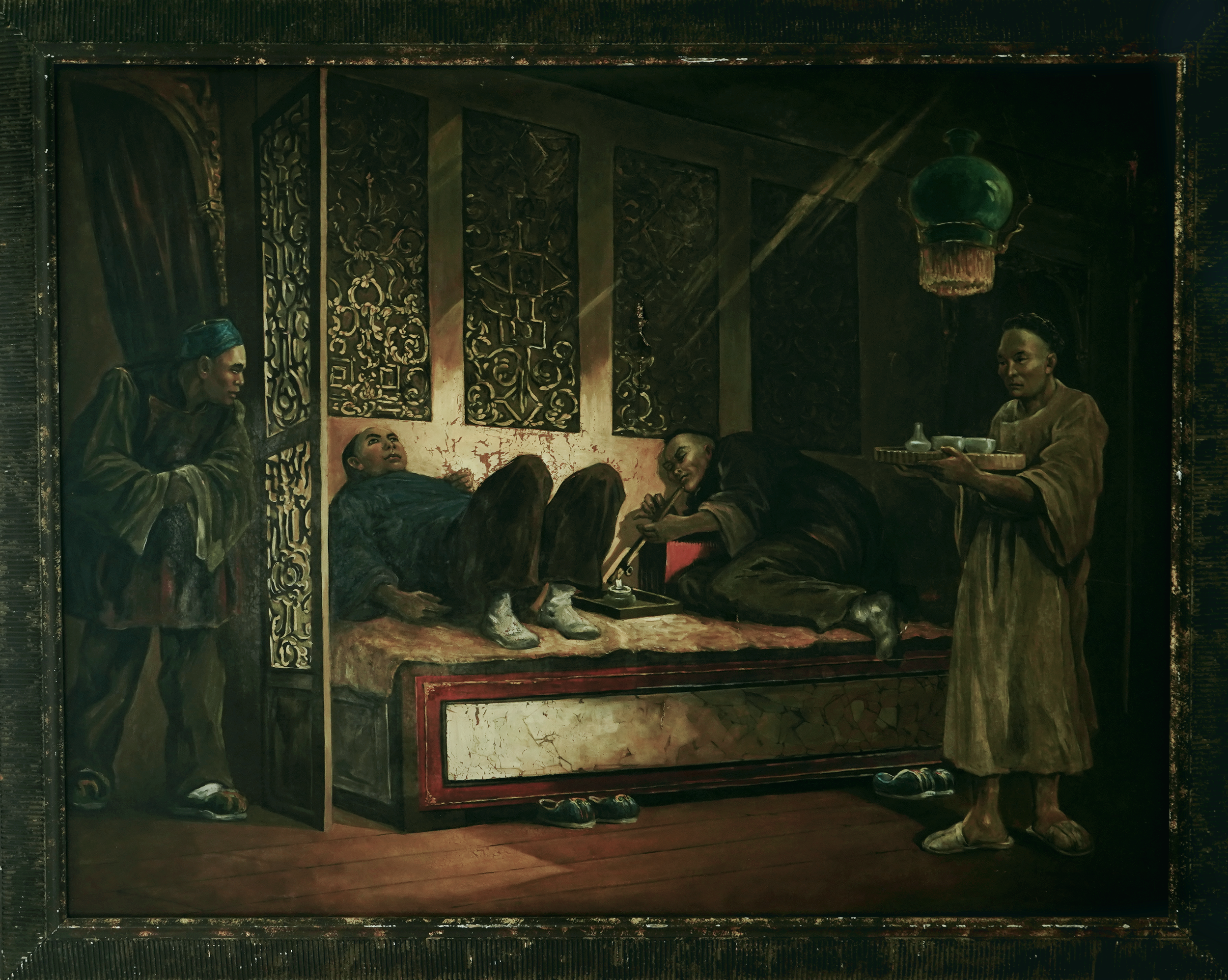 Image 2 of 2
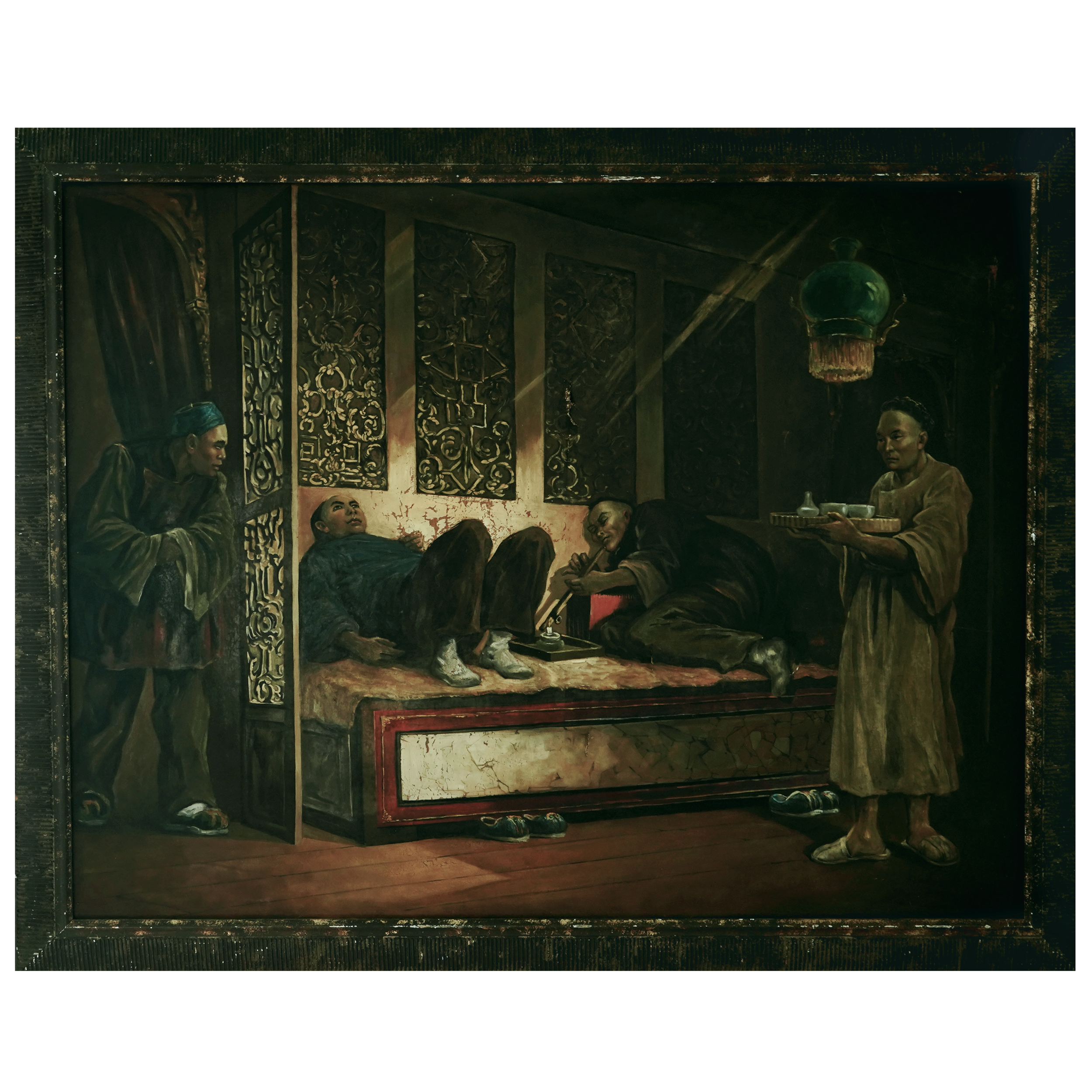
UNKNOWN ARTIST - OPIUM DEN 19th CENTURY - OIL PAINTING
UNKNOWN ARTIST. “Opium Den” 19th Century Oil Painting
Year: 19th Century
Title:Opium Den
Artist: Unknown
Date: Late 19th to early 20th century
Medium: Oil on canvas
Dimensions: 115 X 145 cm
Collection: Private Collection
Description:
Painting presenting a hauntingly atmospheric glimpse into an opium den, most likely located in East Asia during the height of the opium trade and its social consequences. The composition captures a richly detailed interior—a semi-private chamber adorned with carved wooden panels and dimly lit by a hanging lantern. The subdued color palette, dominated by deep browns, ochres, and dark greens, intensifies the somber mood.
The artist’s attention to costume, architecture, and gesture suggests not only a documentary interest but also a critical lens, hinting at themes of escapism, colonial trade, and social decay. The use of directed light—illuminating the figures on the bed while casting the rest of the room into shadow—enhances the psychological depth of the composition.
While the artist remains unidentified, the painting offers rare insight into the cultural and historical context of opium use in the East during a tumultuous period shaped by imperialism, addiction, and moral ambiguity.
UNKNOWN ARTIST. “Opium Den” 19th Century Oil Painting
Year: 19th Century
Title:Opium Den
Artist: Unknown
Date: Late 19th to early 20th century
Medium: Oil on canvas
Dimensions: 115 X 145 cm
Collection: Private Collection
Description:
Painting presenting a hauntingly atmospheric glimpse into an opium den, most likely located in East Asia during the height of the opium trade and its social consequences. The composition captures a richly detailed interior—a semi-private chamber adorned with carved wooden panels and dimly lit by a hanging lantern. The subdued color palette, dominated by deep browns, ochres, and dark greens, intensifies the somber mood.
The artist’s attention to costume, architecture, and gesture suggests not only a documentary interest but also a critical lens, hinting at themes of escapism, colonial trade, and social decay. The use of directed light—illuminating the figures on the bed while casting the rest of the room into shadow—enhances the psychological depth of the composition.
While the artist remains unidentified, the painting offers rare insight into the cultural and historical context of opium use in the East during a tumultuous period shaped by imperialism, addiction, and moral ambiguity.
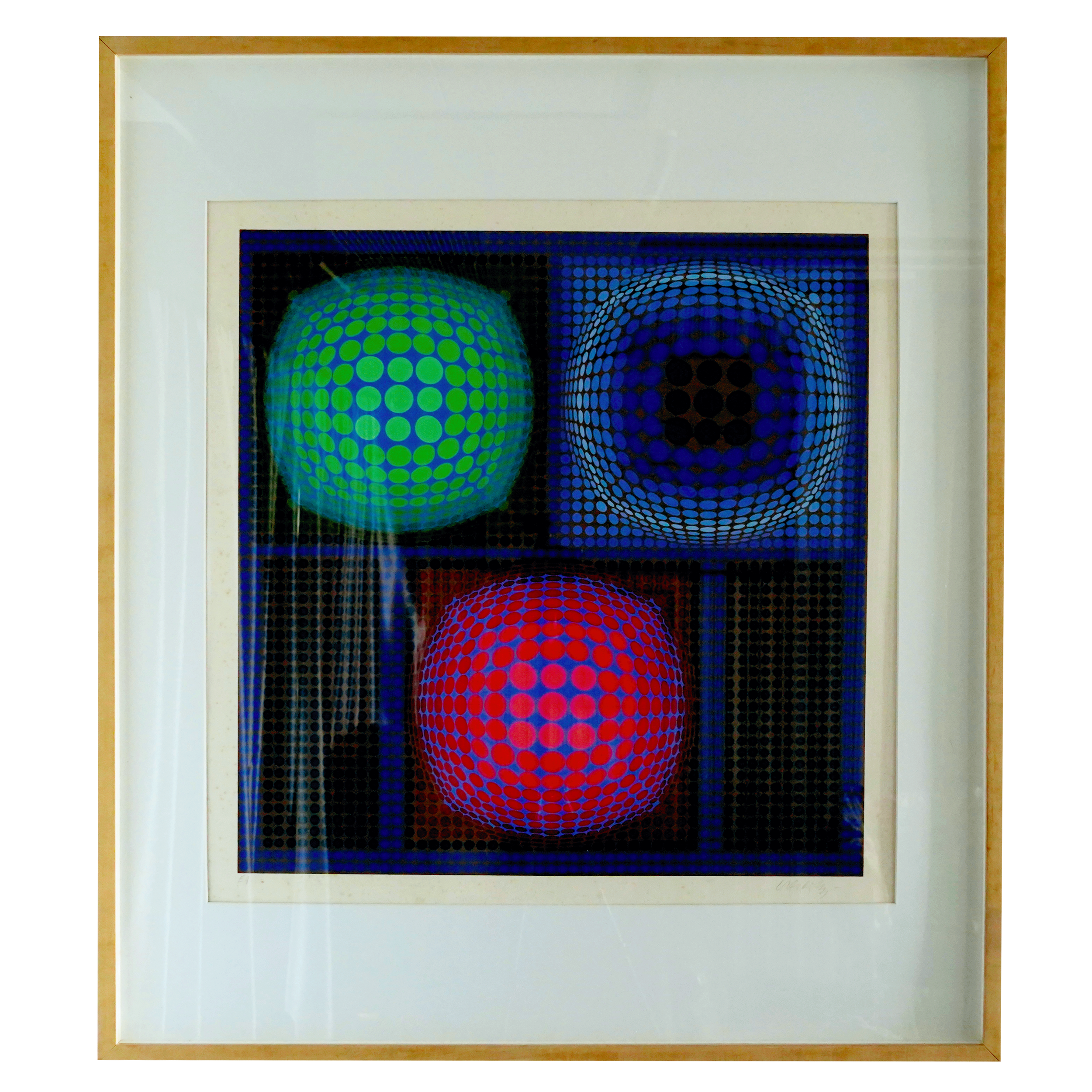
Victor Vasarely (1906–1997)
Untitled (Op Art Composition with Spheres)
Serigraph on paper
Dimensions: 112 × 90 cm
Victor Vasarely, widely regarded as the father of the Op Art movement, explored the optical possibilities of color, geometry, and perception. In this striking work, Vasarely constructs three spherical forms—rendered in vivid green, blue, and red—that appear to pulse and expand beyond the flat surface. Using systematic arrangements of dots and grids, the artist creates a dynamic illusion of three-dimensional depth, engaging the viewer’s eye in a constant play of movement.
This piece exemplifies Vasarely’s lifelong interest in science, mathematics, and visual psychology, reflecting his belief that art could be universal through its reliance on optical laws rather than cultural references. By destabilizing the viewer’s perception, the work transforms static form into kinetic experience, bridging art and technology in a way that defined the visual language of the 20th century.
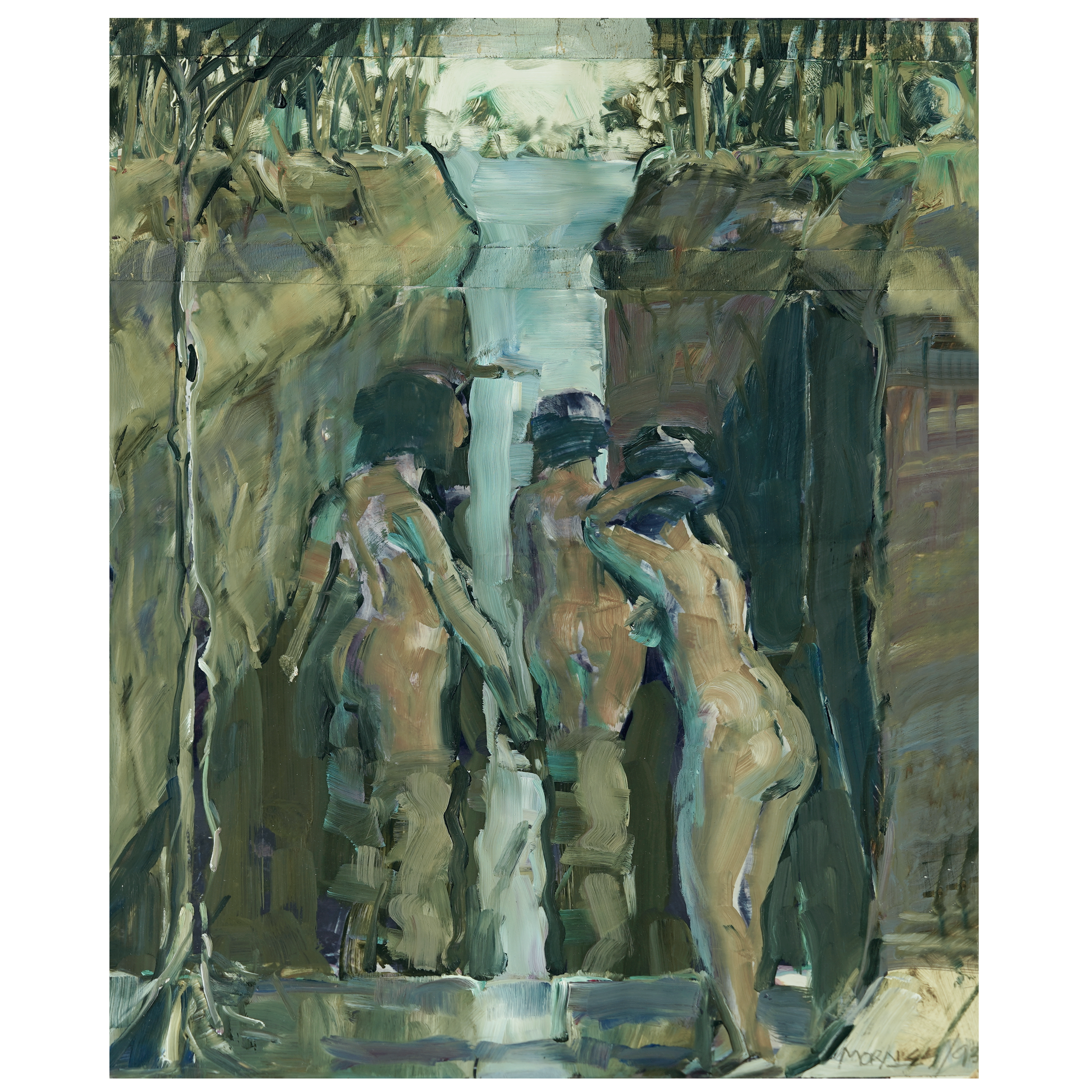
Armando Morales (1927–2011)
Oil on canvas
Dimensions: 35 × 28 cm
Composition by Nicaraguan painter Armando Morales depicting three nude figures gathered at the edge of a cascading waterfall, immersed in a timeless ritual of bathing. Executed in his characteristic painterly style, Morales layers earthy and muted green-blue tones, capturing both the sensuality of the human form and the raw vitality of nature.
Morales, renowned for his fusion of figuration and abstraction, frequently revisited themes of memory, myth, and sensuality. In this work, the tactile impasto brushwork conveys both movement and intimacy, as the figures appear simultaneously rooted in their environment and dreamlike in presence. The interplay between shadow and light accentuates the mystery of the scene, suggesting a timeless moment of communion between humanity and nature.
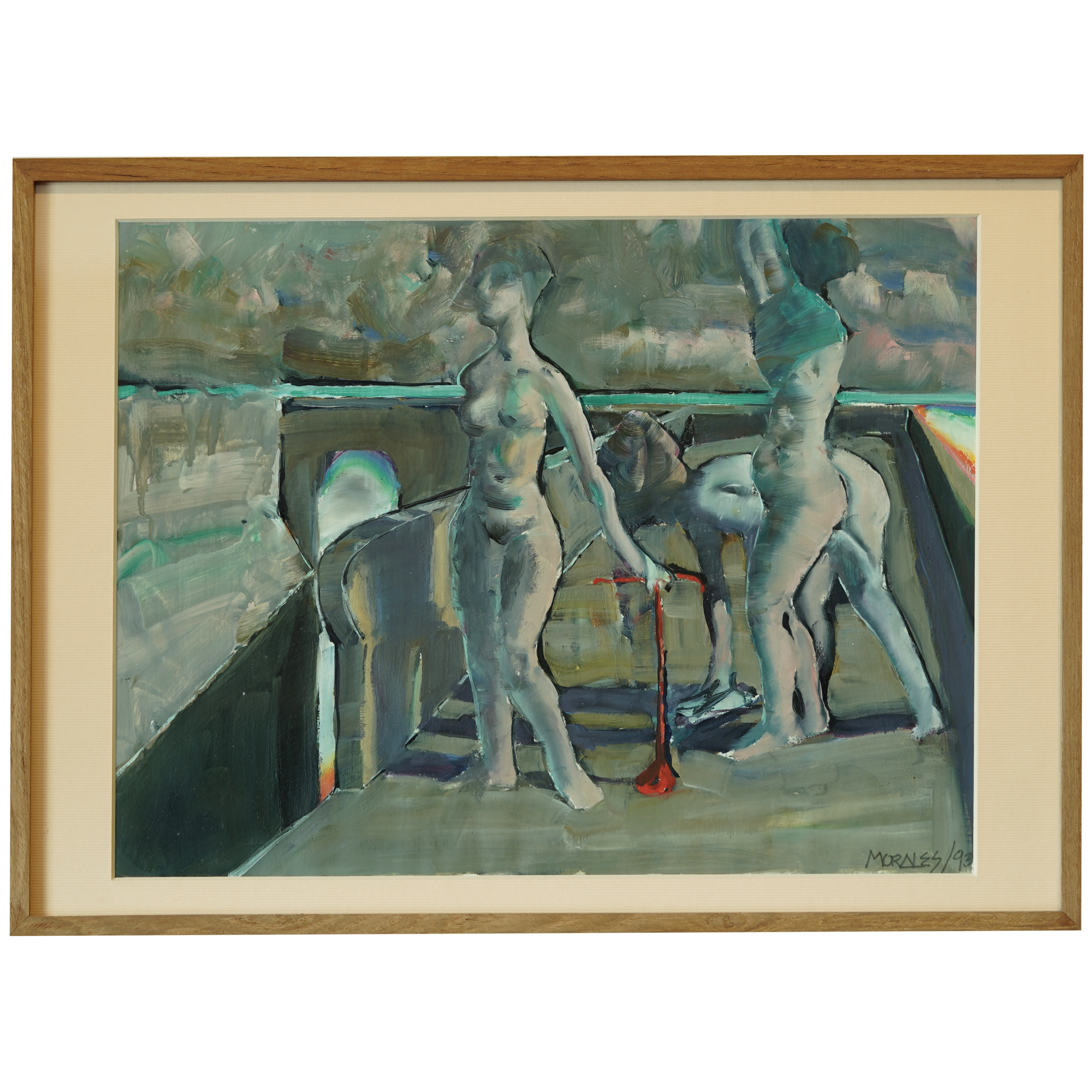
Artist: Armando Morales (Nicaraguan, 1927–2011)
Date: 1993
Medium: Oil on canvas
Signature: Signed and dated lower right, Morales / 93
Dimensions: 29 × 37 cm
Oil on canvas from 1993, Armando Morales presents three nude female figures set within a monumental architectural setting that opens onto a distant seascape. Painted in a restrained, cool-toned palette dominated by muted blues, greens, and greys, the figures emerge with sculptural solidity, their contours modeled with both softness and precision. One central figure holds a striking red staff, a vivid vertical accent that disrupts the otherwise harmonious tonal composition..
Artistic Context:
Armando Morales is celebrated as one of Latin America’s foremost modern painters, renowned for merging realist figuration with surrealist and symbolic elements. His paintings often combine nudes, still lifes, and landscapes in enigmatic, timeless environments. This work exemplifies Morales’s mature style of the late 1970s, in which the human form is reimagined within architecturally inspired, almost stage-like settings that invite multiple readings—mythological, allegorical, or psychological.
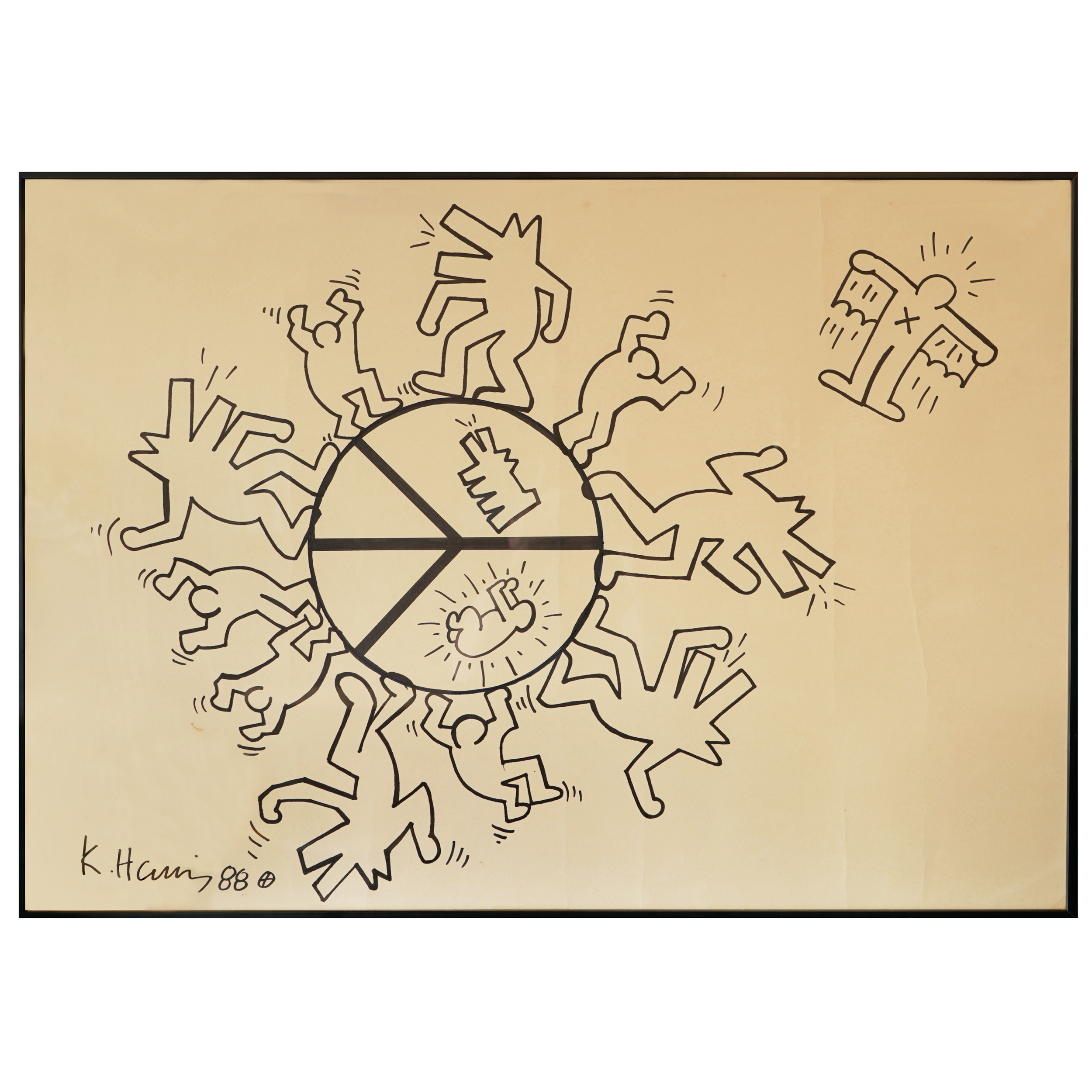
KEITH HARING - Black ink painting. Dated and Signed bottom left
Year: 1988
Title:Untitled
Artist: Keith Haring (1958–1990)
Medium: Ink on paper
Dimensions: 70 × 100 cm
Description:
Original work by Keith Haring showcasing his unmistakable visual language: bold lines, energetic figures, and symbols radiating with urgency. At the center, a peace sign divides a circle containing Haring’s iconic motifs—radiant baby, barking dog, and vibrating television—surrounded by dynamic human forms in motion.
Created in the final years of his life, this 1988 piece reflects Haring’s commitment to activism through art. A central figure in the 1980s street art movement, Haring used his accessible graphic style to address social justice, AIDS awareness, and human rights, imbuing his work with both playfulness and profound political resonance.
UNKNOWN ARTIST. “Opium Den” 19th Century Oil Painting
Year: 19th Century
Title:Opium Den
Artist: Unknown
Date: Late 19th to early 20th century
Medium: Oil on canvas
Dimensions: 115 X 145 cm
Collection: Private Collection
Description:
Painting presenting a hauntingly atmospheric glimpse into an opium den, most likely located in East Asia during the height of the opium trade and its social consequences. The composition captures a richly detailed interior—a semi-private chamber adorned with carved wooden panels and dimly lit by a hanging lantern. The subdued color palette, dominated by deep browns, ochres, and dark greens, intensifies the somber mood.
The artist’s attention to costume, architecture, and gesture suggests not only a documentary interest but also a critical lens, hinting at themes of escapism, colonial trade, and social decay. The use of directed light—illuminating the figures on the bed while casting the rest of the room into shadow—enhances the psychological depth of the composition.
While the artist remains unidentified, the painting offers rare insight into the cultural and historical context of opium use in the East during a tumultuous period shaped by imperialism, addiction, and moral ambiguity.
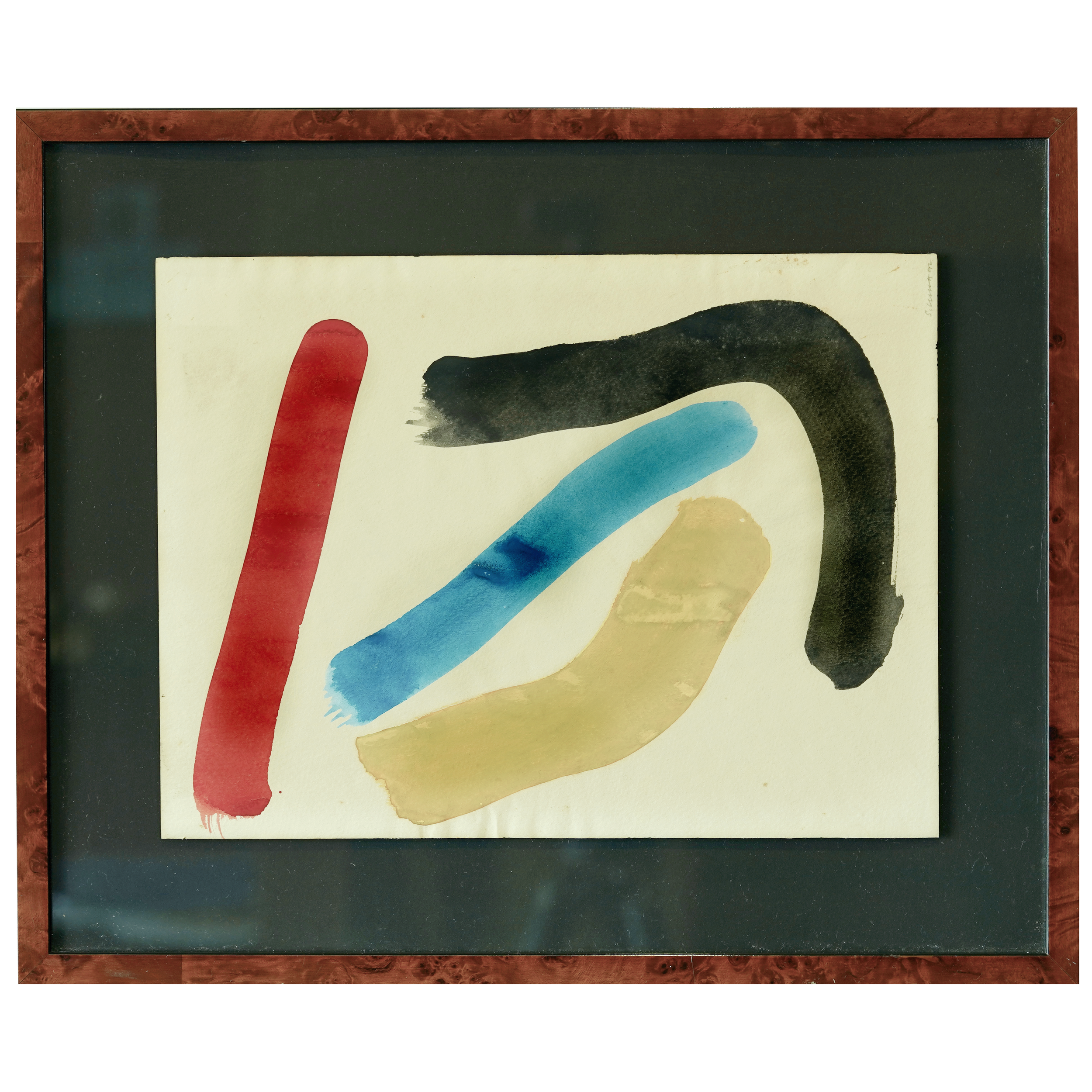
SOL LEWITT Original gouache painting. Dated and Signed top right.
Title:Untitled (Brushstrokes)
Artist: Sol LeWitt (American, 1928–2007)
Date: 1992
Medium: Watercolor on paper
Dimensions: 32 × 24 cm
Collection: Private Collection
Description:
Watercolor by Sol LeWitt featuring four broad, gestural strokes in red, black, blue, and ochre. Departing from his well-known systematic and geometric compositions, this work reveals a more spontaneous and tactile side of the artist’s practice.
Though best known for his conceptual and minimal works, LeWitt also produced a significant body of watercolors later in his career. These pieces explore color, form, and movement in a freer, more organic manner, showcasing the artist’s ongoing curiosity about the possibilities of visual language.
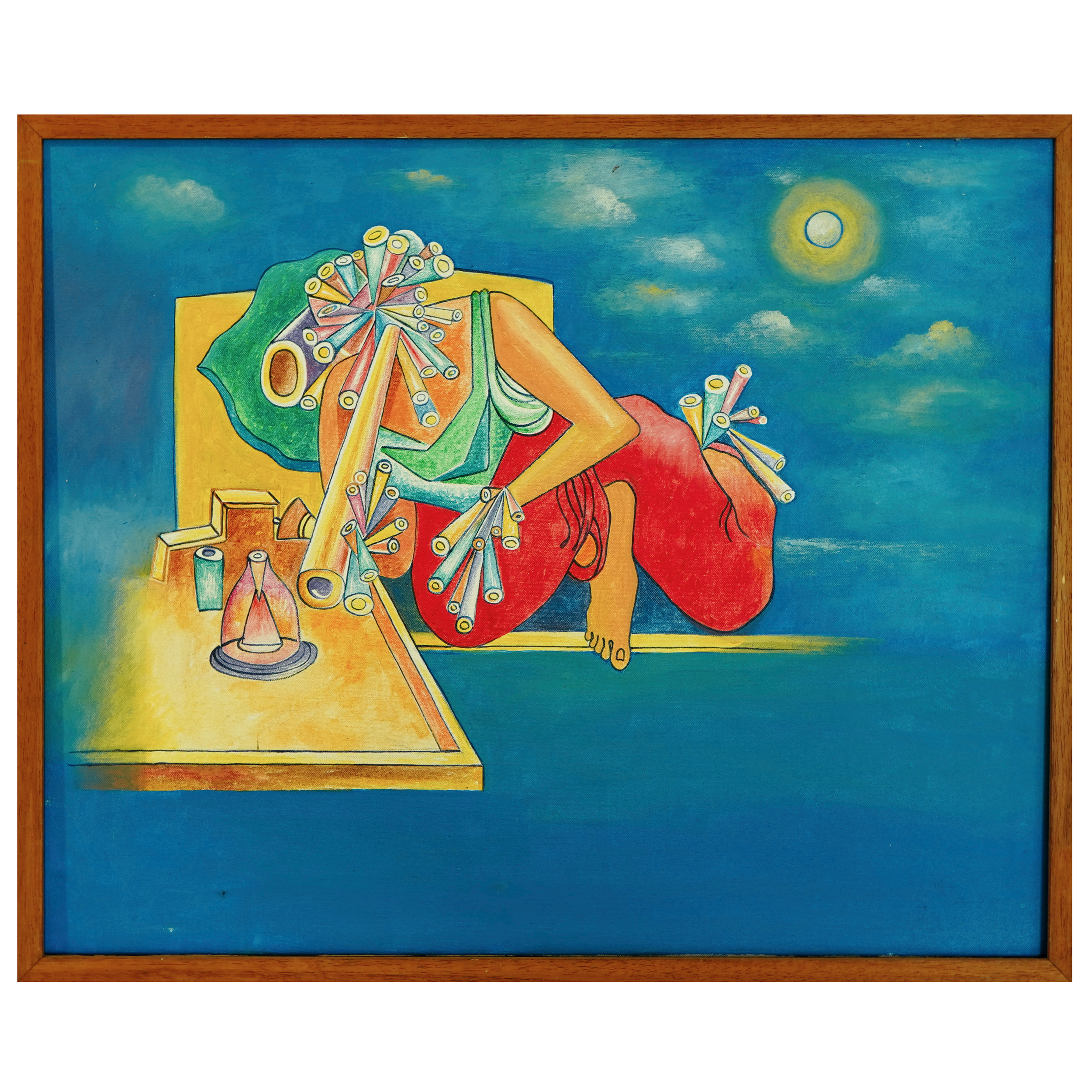
PHILIPPE BOSIO. Oil painting.
Title:L’Opiomane au Soleil
Artist: Philippe Bosio (French, b. 20th c.)
Medium: Oil on Canvas
Dimensions: 52×63 cm
Description:
French artist Philippe Bosio presents a surrealist tableau of a man in the throes of an opium-induced reverie. The composition centers on a semi-reclined figure, whose fragmented form is composed of radiating cylinders and mechanical motifs, suggesting both euphoria and disintegration. This psychedelic abstraction imbues the subject with a hallucinatory aura, reflecting the inner landscape of altered consciousness.
Bosio’s bold palette—rich in primary reds, blues, and yellows—intensifies the psychological charge of the work, while the crisp outlines and flattened perspective lend it a modernist clarity. This painting evokes themes of escapism, solitude, and the seductive peril of narcotic indulgence.
This work exemplifies Philippe Bosio’s distinctive fusion of figurative surrealism with social commentary. Through abstraction and symbolic distortion, L’Opiomane au Soleil probes the complex relationship between intoxication and identity, inviting the viewer into a meditative space where perception is both heightened and obscured.
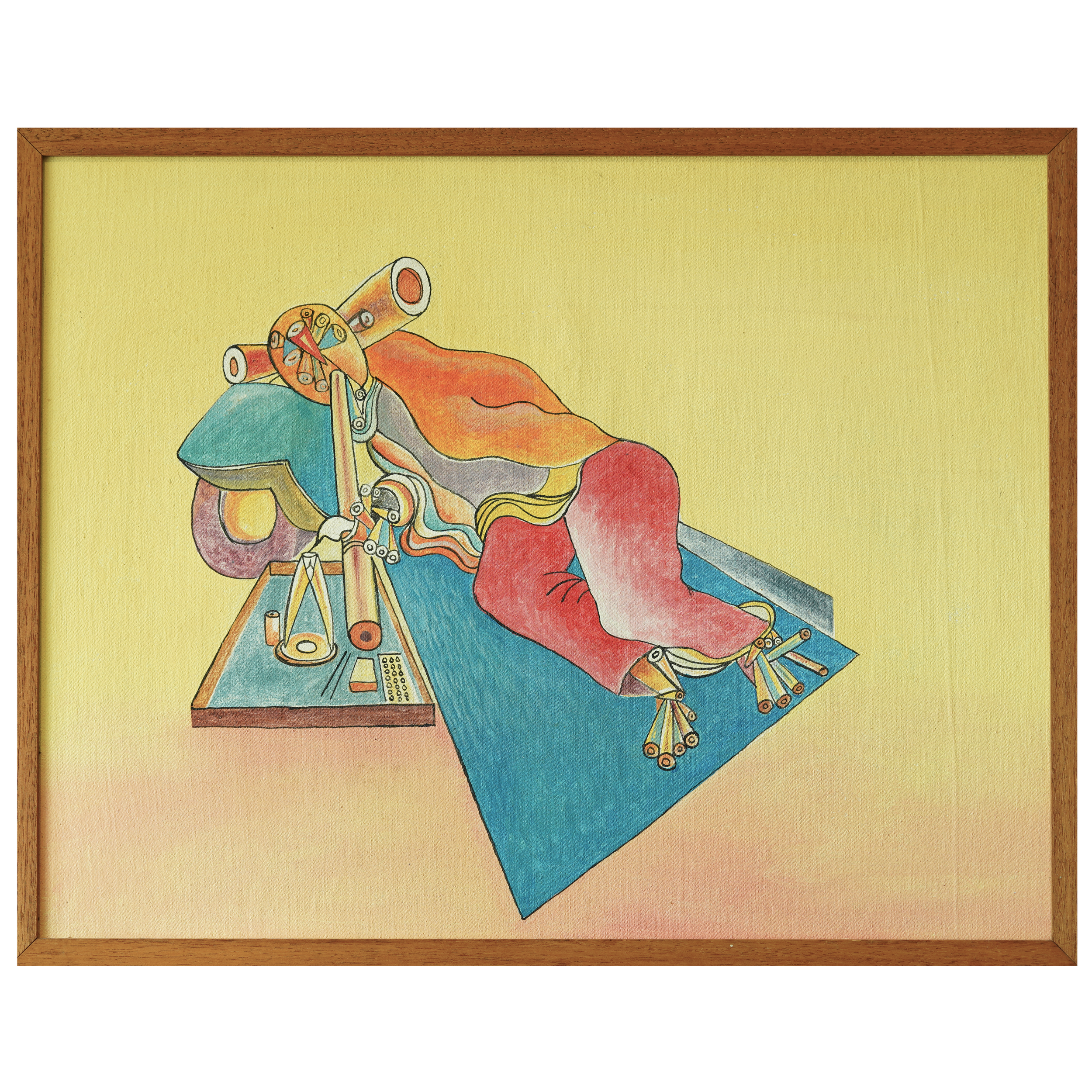
BOZE Oil painting.
Title:Opium Smoker
Artist: BOZE (French, 20th century)
Medium: Acrylic on canvas
Dimensions: 39 × 50 cm
Description:
Original painting by BOZE depicting a reclining man smoking opium. The figure is stylized with mechanical and abstract forms, combining human anatomy with components reminiscent of gears, levers, and tubes. Rendered in warm reds, oranges, and blues against a soft yellow background, the scene evokes both dreamlike detachment and physical ritual.
Boze’s work reinterprets traditional opium-smoking imagery through a surreal and modern lens. The composition reflects the introspective and isolating nature of the opium experience, while the mechanical details suggest the ritual’s repetition and systemic place in society.
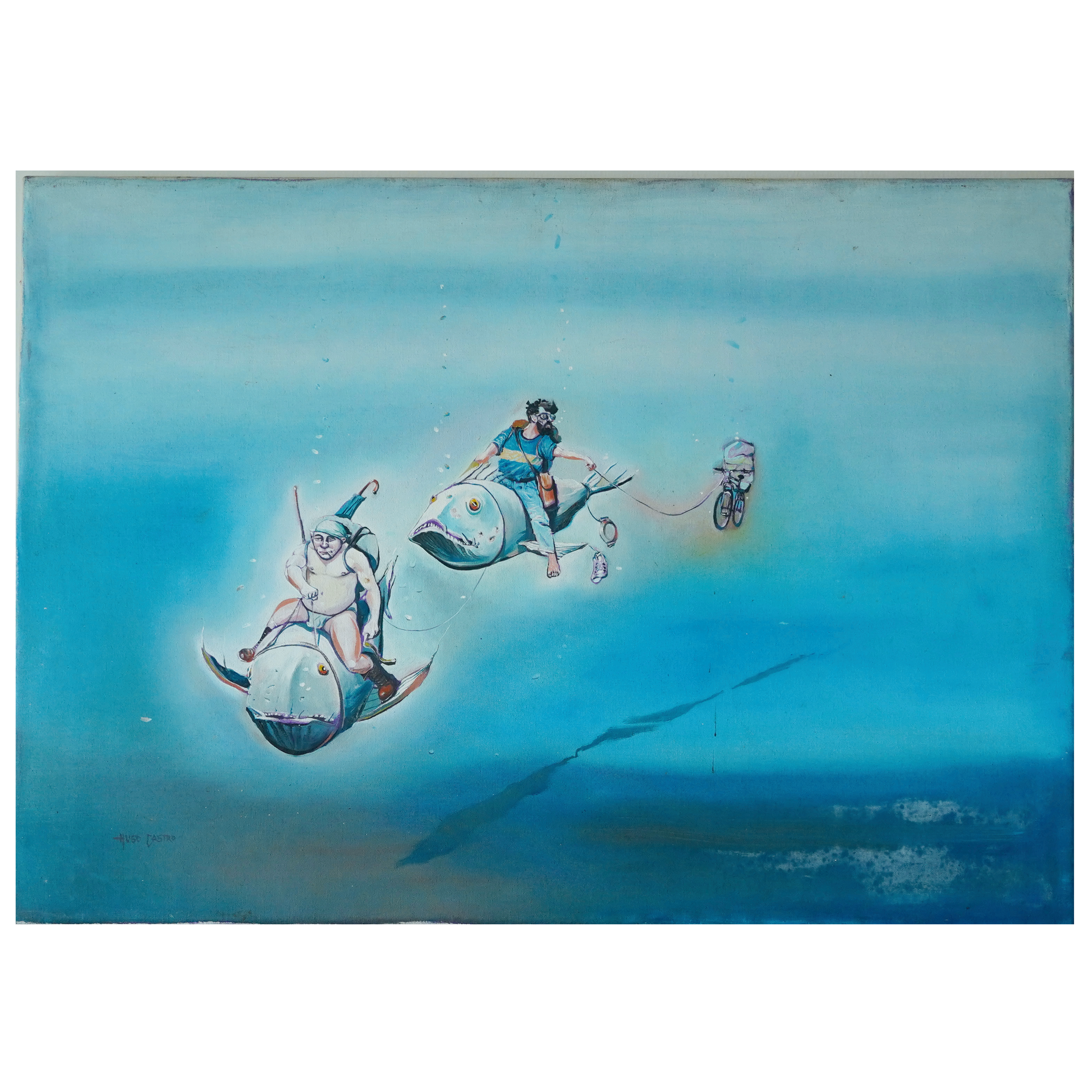
HUGO CASTRO Original Acrylic Painting. Signed bottom left
Artist: Hugo Castro (Mexican, 20th–21st century)
Medium: Acrylic on canvas
Dimensions: 50 × 70 cm
Description:
Underwater scene, Hugo Castro is depicting a fantastical journey through the deep sea. Two human figures, dressed in modern and playful attire, ride large mechanical fish with expressive, cartoon-like faces. A child follows behind, seemingly tethered to the group and riding a small bicycle
Blending fantasy, satire, and a touch of science fiction, Castro’s work reflects on themes of escapism, environmental imagination, and childlike wonder. The fluid motion of the composition and the vibrant palette create a sense of weightlessness and absurd adventure. The juxtaposition of human and mechanical-animal forms challenges traditional boundaries between nature, machine, and human experience.
ENQUIRY:

Artist: BOZE
Date: Unknown
Medium: Oil on canvas
Signature: Not Visible
Dimensions: 29 × 37 cm
This portrait depicts a dog rendered with human posture and expression, dressed in a green beret marked by a red star and a red jacket. The work playfully merges animal imagery with revolutionary iconography, creating a figure that is at once humorous, and quietly unsettling. Rich, warm tones define the face, while energetic splatters of paint animate the background, adding movement and contemporary edge.
Artistic Context:
BOZE is known for creating expressive, figurative paintings that blend humor, symbolism, and social commentary. Working primarily in oil on canvas, the artist often uses animals as stand-ins for human characters, allowing complex political or emotional ideas to be explored with irony and warmth. BOZE’s style combines strong draftsmanship with painterly textures and contemporary pop references, resulting in works that are immediately approachable yet layered in meaning.