
JADE JEWELLERY PENDANTS
Curated Mayan Jade Jewellery
This section features a selection of finely curated jewellery pieces crafted with authentic Mayan jade. Each item highlights the cultural heritage, symbolic richness, and artisanal techniques rooted in Mesoamerican tradition, offering a timeless connection to ancient craftsmanship.
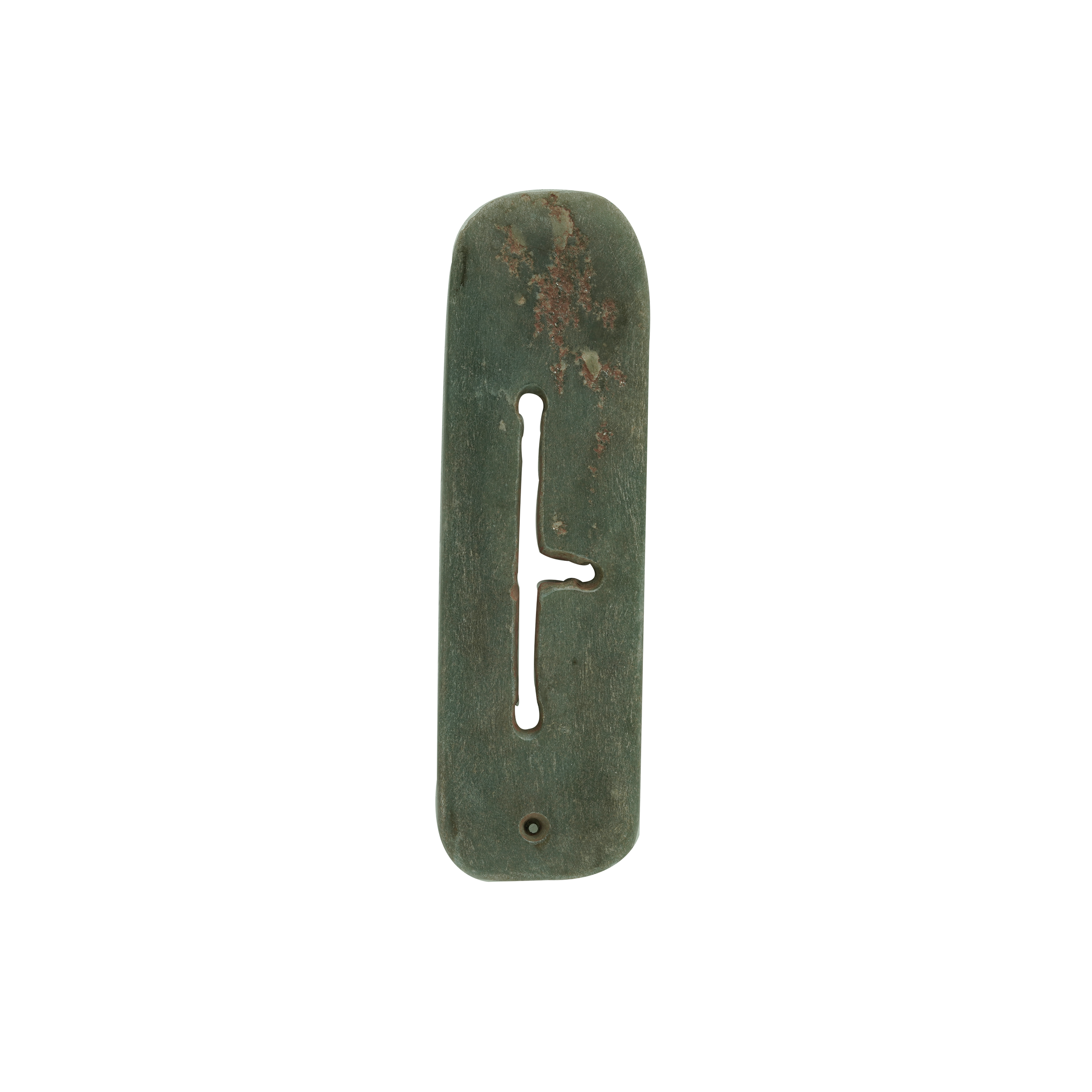
Jade Ornament
China, date uncertain (possibly 20th century or earlier)
Nephrite or jadeite
Size : 12 × 4 cms
This elongated, rectangular jade ornament is carved from dark green stone with a smooth, weathered surface showing areas of natural inclusions and surface alteration. A central openwork cut runs vertically with a lateral extension, and a small drilled perforation is located near one end, likely for suspension or attachment. The form and piercing suggest it may have been used as a decorative fitting, garment accessory, or symbolic amulet. The piece reflects the adaptability of jade craftsmanship, combining functional use with the enduring cultural esteem for jade in Chinese tradition..
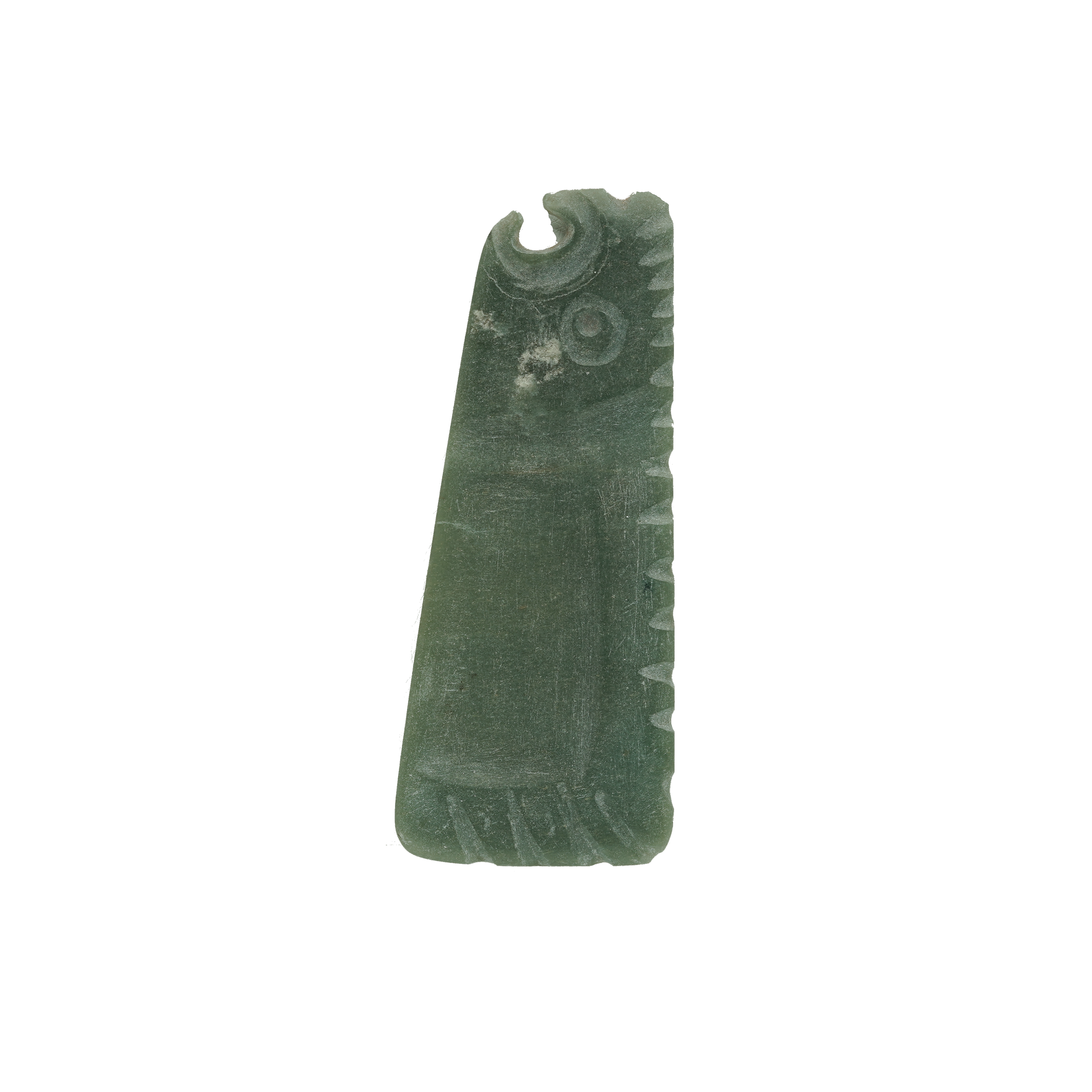
Jade Pendant
China, 20th century or earlier
Jadeite or nephrite
Size: 12 × 5 cms
This pendant is carved from dark green jade in a tapered form with one end featuring a stylized zoomorphic motif and a pierced suspension hole. The edges are finely notched, and the surface bears shallow incised decoration. Such pendants may have served both decorative and symbolic purposes, with the animal-like design elements possibly representing protective or auspicious creatures in Chinese tradition. The piece combines functional wearability with artistic craftsmanship, reflecting jade’s long-standing cultural value as a material associated with status, protection, and spiritual significance.
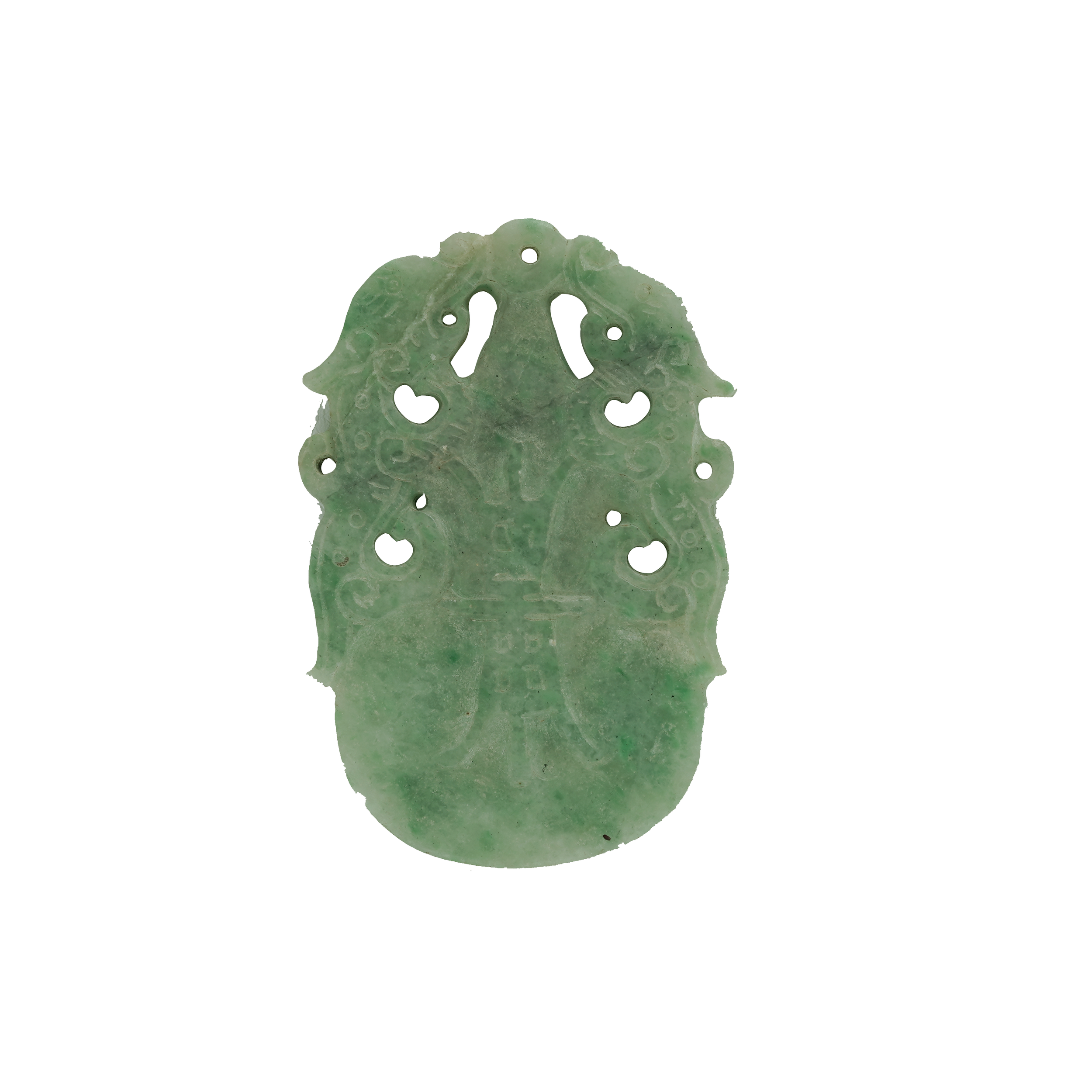
Jade Pendant
China, 20th century
Jadeite or nephrite
Size : 6 × 4 cms
This intricately carved pendant is made from green jade, featuring openwork designs and stylized motifs. The surface shows both raised and incised patterns, possibly including auspicious symbols and characters. In Chinese culture, jade pendants are worn as amulets for protection, prosperity, and good fortune. The craftsmanship and detailed carving reflect the enduring cultural significance of jade as a material prized for both beauty and symbolic meaning.
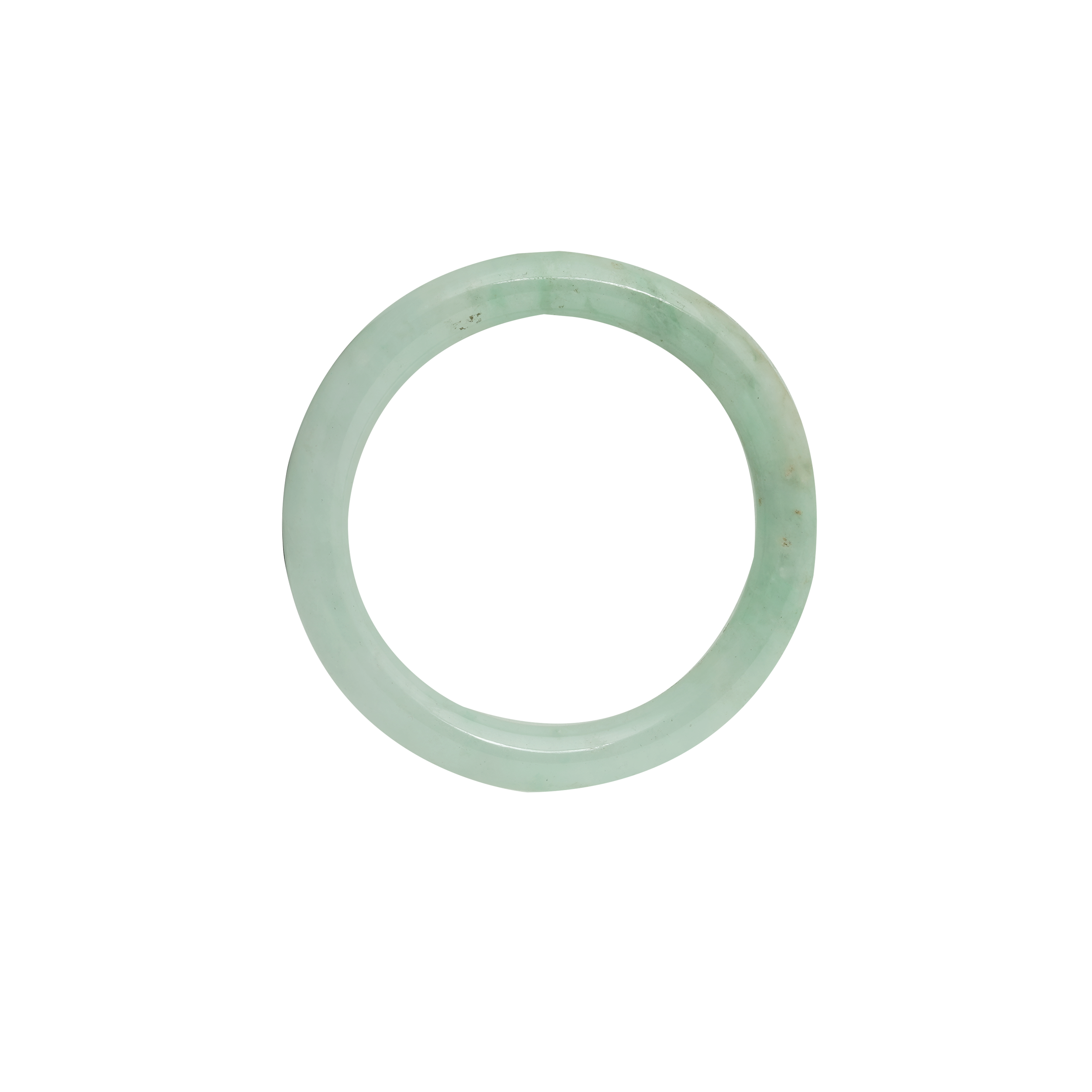
Jade Bangle
China, 20th century
Jadeite or nephrite
Size 7 × 7 cms
This bangle is carved from a single piece of light green jade with a smooth, polished finish. The stone shows slight natural variations in tone, with areas of deeper green and minor inclusions. In Chinese tradition, jade bangles are prized for their beauty and durability, and are believed to offer protection and good fortune to the wearer. The unbroken circular form represents unity and continuity.
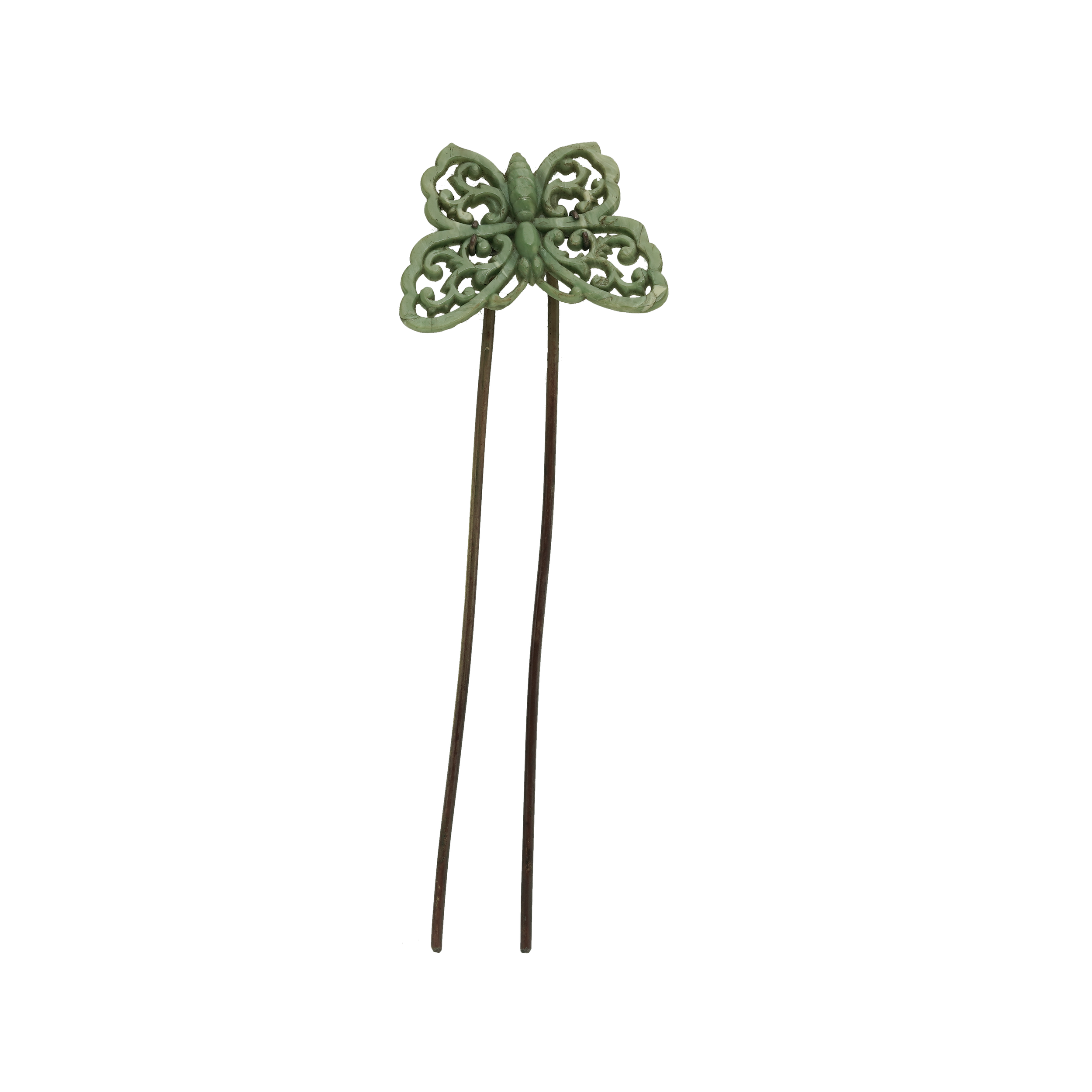
Japanese Jade Hair Ornament in the Form of a Butterfly
Culture: -
Date: c. 600–900 CE (Late Classic Period)
Materials: Jade, metal (possibly copper alloy)
Dimensions: 11 × 3cms
Hair ornament featuring an intricately carved jade butterfly, its openwork wings filled with swirling scroll motifs. The carving is mounted on two slender metal pins, suggesting it was designed to be worn in an elaborate hairstyle, likely as part of ceremonial attire.
Jade was a material of profound spiritual and political significance, representing fertility, life force, and divine authority. Hair ornaments such as this would have been reserved for members of the elite, used to display status and cultural identity during important rituals and public gatherings.
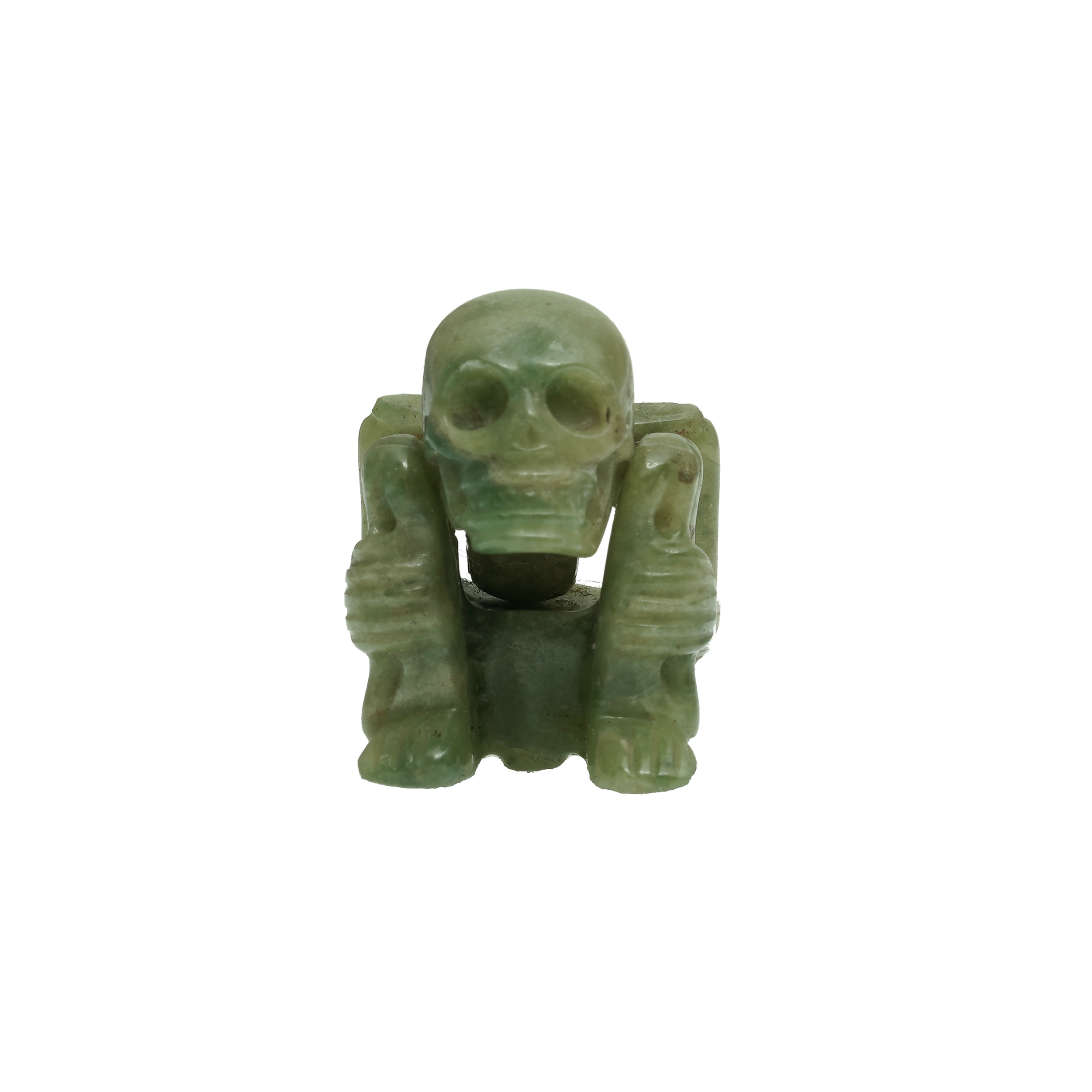
Maya Jade Figurine of a Seated Skeleton
Culture: Maya Civilization
Date: c. 600–900 CE (Late Classic Period)
Materials: Jade
Dimensions: 3.0 × 2.0 cm
Finely carved jade figurine depicting a seated skeletal figure, knees drawn up to the chest, arms wrapped around the legs, and a prominent skull with hollowed eye sockets. The skeletal imagery likely references themes of death, rebirth, and the cyclical nature of existence central to Maya cosmology.
Jade was considered a sacred material by the Maya, associated with life force, fertility, and elite status.
Provenance:
Likely from the southern Maya lowlands, present-day Guatemala or Mexico.

Pendant with Carved Ivory Plaque Depicting a Dragon
Culture: East Asian, likely Chinese
Date: Late 19th–Early 20th Century
Materials: Ivory, silver
Dimensions: 5.2 × 4.0 cm
Pendant featuring a finely carved rectangular ivory plaque set within a silver frame. The central motif depicts a sinuous dragon in high relief, surrounded by swirling cloud patterns, a design deeply rooted in East Asian symbolism. The dragon, a revered mythical creature, is traditionally associated with power, prosperity, and auspicious energy, while the surrounding clouds symbolize celestial realms and divine presence.
The craftsmanship, with precise incisions and layered carving, highlights the artisan’s skill in working with ivory to achieve both depth and movement.
Provenance:
Probably crafted in China for personal adornment or as a treasured gift, reflecting the enduring symbolic power of the dragon motif in East Asian art.

Maya Pendant with Anthropomorphic Figure
Culture: Maya Civilization
Date: c. 600–900 CE (Late Classic Period)
Materials: Jade, brass
Dimensions: 9.5 × 7.0 cm
Pendant depicting a human figure carved from jade, rendered in a stylized, almost abstract form. The figure is framed by an oval border with decorative brass fittings, giving the impression of a symbolic enclosure or ceremonial frame. The simple yet expressive facial features and proportionally elongated limbs reflect the Maya’s symbolic rather than naturalistic approach to human representation.
Jade, a material revered by the Maya for its rarity and spiritual significance, was associated with life, fertility, and divine authority. The combination of jade and brass suggests this piece was a prestigious adornment, possibly worn by a noble or priest during ceremonial events.
Provenance:
Likely from the southern Maya lowlands, in present-day Guatemala or Mexico.
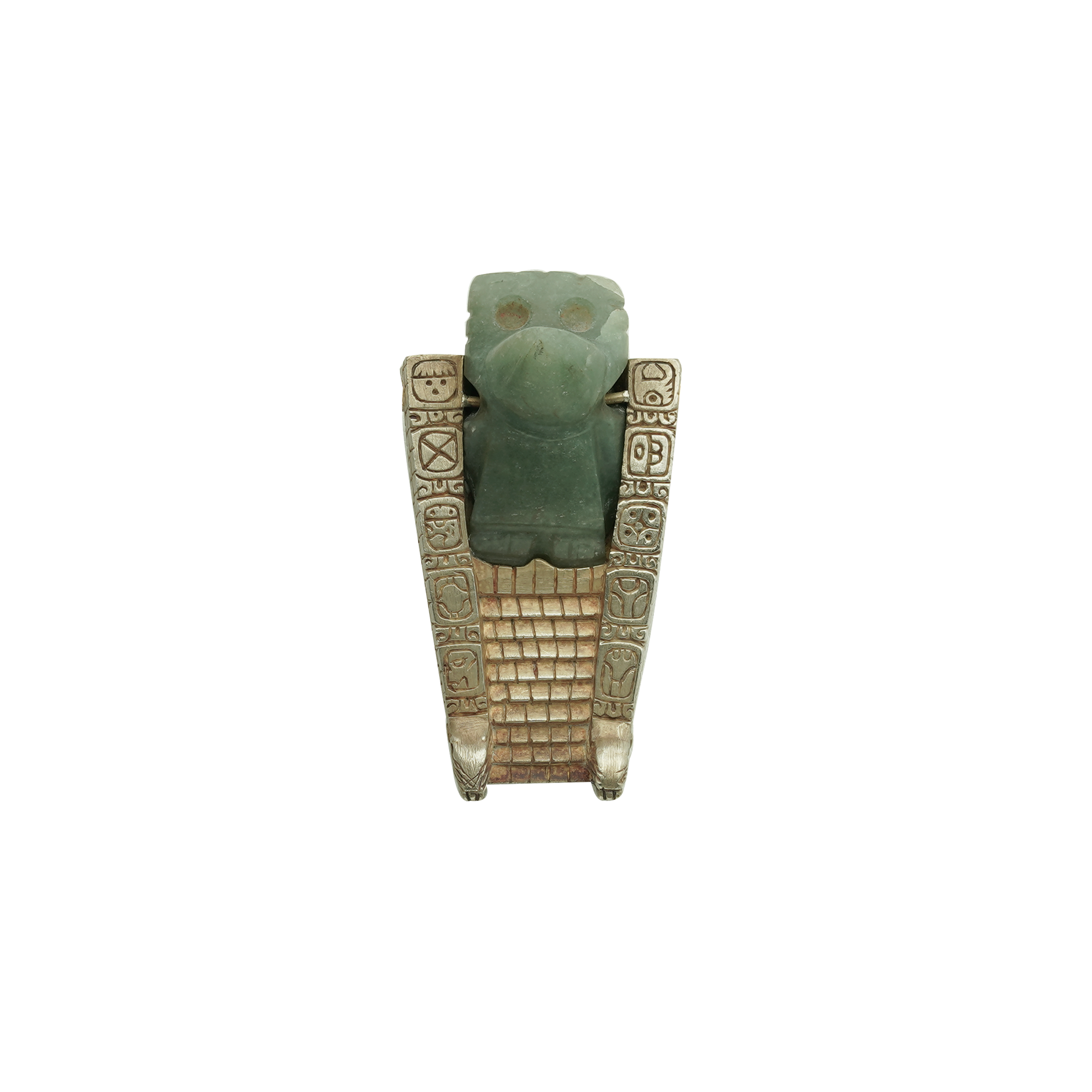
Maya Pendant with Zoomorphic Jade Figurine and Brass Mount
Culture: Maya Civilization
Date: c. 600–900 CE (Late Classic Period)
Materials: Jade, brass
Dimensions: 8.0 × 4.5 cm
Pendant featuring a carved jade figurine, possibly representing a stylized animal or mythological creature, set within an intricately worked brass mount. The mount is decorated with geometric and symbolic motifs, including a textured, scale-like surface and terminal ends shaped as stylized animal heads. Such designs reflect the Maya’s rich symbolic vocabulary, where zoomorphic imagery was often linked to deities, transformation, and cosmic forces.
The jade’s deep green hue was among the most valued materials in Maya culture, symbolizing life, fertility, and divine authority.
Provenance:
Probably from the southern Maya lowlands, in present-day Guatemala or Mexico.
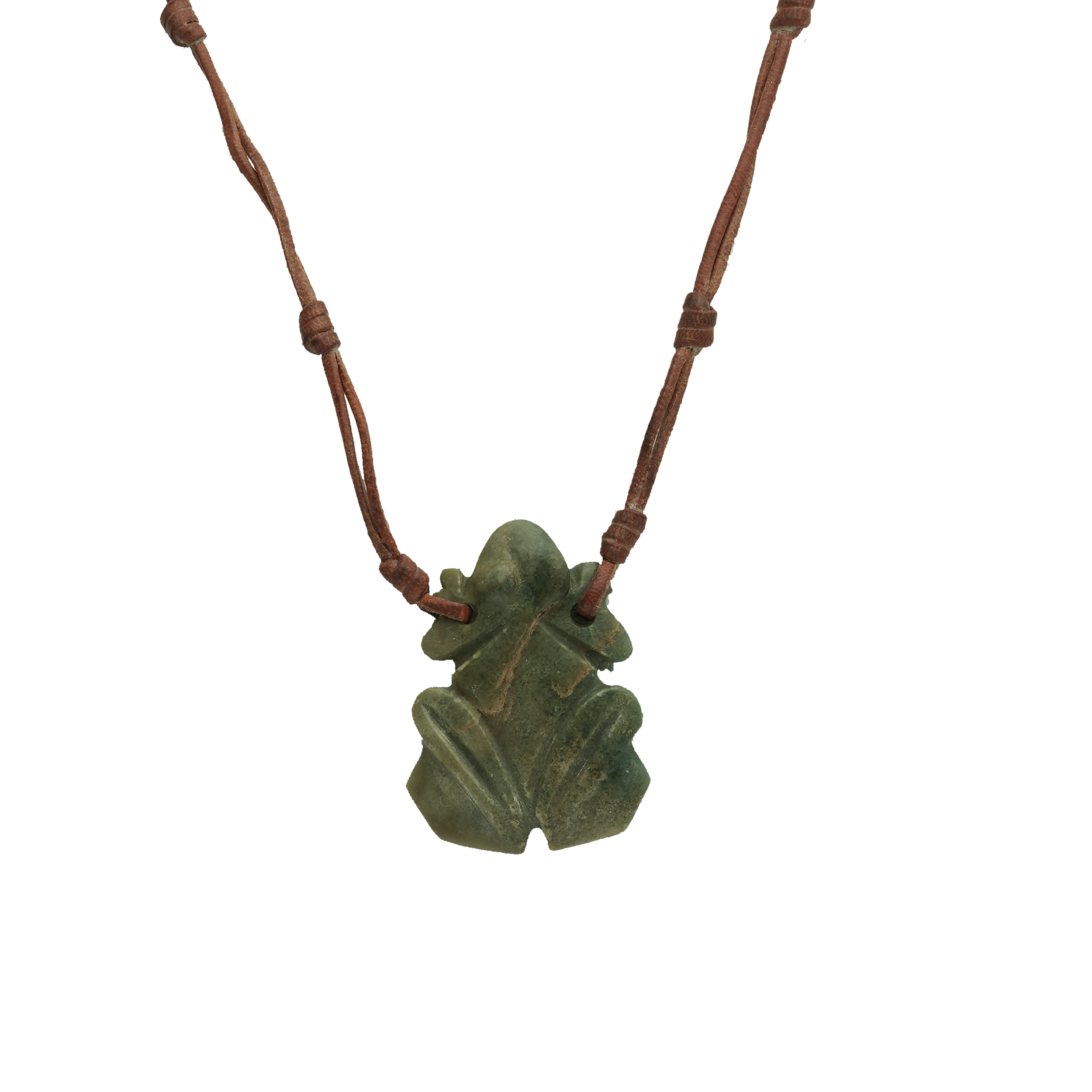
Culture: Maya Civilization
Date: Late Classic Period (c. 600–900 CE)
Materials: Carved green jadeite, leather cord (modern)
Dimensions: 5 × 3 cm
Collection: Private Collection
Description:
Carved pendant in the form of a stylized frog is crafted from green jadeite, a material held in the highest regard by the ancient Maya. Frogs were potent symbols within Mesoamerican cosmology—linked to rain, fertility, and the regenerative power of water. As amphibians, frogs were seen as creatures of dual worlds, able to navigate both land and water, embodying transition and transformation.
Suspended today on a simple leather cord, the pendant merges ancient iconography with modern presentation. The contemporary mounting respects the original function of the piece as adornment while making it accessible as an object of both historical reverence and aesthetic appreciation.
This pendant exemplifies how the Maya encoded spiritual significance into everyday objects. Its frog motif speaks to ecological awareness and the sacred cycles of nature—values deeply embedded in Maya belief systems and still resonant today.
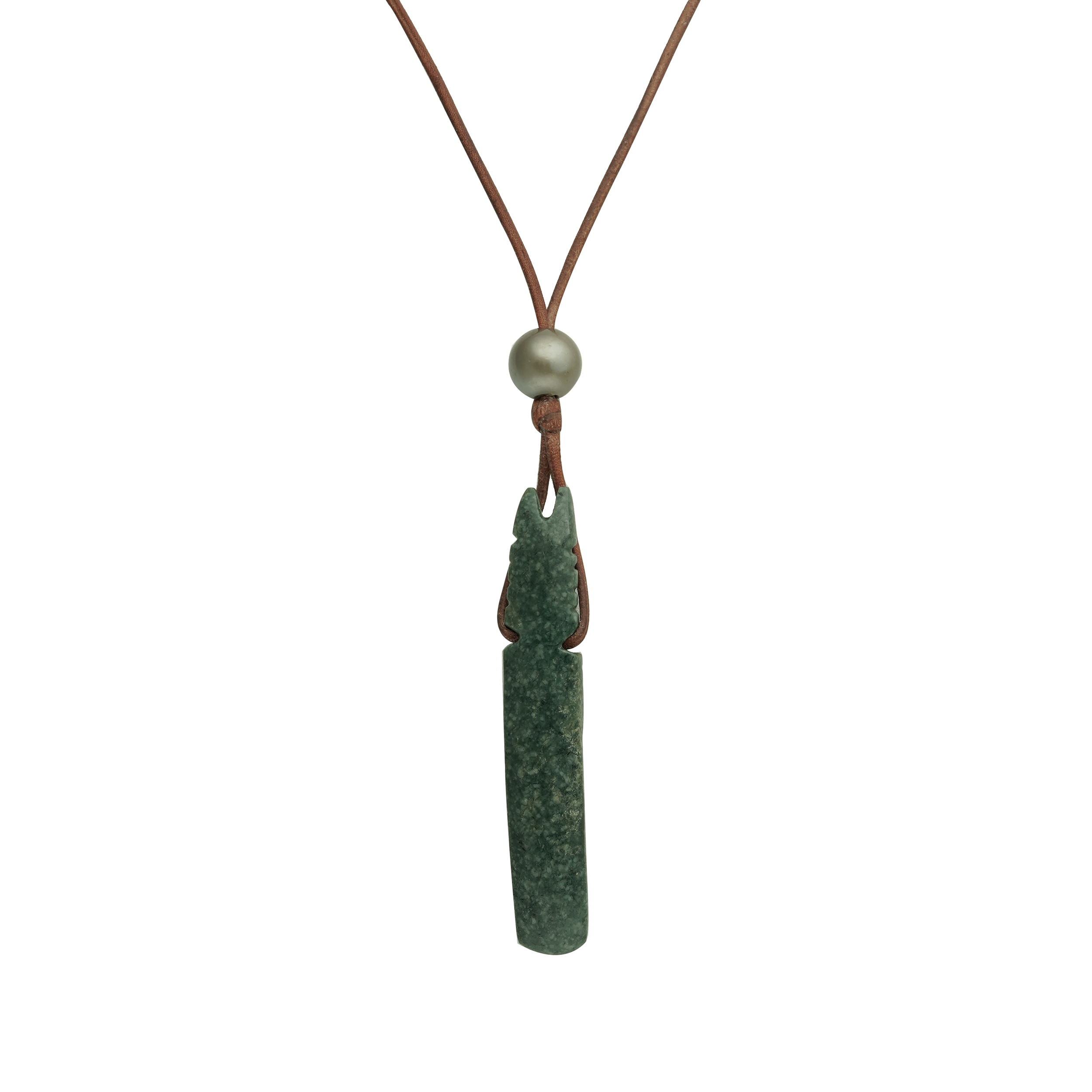
Culture: Maya Civilization (pendant) / Contemporary assemblage
Date: Jade carving, Classical Period (c. 250–900 CE); pearl and leather cord, contemporary
Materials: Maya green jadeite, Tahitian black pearl, leather cord
Dimensions: 6 × 1 cm
Collection: Private Collection
Description:
Pendant bringing together the ancient artistry of the Maya civilization with modern design sensibilities. The central element is a finely shaped green jadeite pendant—likely originating from Mesoamerica and once revered by the Maya as a sacred material associated with life, fertility, and power. Its vertical form evokes ceremonial celts or ritual tools, which were often buried as offerings or worn by elites.
Suspended on a contemporary leather cord, the jade pendant is paired with a single Tahitian black pearl, creating a striking juxtaposition of ancient and modern, raw and refined. While the jade carries the spiritual and social gravitas of its Maya origins, the pearl contributes a sense of contemporary elegance and global connectivity.
This hybrid piece serves as a powerful example of how ancient materials and symbols can be reimagined in contemporary contexts, maintaining their cultural weight while acquiring new layers of meaning across time and space.
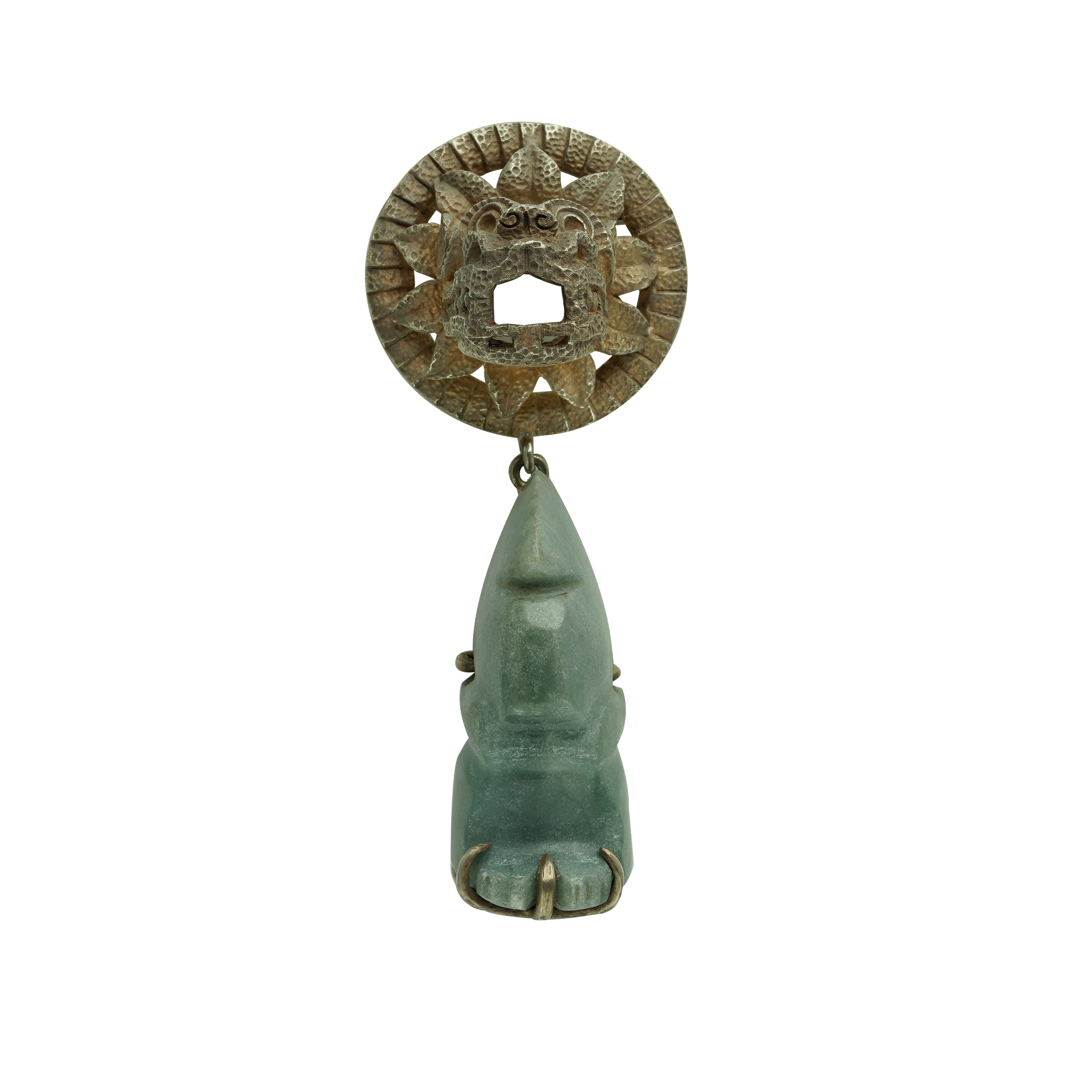
Maya Pendant with Jade Carving and Dragon/Serpent Head Mount
Culture: Maya Civilization
Date: c. 600–900 CE (Late Classic Period)
Materials: Carved jadeite, metal (gilded)
Dimensions: Approx. 9x4 cms
Pendant featuring a carved jadeite element suspended from an intricately cast metal mount in the form of a stylized dragon or serpent head. The jade carving, pierced laterally for suspension, is abstract in form, suggesting a profile or glyphic representation. The surface exhibits a smooth polish with areas of natural mottling in the green stone, typical of Maya jadeite.
The metal mount is highly detailed, with a fierce open-jawed expression, spiral eye, and textured scales or feathers, possibly representing the Feathered Serpent deity (Kukulkan in Maya, Quetzalcoatl in Central Mexican tradition). The combination of jade and the serpent imagery strongly links this pendant to elite ceremonial contexts.
Provenance:
Likely from the Maya lowlands, possibly Guatemala or southern Mexico.
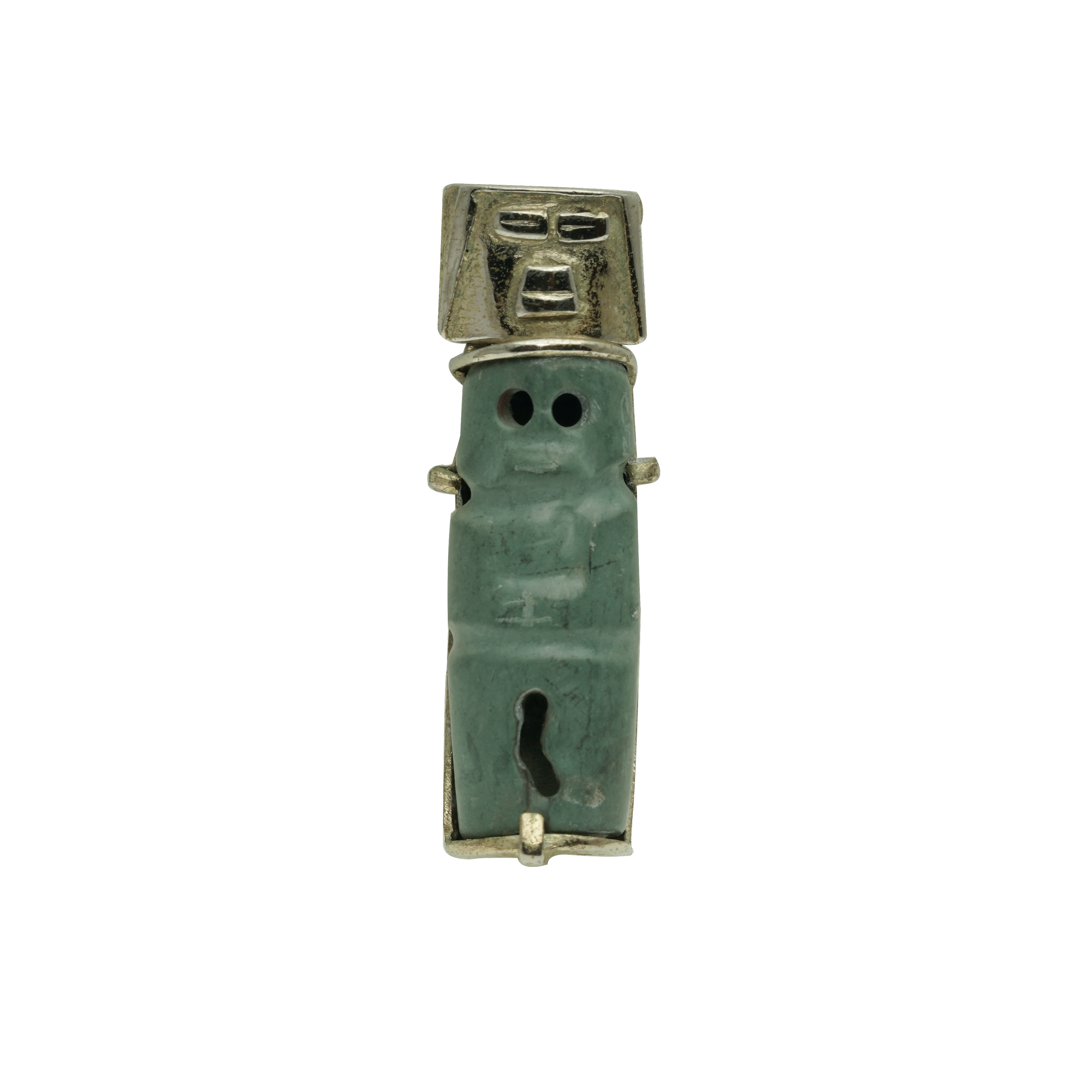
Maya Pendant with Carved Jade Figure and Metal Headdress
Culture: Maya Civilization
Date: c. 600–900 CE (Late Classic Period)
Materials: Carved jadeite, metal (gilded metal)
Dimensions: Approx. 6.5x2 cms
Pendant featuring a small, stylized jadeite carving of a human figure, set within a simple metal frame. The jade figure is rendered in an abstract form with drilled circular eyes and an elongated body, the surface marked with subtle carved details suggesting arms and clothing. A vertical slot-shaped perforation near the lower section may have served as part of its original suspension system or as symbolic detailing.
At the top, a metal element depicts a schematic face in a block-like form, possibly representing a mask or headdress. The contrast between the deep green jade and the metallic fitting enhances the pendant’s ceremonial appearance.
Provenance:
Likely originating from the Maya lowlands, present-day Guatemala, Belize, or southern Mexico.
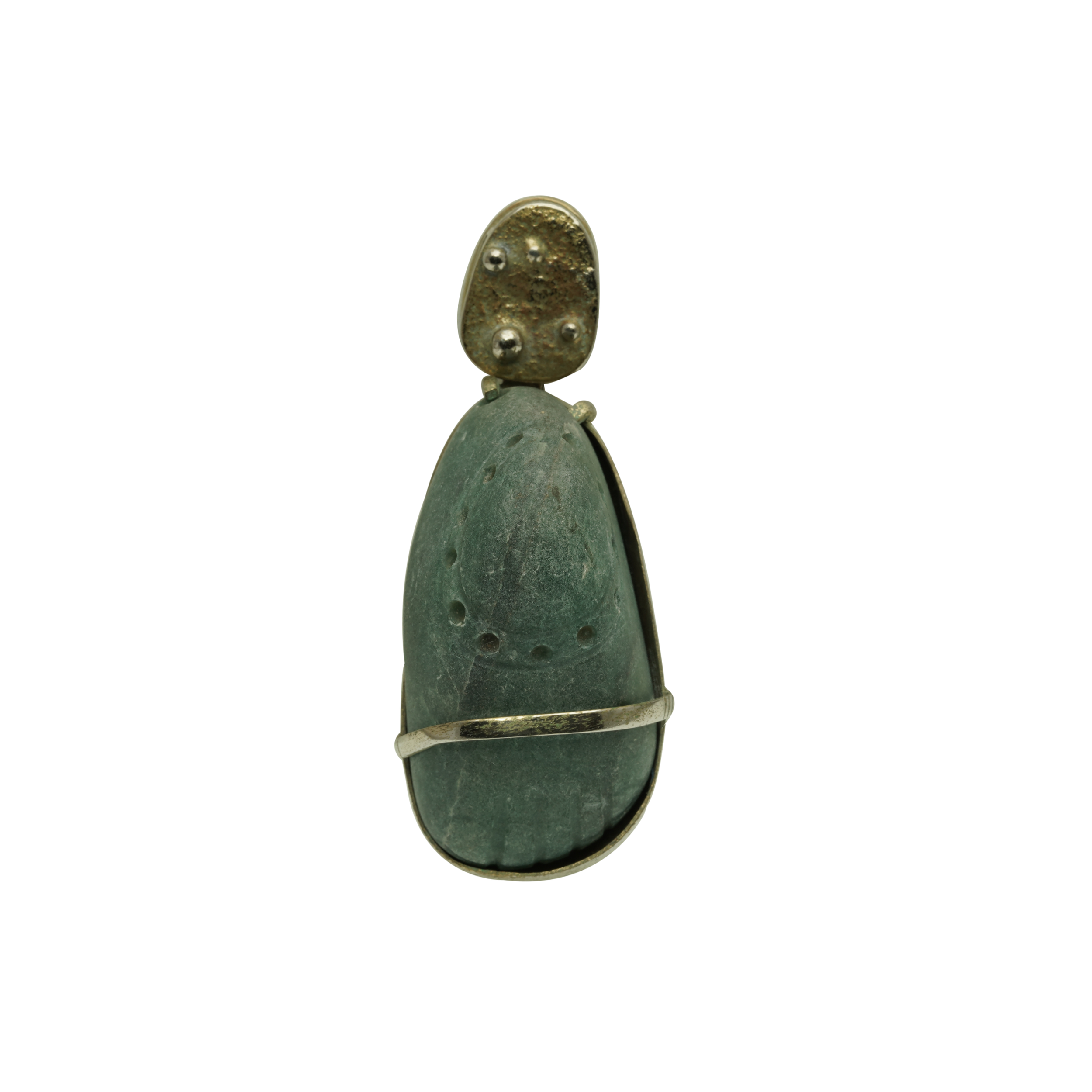
Maya Pendant with Carved Jade Head and Metal Fitting
Culture: Maya Civilization
Date: c. 600–900 CE (Late Classic Period)
Materials: Carved jadeite, metal (gilded metal)
Dimensions: Approx. 10x4 cms
Pendant consisting of a smoothly carved jadeite head form, secured within a simple metal mount. The jade carving is oval in shape with subtle facial detailing, including drilled depressions that outline the eyes and mouth, a minimalist yet characteristic feature of Maya lapidary work. The natural green tones of the jade exhibit slight mottling, adding depth to its surface.
At the top, a small metal fitting is attached, decorated with raised circular studs, possibly representing symbolic ornaments or celestial elements. The overall simplicity of the mounting serves to highlight the jade carving as the focal point of the piece.
Provenance:
Probably from the Maya lowlands, in present-day Guatemala, Belize, or southern Mexico.
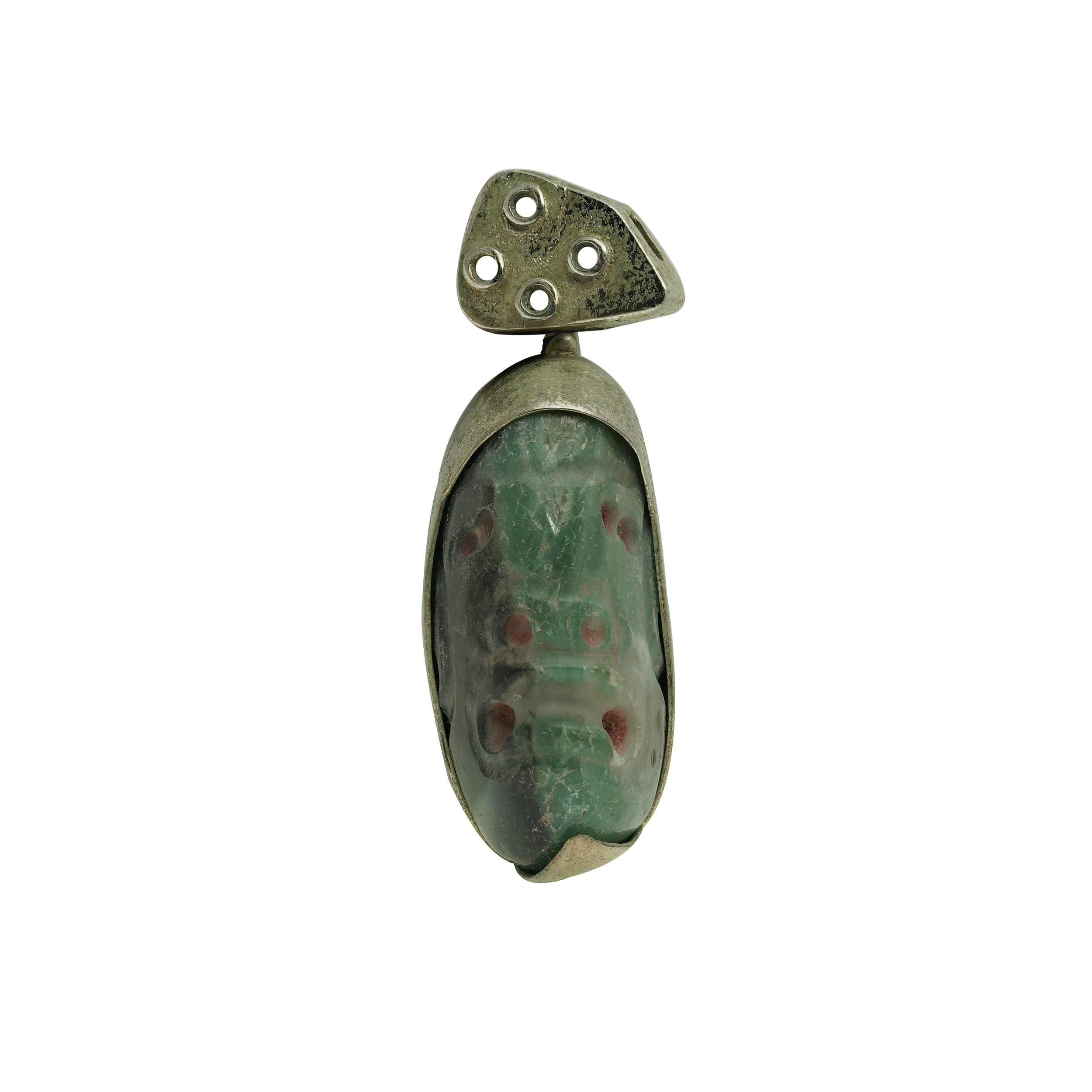
Maya Pendant with Carved Jade Head and Metal Fitting
Culture: Maya Civilization
Date: c. 600–900 CE (Late Classic Period)
Materials: Carved jadeite, metal (gilded metal)
Dimensions: Approx. 10x4 cms
Pendant consisting of a smoothly carved jadeite head form, secured within a simple metal mount. The jade carving is oval in shape with subtle facial detailing, including drilled depressions that outline the eyes and mouth, a minimalist yet characteristic feature of Maya lapidary work. The natural green tones of the jade exhibit slight mottling, adding depth to its surface.
At the top, a small metal fitting is attached, decorated with raised circular studs, possibly representing symbolic ornaments or celestial elements. The overall simplicity of the mounting serves to highlight the jade carving as the focal point of the piece.
Provenance:
Probably from the Maya lowlands, in present-day Guatemala, Belize, or southern Mexico.

Maya Pendant with Carved Jade Figure and Glyph Ornament
Culture: Maya Civilization
Date: c. 600–900 CE (Late Classic Period)
Materials: Carved jadeite, metal (gilded metal)
Dimensions: Approx. 10.0x4 cms
Pendant featuring an elongated jadeite carving of a stylized human figure, set in a simple metal frame. The figure displays a prominent face with deeply incised features, a squared torso, and faintly carved details on the body, possibly representing clothing or glyphic symbols. The surface shows signs of age and wear, indicating both use and antiquity.
At the top of the pendant, a separate metal fitting depicts a small glyph-like ornament with triangular and stepped motifs, possibly referencing mountains, temples, or symbolic elements from Maya writing. The form and iconography suggest a blend of portraiture and hieroglyphic art, a hallmark of elite Maya adornment.
Provenance:
Likely from the Maya lowlands, in present-day Guatemala, Belize, or southern Mexico.
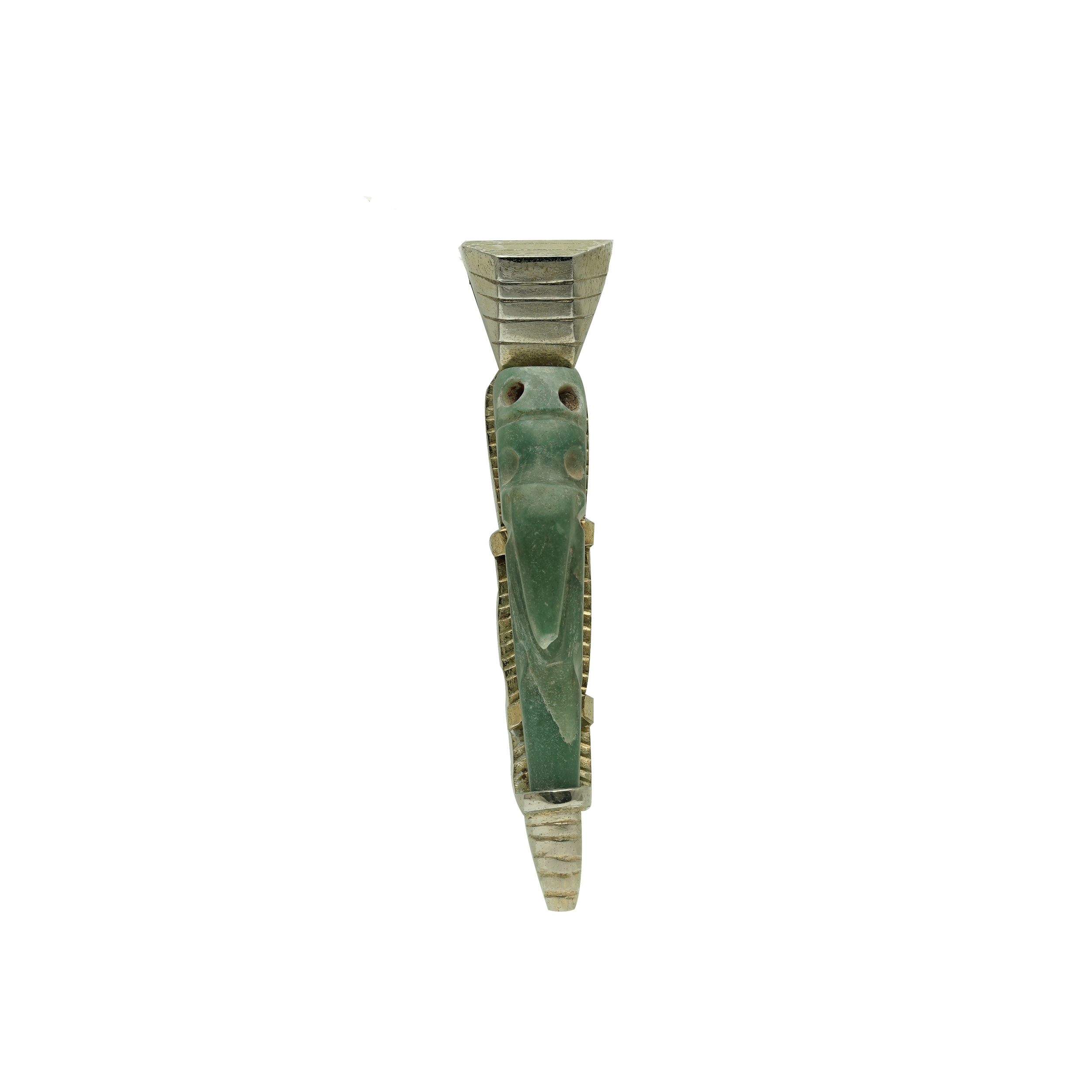
Maya Pendant with Carved Jade Avian Figure
Culture: Maya Civilization
Date: c. 600–900 CE (Late Classic Period)
Materials: Carved jadeite, metal (gilded metal)
Dimensions: Approx. 12x3 cm
Pendant showing a slender, elongated jadeite carving in the form of a stylized bird, likely a parrot or falcon, both important symbols in Maya iconography. The figure is defined by a streamlined body, incised wings, and drilled eyes, all rendered with a minimalist elegance typical of Late Classic lapidary art.
The jade carving is secured in a metal mount that follows the contours of the figure, with a textured edging suggesting feathers or scales. At the top, the suspension element takes the form of a stepped pyramid motif, reinforcing the pendant’s connection to Maya architecture and ceremonial symbolism.
Function:
Bird imagery in Maya art often symbolized the sky, divine messengers, and rulers’ ability to communicate with the supernatural realm. Such a pendant would have been worn as a marker of high status and spiritual authority, possibly during rituals associated with the heavens or celestial deities.
Provenance:
Likely from the southern Maya lowlands, in present-day Guatemala or Chiapas, Mexico.
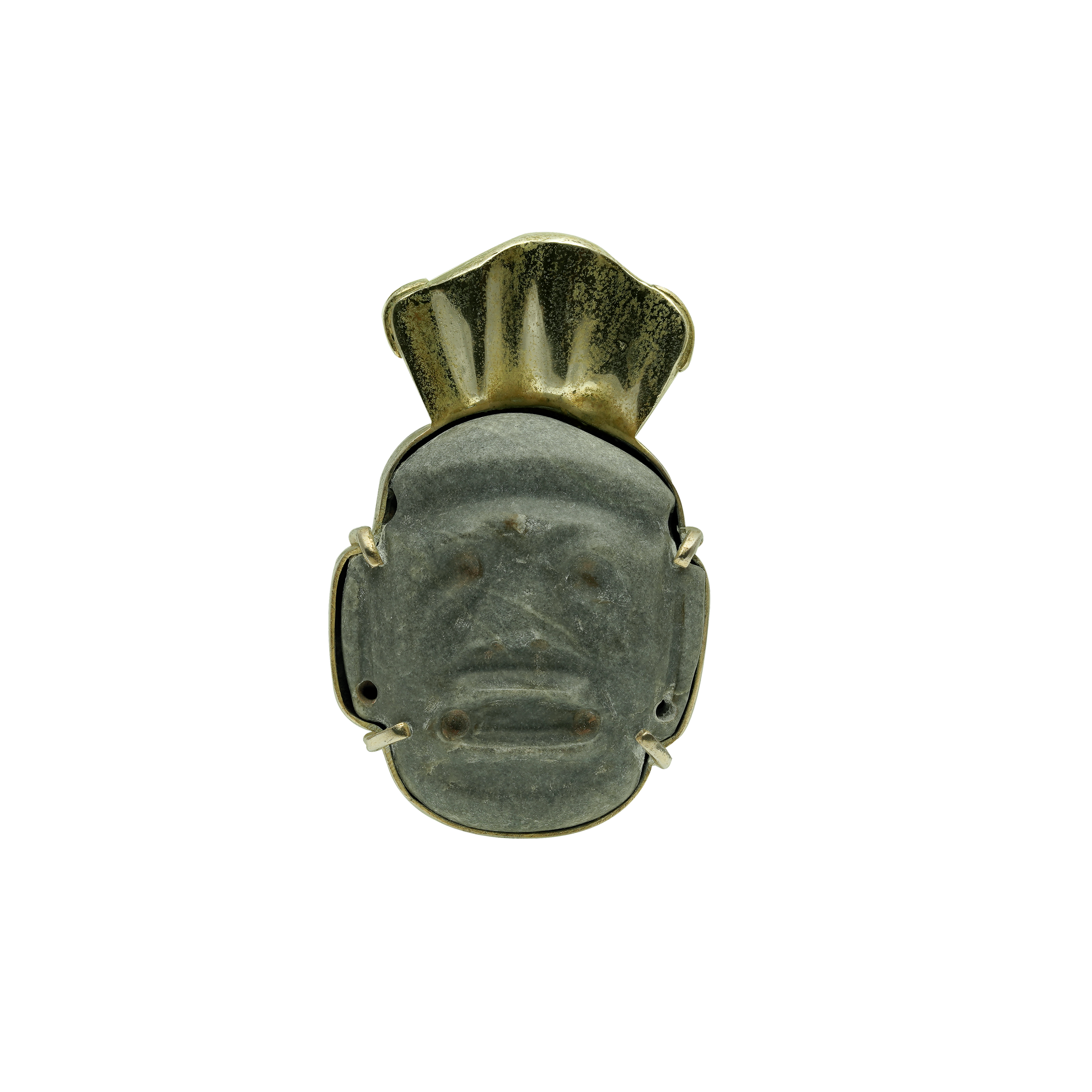
Maya Pendant with Jade Face and Metal Headdress
Culture: Maya Civilization
Date: c. 600–900 CE (Late Classic Period)
Materials: Carved jadeite, metal (Gilded metal)
Dimensions: Approx. 10.5x6.0 cm
Pendant featuring a carved jadeite face, framed in a simple metal mount and topped with a stylized metal headdress. The facial carving is minimalist yet expressive, with deeply set eyes, a broad nose, and prominent lips, characteristic of Maya jade portraiture. Small perforations in the jade suggest it may once have been part of a larger ornament or mask before being set as a pendant.
The headdress element, rendered in metal, likely represents a stylized feathered or cloth adornment, a common indicator of high status in Maya culture. Its placement above the jade face reinforces the imagery of rulership and ceremonial dress.
Provenance:
Likely originating from the Maya lowlands, in present-day Guatemala, Mexico, or Belize.
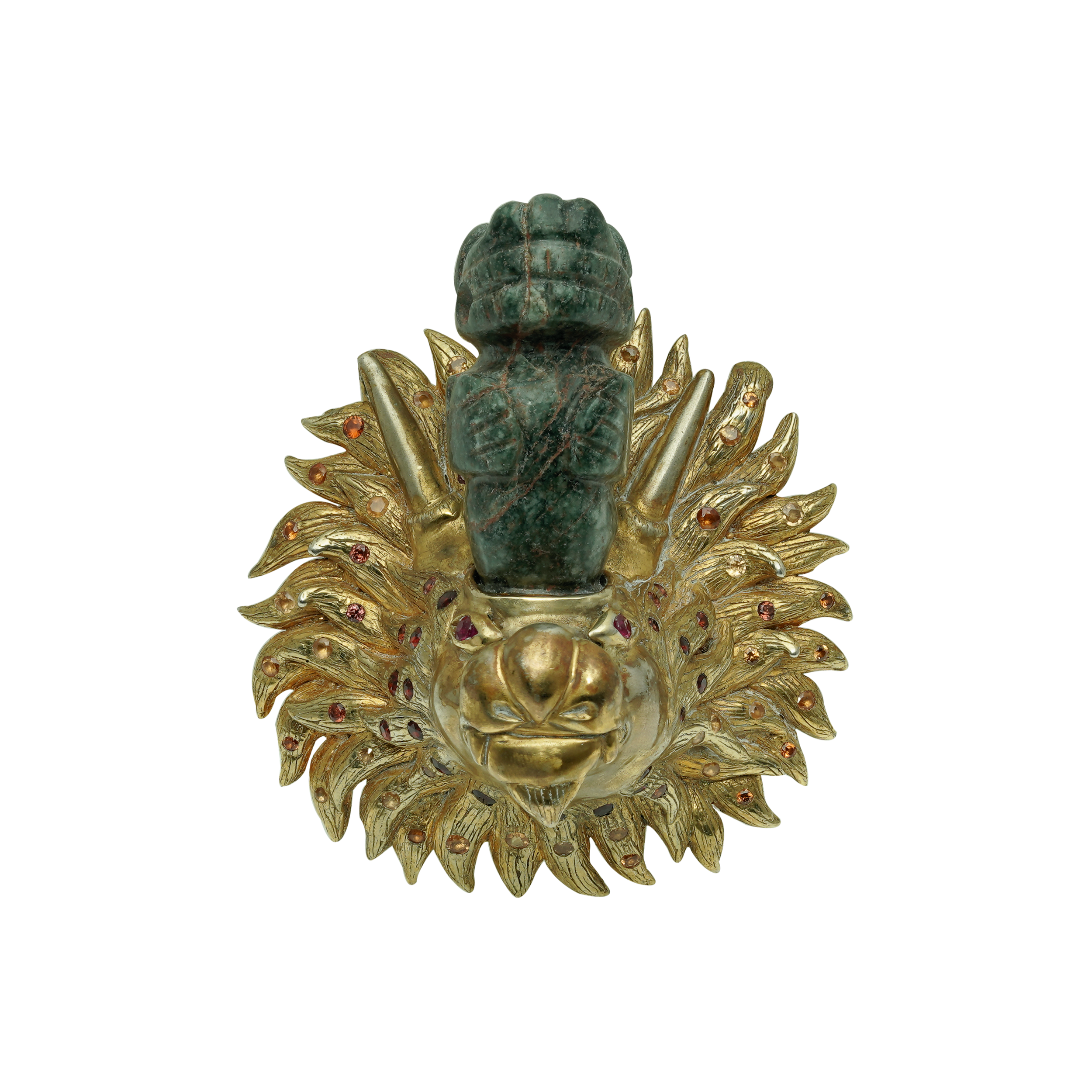
Object Title: Maya Pendant with Jade Figurine and Gilded Zoomorphic Head
Culture: Maya Civilization
Date: c. 600–900 CE (Late Classic Period)
Materials: Carved jadeite, gilded metal, inset red gemstones (likely garnet or spinel)
Dimensions: Approx. 8.5×6.0cm
Pendant combining a carved jadeite figure with an ornate gilded metal fitting in the form of a animal head, possibly representing a jaguar— powerful symbol in Maya art. The jade figure, rendered in a upright posture, is perforated for suspension and likely depicts a deity or spirit being.
The gold-colored metal mount is richly detailed, with deeply incised feather or mane textures and set with numerous small red gemstones, giving the piece a striking and luxurious appearance. The eye is accented with a larger stone, lending a lifelike intensity to the zoomorphic head.
Provenance:
Likely from the Maya lowlands, present-day Guatemala or southern Mexico.
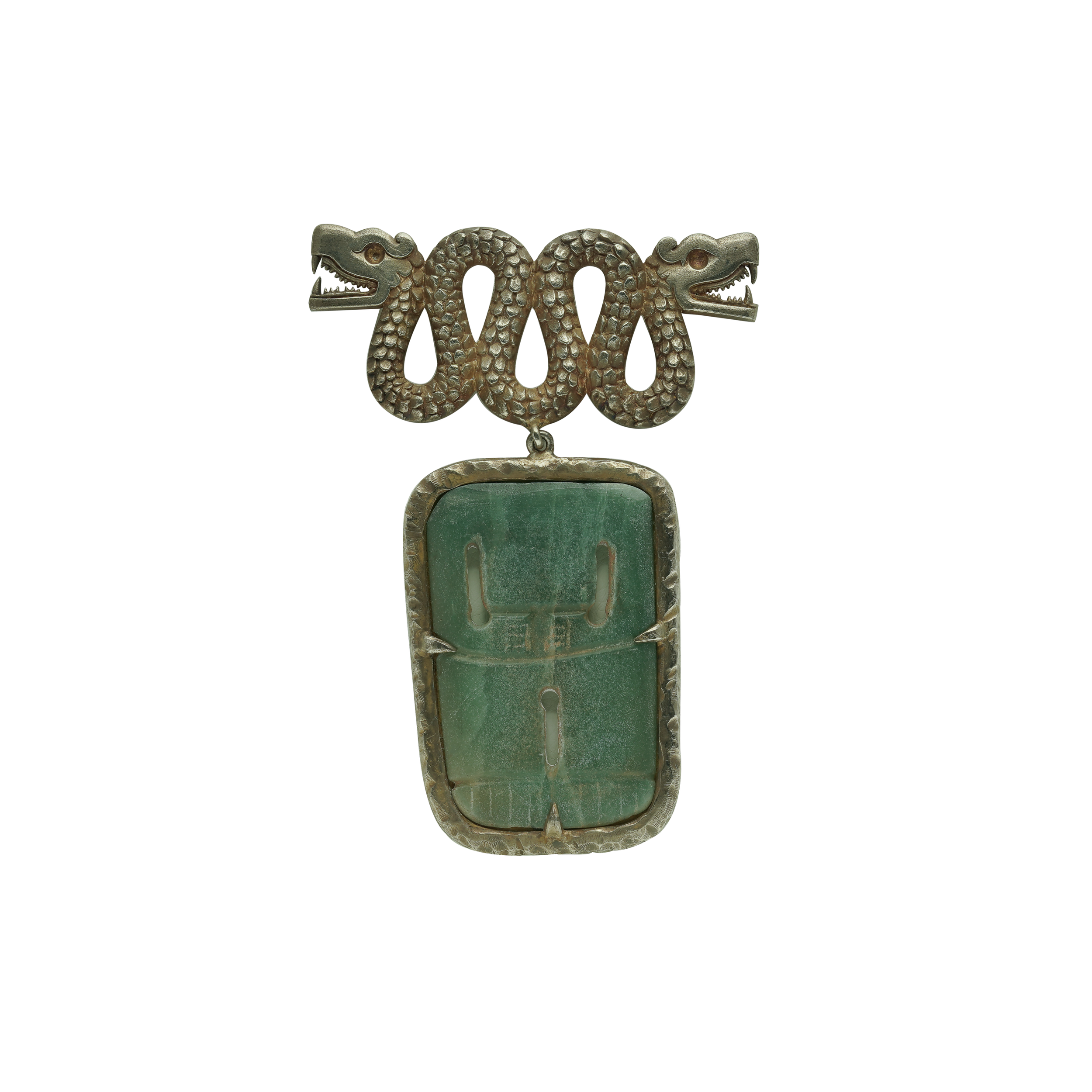
Maya Pendant with Double-Headed Serpent and Jade Plaque
Culture: Maya Civilization
Date: c. 600–900 CE (Late Classic Period)
Materials: Jade, metal (golden plated brass)
Dimensions: 11.0×8.0
Pendant featuring a rectangular carved jadeite plaque set in a metal frame and topped by a double-headed serpent. The serpent is shown in a looping pattern with open jaws, a common Maya symbol of power, transformation, and connection to the spirit world.
The jade plaque is carved with abstract facial or glyph-like features. Its deep green color was highly prized by the Maya, representing life, fertility, and divine authority. The combination of jade and metal indicates that this was an object for someone of high rank, such as a ruler or priest.
Provenance:
Probably from the southern Maya lowlands, in present-day Guatemala or Mexico.
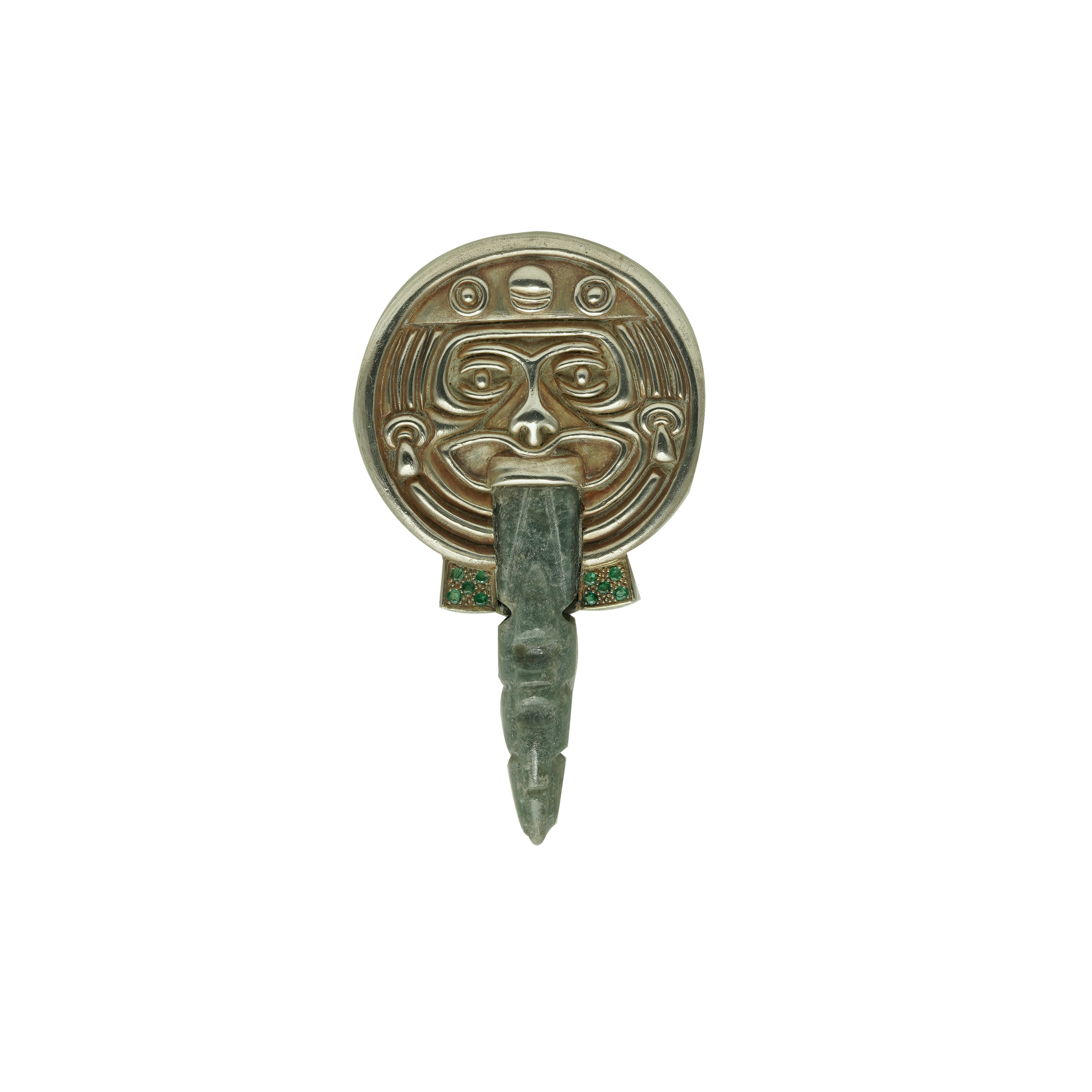
Culture: Maya
Date: c. 600–900 CE (Late Classic Period)
Material: Jadeite, Gold plated Brass, and greenstone inlays
Dimensions: approx. 8x4 cms
Carved pendant representing a stylized Mayan deity—likely a solar or celestial god—characterized by a circular face with prominent features, including deeply incised eyes, a broad nose, and pronounced cheek elements. The mouth appears open, extending downward into a jadeite tongue, which doubles as a symbolic blade or scepter. The tongue itself is carved in the likeness of a human face, suggesting themes of speech, sacrifice, or transformation.
The round disk may symbolize the sun or moon, aligning with Maya cosmological themes, while the elaborate inlays of greenstone (perhaps jade or turquoise) near the base reinforce the object's ritual significance and the elite status of its wearer. Jade, considered sacred by the Maya, was associated with life force, breath, and rulership.
Provenance:
Unknown; likely from the Petén region or southern lowlands of present-day Guatemala or Mexico.
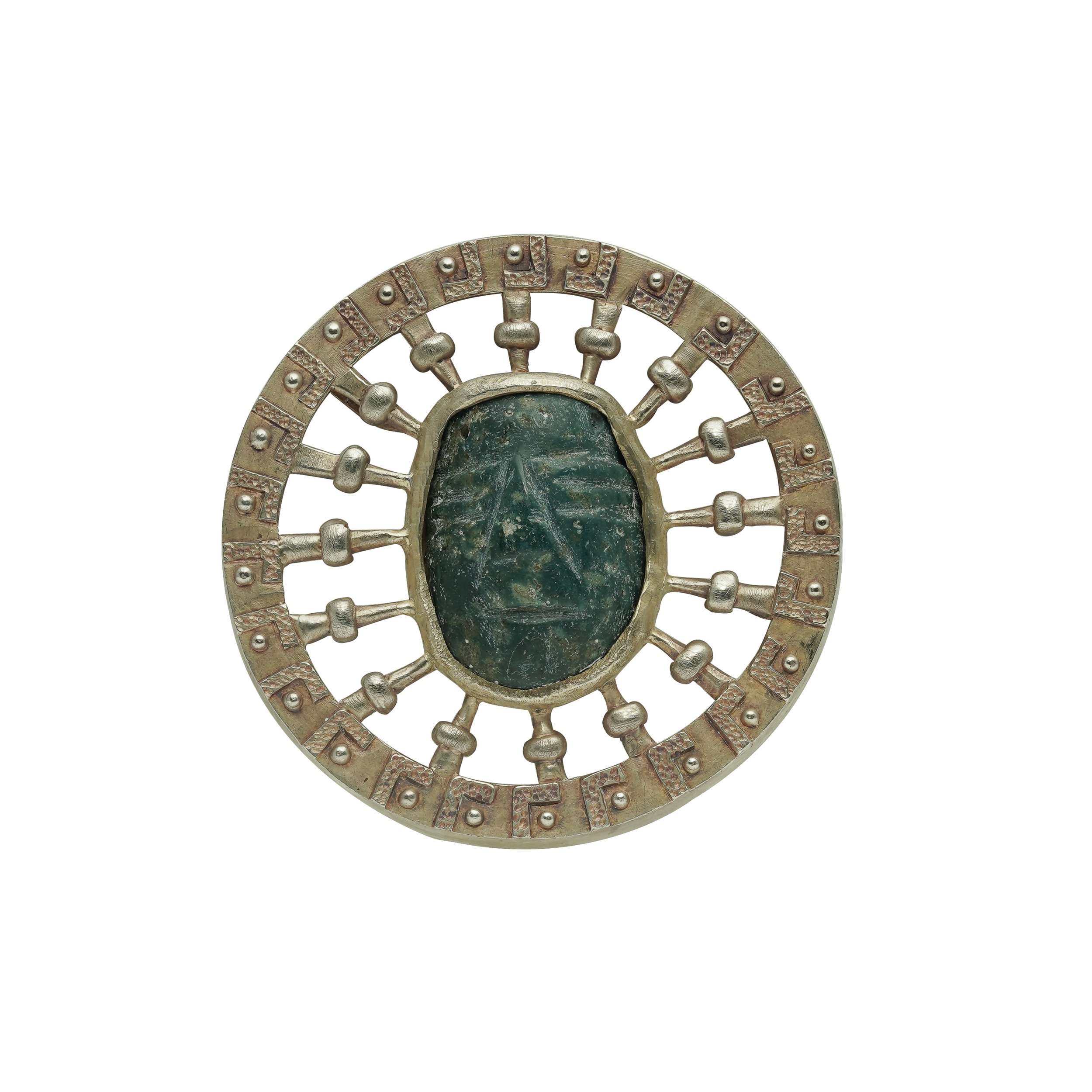
Culture: Maya Civilization
Date: c. 600–900 CE (Late Classic Period)
Materials: Jade, Gold plated brass
Dimensions: 7.5×7.5cms
Carved jadeite maskette depicting a stylized human face with abstracted geometric features, a hallmark of Late Classic Maya lapidary work. The green hue of the jadeite—valued by the Maya as a symbol of life force, fertility, and divine authority—provides a striking contrast to its encircling openwork frame of precious metal.
The radiating metal elements, evenly spaced around the perimeter, are composed of small rectangular segments adorned with raised patterns and connected to the central bezel by rod-like struts ending in spherical nodes. This radial arrangement may symbolize the sun’s rays, reinforcing associations with celestial power and rulership. The integration of jade and metal speaks to elite status, as both materials were restricted to high-ranking individuals within Maya society.
Provenance:
Origin uncertain; stylistically consistent with objects from the Maya lowlands (modern-day Guatemala, Mexico, Belize).
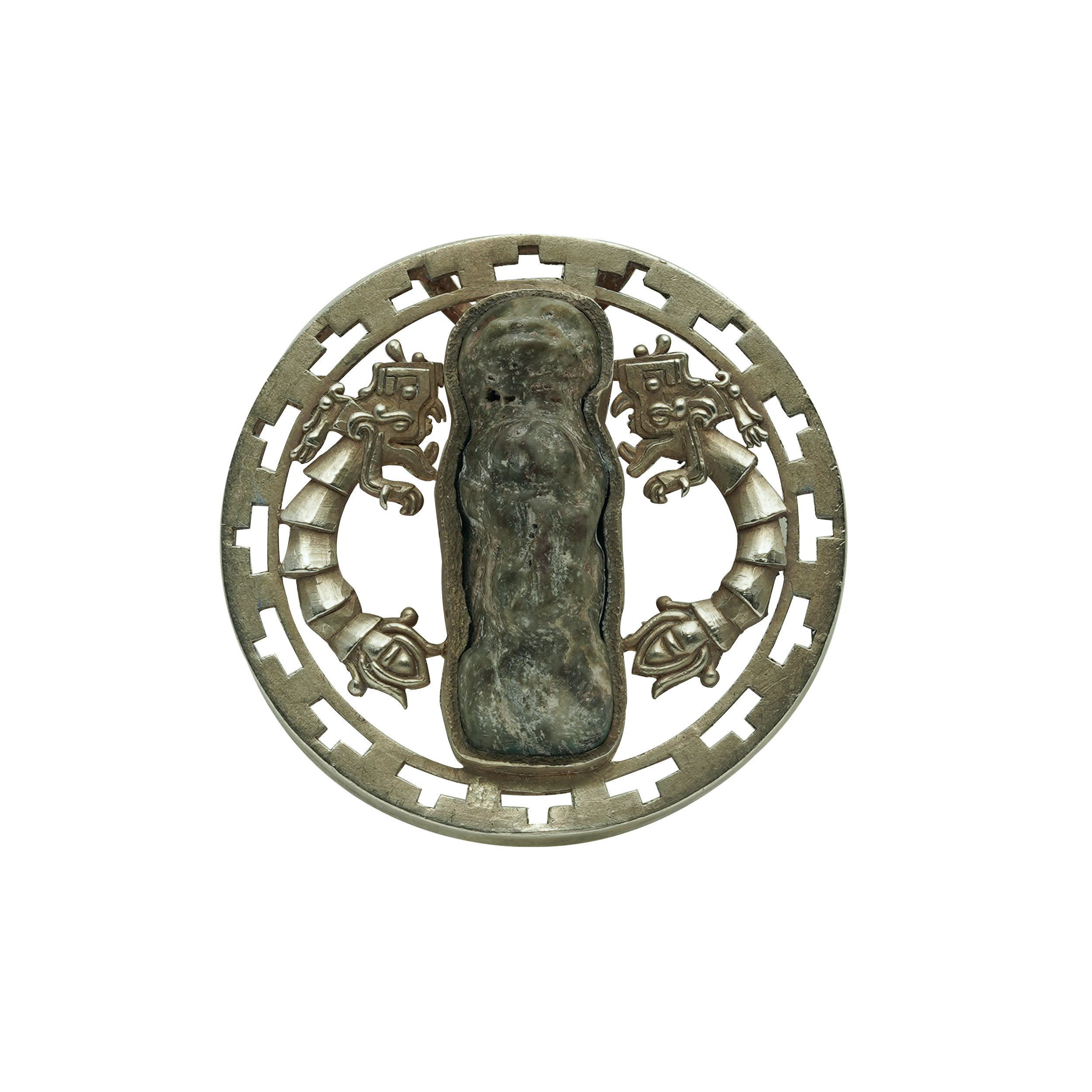
Mayan Pendant with Central Jade Figure and Dual Serpent Imagery
Culture: Maya
Period: Late Classic Period, c. 600–900 CE
Materials: Carved jadeite, cast or hammered metal (copper)
Dimensions: 5.5×5.5 cms
Mayan pendant featuring a central jadeite form, possibly representing a stylized human figure, deity, or sacred object. Flanking the figure are two mirror-opposed serpent forms, their bodies rendered with articulated joints and their heads adorned with geometric headdresses, evoking imagery of the Vision Serpent, a central figure in Maya mythology symbolizing divine communication and ritual bloodletting.
The circular border is decorated with a stepped-fret motif, referencing sacred Maya architectural forms and possibly the cosmic or calendrical order. The choice of jade—reserved for the elite and used in ceremonial contexts—alongside the high level of metal craftsmanship, suggests that this piece was likely worn by a high-ranking noble or priest.
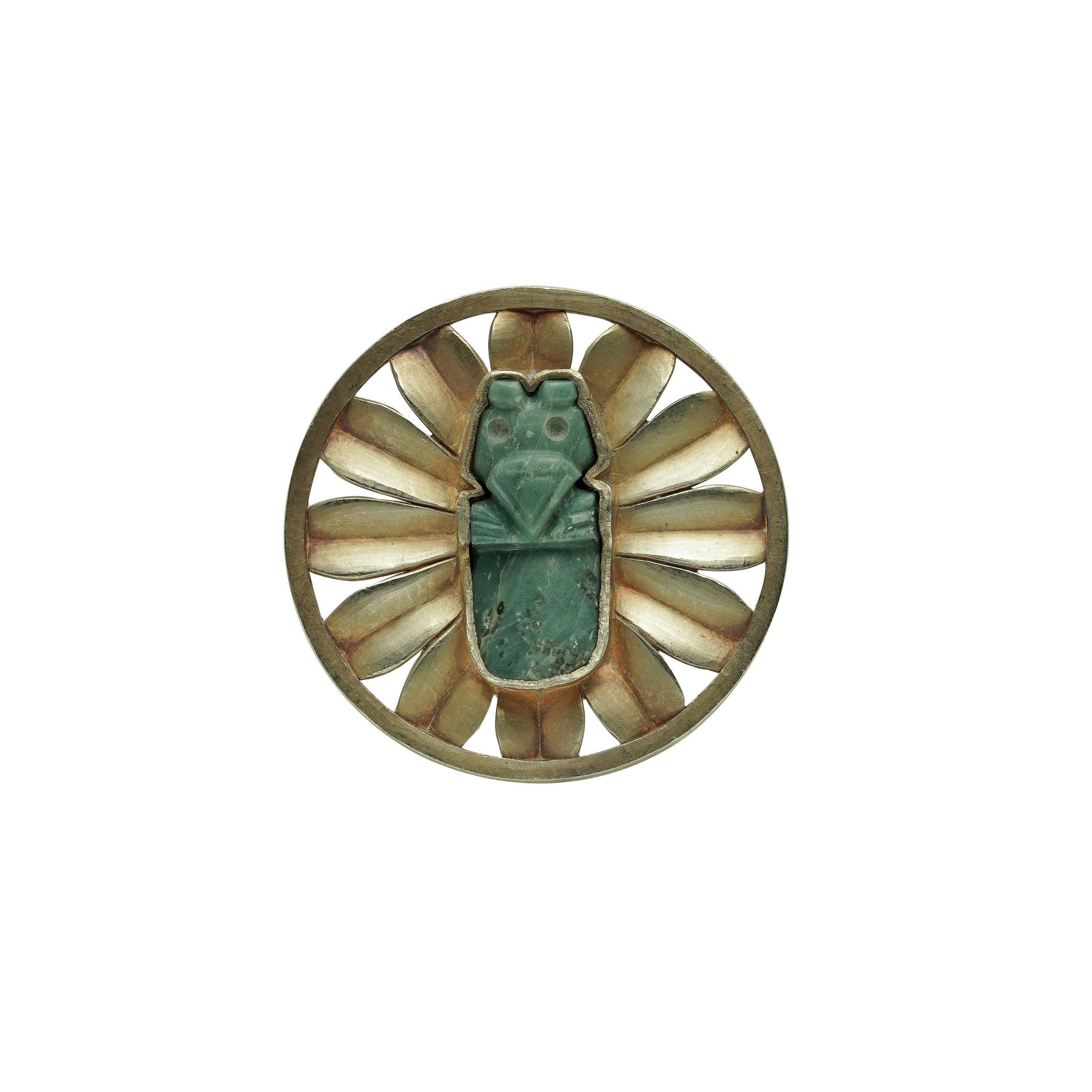
Mayan Pendant with Avian Motif and Radiant Frame
Culture: Maya
Date: c. 600–900 CE
Materials: Carved greenstone Jadeite, copper
Dimensions: 8.0×8.0 cms
Circular pendant showcasing a central carved greenstone figure, interpreted as a stylized bird— an owl or parrot—symbolizing wisdom, vision, or communication in Maya cosmology. The figure is framed by a circular motif resembling sun rays or feathers, crafted in metal to emphasize movement and sacred geometry. The integration of jade, a stone revered by the Maya for its life-giving and spiritual qualities, indicates that this piece likely served both ornamental and ceremonial functions. Its symmetrical design and expert craftsmanship reflect the sophisticated metallurgical and lapidary skills of the Classic Maya period.
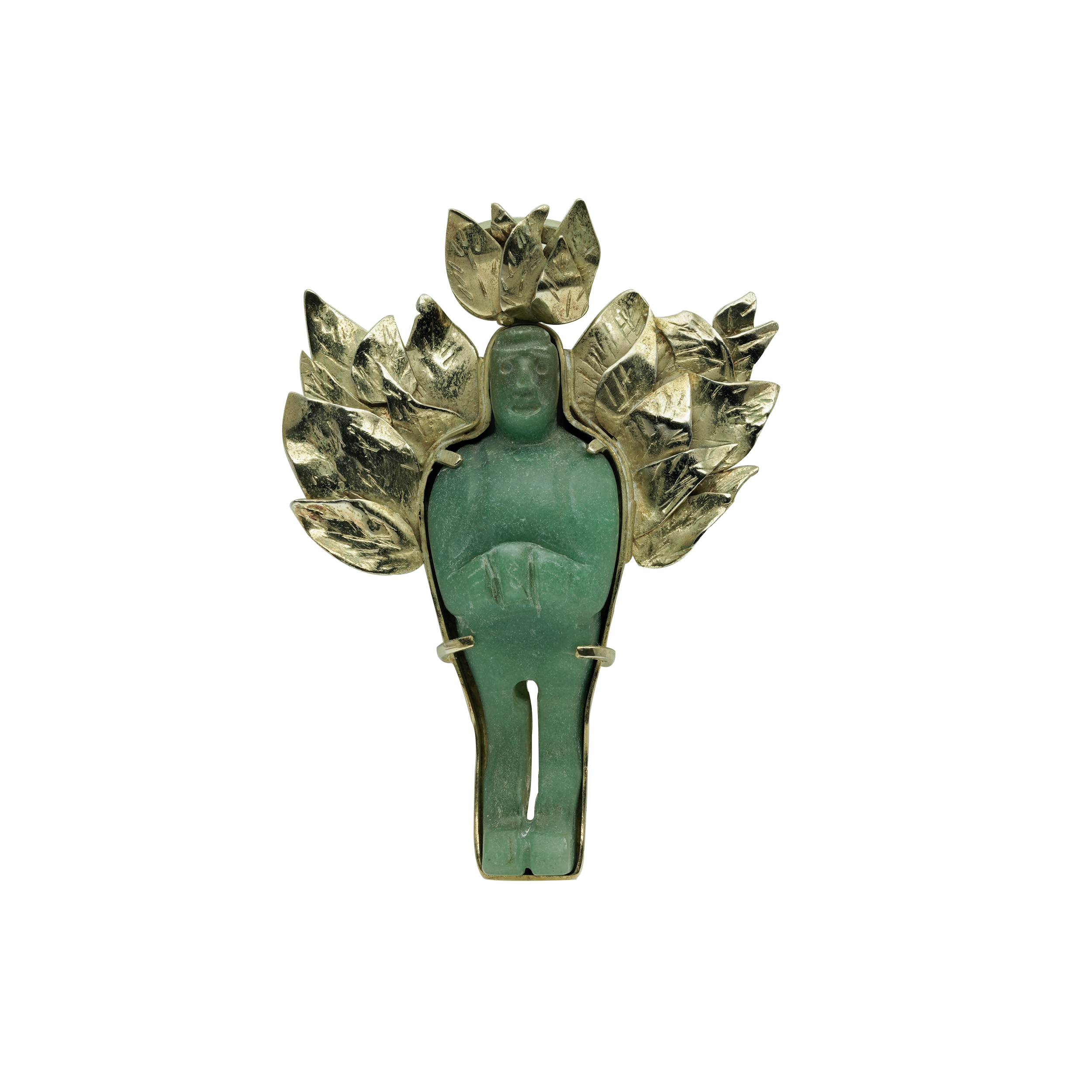
Mayan Pendant with Radiant Headdress
Culture: Maya
Date: c. 600–900 CE
Materials: Carved jadeite
Dimensions: appro 12x9 cms
Ceremonial pendant featuring a stylized human figure carved in greenstone, a material sacred to the Maya for its association with life, fertility, and the divine. The figure is adorned with an elaborate headdress composed of repoussé gold leaves radiating outward, evoking maize, flora, or spiritual energy. The combination of materials and form suggests a high-status object, likely worn by a noble or priest during ritual ceremonies. The balanced posture and frontal gaze reflect themes of cosmic order and ancestral reverence central to Maya beliefs.

Buddha in Meditation with Torana
Dimensions: 44 × 20 cm
Nepal, Kathmandu Valley
Bronze with green patina, c. 12th–15th century
Casted bronze Buddha sitting serenely in meditation (dhyana mudra), framed by an elaborately decorated torana (archway). The figure rests on a double lotus pedestal, symbolizing spiritual purity. The hands are held in the gesture of teaching (vitarka mudra), a sign of wisdom and the transmission of the Dharma.
Nepalese bronzes from the Kathmandu Valley are renowned for their exquisite craftsmanship and synthesis of Pala Indian influences with the distinctive artistry of the Newar sculptors. Such devotional icons were used in both monastic and household shrines, embodying the intimate devotion of Himalayan Buddhism.
The protective torana, with its intricate floral and divine motifs, reflects the Nepalese tradition of blending architecture and sculpture into a single sacred image. Bronze figures like this not only served as focus points for meditation but also traveled across the Himalayas, profoundly influencing Tibetan Buddhist art.
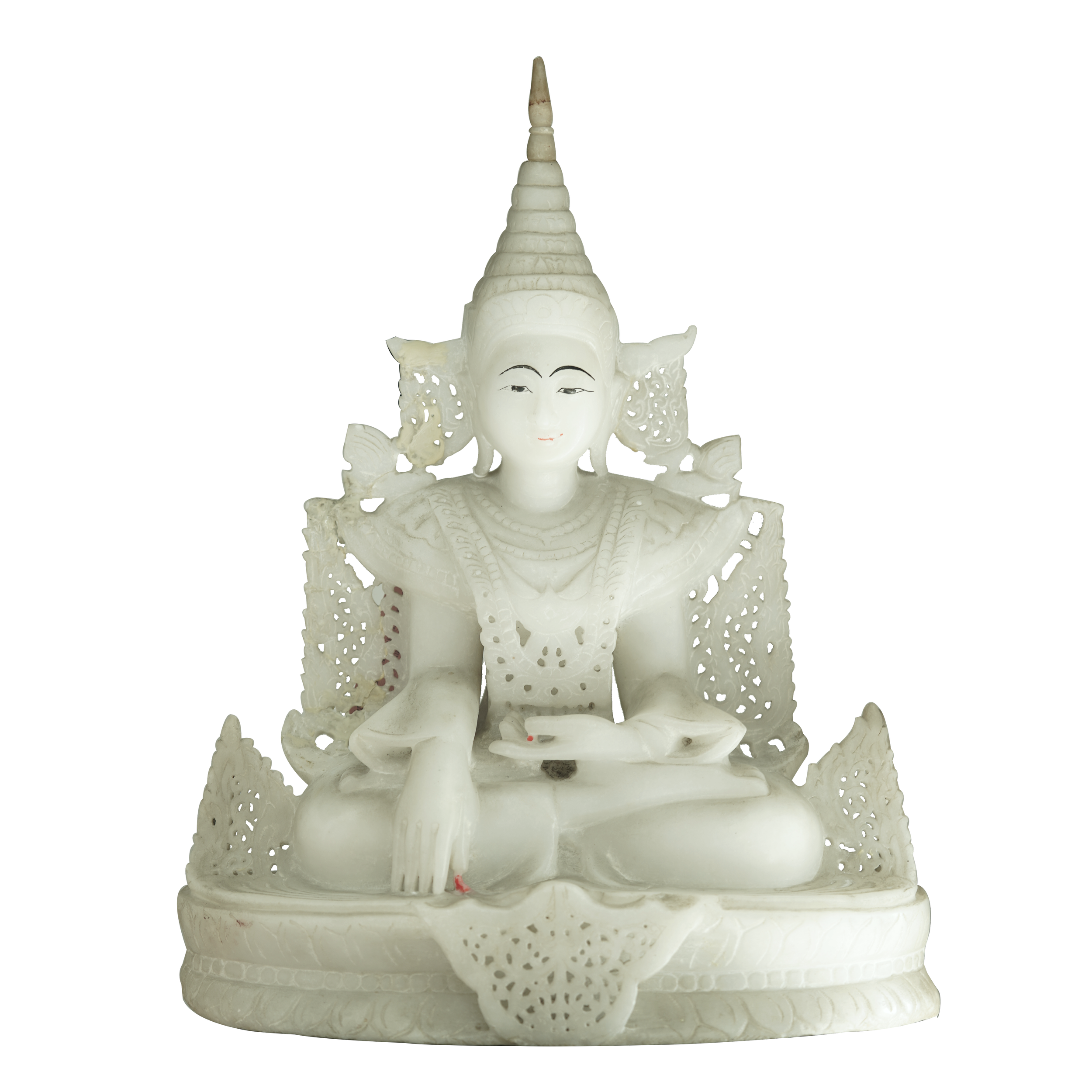
Alaska Crowned Buddha, Myanmar (Burma), 19th century
Dimensions: 40 × 50 cm
Marble, carved and polished
This finely carved marble figure depicts the Buddha in royal attire, seated in meditation with one hand resting gently in his lap. Characterized by the tall, pointed crown and elaborate openwork throne, the sculpture reflects a uniquely Burmese tradition in which the Buddha is portrayed as a universal monarch (Chakravartin). The luminous white marble, a material sourced from the quarries of Mandalay, enhances the sense of purity and serenity, while the refined details evoke the splendor of Burmese courtly art.
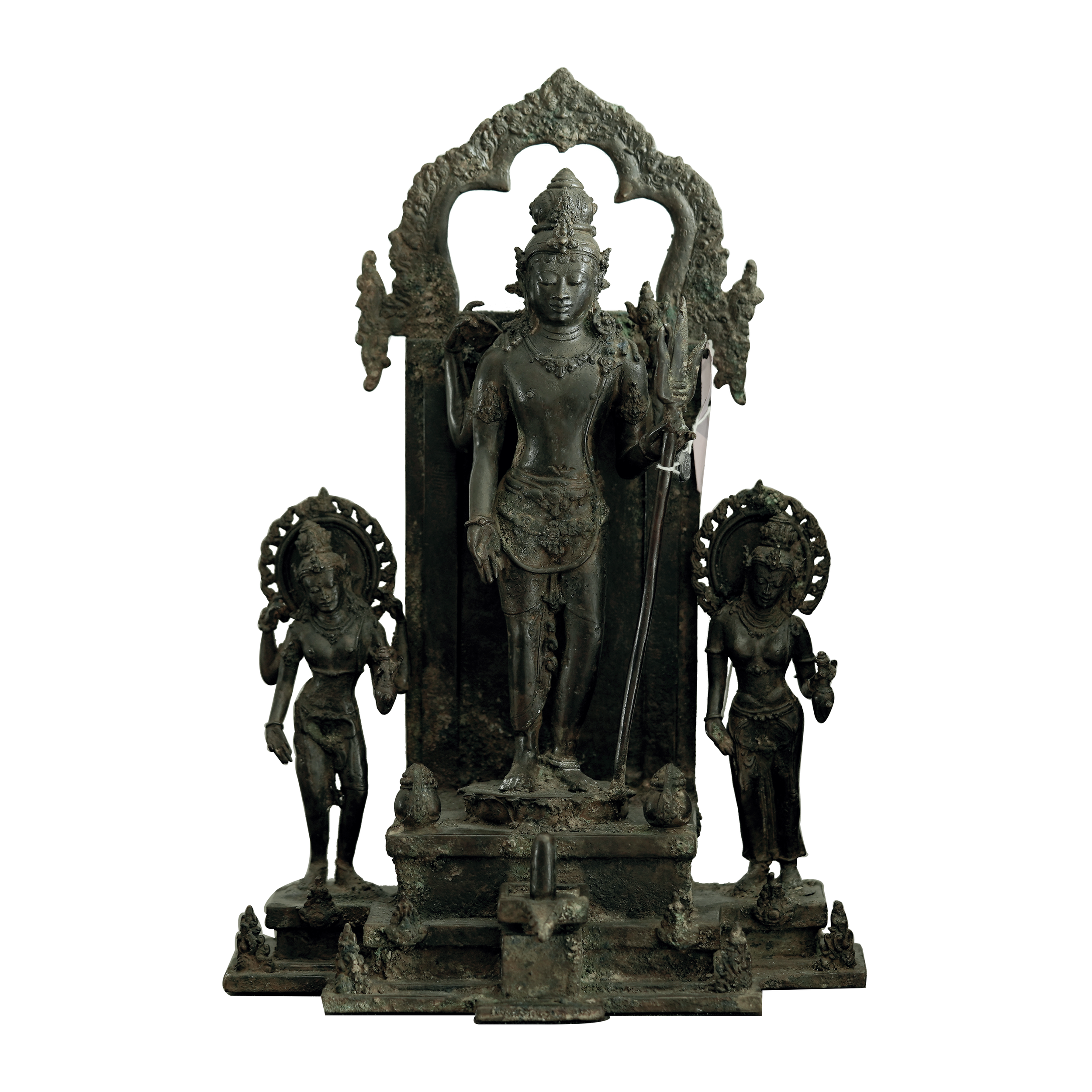
Shiva with Attendants
Dimensions: 35 × 25 cm
South India (Tamil Nadu), Chola Period, 10th–12th century
Bronze, lost-wax casting
This bronze ensemble represents the Hindu god Shiva, shown in a graceful standing posture beneath an elaborate arched aureole (prabhavali). Shiva’s powerful yet serene form is adorned with sacred ornaments, emphasizing his divine authority. At his sides stand two attendant figures, likely his consort Parvati and another divine companion, reinforcing his role within the cosmic order.
Cast using the sophisticated lost-wax technique perfected during the Chola dynasty, this work reflects the period’s mastery of balance, proportion, and spiritual expression. Such bronzes were not static temple icons: they were animated in ritual processions, where devotees encountered the deity directly in streets and courtyards.
While primarily associated with South Indian Shaiva traditions, similar compositions were also produced in Nepal, reflecting the deep interconnections of Hindu and Buddhist art across Asia.
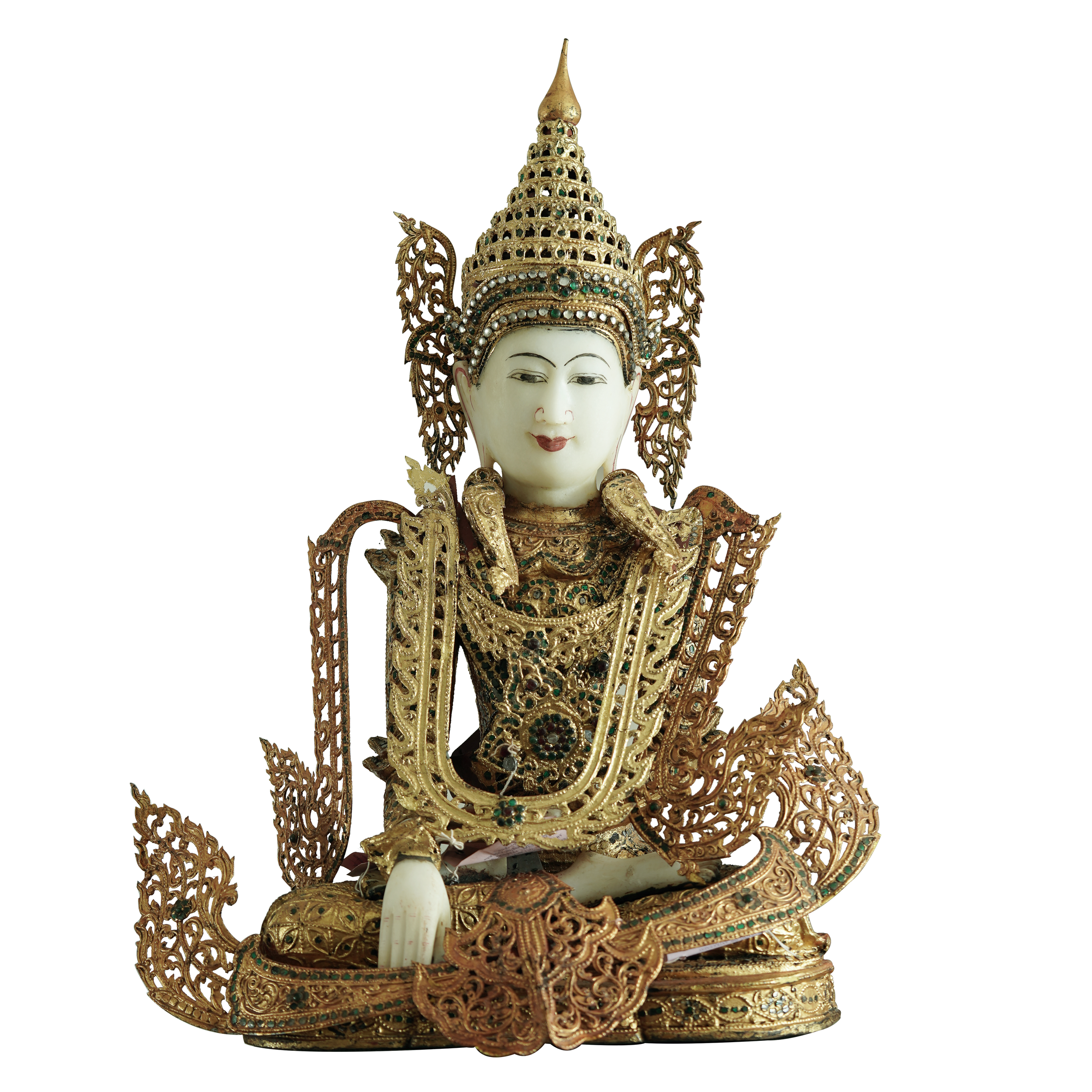
Seated Crowned Buddha
Myanmar (Burma), 19th–20th century
Dimensions: 78 × 56 cm
Gilded wood, alabaster, glass inlay, colored stones
This richly adorned image of the Buddha reflects the Burmese tradition of portraying the Enlightened One in royal attire. The serene white face, carved from alabaster, contrasts with the gilded wooden body, elaborately decorated with glass mosaics and gemstones. The tall pointed crown and intricate shoulder ornaments evoke regal splendor, presenting the Buddha not only as a spiritual teacher but also as a universal monarch (chakravartin).
Seated in the earth-touching gesture (bhūmisparśa mudrā), the figure recalls the moment of the Buddha’s enlightenment. Such images were placed in temples and monasteries, serving as both devotional objects and reminders of the fusion of kingship and sacred authority in Burmese Buddhist art.
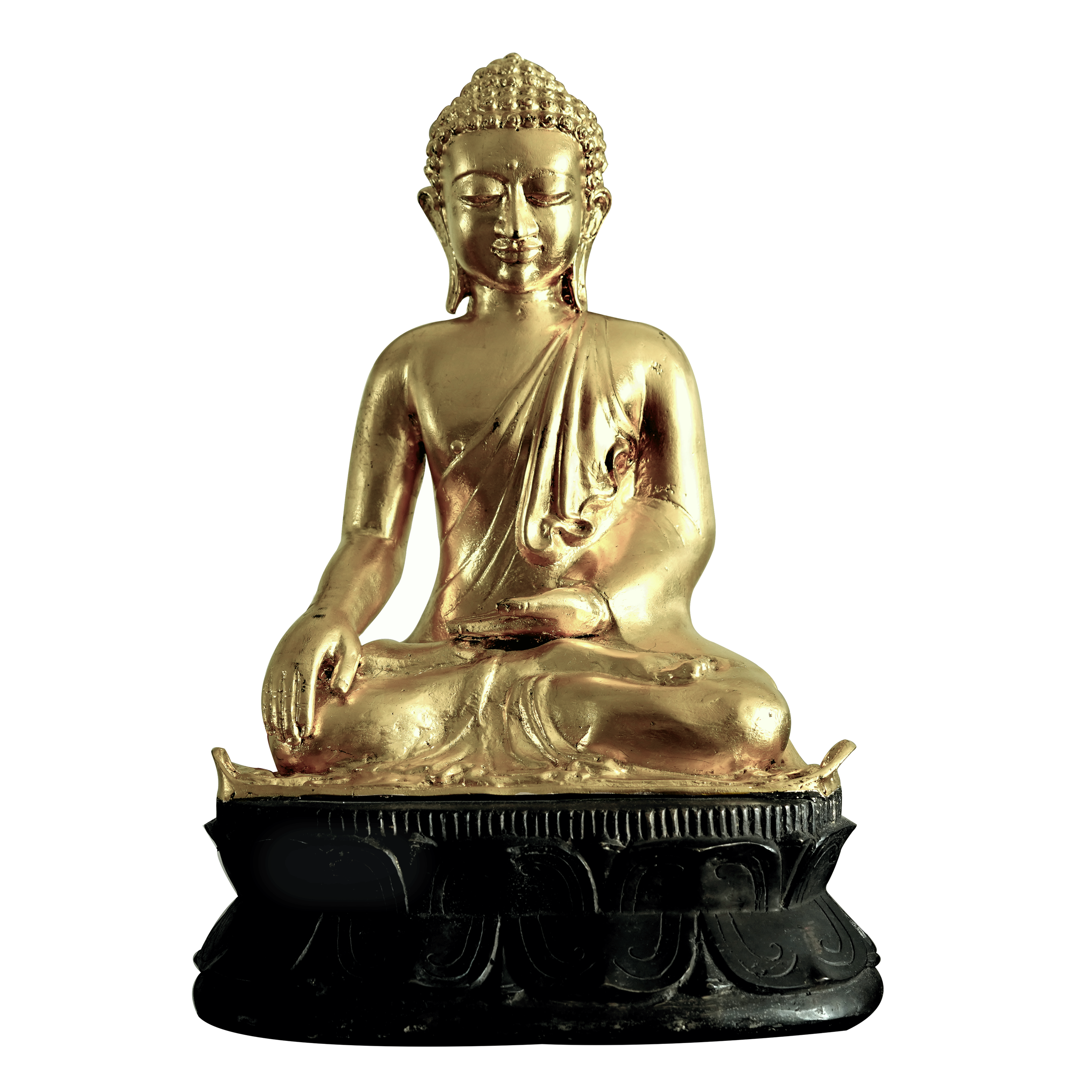
SIAMESE SEATED BUDDHA in Earth-Touching Gesture
Thailand (or Myanmar), 19th century
Gilded bronze (or wood), lacquered base
Dimensions: 48 × 33 cm
This gilded image of the Buddha depicts him seated in meditation on a lotus-petal base, the right hand extended to touch the earth in the bhūmisparśa mudrā—a gesture symbolizing the moment of enlightenment. The serene expression, finely curled hair, and polished surface embody the spiritual calm central to Buddhist devotion. Such statues are common in temple halls and private shrines across Southeast Asia, where they serve as objects of veneration and meditation.

Jade Figurine
Region uncertain, date unknown
Nephrite or jadeite
Size: 11 × 5 cms
This small figurine is carved from dark green jade with lighter inclusions. It depicts a stylized standing human figure with simplified facial features and prominent limbs. The carving is minimal yet deliberate, suggesting symbolic or ritual significance rather than purely decorative intent. Figurines of this type have been used in various cultures as amulets, offerings, or representations of ancestors or deities. The piece’s weathered surface and patina indicate age and prolonged handling, enhancing its tactile quality and historical resonance.