

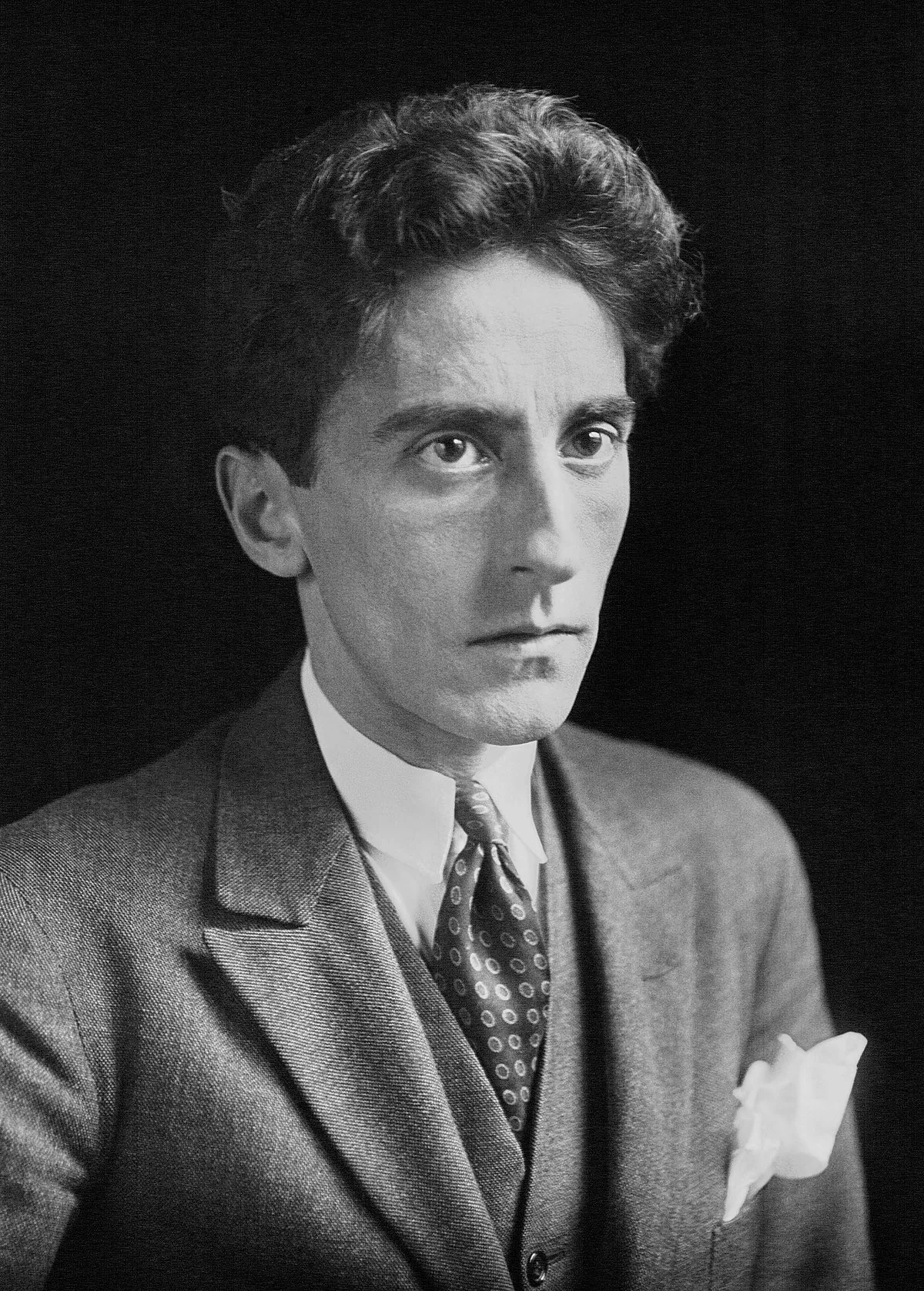
Jean COCTEAU
Jean Cocteau (1889–1963) was a French poet, novelist, playwright, filmmaker, and visual artist, celebrated for his avant-garde creativity and versatility. Moving fluidly between literature, theater, cinema, and the visual arts, he produced works that combined dreamlike imagery, symbolism, and emotional intensity. Known for films like La Belle et la Bête and Orpheus, as well as his poetic writings and drawings, Cocteau was a key figure in 20th-century French culture, blending classical influences with surreal, modern visions.
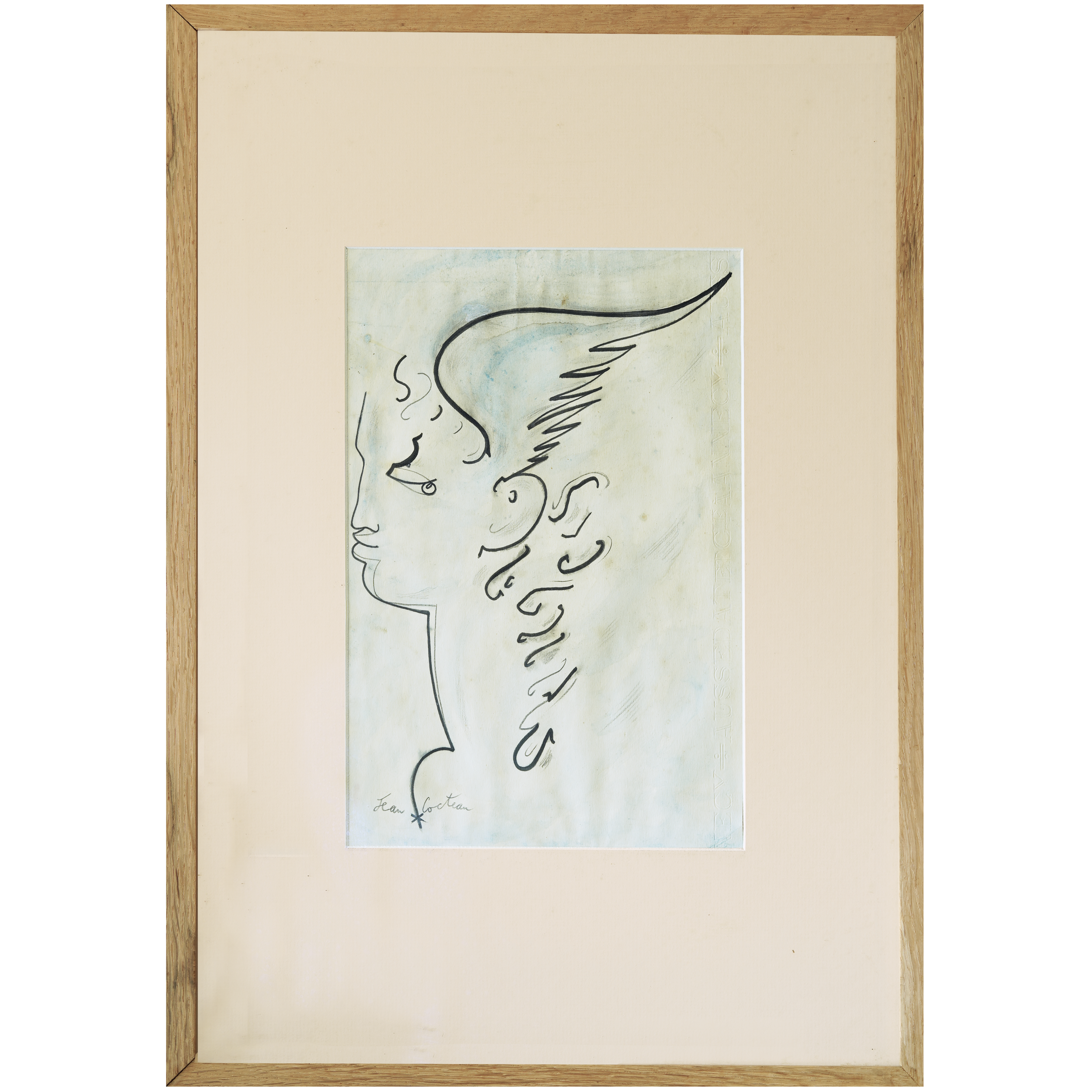
Original drawing by Jean COCTEAU depicting a winged profile.
Title:Winged Profile
Artist: Jean Cocteau (1889–1963)
Medium: Ink on paper
Dimensions: 32 x 21 cm
Description:
Original drawing by Jean Cocteau presenting a stylized human profile with wing-like extensions flowing from the head, evoking classical mythology and poetic symbolism. Rendered in fluid, elegant lines, the figure's face is both serene and enigmatic, a hallmark of Cocteau’s linear aesthetic. The composition is signed by the artist at the bottom.
Jean Cocteau, a French polymath and central figure of 20th-century avant-garde art, often blended poetry, myth, and surrealism in his work. This drawing exemplifies his ability to merge simplicity of line with psychological depth, evoking themes of transformation, flight, and inner vision.
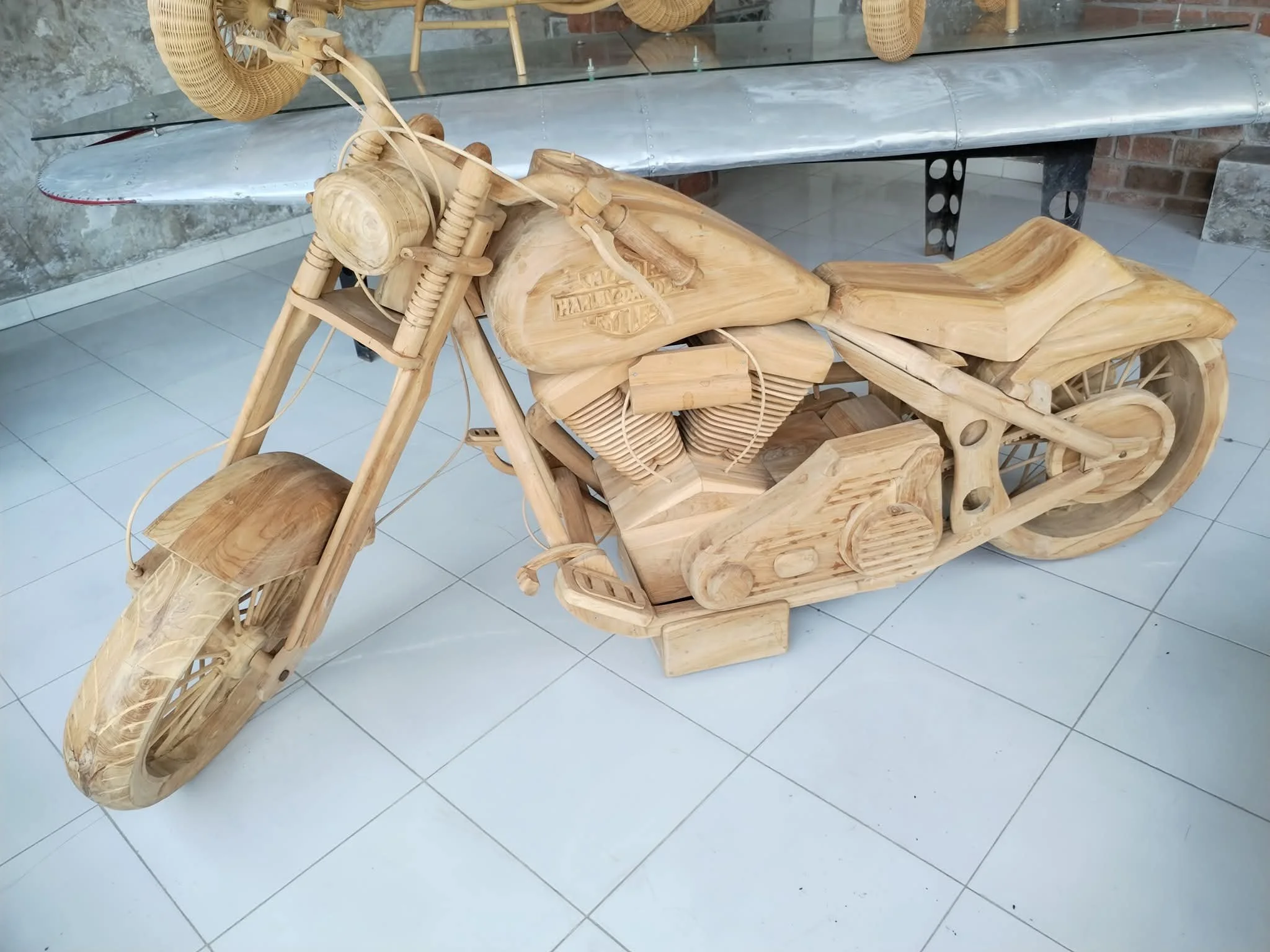
Artist: Unkonwn
Date: Unknown
Materials: Carved wood
Dimensions: 235 x 80 x 137
This wooden sculpture is inspired by a Harley-Davidson motorcycle. It is fully hand-carved from wood, with detailed parts such as the fuel tank, engine, wheels, and handlebars carefully shaped to reflect the original design.
The piece is not functional and cannot be ridden. Instead, it highlights craftsmanship and patience, transforming a powerful mechanical motorcycle into a quiet wooden object. The natural wood grain is left visible, giving the sculpture a warm and organic appearance.
This work celebrates the iconic Harley-Davidson form while presenting it as an object of art and display.
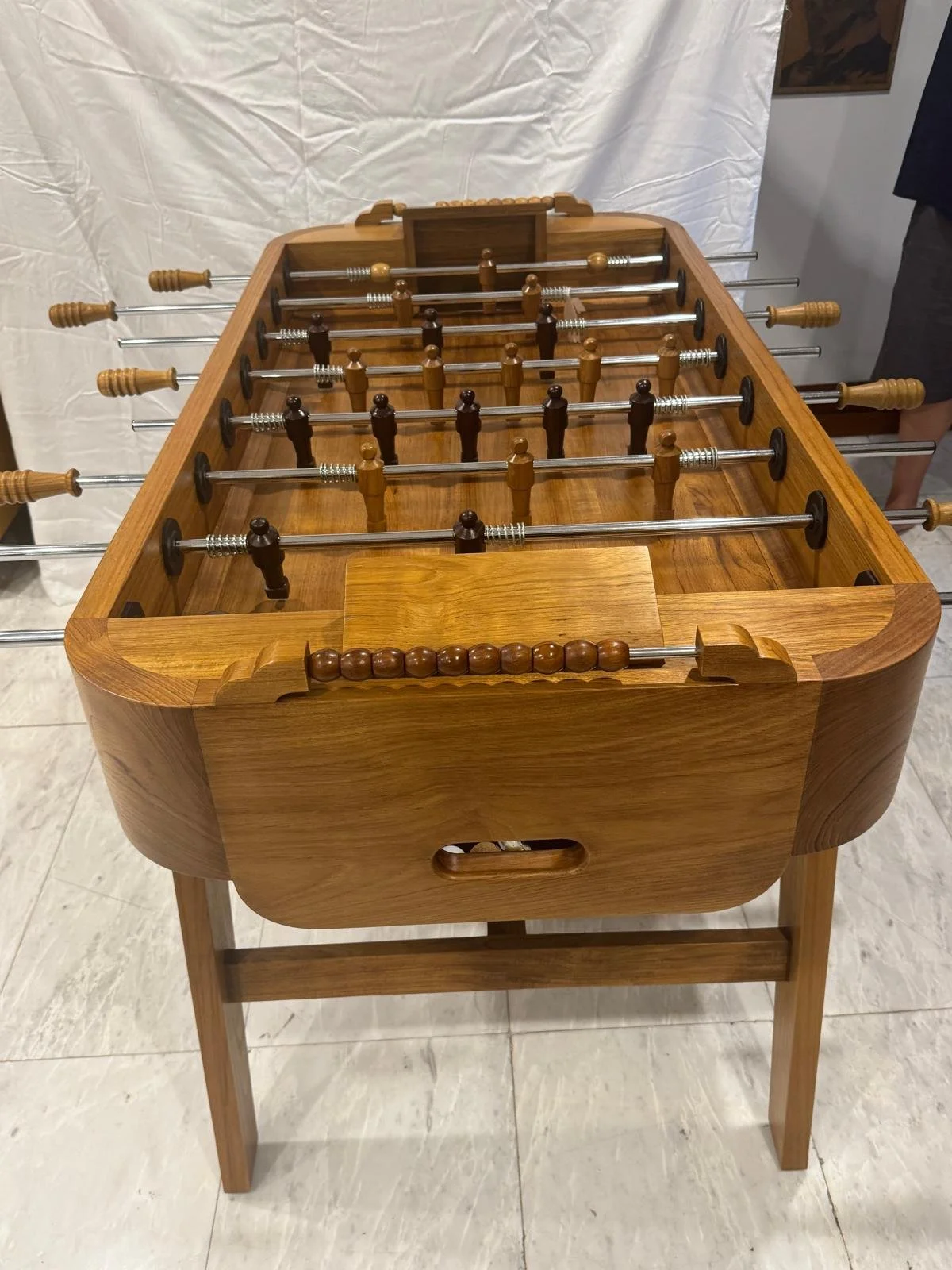
Artist: Unkonwn
Date: Unknown
Materials: Teak wood, metal rods, hand-turned wooden figures
Dimensions: 160 x 132 x 104
This babyfoot table is made from teak, a strong and beautiful wood often used for fine furniture. The natural color and wood grain are left visible, giving the object a warm and elegant appearance. Its rounded edges and solid shape show careful handcraft and attention to detail.
The wooden players are hand-shaped and placed on stainless steel rods. Their simple forms give the table a handmade character. Wooden score counters and carved handles add to the overall design.
This Babyfoot is both a game and a crafted object. It is made to be played, but also to be appreciated for its design and quality.
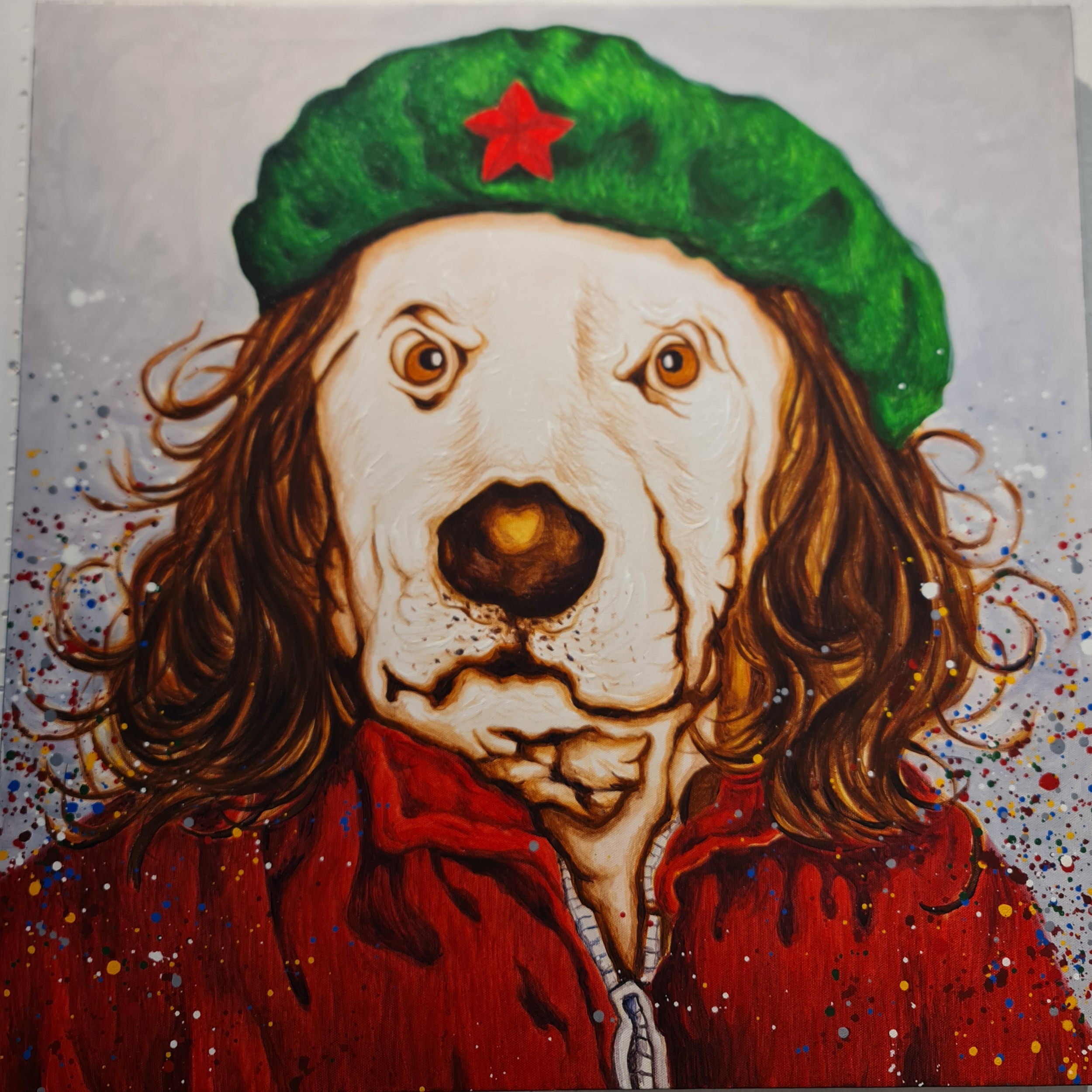
Artist: BOZE
Date: Unknown
Medium: Oil on canvas
Signature: Not Visible
Dimensions: 29 × 37 cm
This portrait depicts a dog rendered with human posture and expression, dressed in a green beret marked by a red star and a red jacket. The work playfully merges animal imagery with revolutionary iconography, creating a figure that is at once humorous, and quietly unsettling. Rich, warm tones define the face, while energetic splatters of paint animate the background, adding movement and contemporary edge.
Artistic Context:
BOZE is known for creating expressive, figurative paintings that blend humor, symbolism, and social commentary. Working primarily in oil on canvas, the artist often uses animals as stand-ins for human characters, allowing complex political or emotional ideas to be explored with irony and warmth. BOZE’s style combines strong draftsmanship with painterly textures and contemporary pop references, resulting in works that are immediately approachable yet layered in meaning.
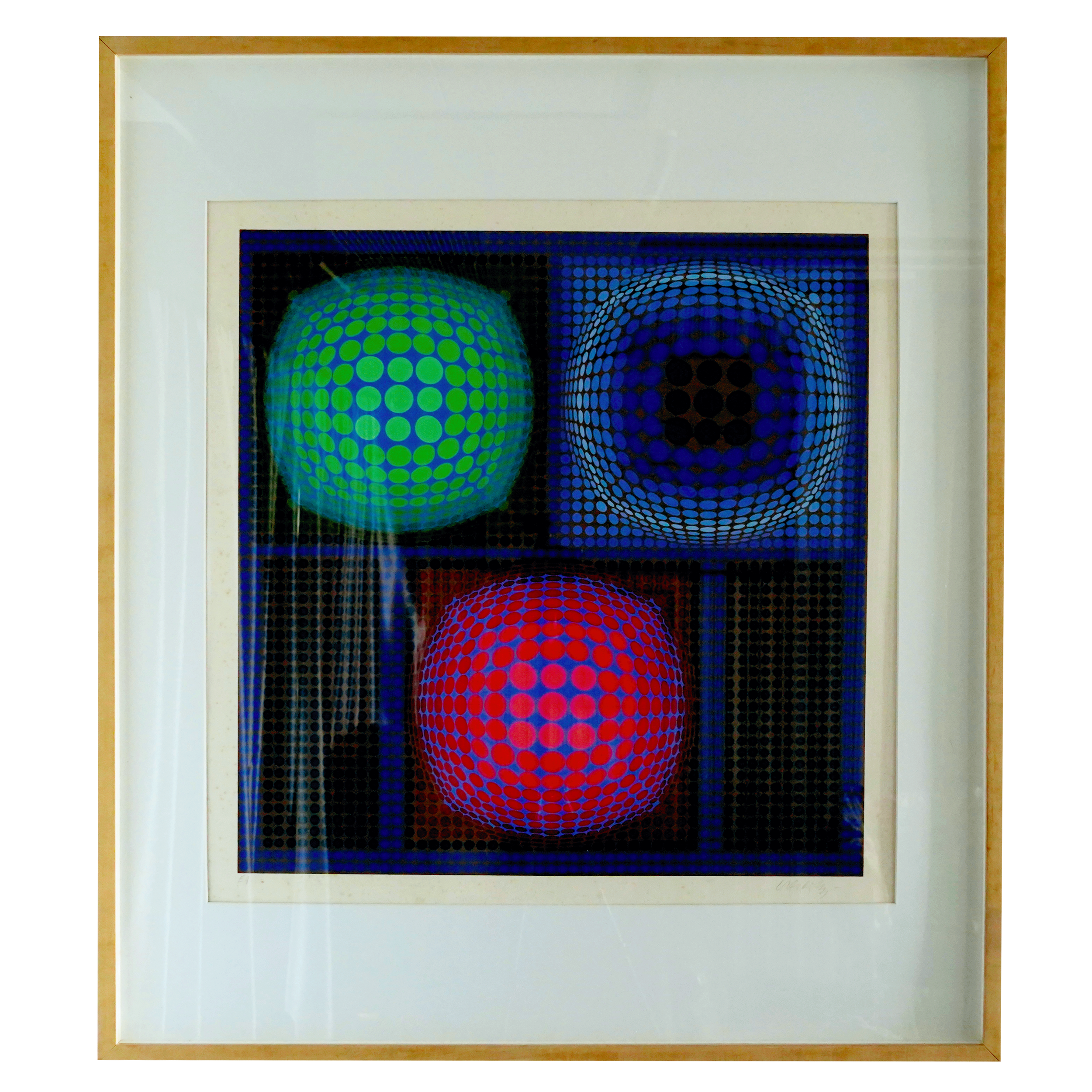
Victor Vasarely (1906–1997)
Untitled (Op Art Composition with Spheres)
Serigraph on paper
Dimensions: 112 × 90 cm
Victor Vasarely, widely regarded as the father of the Op Art movement, explored the optical possibilities of color, geometry, and perception. In this striking work, Vasarely constructs three spherical forms—rendered in vivid green, blue, and red—that appear to pulse and expand beyond the flat surface. Using systematic arrangements of dots and grids, the artist creates a dynamic illusion of three-dimensional depth, engaging the viewer’s eye in a constant play of movement.
This piece exemplifies Vasarely’s lifelong interest in science, mathematics, and visual psychology, reflecting his belief that art could be universal through its reliance on optical laws rather than cultural references. By destabilizing the viewer’s perception, the work transforms static form into kinetic experience, bridging art and technology in a way that defined the visual language of the 20th century.
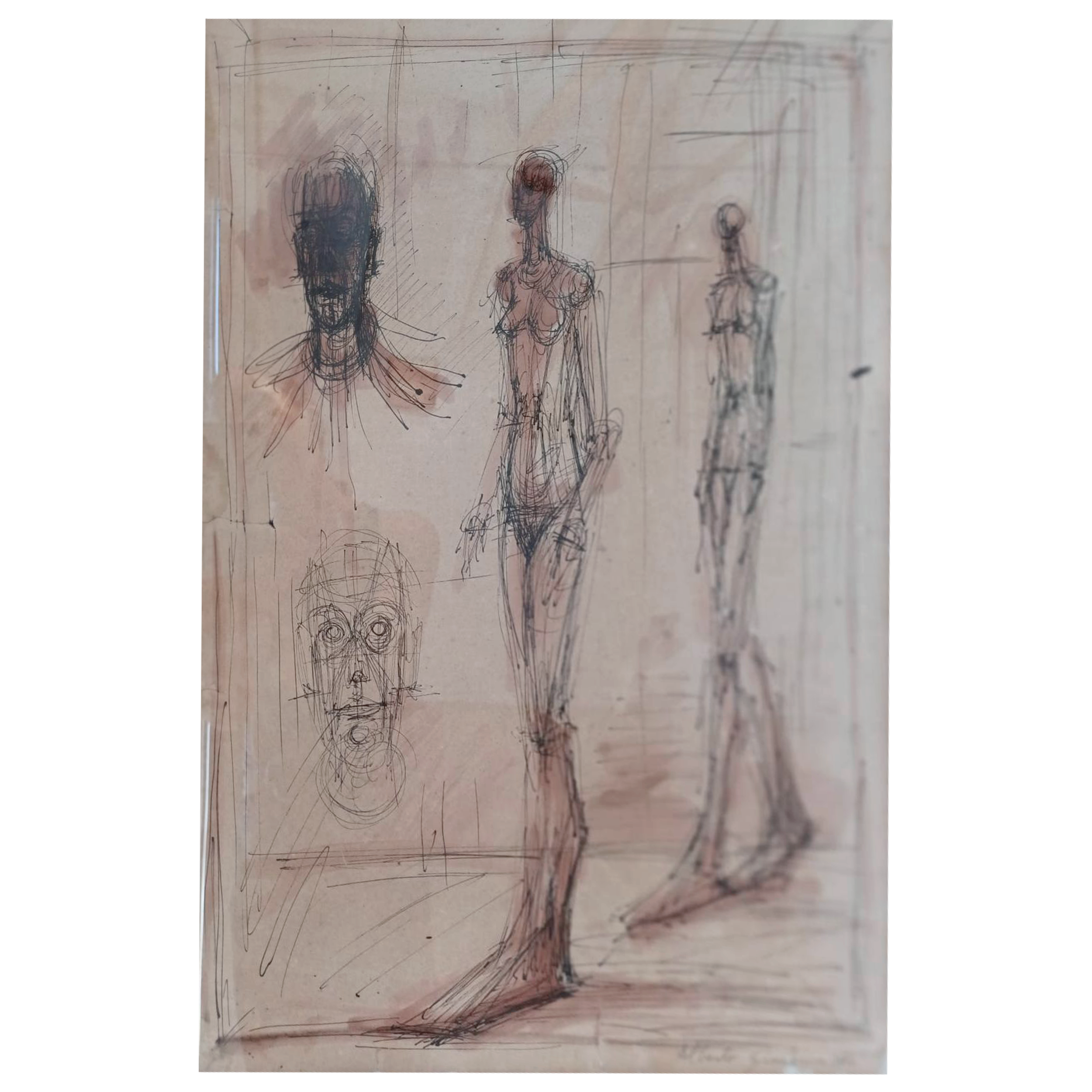
Alberto Giacometti (1901–1966)
Figure Studies
Ink and wash on paper
Drawing exemplifying Alberto Giacometti’s relentless search for the essence of human presence. Combining studies of heads with elongated standing nudes, the composition reveals his characteristic linear draftsmanship—nervous, repetitive strokes that seem to etch the figure into existence. The attenuated bodies anticipate the sculptural forms for which Giacometti is most celebrated, evoking both fragility and permanence. The ink wash adds tonal depth, situating the figures in a spatial field while underscoring their spectral, almost immaterial quality.
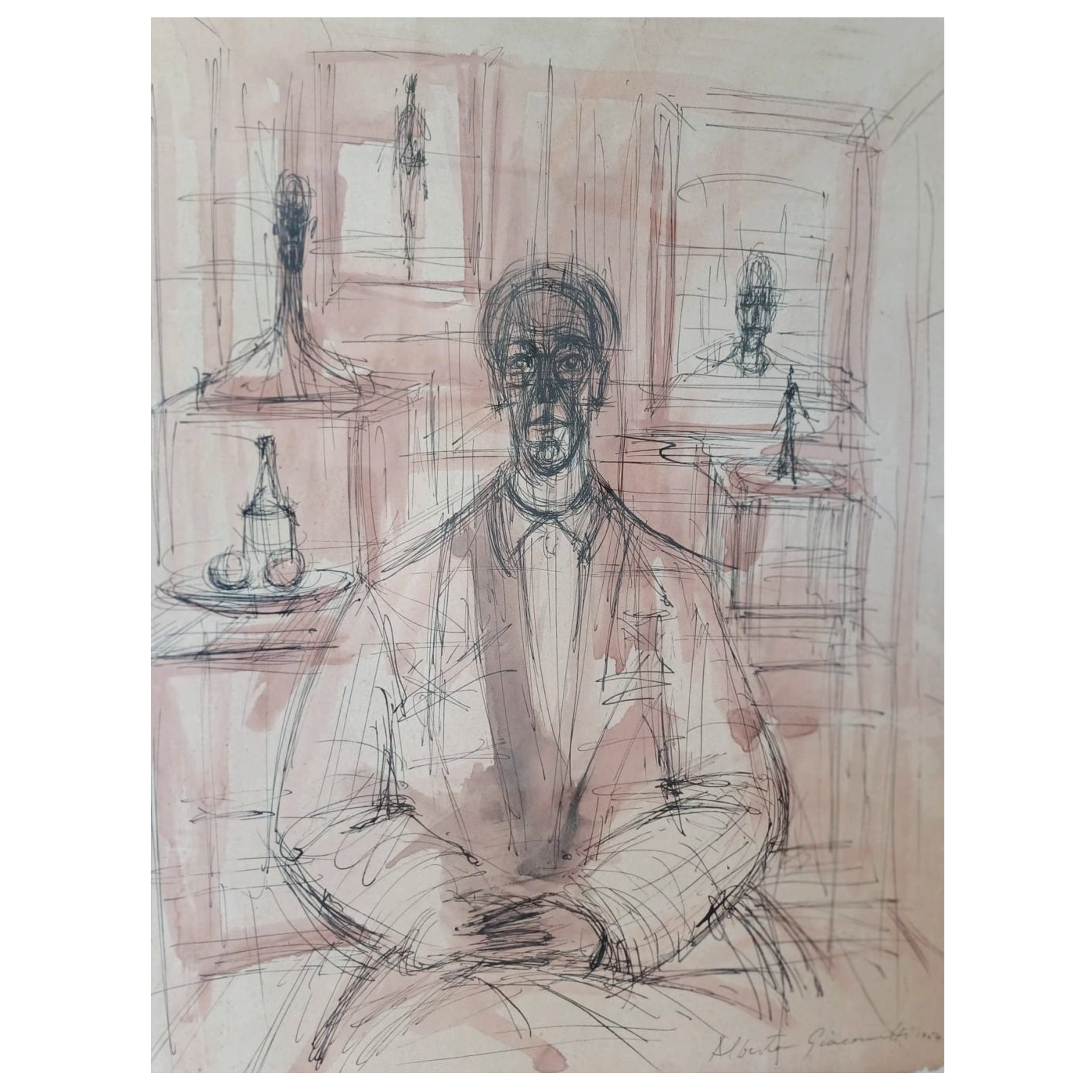
Alberto Giacometti (1901–1966)
Seated Man in Interior
Ink and wash on paper, c. 1950s
Drawing by Alberto Giacometti exemplifying his distinctive draftsmanship, where restless lines and overlapping contours convey both form and psychological presence. The central figure, seated in a frontal pose, is defined through dense linear crosshatching and layered washes of muted tones. Surrounding him, Giacometti sketches elements of a studio interior: sculptures, paintings, and still-life objects that echo the artist’s lifelong exploration of the human figure and its relation to space.
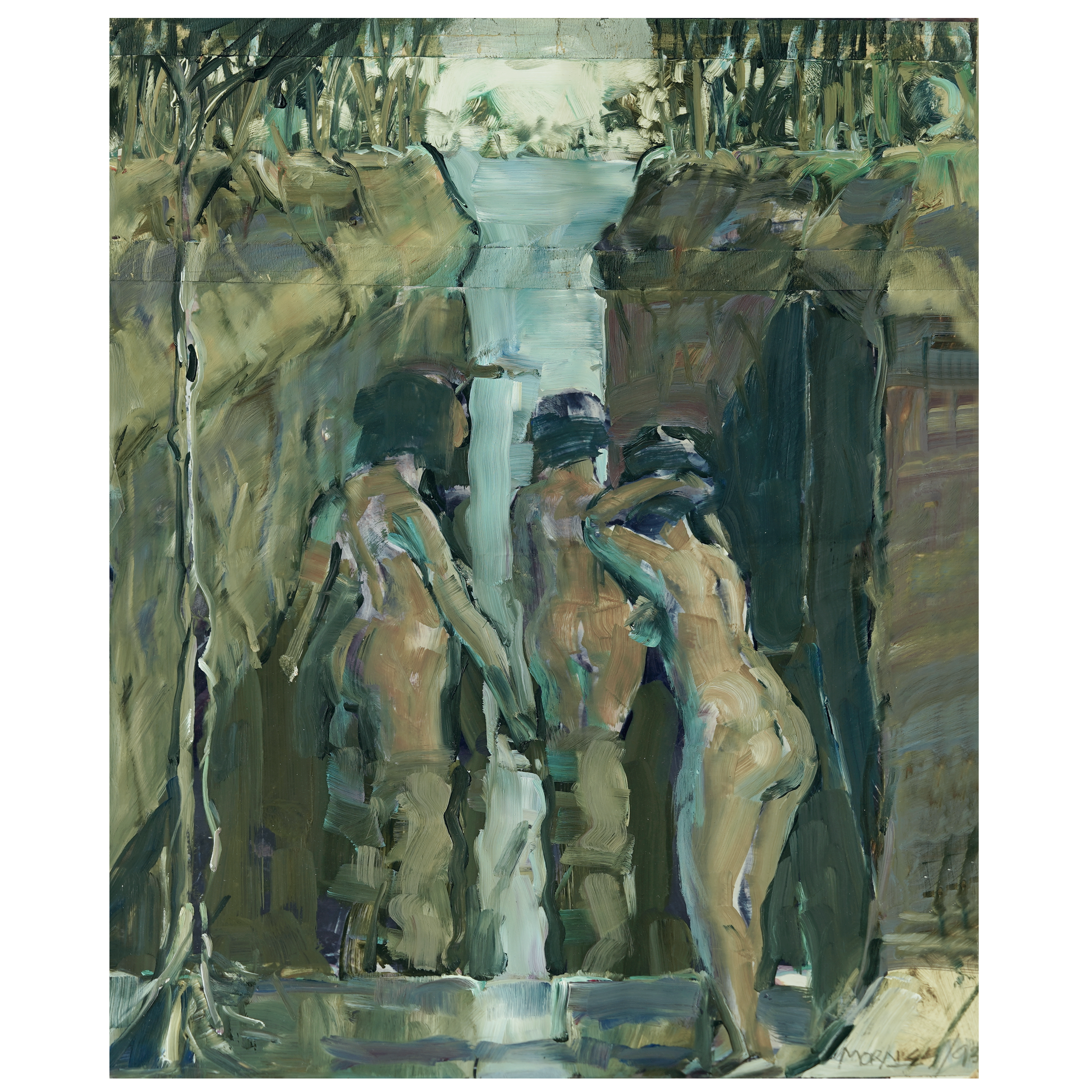
Armando Morales (1927–2011)
Oil on canvas
Dimensions: 35 × 28 cm
Composition by Nicaraguan painter Armando Morales depicting three nude figures gathered at the edge of a cascading waterfall, immersed in a timeless ritual of bathing. Executed in his characteristic painterly style, Morales layers earthy and muted green-blue tones, capturing both the sensuality of the human form and the raw vitality of nature.
Morales, renowned for his fusion of figuration and abstraction, frequently revisited themes of memory, myth, and sensuality. In this work, the tactile impasto brushwork conveys both movement and intimacy, as the figures appear simultaneously rooted in their environment and dreamlike in presence. The interplay between shadow and light accentuates the mystery of the scene, suggesting a timeless moment of communion between humanity and nature.
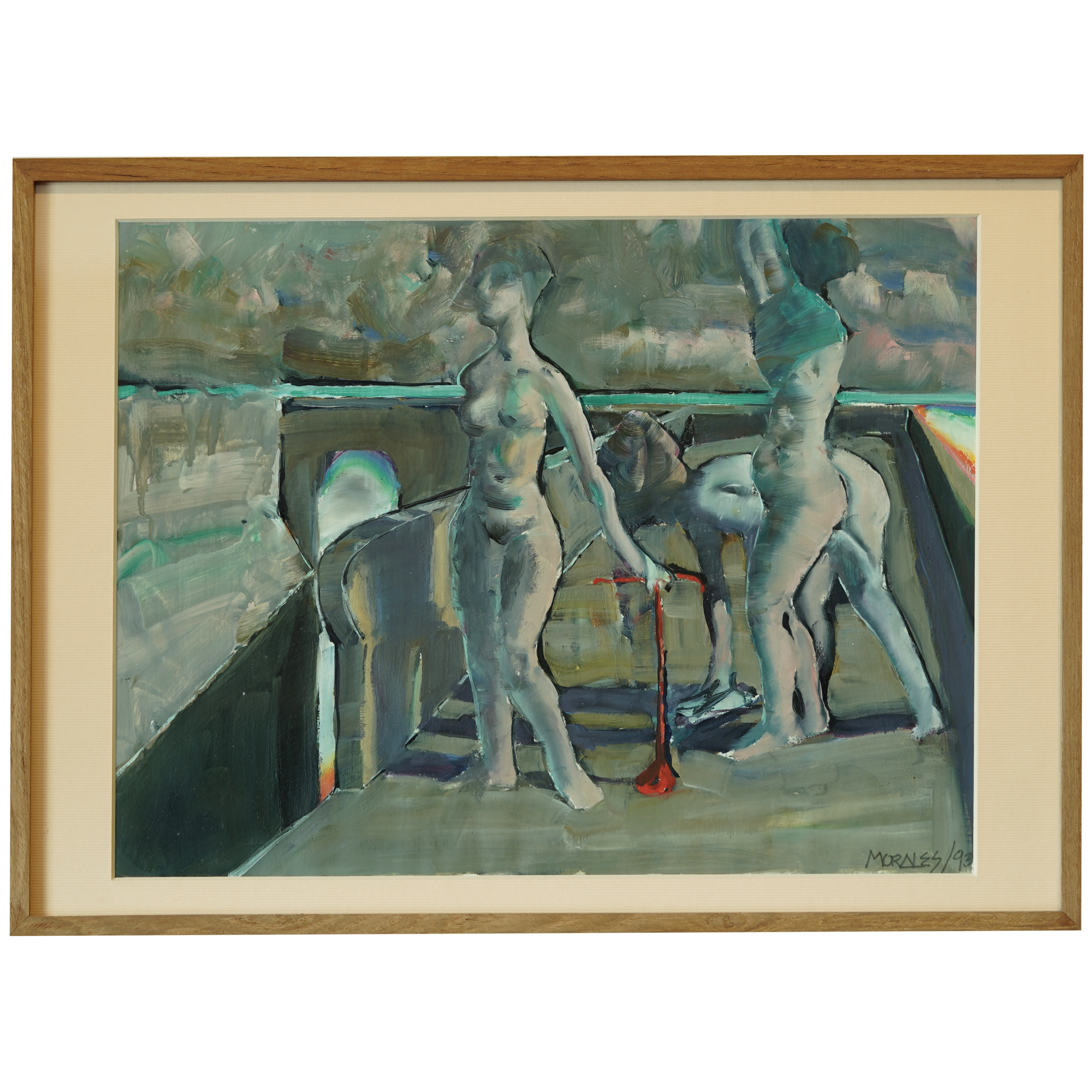
Artist: Armando Morales (Nicaraguan, 1927–2011)
Date: 1993
Medium: Oil on canvas
Signature: Signed and dated lower right, Morales / 93
Dimensions: 29 × 37 cm
Oil on canvas from 1993, Armando Morales presents three nude female figures set within a monumental architectural setting that opens onto a distant seascape. Painted in a restrained, cool-toned palette dominated by muted blues, greens, and greys, the figures emerge with sculptural solidity, their contours modeled with both softness and precision. One central figure holds a striking red staff, a vivid vertical accent that disrupts the otherwise harmonious tonal composition..
Artistic Context:
Armando Morales is celebrated as one of Latin America’s foremost modern painters, renowned for merging realist figuration with surrealist and symbolic elements. His paintings often combine nudes, still lifes, and landscapes in enigmatic, timeless environments. This work exemplifies Morales’s mature style of the late 1970s, in which the human form is reimagined within architecturally inspired, almost stage-like settings that invite multiple readings—mythological, allegorical, or psychological.

Artist: Alberto Giacometti (Swiss, 1901–1966)
Medium: Lithograph on paper
Edition: Numbered lower left 47/100
Signature: Printed signature of the artist lower right, Alberto Giacometti
Dimensions: 47 × 31 cm
Description:
Lithograph reproducing a seated male figure in Alberto Giacometti’s distinctive, searching line. The subject, rendered with sparse yet deliberate marks, sits in a relaxed but introspective pose, arms loosely resting on his knees. Giacometti’s trademark web of overlapping lines conveys both the structure of the body and the artist’s intense process of observation, imbuing the image with an almost vibrating presence.
The composition leaves the background bare, allowing the figure to emerge in isolation. The head and upper body are drawn with heightened focus, evoking a psychological depth that is characteristic of Giacometti’s portrait work.
Artistic Context:
Giacometti’s lithographs, often based on his original drawings, preserve the immediacy and spontaneity of his hand while making his vision accessible to a wider audience. They reflect his enduring fascination with the human figure as an existential presence, existing between physical form and fleeting perception.
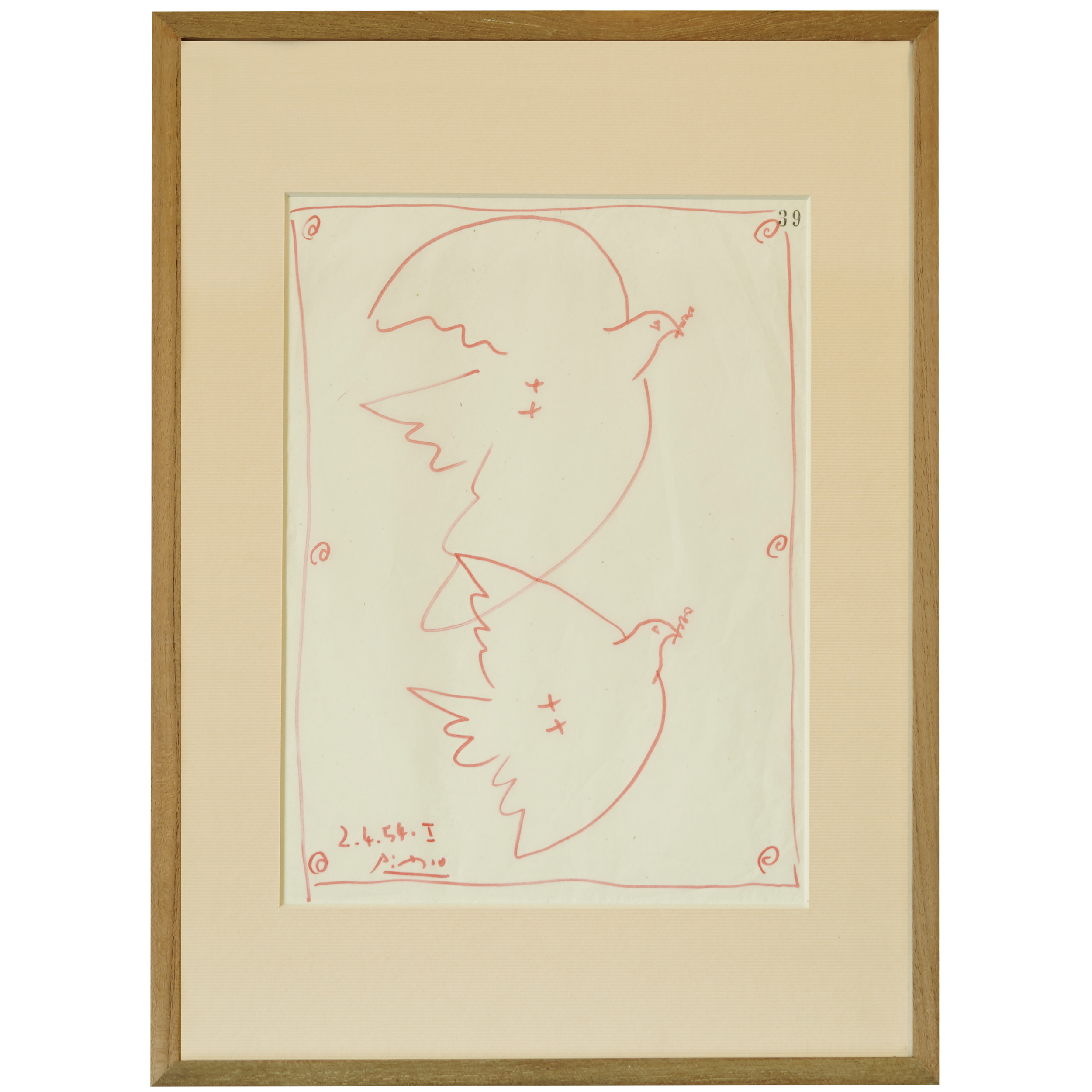
Original PICASSO two doves of peace, in flight, a sprig of olive in the beak. Dated and signed bottom left 2.4.54 I
Year: 1954
Dimensions: 27 × 20 cm
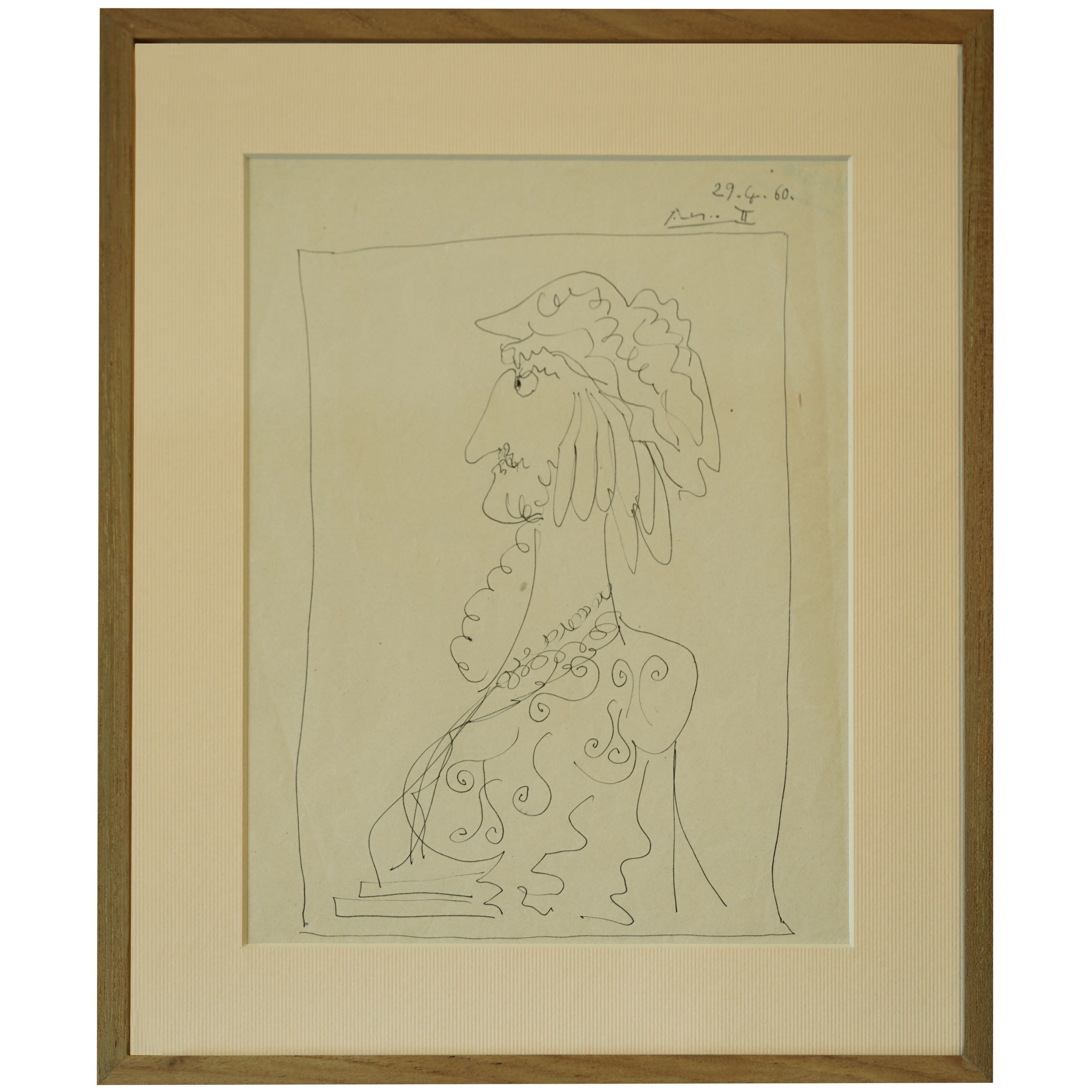
Bust profile of a burlesque character, wearing a headpiece, looking to the left, outlined by a rectangular ink stroke. Dated and signed top right 29.4.60 II
Year: 1960
Dimensions: 26 × 20 cm
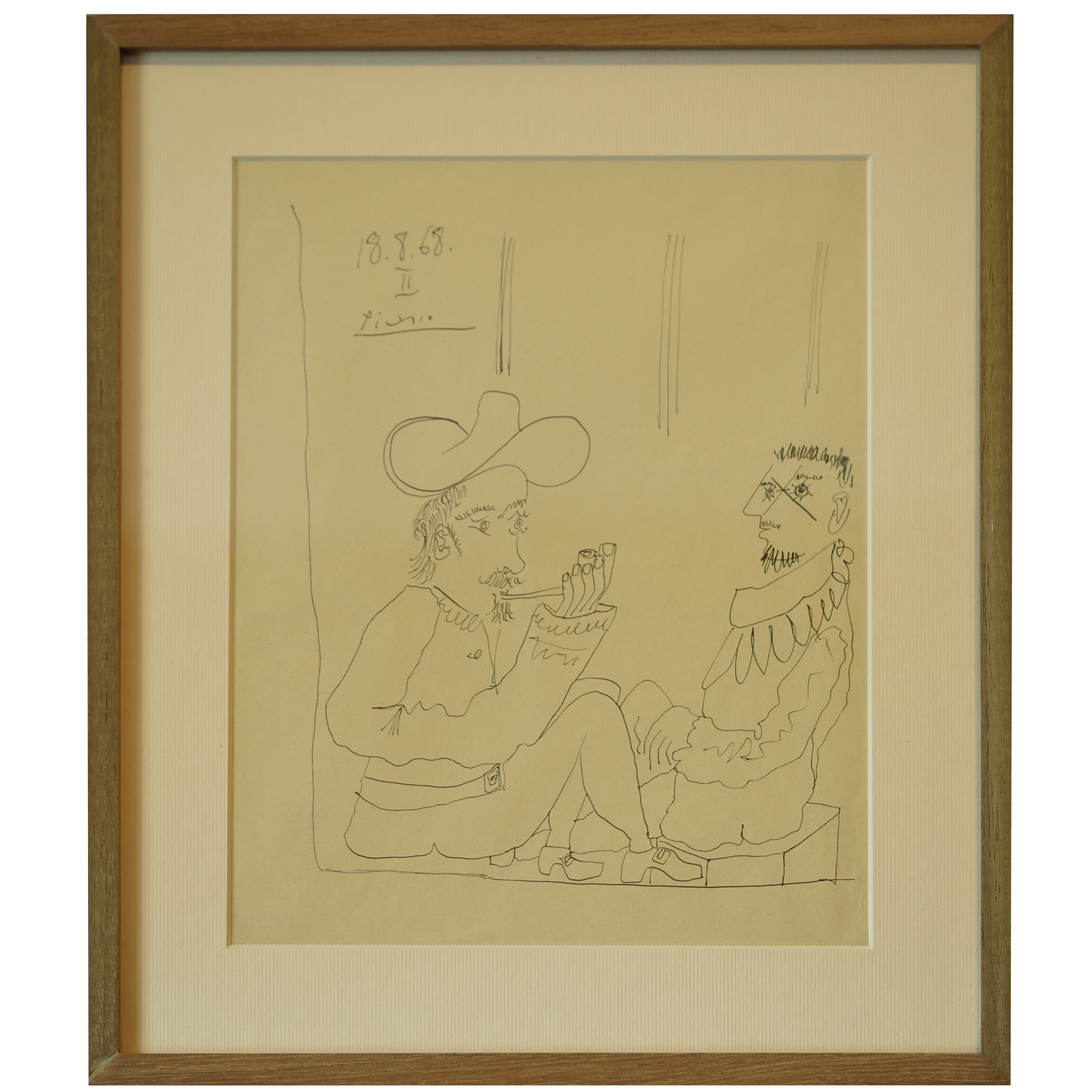
A hatted pipe smoker sits facing a figure with an X-shaped face and a jabot, set before a row of columns. Dated and signed top left 18.8.68 II
Year: 1968
Dimensions: 26 × 20 cm

Original Picasso horned bull’s head carried by two running legs. Dated and signed top left 1.2.54 XV
Year: 1954
Dimensions: 16 × 22 cm

Original Picasso, Galerie Louise Leiris, 8th arrondissement, surmounting a lively scene of a picador on his mount, flanked by two toreadors signed bottom left
Year:

UNKNOWN ARTIST
Circa 1800-1820
Original Item: One of a Kind. Here we have a wonderful original bronze lantaka swivel cannon barrel, dating to about 1800-1820. While these were used throughout South East Asia, this style is from the “East Indies”, more properly known as South Eastern Asia. These were used only at close quarters, used to fire lead balls, stones and other debris while mounted on boats and other ocean going craft during the age of Sailing.
The cannon is very heavy, weighing in at 33lbs, a good sign as later copies are much lighter and sometimes are filled internally with foam to be sold as fakes.
Totally authentic but not too big to display in home or office.
Dimensions:
Lantaka or rentaka was a type of bronze portable cannon or swivel gun, sometimes mounted on merchant vessels and warships in Maritime Southeast Asia. It was commonly equipped by native seafaring vessels from Indonesia, Philippines, Brunei, and Malaysia. Lela and rentaka are known by the Malays as meriam kecil (lit. "small cannon"), the difference is that rentaka is smaller in length and bore than a lela.