
PRE COLUMBIAN AND MAYA CERAMIC
Pre-Columbian and Maya Ceramics
Presented by Eclectic Collectors, this page brings together unique examples of Pre-Columbian and Maya ceramics. Each piece reflects the creativity, symbolism, and ritual significance of ancient Mesoamerican cultures. From animal effigies to human and divine figures, these works reveal how clay was shaped into vessels and sculptures that served daily, ceremonial, and spiritual purposes.
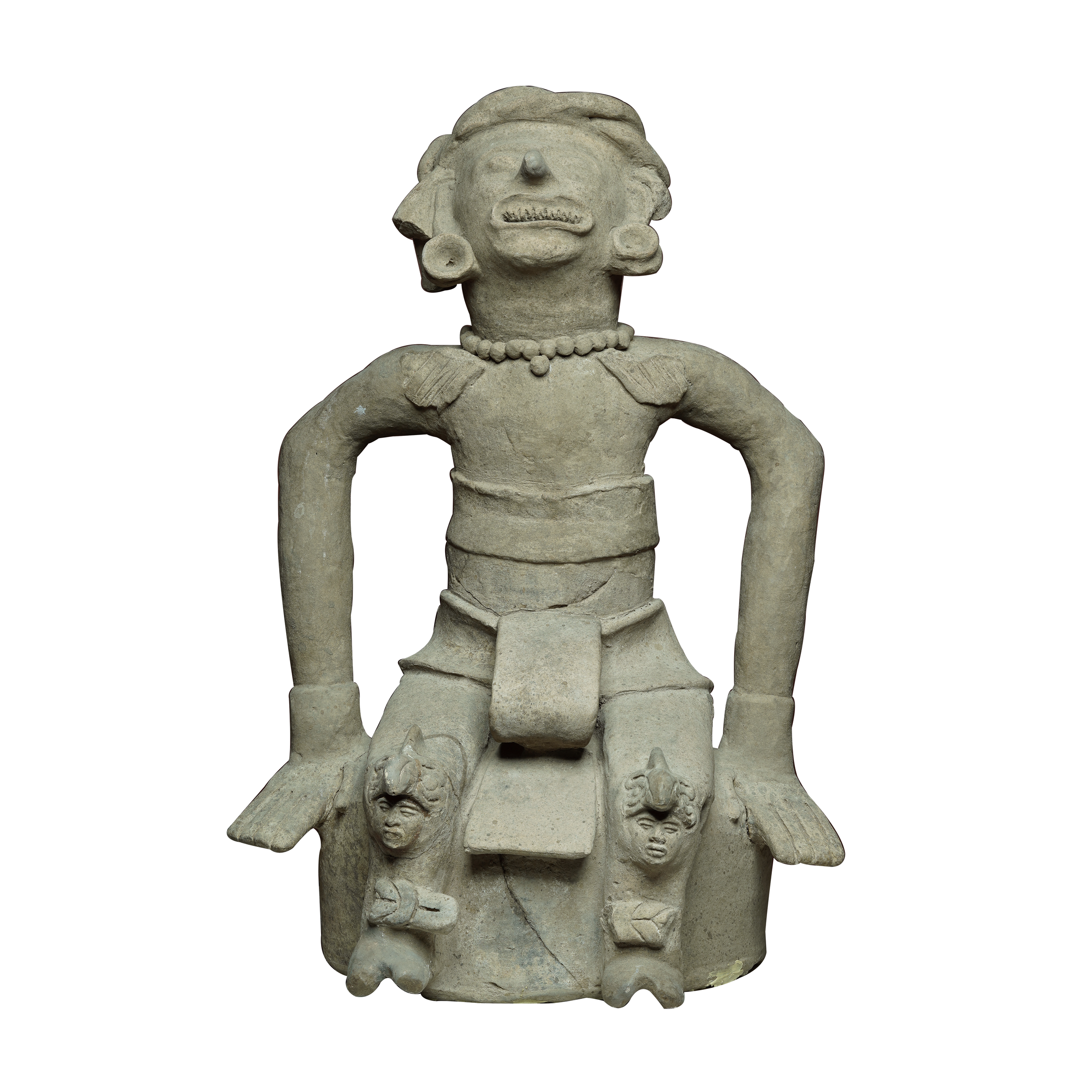
Pre-Columbian Ceramic Figure
Culture: Maya or related Mesoamerican tradition
Material: Ceramic
Date: ca. 600–900 CE (Late Classic Period)
Dimensions: 55 × 35 cm
Ceramic figure representing a richly adorned individual, likely a deity, shaman, or elite figure within Maya culture. The figure’s upright posture, exaggerated facial features, and elaborate headdress suggest a ceremonial role. The necklace, belt, and skirt details emphasize status and authority, while the prominent hands and stylized mouth may symbolize communication with the spiritual realm.
Of particular note are the two small sculpted heads on the figure’s skirt, possibly representing captives, ancestors, or divine beings, reinforcing the figure’s mediating role between the earthly and spiritual worlds. Such imagery reflects the Maya’s strong emphasis on lineage, ritual performance, and the cyclical balance of life and death.
Objects of this type were often placed in tombs or ceremonial centers, serving as guardians, offerings, or representations of powerful intermediaries in Maya cosmology
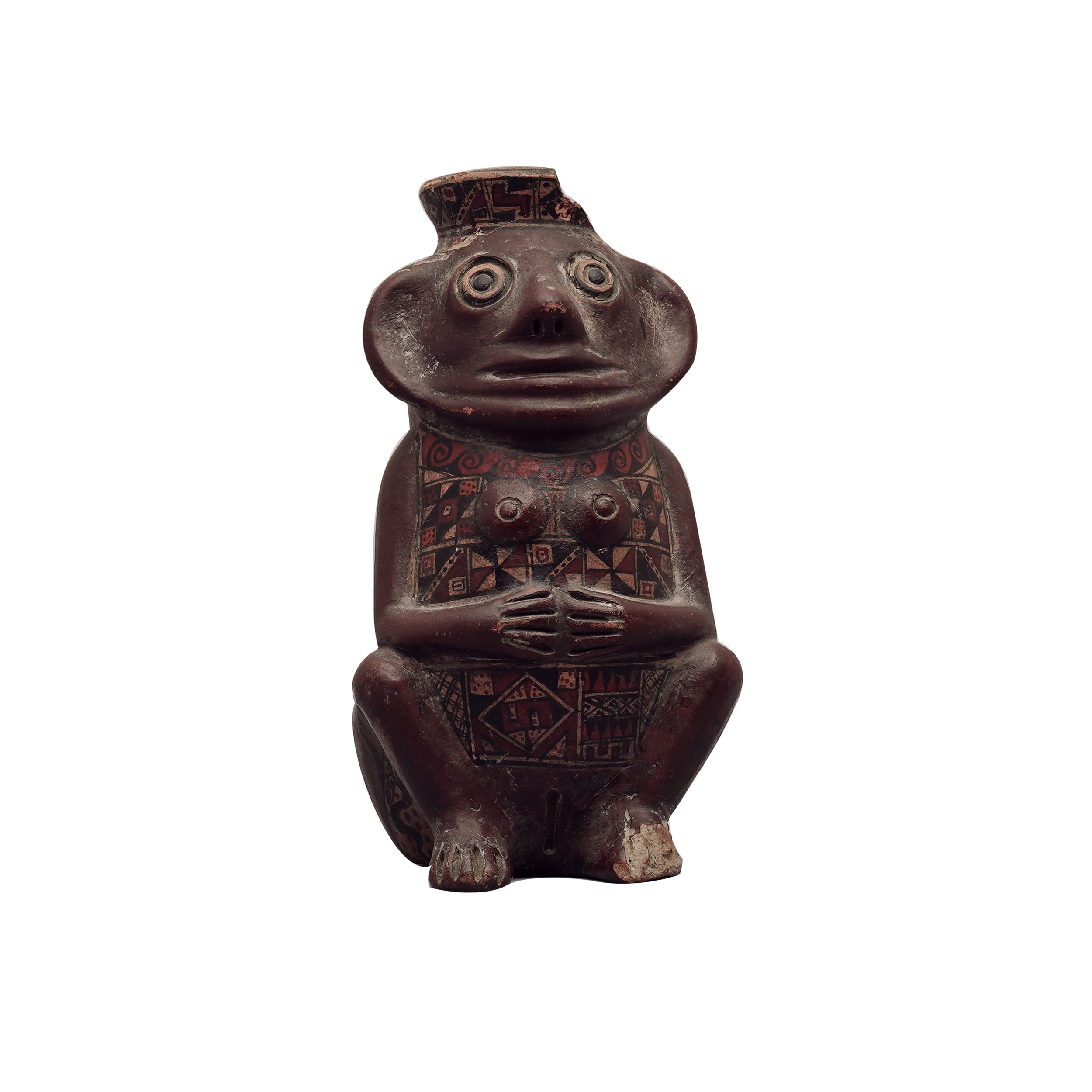
Seated Anthropomorphic Vessel
Pre-Columbian, Inca Culture (Peru), ca. 500 BCE (c. 2500 years old)
Dimensions: 14 ×9 cm
Ceramic figure representing a seated anthropomorphic being, possibly a deity, ancestor, or ritual participant. Crafted with great care, the figure displays exaggerated facial features, wide circular eyes, and a pronounced mouth, embodying both human and supernatural traits. The body is decorated with intricate geometric patterns painted in red and black, symbols that may have conveyed identity, rank, or cosmological meaning.
The figure’s hollow form and opening at the top suggest it may have served as a vessel, perhaps used in ceremonial offerings of liquids or other sacred substances.
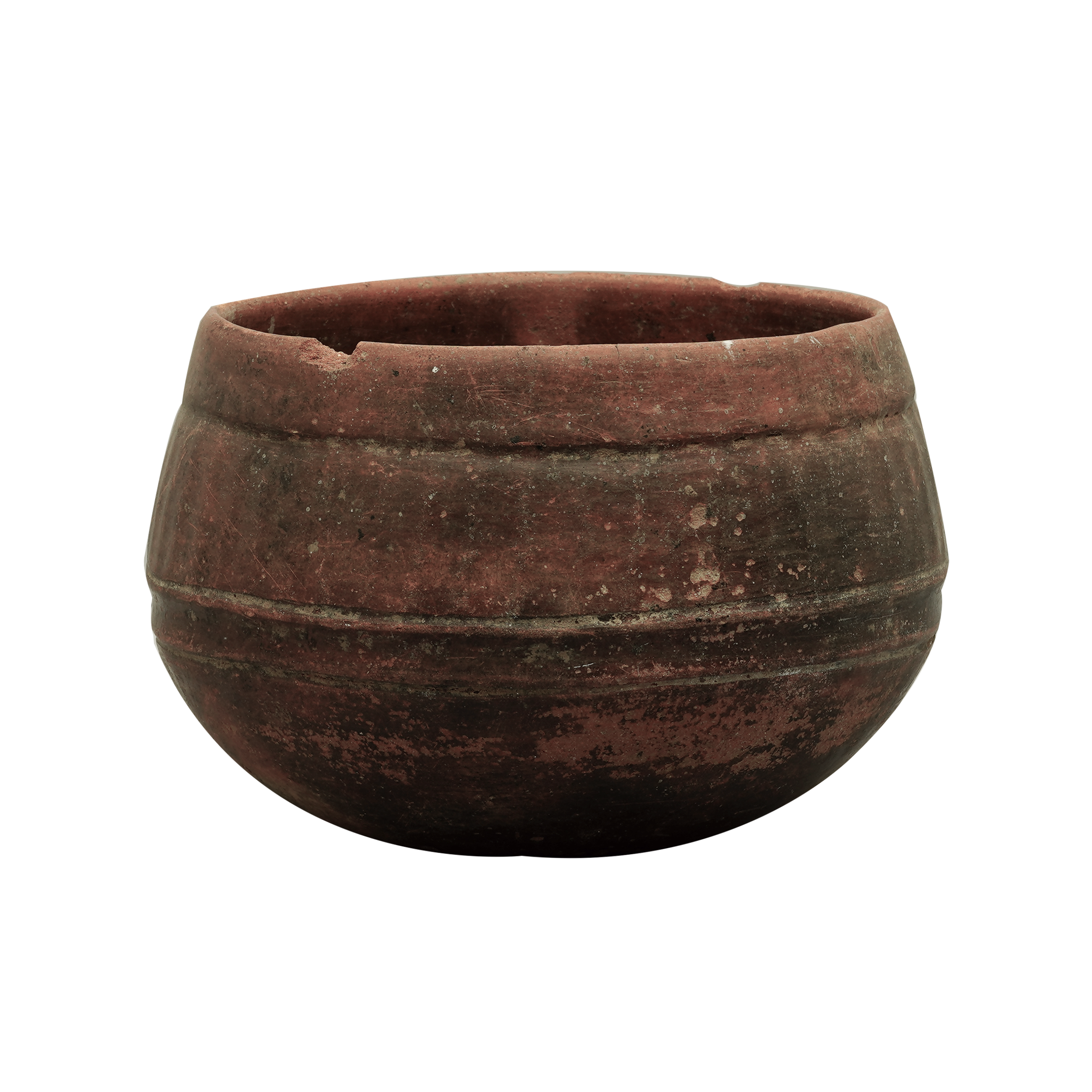
Maya Ceramic Bowl
Dimensions: 17 × 11 cm
Maya Civilization, ca. 300 BCE – 600 CE
Burnished ceramic with red slip
Rounded bowl, with its simple form and subtle red slip finish, reflects the utilitarian yet refined craftsmanship of Maya ceramics. Such vessels were used in daily life for storing and serving food, while also carrying symbolic meaning when placed in ritual or funerary contexts.
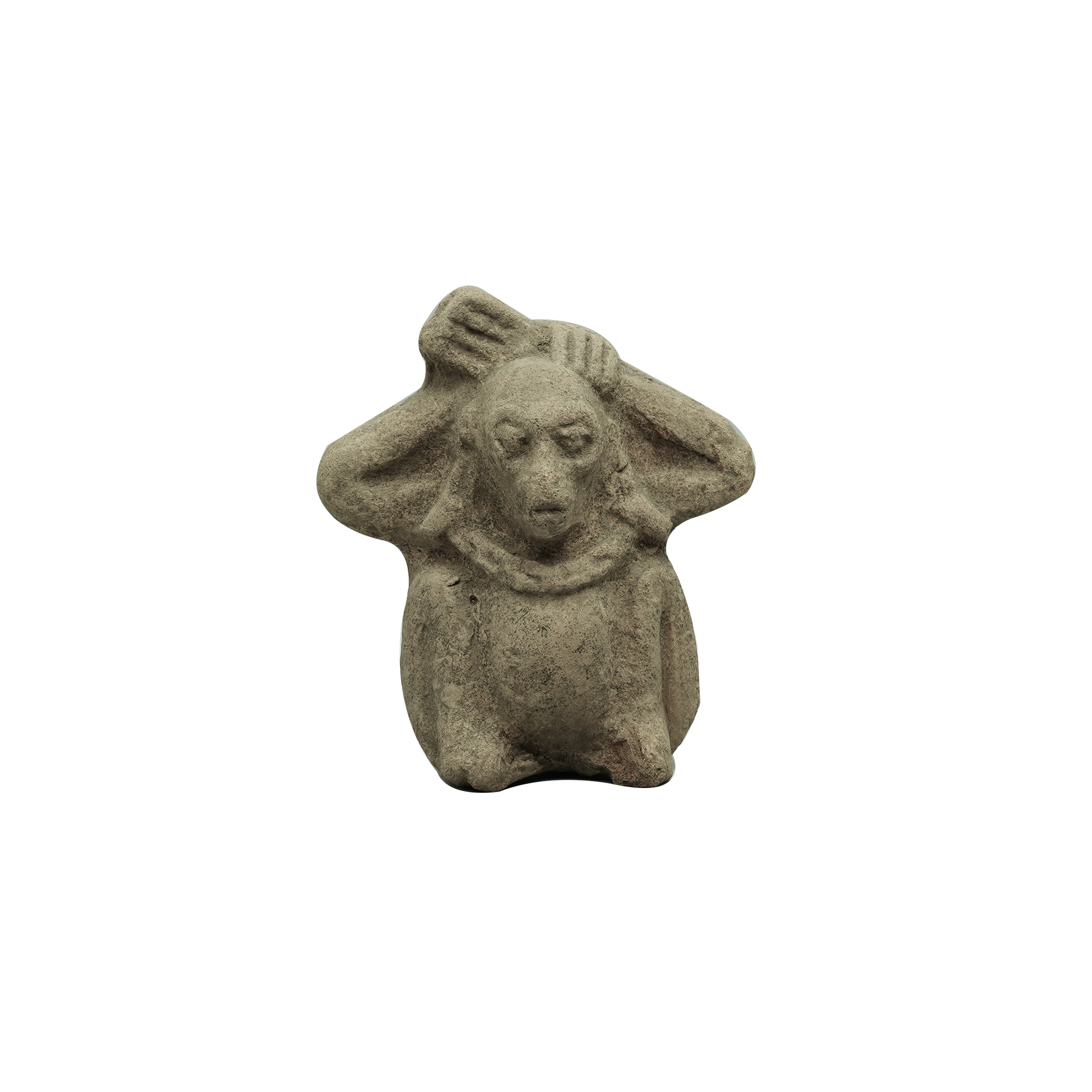
Pre-Columbian / Maya Ceramic Figurine
Late Classic Period (c. 600–900 CE)
Dimensions: 9 × 6 cm
Small ceramic figure depicting a seated monkey with arms raised to its head. Monkeys were significant in Maya culture, linked to scribes, musicians, and mythological beings from the Popol Vuh. The simple modeling emphasizes posture and expression rather than surface detail. Likely used in a ritual or domestic context, the figurine reflects both artistic skill and symbolic meaning in Maya society.
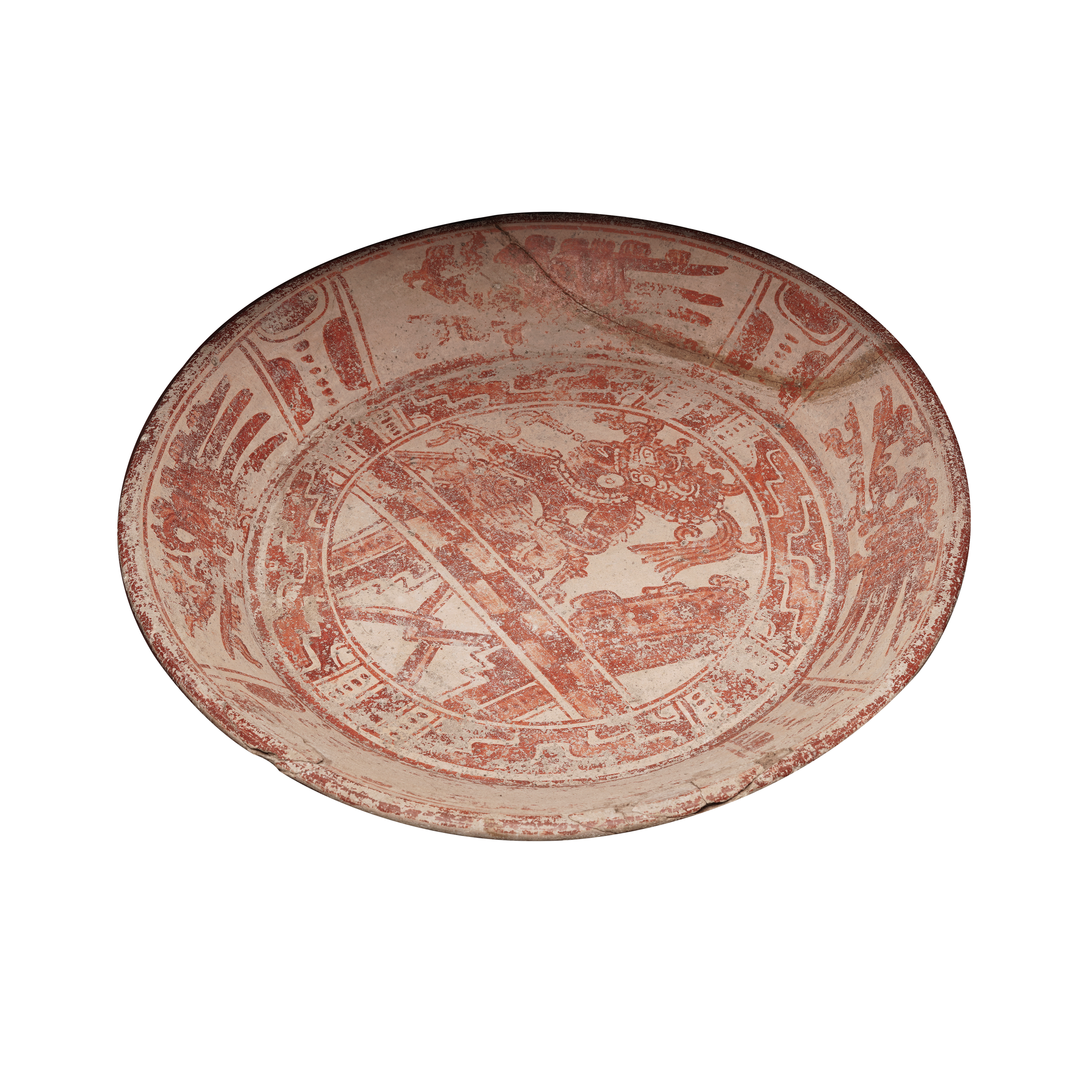
Maya Polychrome Ceramic Plate
Classic Period (c. 600–900 CE), Mesoamerica
Dimensions: 13 × 35 cm
Painted ceramic plate showcasing the artistic and symbolic sophistication of the ancient Maya. Decorated in red slip on a cream ground, the central motif features a mythological scene rendered with dynamic linework and intricate iconography. The figures—possibly deities, mythic creatures, or rulers—are framed by geometric and symbolic borders, reflecting both cosmological and ritual significance.
Maya ceramics such as this were often used in ceremonial feasts, burials, or elite offerings, serving not only as functional vessels but also as carriers of sacred narratives. The circular composition and repeating motifs reinforce the Maya worldview of cyclical time and the cosmic order.
The red pigments, derived from natural minerals, highlight the Maya mastery of polychrome painting techniques, while the worn surface reveals centuries of use and burial. Today, this piece offers invaluable insight into the interconnectedness of Maya art, ritual, and cosmology.
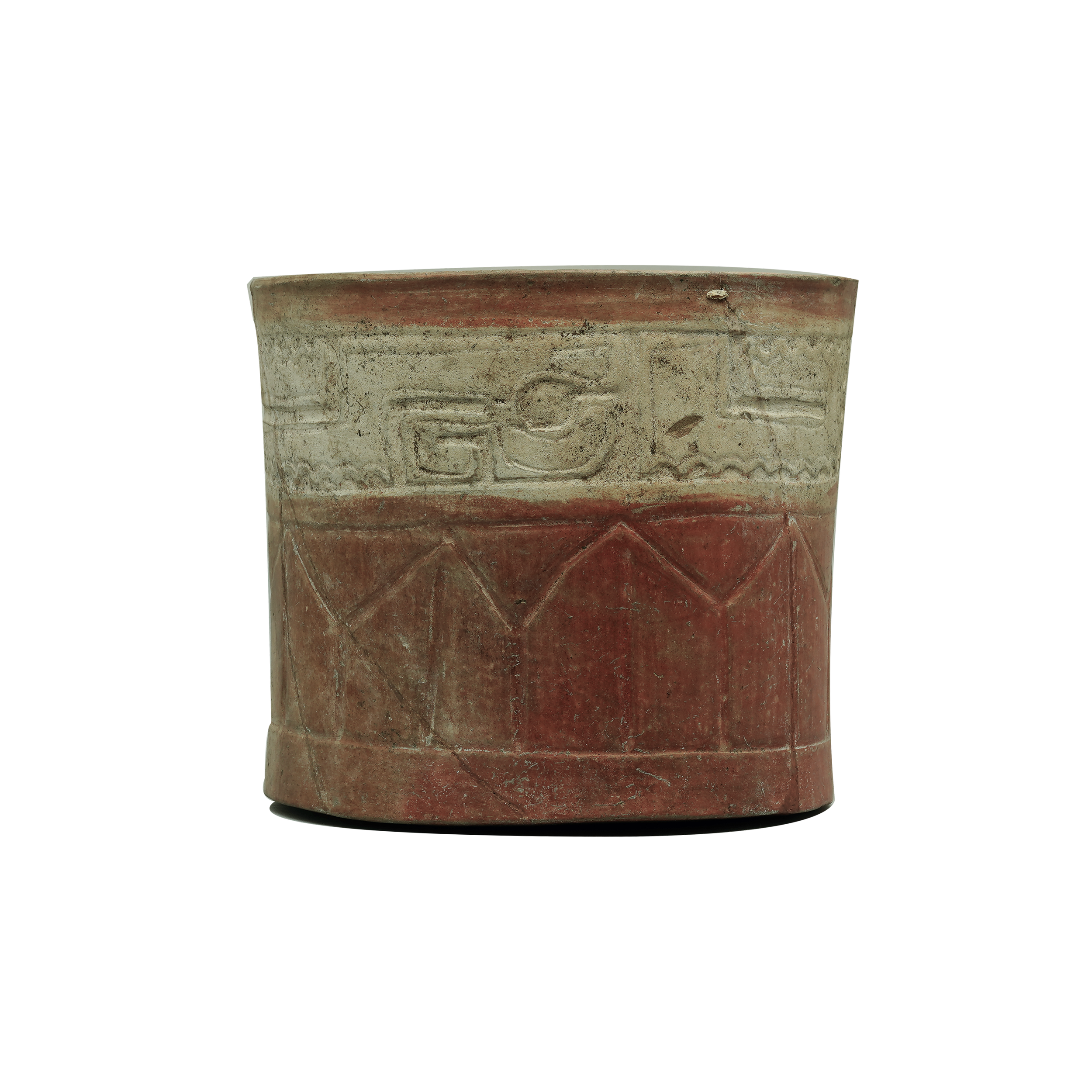
Maya Cylindrical Vessel
Maya Civilization, ca. 400 BCE – 500 CE
Ceramic with red slip and incised decoration
Dimensions: 15 × 17 cm
Cylindrical vessel, decorated with geometric and glyph-like motifs, reflects the artistry of early Maya ceramics. Likely used in ritual or elite contexts, such vessels served as containers for food, drink, or offerings and were often placed in burials as symbols of status and sustenance for the afterlife.
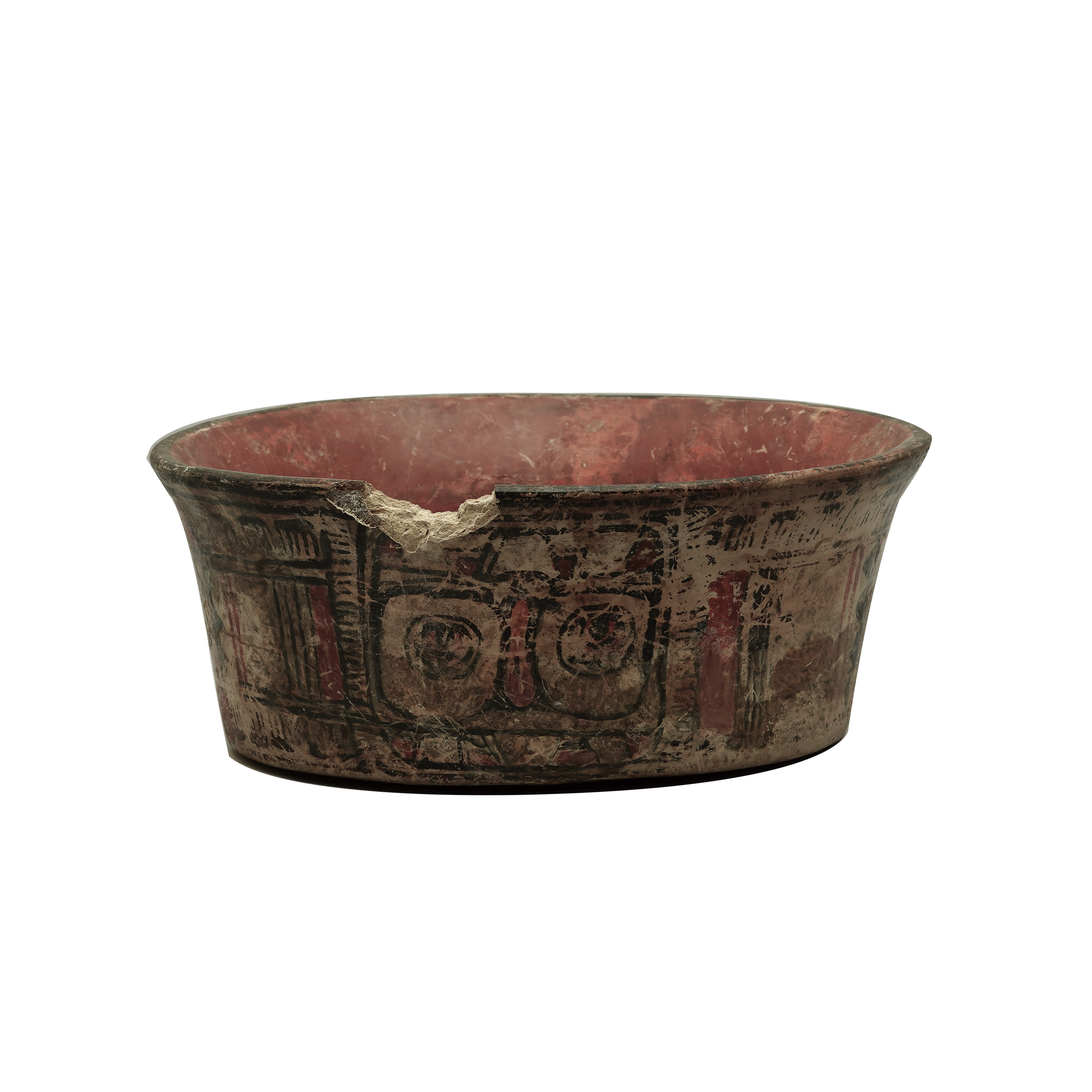
Maya Polychrome Bowl
Maya Civilization, ca. 600–900 CE
Ceramic with red and black painted decoration
Dimensions: 19 × 7 cm
Shallow bowl, decorated with geometric and symbolic motifs in red and black, exemplifies the sophistication of Maya painted ceramics. The interior features a radiating design, possibly symbolizing the sun or cosmic order, while the exterior displays glyph-like and abstract imagery. Such vessels were used in both daily life and ritual contexts, often for serving food or drink, and sometimes placed in tombs as offerings to accompany the deceased in the afterlife.
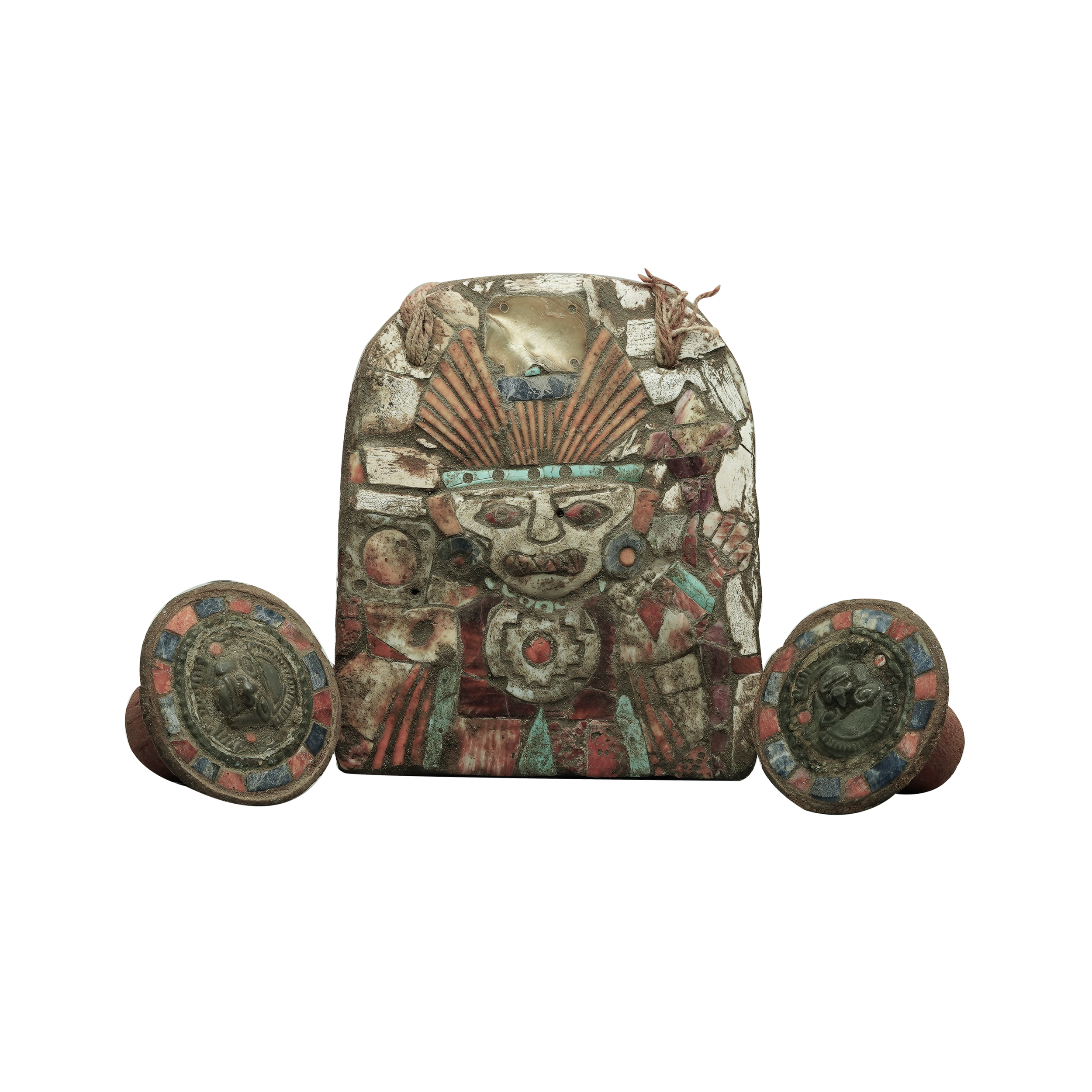
Ceremonial Polychrome Pectoral
Late Postclassic Period (c. 1200–1500 CE)
Peru, Inca or Central Highlands
Dimensions: 13 × 11 cm
Polychrome ceramic pectoral depicting a richly adorned deity or priestly figure, rendered with vibrant pigments of red, turquoise, white, and black. The central plaque features a stylized face framed by a dramatic headdress and elaborate ornaments, signifying high status and sacred authority. The two accompanying round earspools, decorated with modeled faces and colorful geometric borders, would have complemented the regalia, evoking themes of ritual power and divine presence.
Such pectorals were likely used in ceremonial contexts, possibly as part of ritual attire or as offerings, symbolizing the connection between earthly rulers and the divine. The bold iconography and careful workmanship reflect the importance of costume and ornament in pre-Columbian religious and political life.
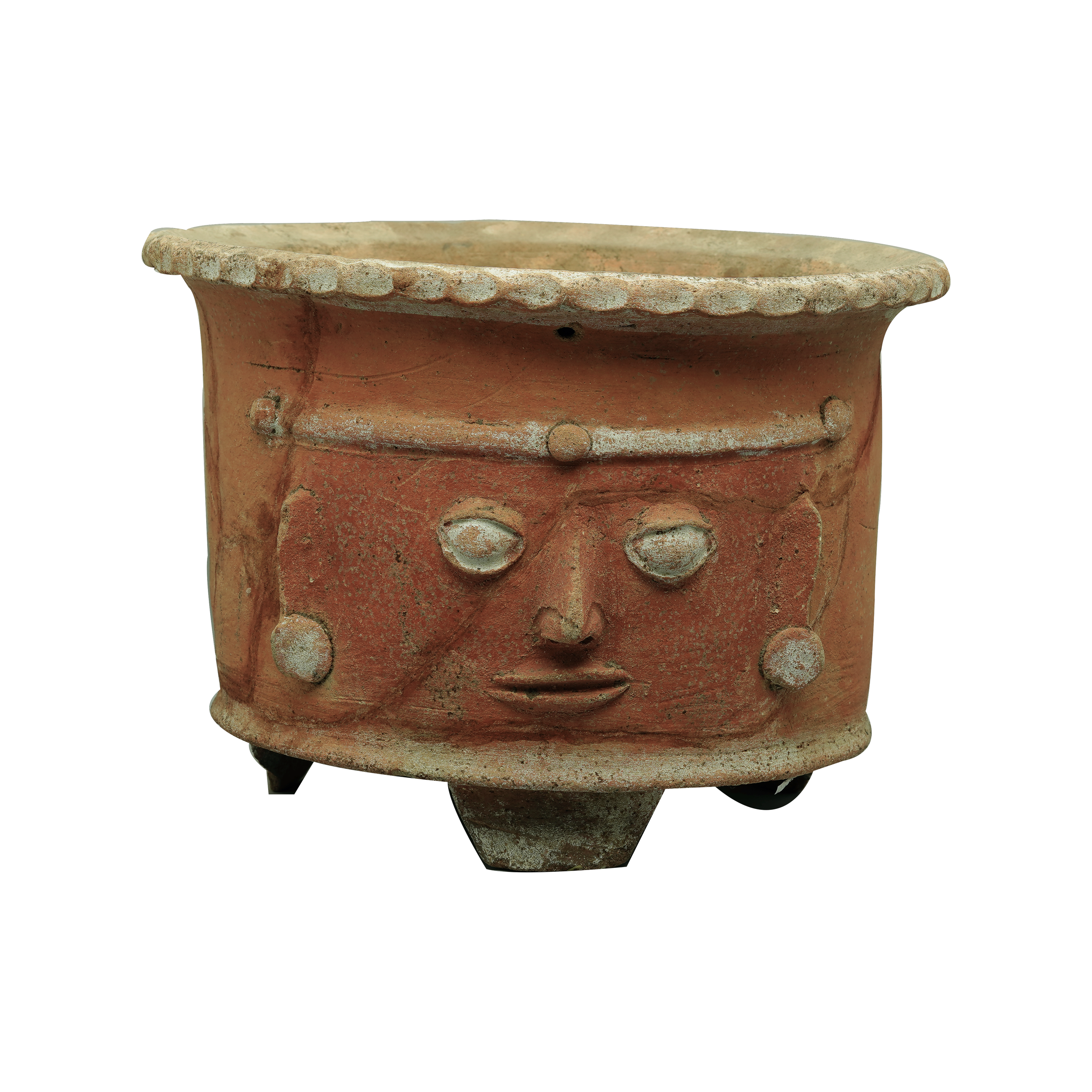
Tripod Vessel with Human Face
Pre-Columbian, Maya Culture, c. 600–900 CE
Ceramic with red slip
Dimensions: 19 × 26 cm
Cylindrical tripod vessel decorated with a modeled human face, complete with earspools and a rim of raised dots. The form and red slip suggest its use in ritual contexts, likely for offerings of food or drink. The human visage may represent an ancestor or deity, reflecting Maya beliefs in the sacred power of objects and their role in connecting the living with the spiritual world.
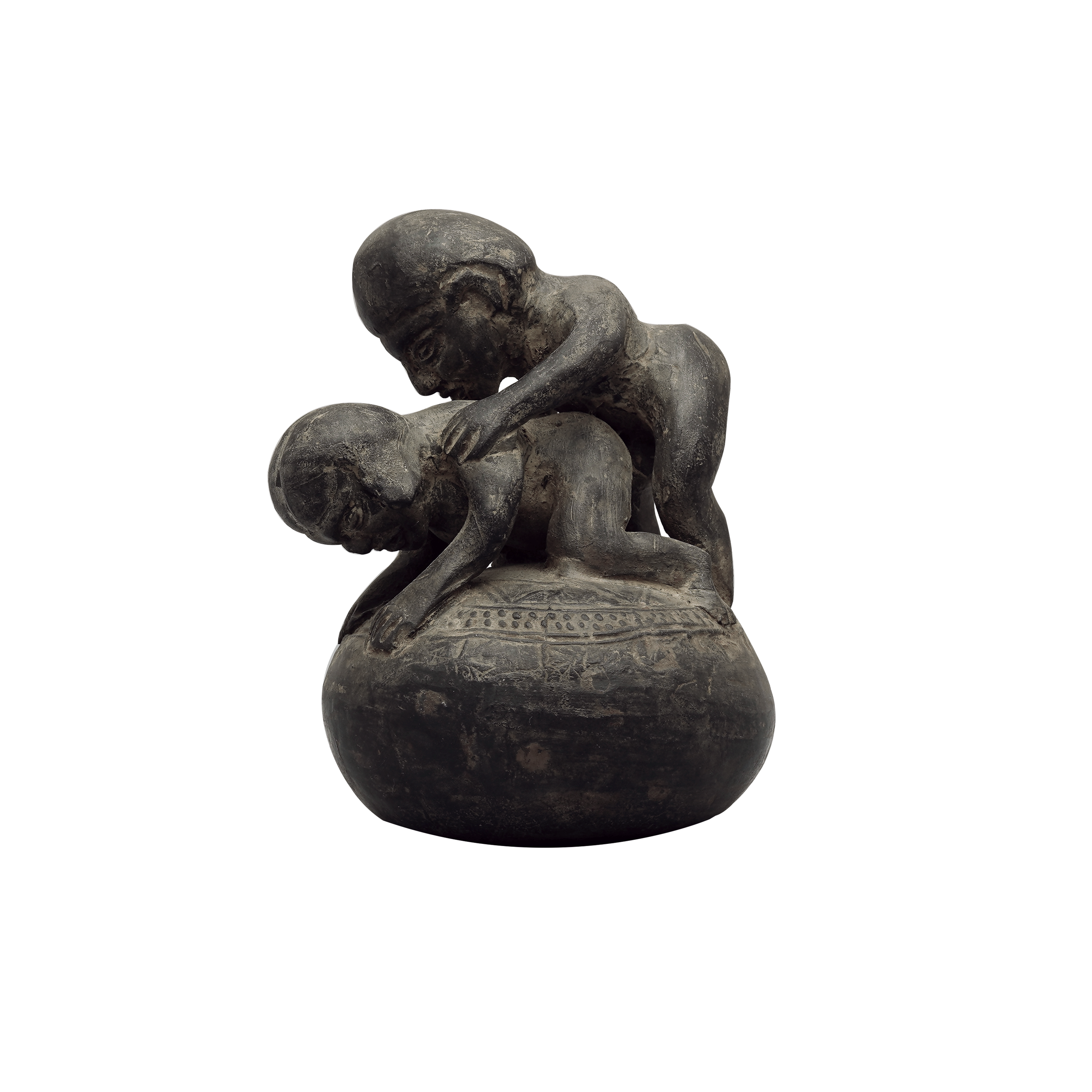
Erotic Figurative Vessel
West Mexico (Nayarit/Colima), ca. 200 BCE – 500 CE
Burnished black ceramic
Dimensions: 17 × 13 cm
Ceramic vessel depicting two intertwined human figures in an intimate pose, modeled with striking realism and vitality. Such works are part of the West Mexican shaft tomb tradition, where ceramics were placed as offerings for the dead. Erotic imagery in these vessels is believed to symbolize fertility, continuity, and the regenerative forces that link life and death.
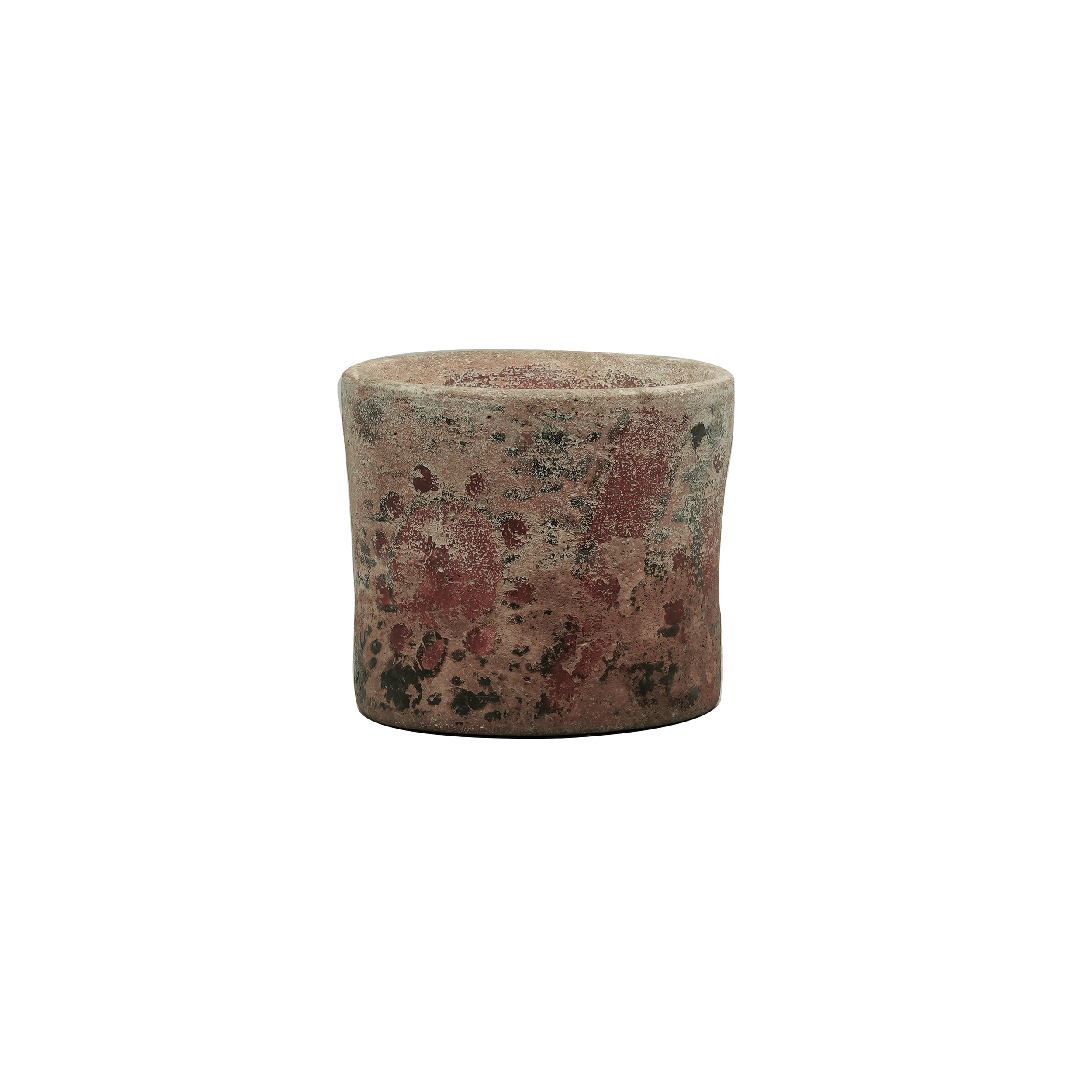
Maya Ceramic Goblet
Maya Civilization, ca. 400–900 CE
Ceramic with red slip and surface encrustation
Dimensions: 8 × 7 cm
Small goblet, with traces of red pigment and darkened patina from age, reflects the utilitarian yet symbolic ceramics of the Maya. Such vessels were likely used for drinking cacao or other ritual beverages, linking daily life with ceremonial practice. Its simple cylindrical form and worn surface suggest both practical use and enduring cultural significance.si
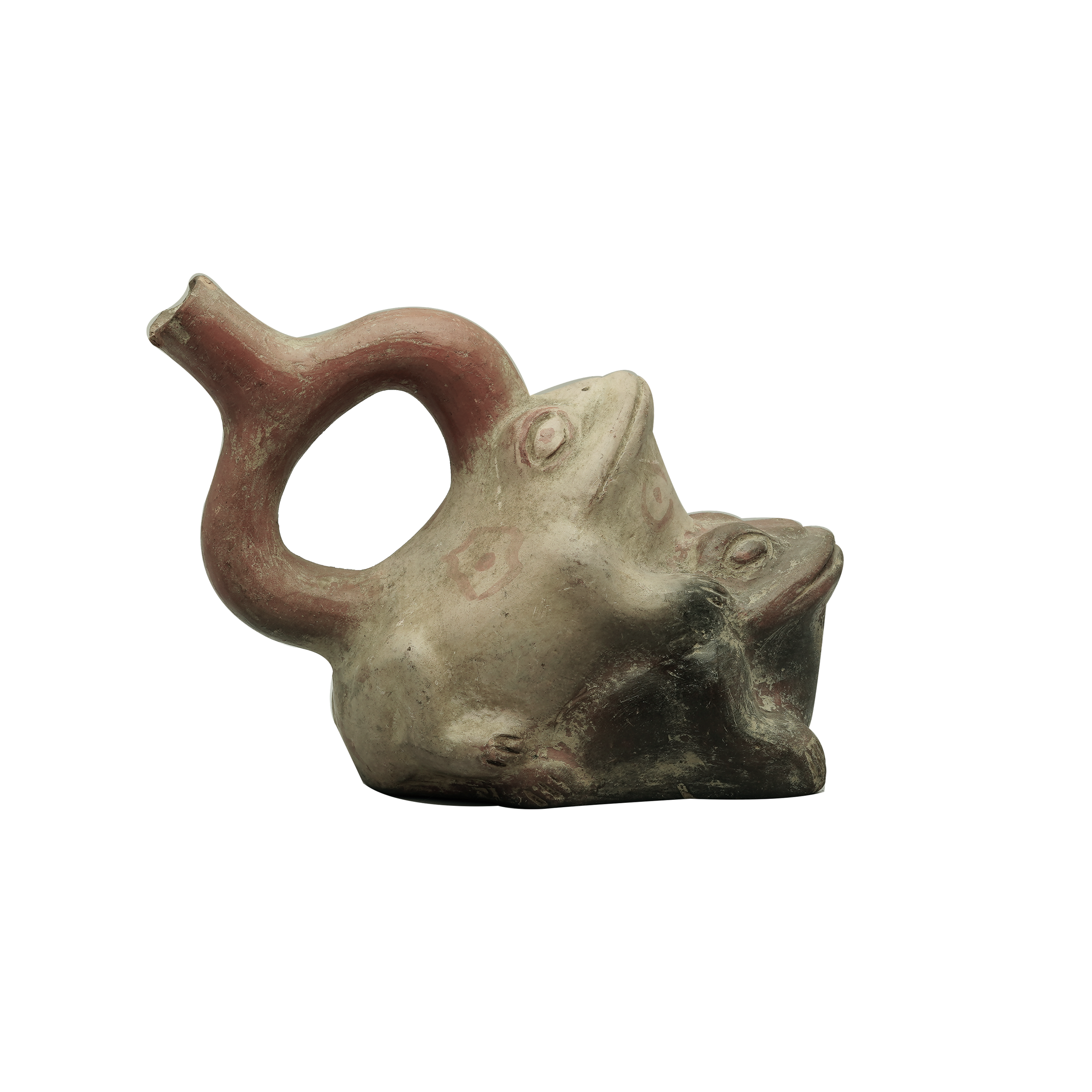
Stirrup-Spout Vessel with Frogs
Pre-Columbian, Moche Culture (100–700 CE)
Ceramic, slip-painted
Dimensions: 18x14 cm
Crafted vessel depicting two frogs in dynamic composition, rendered with naturalistic detail. The stirrup-shaped spout, characteristic of Moche ceramics, allowed for controlled pouring while also serving symbolic purposes. Frogs were powerful symbols of fertility, transformation, and water abundance, closely tied to agricultural cycles and rain.
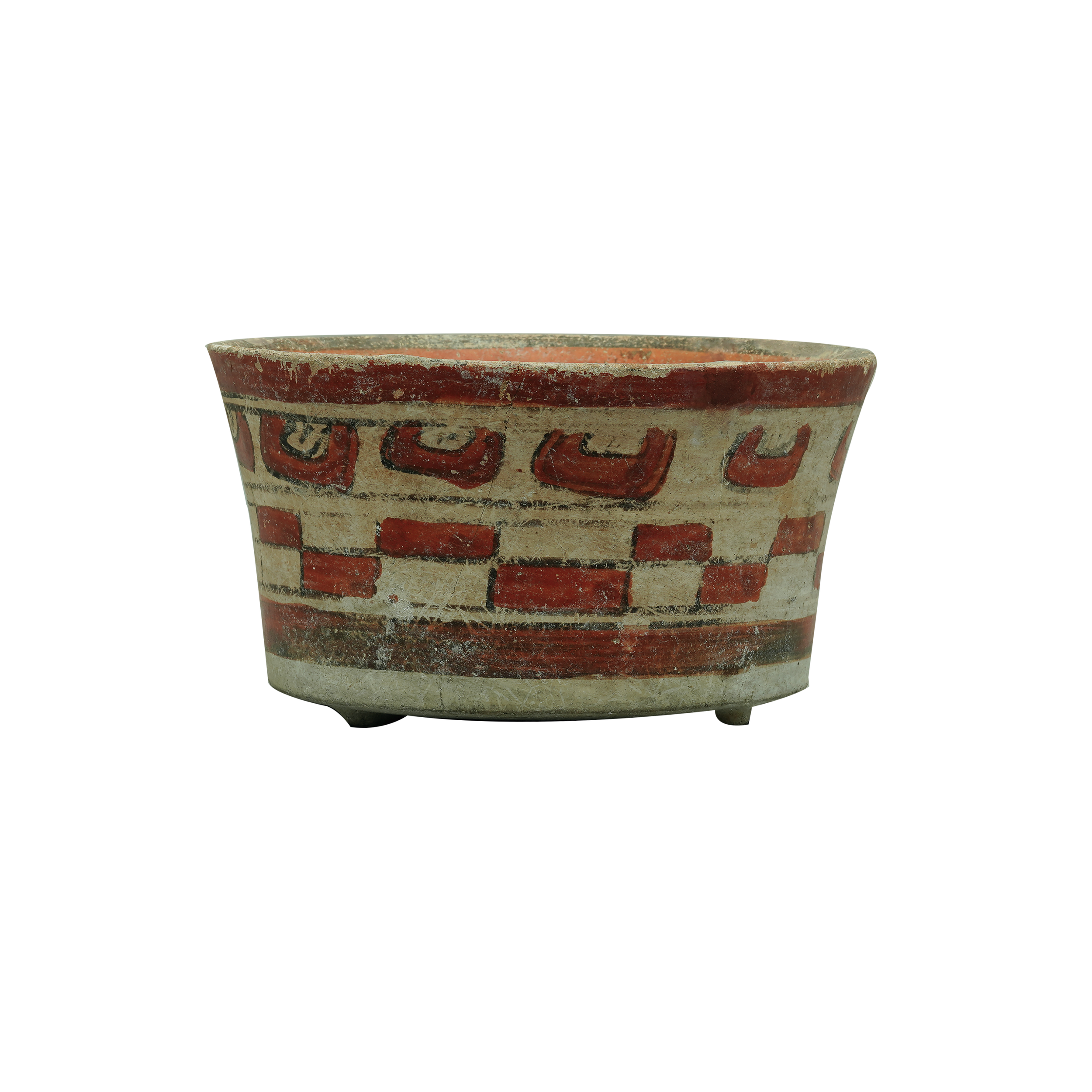
Maya Polychrome Bowl
Painted Ceramic, c. 600–900 CE
Maya Civilization, Mesoamerica
Dimensions: 19 × 10 cm
Painted ceramic vessel features bold geometric motifs in red and black on a cream background, framed by horizontal registers. The exterior is decorated with repeating stepped and scroll-like patterns, symbols associated with Maya cosmology and ritual meaning. The interior, coated in a rich red slip, contrasts with the exterior.
Such bowls were often used for food offerings, ritual libations, or as burial goods, linking everyday sustenance with spiritual continuity.
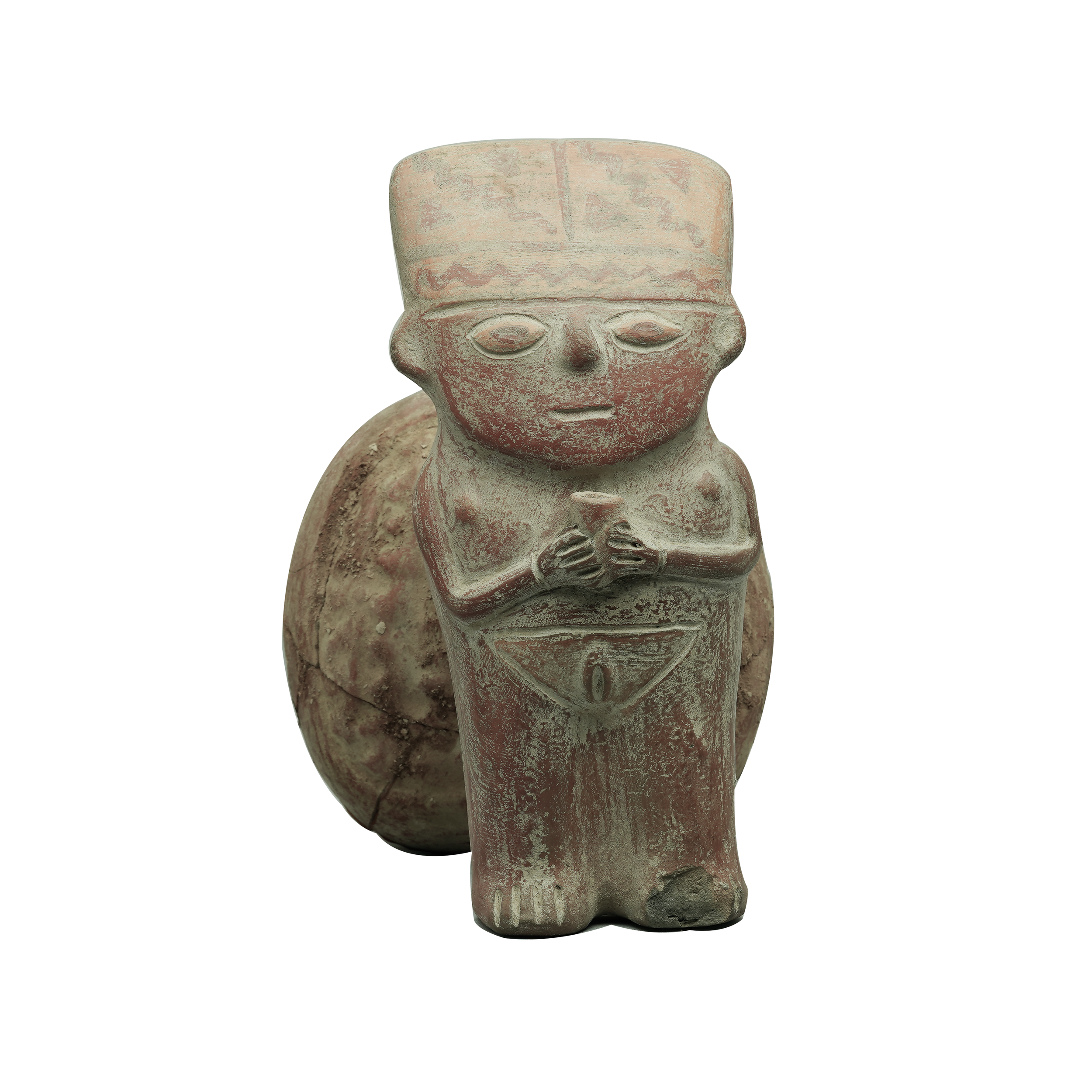
Figural Vessel with Standing Figure
Pre-Columbian, likely Inca, ca. 300–800 CE
Ceramic with red slip
Dimensions: 22 x 22 cm
Vessel combining practical function with symbolic representation. The body of the container is modeled as a gourd-like form, while a standing human figure, wearing a headdress and loincloth, emerges from its side. The figure holds an object, possibly an offering or cup, suggesting ritual or ceremonial use.
Such figural vessels were often associated with elite contexts, serving as containers for liquids or offerings, and may have symbolized fertility, abundance, or the connection between human ritual and agricultural sustenance.
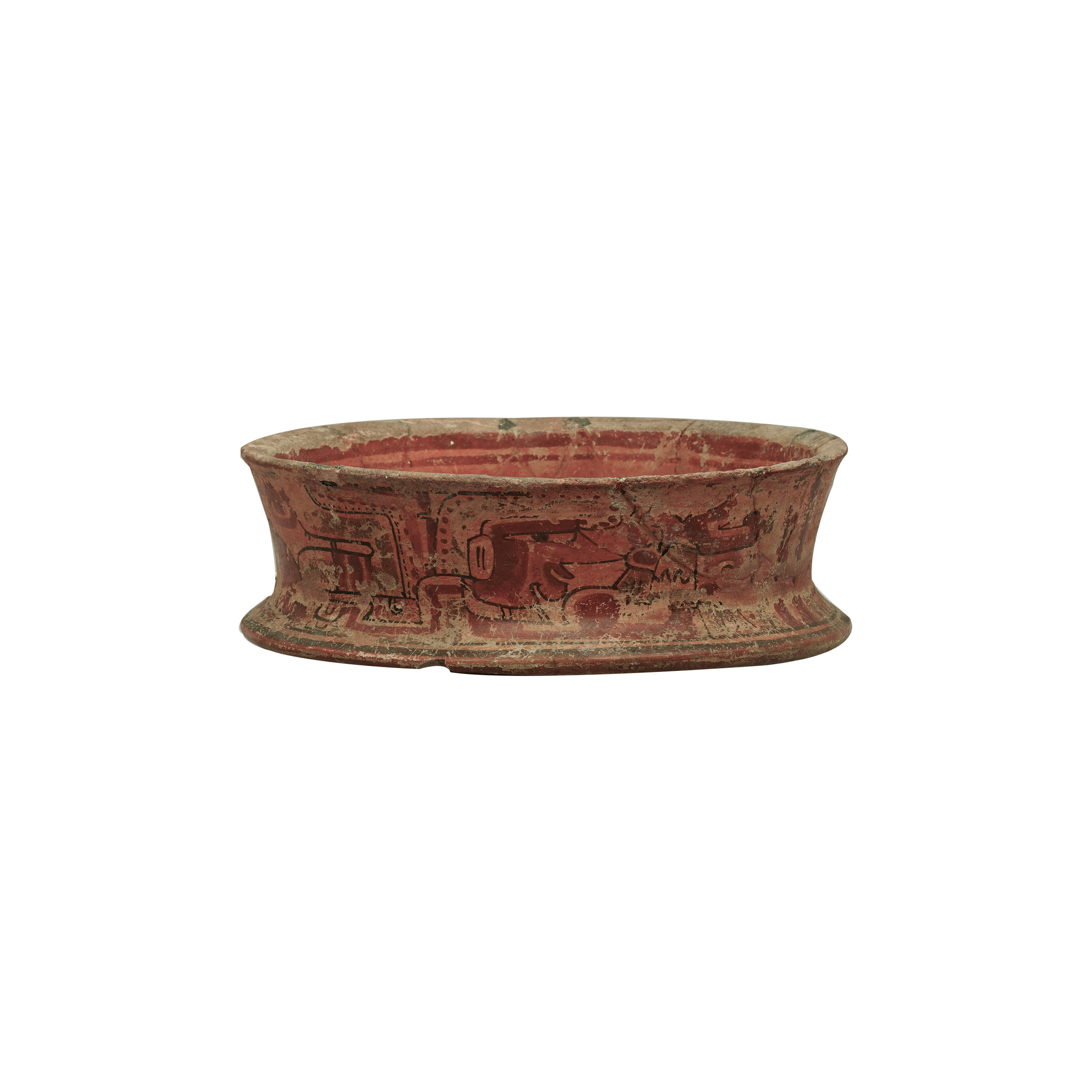
Maya Shallow Bowl with Painted Motifs
Maya Civilization, ca. 400–900 CE
Ceramic with red slip and painted decoration
Dimensions: 21 × 9 cm
Shallow ceramic bowl featuring painted motifs along its flaring sides, rendered in dark pigment against a red slip surface. Its wide, open form suggests use in serving food or drink, possibly in elite feasting or ritual contexts. The fine decoration and careful shaping reflect the Maya tradition of combining utility with artistic expression, making such vessels both functional and symbolic objects in daily and ceremonial life.
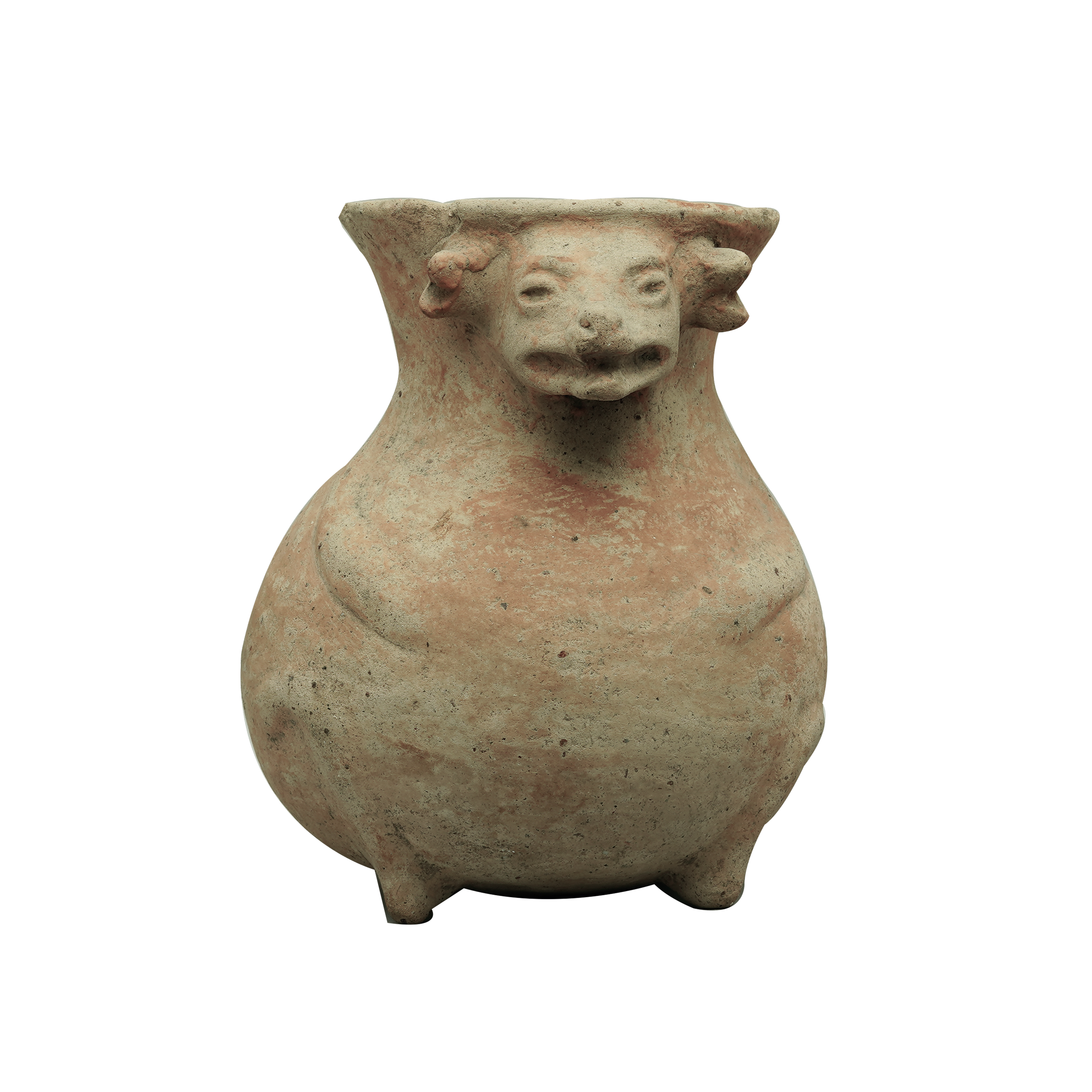
Maya Animal Effigy Vessel
Maya Culture, ca. 600–900 CE
Terracotta
Dimensions: 15 High -13 wide cm
Globular ceramic vessel featuring an animal head modeled at the rim, with rounded body and small tripod supports. The expressive snout, eyes, and ears suggest a symbolic creature, likely linked to fertility or protection. Used in ritual or domestic settings, such effigy jars combined utility with spiritual meaning, reflecting the Maya tradition of imbuing everyday objects with sacred significance.
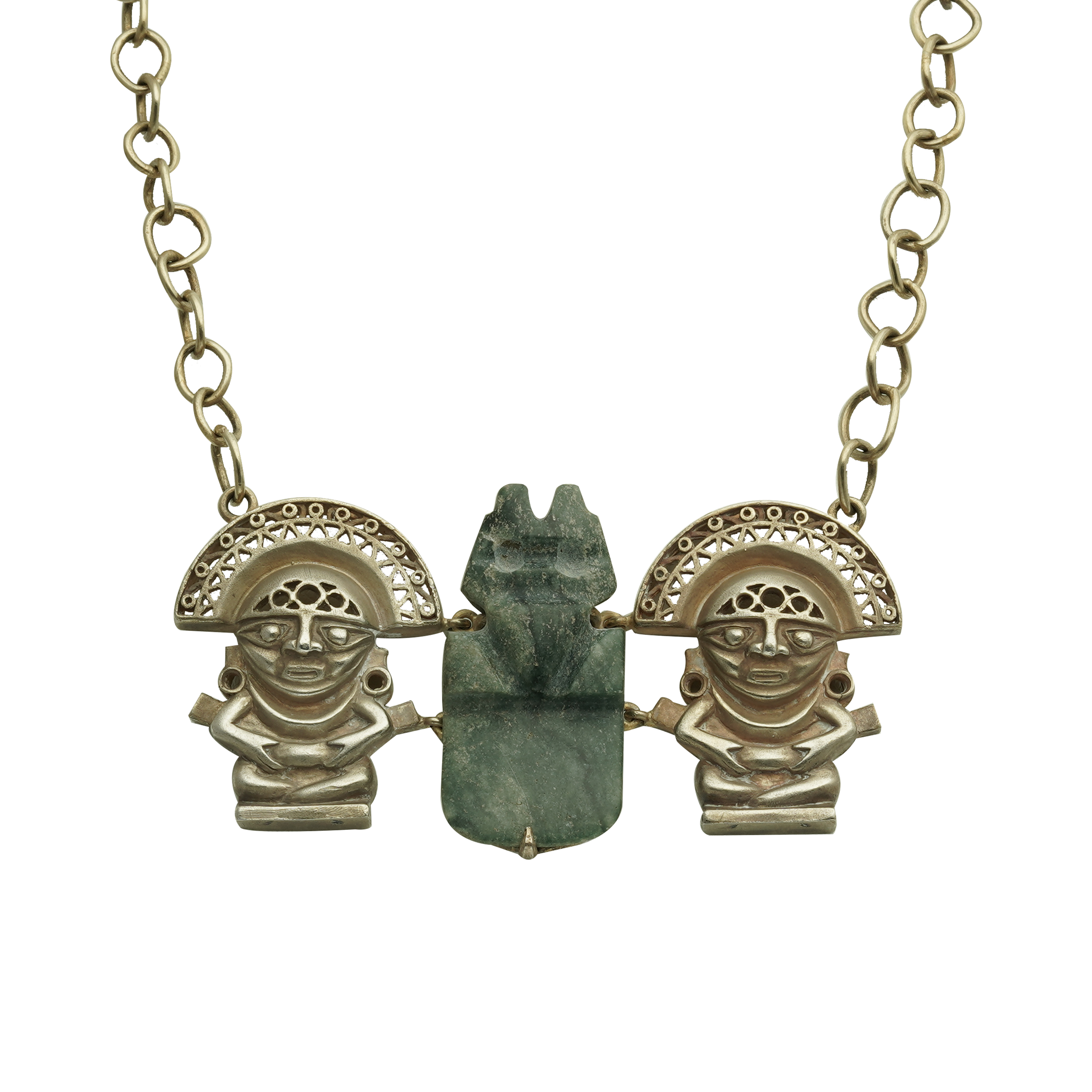
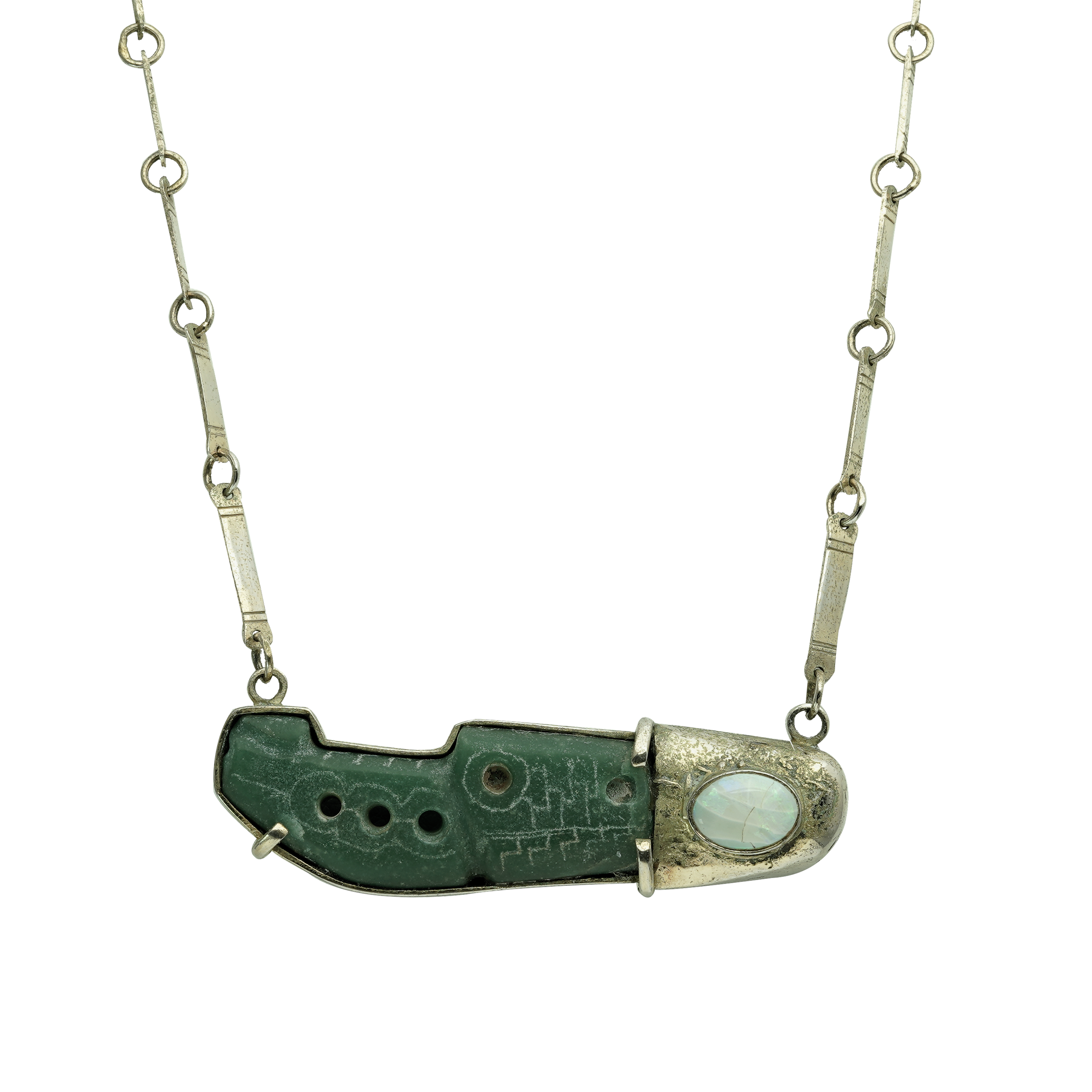
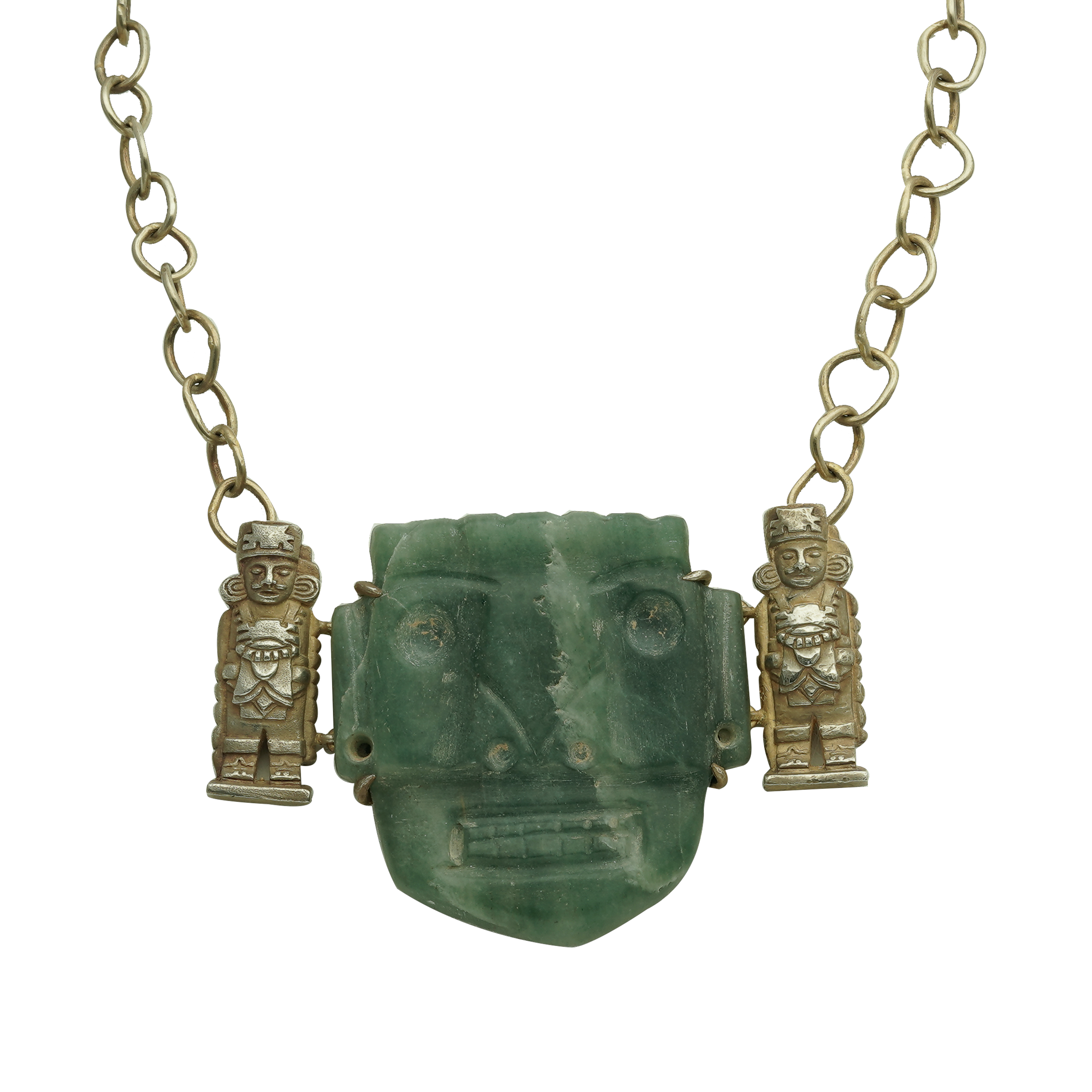
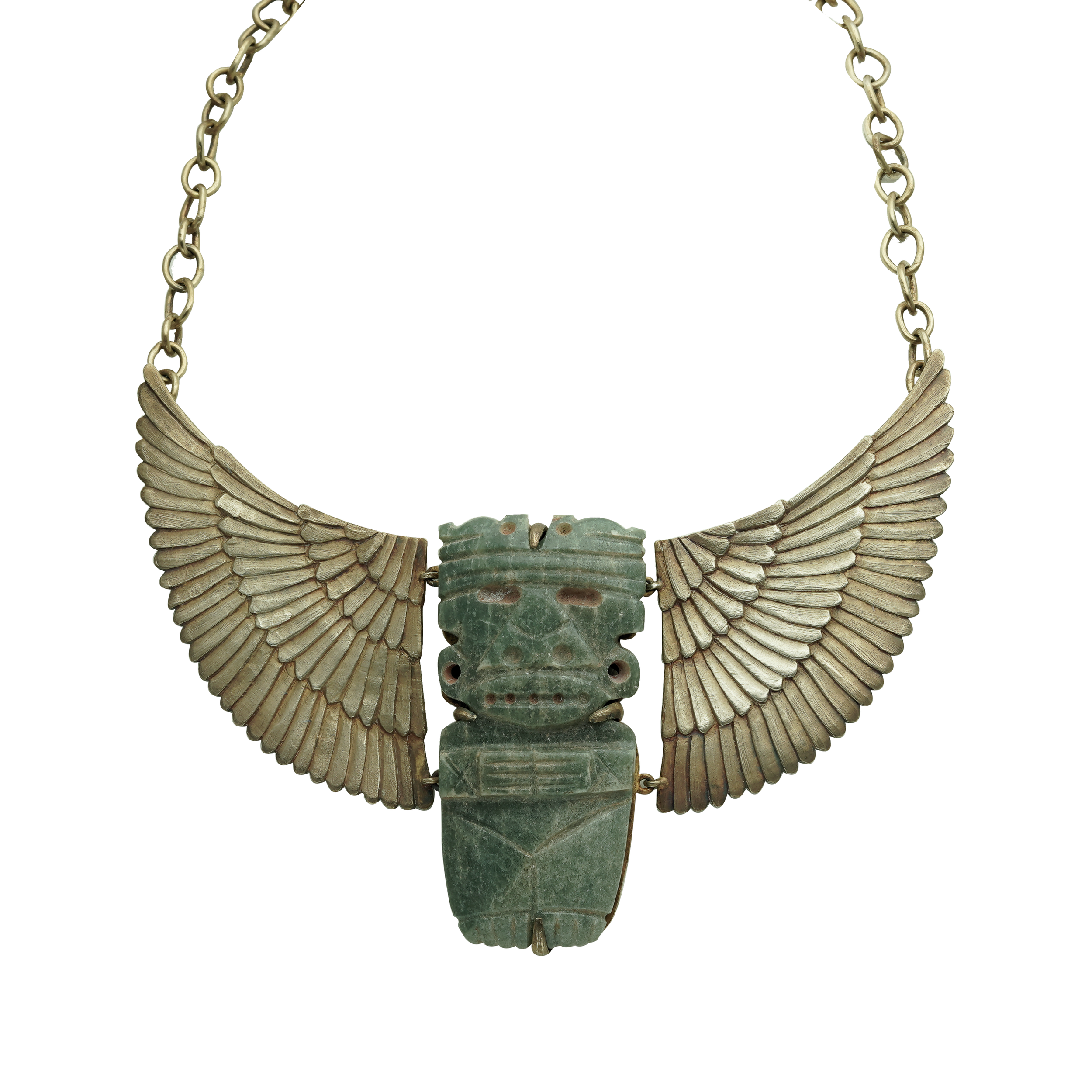

Maya Necklace with Jade Pendant and Beads
Culture: Maya Civilization
Date: c. 600–900 CE (Late Classic Period)
Materials: Carved jadeite, stone beads, shell or bone beads, metal fittings
Dimensions: Pendant height approx. 6 cm; overall necklace length variable
Necklace featuring a carved jadeite pendant in the stylized form of an abstracted insect or shield-like emblem, defined by symmetrical lobes and a central vertical ridge with transverse bar. The pendant’s smooth, mottled green surface is characteristic of high-quality jadeite prized in Maya culture.
The necklace strand is composed of cylindrical jadeite beads, smaller green stone beads, and darker interspersed beads, possibly made of shell, bone, or stone. These are strung on metal-linked connectors, forming a V-shaped drop that emphasizes the central pendant.
Provenance:
Likely from the Maya lowlands, in present-day Guatemala, Belize, or southern Mexico.