
SCULPTURES
Curated by ECLECTIC COLLECTORS, this page represent a selection of sculptures, showcasing diverse styles, periods, and artistic traditions. Each piece reflects the collectors’ refined taste and passion for preserving remarkable works of art
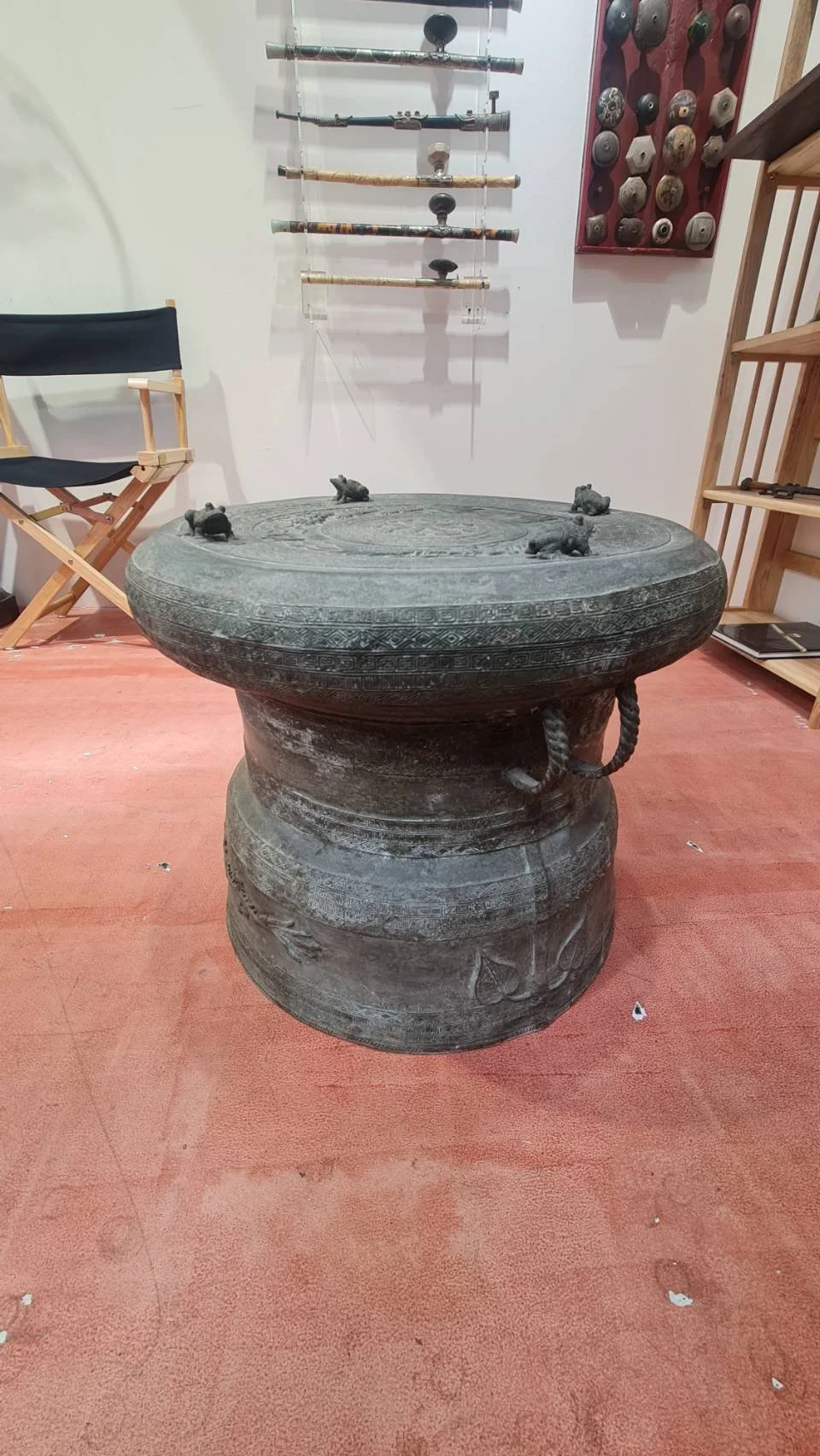
UNKNOWN ARTIST
The object in the image is a type of Southeast Asian bronze drum, commonly known as a "rain drum" or "frog drum". These drums are found across various cultures in Southeast Asia and as far away as Indonesia.
Dimensions:
The drums are typically decorated with frogs around the rim, which are symbols of water and rain, and associated with fertility. The sound produced by striking the drum is sometimes likened to the roar of thunder or a bullfrog, heralding the monsoon rains.
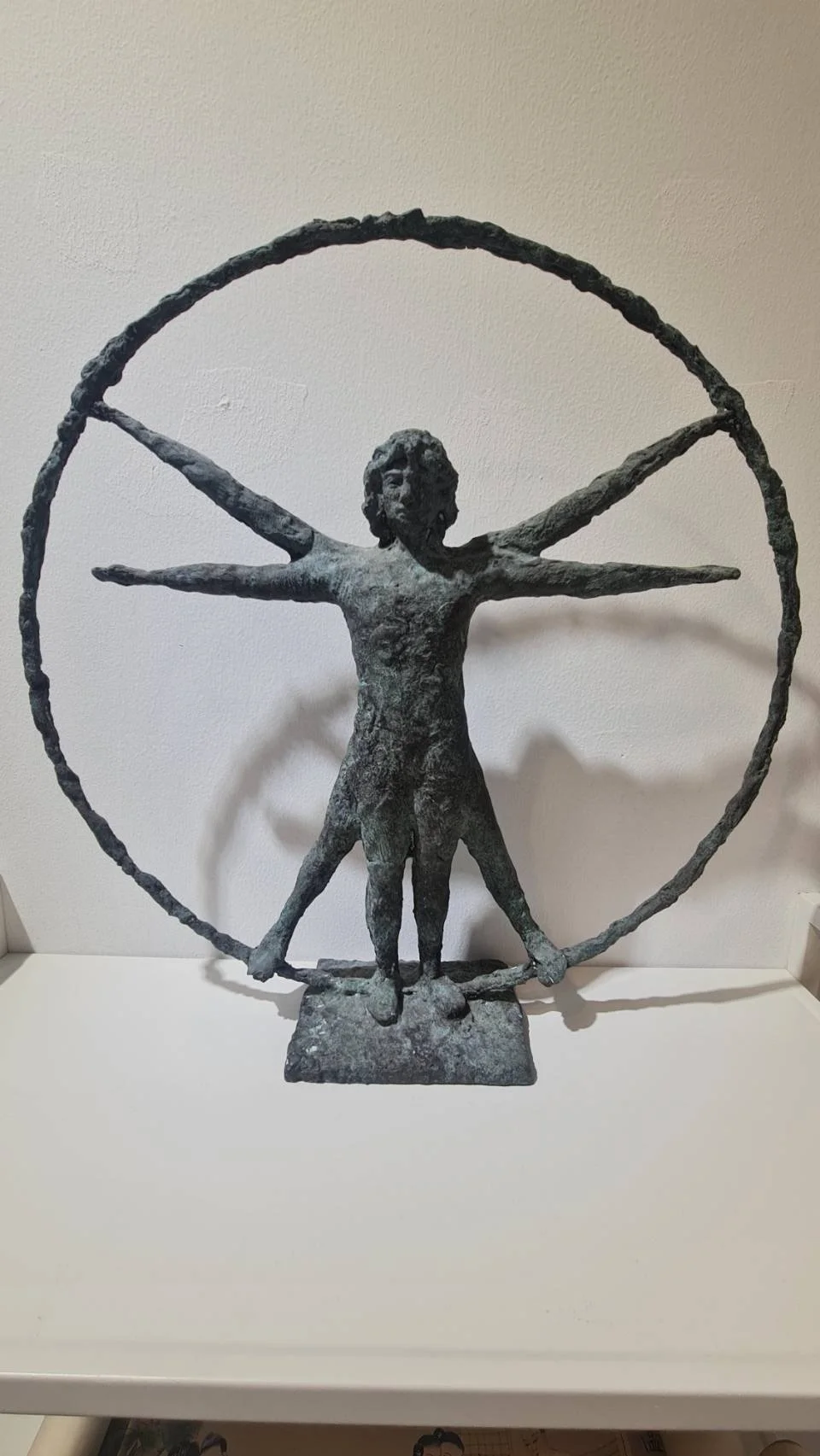
BOZE
JIM MORRISON inspired by Leonardo Da Vinci,
Bronze sculpture with green patina
Dimensions: 25 × 20 cm
This bronze sculpture reinterprets Leonardo da Vinci’s iconic Vitruvian Man, translating the Renaissance master’s study of human proportions into three-dimensional form. The figure stands within a large circular frame, arms and legs extended to convey balance, symmetry, and the harmony between man and the universe. Cast with a textured surface and green patina, the work evokes a timeless quality, bridging classical ideals with modern sculptural expression. It serves as both an homage to da Vinci’s pursuit of knowledge and a meditation on the enduring quest for human perfection.
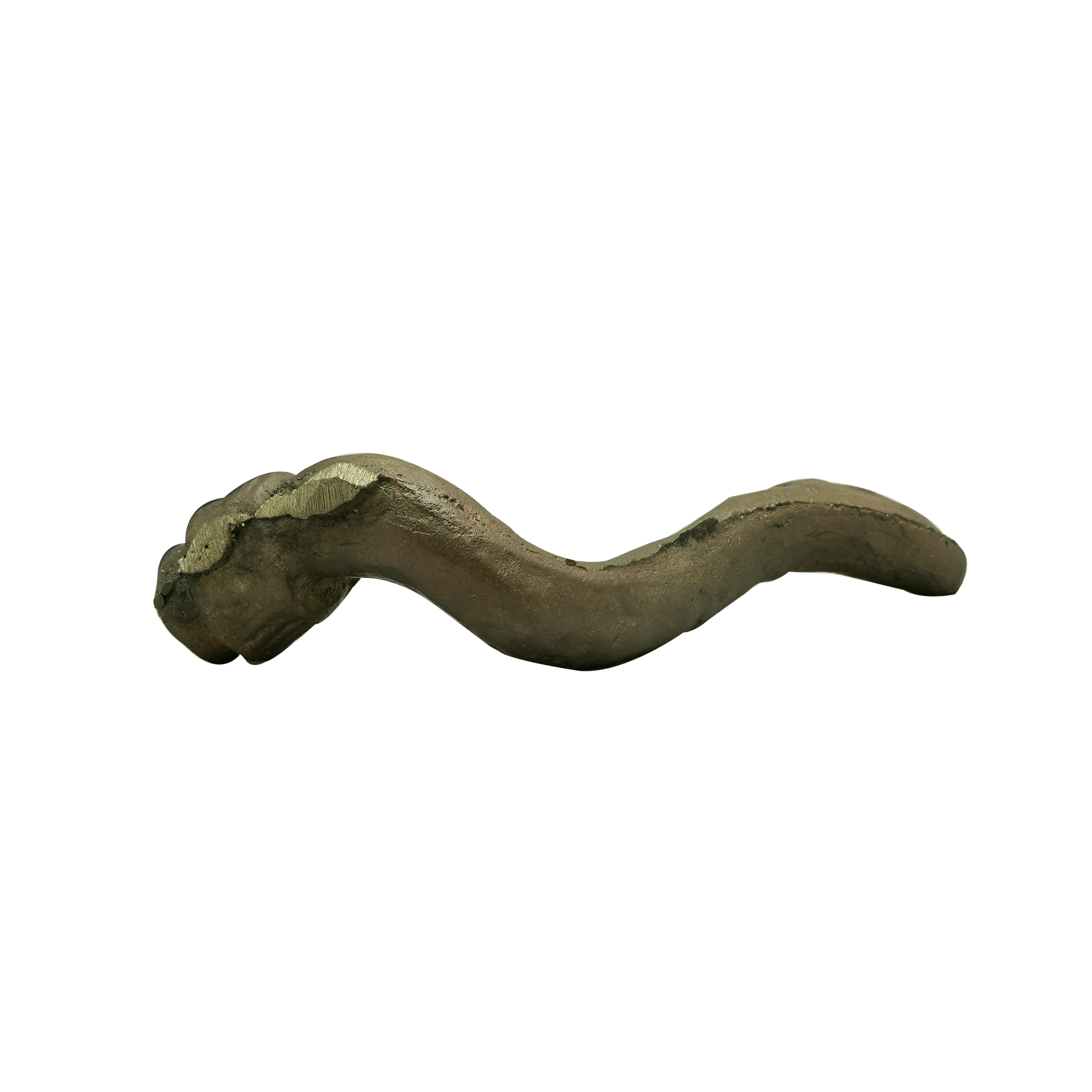
Door Handle by Diego Giacometti
Bronze, mid-20th century
Dimensions: 12 × 4 cm
This sculptural bronze door handle by Diego Giacometti exemplifies his organic and tactile approach to functional design. The handle, with its fluid, undulating form, suggests a natural branch or creature in motion, blurring the boundary between utility and art. Giacometti’s rough-textured surface treatment enhances its hand-crafted character, inviting touch while emphasizing the artist’s signature style rooted in nature and simplicity.
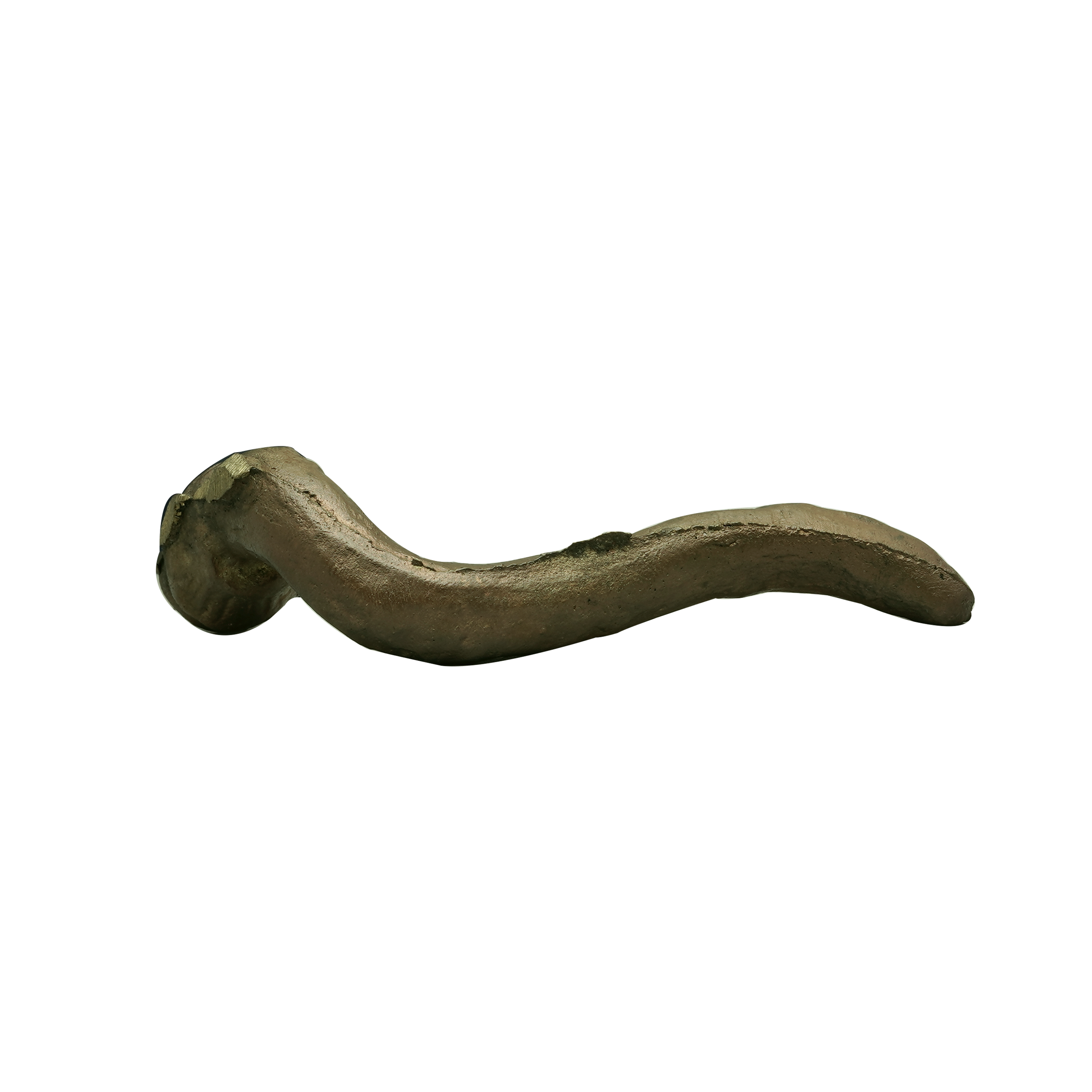
Door Handle
Diego Giacometti (1902–1985)
Bronze
Dimensions: 12 × 4 cm
This door handle by Diego Giacometti demonstrates his organic and tactile approach to design. Shaped with subtle irregularity, its gently undulating form evokes natural motifs—such as branches or animal silhouettes—while remaining functional as an everyday object. The hand-finished surface bears the artist’s signature texture, a hallmark of his work that blends sculpture with utility. Giacometti’s creations transformed simple furnishings into poetic works of art, merging craftsmanship with imagination.
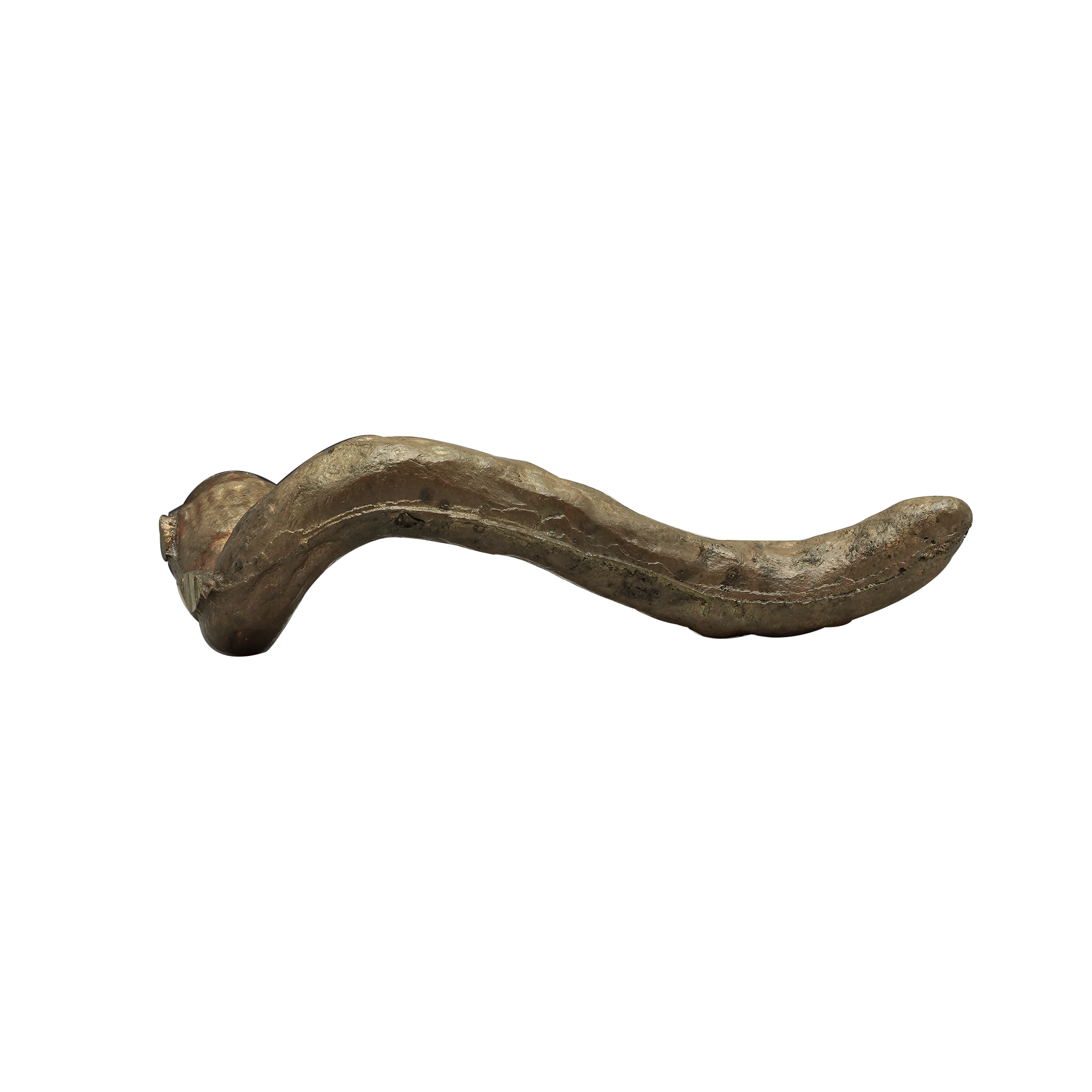
Door Handle by Diego Giacometti
Bronze, mid-20th century
Dimensions: 12 × 4 cm
Bronze door handle, designed by Diego Giacometti, exemplifies his ability to transform everyday objects into sculptural works of art. With its organic, sinuous form, the handle blurs the line between functionality and artistry, echoing natural shapes while remaining tactile and practical. Giacometti’s distinct textured surfaces give the piece a handmade, almost primitive quality, reflecting his philosophy that beauty lies in simplicity and imperfection.
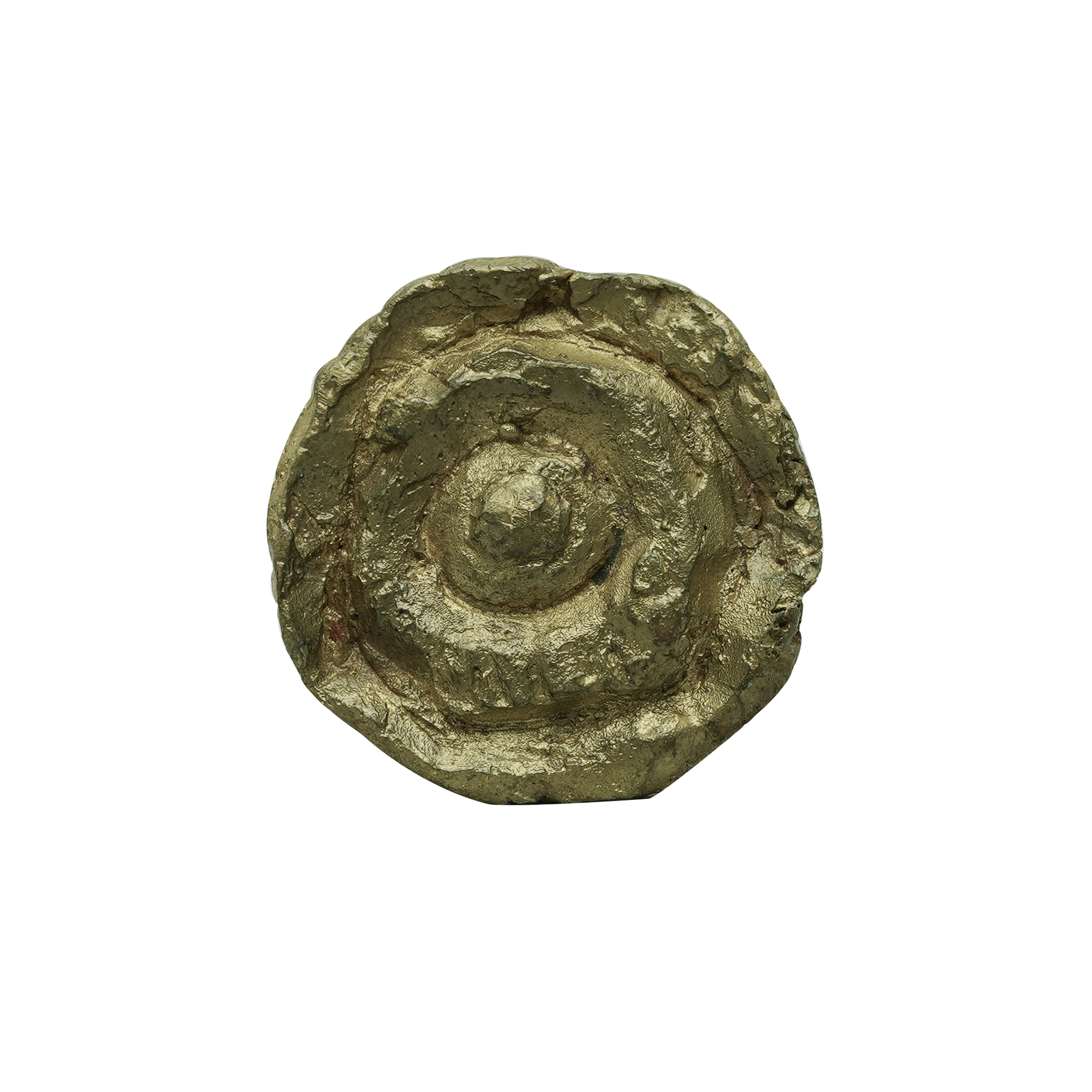
Diego Giacometti (1902–1985)
Door Handle, Bronze
Dimensions: 6 × 5 cm
Sculptural door handle exemplifying Diego Giacometti’s distinctive approach to functional art. Cast in bronze with a textured, organic surface, the piece transforms a utilitarian object into a tactile artwork. The design, reminiscent of ancient artifacts and natural forms, reflects Giacometti’s ability to merge simplicity with poetic expression. Its irregular, hand-worked finish underscores the artisanal quality that made his creations both intimate and timeless.
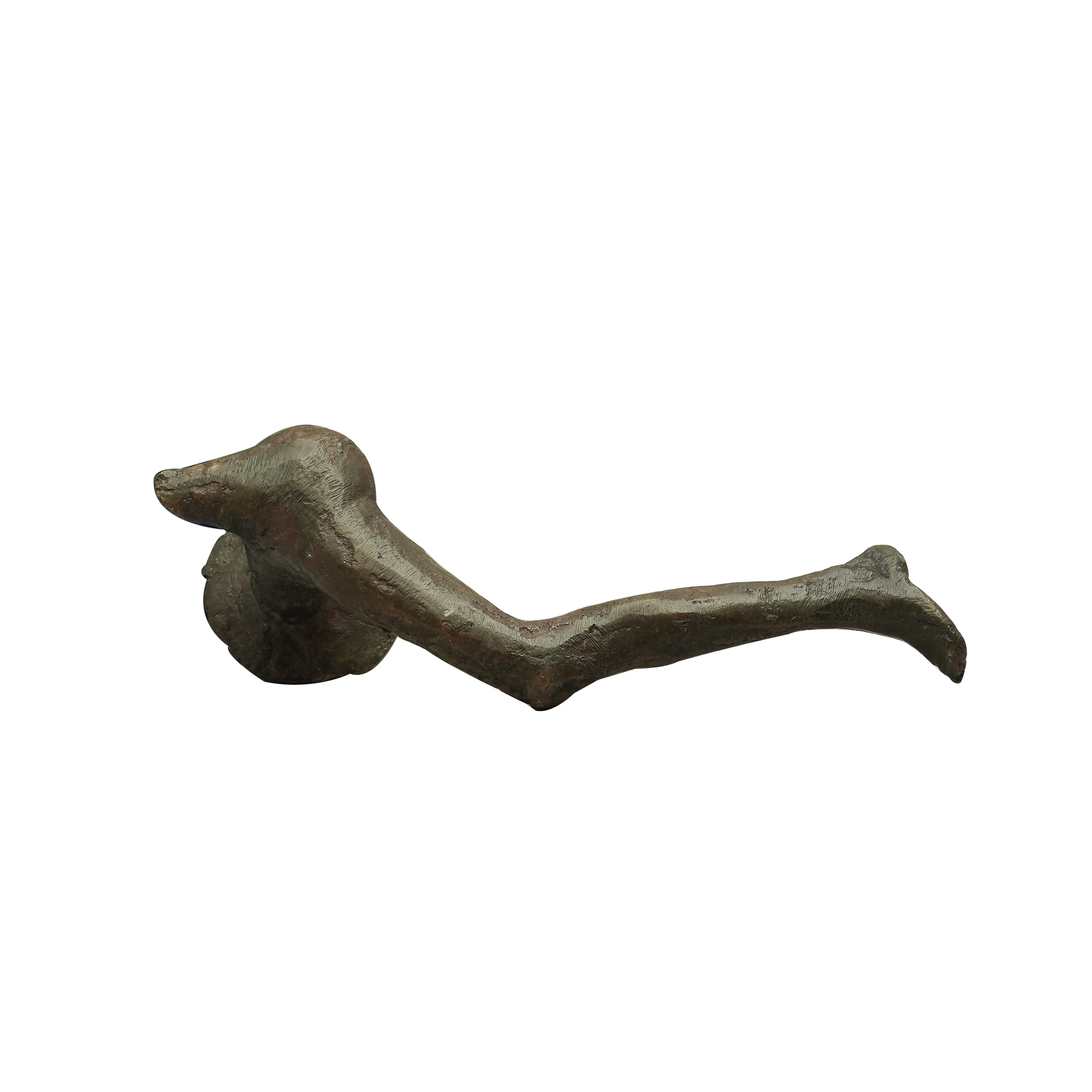
Diego Giacometti (1902–1985)
Door Handle in the Form of a Reclining Figure
Bronze, patinated, c. 1960s–1980s
Dimensions: 3 × 12 cm
This bronze door handle shows Diego Giacometti’s gift for turning everyday objects into works of art. The reclining figure, both abstract and playful, reflects his signature blend of utility and poetry. Known for his furniture and decorative pieces, Giacometti infused even the smallest designs with elegance and imagination.
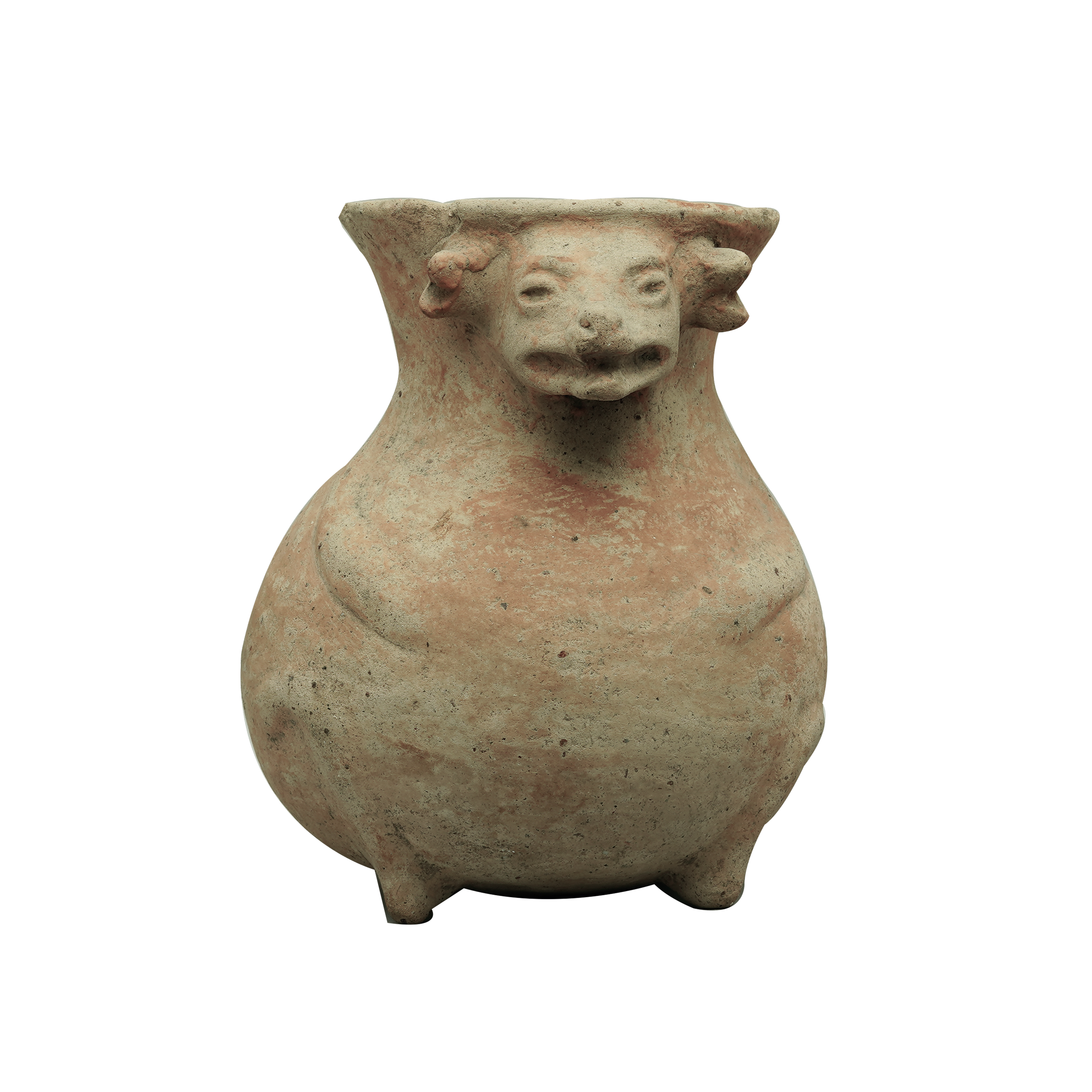
Maya Animal Effigy Vessel
Maya Culture, ca. 600–900 CE
Terracotta
Dimensions: 15 High -13 wide cm
Globular ceramic vessel featuring an animal head modeled at the rim, with rounded body and small tripod supports. The expressive snout, eyes, and ears suggest a symbolic creature, likely linked to fertility or protection. Used in ritual or domestic settings, such effigy jars combined utility with spiritual meaning, reflecting the Maya tradition of imbuing everyday objects with sacred significance.
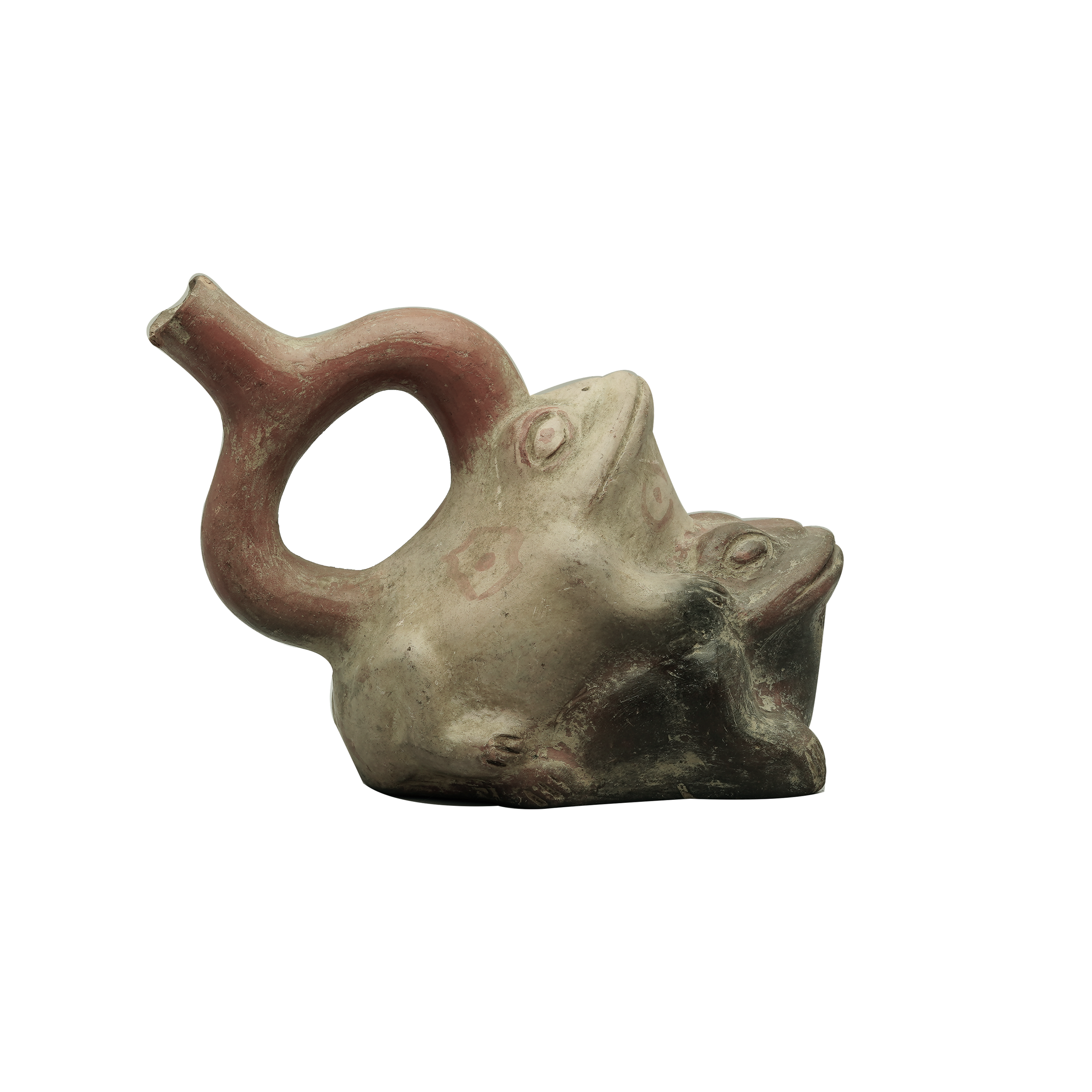
Stirrup-Spout Vessel with Frogs
Pre-Columbian, Moche Culture (100–700 CE)
Ceramic, slip-painted
Dimensions: 18x14 cm
Crafted vessel depicting two frogs in dynamic composition, rendered with naturalistic detail. The stirrup-shaped spout, characteristic of Moche ceramics, allowed for controlled pouring while also serving symbolic purposes. Frogs were powerful symbols of fertility, transformation, and water abundance, closely tied to agricultural cycles and rain.
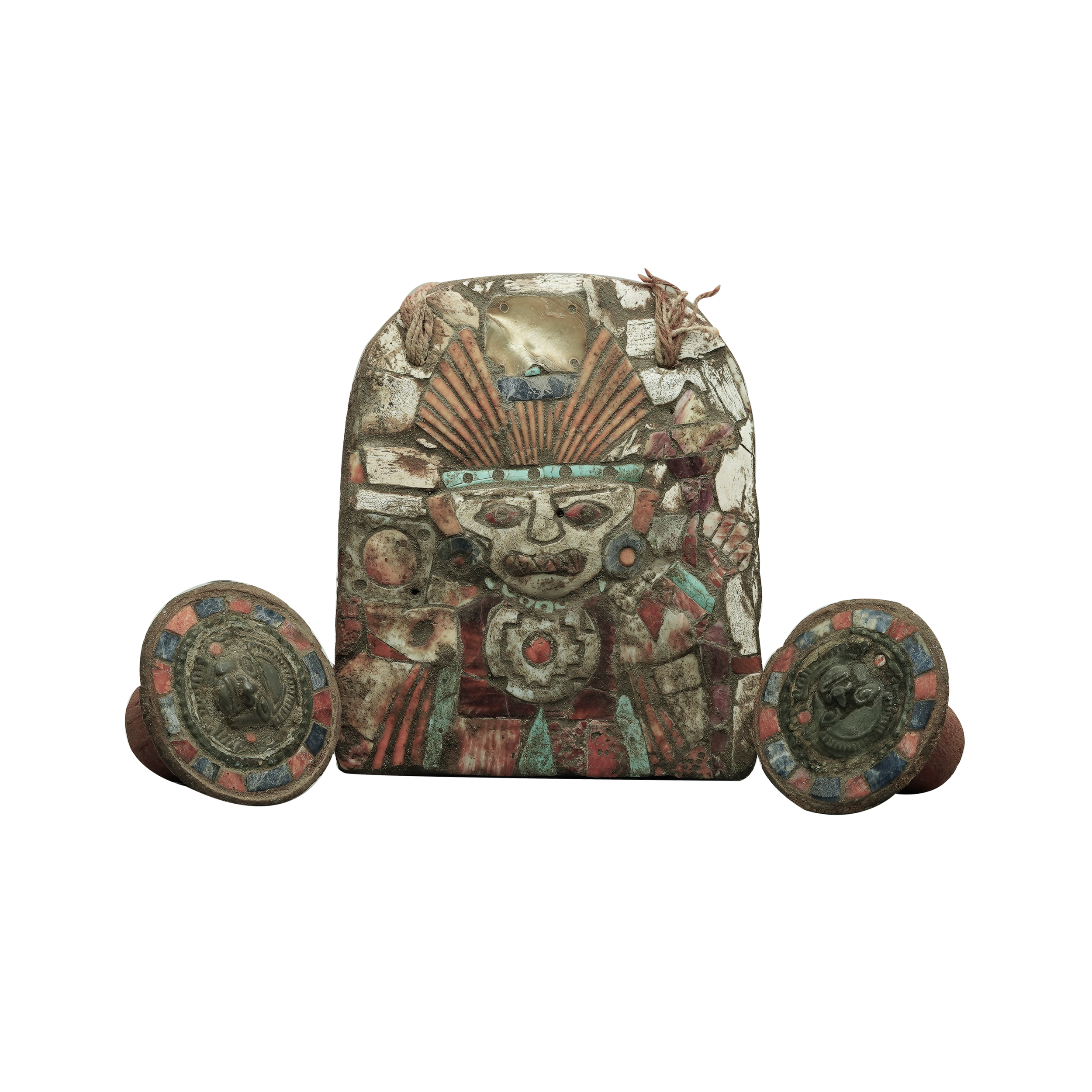
Ceremonial Polychrome Pectoral
Late Postclassic Period (c. 1200–1500 CE)
Peru, Inca or Central Highlands
Dimensions: 13 × 11 cm
Polychrome ceramic pectoral depicting a richly adorned deity or priestly figure, rendered with vibrant pigments of red, turquoise, white, and black. The central plaque features a stylized face framed by a dramatic headdress and elaborate ornaments, signifying high status and sacred authority. The two accompanying round earspools, decorated with modeled faces and colorful geometric borders, would have complemented the regalia, evoking themes of ritual power and divine presence.
Such pectorals were likely used in ceremonial contexts, possibly as part of ritual attire or as offerings, symbolizing the connection between earthly rulers and the divine. The bold iconography and careful workmanship reflect the importance of costume and ornament in pre-Columbian religious and political life.
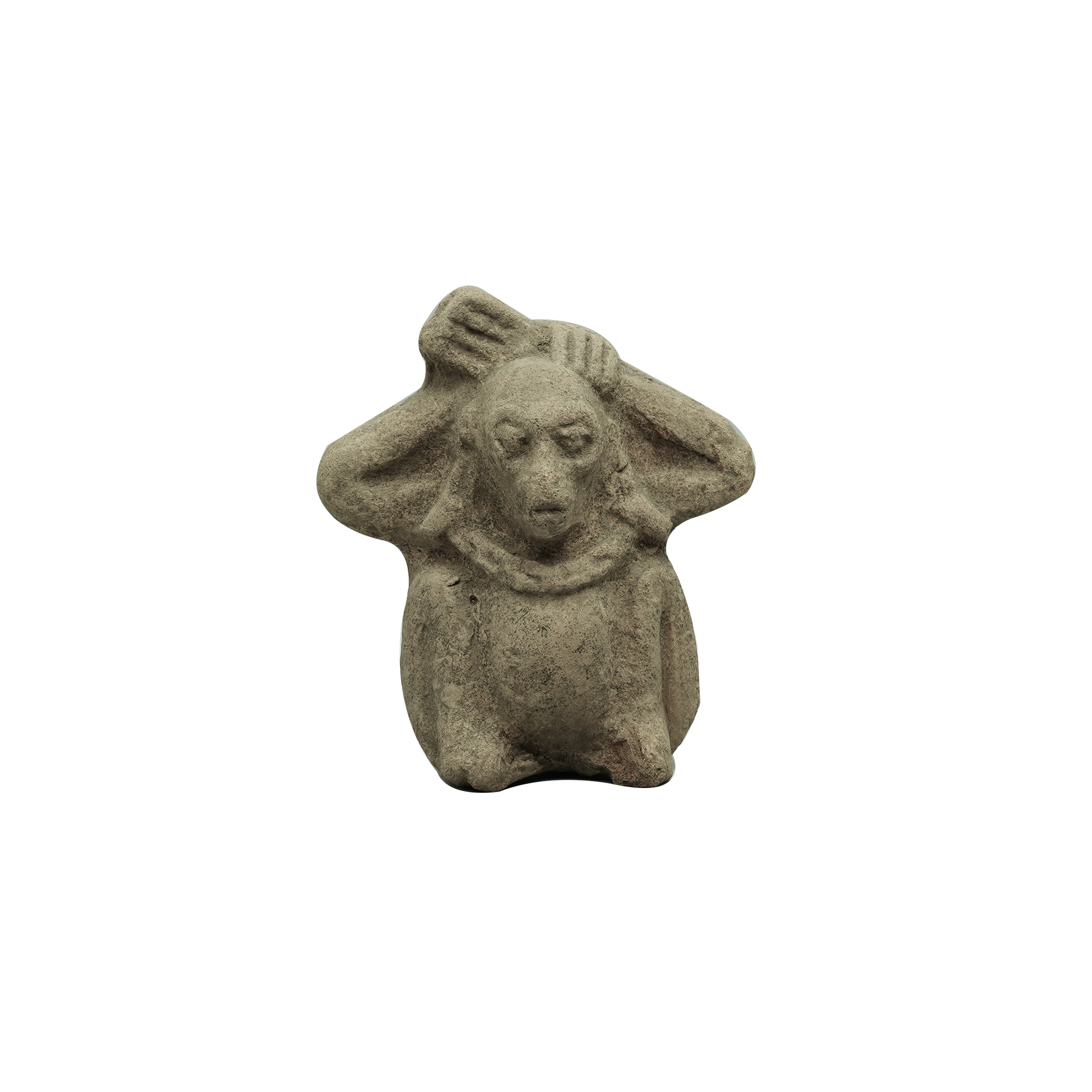
Pre-Columbian / Maya Ceramic Figurine
Late Classic Period (c. 600–900 CE)
Dimensions: 9 × 6 cm
Small ceramic figure depicting a seated monkey with arms raised to its head. Monkeys were significant in Maya culture, linked to scribes, musicians, and mythological beings from the Popol Vuh. The simple modeling emphasizes posture and expression rather than surface detail. Likely used in a ritual or domestic context, the figurine reflects both artistic skill and symbolic meaning in Maya society.
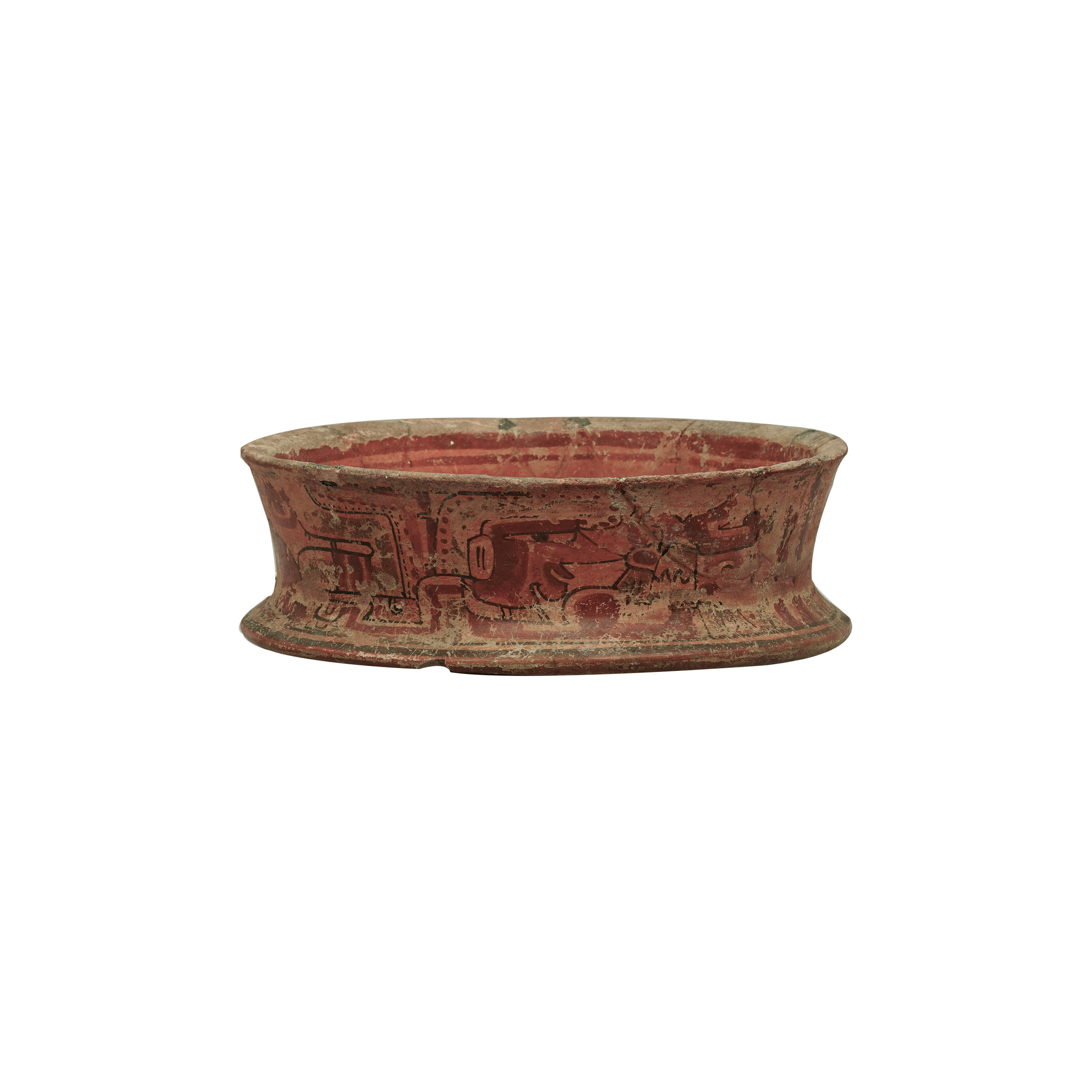
Maya Shallow Bowl with Painted Motifs
Maya Civilization, ca. 400–900 CE
Ceramic with red slip and painted decoration
Dimensions: 21 × 9 cm
Shallow ceramic bowl featuring painted motifs along its flaring sides, rendered in dark pigment against a red slip surface. Its wide, open form suggests use in serving food or drink, possibly in elite feasting or ritual contexts. The fine decoration and careful shaping reflect the Maya tradition of combining utility with artistic expression, making such vessels both functional and symbolic objects in daily and ceremonial life.
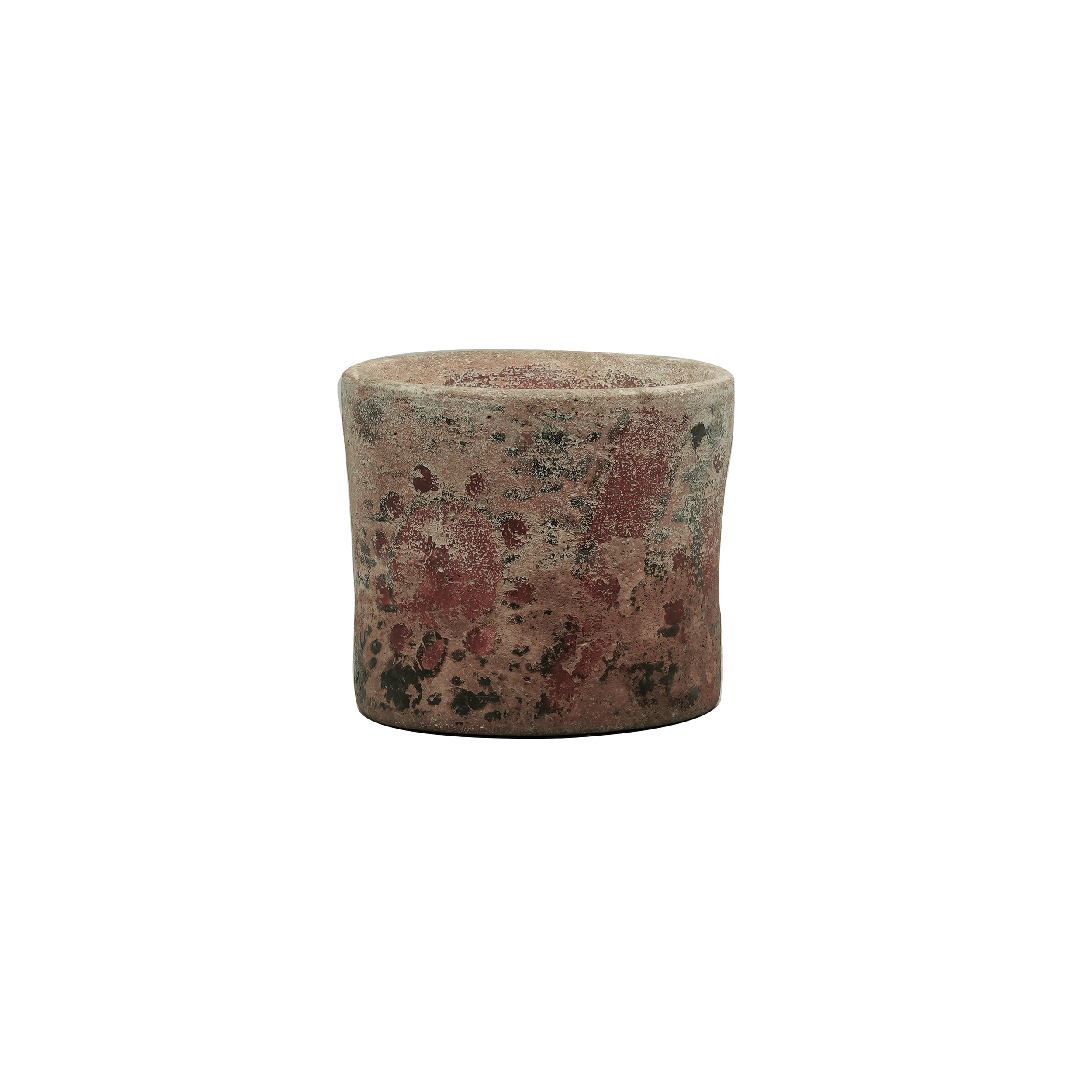
Maya Ceramic Goblet
Maya Civilization, ca. 400–900 CE
Ceramic with red slip and surface encrustation
Dimensions: 8 × 7 cm
Small goblet, with traces of red pigment and darkened patina from age, reflects the utilitarian yet symbolic ceramics of the Maya. Such vessels were likely used for drinking cacao or other ritual beverages, linking daily life with ceremonial practice. Its simple cylindrical form and worn surface suggest both practical use and enduring cultural significance.si
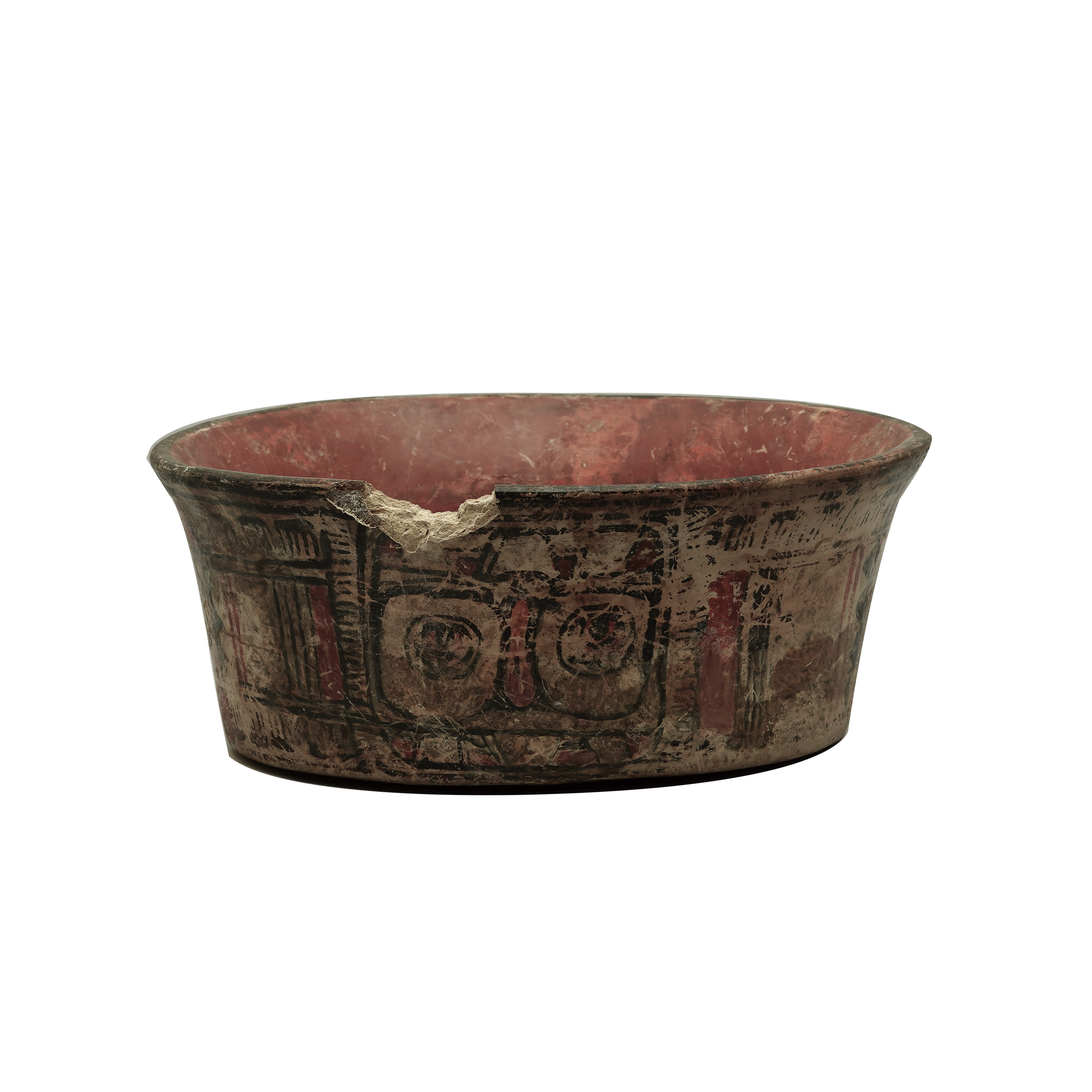
Maya Polychrome Bowl
Maya Civilization, ca. 600–900 CE
Ceramic with red and black painted decoration
Dimensions: 19 × 7 cm
Shallow bowl, decorated with geometric and symbolic motifs in red and black, exemplifies the sophistication of Maya painted ceramics. The interior features a radiating design, possibly symbolizing the sun or cosmic order, while the exterior displays glyph-like and abstract imagery. Such vessels were used in both daily life and ritual contexts, often for serving food or drink, and sometimes placed in tombs as offerings to accompany the deceased in the afterlife.
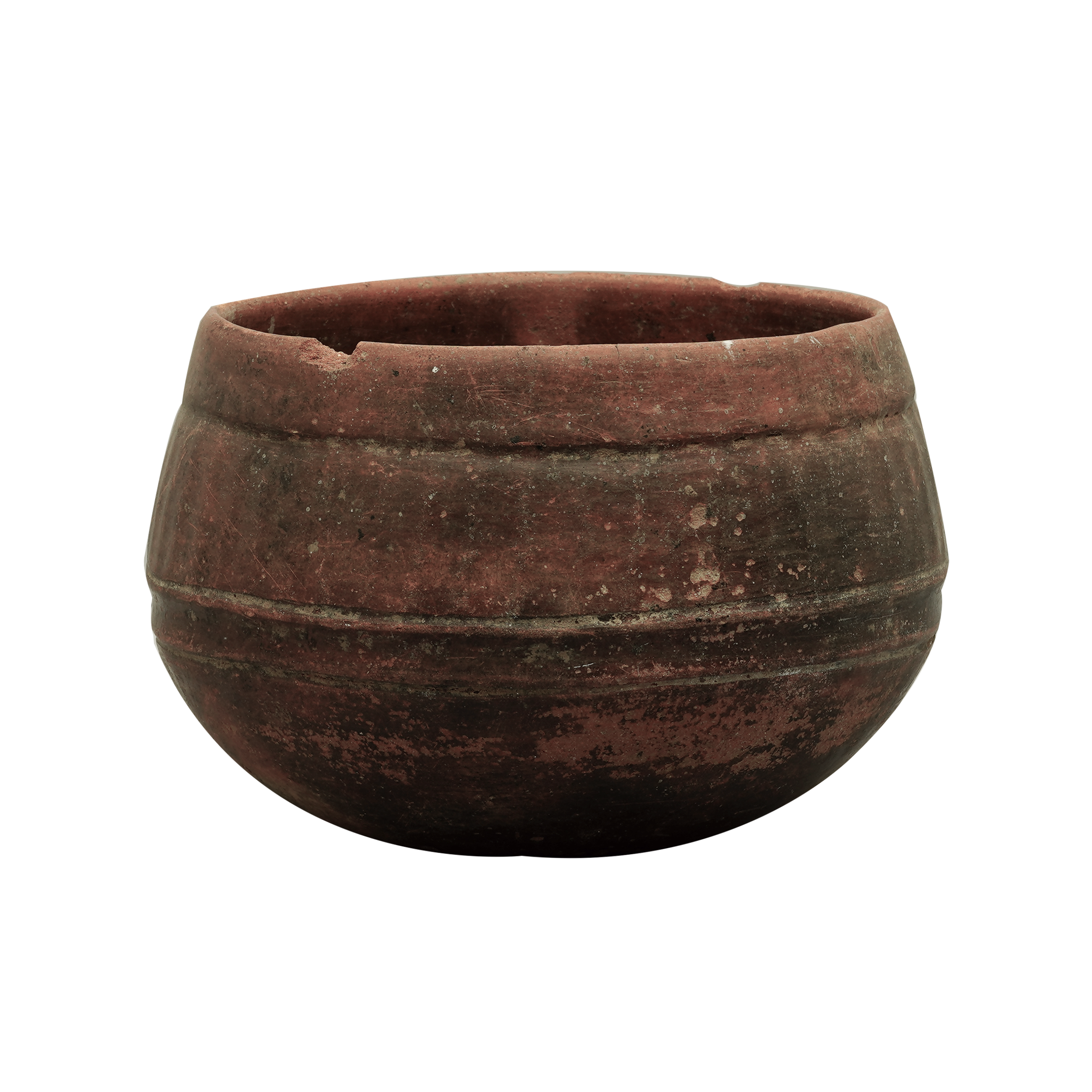
Maya Ceramic Bowl
Dimensions: 17 × 11 cm
Maya Civilization, ca. 300 BCE – 600 CE
Burnished ceramic with red slip
Rounded bowl, with its simple form and subtle red slip finish, reflects the utilitarian yet refined craftsmanship of Maya ceramics. Such vessels were used in daily life for storing and serving food, while also carrying symbolic meaning when placed in ritual or funerary contexts.
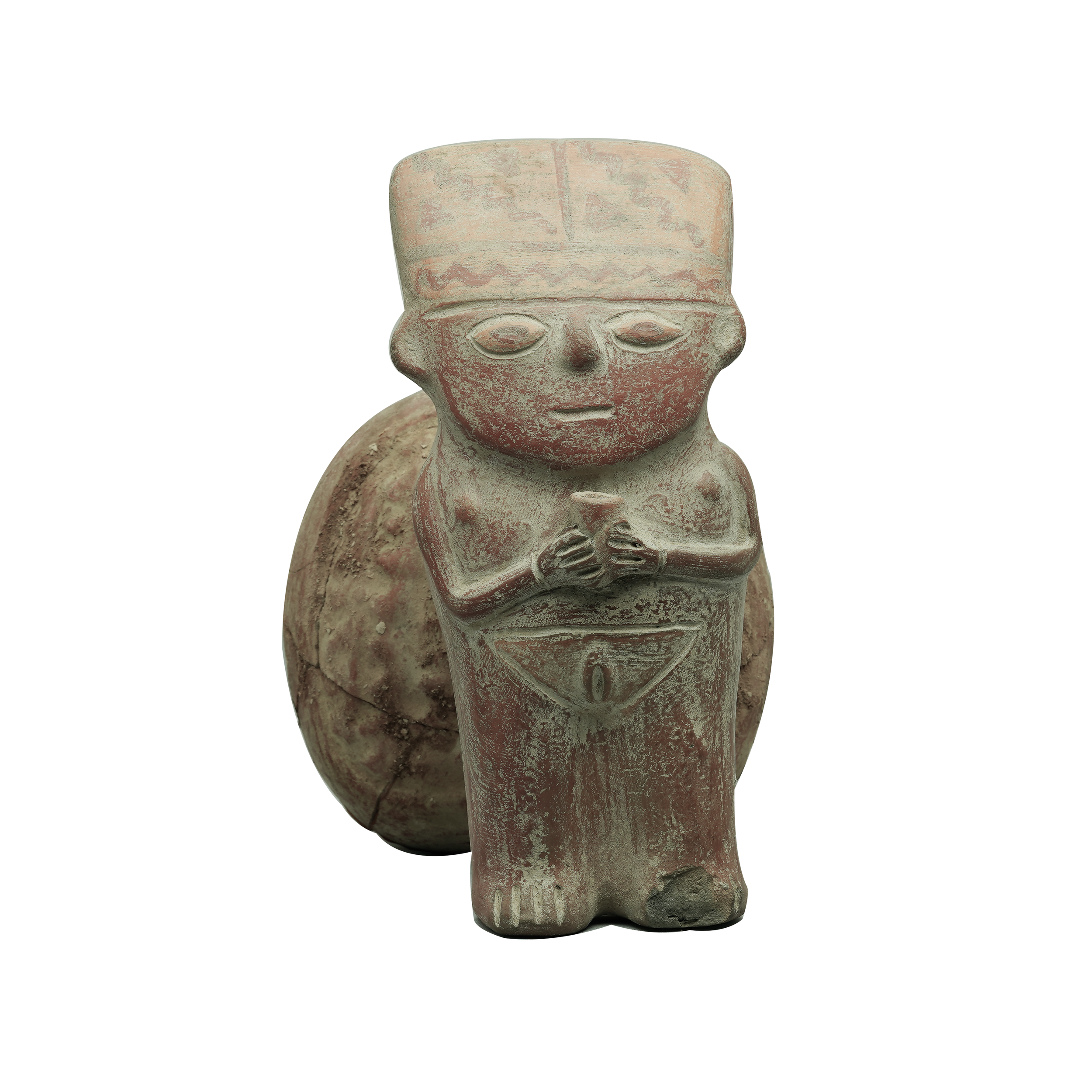
Figural Vessel with Standing Figure
Pre-Columbian, likely Inca, ca. 300–800 CE
Ceramic with red slip
Dimensions: 22 x 22 cm
Vessel combining practical function with symbolic representation. The body of the container is modeled as a gourd-like form, while a standing human figure, wearing a headdress and loincloth, emerges from its side. The figure holds an object, possibly an offering or cup, suggesting ritual or ceremonial use.
Such figural vessels were often associated with elite contexts, serving as containers for liquids or offerings, and may have symbolized fertility, abundance, or the connection between human ritual and agricultural sustenance.
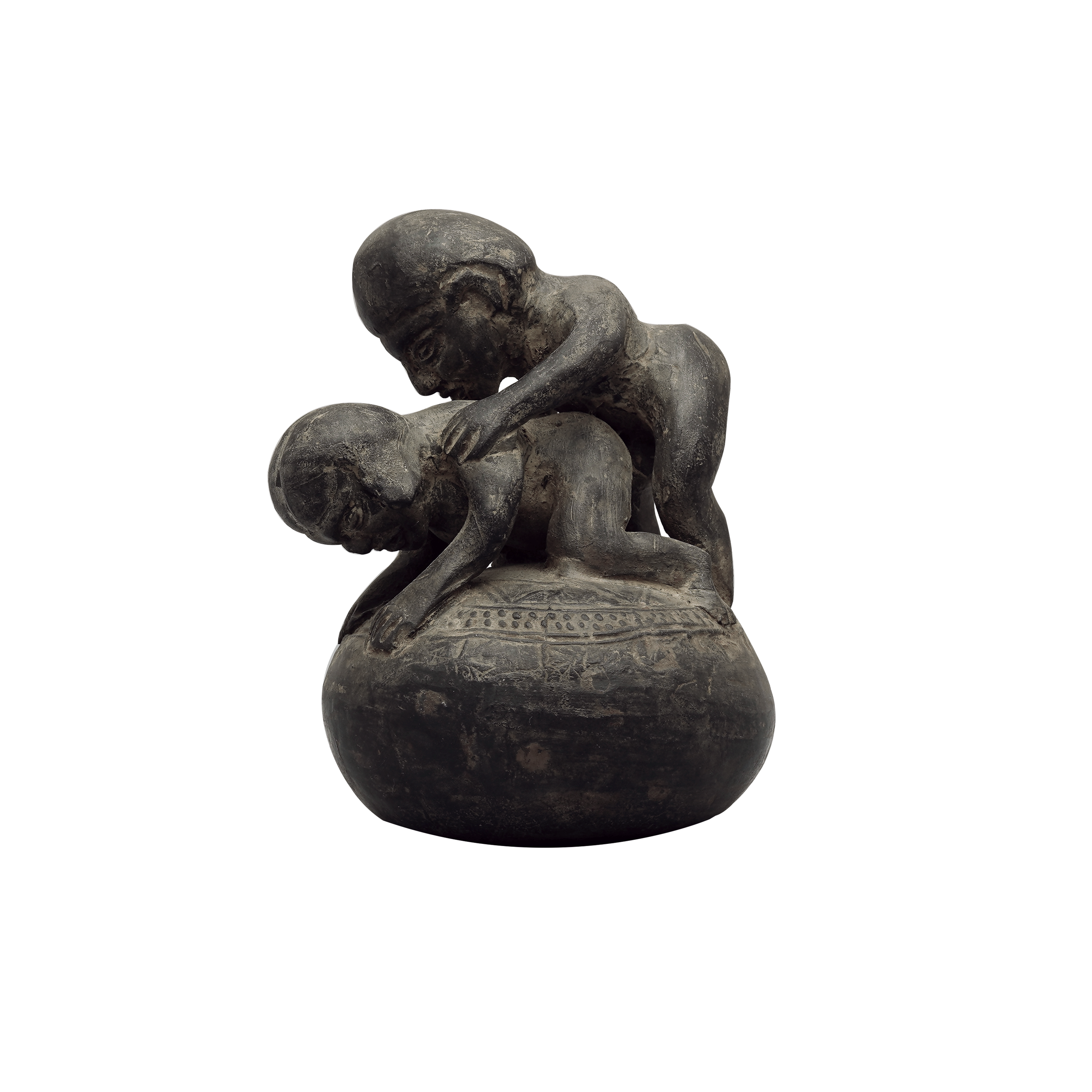
Erotic Figurative Vessel
West Mexico (Nayarit/Colima), ca. 200 BCE – 500 CE
Burnished black ceramic
Dimensions: 17 × 13 cm
Ceramic vessel depicting two intertwined human figures in an intimate pose, modeled with striking realism and vitality. Such works are part of the West Mexican shaft tomb tradition, where ceramics were placed as offerings for the dead. Erotic imagery in these vessels is believed to symbolize fertility, continuity, and the regenerative forces that link life and death.
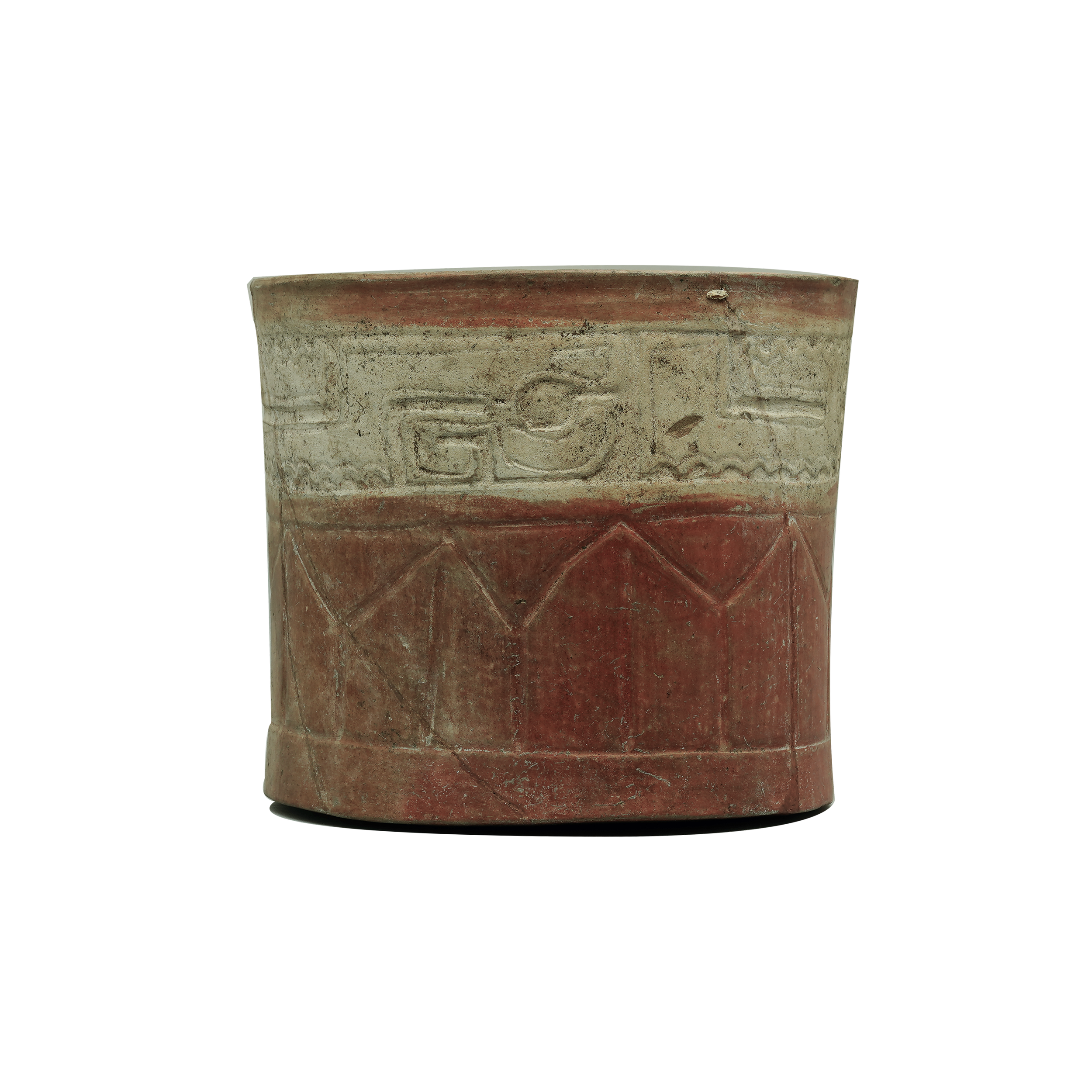
Maya Cylindrical Vessel
Maya Civilization, ca. 400 BCE – 500 CE
Ceramic with red slip and incised decoration
Dimensions: 15 × 17 cm
Cylindrical vessel, decorated with geometric and glyph-like motifs, reflects the artistry of early Maya ceramics. Likely used in ritual or elite contexts, such vessels served as containers for food, drink, or offerings and were often placed in burials as symbols of status and sustenance for the afterlife.
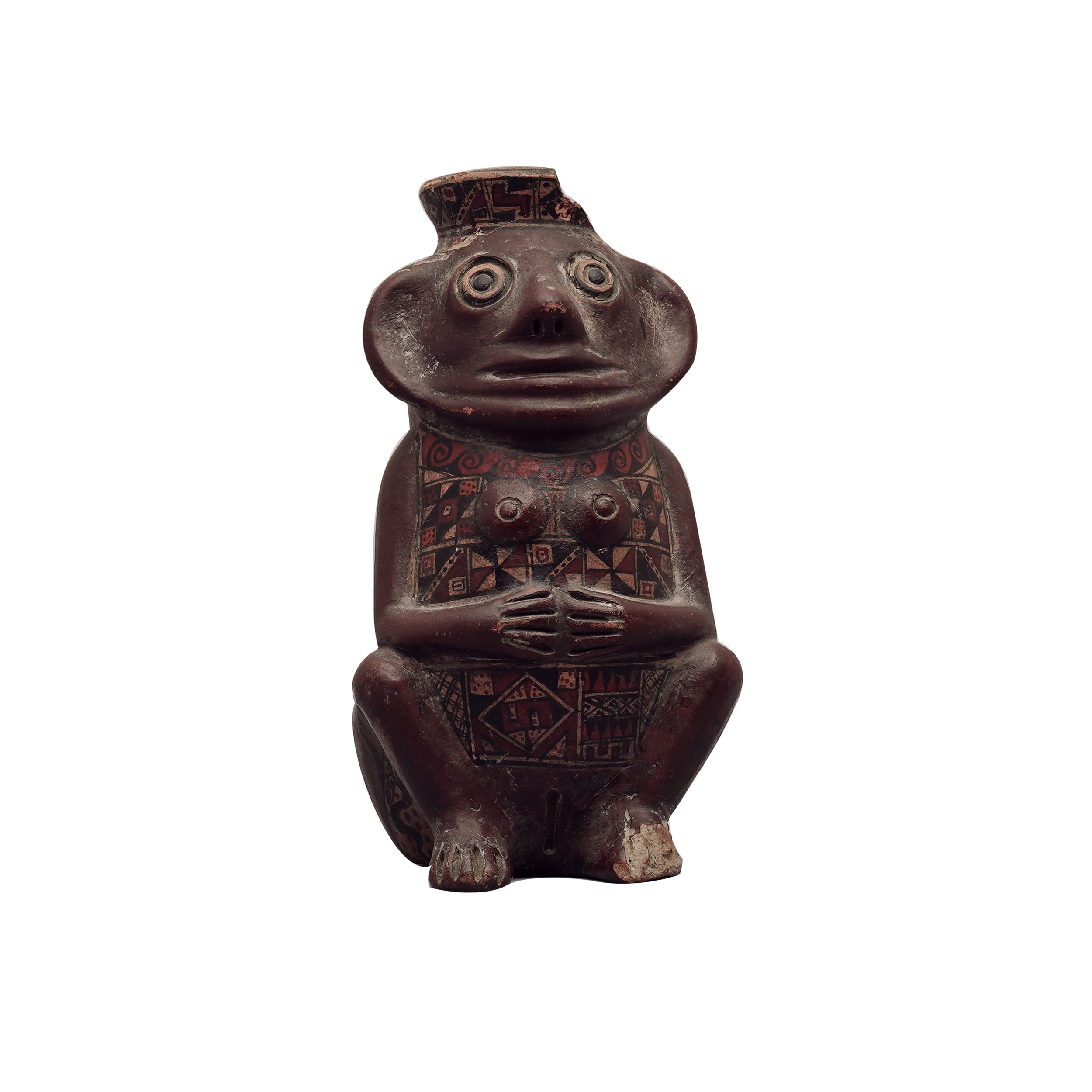
Seated Anthropomorphic Vessel
Pre-Columbian, Inca Culture (Peru), ca. 500 BCE (c. 2500 years old)
Dimensions: 14 ×9 cm
Ceramic figure representing a seated anthropomorphic being, possibly a deity, ancestor, or ritual participant. Crafted with great care, the figure displays exaggerated facial features, wide circular eyes, and a pronounced mouth, embodying both human and supernatural traits. The body is decorated with intricate geometric patterns painted in red and black, symbols that may have conveyed identity, rank, or cosmological meaning.
The figure’s hollow form and opening at the top suggest it may have served as a vessel, perhaps used in ceremonial offerings of liquids or other sacred substances.
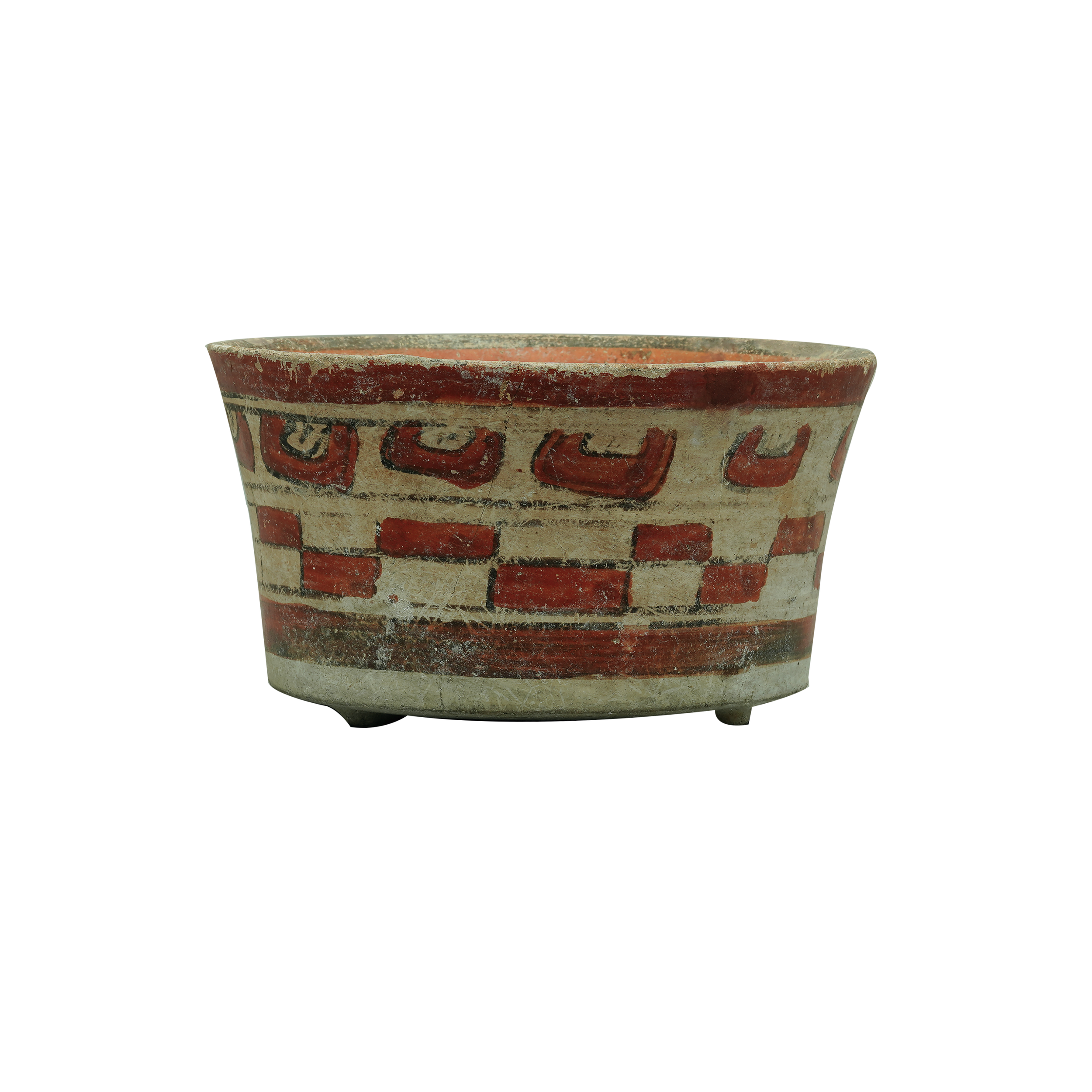
Maya Polychrome Bowl
Painted Ceramic, c. 600–900 CE
Maya Civilization, Mesoamerica
Dimensions: 19 × 10 cm
Painted ceramic vessel features bold geometric motifs in red and black on a cream background, framed by horizontal registers. The exterior is decorated with repeating stepped and scroll-like patterns, symbols associated with Maya cosmology and ritual meaning. The interior, coated in a rich red slip, contrasts with the exterior.
Such bowls were often used for food offerings, ritual libations, or as burial goods, linking everyday sustenance with spiritual continuity.
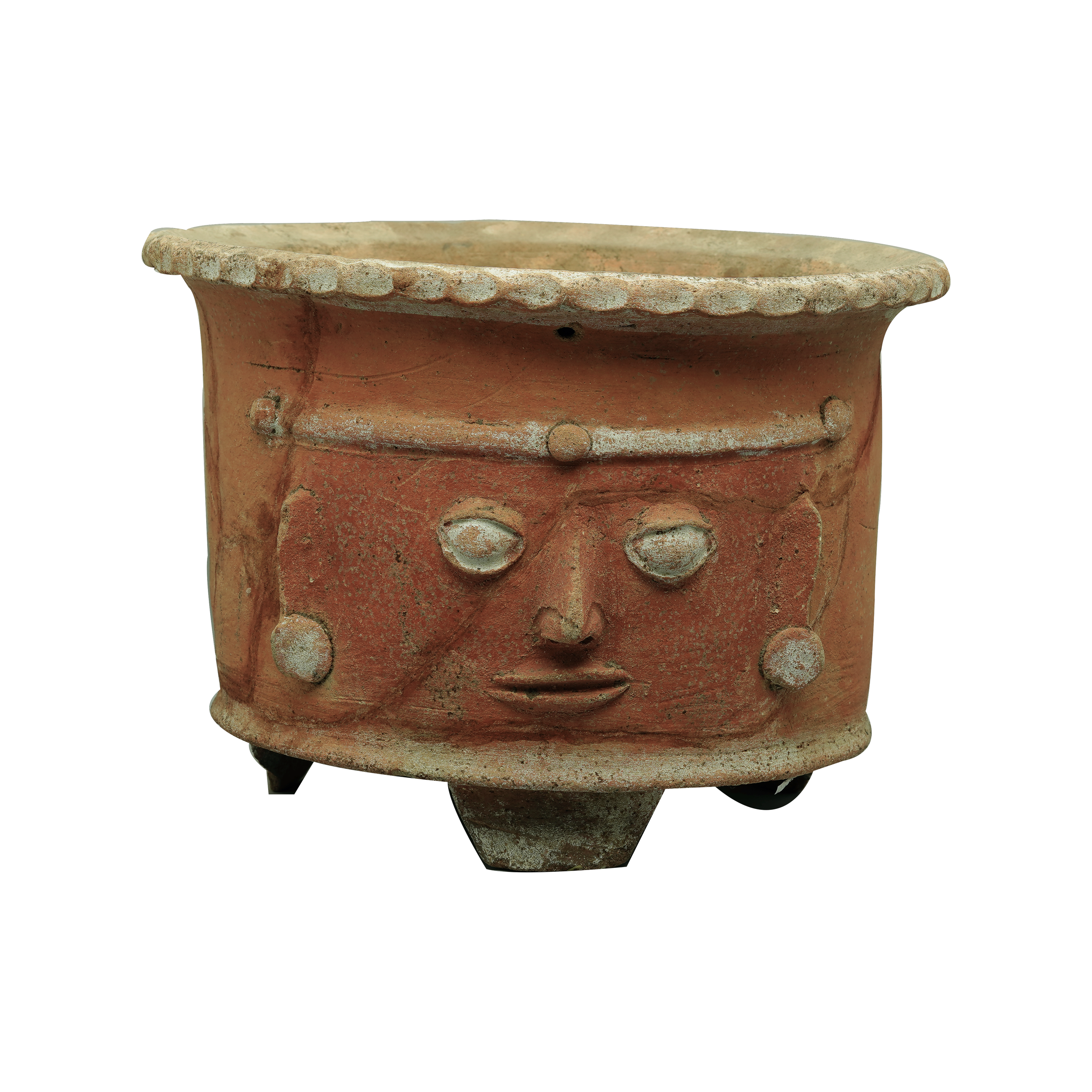
Tripod Vessel with Human Face
Pre-Columbian, Maya Culture, c. 600–900 CE
Ceramic with red slip
Dimensions: 19 × 26 cm
Cylindrical tripod vessel decorated with a modeled human face, complete with earspools and a rim of raised dots. The form and red slip suggest its use in ritual contexts, likely for offerings of food or drink. The human visage may represent an ancestor or deity, reflecting Maya beliefs in the sacred power of objects and their role in connecting the living with the spiritual world.
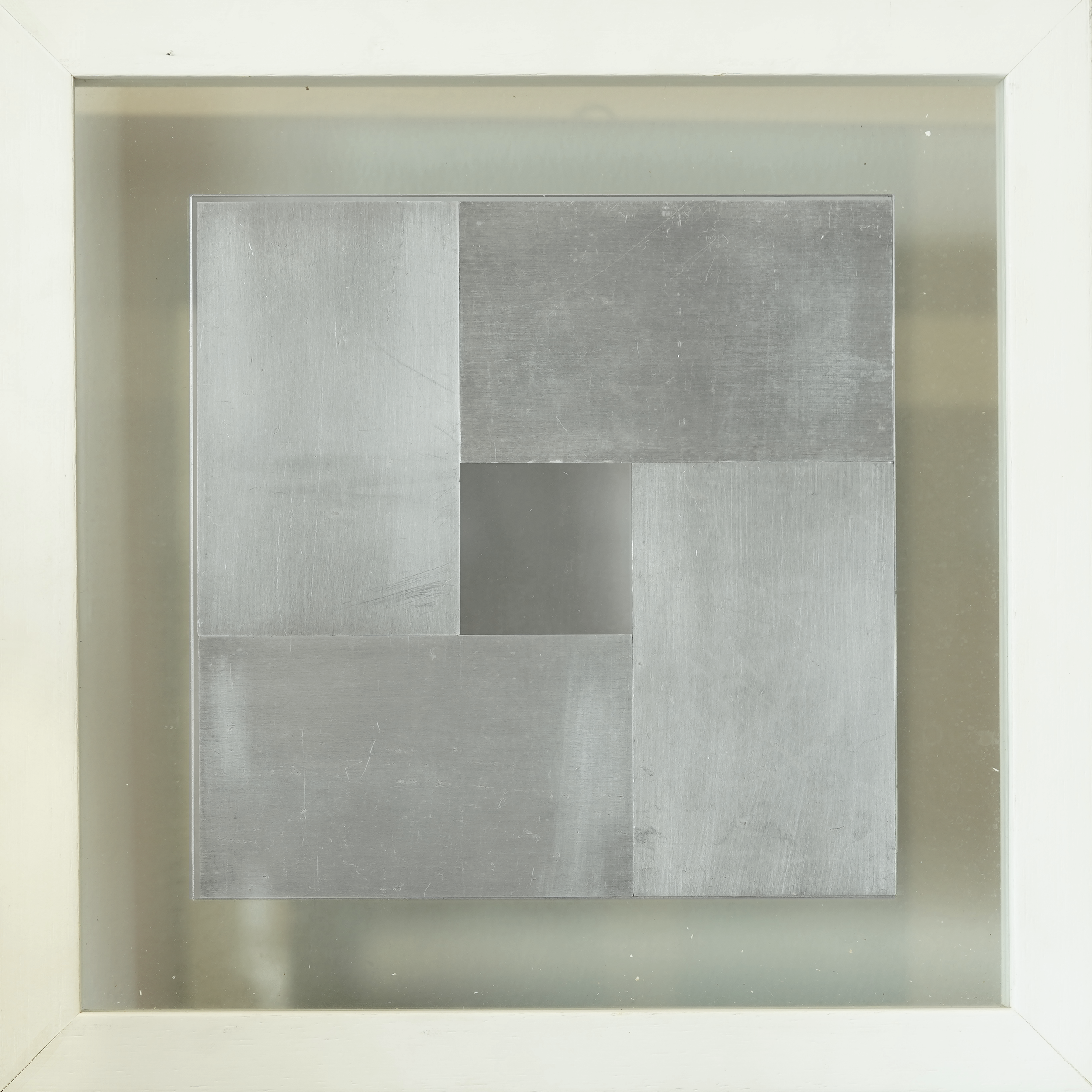
Carl Andre (American, b. 1935)
Untitled, c. 1970s
Aluminum on board
Dimensions: 32× 32 cm
Carl Andre, a leading figure of Minimalist art, is renowned for his radical reduction of form and material. This work exemplifies his geometric rigor and devotion to industrial surfaces. Constructed from brushed aluminum panels arranged in a precise square composition, the piece emphasizes symmetry, repetition, and the inherent qualities of the material itself.
Andre rejected traditional notions of sculpture as modeling or carving, instead presenting raw materials in simple configurations that highlight their physical presence and spatial relationships. The subtle tonal variations across the metallic surface reveal the tactile quality of aluminum while also engaging the viewer in quiet contemplation of order, proportion, and structure.
This work encapsulates Andre’s belief that sculpture should not represent or symbolize, but simply be. Its clarity and restraint embody the essence of Minimalism, transforming industrial matter into an object of profound visual and conceptual intensity.
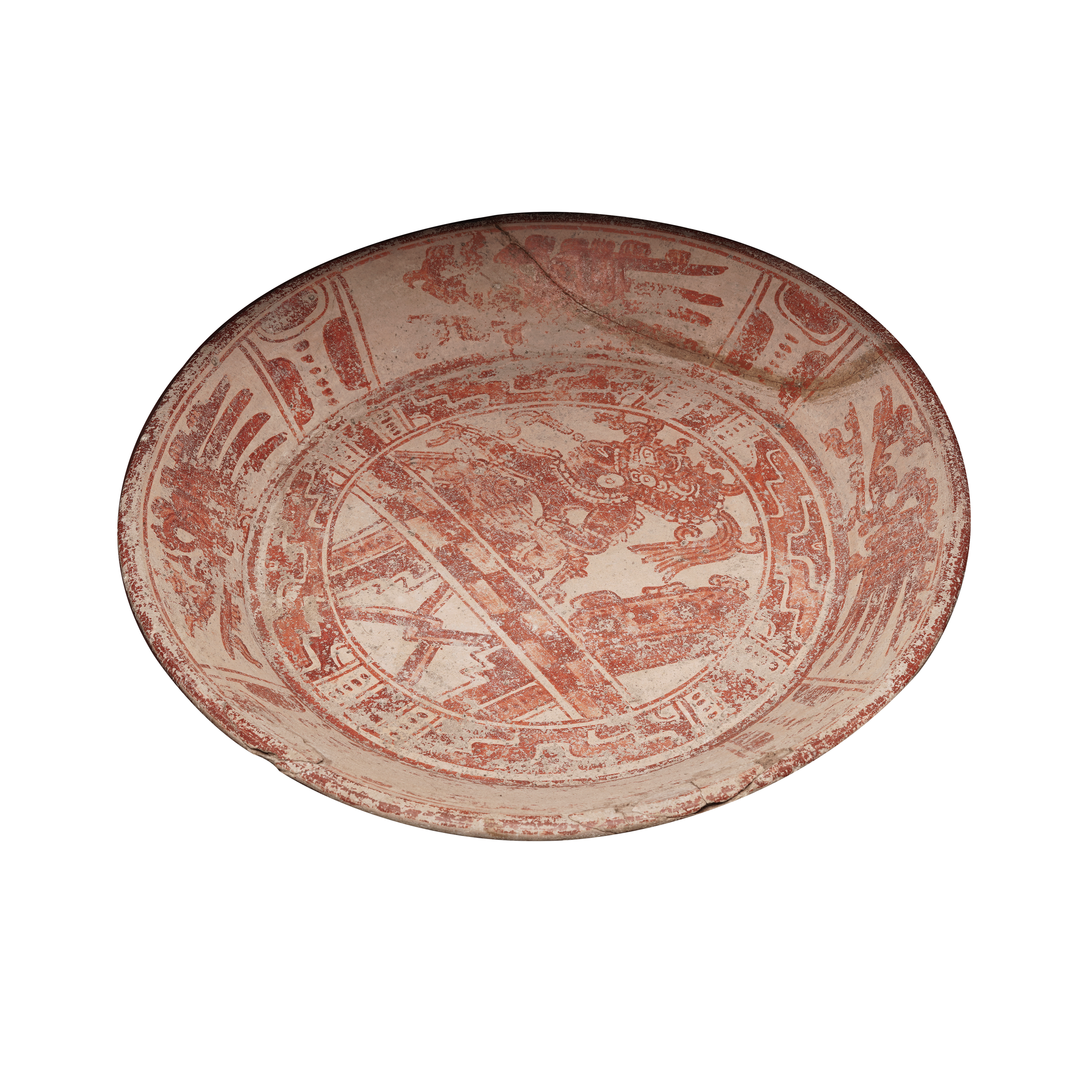
Maya Polychrome Ceramic Plate
Classic Period (c. 600–900 CE), Mesoamerica
Dimensions: 13 × 35 cm
Painted ceramic plate showcasing the artistic and symbolic sophistication of the ancient Maya. Decorated in red slip on a cream ground, the central motif features a mythological scene rendered with dynamic linework and intricate iconography. The figures—possibly deities, mythic creatures, or rulers—are framed by geometric and symbolic borders, reflecting both cosmological and ritual significance.
Maya ceramics such as this were often used in ceremonial feasts, burials, or elite offerings, serving not only as functional vessels but also as carriers of sacred narratives. The circular composition and repeating motifs reinforce the Maya worldview of cyclical time and the cosmic order.
The red pigments, derived from natural minerals, highlight the Maya mastery of polychrome painting techniques, while the worn surface reveals centuries of use and burial. Today, this piece offers invaluable insight into the interconnectedness of Maya art, ritual, and cosmology.
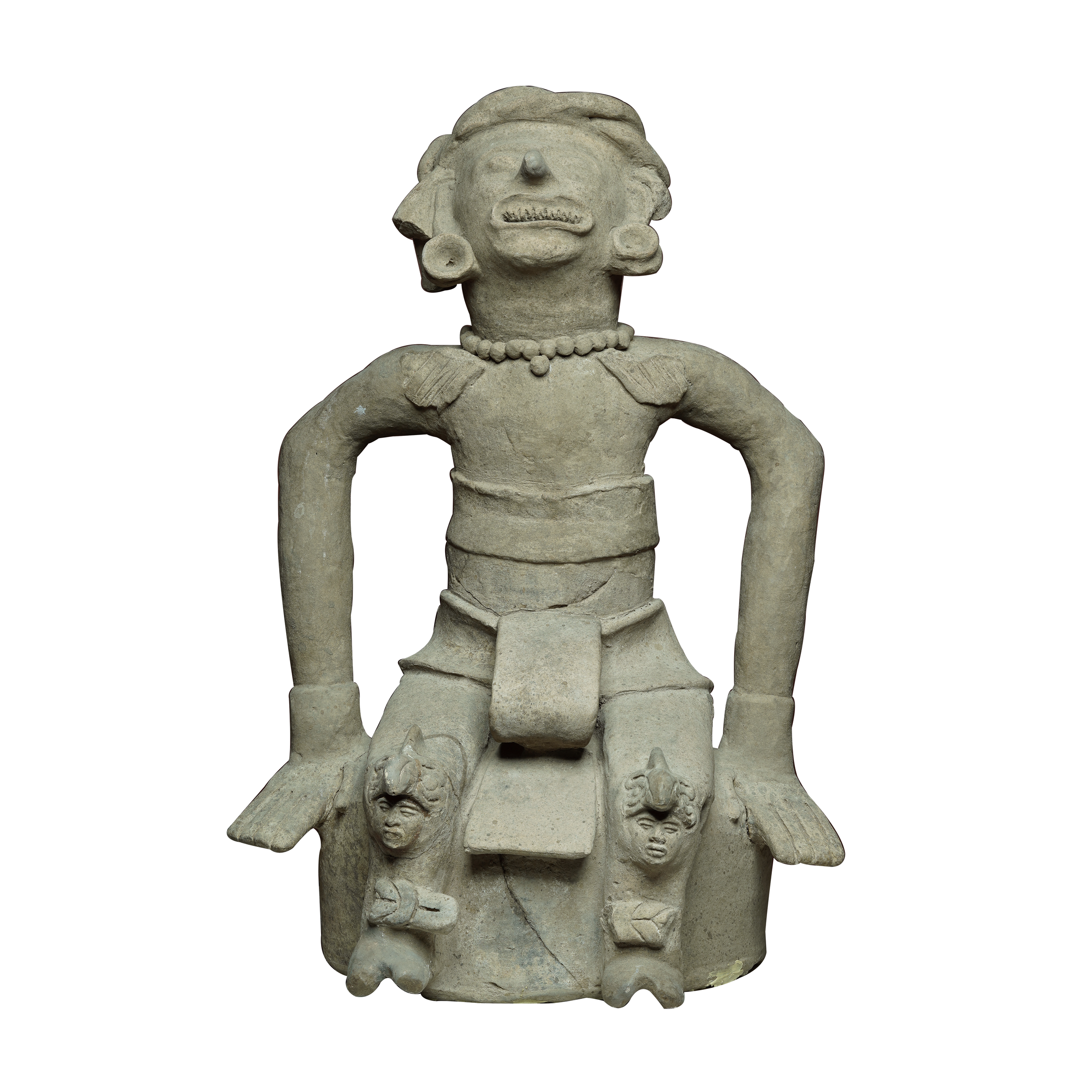
Pre-Columbian Ceramic Figure
Culture: Maya or related Mesoamerican tradition
Material: Ceramic
Date: ca. 600–900 CE (Late Classic Period)
Dimensions: 55 × 35 cm
Ceramic figure representing a richly adorned individual, likely a deity, shaman, or elite figure within Maya culture. The figure’s upright posture, exaggerated facial features, and elaborate headdress suggest a ceremonial role. The necklace, belt, and skirt details emphasize status and authority, while the prominent hands and stylized mouth may symbolize communication with the spiritual realm.
Of particular note are the two small sculpted heads on the figure’s skirt, possibly representing captives, ancestors, or divine beings, reinforcing the figure’s mediating role between the earthly and spiritual worlds. Such imagery reflects the Maya’s strong emphasis on lineage, ritual performance, and the cyclical balance of life and death.
Objects of this type were often placed in tombs or ceremonial centers, serving as guardians, offerings, or representations of powerful intermediaries in Maya cosmology
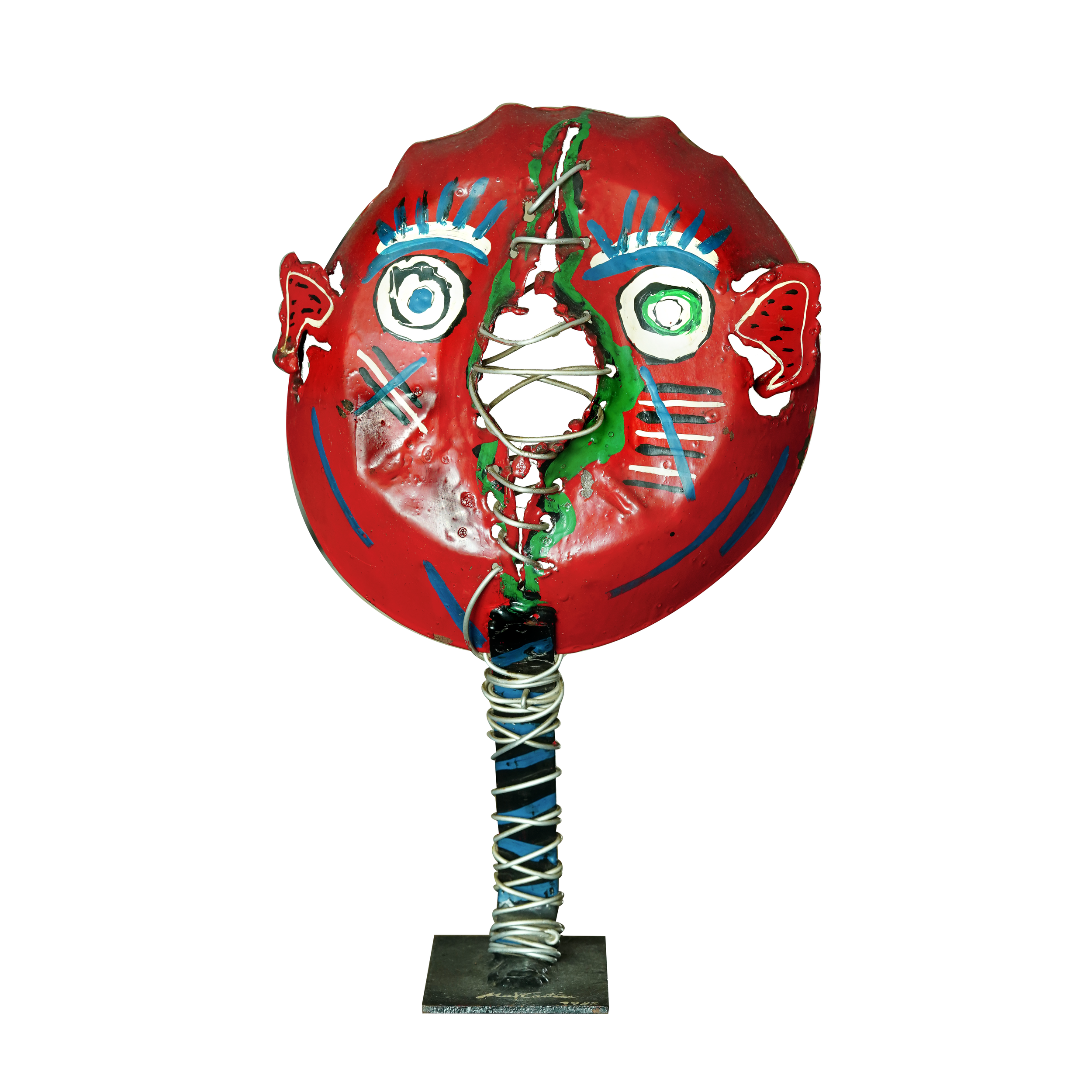
Max Cartier (Italian, b. 1935)
École de Nice, 1987
Painted on a fried pan with wire and mixed media, dedicated with delight to a special chef friend.
Dimensions: 40 × 25 cm
Work by Max Cartier showcasing the artist’s inventive use of industrial materials to create bold, expressive forms. The sculpture, fashioned in 1987, takes the shape of a stylized mask, painted in vivid red with accents of blue, green, and white. The face is punctuated by exaggerated, wide-open eyes, linear markings, and a dramatic central opening.
Cartier’s integration of painted steel, wire bindings, and coiled spring-like structures emphasizes the raw materiality of the object while simultaneously imbuing it with playfulness and theatricality. The mask is mounted on a robust base, its vertical support wrapped in metallic spirals, reinforcing a sense of tension and energy.

Buddha in Meditation with Torana
Dimensions: 44 × 20 cm
Nepal, Kathmandu Valley
Bronze with green patina, c. 12th–15th century
Casted bronze Buddha sitting serenely in meditation (dhyana mudra), framed by an elaborately decorated torana (archway). The figure rests on a double lotus pedestal, symbolizing spiritual purity. The hands are held in the gesture of teaching (vitarka mudra), a sign of wisdom and the transmission of the Dharma.
Nepalese bronzes from the Kathmandu Valley are renowned for their exquisite craftsmanship and synthesis of Pala Indian influences with the distinctive artistry of the Newar sculptors. Such devotional icons were used in both monastic and household shrines, embodying the intimate devotion of Himalayan Buddhism.
The protective torana, with its intricate floral and divine motifs, reflects the Nepalese tradition of blending architecture and sculpture into a single sacred image. Bronze figures like this not only served as focus points for meditation but also traveled across the Himalayas, profoundly influencing Tibetan Buddhist art.
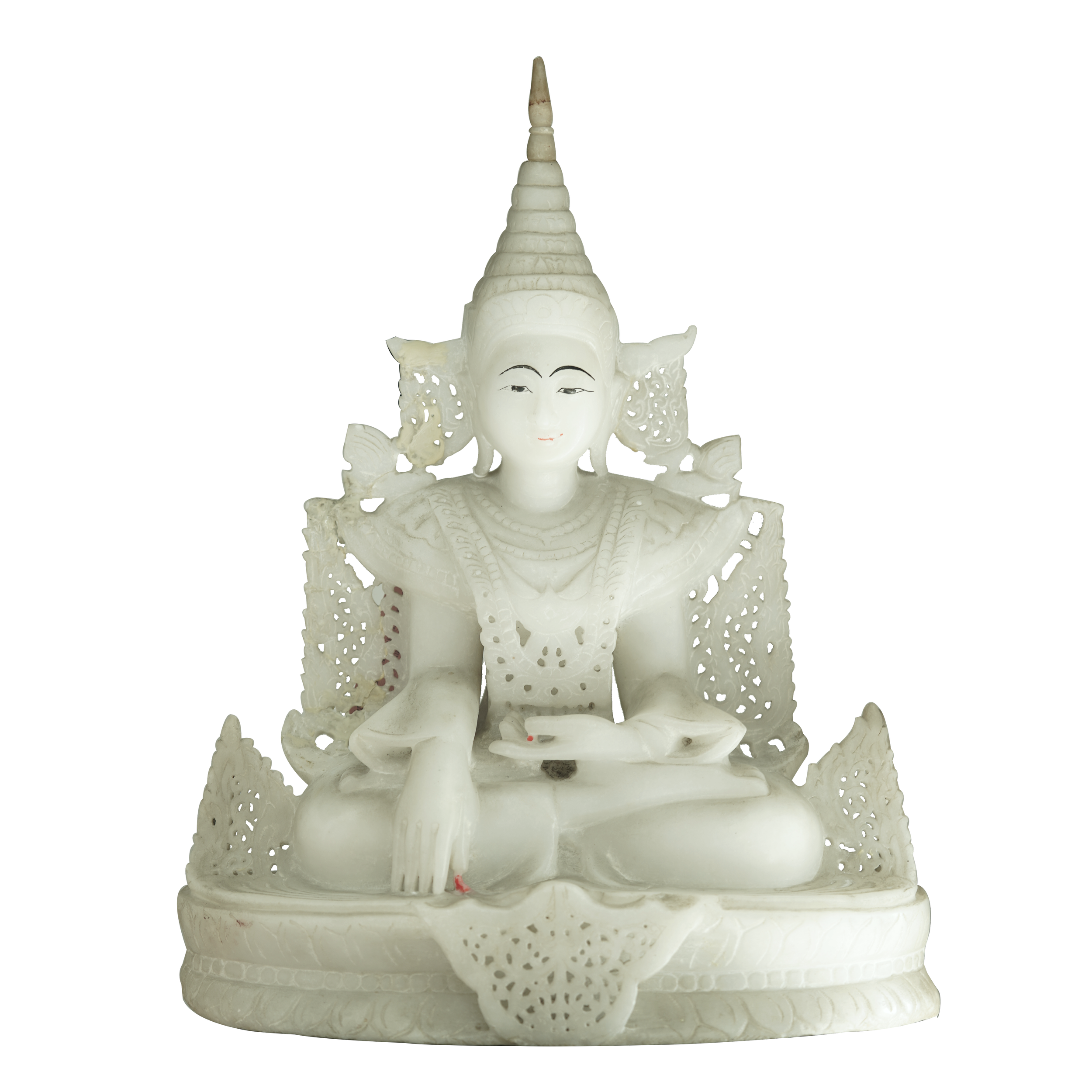
Alaska Crowned Buddha, Myanmar (Burma), 19th century
Dimensions: 40 × 50 cm
Marble, carved and polished
This finely carved marble figure depicts the Buddha in royal attire, seated in meditation with one hand resting gently in his lap. Characterized by the tall, pointed crown and elaborate openwork throne, the sculpture reflects a uniquely Burmese tradition in which the Buddha is portrayed as a universal monarch (Chakravartin). The luminous white marble, a material sourced from the quarries of Mandalay, enhances the sense of purity and serenity, while the refined details evoke the splendor of Burmese courtly art.
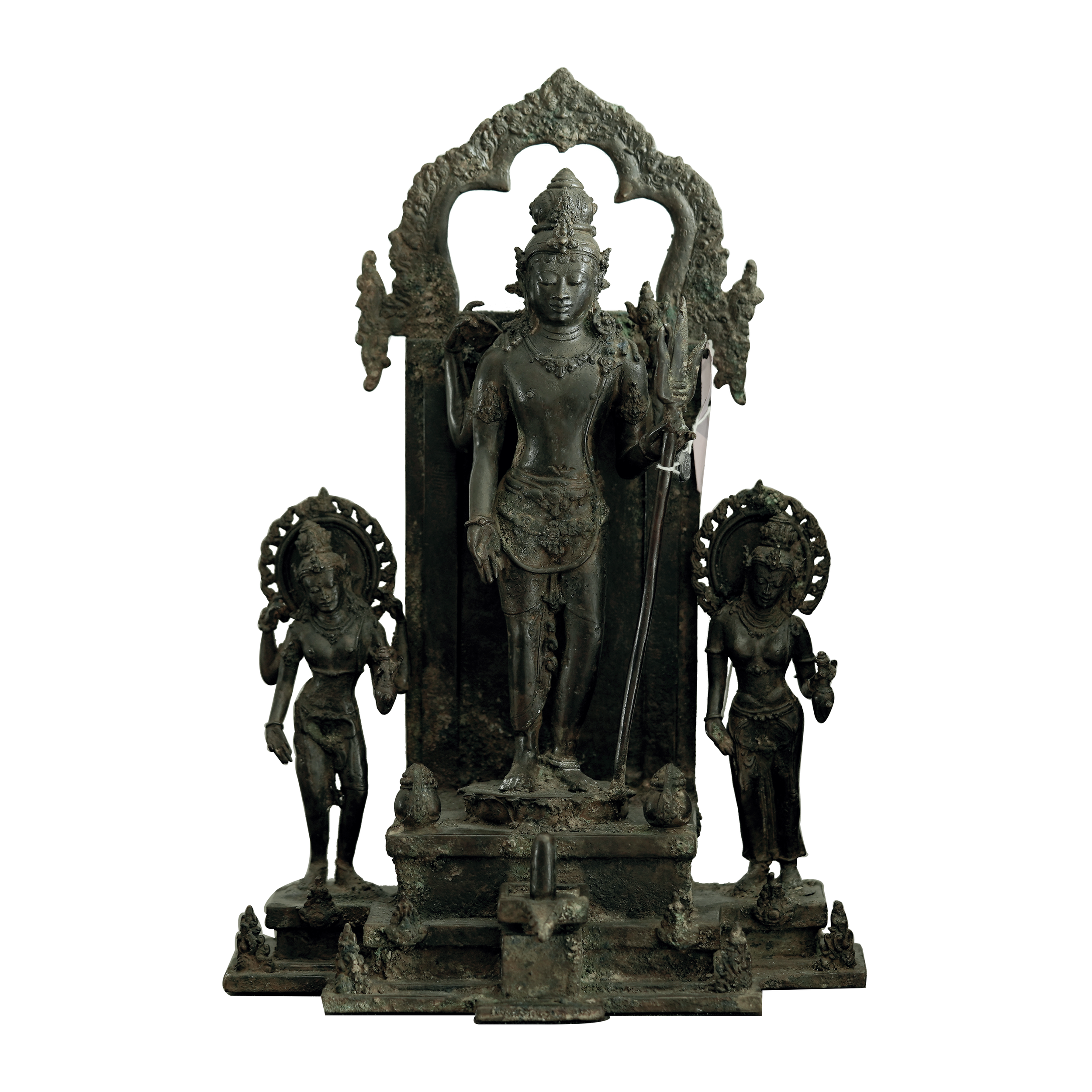
Shiva with Attendants
Dimensions: 35 × 25 cm
South India (Tamil Nadu), Chola Period, 10th–12th century
Bronze, lost-wax casting
This bronze ensemble represents the Hindu god Shiva, shown in a graceful standing posture beneath an elaborate arched aureole (prabhavali). Shiva’s powerful yet serene form is adorned with sacred ornaments, emphasizing his divine authority. At his sides stand two attendant figures, likely his consort Parvati and another divine companion, reinforcing his role within the cosmic order.
Cast using the sophisticated lost-wax technique perfected during the Chola dynasty, this work reflects the period’s mastery of balance, proportion, and spiritual expression. Such bronzes were not static temple icons: they were animated in ritual processions, where devotees encountered the deity directly in streets and courtyards.
While primarily associated with South Indian Shaiva traditions, similar compositions were also produced in Nepal, reflecting the deep interconnections of Hindu and Buddhist art across Asia.
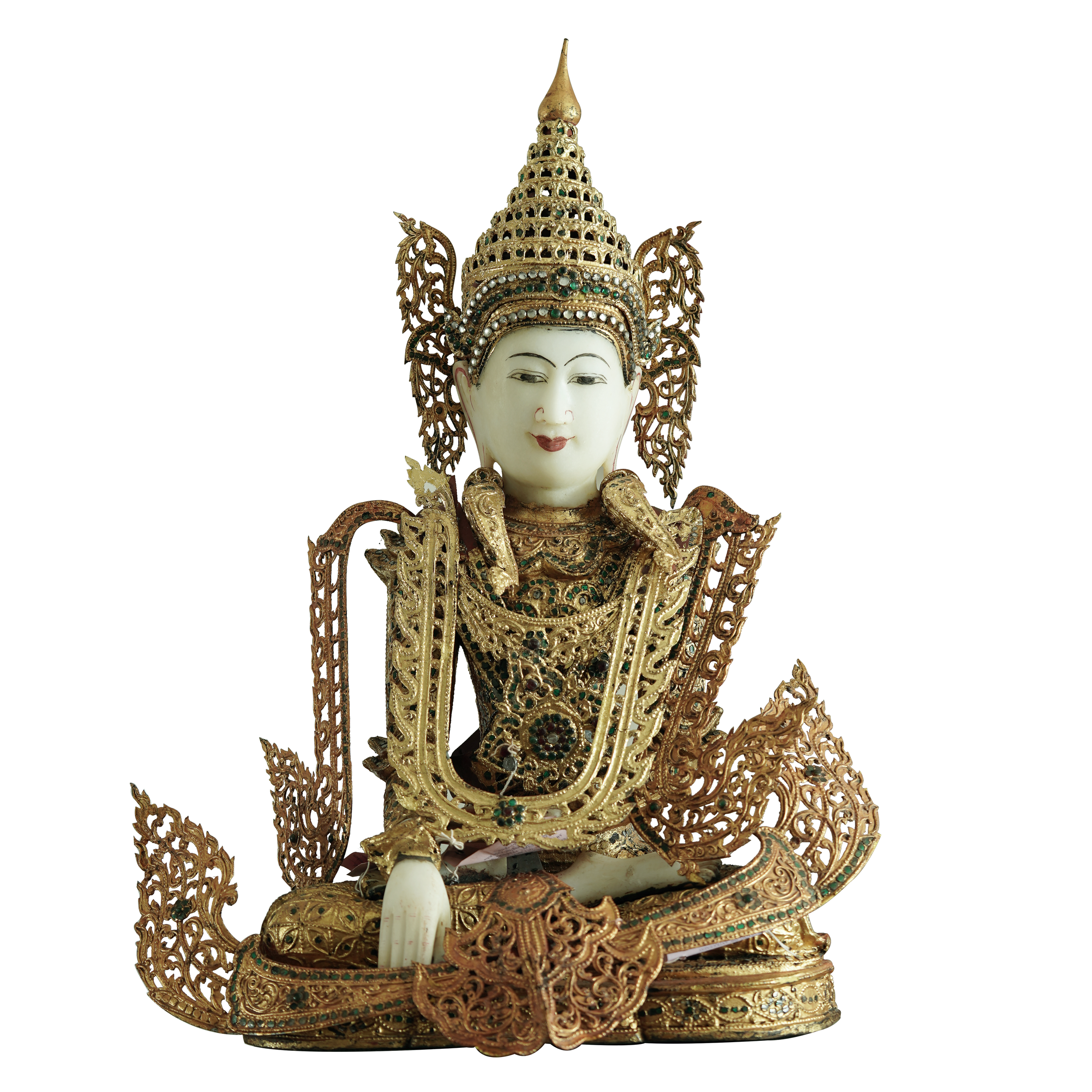
Seated Crowned Buddha
Myanmar (Burma), 19th–20th century
Dimensions: 78 × 56 cm
Gilded wood, alabaster, glass inlay, colored stones
This richly adorned image of the Buddha reflects the Burmese tradition of portraying the Enlightened One in royal attire. The serene white face, carved from alabaster, contrasts with the gilded wooden body, elaborately decorated with glass mosaics and gemstones. The tall pointed crown and intricate shoulder ornaments evoke regal splendor, presenting the Buddha not only as a spiritual teacher but also as a universal monarch (chakravartin).
Seated in the earth-touching gesture (bhūmisparśa mudrā), the figure recalls the moment of the Buddha’s enlightenment. Such images were placed in temples and monasteries, serving as both devotional objects and reminders of the fusion of kingship and sacred authority in Burmese Buddhist art.

UNKNOWN ARTIST
Circa 1800-1820
Original Item: One of a Kind. Here we have a wonderful original bronze lantaka swivel cannon barrel, dating to about 1800-1820. While these were used throughout South East Asia, this style is from the “East Indies”, more properly known as South Eastern Asia. These were used only at close quarters, used to fire lead balls, stones and other debris while mounted on boats and other ocean going craft during the age of Sailing.
The cannon is very heavy, weighing in at 33lbs, a good sign as later copies are much lighter and sometimes are filled internally with foam to be sold as fakes.
Totally authentic but not too big to display in home or office.
Dimensions:
Lantaka or rentaka was a type of bronze portable cannon or swivel gun, sometimes mounted on merchant vessels and warships in Maritime Southeast Asia. It was commonly equipped by native seafaring vessels from Indonesia, Philippines, Brunei, and Malaysia. Lela and rentaka are known by the Malays as meriam kecil (lit. "small cannon"), the difference is that rentaka is smaller in length and bore than a lela.