
THAI AND MYANMAR BUDDHAS
Buddhas from Thailand and Myanmar
Page from Eclectic Collectors
This page highlights sculptural representations of the Buddha originating from Thailand and Myanmar, two regions where Buddhist art has developed distinctive yet interconnected traditions. Thai Buddhas are often characterized by elegant, elongated features and flowing robes, embodying serenity and spiritual grace. In contrast, Burmese (Myanmar) Buddhas emphasize calm, rounded forms and a sense of gentle introspection.
By presenting these images together, Eclectic Collectors illustrates both the shared symbolism of enlightenment and meditation across Southeast Asia and the regional variations that give each tradition its unique artistic identity.
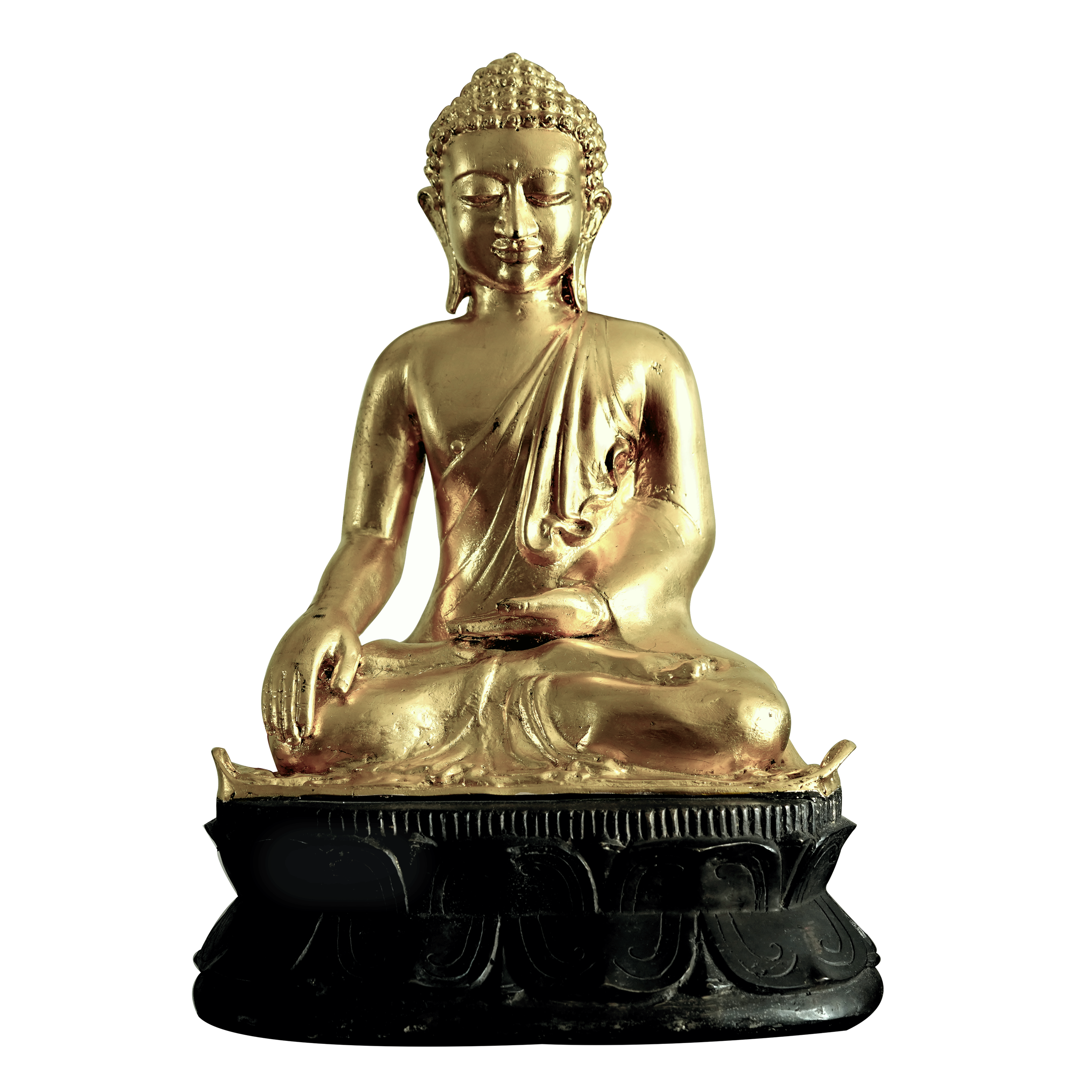
SIAMESE SEATED BUDDHA in Earth-Touching Gesture
Thailand (or Myanmar), 19th century
Gilded bronze (or wood), lacquered base
Dimensions: 48 × 33 cm
This gilded image of the Buddha depicts him seated in meditation on a lotus-petal base, the right hand extended to touch the earth in the bhūmisparśa mudrā—a gesture symbolizing the moment of enlightenment. The serene expression, finely curled hair, and polished surface embody the spiritual calm central to Buddhist devotion. Such statues are common in temple halls and private shrines across Southeast Asia, where they serve as objects of veneration and meditation.
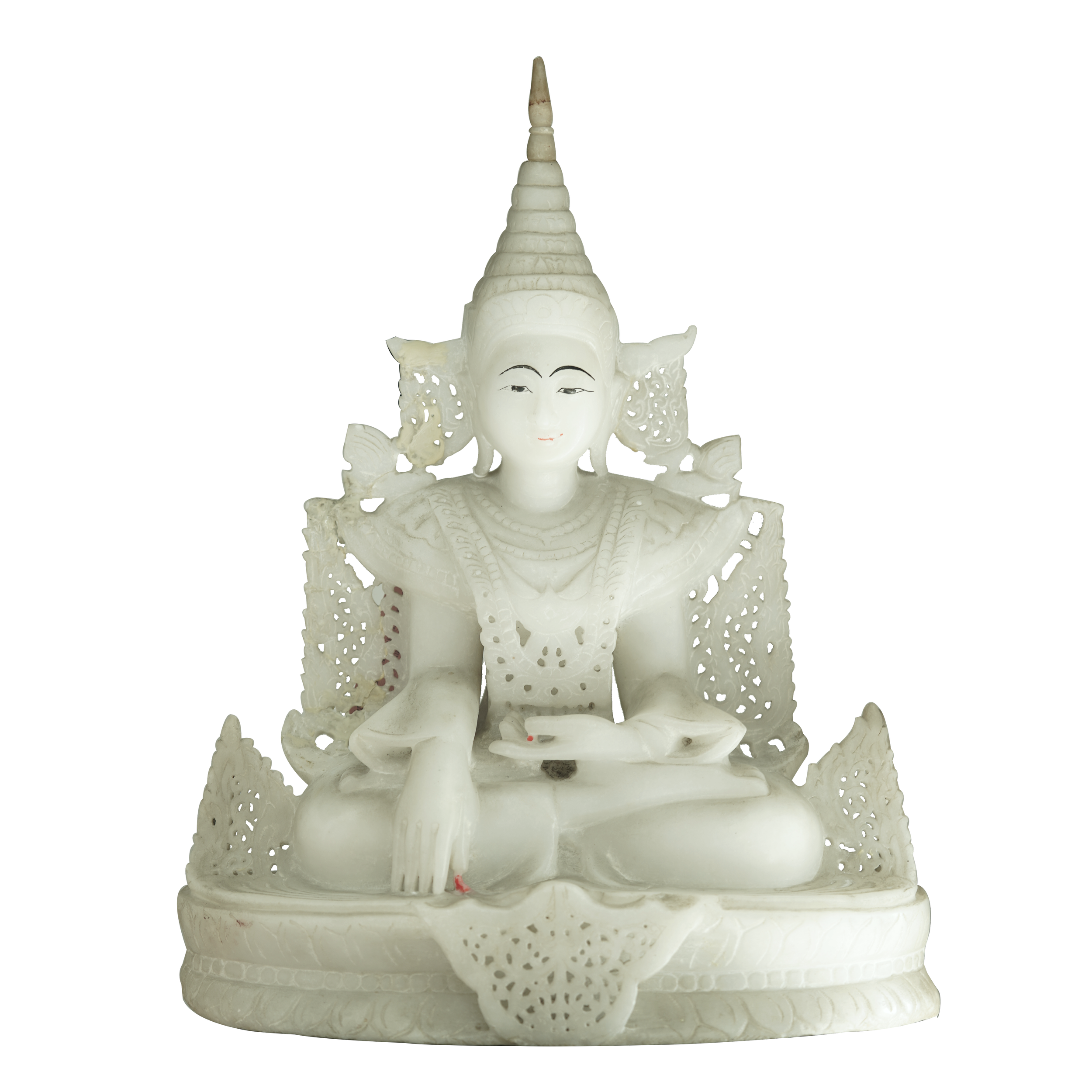
Alaska Crowned Buddha, Myanmar (Burma), 19th century
Dimensions: 40 × 50 cm
Marble, carved and polished
This finely carved marble figure depicts the Buddha in royal attire, seated in meditation with one hand resting gently in his lap. Characterized by the tall, pointed crown and elaborate openwork throne, the sculpture reflects a uniquely Burmese tradition in which the Buddha is portrayed as a universal monarch (Chakravartin). The luminous white marble, a material sourced from the quarries of Mandalay, enhances the sense of purity and serenity, while the refined details evoke the splendor of Burmese courtly art.

Buddha in Meditation with Torana
Dimensions: 44 × 20 cm
Nepal, Kathmandu Valley
Bronze with green patina, c. 12th–15th century
Casted bronze Buddha sitting serenely in meditation (dhyana mudra), framed by an elaborately decorated torana (archway). The figure rests on a double lotus pedestal, symbolizing spiritual purity. The hands are held in the gesture of teaching (vitarka mudra), a sign of wisdom and the transmission of the Dharma.
Nepalese bronzes from the Kathmandu Valley are renowned for their exquisite craftsmanship and synthesis of Pala Indian influences with the distinctive artistry of the Newar sculptors. Such devotional icons were used in both monastic and household shrines, embodying the intimate devotion of Himalayan Buddhism.
The protective torana, with its intricate floral and divine motifs, reflects the Nepalese tradition of blending architecture and sculpture into a single sacred image. Bronze figures like this not only served as focus points for meditation but also traveled across the Himalayas, profoundly influencing Tibetan Buddhist art.
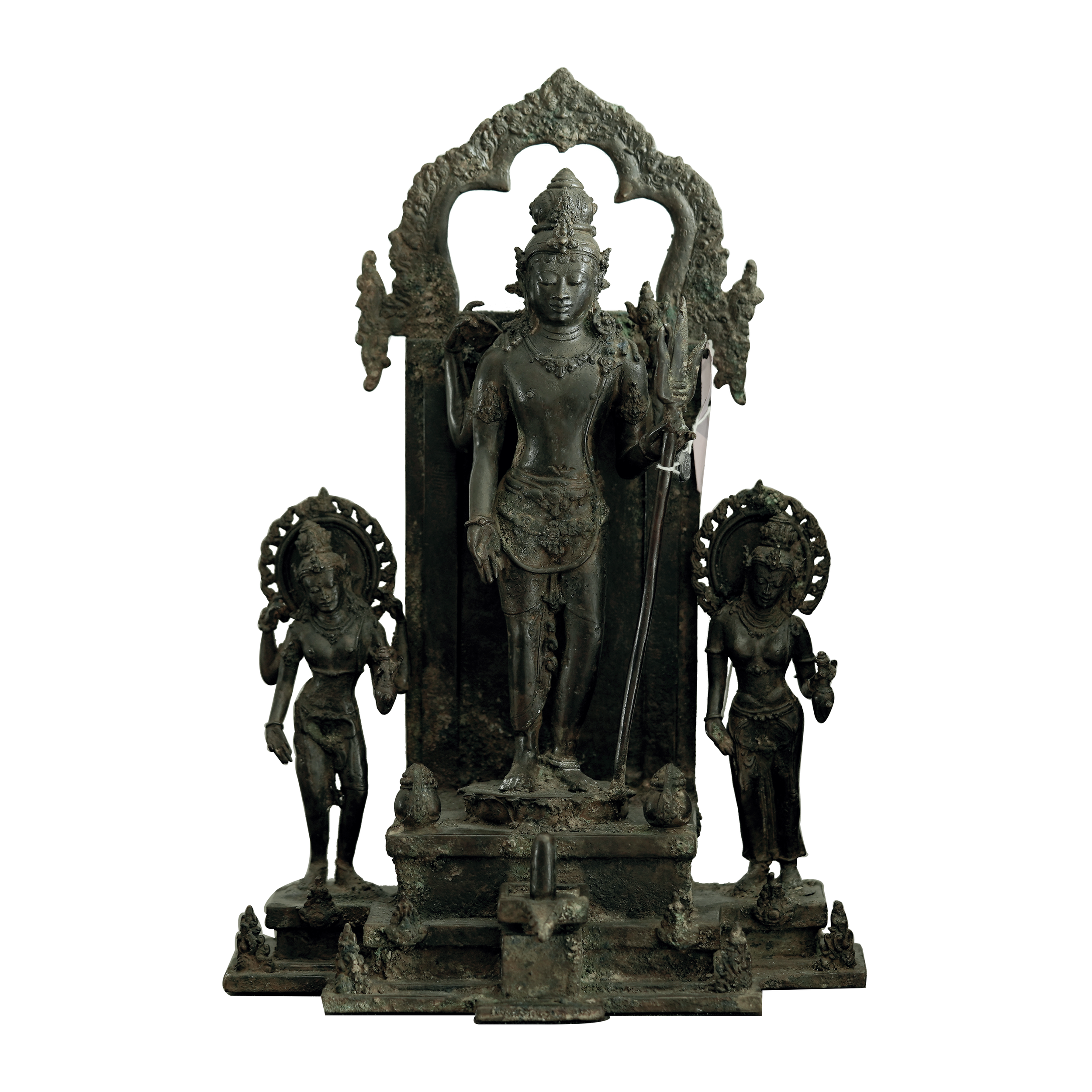
Shiva with Attendants
Dimensions: 35 × 25 cm
South India (Tamil Nadu), Chola Period, 10th–12th century
Bronze, lost-wax casting
This bronze ensemble represents the Hindu god Shiva, shown in a graceful standing posture beneath an elaborate arched aureole (prabhavali). Shiva’s powerful yet serene form is adorned with sacred ornaments, emphasizing his divine authority. At his sides stand two attendant figures, likely his consort Parvati and another divine companion, reinforcing his role within the cosmic order.
Cast using the sophisticated lost-wax technique perfected during the Chola dynasty, this work reflects the period’s mastery of balance, proportion, and spiritual expression. Such bronzes were not static temple icons: they were animated in ritual processions, where devotees encountered the deity directly in streets and courtyards.
While primarily associated with South Indian Shaiva traditions, similar compositions were also produced in Nepal, reflecting the deep interconnections of Hindu and Buddhist art across Asia.
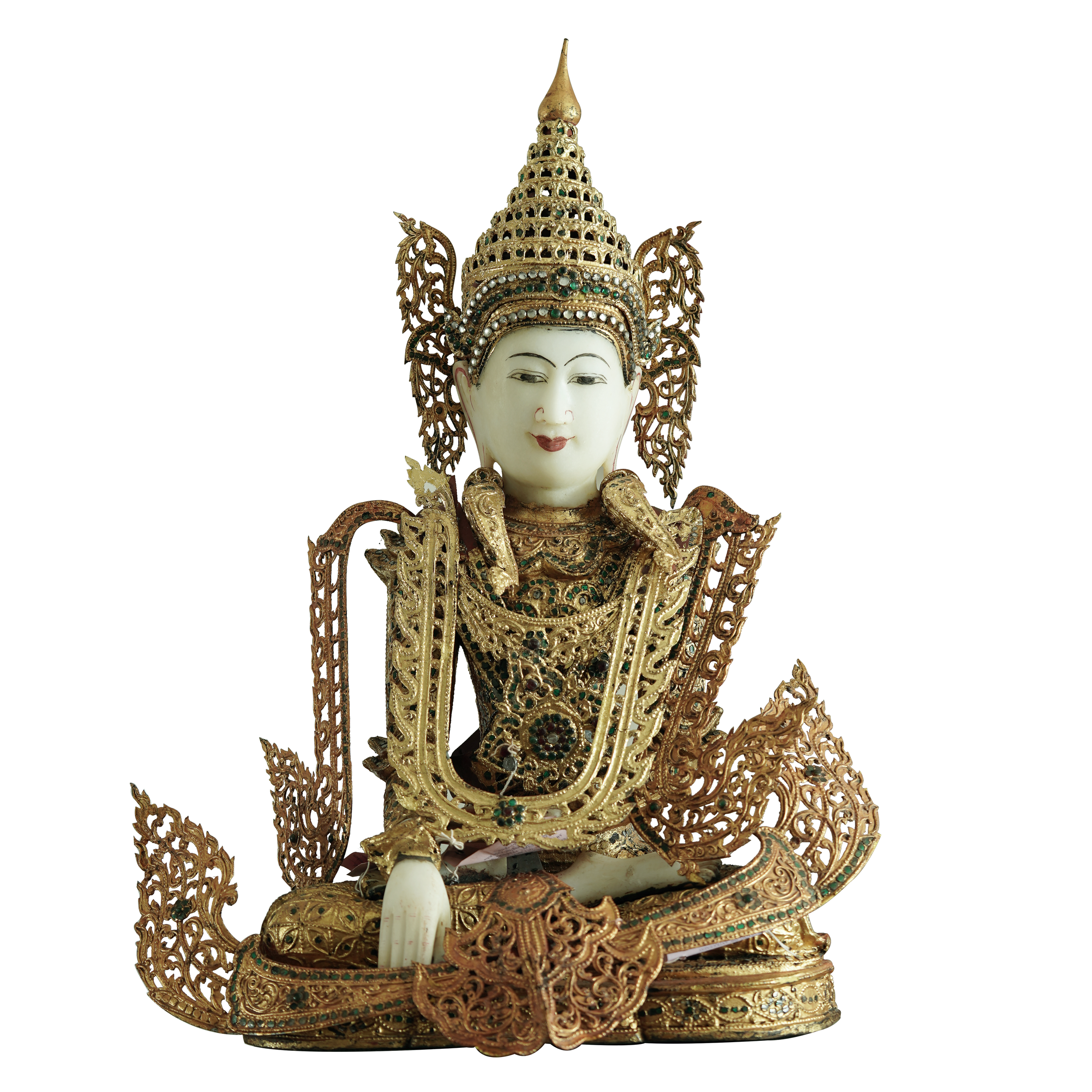
Seated Crowned Buddha
Myanmar (Burma), 19th–20th century
Dimensions: 78 × 56 cm
Gilded wood, alabaster, glass inlay, colored stones
This richly adorned image of the Buddha reflects the Burmese tradition of portraying the Enlightened One in royal attire. The serene white face, carved from alabaster, contrasts with the gilded wooden body, elaborately decorated with glass mosaics and gemstones. The tall pointed crown and intricate shoulder ornaments evoke regal splendor, presenting the Buddha not only as a spiritual teacher but also as a universal monarch (chakravartin).
Seated in the earth-touching gesture (bhūmisparśa mudrā), the figure recalls the moment of the Buddha’s enlightenment. Such images were placed in temples and monasteries, serving as both devotional objects and reminders of the fusion of kingship and sacred authority in Burmese Buddhist art.

UNKNOWN ARTIST
Circa 1800-1820
Original Item: One of a Kind. Here we have a wonderful original bronze lantaka swivel cannon barrel, dating to about 1800-1820. While these were used throughout South East Asia, this style is from the “East Indies”, more properly known as South Eastern Asia. These were used only at close quarters, used to fire lead balls, stones and other debris while mounted on boats and other ocean going craft during the age of Sailing.
The cannon is very heavy, weighing in at 33lbs, a good sign as later copies are much lighter and sometimes are filled internally with foam to be sold as fakes.
Totally authentic but not too big to display in home or office.
Dimensions:
Lantaka or rentaka was a type of bronze portable cannon or swivel gun, sometimes mounted on merchant vessels and warships in Maritime Southeast Asia. It was commonly equipped by native seafaring vessels from Indonesia, Philippines, Brunei, and Malaysia. Lela and rentaka are known by the Malays as meriam kecil (lit. "small cannon"), the difference is that rentaka is smaller in length and bore than a lela.