

Roberto PANDOLFI
Roberto Pandolfi is a contemporary Cuban-born artist recognized for his paintings, drawings, and mixed-media works. His art often incorporates vivid color, symbolic elements, and a balance between realism and abstraction. Working internationally, Pandolfi has explored subjects ranging from urban scenes to still lifes, reflecting both personal narratives and broader cultural themes. His style blends expressive brushwork with careful composition, creating pieces that invite both emotional and visual engagement.
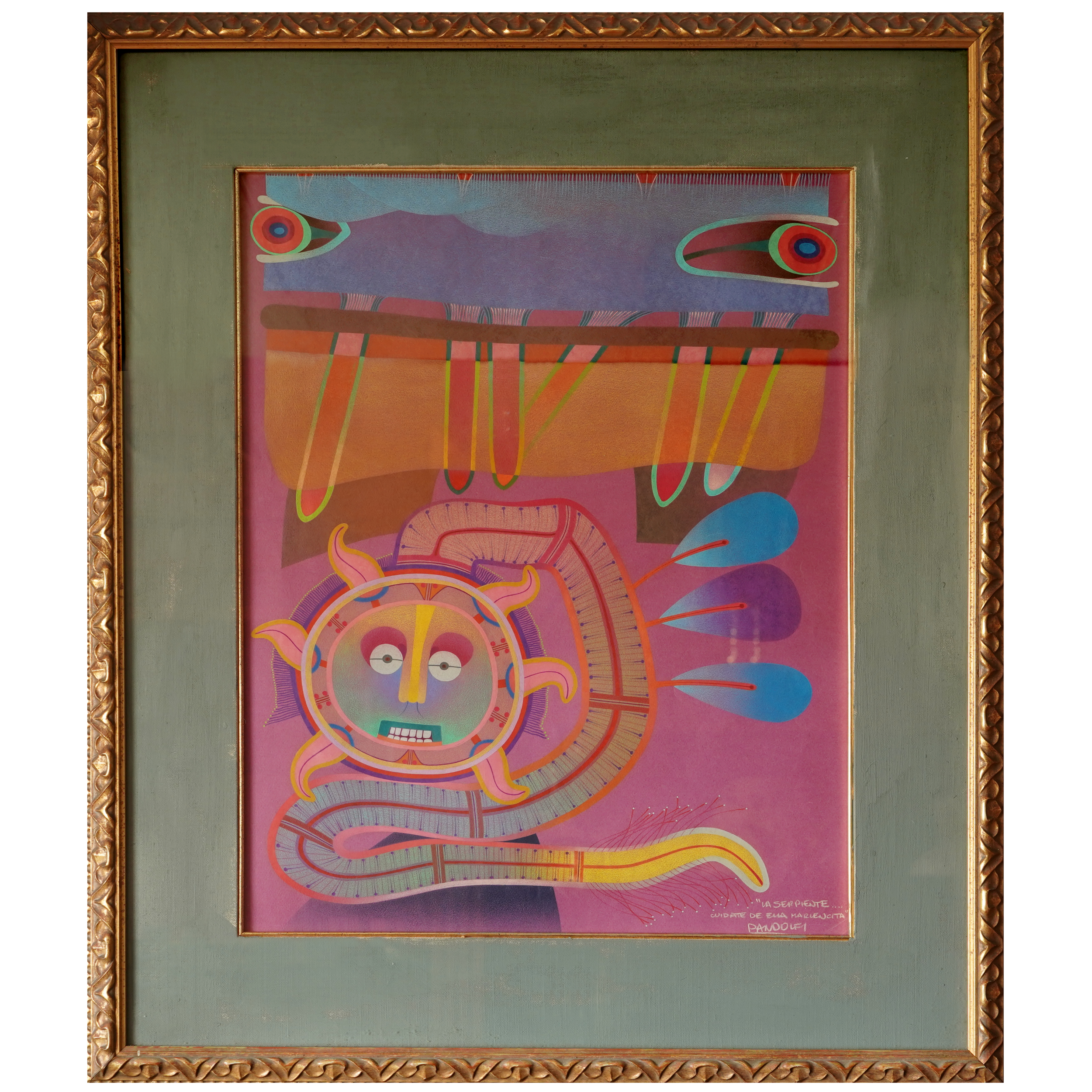
ROBERTO PANDOLFI. ORIGINAL DRAWING. Signed bottom right
Artist: Roberto Pandolfi (Argentine, 20th–21st century)
Medium: Ink and colored pencil (or pastel) on paper
Dimensions: 60 × 47 cm
Description:
Original drawing by Roberto Pandolfi depicting a fantastical figure composed of serpentine and humanoid elements. The central face, surrounded by sinuous, coiling forms and appendages, appears both mechanical and organic. Set against a vivid magenta background, the composition bursts with electric hues—neon yellows, blues, and reds—evoking a psychedelic or dreamlike state.
Pandolfi’s work merges Latin American symbolism with a personal surrealist language, often exploring dualities—man and beast, spirit and matter, inner and outer vision. In this piece, the creature’s hypnotic gaze and winding body suggest transformation, control, and introspection. The composition’s playful menace and intense chromatic contrasts reflect Pandolfi’s unique voice in contemporary visionary art.
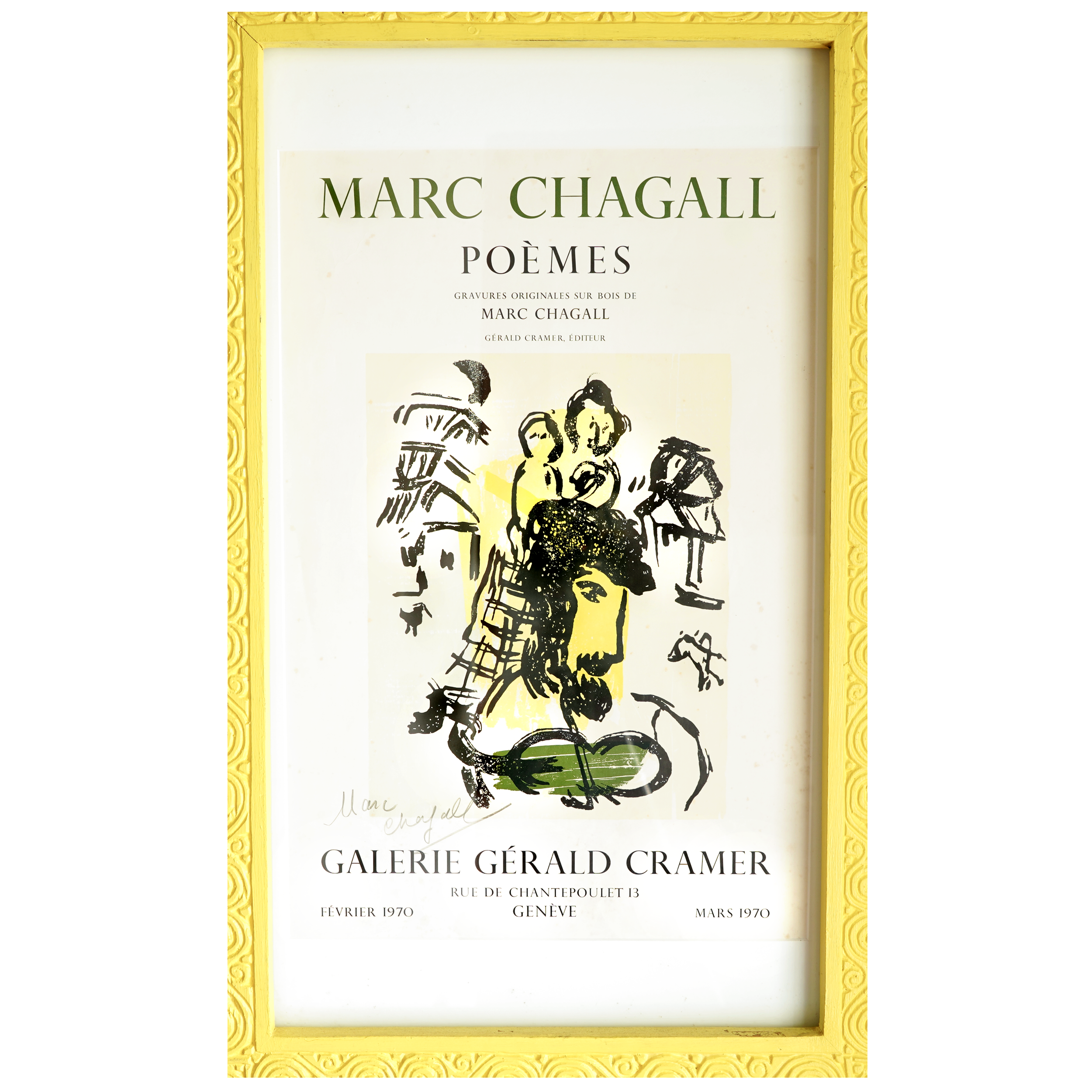
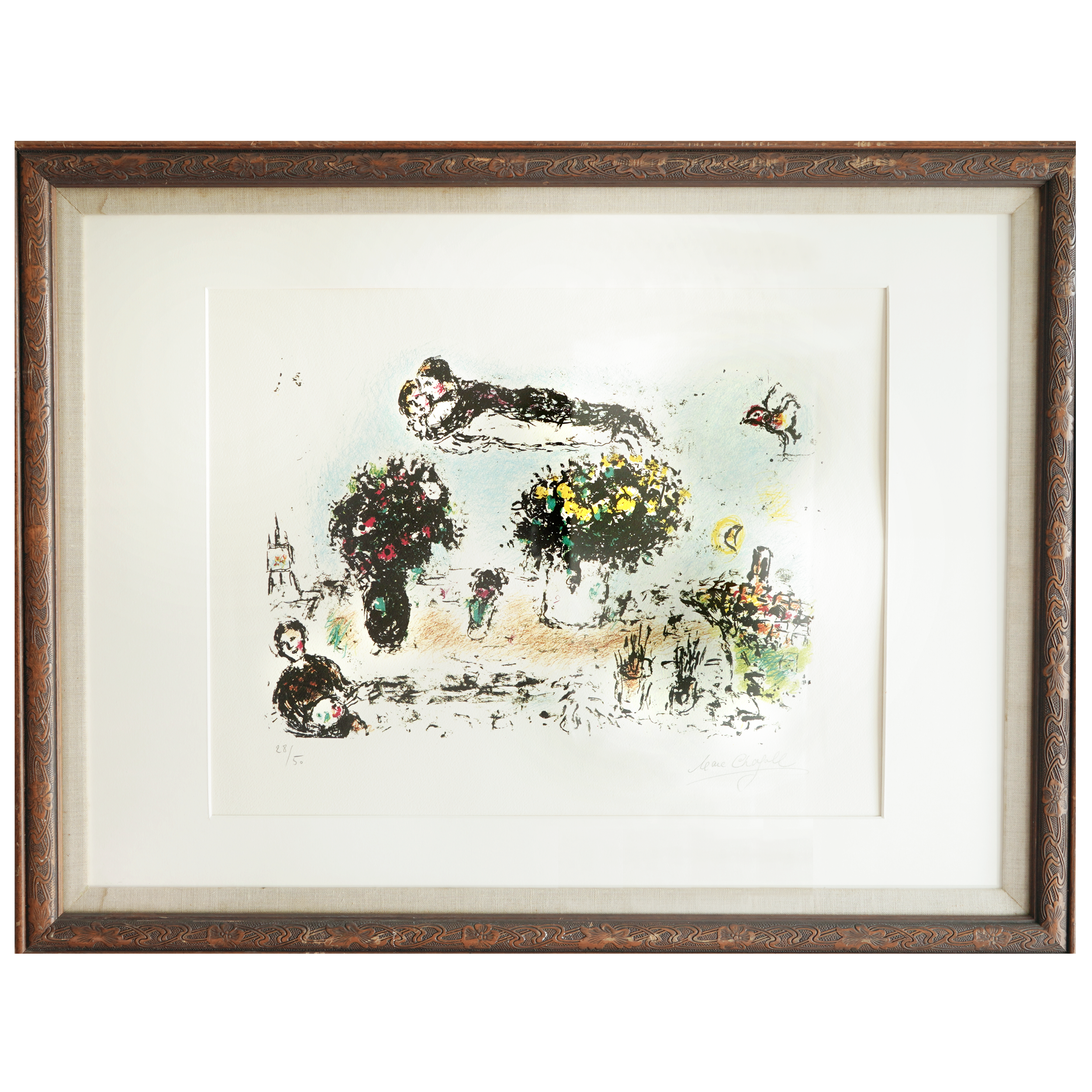
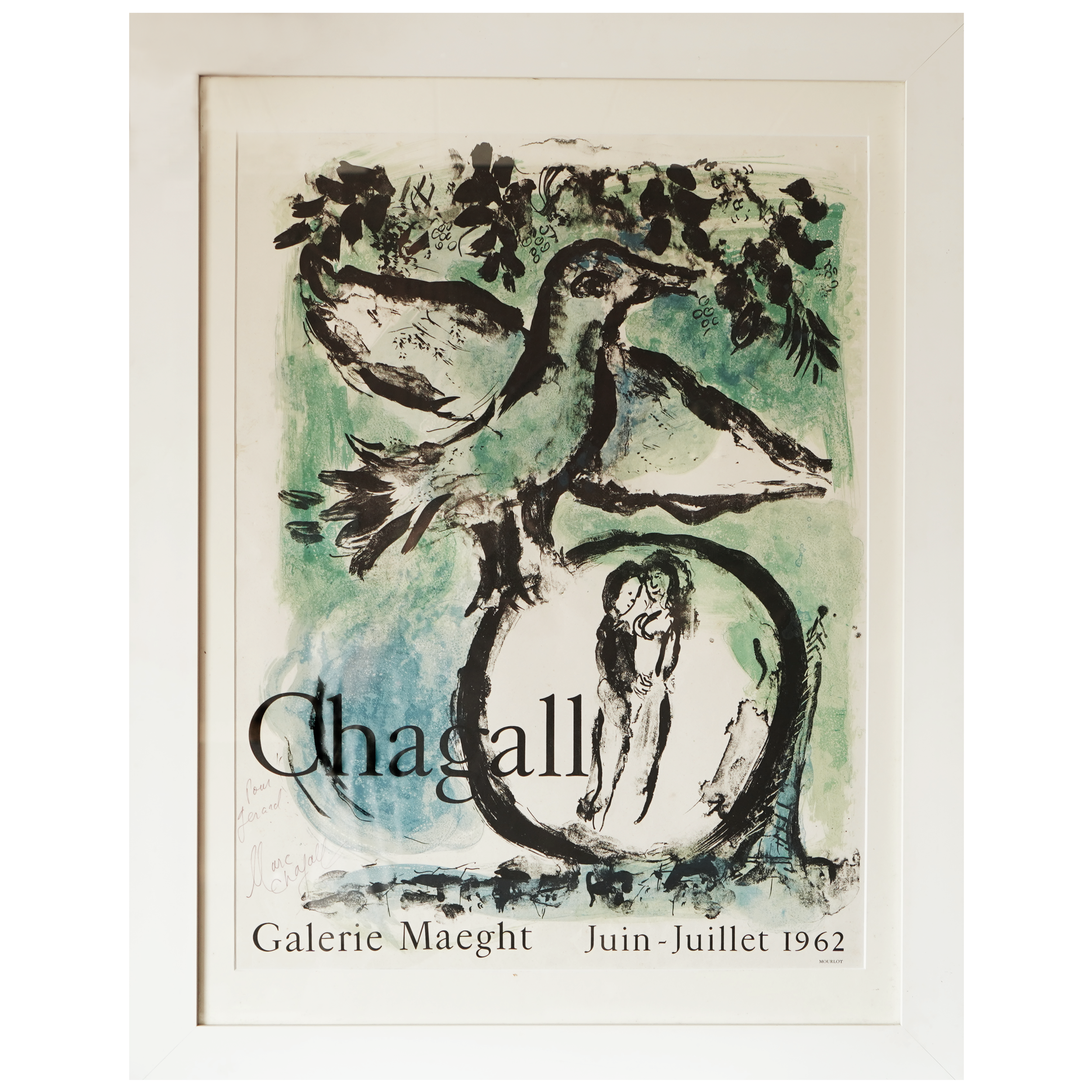
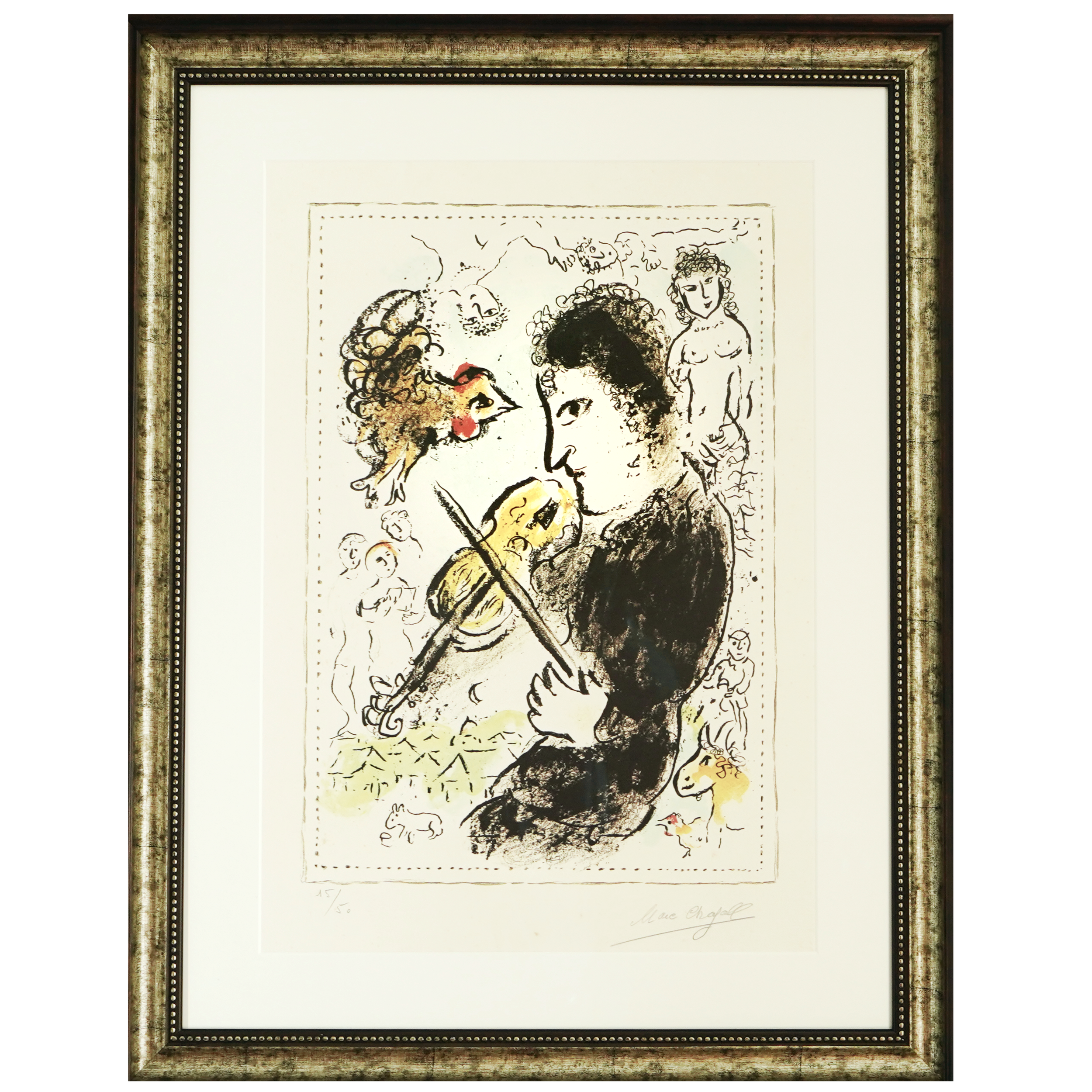

Marc Chagall (1887–1985)
Psaumes de David (Psalms of David)
Lithograph on paper
Exhibition poster, Musée National Message Biblique Marc Chagall, Nice, 1980
Dimensions: 69 × 43 cm
This lithograph, created for the exhibition Psaumes de David at the Musée National Message Biblique Marc Chagall in Nice, reflects the artist’s lifelong dialogue between biblical themes and his poetic, dreamlike visual language. Executed in his characteristic style of fluid lines and floating figures, the work illustrates a joyful dance of figures set against a symbolic cityscape, evoking both the biblical Jerusalem and Chagall’s own memory-laden imagination.