

Joan MIRO
Joan Miró (1893–1983)
Joan Miró was a Spanish painter, sculptor, and ceramicist from Barcelona, known for his playful yet deeply symbolic style that bridged Surrealism, abstraction, and modernism. After early training at art schools in Barcelona, he moved to Paris, where he connected with avant-garde circles and developed his distinctive visual language.
His art is characterized by bold colors, biomorphic forms, and dreamlike compositions, often inspired by Catalan culture, nature, and the subconscious mind. Miró sought to “assassinate painting” by breaking from traditional forms, creating works that were both poetic and experimental.
Over his long career, he worked across painting, sculpture, printmaking, and large-scale public art, becoming one of the most influential artists of the 20th century. His work continues to inspire for its imaginative freedom and joyful, yet profound, spirit.
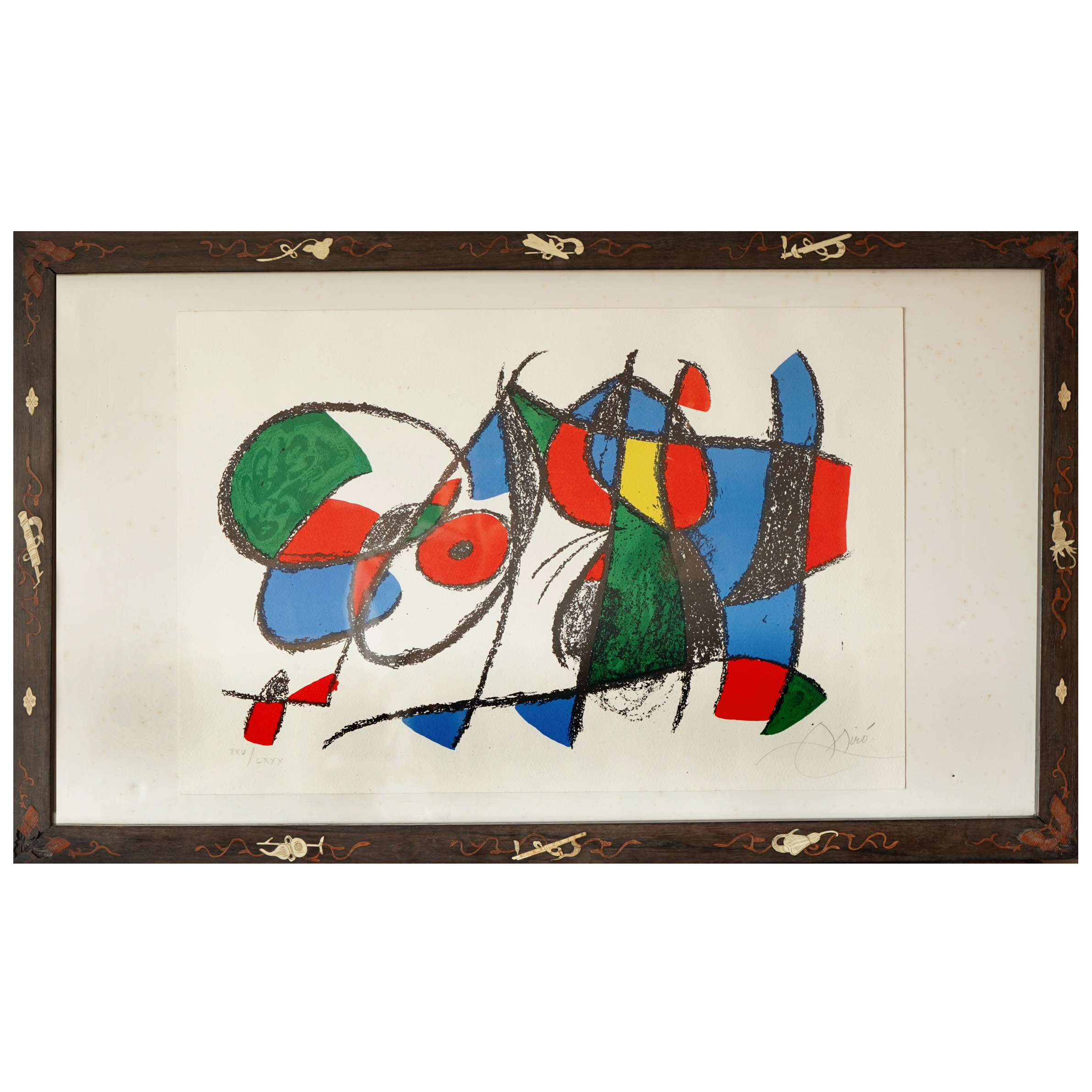
JOAN MIRO Lithographe Original. Signed bottom right
XXV / LXXX
Year: 1979
Title:Untitled (Abstract Composition)
Artist: Joan Miró (Spanish, 1893–1983)
Medium: Color lithograph on paper
Signature: Hand-signed "Miró" (lower right)
Dimensions: 36 × 55 cm
Description:
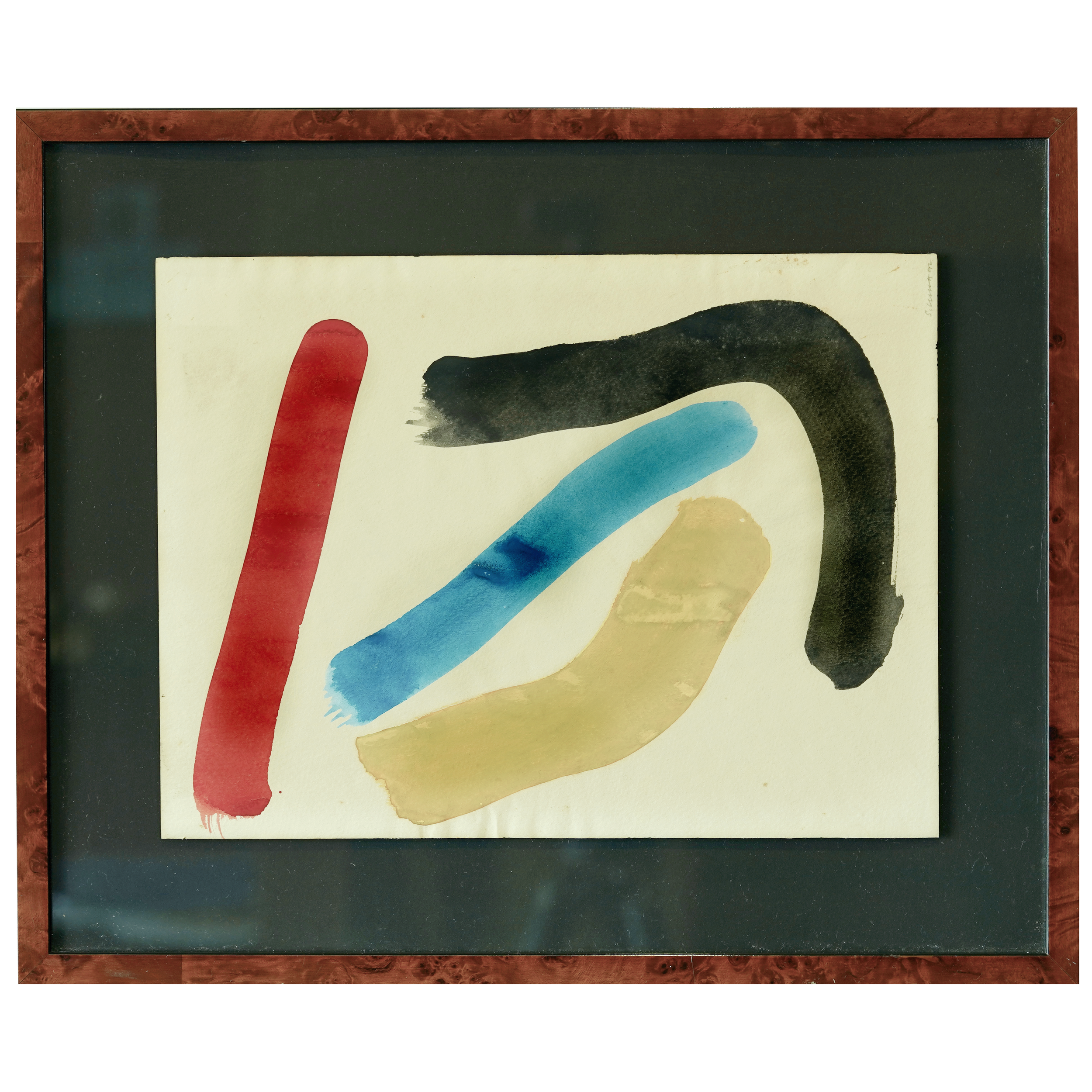
Lithograph by Joan Miró showing the artist’s mastery of color and abstract form. Composed of energetic black lines intertwined with vibrant zones of red, blue, green, and yellow, the piece captures the rhythmic dynamism that defines much of Miró’s later work. The playful, looping forms and whimsical geometry evoke a sense of freedom and imagination, hallmarks of his unique visual language..
This lithograph belongs to a series of works that reflect Miró’s enduring interest in the subconscious and the symbolic. His bold, modernist vocabulary — characterized by floating biomorphic shapes and surreal gestures — had a profound influence on 20th-century abstraction.
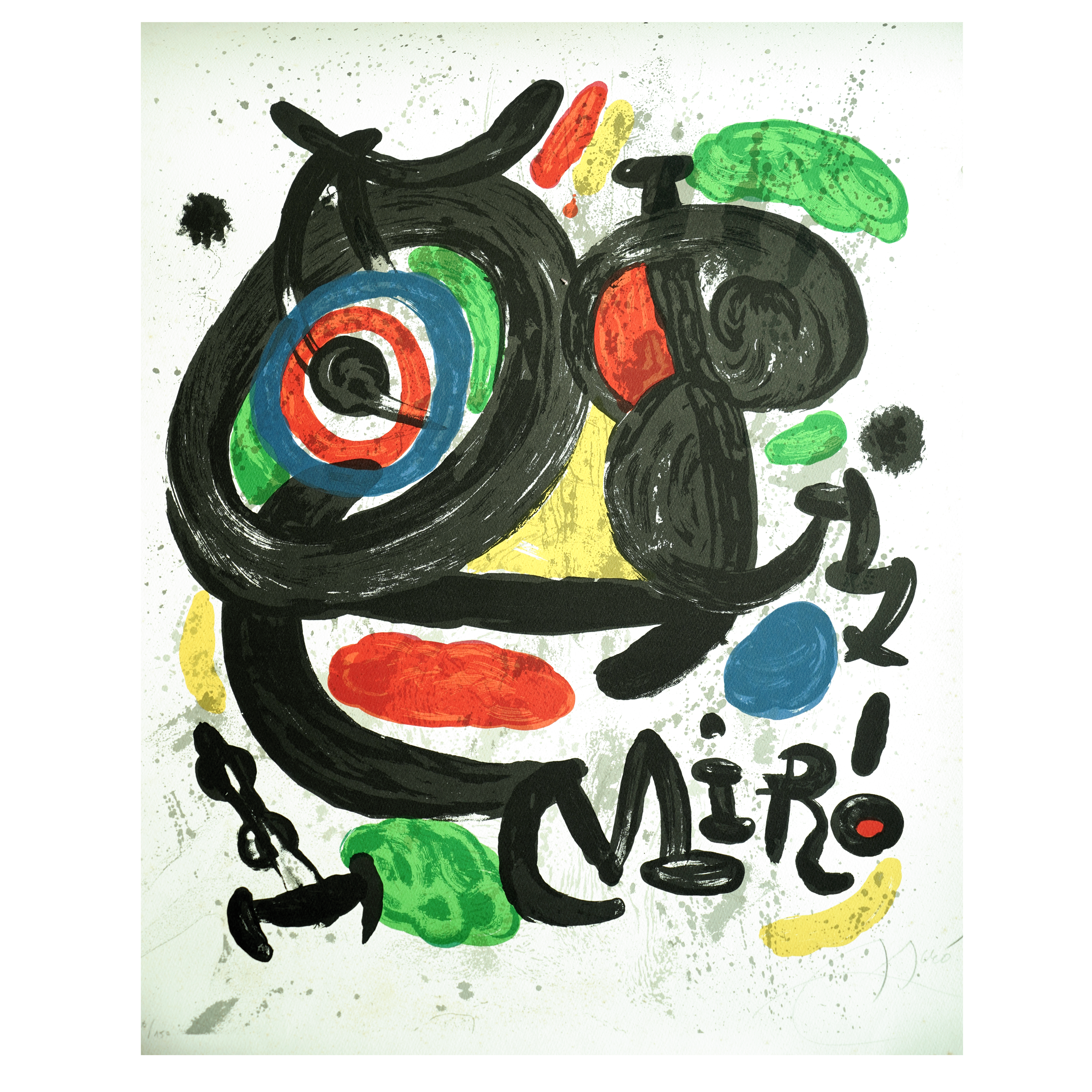
Joan Miró (1893–1983)
Untitled, c. 1960s
Color lithograph on paper
Dimensions: 86 × 59 cm
Lithograph exemplifying Joan Miró’s playful and poetic visual language. Bold black forms intertwine with bursts of primary colors—red, blue, yellow, and green—set against a dynamic field of painterly textures and gestural marks. The composition embodies Miró’s signature balance between abstraction and spontaneity, evoking a dreamlike world of symbols, movement, and imagination.
Miró’s graphic works, such as this, highlight his ability to translate the energy of his paintings into printmaking, making color and form accessible while preserving their expressive intensity.
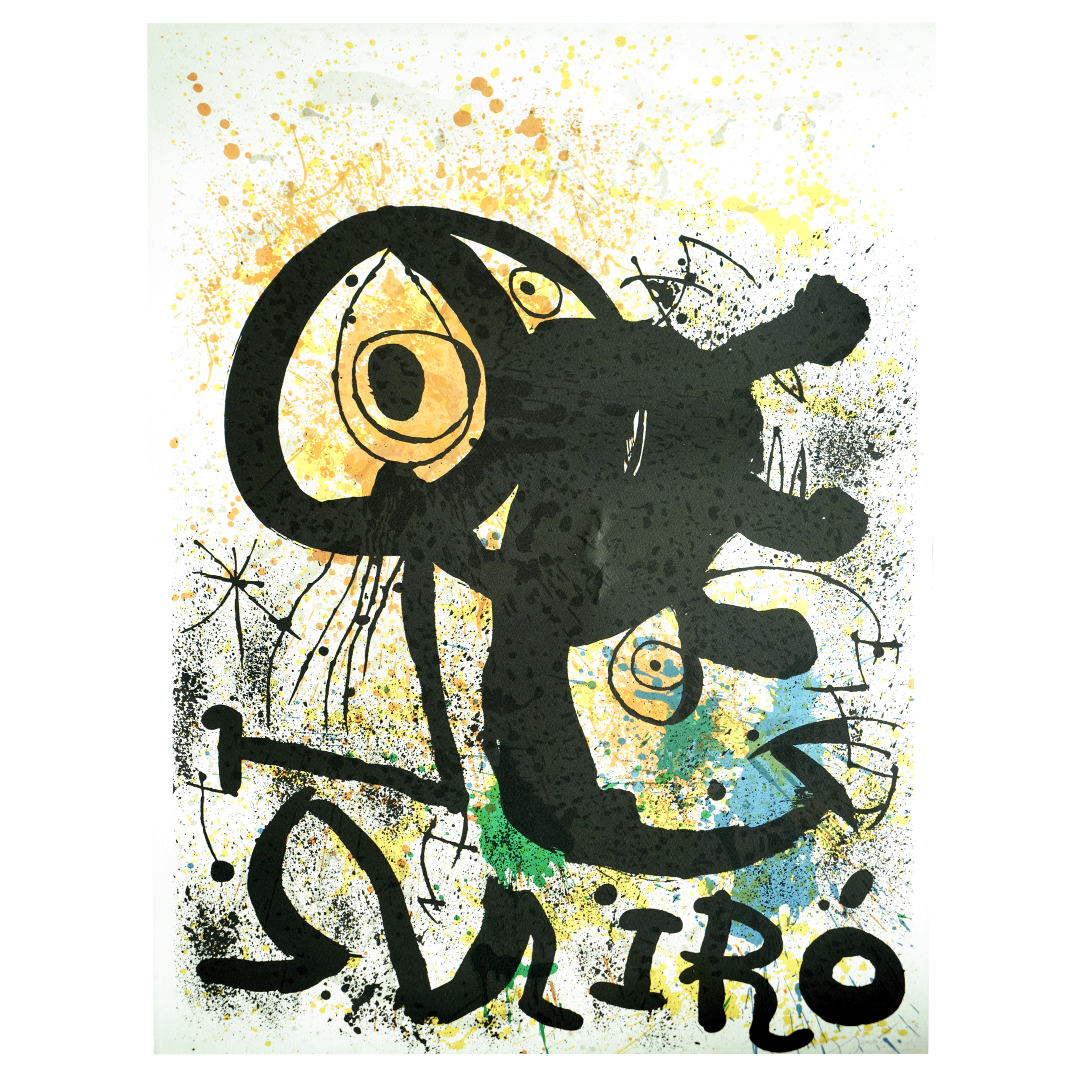
Joan Miró (1893–1983)
Untitled, c. 1960s–70s
Color lithograph on paper
Dimensions: 86 × 59 cm
Lithograph capturing Joan Miró’s fascination with spontaneity, movement, and the dreamlike world of abstraction. Bold black forms dominate the composition, animated by bursts of yellow, green, and blue splatters that evoke both cosmic energy and childlike play. Miró’s gestural lines and biomorphic shapes suggest a universe alive with symbols, where imagination transforms into visual poetry.
As in much of his graphic work, Miró uses lithography not only as a means of reproduction but as a medium of invention, preserving the immediacy and vitality of his painterly touch.

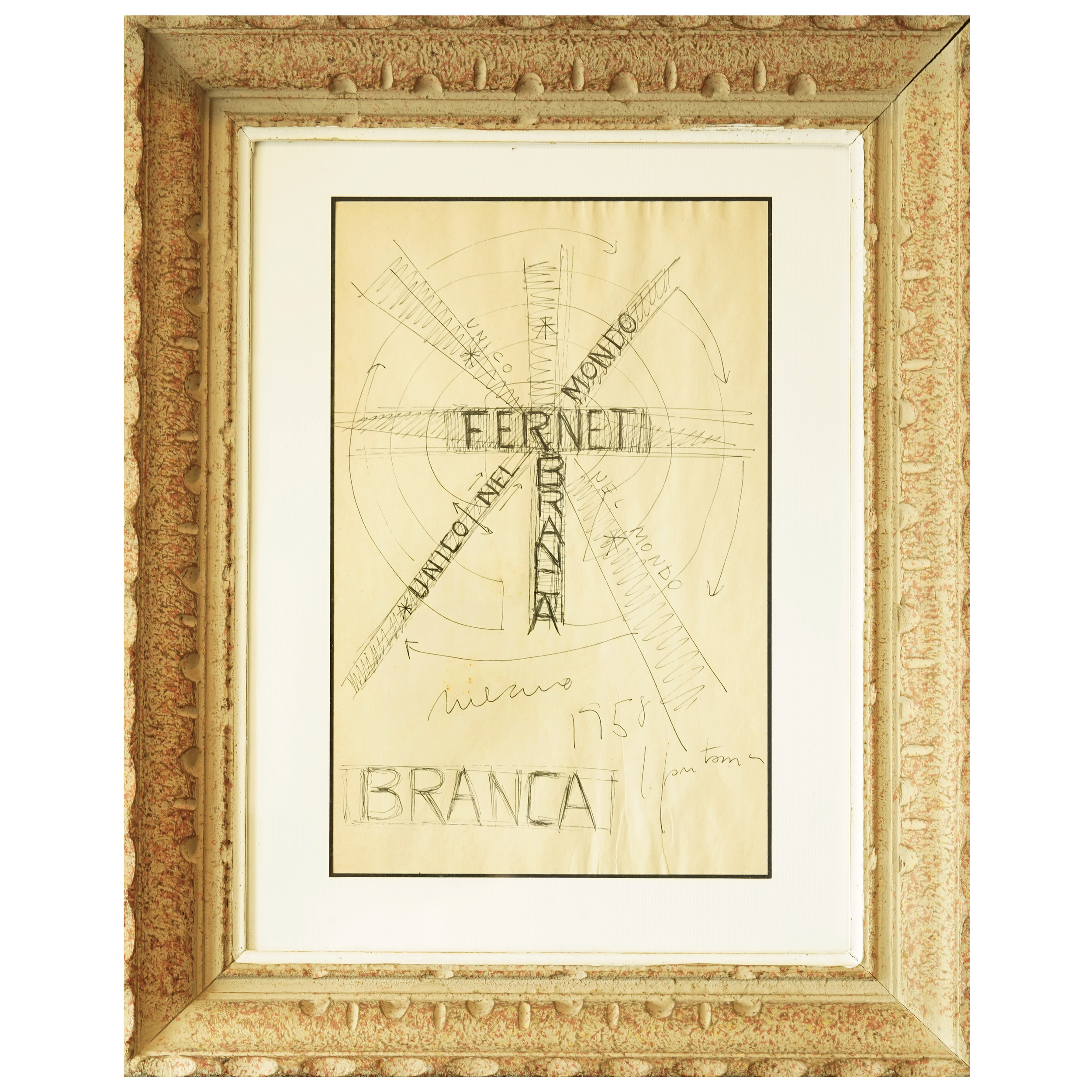
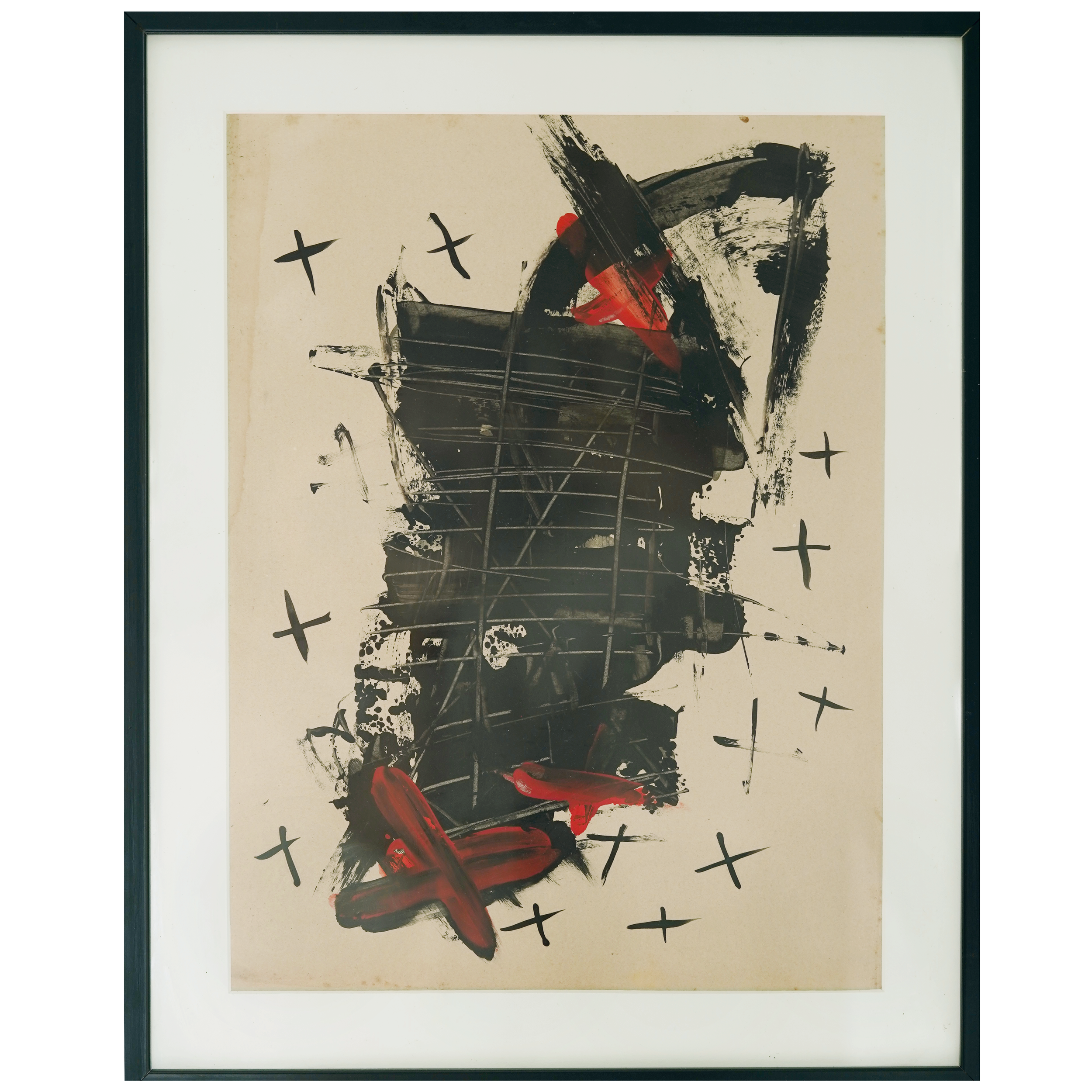
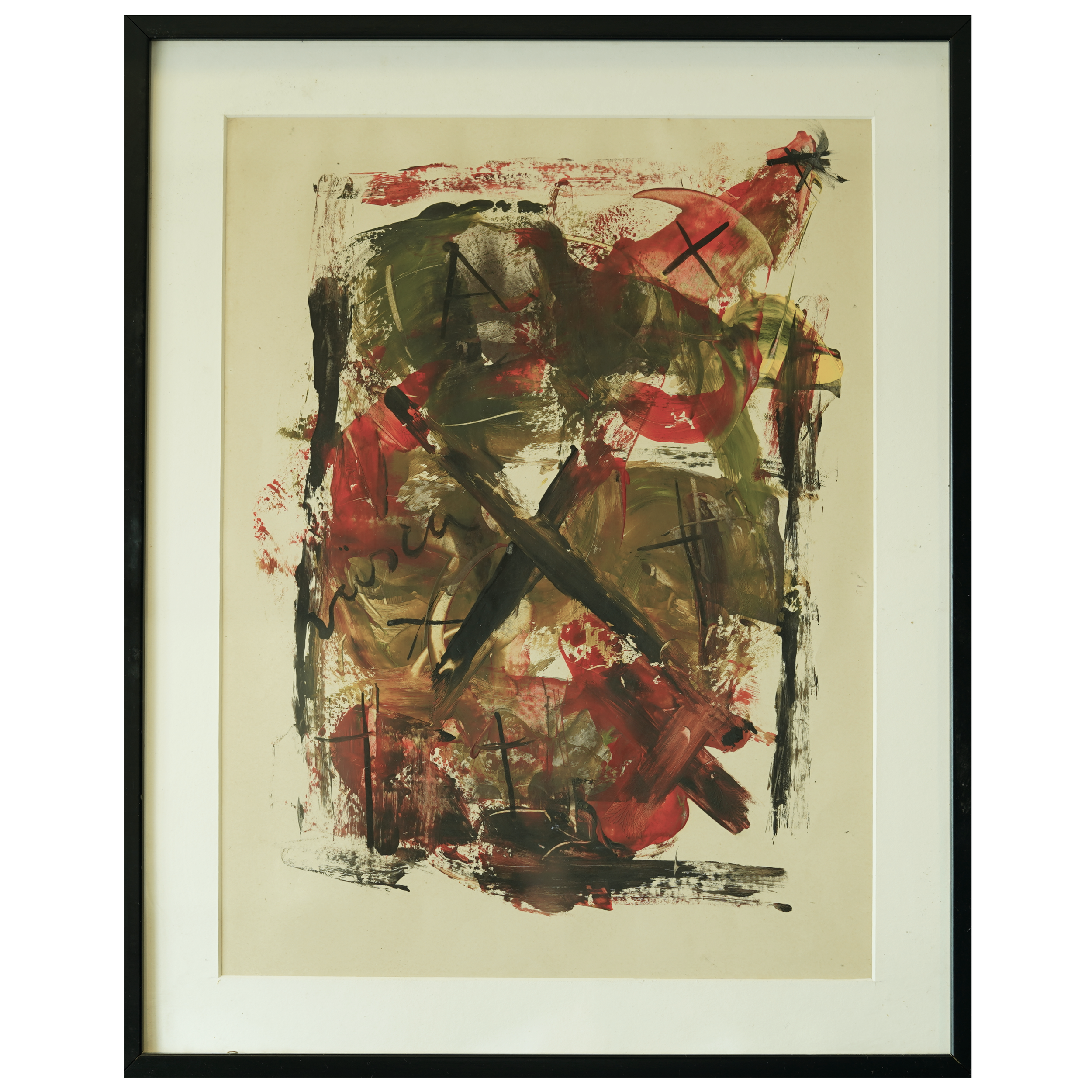
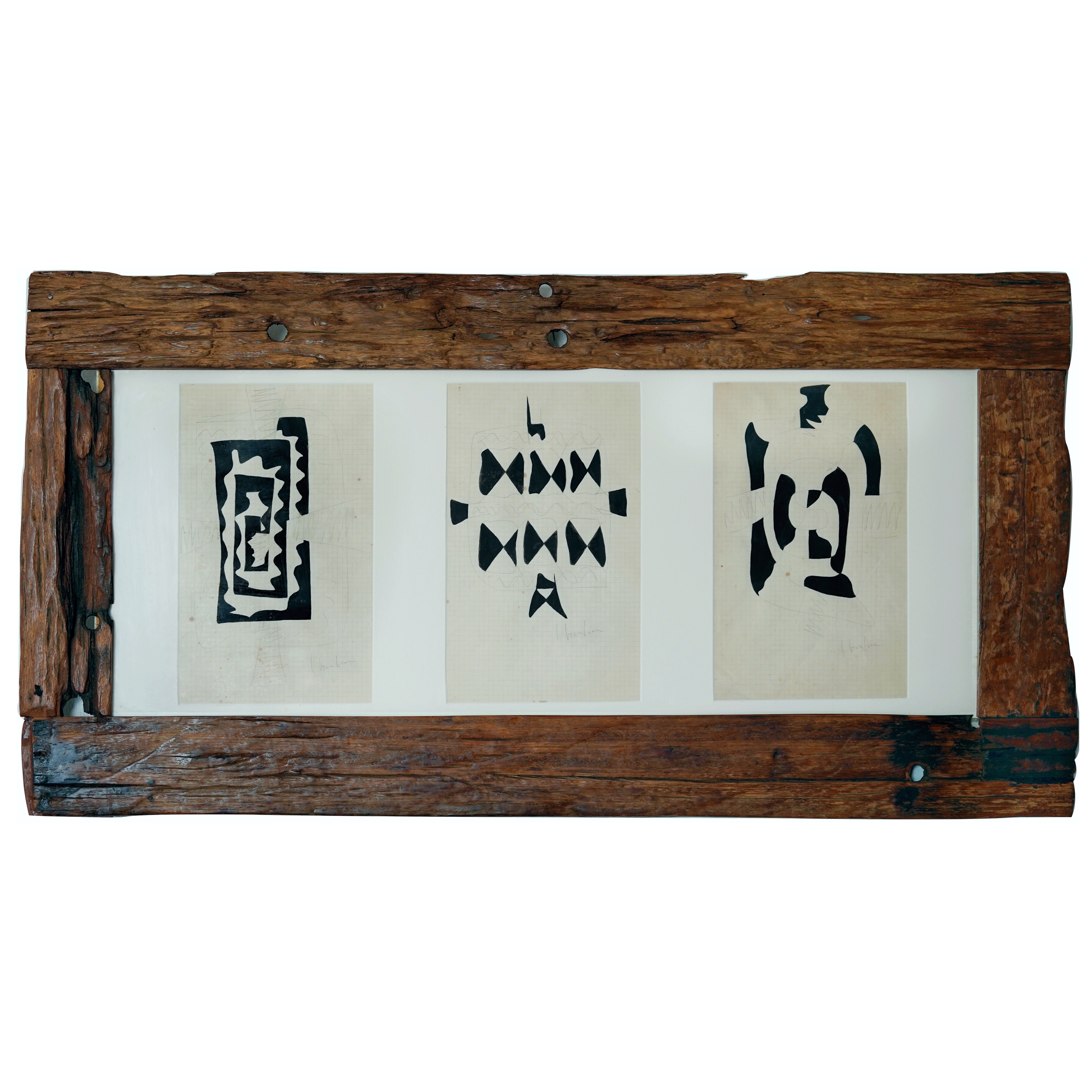
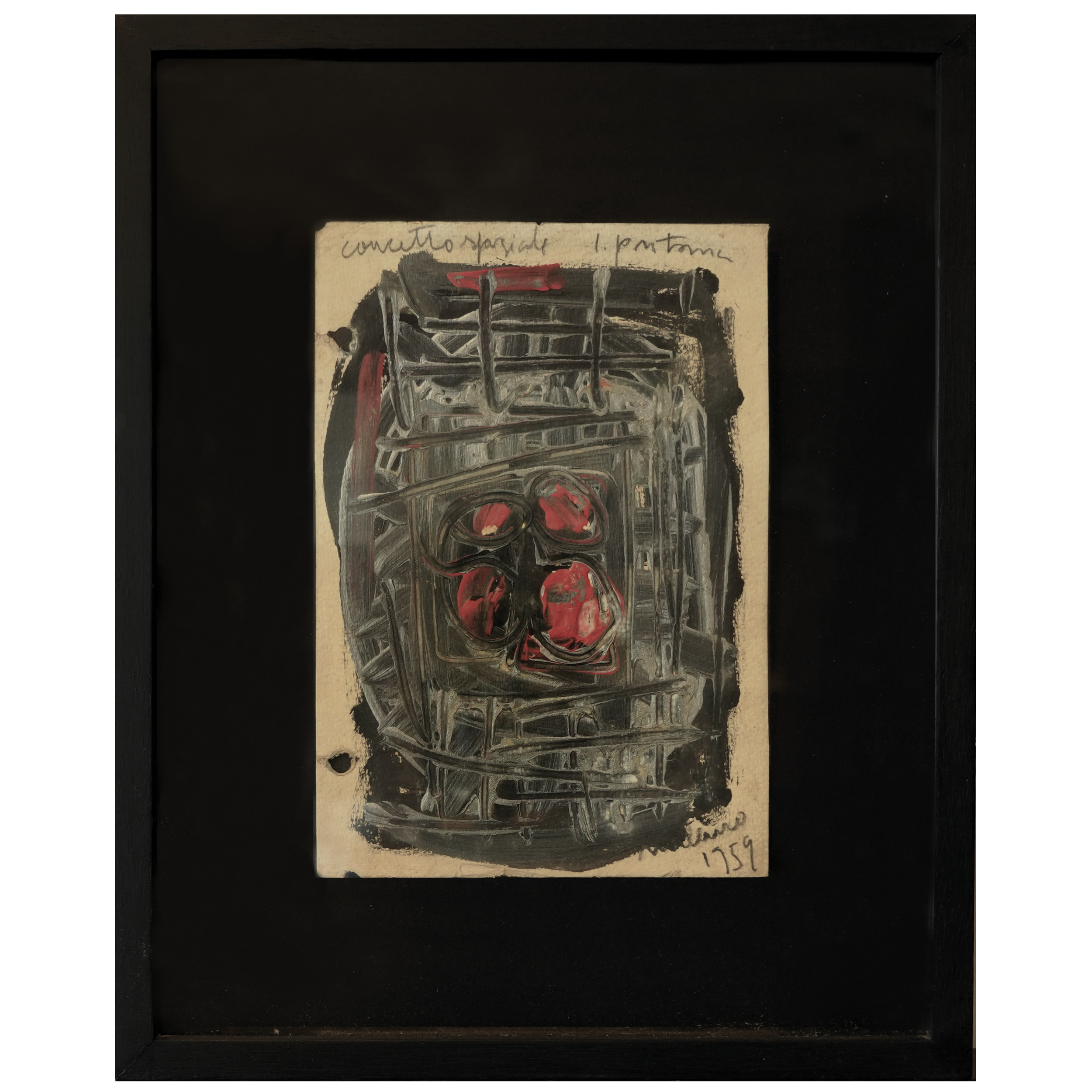
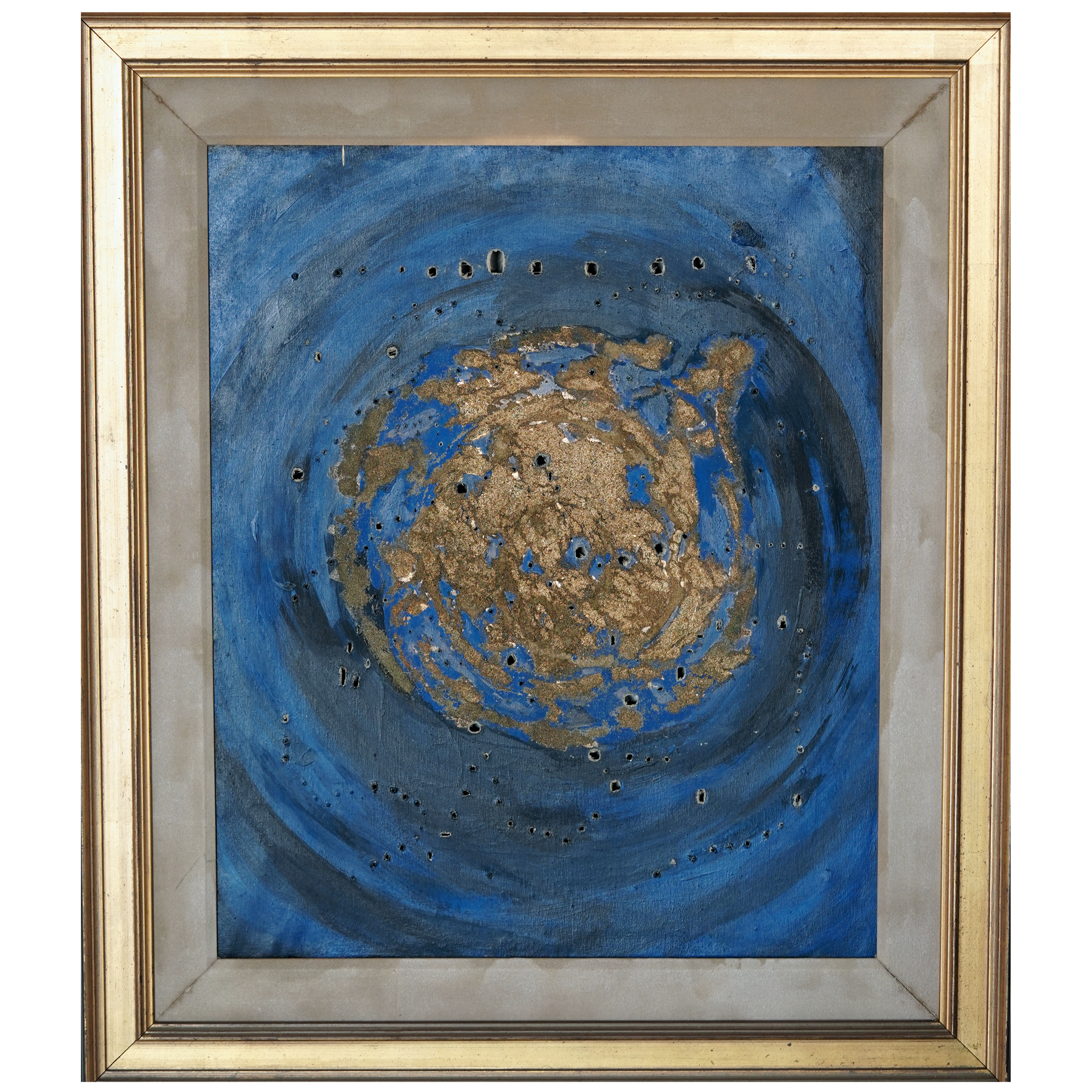

Lucio Fontana (1899–1968)
Concetto Spaziale, Renove, 1965
Bronze with incision, mounted on base
Dimensions: 48 × 50 cm
This minimalist yet striking sculpture by Argentine-Italian artist Lucio Fontana embodies his pioneering Spatialism movement. The work features a single, deliberate incision in a square steel plate, transforming the flat surface into a space of infinite depth. By cutting through the metal, Fontana rejects traditional sculptural volume, instead inviting the viewer to contemplate the void and the space beyond the object itself. The raw, weathered surface contrasts with the clean precision of the slit, reflecting Fontana’s interest in the dialogue between materiality and the metaphysical.