

 Image 1 of 3
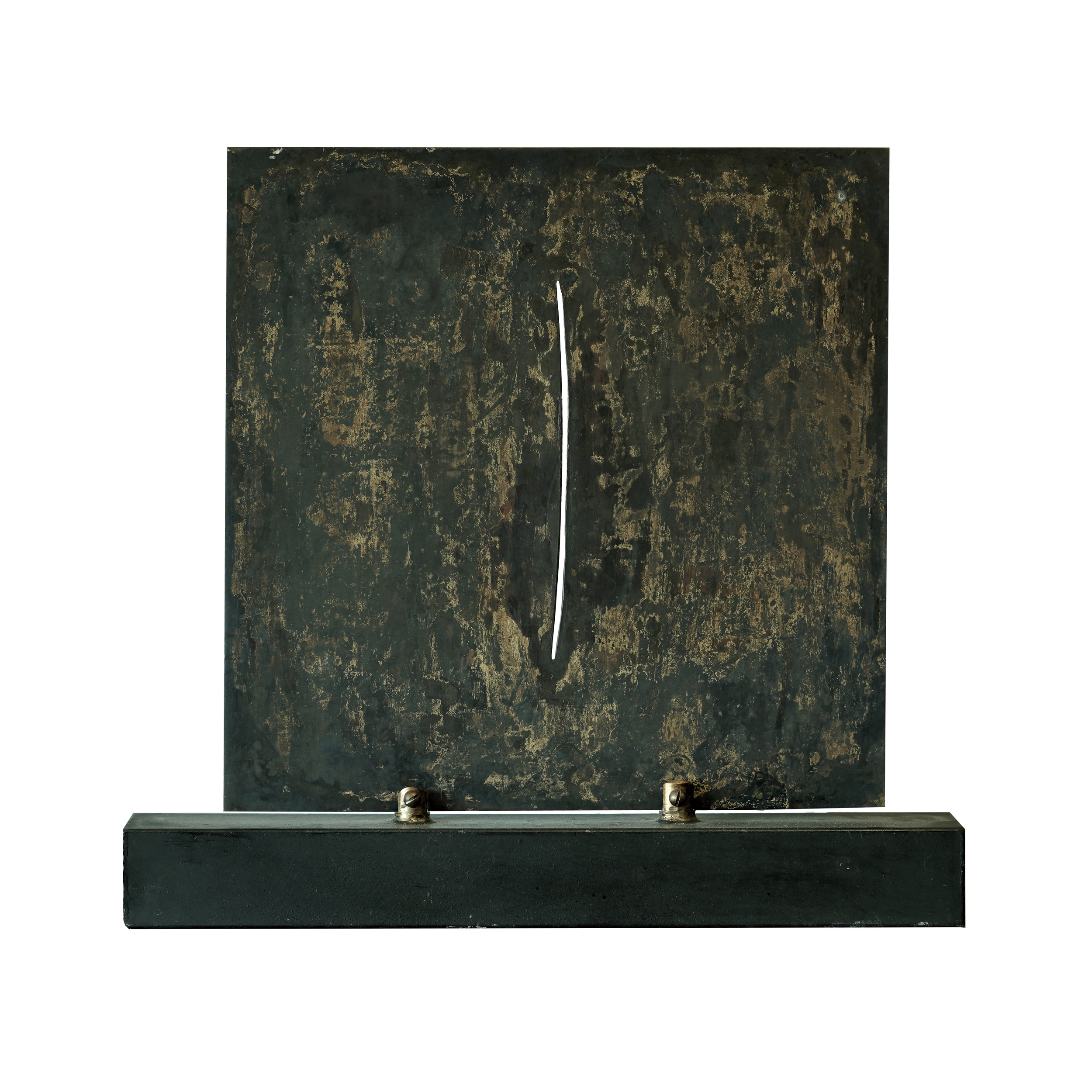 Image 2 of 3
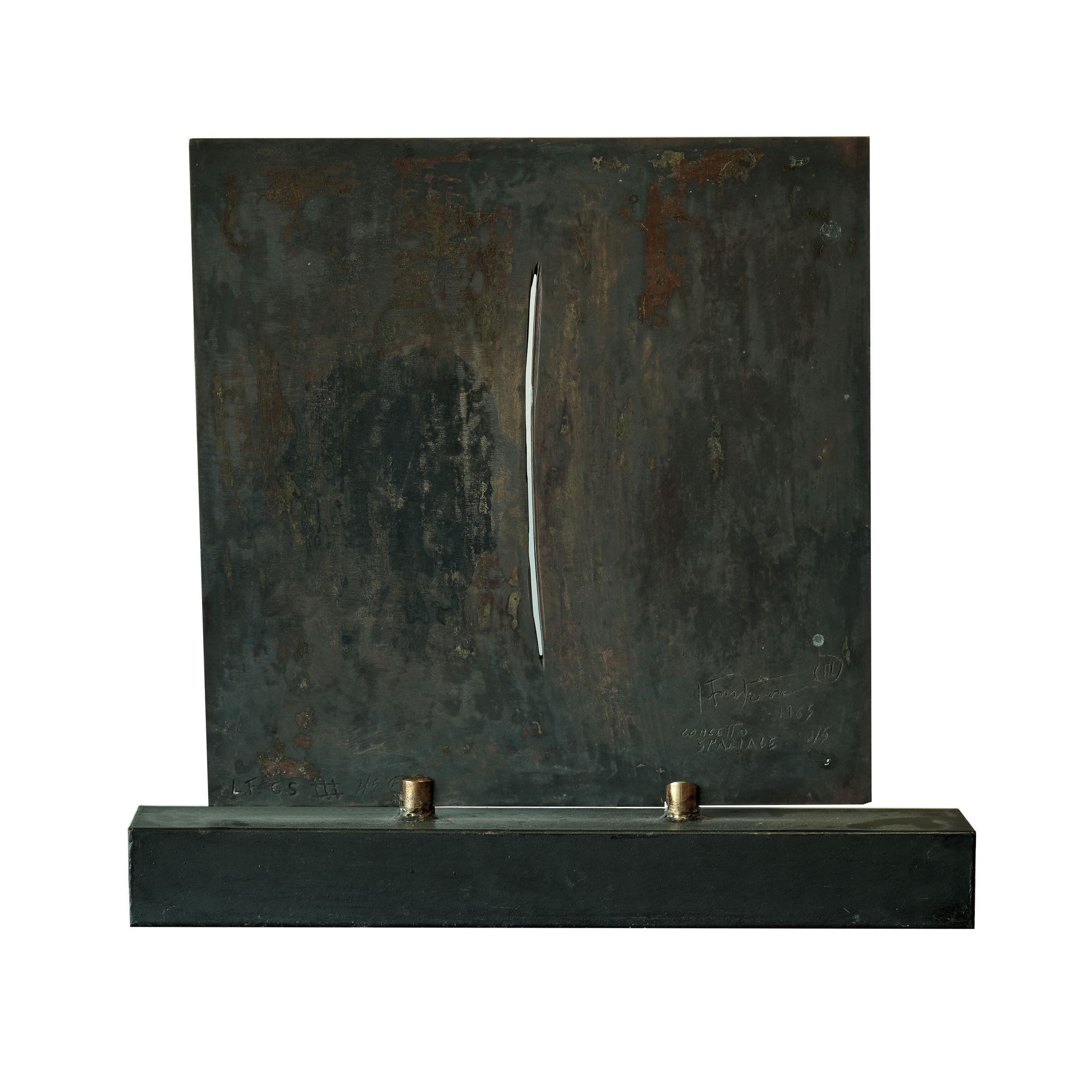 Image 3 of 3
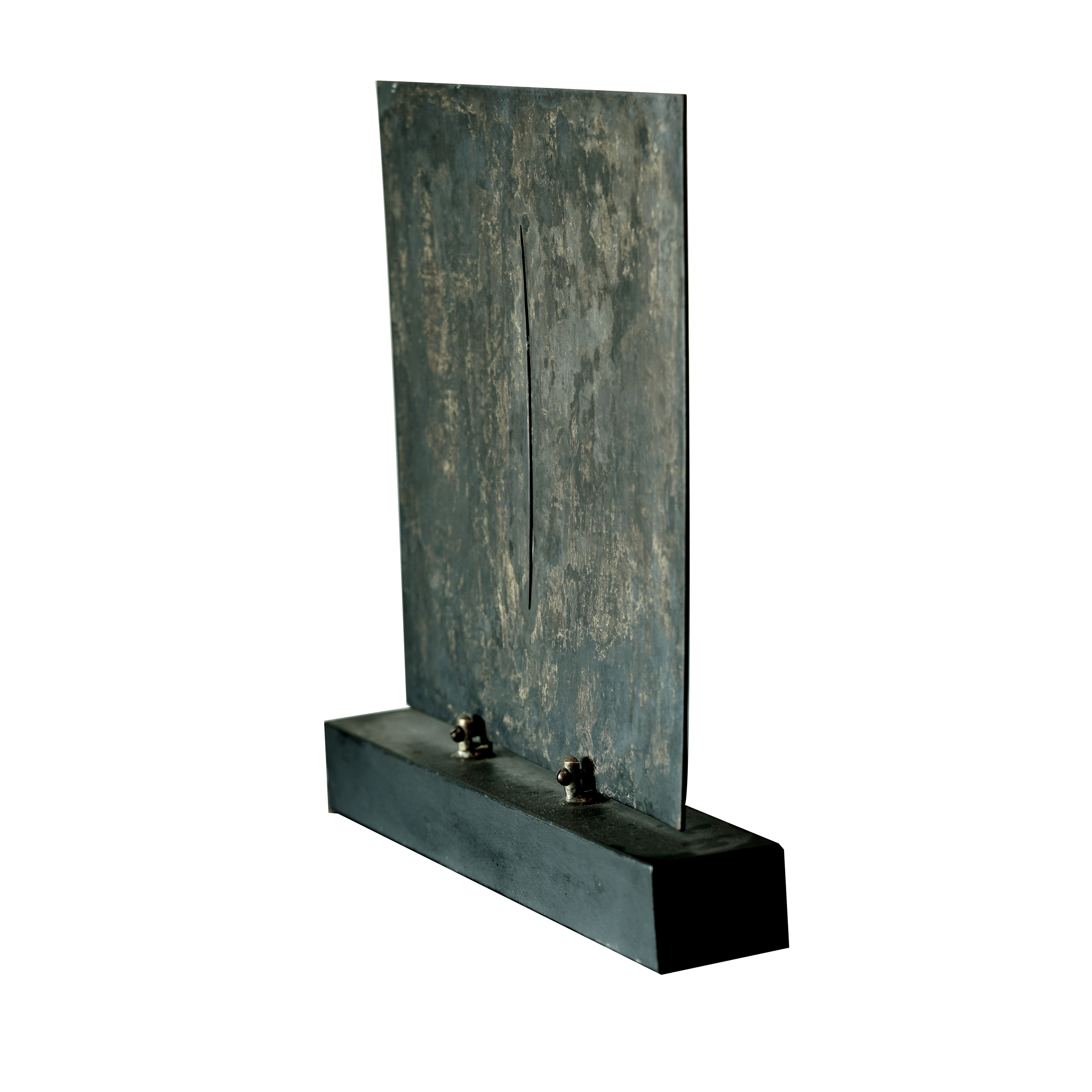
LUCIO FONTANA CONCETTO SPAZIALE, "RENOVE" 1965
Lucio Fontana (1899–1968)
Concetto Spaziale, Renove, 1965
Bronze with incision, mounted on base
Dimensions: 48 × 50 cm
This minimalist yet striking sculpture by Argentine-Italian artist Lucio Fontana embodies his pioneering Spatialism movement. The work features a single, deliberate incision in a square steel plate, transforming the flat surface into a space of infinite depth. By cutting through the metal, Fontana rejects traditional sculptural volume, instead inviting the viewer to contemplate the void and the space beyond the object itself. The raw, weathered surface contrasts with the clean precision of the slit, reflecting Fontana’s interest in the dialogue between materiality and the metaphysical.
Lucio Fontana (1899–1968)
Concetto Spaziale, Renove, 1965
Bronze with incision, mounted on base
Dimensions: 48 × 50 cm
This minimalist yet striking sculpture by Argentine-Italian artist Lucio Fontana embodies his pioneering Spatialism movement. The work features a single, deliberate incision in a square steel plate, transforming the flat surface into a space of infinite depth. By cutting through the metal, Fontana rejects traditional sculptural volume, instead inviting the viewer to contemplate the void and the space beyond the object itself. The raw, weathered surface contrasts with the clean precision of the slit, reflecting Fontana’s interest in the dialogue between materiality and the metaphysical.
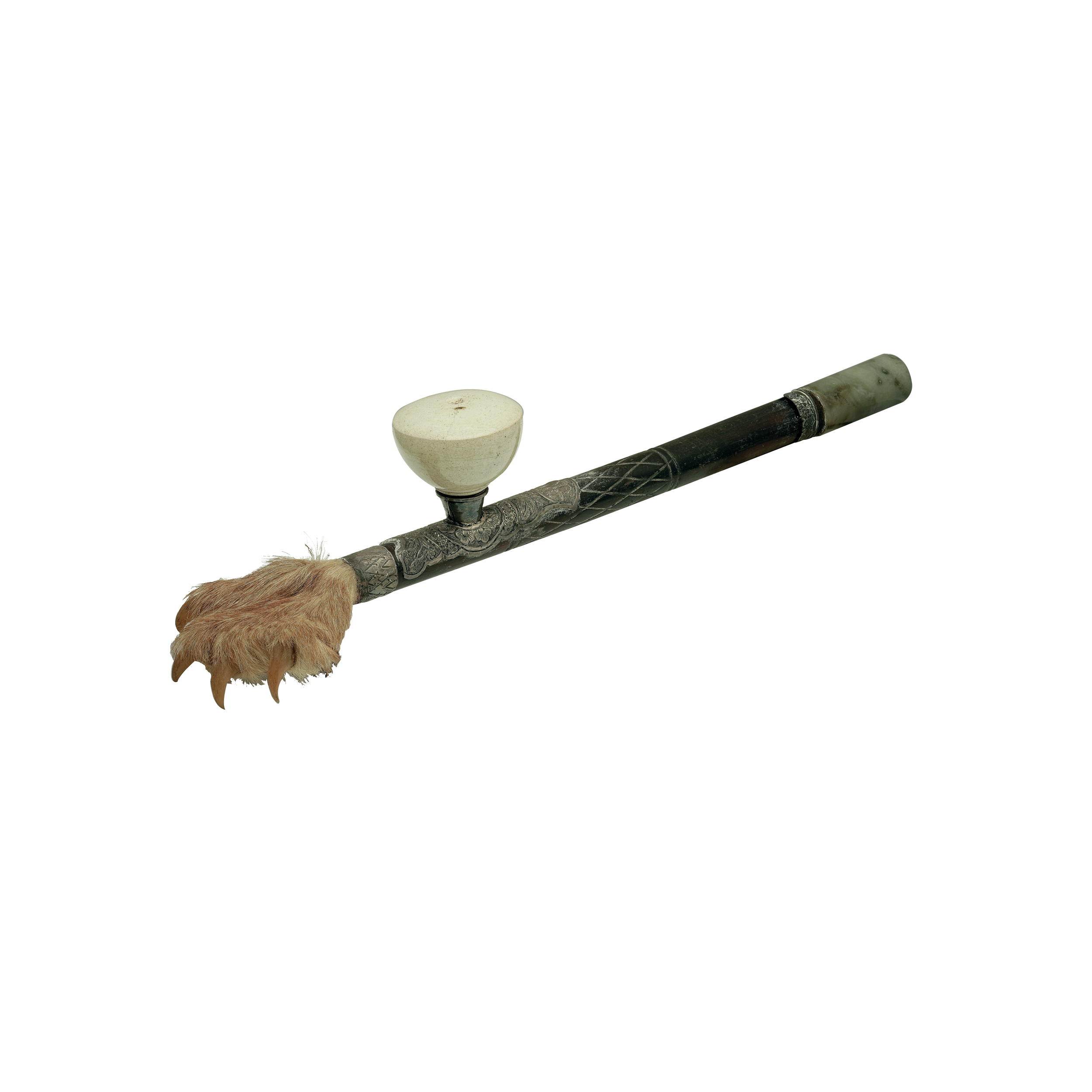
Origin: China or Southeast Asia
Date: Late 19th–early 20th century
Materials: Metal, ceramic, animal paw (likely feline)
Dimensions: Appro 49 × 10 cm
Description:
Unusual custom-made opium pipe combining traditional materials with a personalizing feature. The long cylindrical stem, crafted from metal and engraved with geometric and foliate motifs, is fitted with a white ceramic bowl for vaporizing prepared opium. The mouthpiece appears to be carved from pale green jade.
Most notably, the opposite end of the stem is capped with a preserved animal paw—likely feline—complete with fur and claws intact. This distinctive finial transforms the piece into a unique personal statement, possibly signifying the owner’s status, identity, or totemic beliefs. The fusion of refined materials with an organic ornamentation marks this pipe as a rare example of individualized opium-smoking paraphernalia.
Cultural Context:
In the opium-smoking traditions of China and Southeast Asia, pipes could range from utilitarian bamboo examples to elaborately decorated personal possessions. The use of jade in the mouthpiece reflects the material’s long-standing association with purity, health, and nobility, while the animal paw suggests either a symbolic talisman or an expression of eccentricity and power. Such a piece may have been commissioned by an elite smoker wishing to stand out in a competitive social milieu.
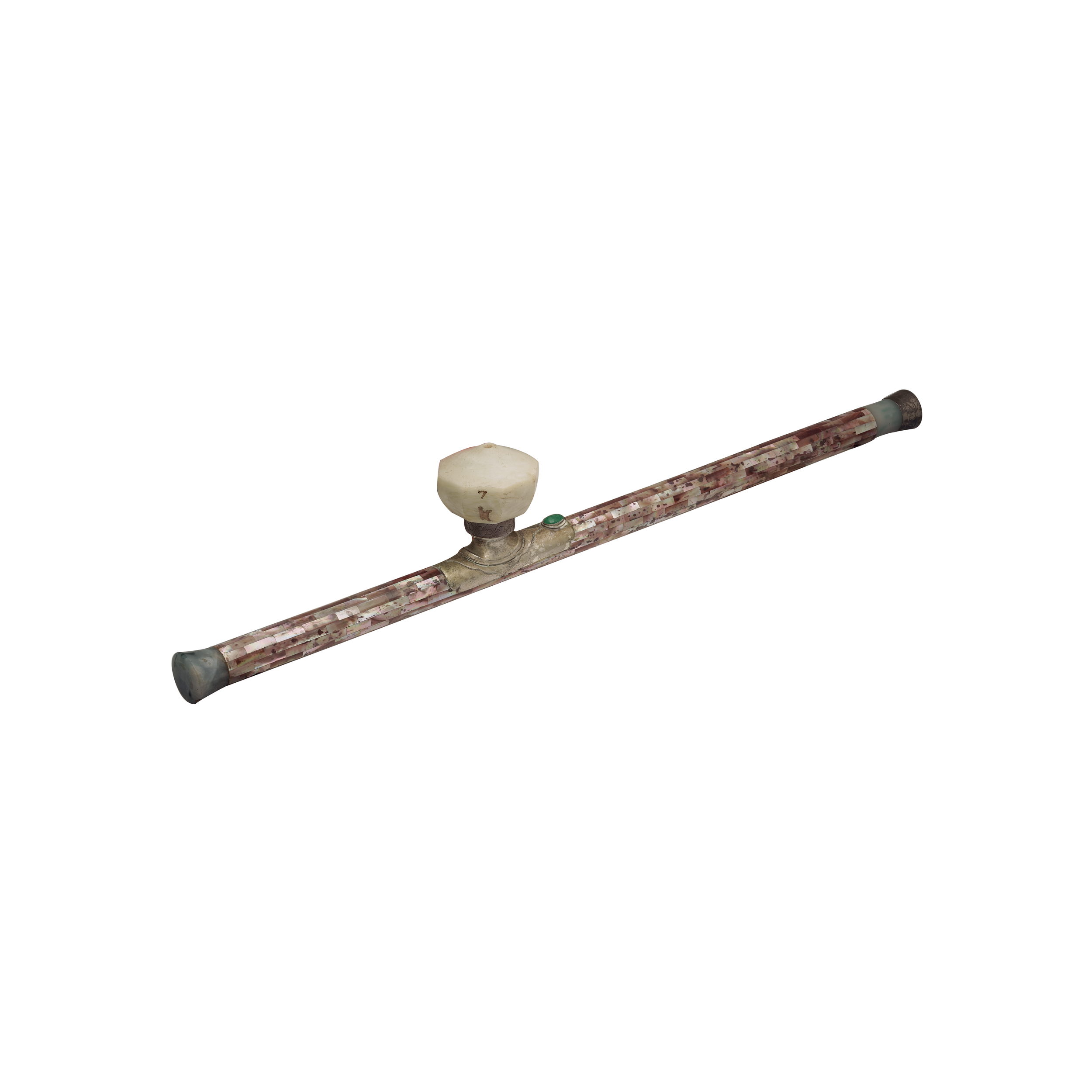
Origin: China
Date: Late 19th–early 20th century
Materials: mother-of-pearl, jade, ceramic, metal fittings
Dimensions: Appro 54 × 9 cm
Description:
Chinese opium pipe slender stem, inlaid with hundreds of small pieces of shimmering mother-of-pearl arranged in repeating floral and geometric motifs. The inlay work covers nearly the entire surface, creating a luminous effect when viewed under soft light. At the center sits a hexagonal white ceramic bowl, used for heating and vaporizing the prepared opium.
Adjacent to the bowl’s metal fitting is a small jade cabochon, possibly serving both decorative and symbolic purposes, as jade is traditionally associated with purity, protection, and high social standing. The ends of the stem are capped with metal fittings, one forming the mouthpiece, the other reinforcing the opposite extremity.
Cultural Context:
In the Qing dynasty and into the early Republican era, opium smoking was a highly ritualized activity, and pipes were often crafted to reflect the wealth and refinement of their owners. Mother-of-pearl inlay was a labor-intensive art, requiring patience and skill, and its inclusion here suggests that the pipe belonged to a patron of means who valued both function and beauty.
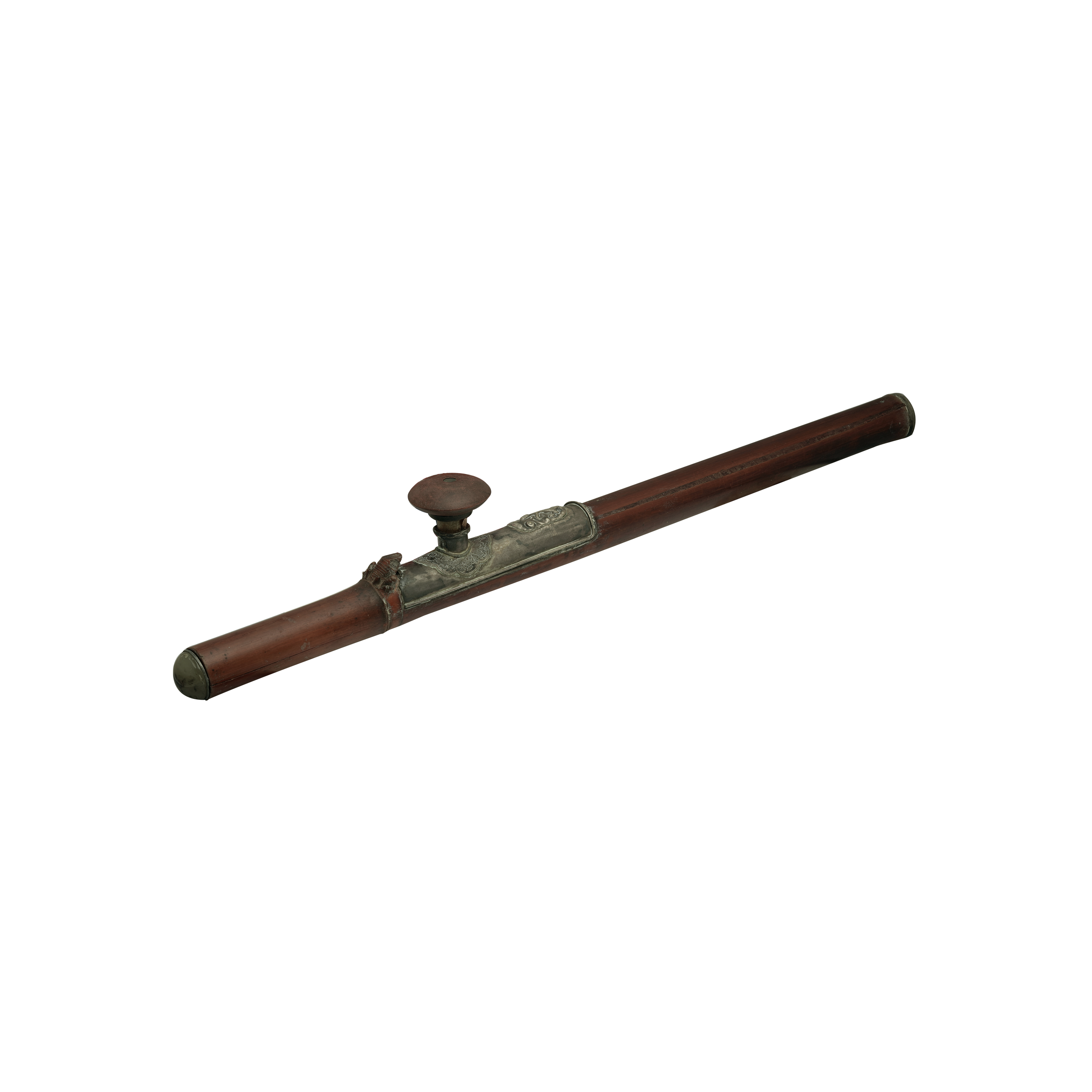
Origin: China
Date: Late 19th–early 20th century
Materials: Bamboo, brass, metal alloy
Dimensions: Appro 57 × 12 cm
Description:
Chinese opium pipe featuring a smooth cylindrical bamboo stem with warm reddish-brown patina, complemented by brass end caps and a central metal fitting to hold the ceramic or metal bowl. The central section, cast in metal alloy, displays modest decorative flourishes, including low-relief scroll motifs and a stylized clasp to secure the bowl.
The bowl itself is of small, rounded form—ideal for controlled heating of prepared opium paste over a specialized lamp. The bamboo stem’s natural durability, paired with the resilience of brass fittings, speaks to a practical yet refined approach to pipe-making, balancing utility with understated ornamentation.
Cultural Context:
Opium pipes such as this were essential implements in Chinese opium-smoking rituals, which peaked in popularity during the Qing dynasty. Bamboo was a favored stem material for its light weight, resistance to heat, and smooth draw, while brass fittings added durability and a subtle decorative element.
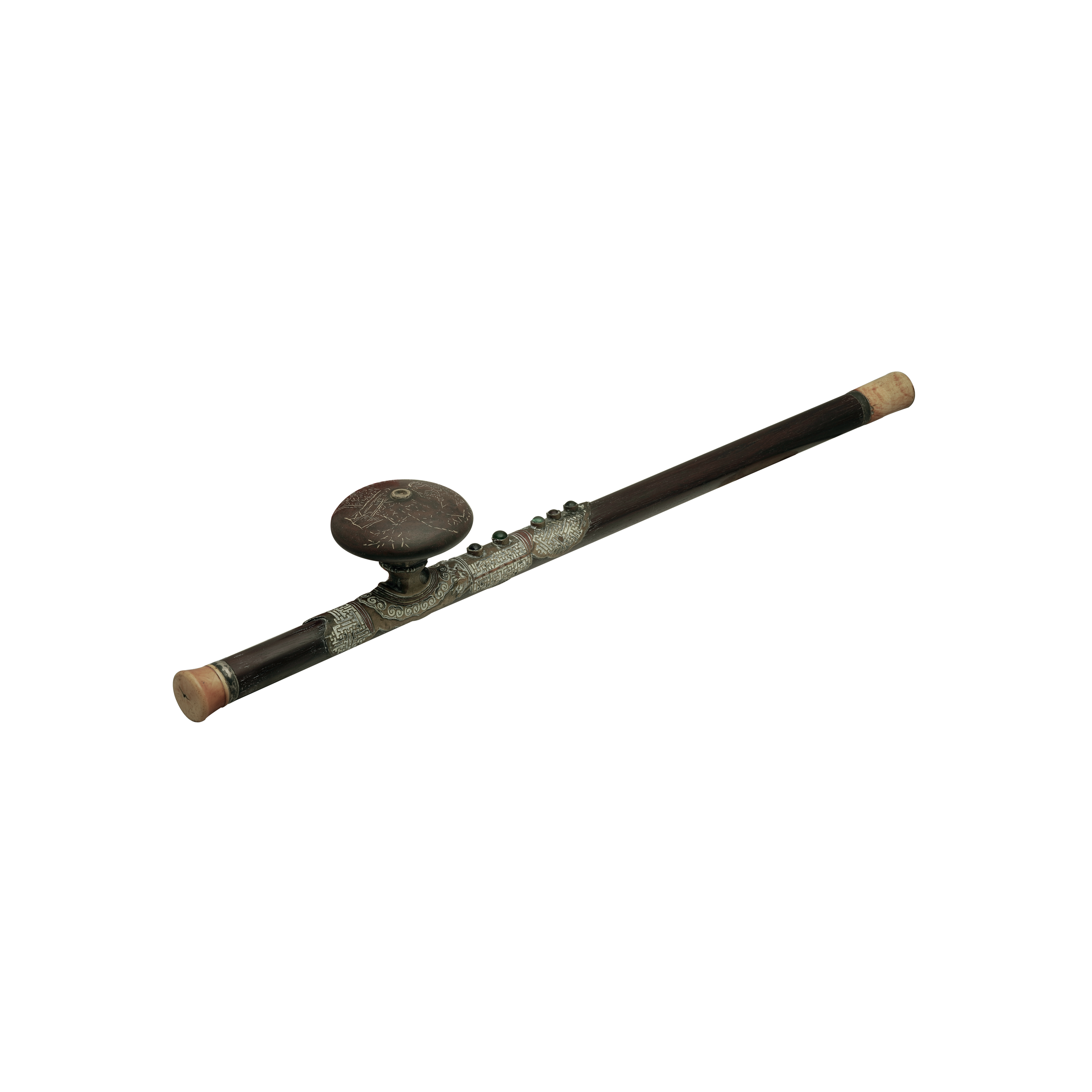
Origin: China
Date: Late 19th–early 20th century
Materials: Hardwood, metal alloy, lacquer, jade or stone mouthpieces
Dimensions: Appro 56 × 9 cm
Description:
Chinese opium pipe crafted with a hardwood stem flanked by smooth stone or jade mouthpieces at either end. The pipe features an ornate metal saddle with fine engravings of floral scrollwork, symbolizing prosperity and refinement. Resting atop the saddle is a lacquered ceramic bowl, its surface decorated with delicate gilt-painted motifs, possibly floral or calligraphic, that would have caught the light during use.
A row of small metal bosses embellishes the saddle, providing both decorative and tactile interest. The combination of rich hardwood, polished stone, and engraved metal reflects the harmony of materials prized in Qing dynasty smoking culture.
Cultural Context:
Such pipes were used in the ritualized practice of opium smoking, a pastime closely associated with leisure, social gatherings, and expressions of status in late imperial China. The luxurious details of this example suggest ownership by a connoisseur who valued both the art of smoking and the craftsmanship of the tools involved.
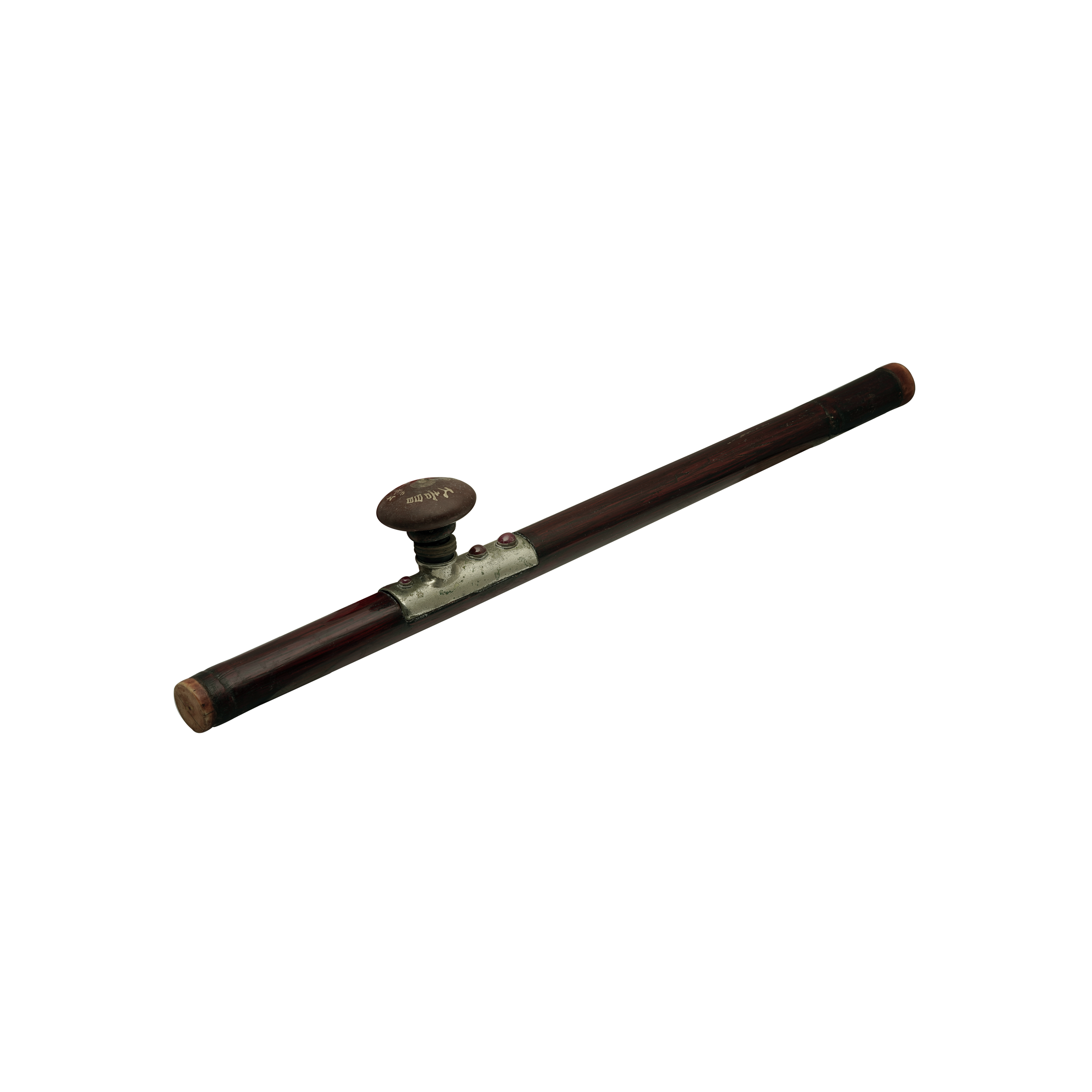
Origin: China
Date: Late 19th–early 20th century
Materials: Hardwood, metal alloy, lacquer, inlay
Dimensions: Appro 57 × 10 cm
Description:
Chinese opium pipe featuring a straight, polished hardwood stem of rich reddish-brown hue, capped at each end with fitted collars for durability. At its center sits a domed metal bowl cover, engraved with Chinese characters, mounted on a short, ridged neck that connects to an engraved metal saddle. The saddle bears a worn but elegant surface, possibly from years of careful use, and is accented with small inset stones or beads, hinting at the owner’s appreciation for refinement.
The smooth, lacquered wood contrasts with the utilitarian yet decorative metalwork, a hallmark of Qing-era smoking implements. The engraved inscription on the bowl may carry auspicious or poetic meaning, underscoring the cultural practice of pairing opium consumption with artistry and wordplay.
Cultural Context:
During the late Qing dynasty, opium smoking was a ritualized pastime that blended craftsmanship, social etiquette, and personal indulgence. Pipes of this kind were often custom-made, with fittings that reflected the wealth, status, and taste of their owner. The combination of inscribed metalwork and hardwood stem places this example within the tradition of refined domestic paraphernalia used by the literati and elite classes.
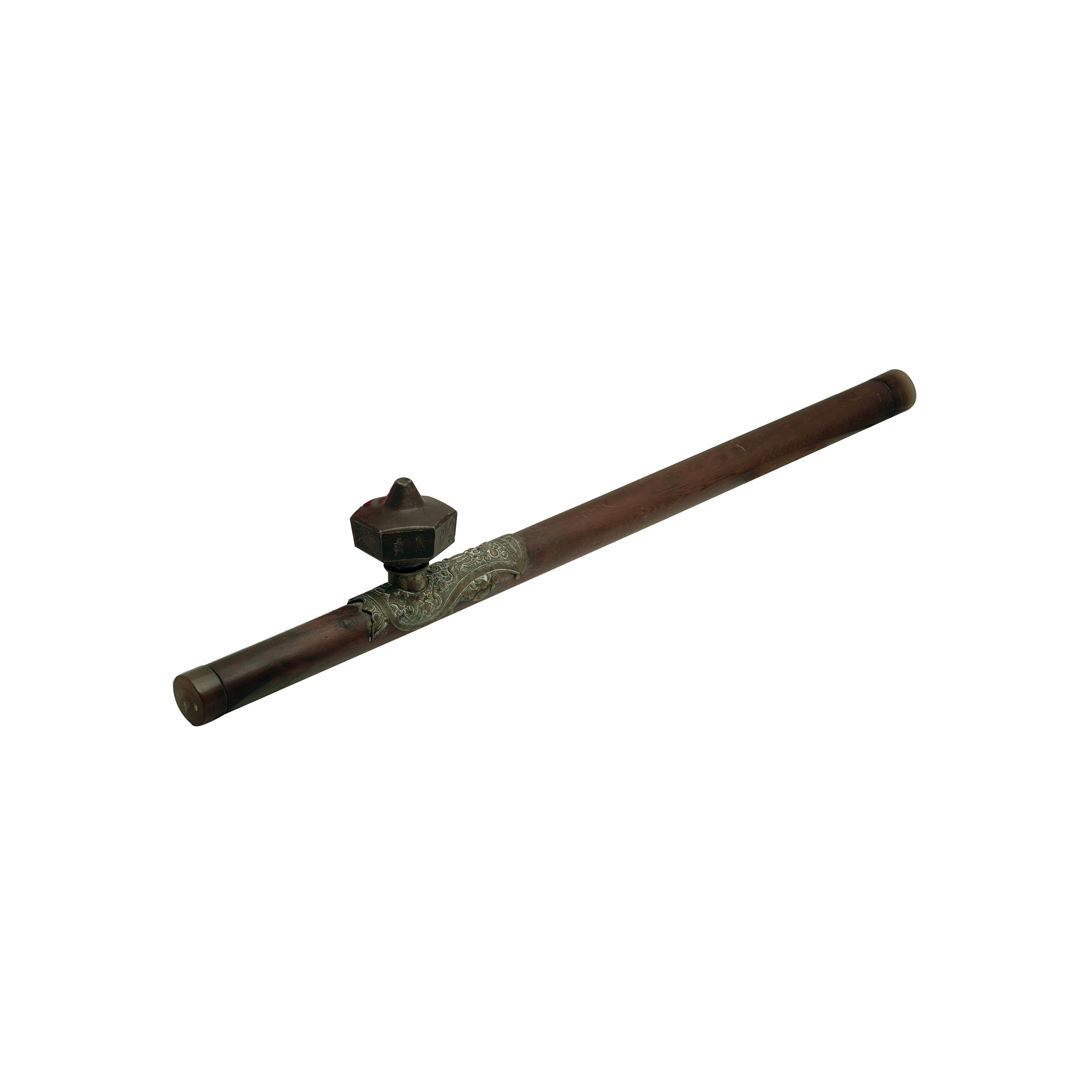
Origin: China
Date: Late 19th–early 20th century
Materials: Hardwood, metal alloy
Dimensions: Appro 54 × 10 cm
Description:
Chinese opium pipe featuring a straight hardwood stem with a polished patina, indicative of frequent handling over time. At its center sits a distinctive hexagonal metal bowl with a pointed, conical lid—a rare and striking form compared to the more typical rounded bowls. The bowl is mounted on an engraved metal saddle, adorned with scrolling floral and foliate motifs, adding both visual interest and a touch of luxury.
The hardwood body is capped at each end with smooth, fitted collars, providing durability and balance. The geometric form of the bowl contrasts elegantly with the organic patterns of the engraved saddle, merging utilitarian function with decorative artistry.
Cultural Context:
Opium smoking in late Qing China was as much a social ritual as it was a private indulgence. Pipes like this, with distinctive and high-quality fittings, often belonged to affluent individuals who took pride in the craftsmanship of their paraphernalia. The unusual bowl shape suggests either a regional variation or a custom-made commission, reflecting the owner’s personal taste.
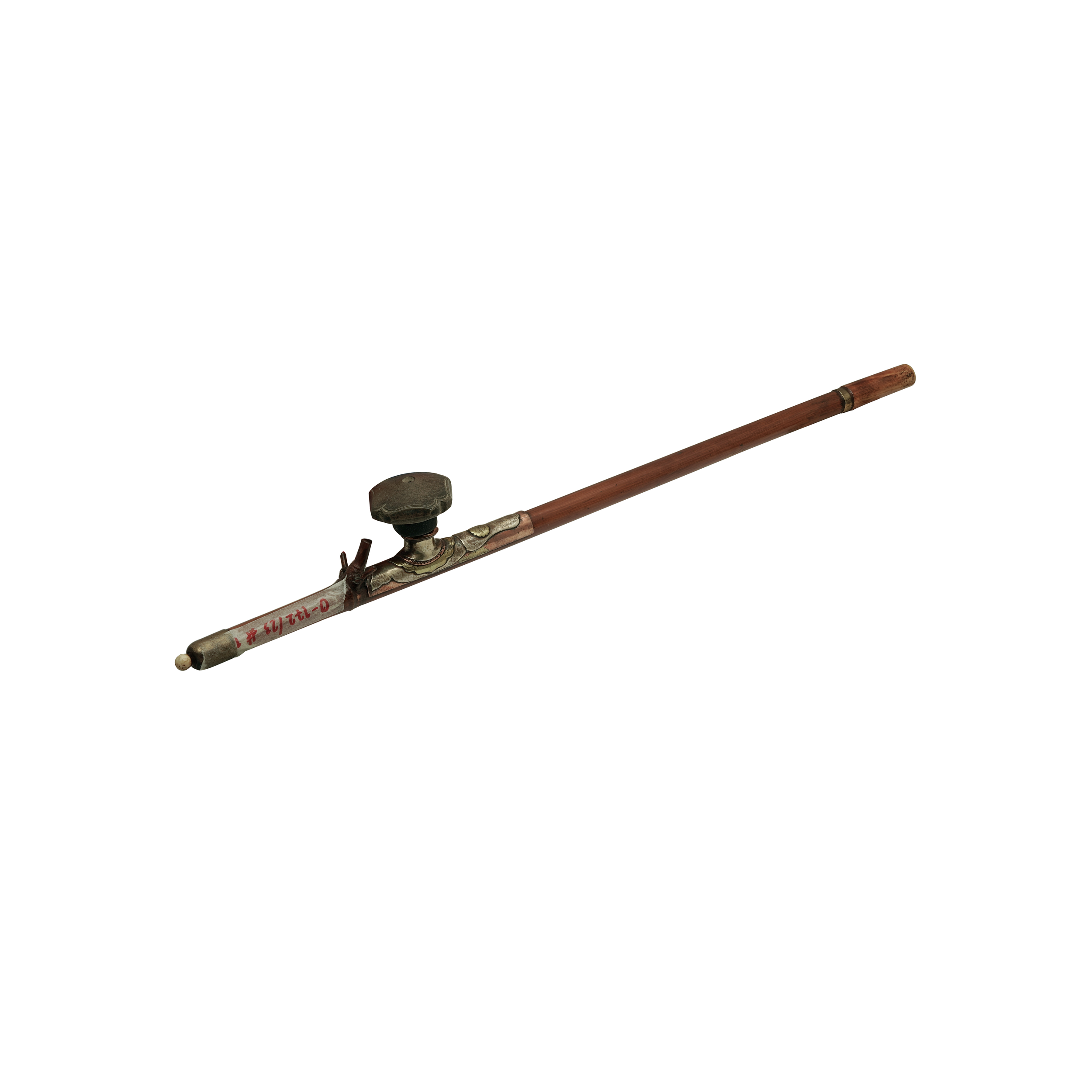
Origin: China
Date: Late 19th–early 20th century
Materials: Hardwood, brass, lacquer, pigment
Dimensions: Appro 49 × 7 cm
Description:
Chinese opium pipe featuring a long, polished hardwood stem of reddish-brown tone, fitted at both ends with protective metal collars. At the center sits a circular, slightly domed metal bowl cover with a patinated surface, connected to an engraved brass saddle decorated with stylized floral and foliate motifs. A section of the front stem bears red-painted Chinese characters, likely denoting a workshop name, auspicious phrase, or ownership mark. A small protruding support—possibly for resting the pipe—extends from the saddle area, adding both functionality and visual balance to the design.
The combination of warm hardwood, decorative brass, and hand-painted calligraphy reflects the Qing-era appreciation for craftsmanship and refinement in smoking implements.
Cultural Context:
Opium smoking during the late Qing dynasty was not only a leisure activity but also a social ritual among China’s literati and upper classes. Pipes such as this were often personalized, incorporating inscriptions or motifs meaningful to their owners. The addition of painted calligraphy aligns with the cultural practice of merging artistry, poetry, and daily objects, elevating the pipe from a utilitarian tool to an object of aesthetic and cultural value.
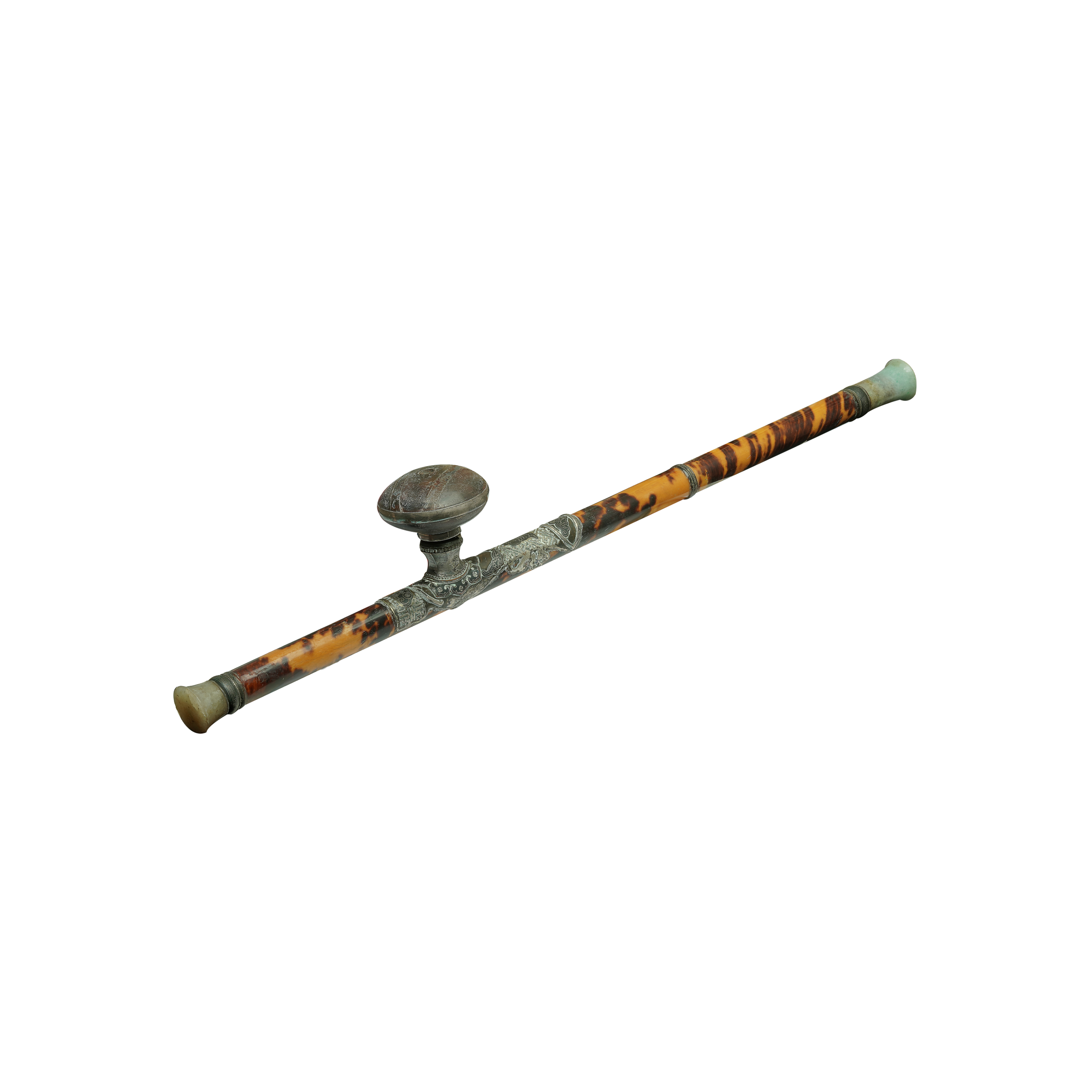
Origin: China
Date: Late 19th–early 20th century
Materials: Tortoiseshell, metal alloy, lacquer
Dimensions: Appro 67 × 10 cm
Description:
Opium pipe showcasing a stem crafted from richly patterned tortoiseshell, exhibiting warm hues of amber and deep brown in its naturally mottled surface. At the center, a domed metal bowl cover rises on a narrow collar and connects to an ornate metal saddle, intricately engraved with scrolling motifs and stylized forms typical of the Qing dynasty aesthetic.
The vivid tortoiseshell, prized for its beauty and rarity, complements the finely detailed metalwork. The integration of precious organic and metallic materials suggests this piece was created for a refined clientele, likely within elite social circles.
Cultural Context:
During the height of opium use in late imperial China, smoking implements were often bespoke, combining function with visual elegance. Tortoiseshell, a symbol of longevity and high status, was favored by the wealthy for personal objects. The pipe’s refined craftsmanship and costly materials reflect the ritualized and aristocratic nature of opium consumption during this period.
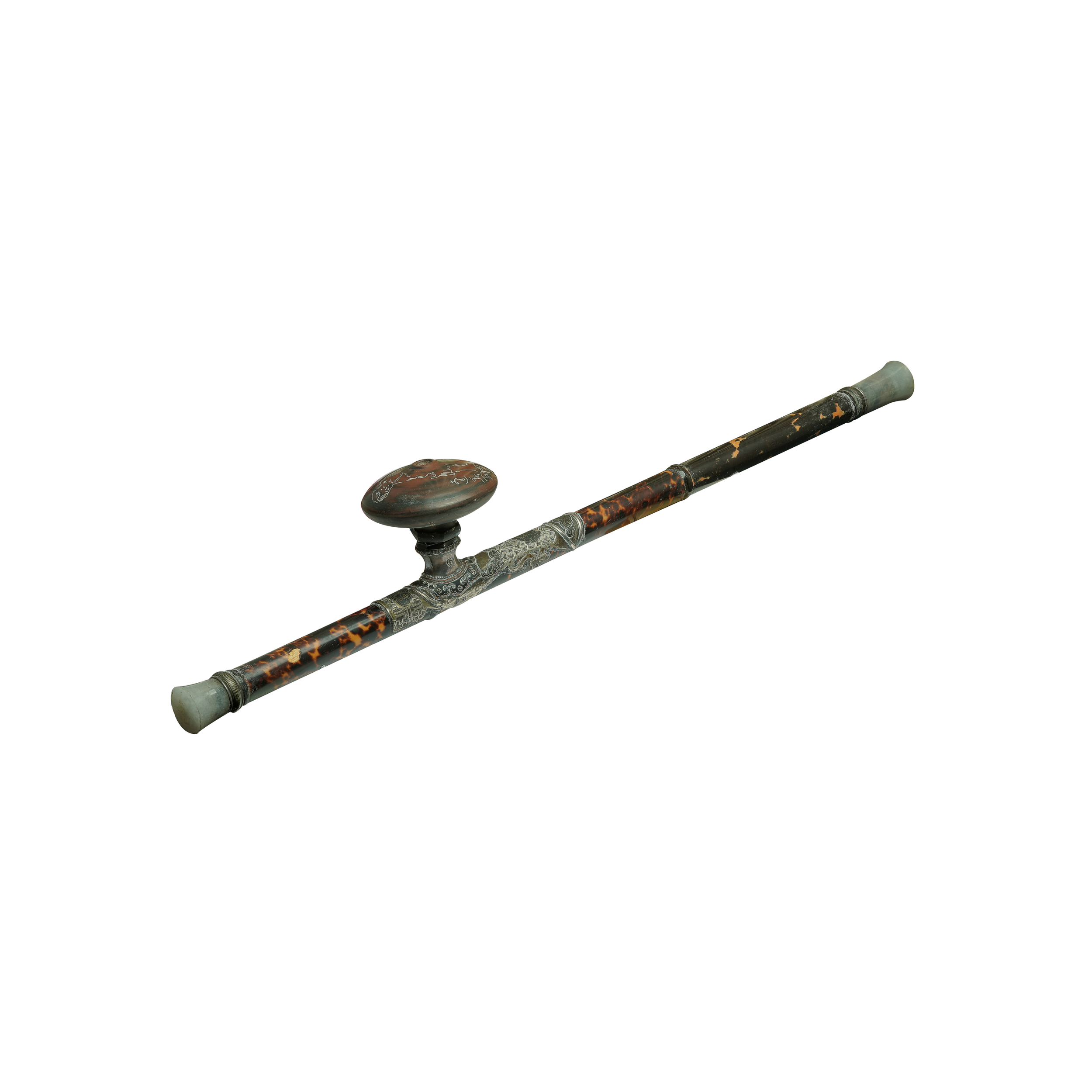
Origin: China
Date: Late 19th–early 20th century
Materials: Tortoiseshell, metal alloy, lacquer
Dimensions: Appro 65 × 9 cm
Description:
Chinese opium pipe featuring a stem crafted from mottled tortoiseshell, its natural amber and dark brown patterns enhanced by age and use. At the center, a domed metal bowl cover, possibly copper alloy, rests on a short neck and connects to an engraved metal saddle adorned with intricate scrolling motifs. The metalwork shows subtle signs of wear, attesting to its history..
Cultural Context:
In late Qing dynasty China, opium smoking was not merely a habit but a cultivated ritual among the upper classes. The use of tortoiseshell signified wealth and refinement, while engraved metal fittings reflected the artistry expected of personal objects in elite society. Pipes of this quality were often treasured possessions, sometimes gifted or passed down through generations.

Origin: Tibet
Date: Late 19th–early 20th century
Materials: Silver, black-lacquered wood or horn, coral cabochons
Dimensions: Appro 39 × 6 cm
Description:
Crafted Tibetan opium pipe featuring ornate silver mounts over a black-lacquered central shaft, likely made from wood or horn. The pipe is decorated with repoussé and chased floral and scroll motifs along the silver sections. Six raised silver bezels, each set with a polished coral cabochon, provide both ornamentation and symbolic significance, as coral is considered a protective and auspicious material in Tibetan culture.
The bowl is positioned at one end, fitted into an intricately worked silver headpiece that extends into a capped section. The opposite end tapers to a silver mouthpiece, with an additional decorative silver sleeve at the junction with the shaft. The combination of luxurious materials and intricate detailing suggests that this pipe belonged to a wealthy or high-ranking individual.
Cultural Context:
While opium smoking spread widely in China during the Qing dynasty, it also reached Tibet, where pipes were often made to reflect local aesthetics and spiritual symbolism. The use of coral and silver links this example to Tibetan jewelry traditions, where such materials are prized for their beauty, rarity, and protective powers. In this way, the pipe served as both a functional smoking implement and a status-laden personal possession.