

Opium
PARAPHENARLIA
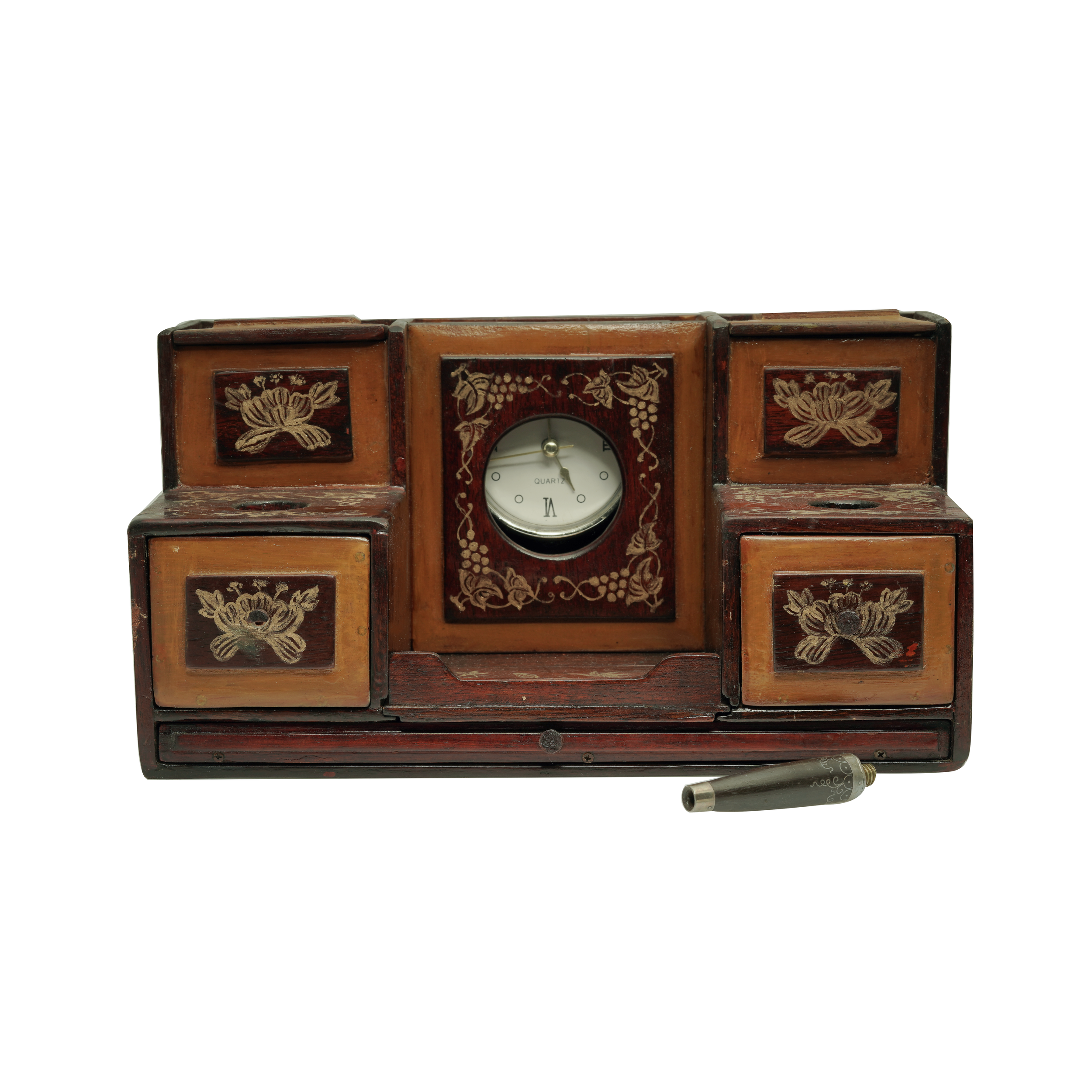
Origin: Likely Southern China or Southeast Asia
Date: Early–mid 20th century
Materials: Hardwood, inlay, metal fittings, modern quartz clock
Dimensions: Appro 26 × 18 cm
Description:
Opium storage cabinet combining traditional craftsmanship with a later adaptation for modern use. Made from dark hardwood, the piece features five drawers—two large, three small—each decorated with floral inlay designs. At the center, a recessed compartment houses a round quartz clock surrounded by an ornate floral border, likely a later addition replacing an original mirror or decorative panel.
The drawers would have been used to store opium-smoking paraphernalia, including pipes, burners, lamps, and small tools. A metal opium pipe rests at the front, illustrating the piece’s intended function. The cabinet’s modest size allowed it to be placed conveniently beside the user during smoking sessions, while the decorative details conveyed refinement and personal pride in possession.
Cultural Context:
Opium cabinets were once common among affluent households and in opium dens in China and Southeast Asia. They served not only as storage but also as symbols of leisure and status. This example’s integration of a modern clock indicates adaptation and reuse over time, reflecting the transition of such objects from active use to decorative or collectible status.
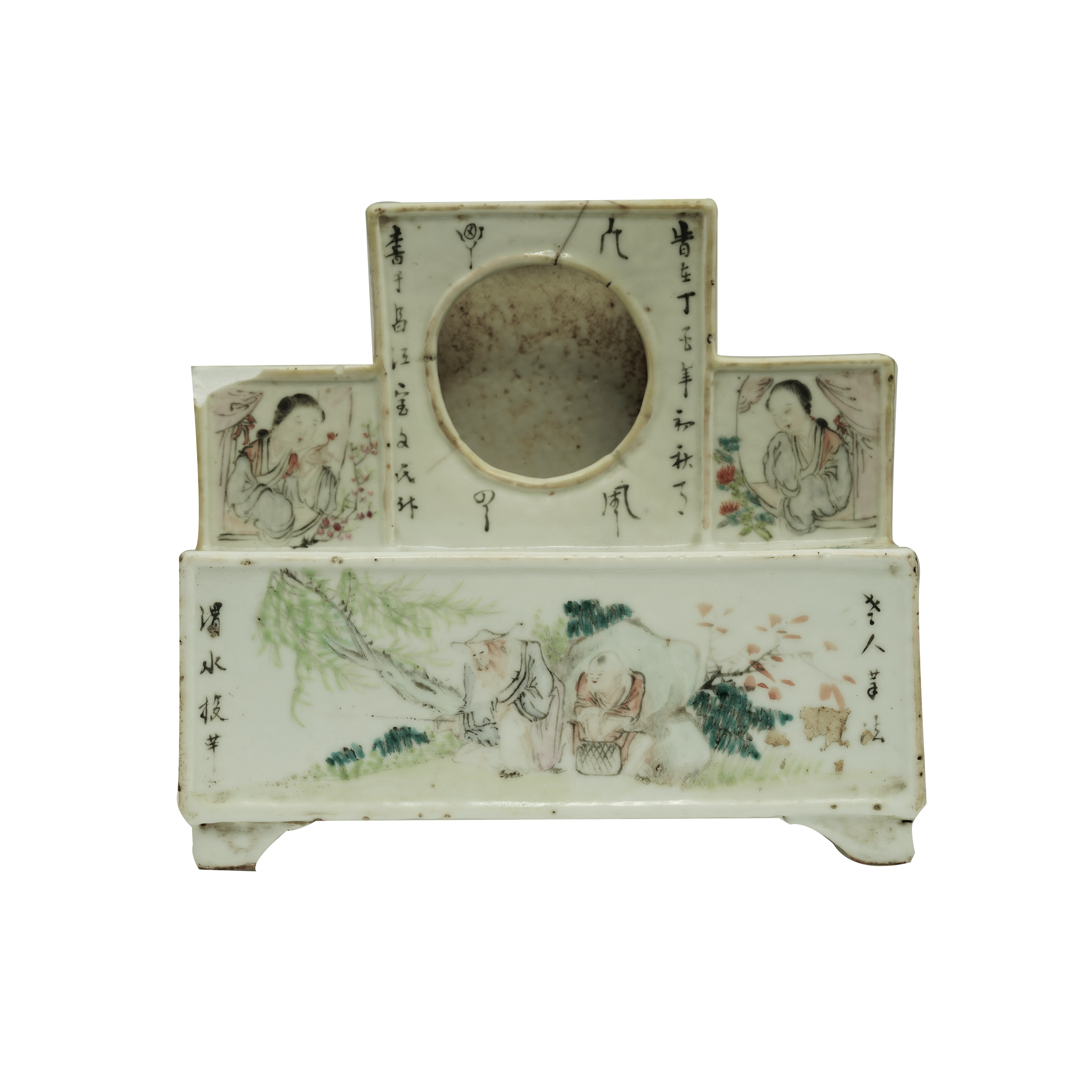
Origin: China
Date: Late Qing Dynasty, late 19th–early 20th century
Materials: Porcelain with overglaze polychrome enamel decoration
Dimensions: Appro 18 × 17 cm
Description:
Porcelain opium cabinet designed to store smoking implements in an elegant, compact form. The stepped structure features a central oval aperture—likely once fitted with a small mirror—flanked by shallow compartments. The entire surface is hand-painted with overglaze enamel decoration, including figural scenes, floral sprays, and calligraphic inscriptions.
One panel depicts a scholar with a fan seated beneath a flowering tree, symbolizing leisure and refinement. Another shows two elephants beneath a willow tree, a traditional motif associated with strength, wisdom, and good fortune. Pink cherry blossoms and green foliage enliven the surrounding panels, their delicate rendering contrasting with the cabinet’s functional purpose. Inscriptions in black calligraphy provide poetic or auspicious phrases, enhancing the object’s literati appeal.
Cultural Context:
In the late Qing period, opium smoking was widespread among China’s elite, and accessories were often made from fine materials to reflect the owner’s social status. Porcelain opium cabinets like this, though less common than wooden examples, combined practical storage with artistry, serving as a tabletop statement piece in opium-smoking parlors.
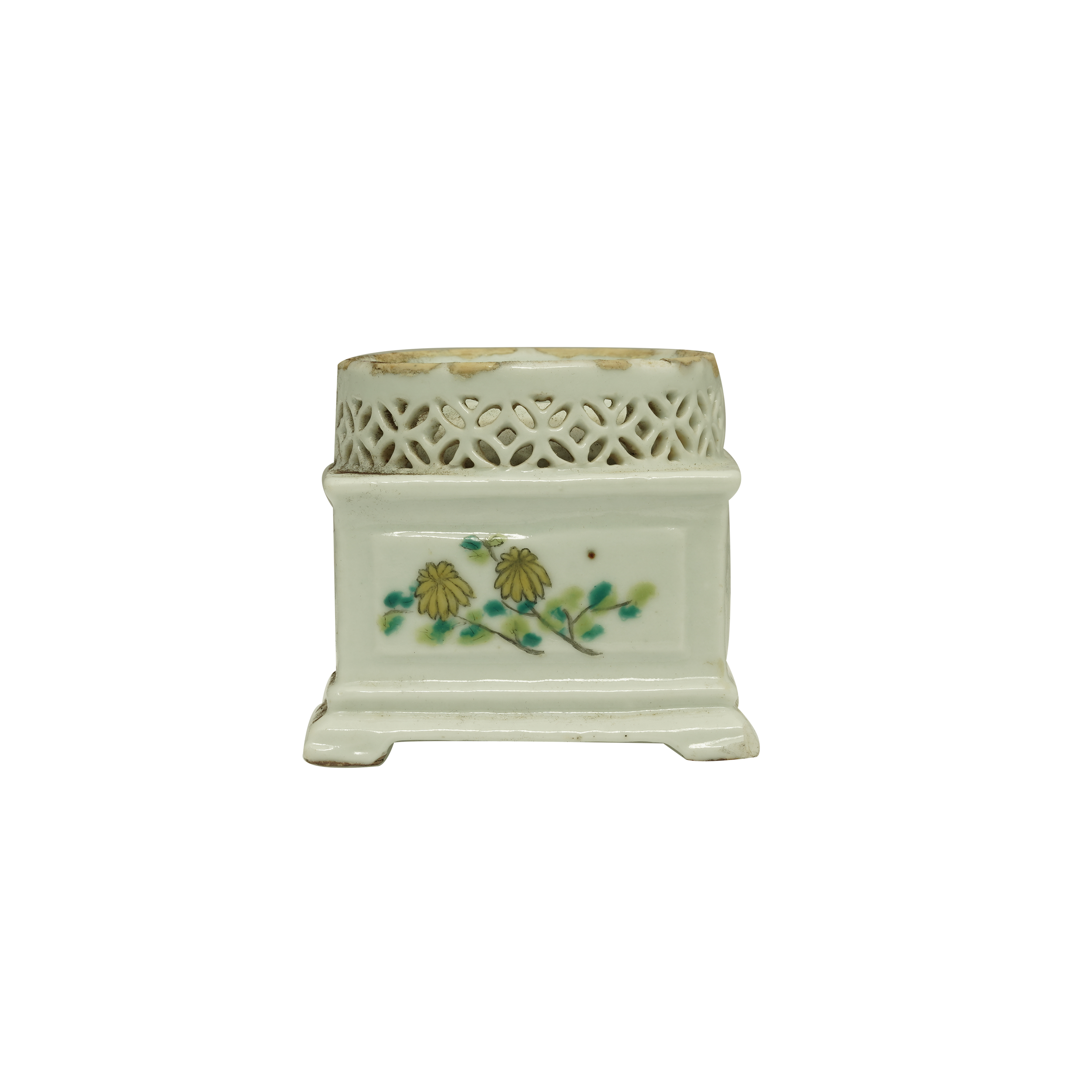
Origin: China
Date: Late 19th–early 20th century
Materials: Glazed porcelain with enamel decoration
Dimensions: Appro 4 × 5 cm
Description:
Small rectangular opium lamp is made of white glazed porcelain and decorated on its sides with hand-painted yellow chrysanthemums and green leaves. The top features a pierced, openwork gallery designed to hold and ventilate the lamp’s chimney and wick. The floral decoration adds an elegant touch to this functional piece, which was used to heat the opium pipe bowl during smoking sessions.
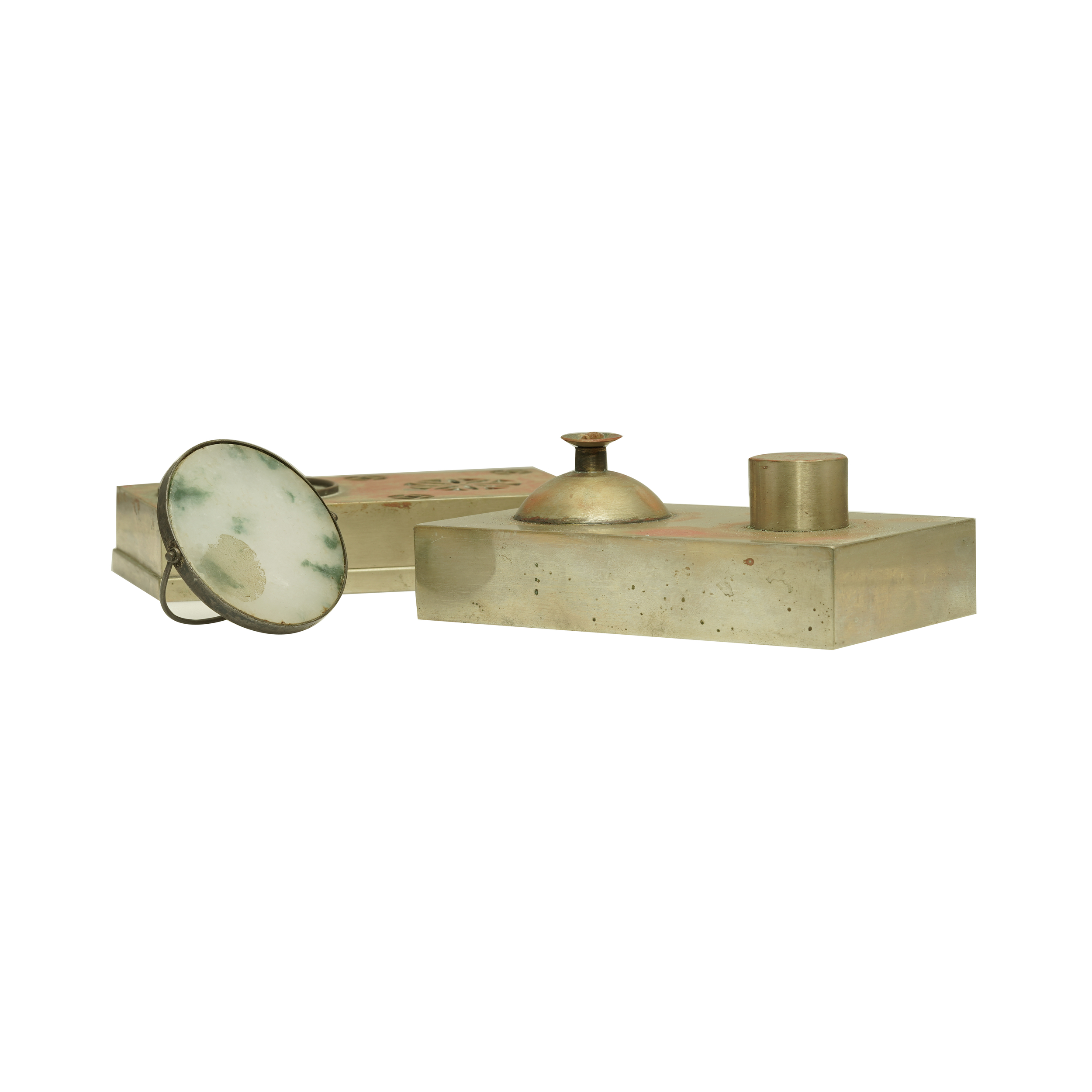
Origin: China
Date: Late 19th–early 20th century
Materials: Brass, jade, glass
Dimensions: Appro 12 × 4 cm
Description:
Rectangular brass opium lamp featuring a domed central burner flanked by a cylindrical reservoir. A detachable jade disk, mounted in a brass ring, served as a heat reflector, focusing the flame’s warmth onto the opium pipe bowl during preparation. The lamp’s sturdy brass construction ensured durability, while the inclusion of jade, reflects the blending of functionality.
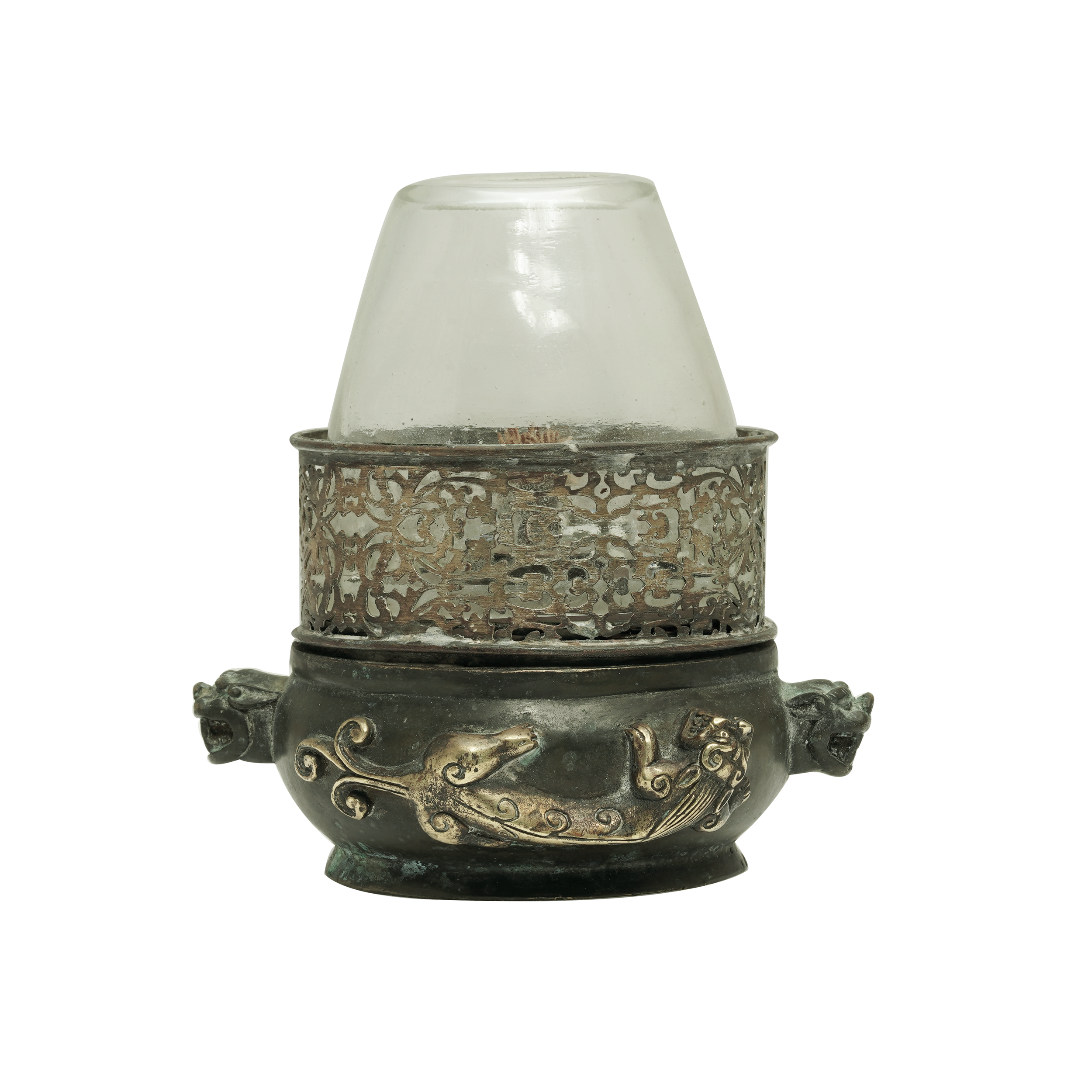
Origin: China
Date: Late 19th–early 20th century
Materials: Cast bronze, gilt decoration, glass
Dimensions: Appro 9 × 8 cm
Description:
Crafted opium pipe lamp consisting of a cast bronze base with gilt decorative elements, a pierced metal gallery, and a clear glass chimney. The base is adorned with gilt relief motifs of stylized mythical animals—possibly chi dragons—on a scrolling background, flanked by handles in the form of lion or dragon heads. The pierced metal gallery above is decorated with an intricate lattice of geometric and foliate designs, allowing heat to dissipate while shielding the flame.
The lamp’s glass chimney, slightly flared and tapering toward the top, would have protected the flame from drafts and ensured a steady burn. Such lamps provided the focused heat necessary for vaporizing prepared opium in the pipe’s bowl.
Cultural Context:
During the height of opium smoking in China, lamps like this were essential components of the ritual. The quality of materials and workmanship in this example suggest it was made for a wealthy user or an upscale opium establishment. The decorative program, blending auspicious animals and fine metalwork, reflects the tendency to imbue even utilitarian smoking implements with artistry and symbolism.
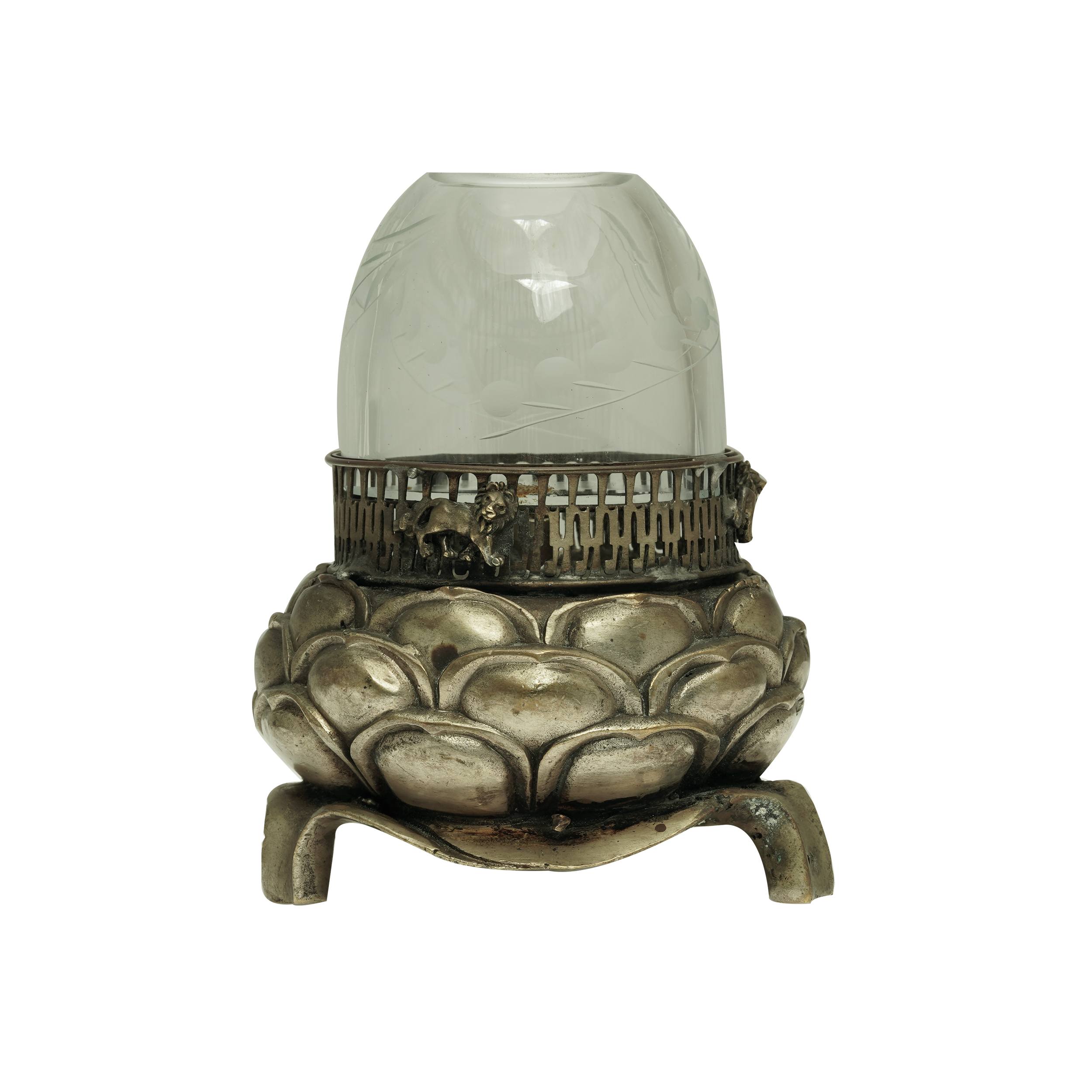
Origin: China
Date: Late 19th–early 20th century
Materials: plated metal, cast and chased; glass with etched decoration
Dimensions: Appro 10 × 8 cm
Description:
Ornate opium pipe lamp modeled in the form of a blooming lotus flower, a symbol of purity and transcendence in Chinese culture. The plated metal base is cast in overlapping lotus petals rising from a footed stand with four outward-curving supports. Above the petals sits a pierced gallery band adorned with small applied animal figures, including a finely detailed lion in relief.
The gallery supports a clear glass chimney, subtly etched with a pattern of flowers and foliage. This chimney would have shielded the lamp’s flame, ensuring a steady source of heat for vaporizing prepared opium in the pipe’s bowl. The lotus motif—paired with the inclusion of protective animals—would have imbued the piece with auspicious associations, blending spiritual symbolism with functional design.
Cultural Context:
During the height of opium smoking in the late Qing Dynasty, lamps of this type were essential tools, yet wealthy patrons often commissioned examples of high craftsmanship. This lamp’s decorative sophistication reflects its probable use in an elite household or refined opium parlor, where artistry and ritual combined in the act of smoking.
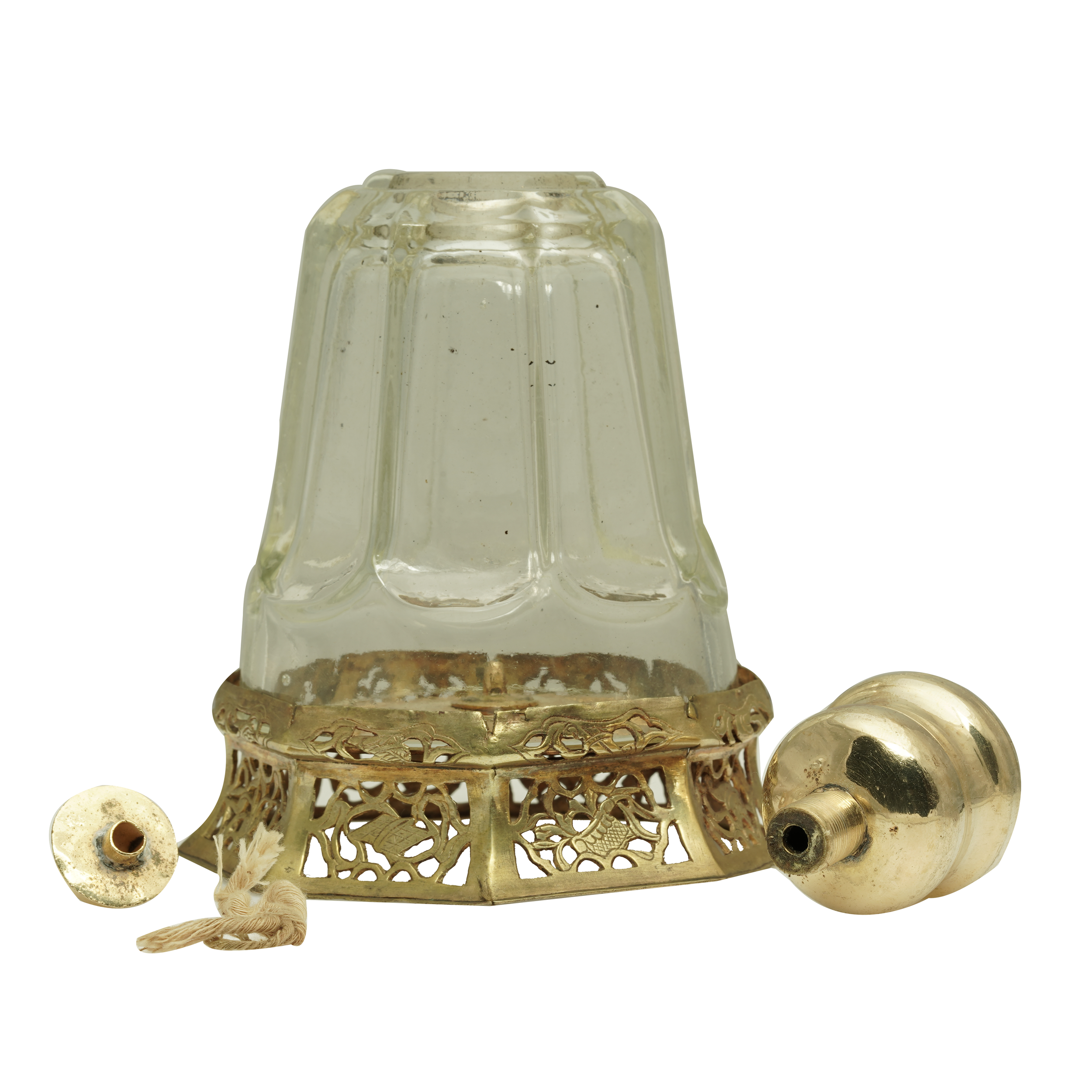
Origin: China
Date: Late 19th–early 20th century
Materials: Glass, brass, cotton wick
Dimensions: Appro 14 × 9 cm
Description:
Traditional Chinese opium lamp featuring a fluted, clear glass chimney mounted on an ornate pierced brass base. The base is decorated with cut-out patterns, allowing light to diffuse softly while protecting the flame from drafts. The removable brass burner and fitted cotton wick enabled controlled heating, a critical aspect of preparing opium for smoking. The detachable components reflect both practical design and ease of maintenance.
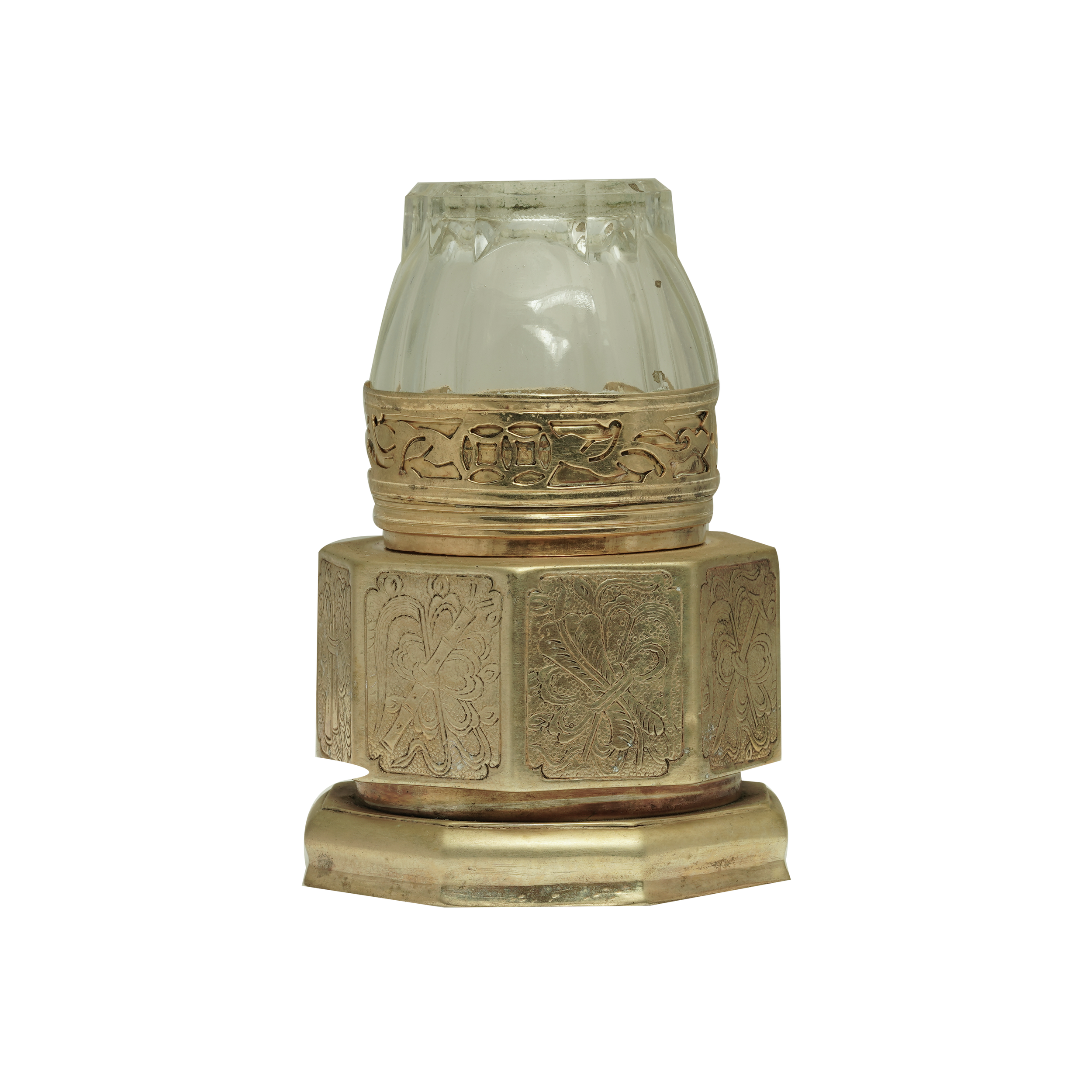
Origin: China
Date: Late 19th–early 20th century
Materials: Brass, glass
Dimensions: Appro 11 × 9 cm
Description:
Crafted Chinese opium lamp showcasing a faceted brass base, each panel adorned with engraved floral motifs. The cylindrical glass chimney is held in place by an ornate pierced brass collar with a scrolling vine pattern. The combination of a stable, weighty base and the protective glass allowed for a steady, focused flame—essential for heating opium paste in the pipe bowl. The lamp’s compact and robust design reflects both functional precision and decorative artistry.
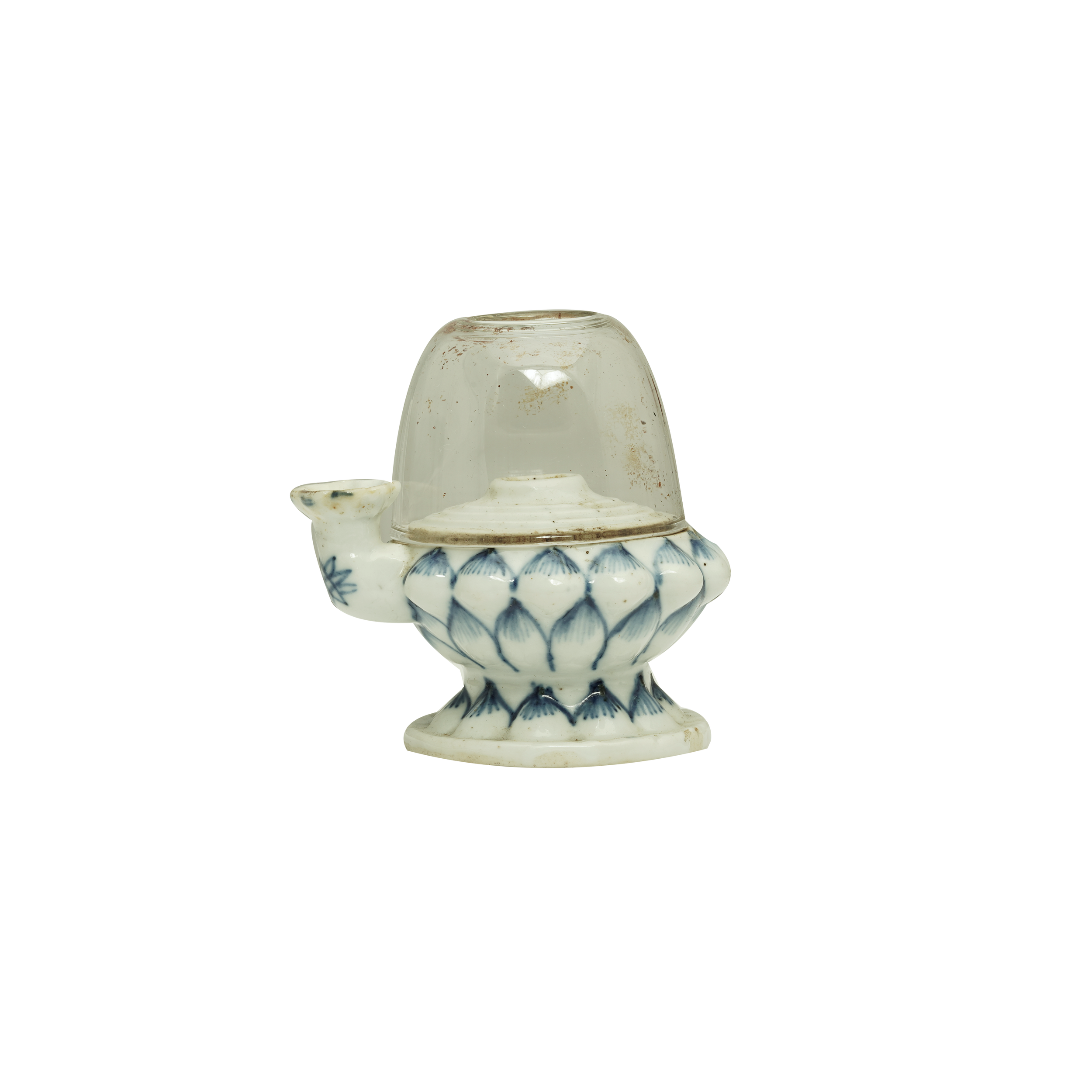
Origin: China
Date: Late 19th–early 20th century
Materials: Porcelain, glass
Dimensions: Appro 11 × 7 cm
Description:
Opium lamp crafted from blue and white porcelain, its body formed in a lotus-bud motif—an auspicious symbol in Chinese culture. The porcelain base supports a clear glass chimney designed to focus and protect the flame. A small spout-like extension served as the fuel chamber opening, allowing controlled access for lighting and maintaining the lamp.
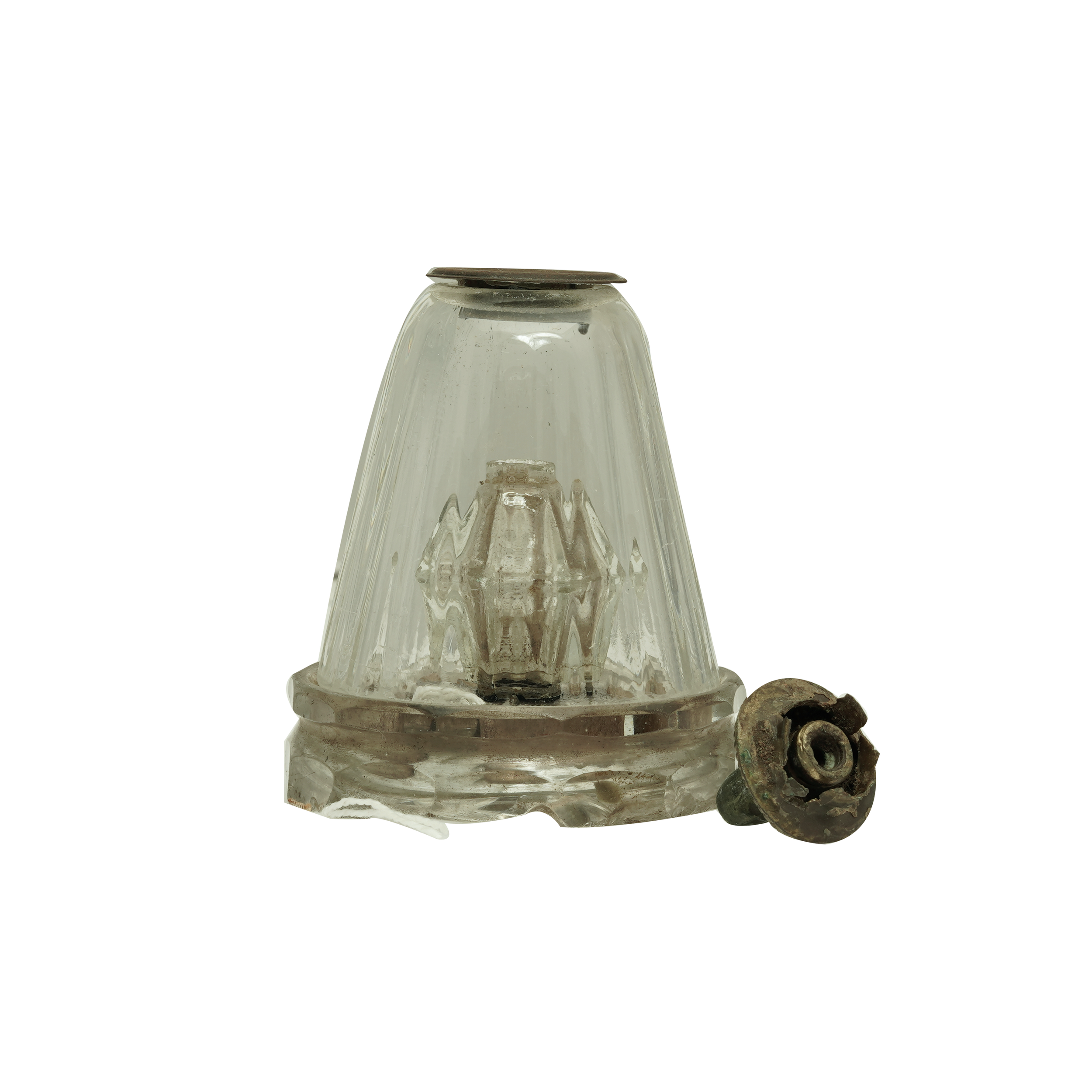
Origin: China
Date: Late 19th–early 20th century
Materials: Pressed glass, metal
Dimensions: 13 × 11 cm
Description:
Utilitarian opium lamp fashioned from clear pressed glass with faceted and fluted surfaces that refract the lamplight. The conical chimney, integrated with the base, encloses the burner assembly to protect the flame from drafts. A small metal burner cap, now aged with patina, once held the wick in place for precise heating of the opium pipe’s bowl.
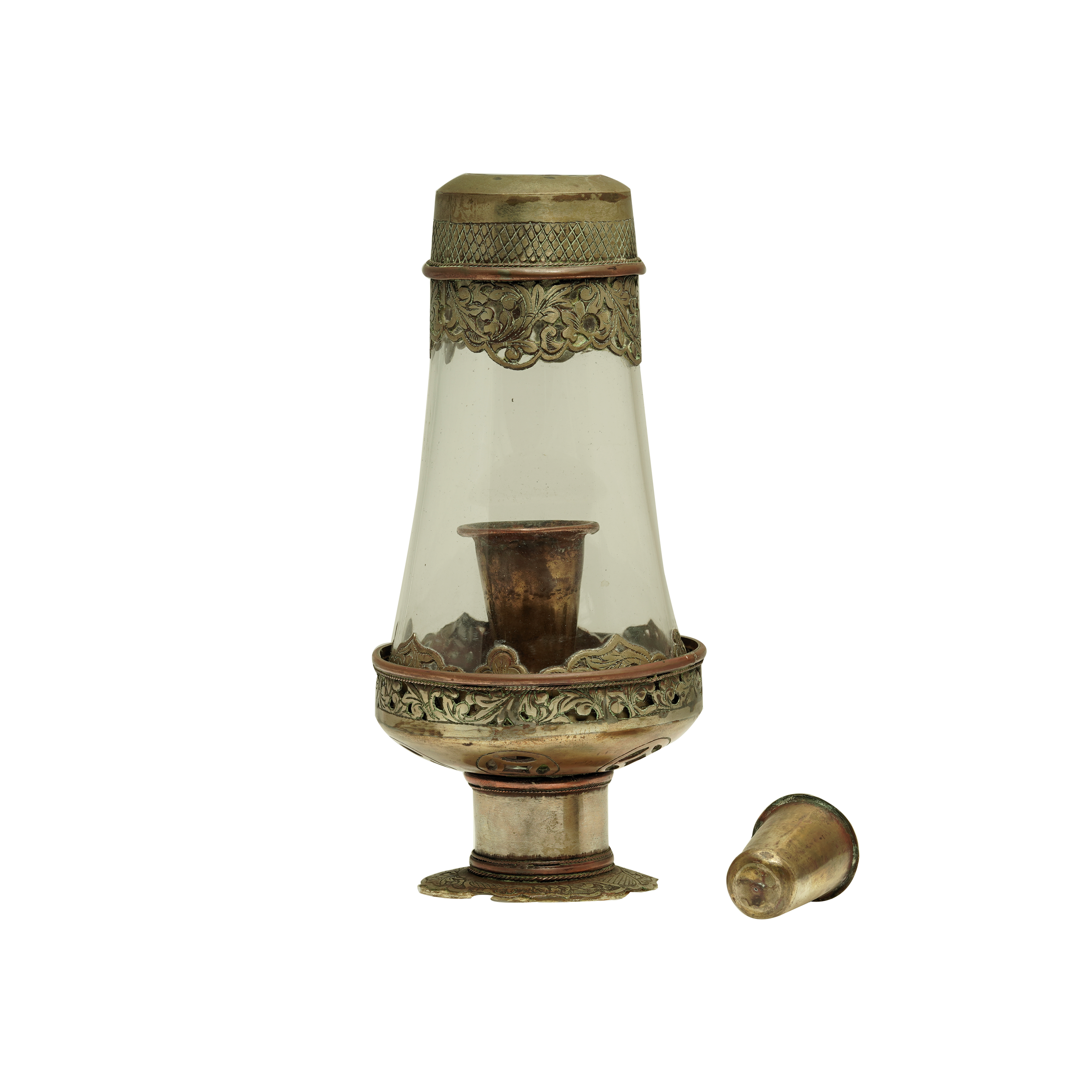
Origin: China
Date: Late 19th–early 20th century
Materials: Glass, brass, copper alloy
Dimensions: Appro 18 × 8 cm
Description:
Opium lamp featuring a tall, slightly flared glass chimney secured within ornate pierced brass bands at the top and base. The interior holds a copper burner cup designed to hold the wick, with the removable brass burner cap displayed alongside. The pierced metalwork incorporates scrolling foliate motifs, both decorative and functional, allowing airflow to sustain the flame.
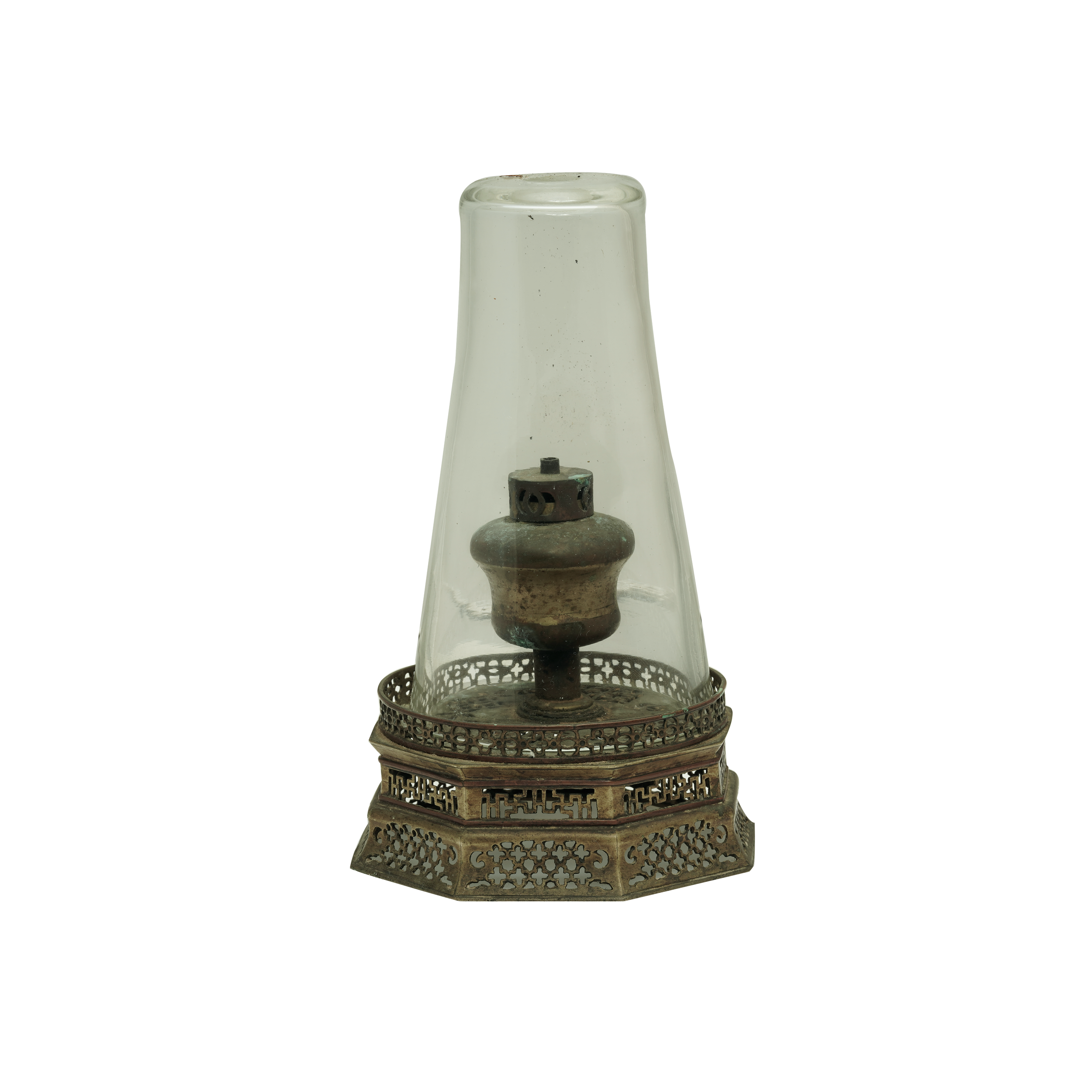
Origin: China
Date: Late 19th–early 20th century
Materials: Glass, brass, copper alloy
Dimensions: Appro 19 × 14 cm
Description:
Opium lamp featuring a tall, clear glass chimney set into an ornate, pierced brass base of octagonal form. The base is finely worked with geometric and foliate patterns, allowing ventilation for the central burner. The metal burner sits elevated within the chimney, designed to hold a wick and produce a steady, focused flame for heating opium in a pipe. The pierced brass work is both decorative and functional, enhancing airflow and stability.
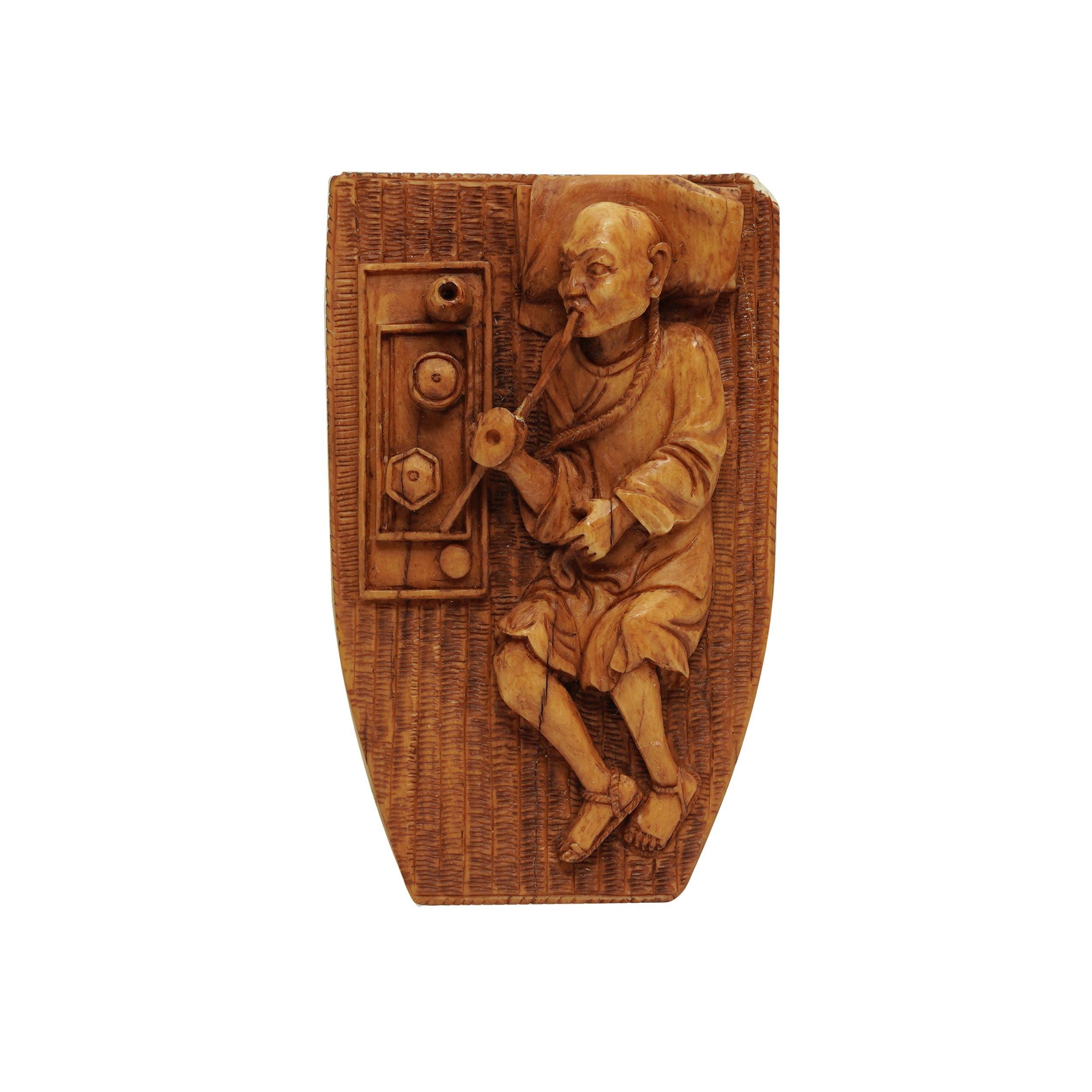
Origin: China
Date: Late 19th–early 20th century
Materials: wood
Dimensions: 8 × 5 cm
Description:
Carved ivory plaque depicting a reclining opium smoker engaged in the act of smoking from a long pipe. The figure lies on a woven mat, propped up by a pillow, with an opium tray set beside him, complete with tools and accessories.
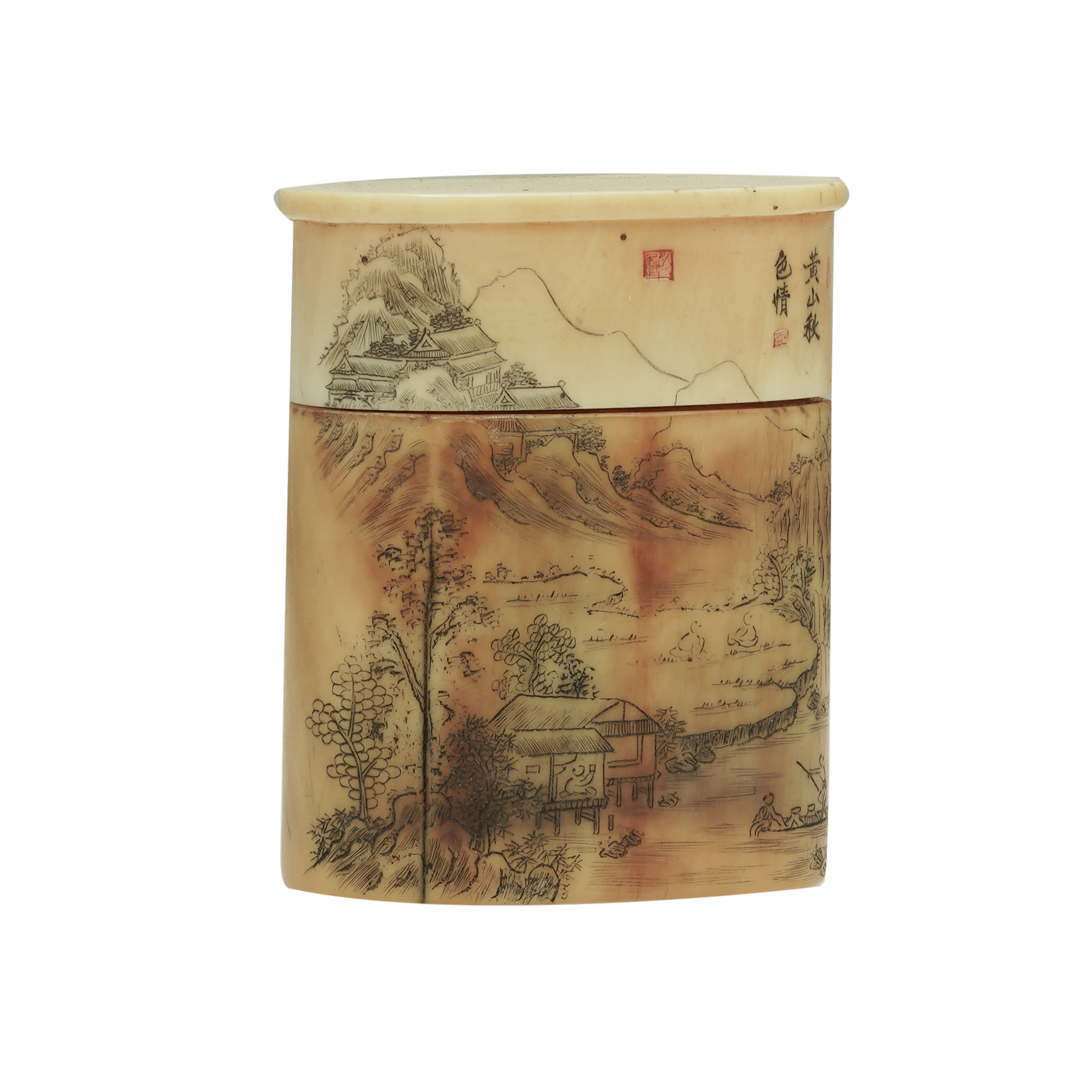
Origin: China
Date: Late 19th–early 20th century
Materials: Bone or faux-ivory
Dimensions: 5 cm (width) × 6 cm (height)
Description:
Carved opium tool case featuring a serene Chinese landscape, complete with riverside dwellings, fishermen in boats, and distant mountain peaks. Rendered in fine incised lines, the scene captures the tranquil ideal of nature in traditional Chinese art. Subtle red stamps and calligraphic inscriptions enrich the composition, possibly indicating a poetic title or artist's seal.
The container opens horizontally at its midpoint, revealing a hollow interior designed to store small opium-related tools such as needles, picks, or spatulas. The small size and discreet design made it ideal for personal use, whether in a smoking den or during travel.
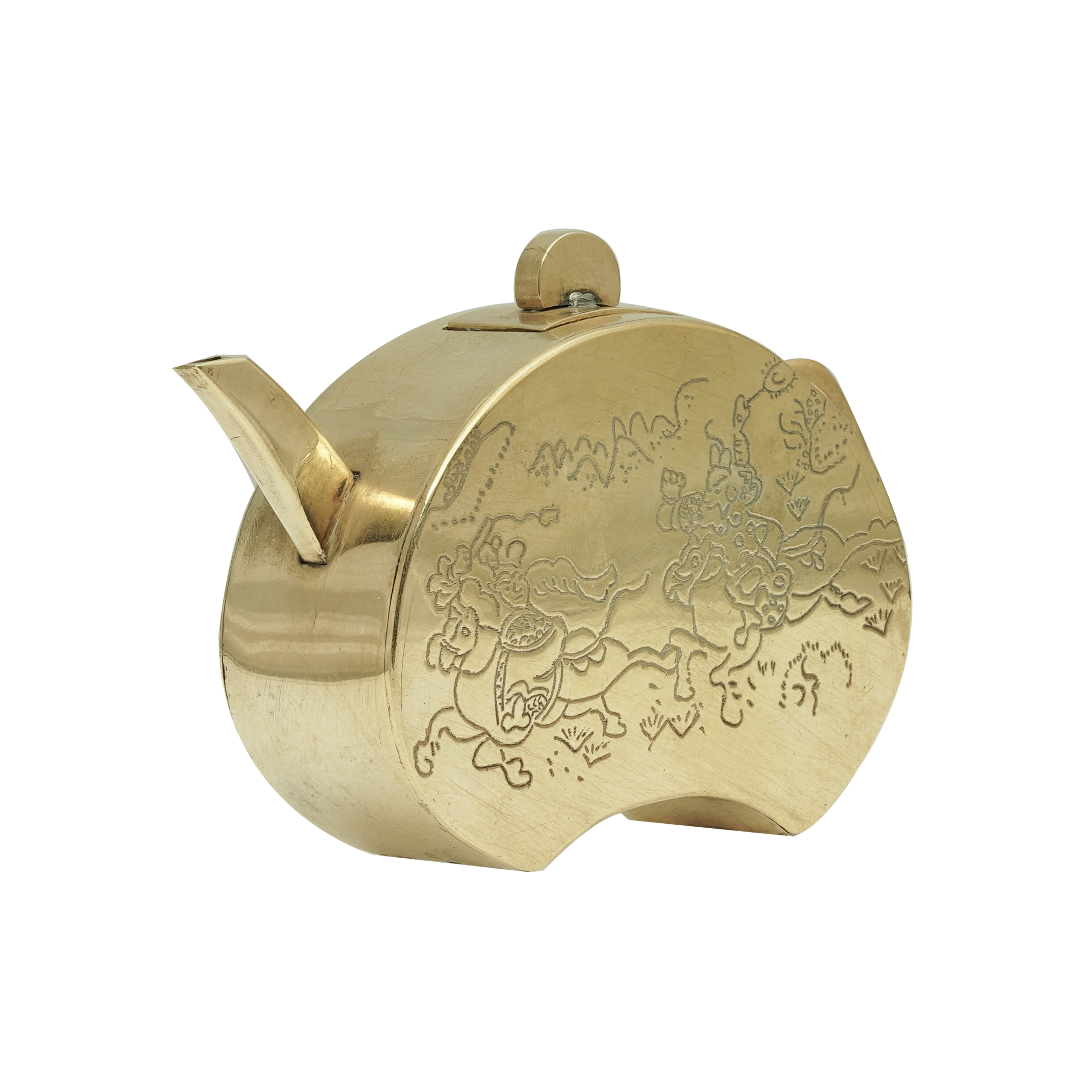
Title: Miniature Brass Teapot with Engraved Motif
Origin: Likely China or Southeast Asia
Date: Late 19th–early 20th century
Materials: Brass
Dimensions: Width: 7 cm; Height: 6 cm
Description:
Miniature brass teapot distinguished by its compact, flattened cylindrical form and finely engraved decorative motif. The side panel features a stylized scene of two horsemen galloping across a stylized landscape, possibly drawing on mythological or folkloric themes. The short spout and top-mounted lid are crafted seamlessly into the rounded body, with a flat base and gently raised foot for stability.
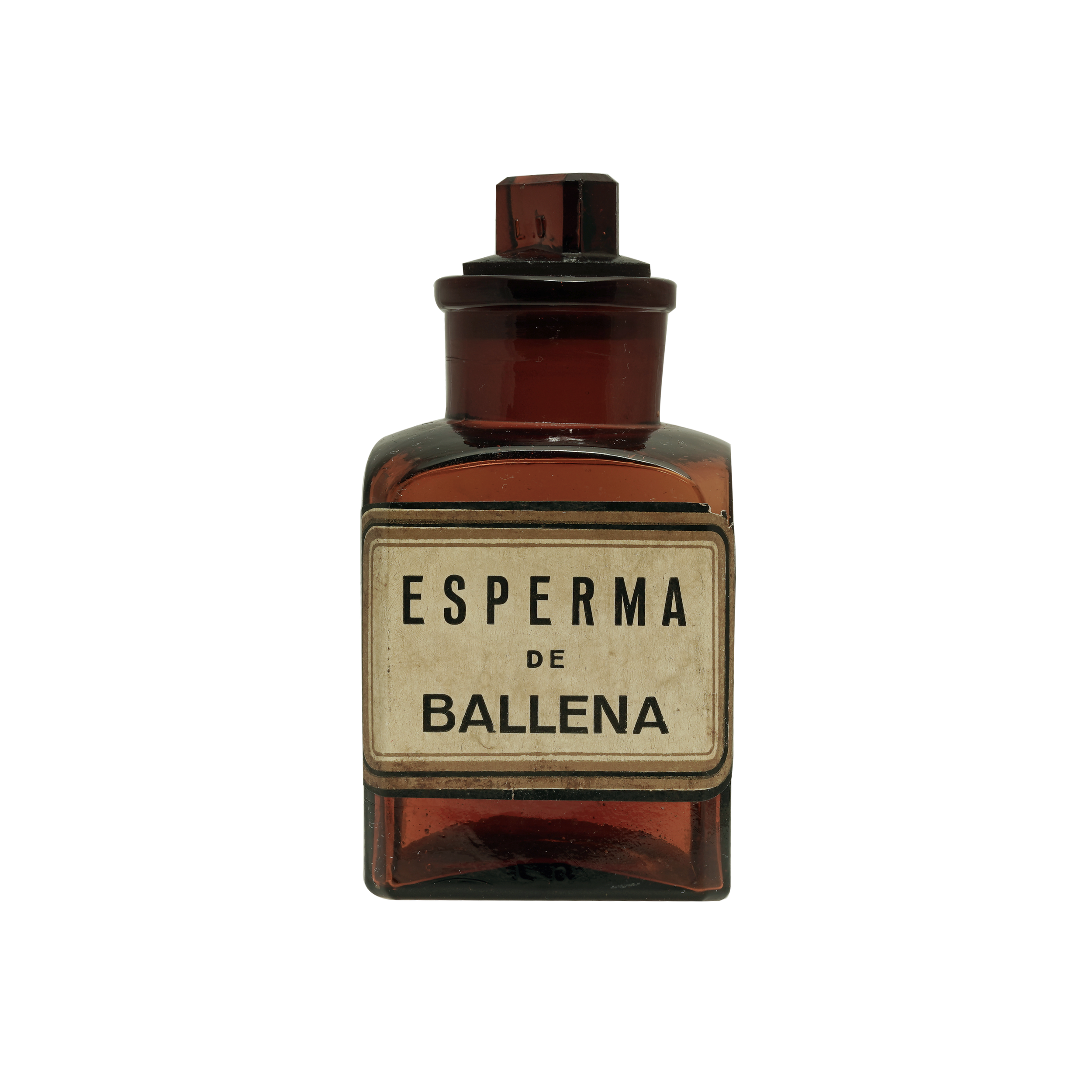
Origin: Likely Spain or Latin America
Date: Late 19th–early 20th century
Materials: Amber glass, paper label, cork stopper (missing or replaced)
Dimensions: 13 x 7 cm
Description:
Amber glass bottle reading "Esperma de Ballena" ("Whale Spermaceti" in Spanish). Spermaceti, a waxy substance obtained from the head cavity of the sperm whale (Physeter macrocephalus), was prized for its use in high-quality candles, ointments, cosmetics, and lubricants. The bottle's compact form and secure closure suggest it was intended for medicinal or cosmetic storage, protecting its contents from light exposure.
Historical Note:
During the 19th century, spermaceti was a valuable commodity in global trade, harvested primarily by whaling fleets from the United States, Europe, and Japan. By the early 20th century, synthetic alternatives began replacing whale-derived products, but labeled bottles such as this remain as artifacts of the once-flourishing whaling industry and its role in domestic, cosmetic, and industrial applications.
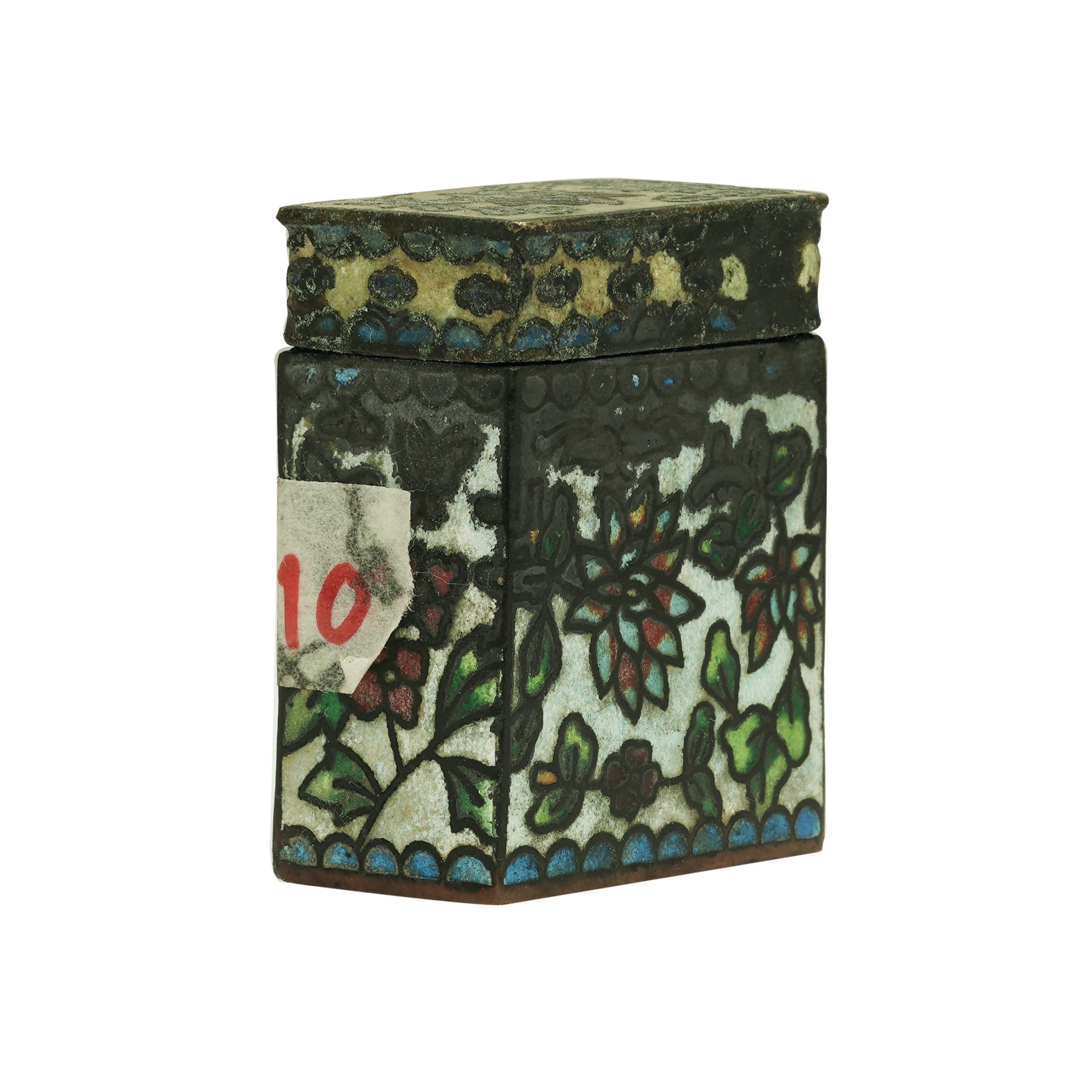
Origin: China
Date: Late 19th–early 20th century
Materials: Copper, enamel
Dimensions: 4 cm (width) × 5 cm (height)
Description:
Rectangular cloisonné box adorned with floral motifs, framed by geometric borders in blue and yellow enamel. The technique involves soldering fine copper wires to the surface to create compartments, which are then filled with colored glass powder and fired to a glossy finish. The rich green, red, and white enamel hues create a vivid tapestry of blossoms and foliage across all visible surfaces.
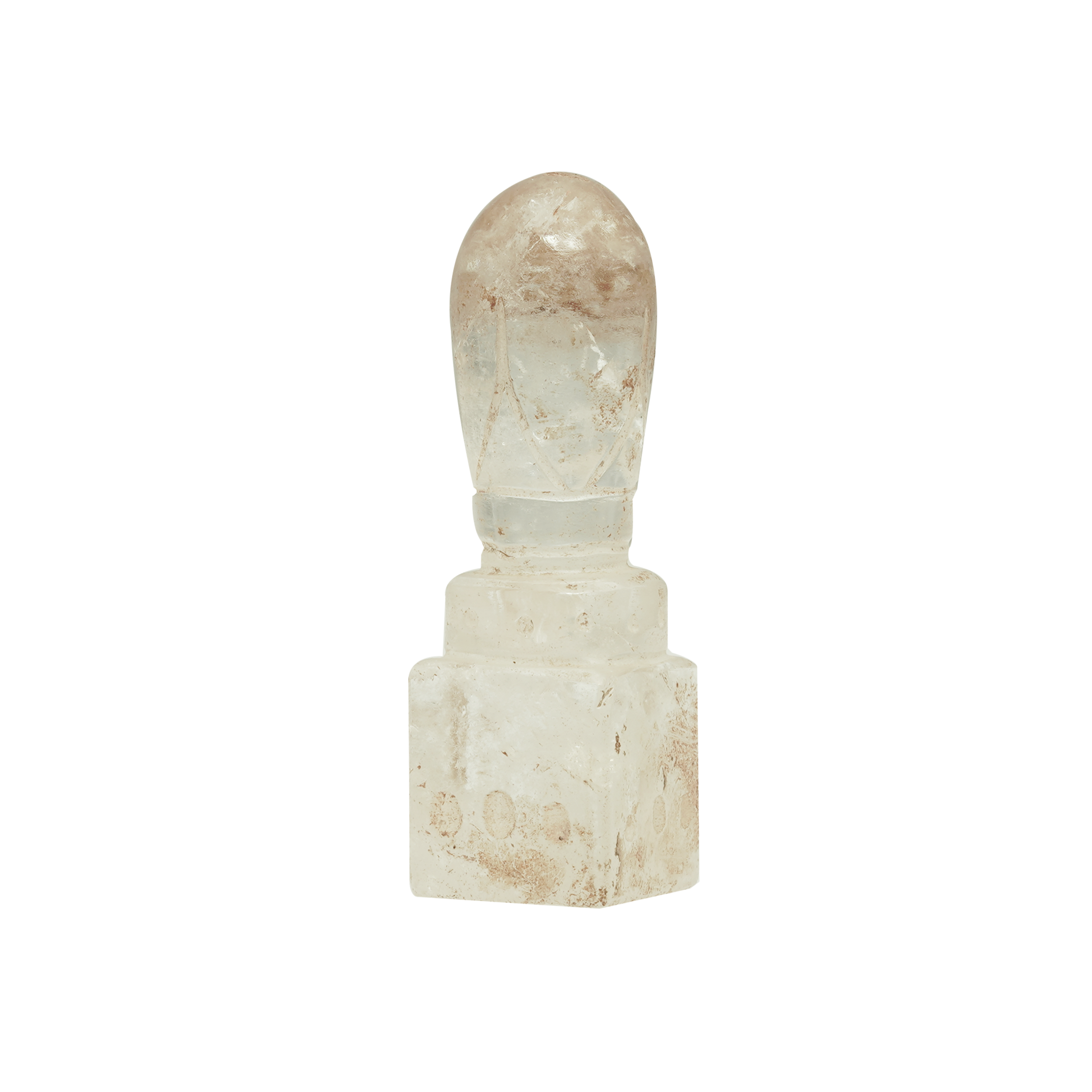
Origin: China
Date: Late 19th–early 20th century
Materials: Rock crystal (quartz)
Dimensions: 6 × 2 cm
Description:
Carved rock crystal stopper once sealed the mouthpiece or container of an opium pipe, preserving the contents within. The upper section is shaped into a smooth, domed finial with subtle faceting, while the lower portion transitions into a squared base for secure fitting.
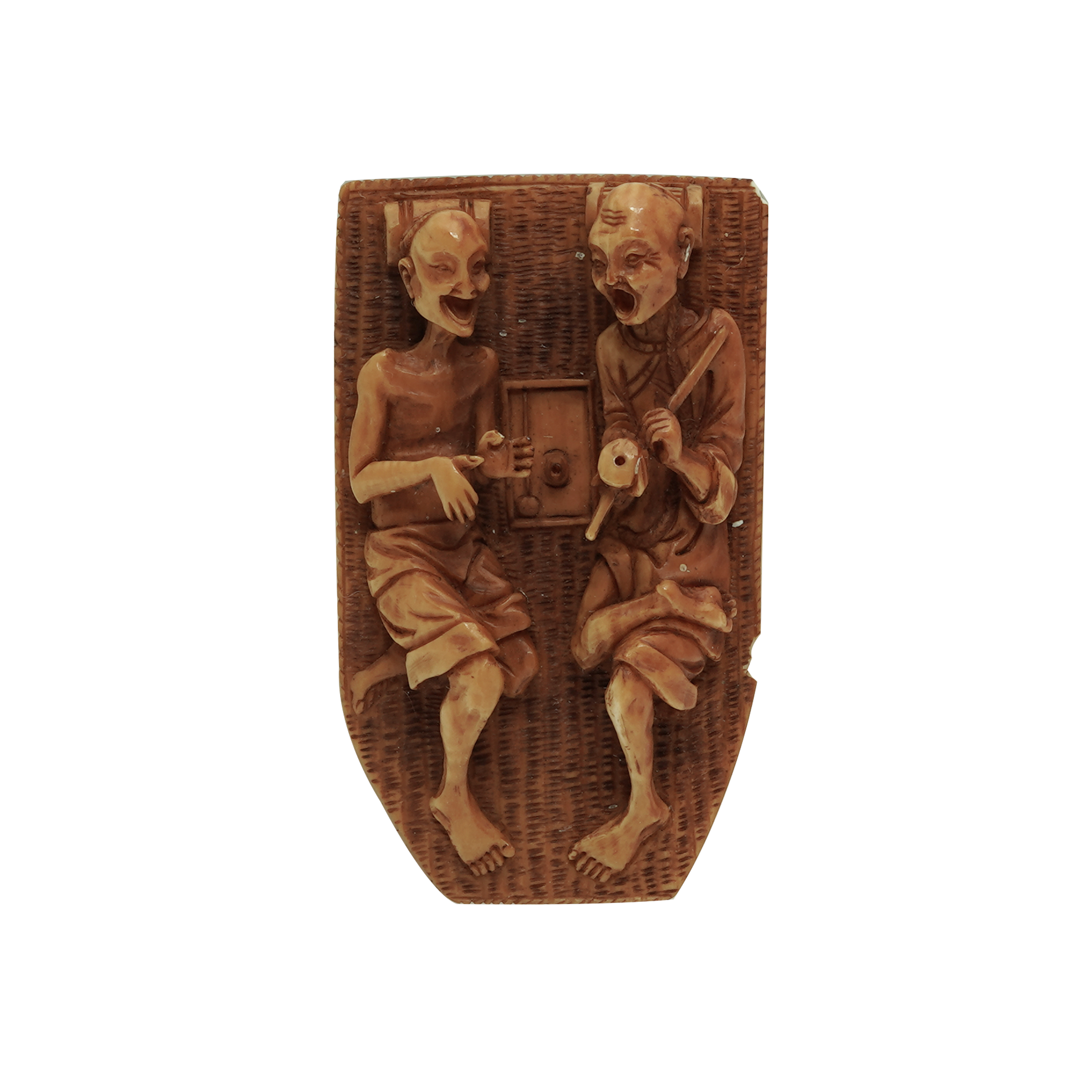
Origin: China
Date: Late 19th–early 20th century
Materials: Carved ivory or bone
Dimensions: 6x4 cm
Description:
Carved relief depicting two men seated on woven mats, engaged in an opium-smoking session. The figure on the right holds an opium pipe and appears to be preparing a dose, while the figure on the left gestures animatedly, perhaps in conversation or storytelling. Between them rests a small opium tray with paraphernalia.
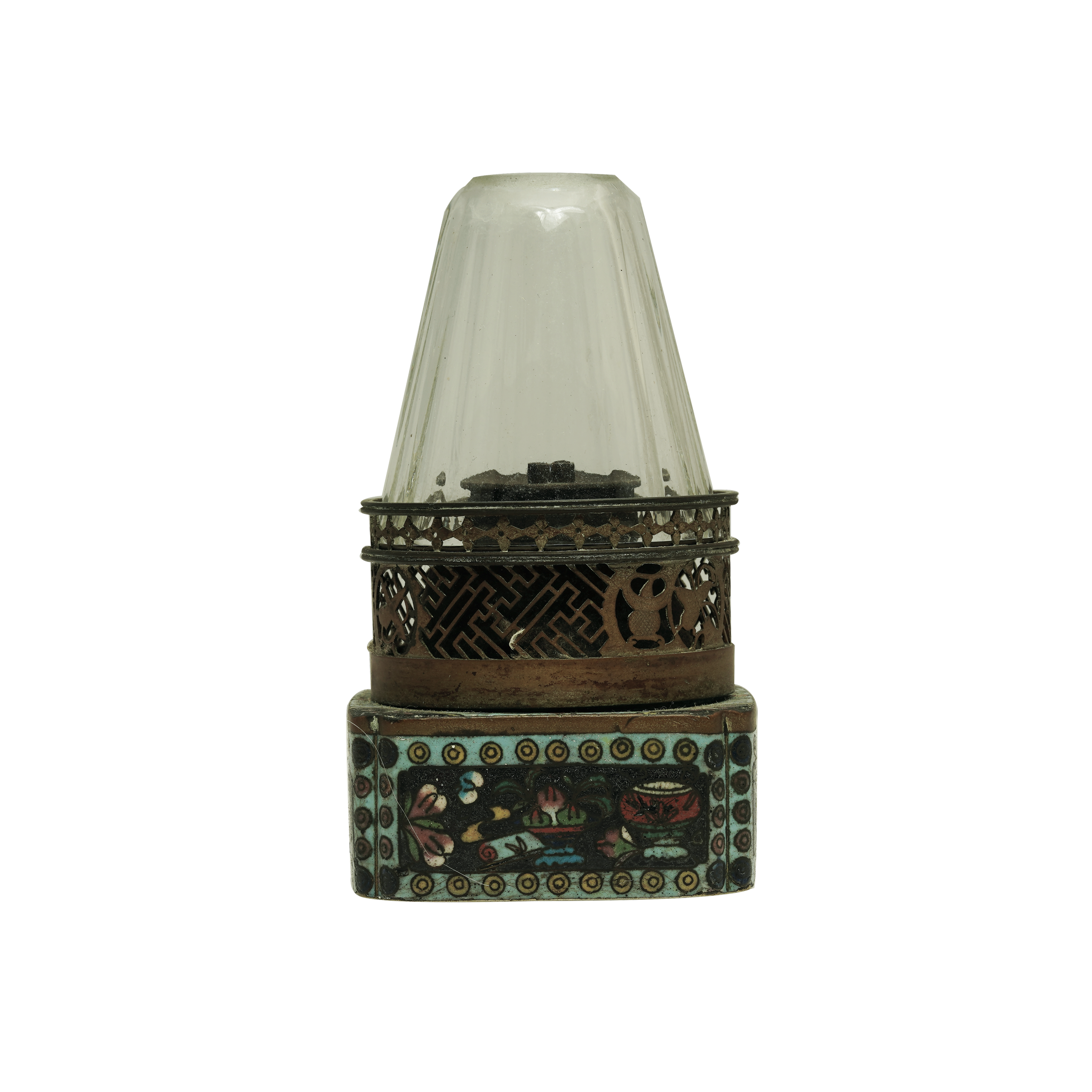
Origin: China
Date: Late 19th–early 20th century
Materials: Cloisonné enamel, brass, glass
Dimensions: 12 × 7 cm
Description:
Opium lamp featuring a square cloisonné enamel base decorated with vibrant floral motifs framed by circular patterns in turquoise, red, and white. Above the base sits an intricately pierced brass gallery with geometric and symbolic designs, allowing airflow to the flame. The lamp is topped with a conical glass chimney, which would protect the flame while focusing heat on the opium bowl during preparation.
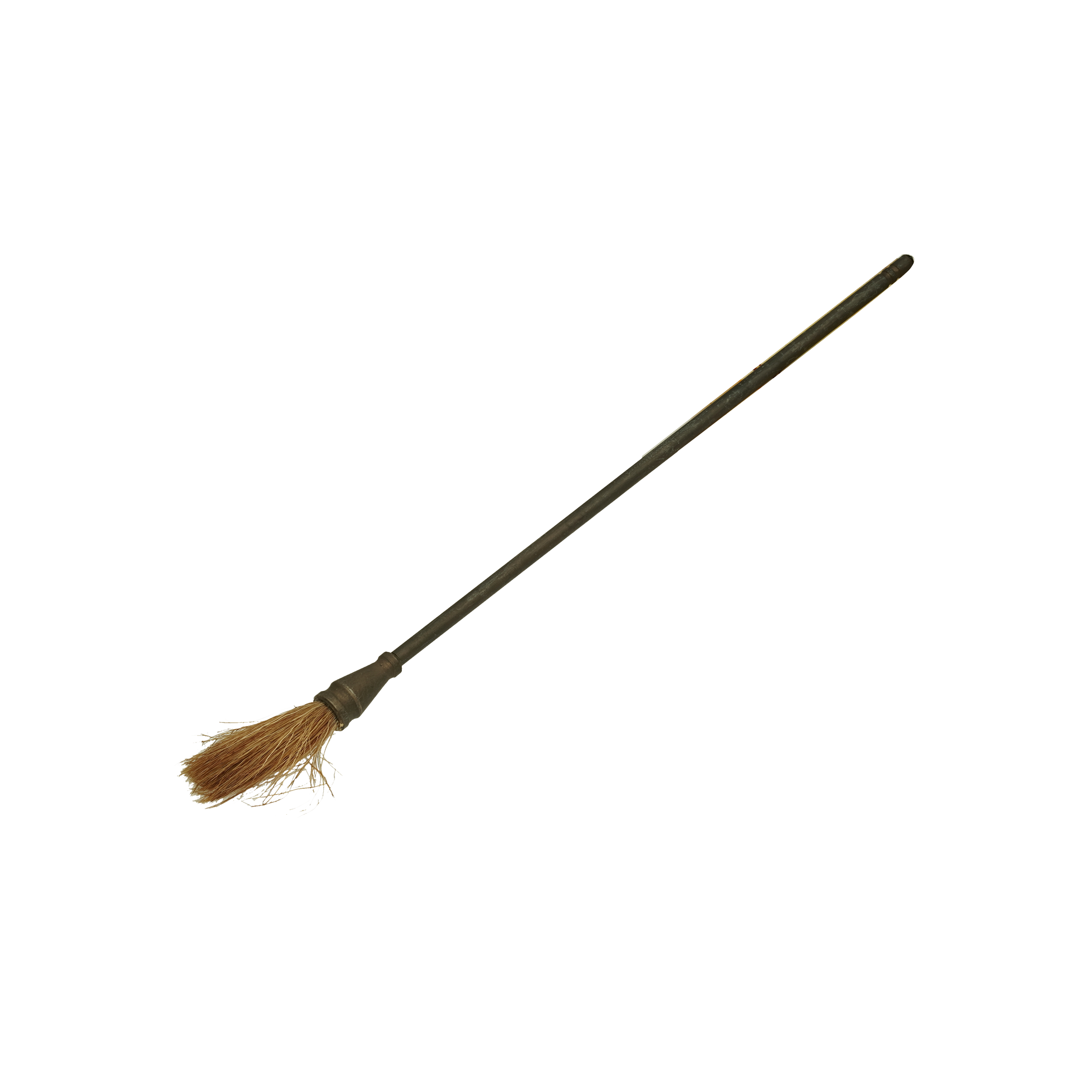
Origin: China
Date: Late 19th–early 20th century
Materials: Metal, natural bristles
Dimensions: Appro 17 × 2 cm
Description:
Opium pipe cleaning brush featuring a slender metal shaft terminating in a bundle of coarse natural bristles secured within a conical metal ferrule. The tool was designed to remove residue and ash from the narrow stem of an opium pipe, ensuring a smooth draw and preserving the flavor of the smoke.
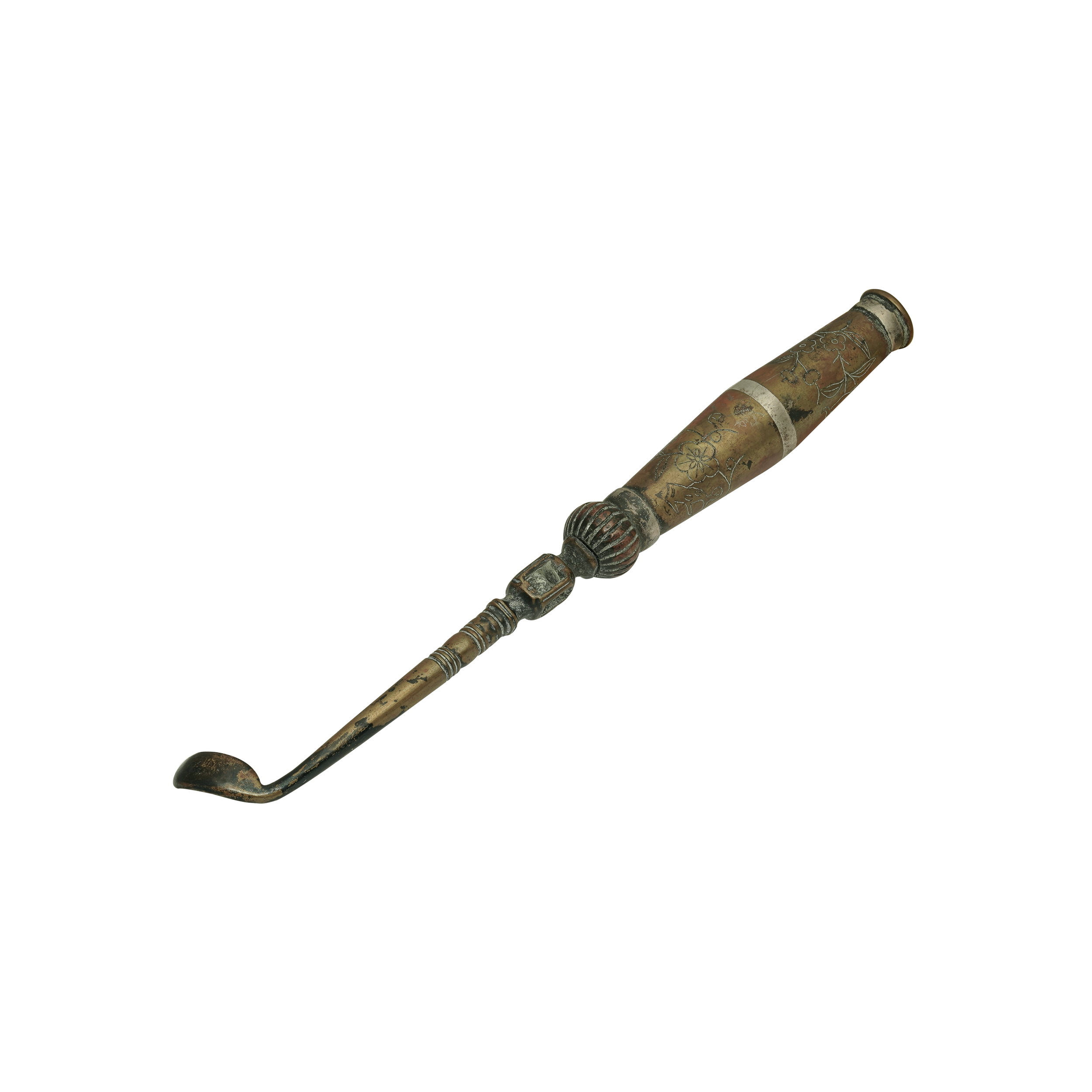
Origin: China
Date: Late 19th–early 20th century
Materials: Brass, silver inlay
Dimensions: Appro 17 × 2 cm
Description:
Crafted opium pipe tool featuring a gently curved spatula-like tip, used for handling prepared opium paste during the smoking ritual. The elongated handle is fashioned from brass, decorated with engraved floral motifs and accented with silver inlay bands.
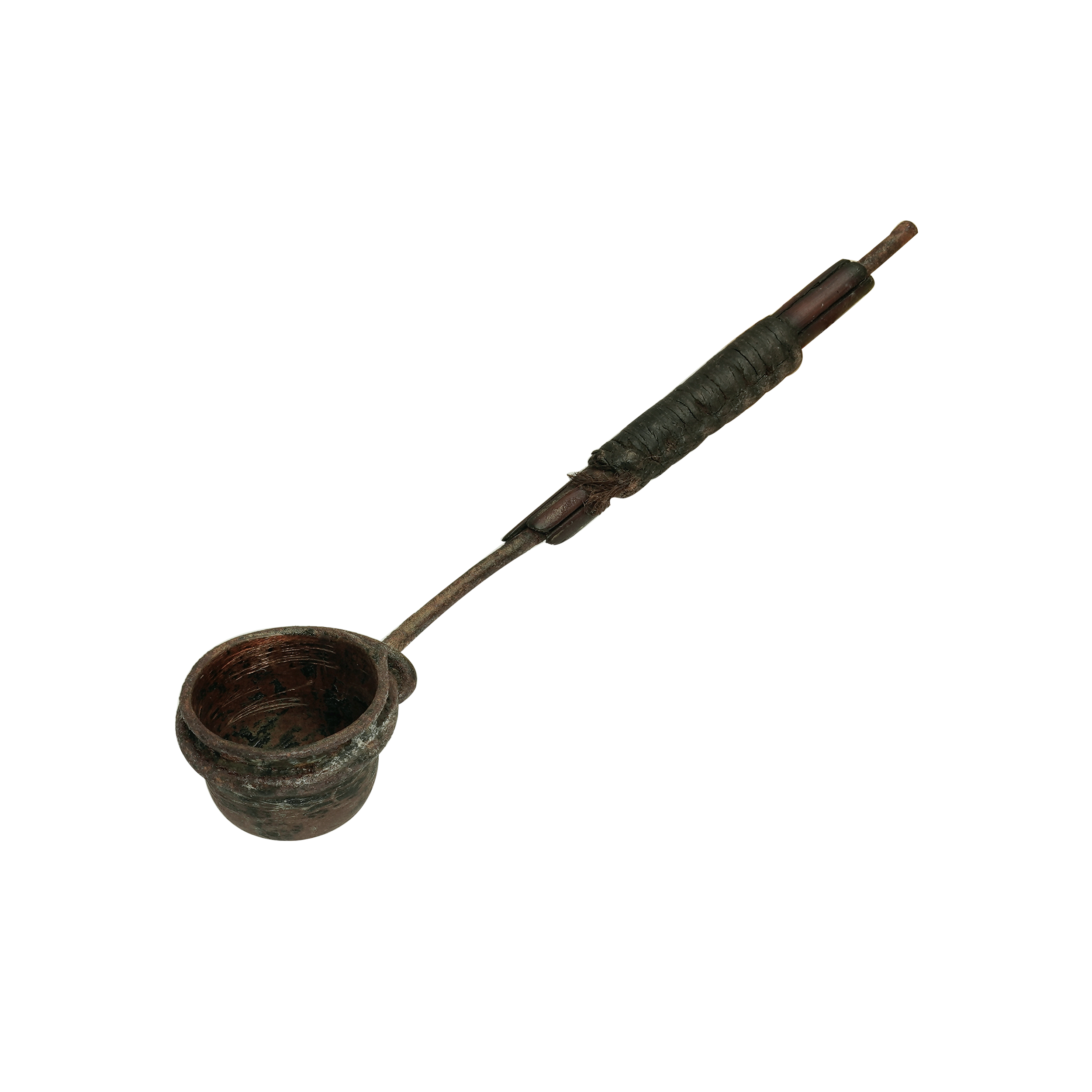
Origin: China
Date: Late 19th–early 20th century
Materials: Copper, wood, leather wrapping
Dimensions: Appro 11 × 2.5 cm
Description:
Utilitarian copper opium cooking spoon features a deep, rounded bowl affixed to a long, narrow handle. The bowl was used to heat opium over a flame, preparing it for smoking. The handle is reinforced with a wrapped leather grip, providing insulation from heat and improved handling during use.
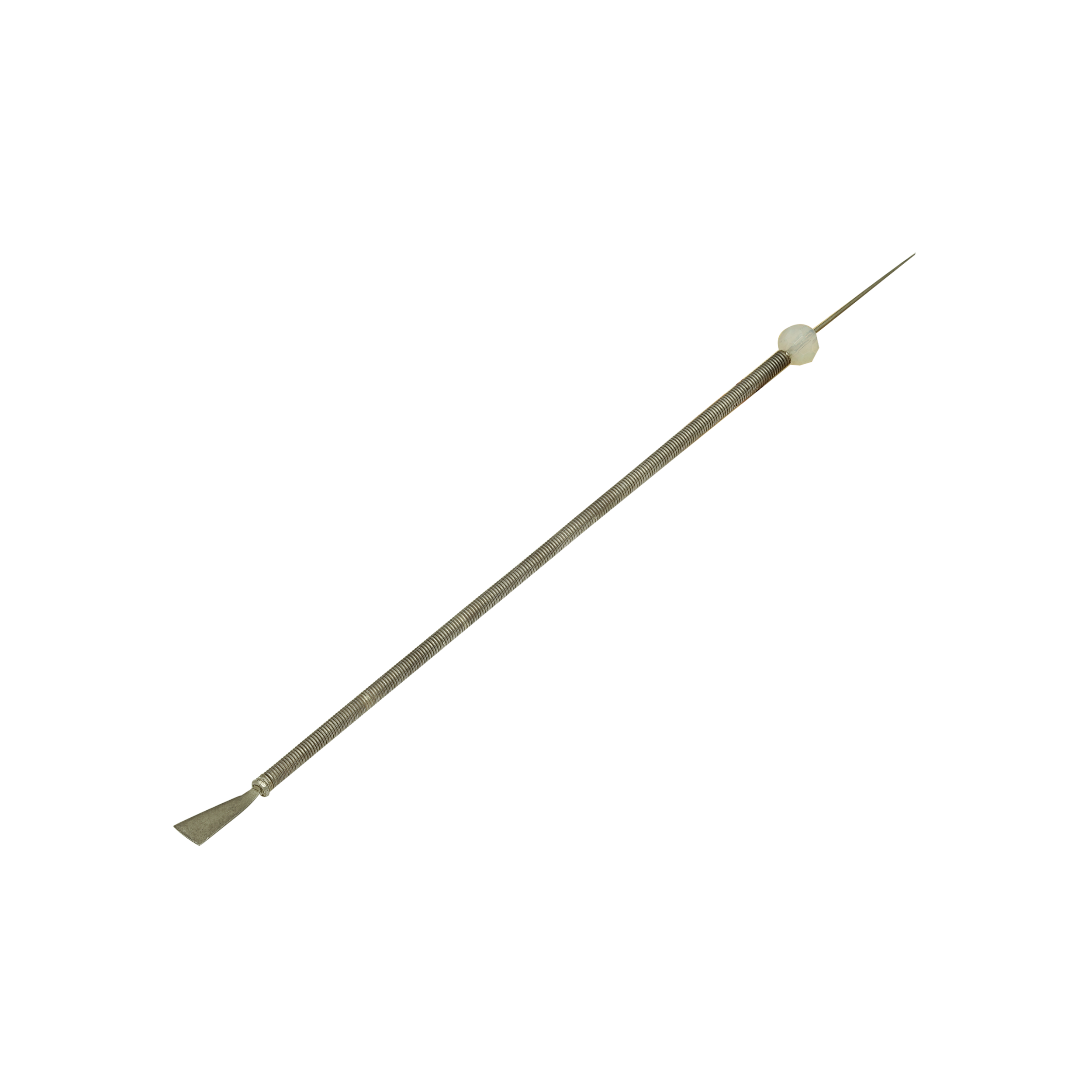
Origin: China
Date: Late 19th–early 20th century
Materials: Metal alloy, mother-of-pearl
Dimensions: Appro 20 × 0.5 cm
Description:
Crafted dual-ended opium pipe tool featuring a coiled metal handle for both strength and grip. One end terminates in a narrow, flat spatula used for scraping opium residue from the pipe’s bowl, while the opposite end is fitted with a sharp needle for clearing obstructions in the stem.
Origin: China
Date: Late 19th–early 20th century
Materials: Metal alloy
Dimensions: Appro 17 × 2 cm
Description:
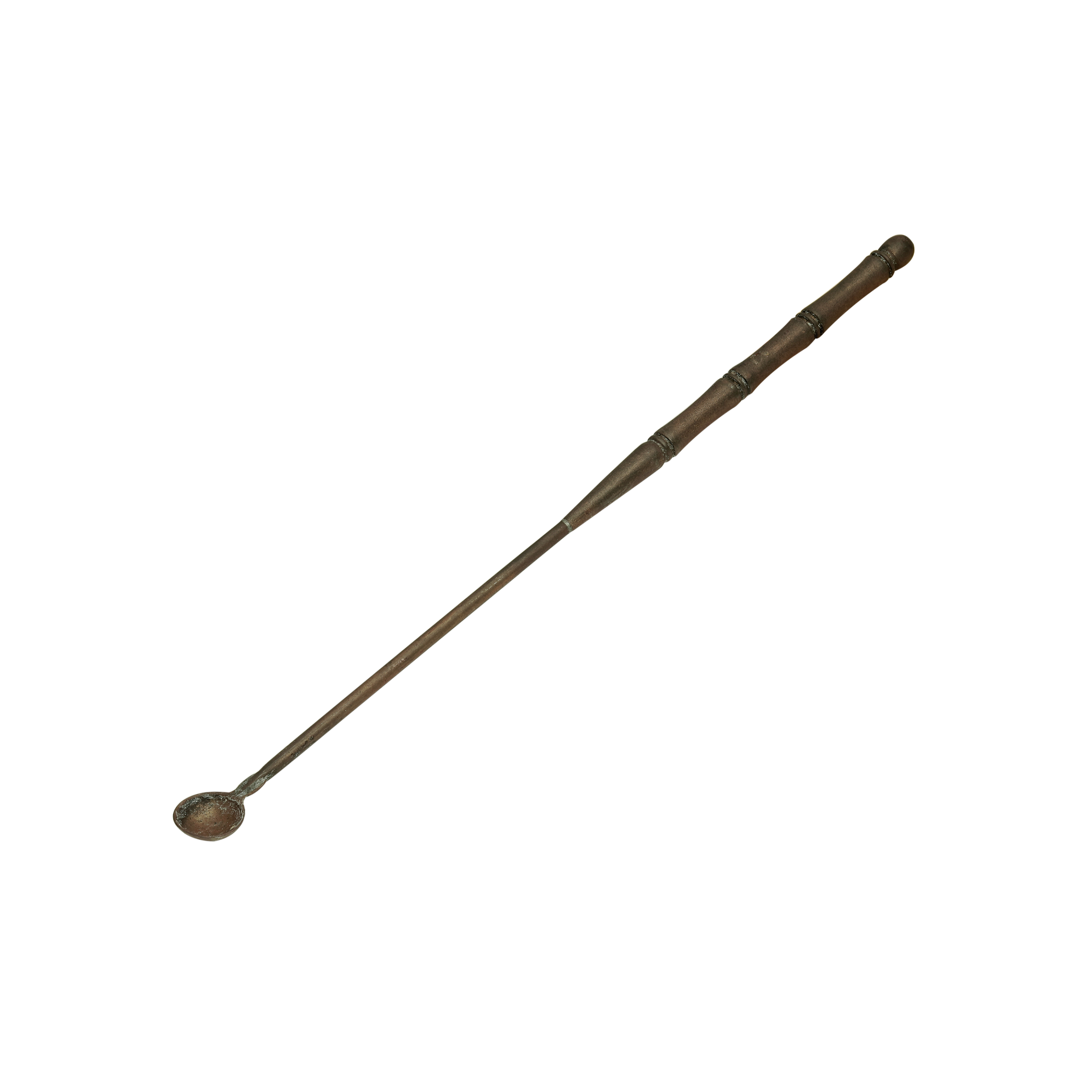
Opium preparation spoon featuring a long, slender shaft with a rounded, bamboo-inspired handle. At one end, a small hemispherical bowl was used to measure and manipulate prepared opium paste before placing it onto the smoking pipe’s bowl for heating. The metal surface shows patination from prolonged handling and exposure to heat, attesting to its age and use
Origin: China
Date: Late 19th–early 20th century
Materials: Hardwood, metal alloy
Dimensions: Appro 20 × 1 cm
Description:
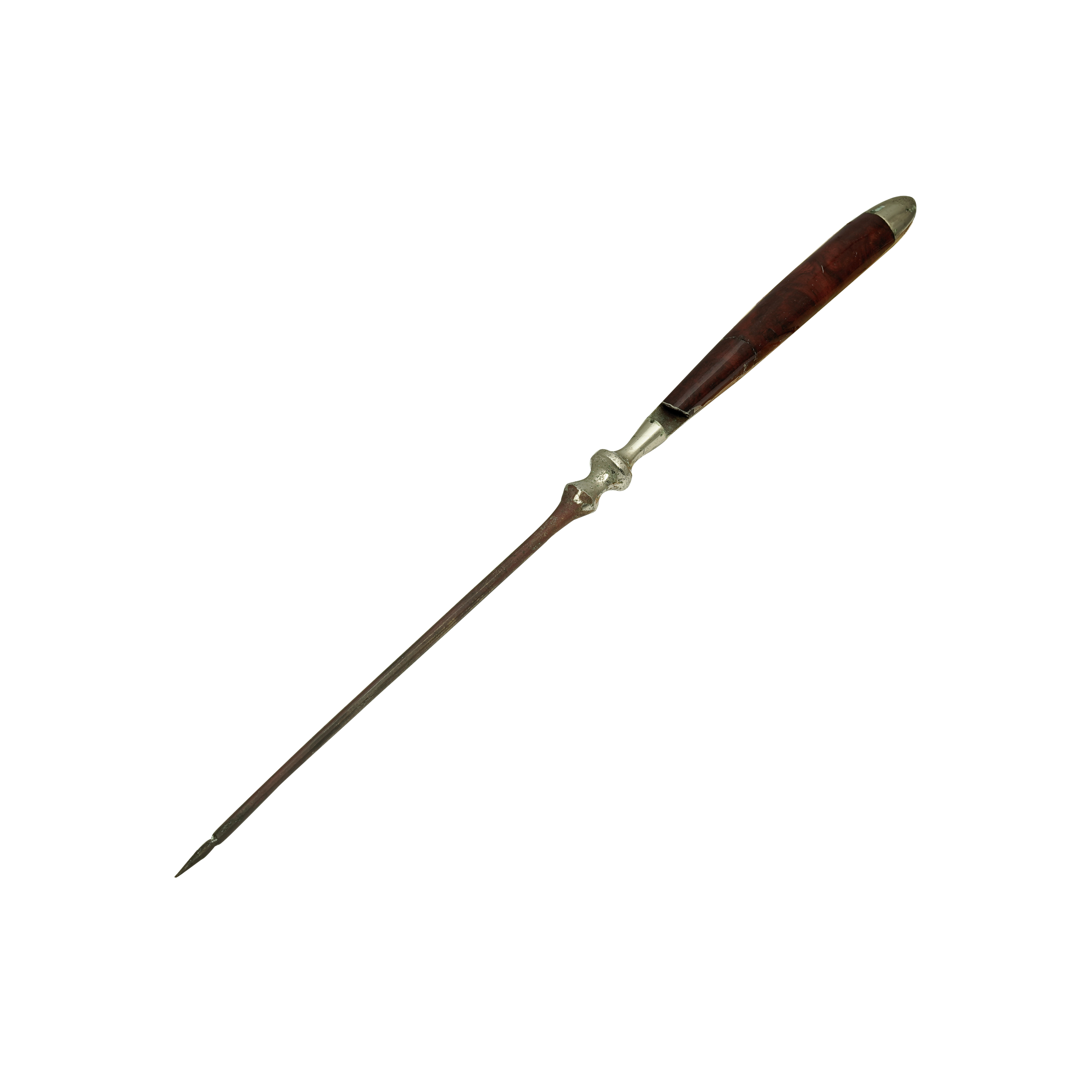
Opium pipe needle featuring a polished hardwood handle with a tapered form, capped at both ends with metal fittings. The long, narrow metal shaft terminates in a fine point, designed for clearing blockages and cleaning the narrow channels of an opium pipe.
Origin: China
Date: Late 19th–early 20th century
Materials: Metal alloy, wood
Dimensions: Appro 17 × 1.5 cm
Description:
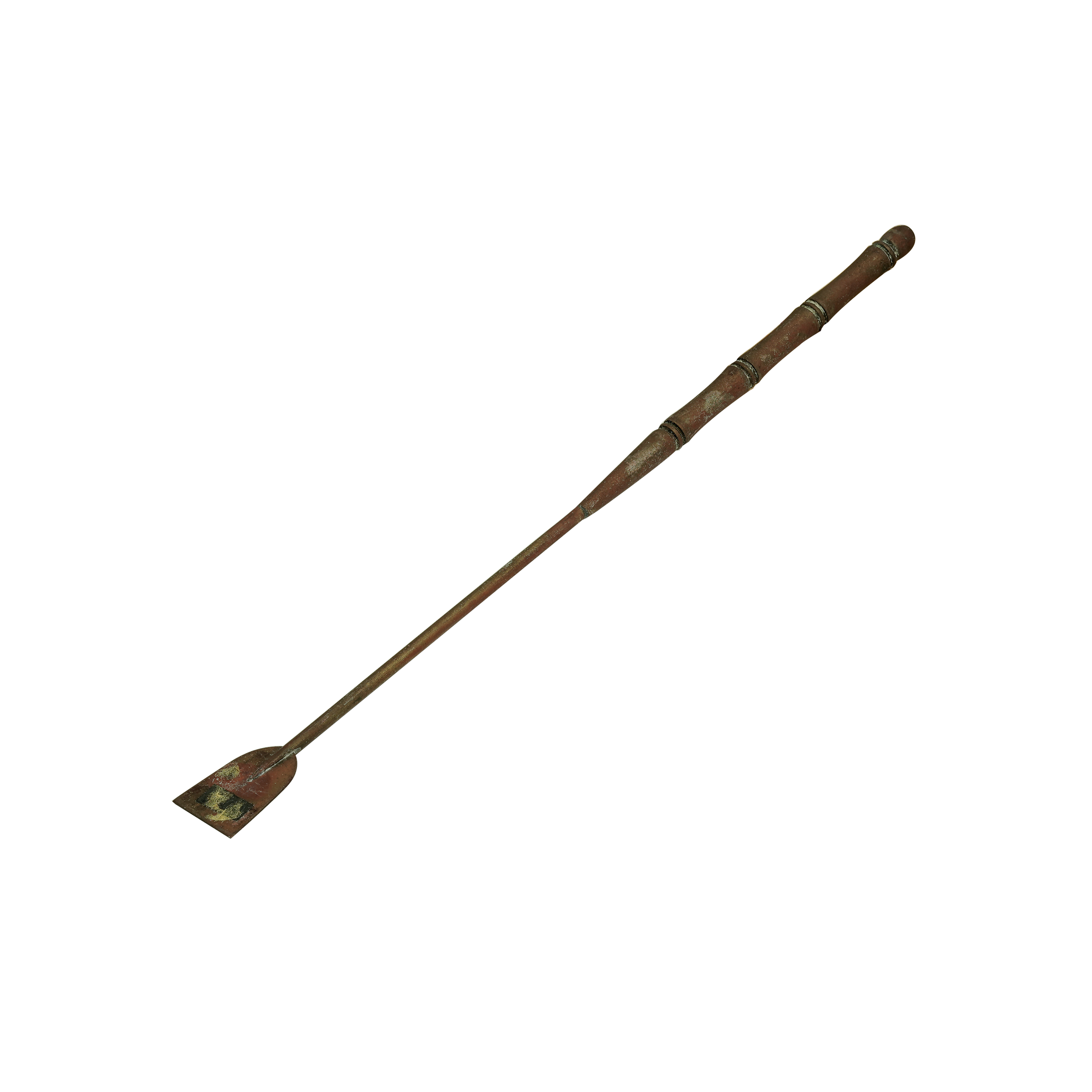
Long-handled opium pipe scraper designed with a bamboo-motif wooden grip, tapering to a narrow metal shaft and ending in a flat, spade-like blade. The tool was used for cleaning the opium pipe’s bowl and stem, removing charred residue to maintain smooth airflow and smoking quality. The stylized bamboo segments along the handle not only provide visual appeal but also improve grip during use.
Origin: China
Date: Late 19th–early 20th century
Materials: Hardwood, iron, copper alloy
Dimensions: Appro 17 × 3 cm
Description:
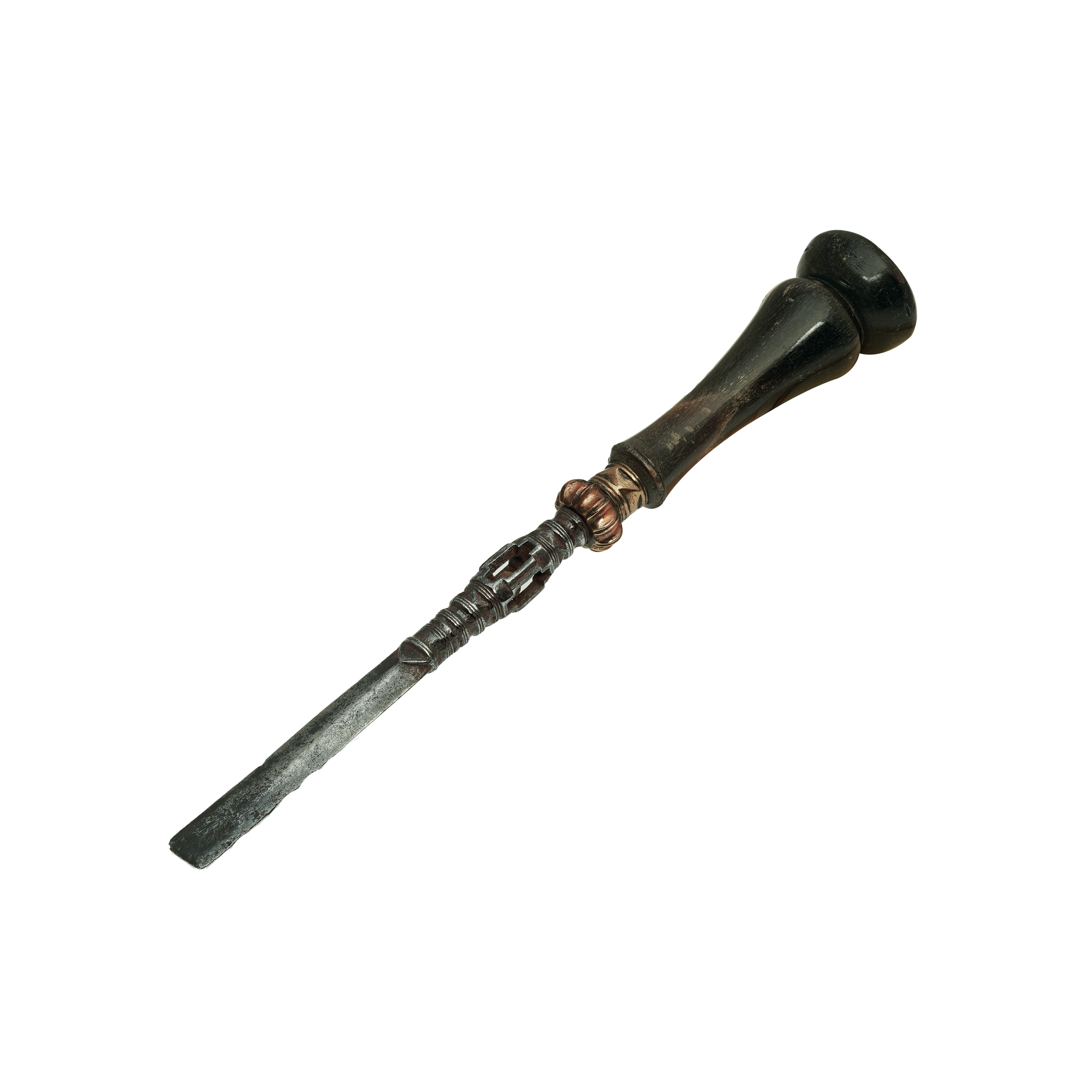
Opium pipe scraper featuring a turned hardwood handle, elegantly shaped for a comfortable grip, joined to a carved and pierced metal shaft. The flat-ended iron blade was used to scrape residual opium ash and char from the pipe bowl and stem, ensuring a clean airway and optimal smoking experience. A copper alloy collar reinforces the junction between handle and shaft, adding both durability and decorative contrast.
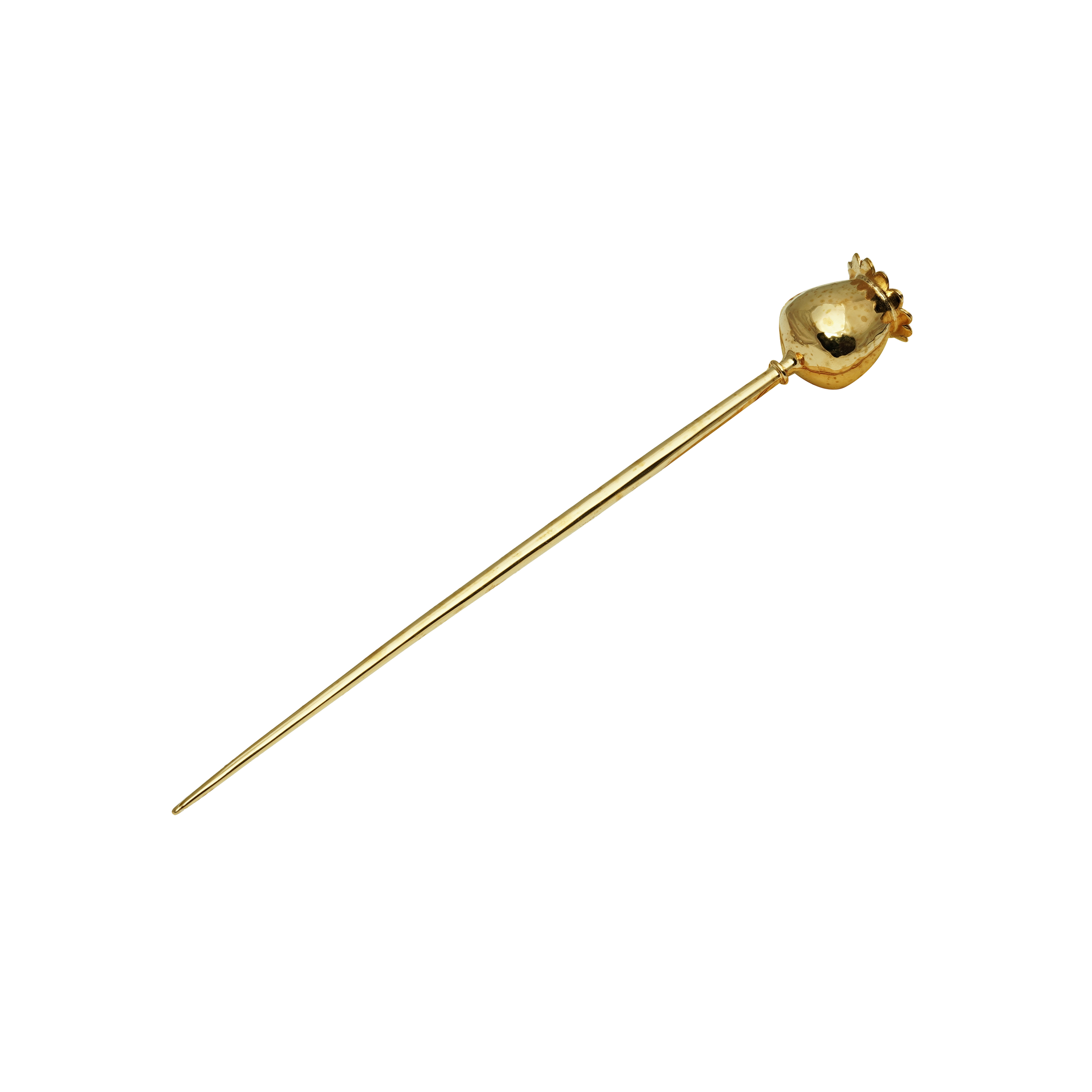
Origin: China
Date: Late 19th–early 20th century
Materials: Gilded brass
Dimensions: Appro 16 × 2.5 cm
Description:
Gilded brass needle used in the preparation and cleaning of opium pipes. Its sharp, tapered point allowed smokers to manipulate the opium pellet within the pipe bowl or clear residue from the narrow airway. The handle is topped with a delicately crafted poppy pod finial, a direct reference to the opium poppy (Papaver somniferum) and the source of the drug.
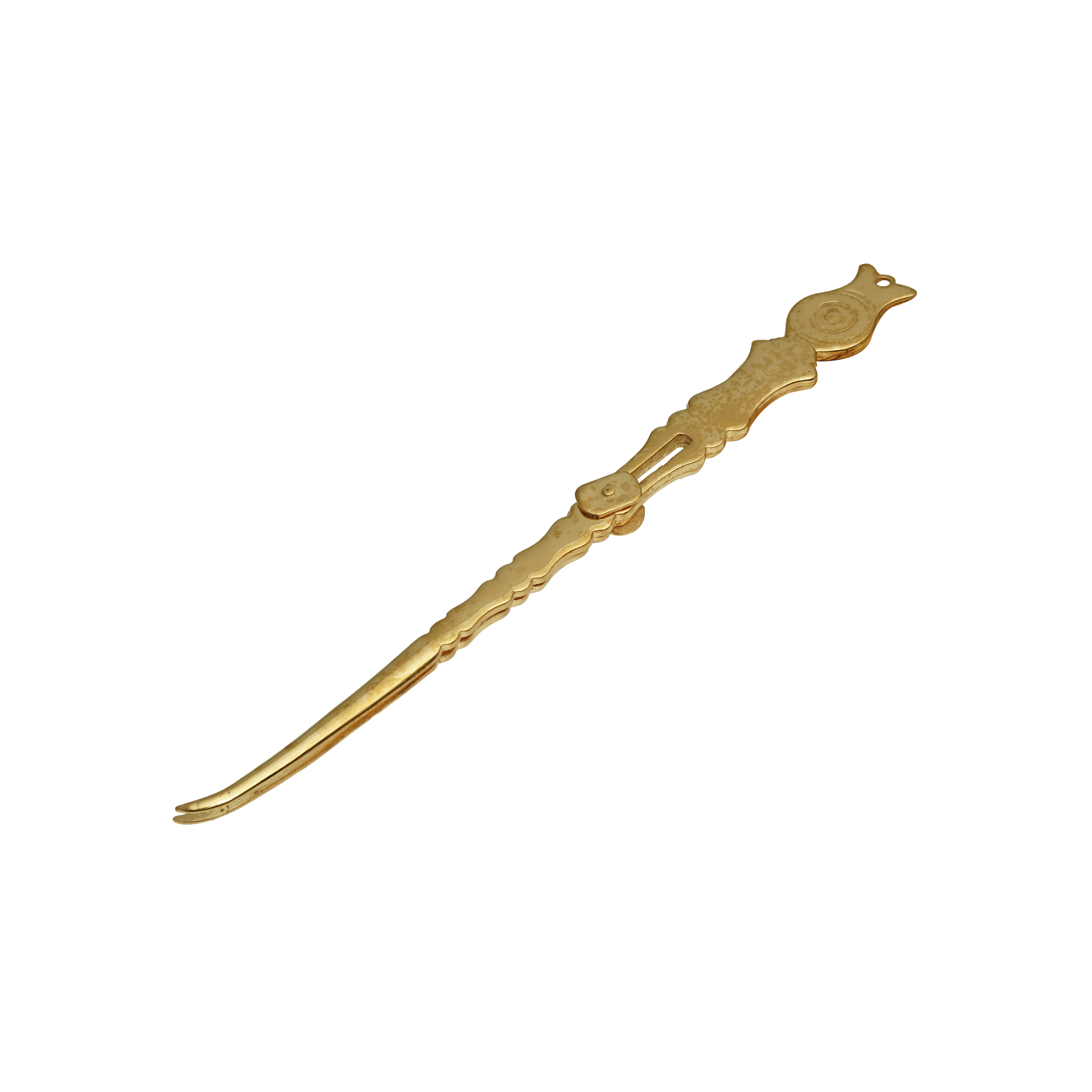
Origin: China
Date: Late 19th–early 20th century
Materials: Gilded brass
Dimensions: Appro 17 × 2 cm
Description:
This ornate gilded brass tool was used in the preparation of opium for smoking. Featuring a slender, slightly curved tip, it served for tamping the opium pellet into the bowl and adjusting its position during heating. The handle is richly decorated with engraved patterns and cutwork, with a finial shaped in a stylized fish motif, symbolizing abundance and prosperity in Chinese culture.
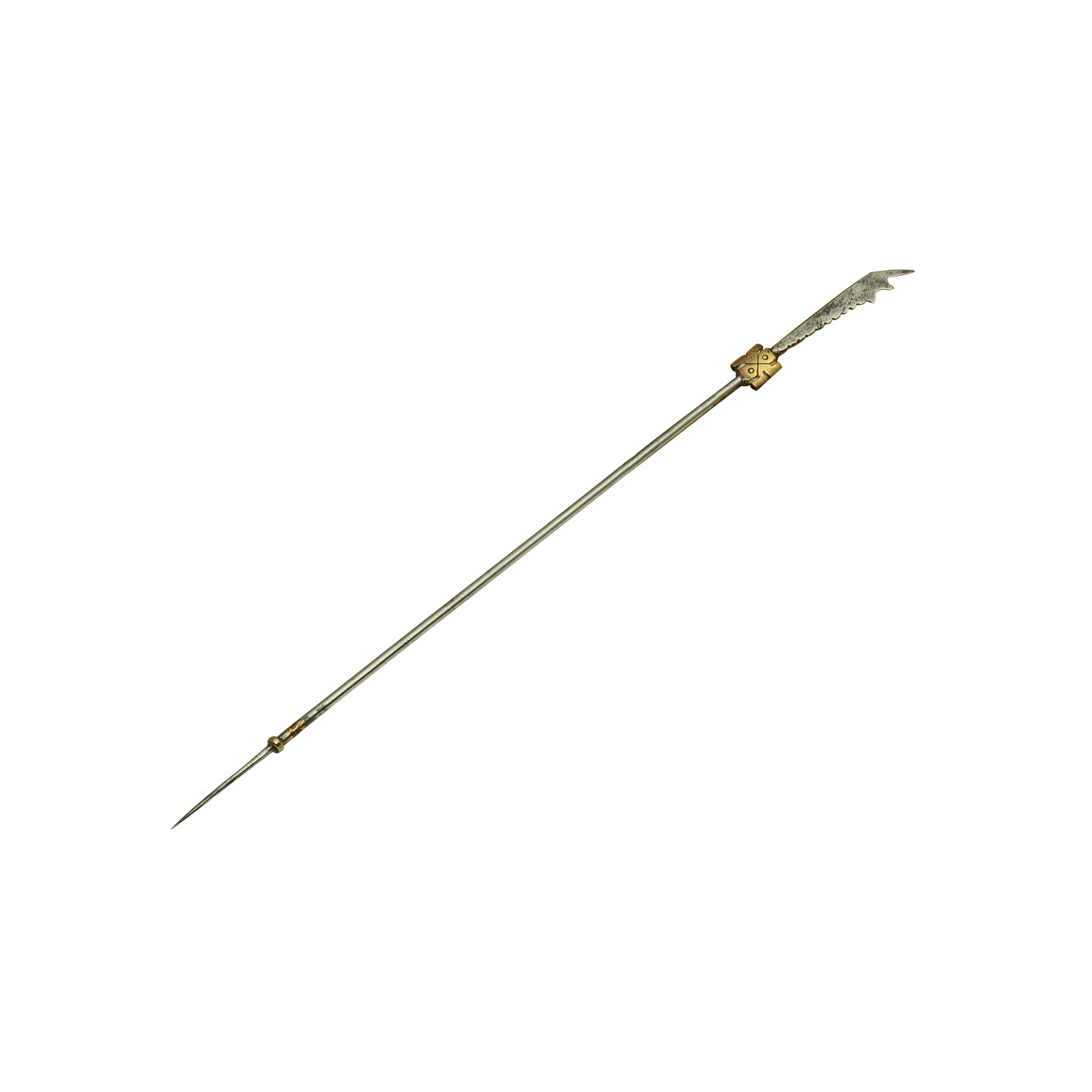
Origin: China
Date: Late 19th–early 20th century
Materials: Metal alloy, brass fittings
Dimensions: Appro 16 × 0.5 cm
Description:
This long, slender opium pipe pick features a tapered shaft ending in a sharp point for clearing the small air hole of an opium pipe bowl. At the opposite end, an ornate finial in the form of a stylized bird or feather motif is mounted alongside a small brass floral fitting, adding decorative appeal to this functional implement. Pipe picks were indispensable tools for maintaining an unobstructed draw and ensuring efficient combustion of the opium pellet.
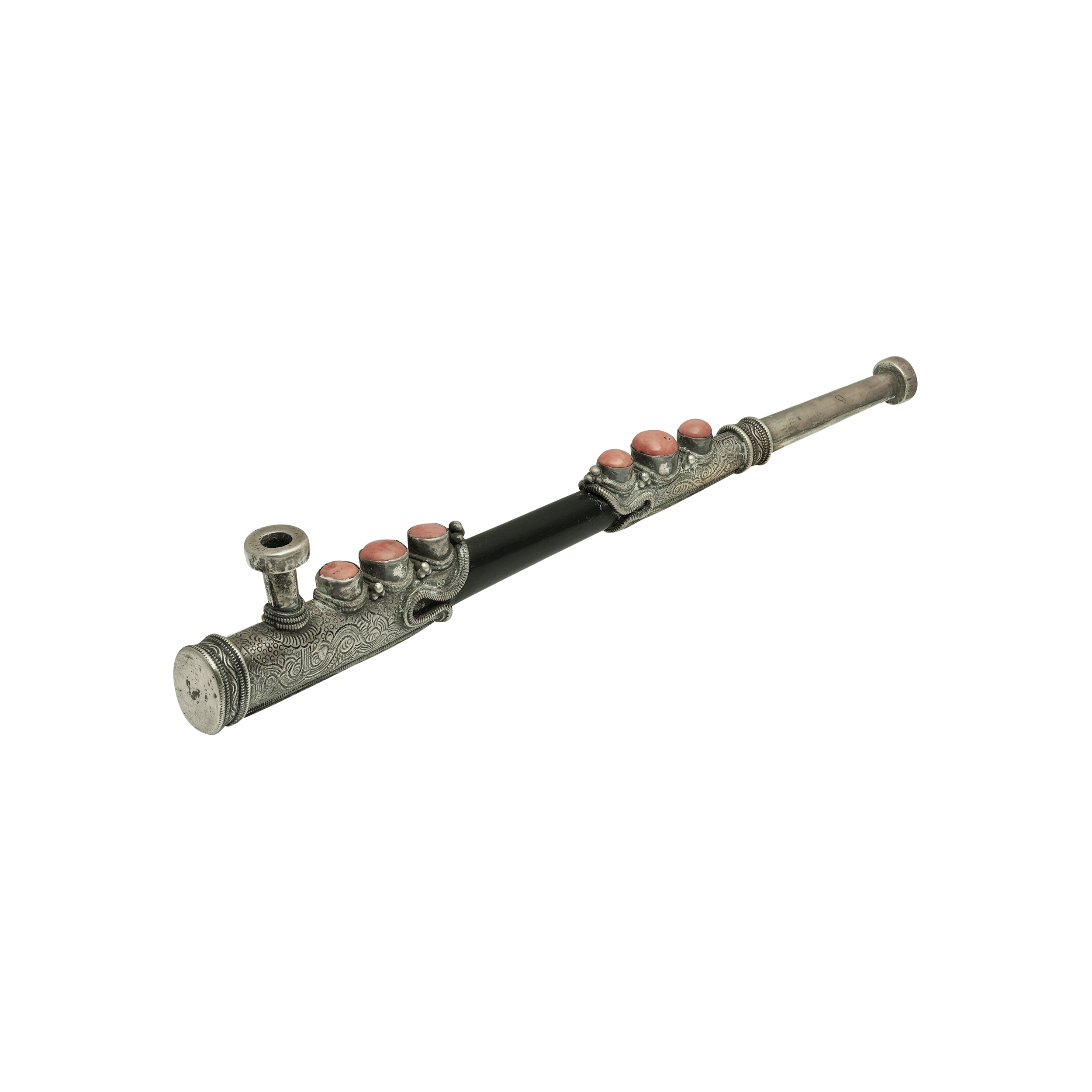
Origin: Tibet
Date: Late 19th–early 20th century
Materials: Silver, black-lacquered wood or horn, coral cabochons
Dimensions: Appro 39 × 6 cm
Description:
Crafted Tibetan opium pipe featuring ornate silver mounts over a black-lacquered central shaft, likely made from wood or horn. The pipe is decorated with repoussé and chased floral and scroll motifs along the silver sections. Six raised silver bezels, each set with a polished coral cabochon, provide both ornamentation and symbolic significance, as coral is considered a protective and auspicious material in Tibetan culture.
The bowl is positioned at one end, fitted into an intricately worked silver headpiece that extends into a capped section. The opposite end tapers to a silver mouthpiece, with an additional decorative silver sleeve at the junction with the shaft. The combination of luxurious materials and intricate detailing suggests that this pipe belonged to a wealthy or high-ranking individual.
Cultural Context:
While opium smoking spread widely in China during the Qing dynasty, it also reached Tibet, where pipes were often made to reflect local aesthetics and spiritual symbolism. The use of coral and silver links this example to Tibetan jewelry traditions, where such materials are prized for their beauty, rarity, and protective powers. In this way, the pipe served as both a functional smoking implement and a status-laden personal possession.
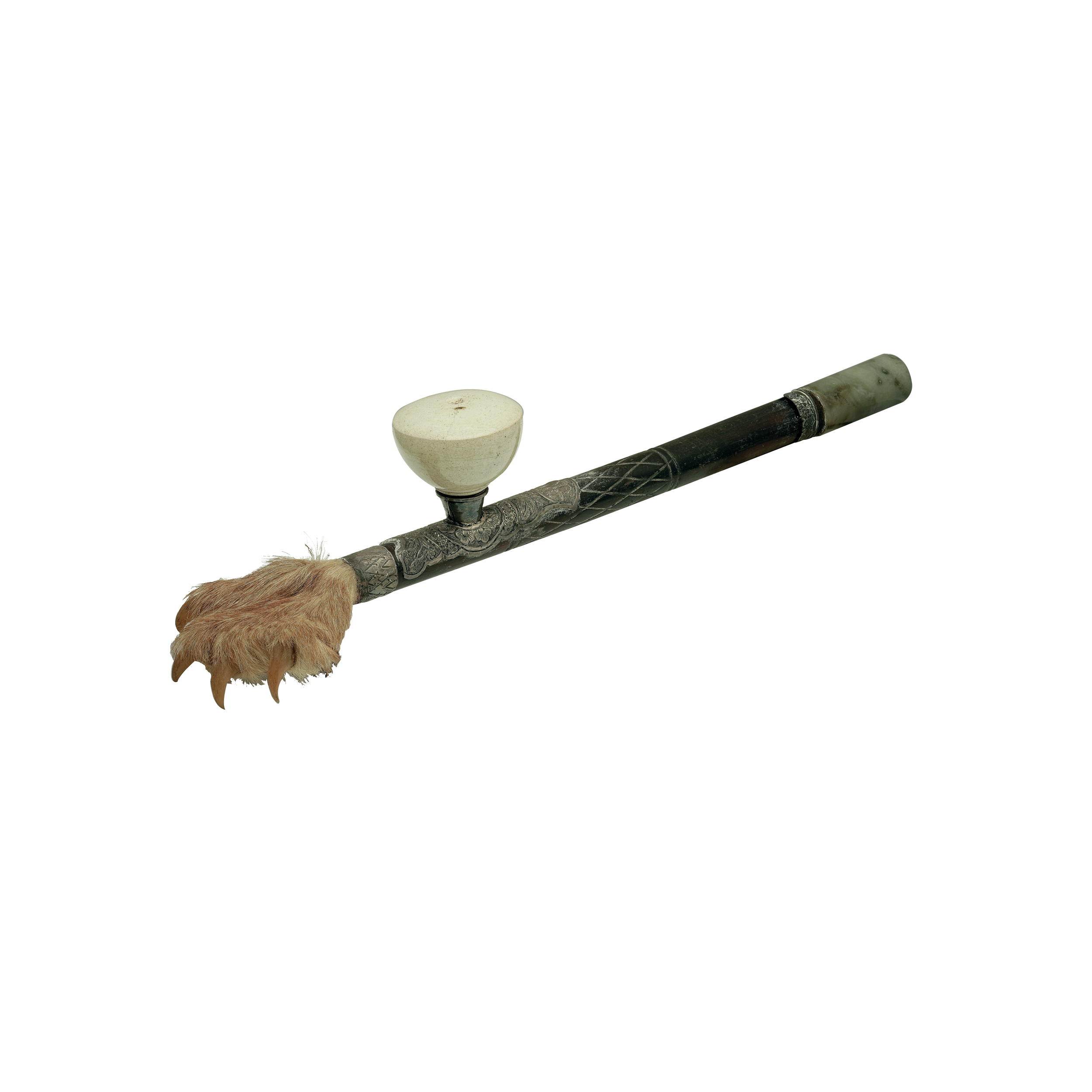
Origin: China or Southeast Asia
Date: Late 19th–early 20th century
Materials: Metal, ceramic, animal paw (likely feline)
Dimensions: Appro 49 × 10 cm
Description:
Unusual custom-made opium pipe combining traditional materials with a personalizing feature. The long cylindrical stem, crafted from metal and engraved with geometric and foliate motifs, is fitted with a white ceramic bowl for vaporizing prepared opium. The mouthpiece appears to be carved from pale green jade.
Most notably, the opposite end of the stem is capped with a preserved animal paw—likely feline—complete with fur and claws intact. This distinctive finial transforms the piece into a unique personal statement, possibly signifying the owner’s status, identity, or totemic beliefs. The fusion of refined materials with an organic ornamentation marks this pipe as a rare example of individualized opium-smoking paraphernalia.
Cultural Context:
In the opium-smoking traditions of China and Southeast Asia, pipes could range from utilitarian bamboo examples to elaborately decorated personal possessions. The use of jade in the mouthpiece reflects the material’s long-standing association with purity, health, and nobility, while the animal paw suggests either a symbolic talisman or an expression of eccentricity and power. Such a piece may have been commissioned by an elite smoker wishing to stand out in a competitive social milieu.
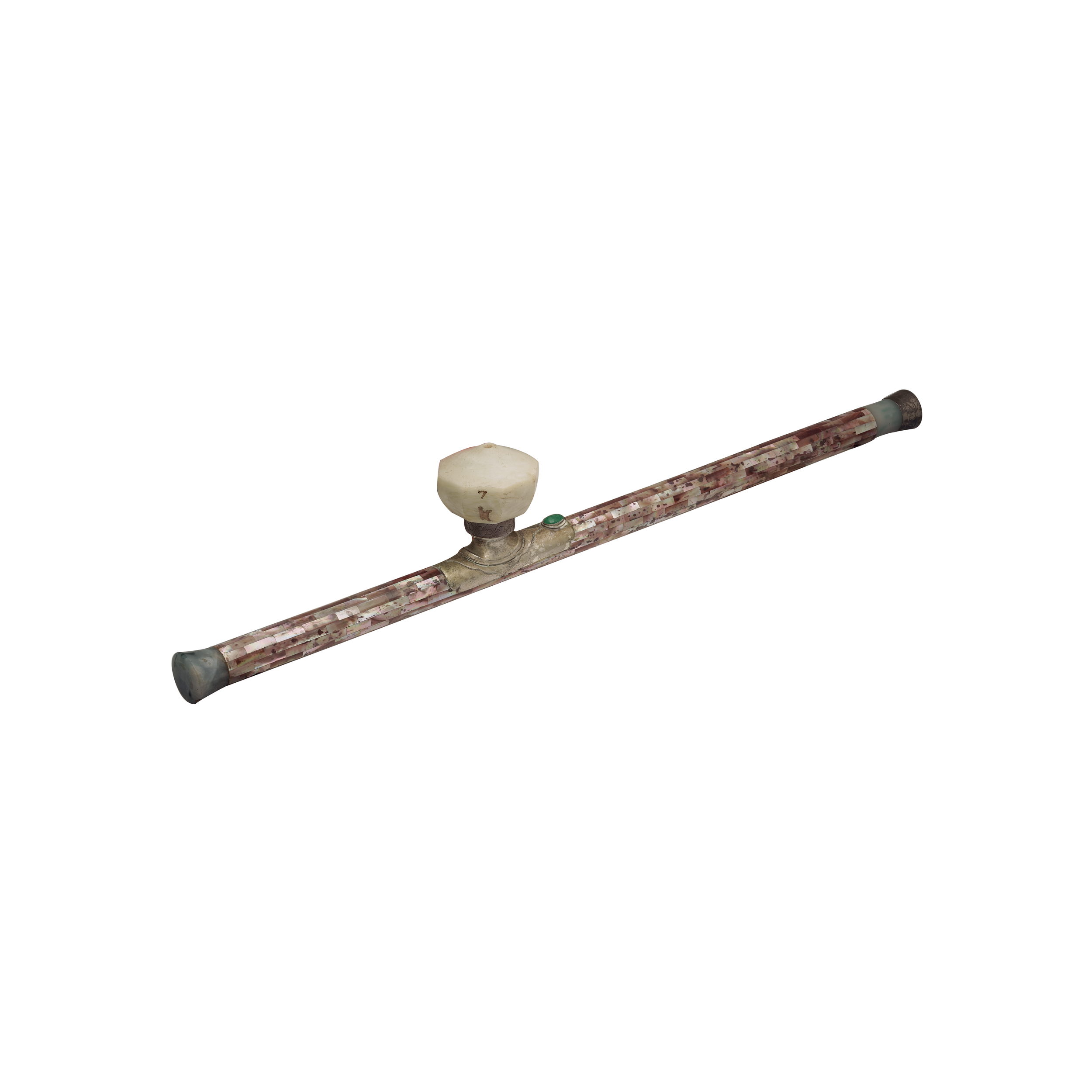
Origin: China
Date: Late 19th–early 20th century
Materials: mother-of-pearl, jade, ceramic, metal fittings
Dimensions: Appro 54 × 9 cm
Description:
Chinese opium pipe slender stem, inlaid with hundreds of small pieces of shimmering mother-of-pearl arranged in repeating floral and geometric motifs. The inlay work covers nearly the entire surface, creating a luminous effect when viewed under soft light. At the center sits a hexagonal white ceramic bowl, used for heating and vaporizing the prepared opium.
Adjacent to the bowl’s metal fitting is a small jade cabochon, possibly serving both decorative and symbolic purposes, as jade is traditionally associated with purity, protection, and high social standing. The ends of the stem are capped with metal fittings, one forming the mouthpiece, the other reinforcing the opposite extremity.
Cultural Context:
In the Qing dynasty and into the early Republican era, opium smoking was a highly ritualized activity, and pipes were often crafted to reflect the wealth and refinement of their owners. Mother-of-pearl inlay was a labor-intensive art, requiring patience and skill, and its inclusion here suggests that the pipe belonged to a patron of means who valued both function and beauty.
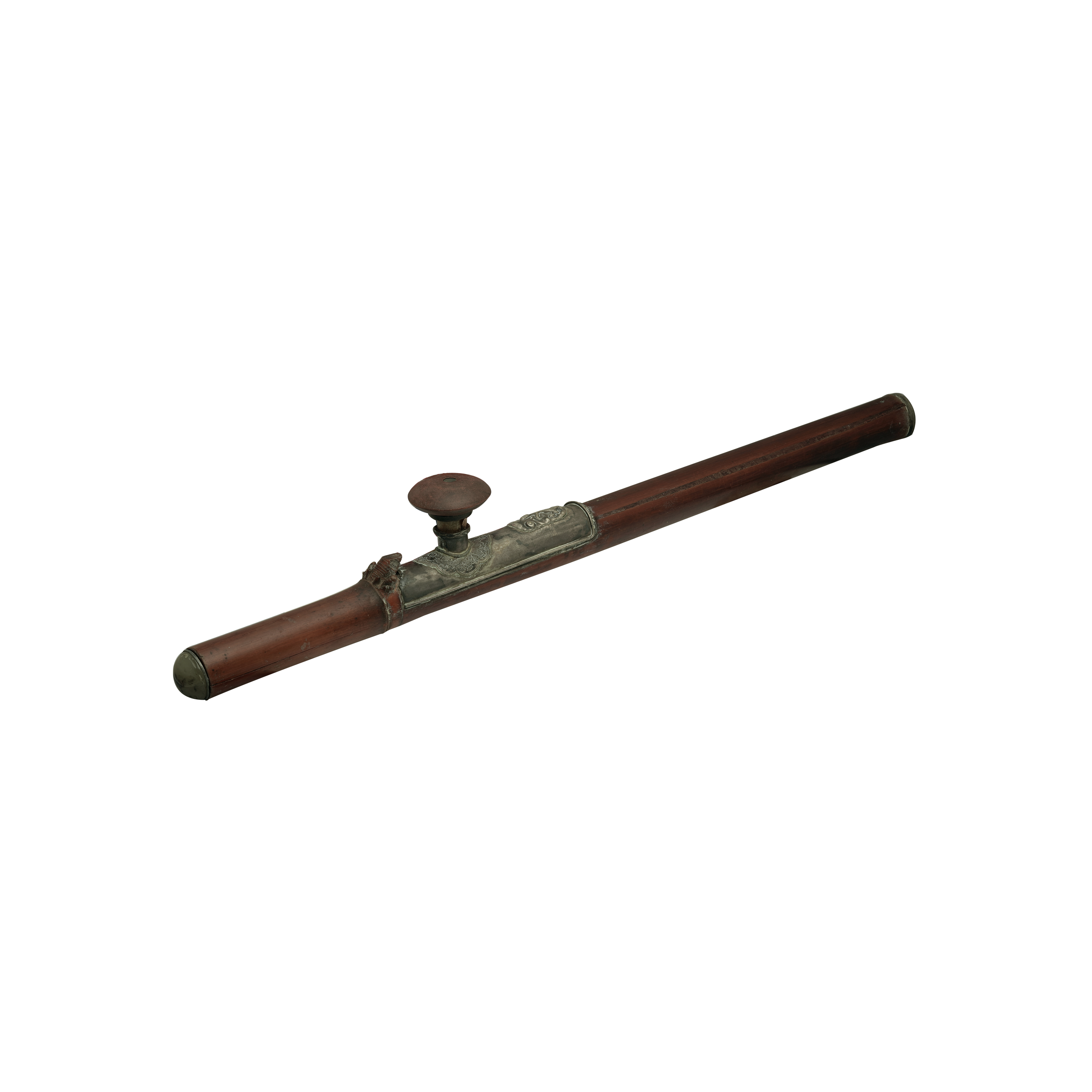
Origin: China
Date: Late 19th–early 20th century
Materials: Bamboo, brass, metal alloy
Dimensions: Appro 57 × 12 cm
Description:
Chinese opium pipe featuring a smooth cylindrical bamboo stem with warm reddish-brown patina, complemented by brass end caps and a central metal fitting to hold the ceramic or metal bowl. The central section, cast in metal alloy, displays modest decorative flourishes, including low-relief scroll motifs and a stylized clasp to secure the bowl.
The bowl itself is of small, rounded form—ideal for controlled heating of prepared opium paste over a specialized lamp. The bamboo stem’s natural durability, paired with the resilience of brass fittings, speaks to a practical yet refined approach to pipe-making, balancing utility with understated ornamentation.
Cultural Context:
Opium pipes such as this were essential implements in Chinese opium-smoking rituals, which peaked in popularity during the Qing dynasty. Bamboo was a favored stem material for its light weight, resistance to heat, and smooth draw, while brass fittings added durability and a subtle decorative element.
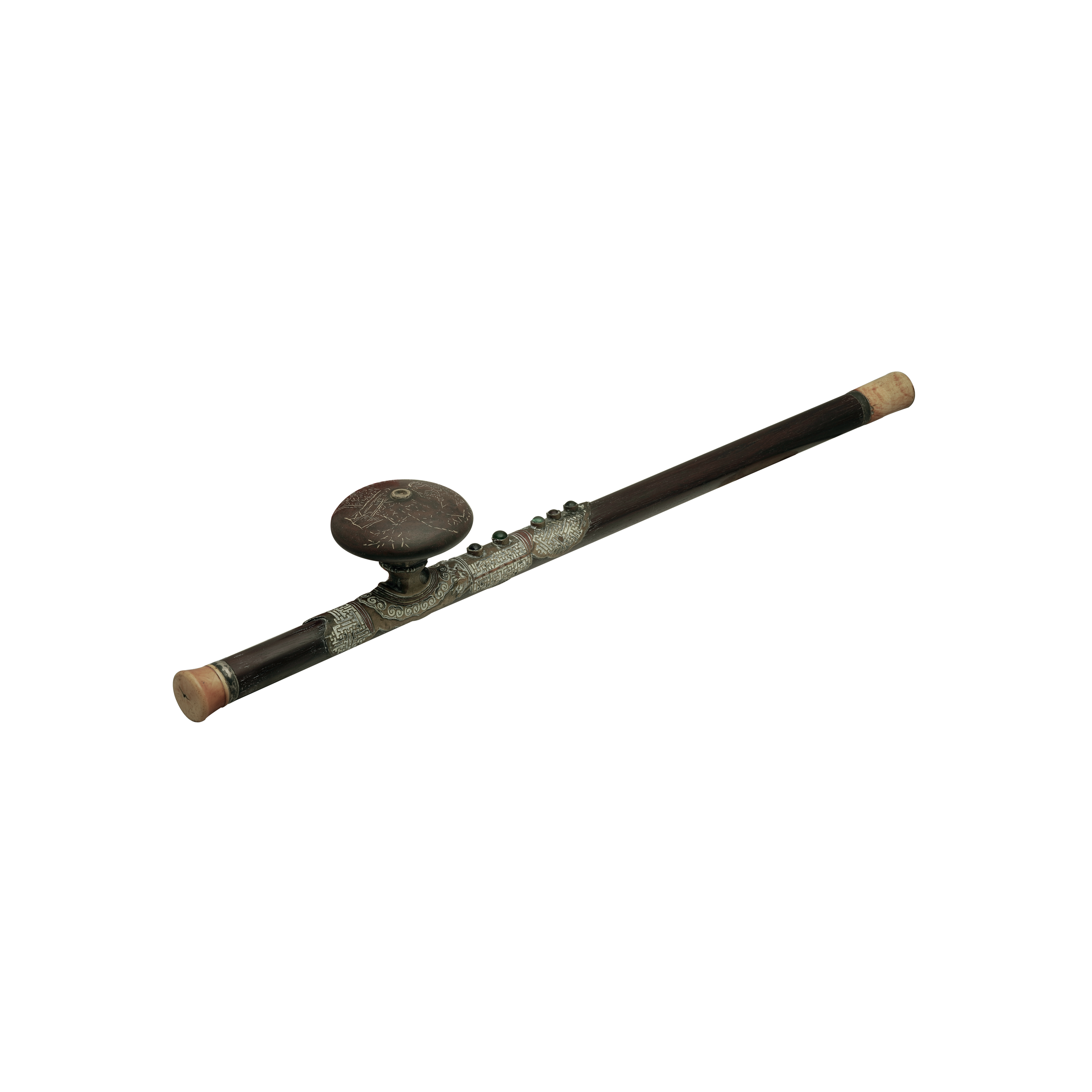
Origin: China
Date: Late 19th–early 20th century
Materials: Hardwood, metal alloy, lacquer, jade or stone mouthpieces
Dimensions: Appro 56 × 9 cm
Description:
Chinese opium pipe crafted with a hardwood stem flanked by smooth stone or jade mouthpieces at either end. The pipe features an ornate metal saddle with fine engravings of floral scrollwork, symbolizing prosperity and refinement. Resting atop the saddle is a lacquered ceramic bowl, its surface decorated with delicate gilt-painted motifs, possibly floral or calligraphic, that would have caught the light during use.
A row of small metal bosses embellishes the saddle, providing both decorative and tactile interest. The combination of rich hardwood, polished stone, and engraved metal reflects the harmony of materials prized in Qing dynasty smoking culture.
Cultural Context:
Such pipes were used in the ritualized practice of opium smoking, a pastime closely associated with leisure, social gatherings, and expressions of status in late imperial China. The luxurious details of this example suggest ownership by a connoisseur who valued both the art of smoking and the craftsmanship of the tools involved.
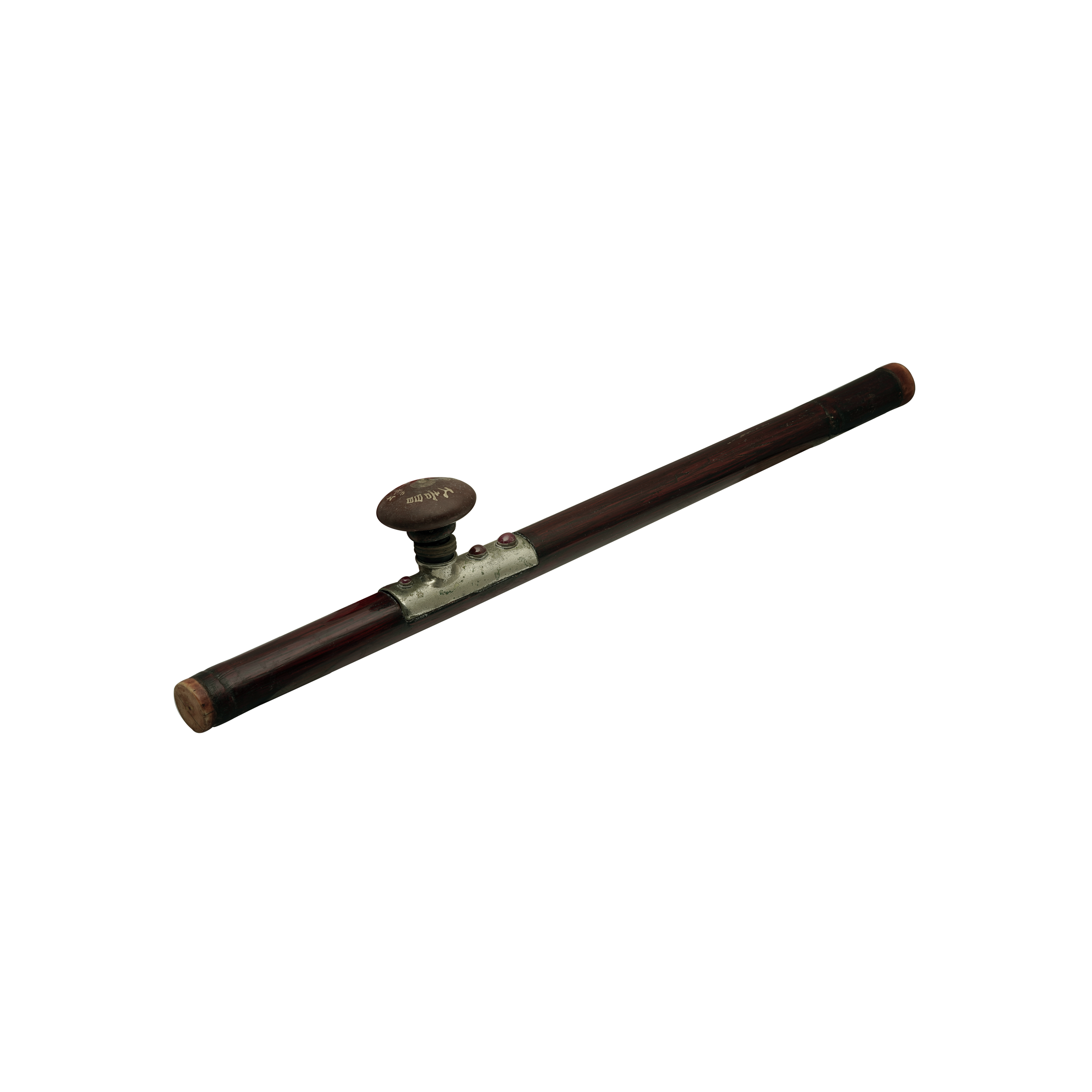
Origin: China
Date: Late 19th–early 20th century
Materials: Hardwood, metal alloy, lacquer, inlay
Dimensions: Appro 57 × 10 cm
Description:
Chinese opium pipe featuring a straight, polished hardwood stem of rich reddish-brown hue, capped at each end with fitted collars for durability. At its center sits a domed metal bowl cover, engraved with Chinese characters, mounted on a short, ridged neck that connects to an engraved metal saddle. The saddle bears a worn but elegant surface, possibly from years of careful use, and is accented with small inset stones or beads, hinting at the owner’s appreciation for refinement.
The smooth, lacquered wood contrasts with the utilitarian yet decorative metalwork, a hallmark of Qing-era smoking implements. The engraved inscription on the bowl may carry auspicious or poetic meaning, underscoring the cultural practice of pairing opium consumption with artistry and wordplay.
Cultural Context:
During the late Qing dynasty, opium smoking was a ritualized pastime that blended craftsmanship, social etiquette, and personal indulgence. Pipes of this kind were often custom-made, with fittings that reflected the wealth, status, and taste of their owner. The combination of inscribed metalwork and hardwood stem places this example within the tradition of refined domestic paraphernalia used by the literati and elite classes.
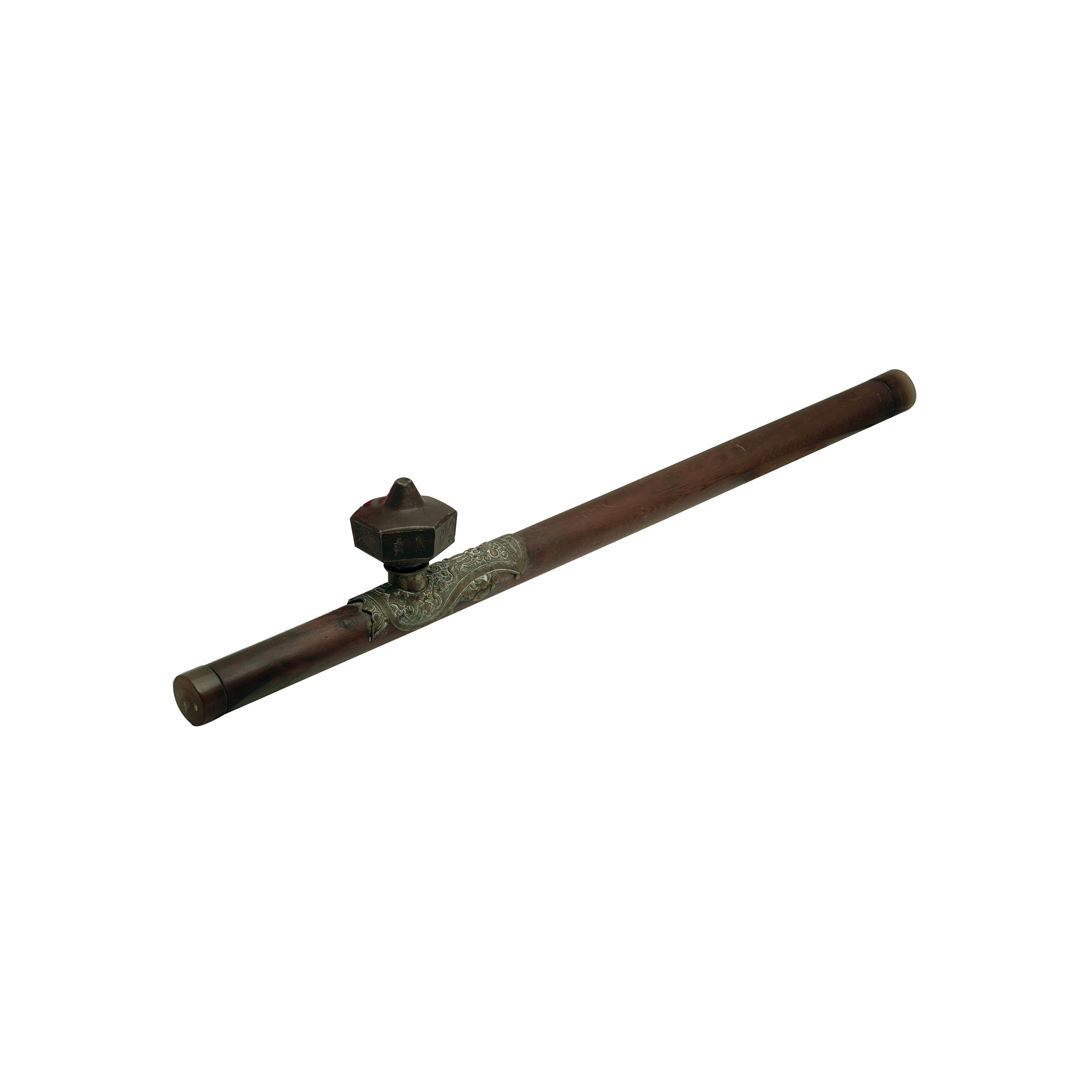
Origin: China
Date: Late 19th–early 20th century
Materials: Hardwood, metal alloy
Dimensions: Appro 54 × 10 cm
Description:
Chinese opium pipe featuring a straight hardwood stem with a polished patina, indicative of frequent handling over time. At its center sits a distinctive hexagonal metal bowl with a pointed, conical lid—a rare and striking form compared to the more typical rounded bowls. The bowl is mounted on an engraved metal saddle, adorned with scrolling floral and foliate motifs, adding both visual interest and a touch of luxury.
The hardwood body is capped at each end with smooth, fitted collars, providing durability and balance. The geometric form of the bowl contrasts elegantly with the organic patterns of the engraved saddle, merging utilitarian function with decorative artistry.
Cultural Context:
Opium smoking in late Qing China was as much a social ritual as it was a private indulgence. Pipes like this, with distinctive and high-quality fittings, often belonged to affluent individuals who took pride in the craftsmanship of their paraphernalia. The unusual bowl shape suggests either a regional variation or a custom-made commission, reflecting the owner’s personal taste.
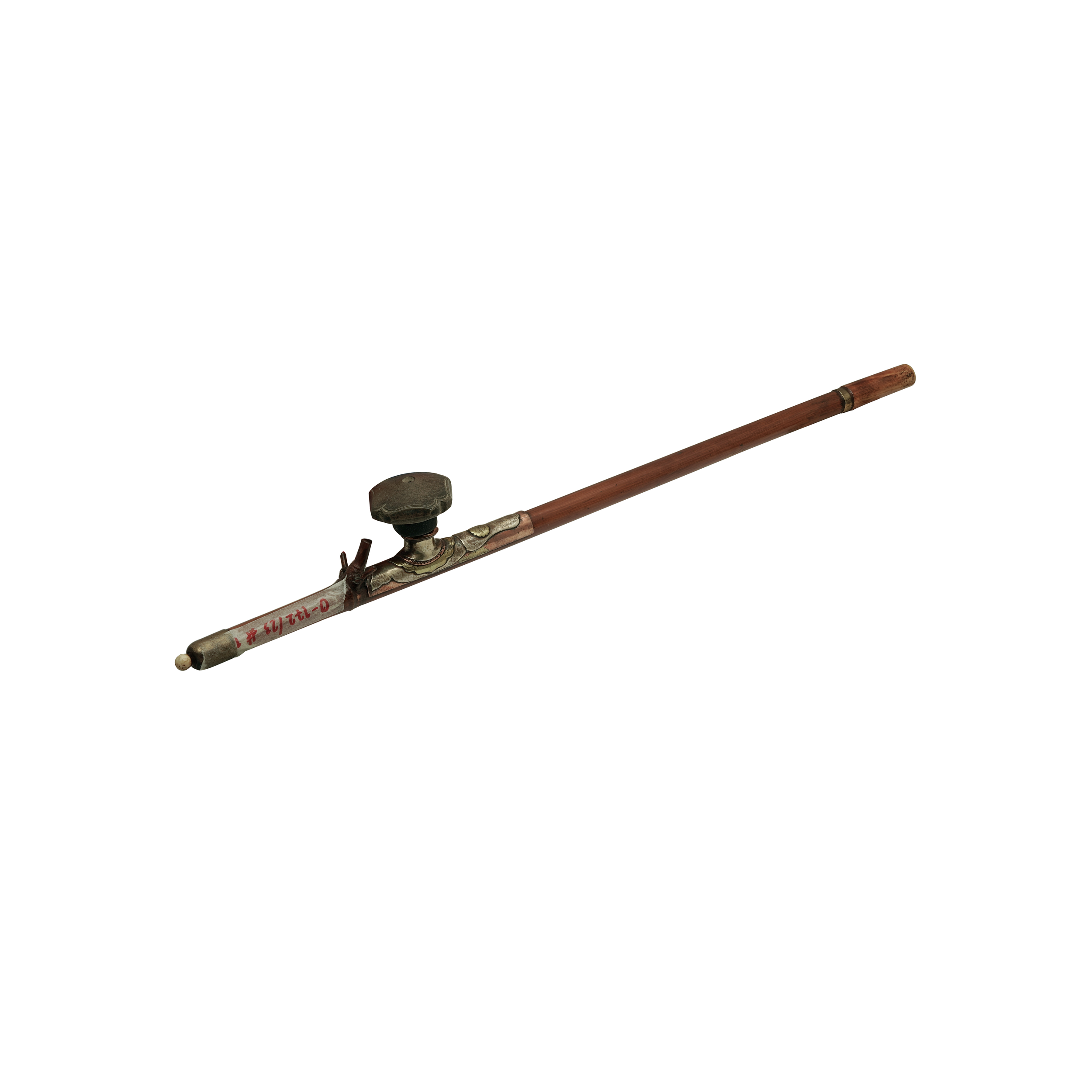
Origin: China
Date: Late 19th–early 20th century
Materials: Hardwood, brass, lacquer, pigment
Dimensions: Appro 49 × 7 cm
Description:
Chinese opium pipe featuring a long, polished hardwood stem of reddish-brown tone, fitted at both ends with protective metal collars. At the center sits a circular, slightly domed metal bowl cover with a patinated surface, connected to an engraved brass saddle decorated with stylized floral and foliate motifs. A section of the front stem bears red-painted Chinese characters, likely denoting a workshop name, auspicious phrase, or ownership mark. A small protruding support—possibly for resting the pipe—extends from the saddle area, adding both functionality and visual balance to the design.
The combination of warm hardwood, decorative brass, and hand-painted calligraphy reflects the Qing-era appreciation for craftsmanship and refinement in smoking implements.
Cultural Context:
Opium smoking during the late Qing dynasty was not only a leisure activity but also a social ritual among China’s literati and upper classes. Pipes such as this were often personalized, incorporating inscriptions or motifs meaningful to their owners. The addition of painted calligraphy aligns with the cultural practice of merging artistry, poetry, and daily objects, elevating the pipe from a utilitarian tool to an object of aesthetic and cultural value.
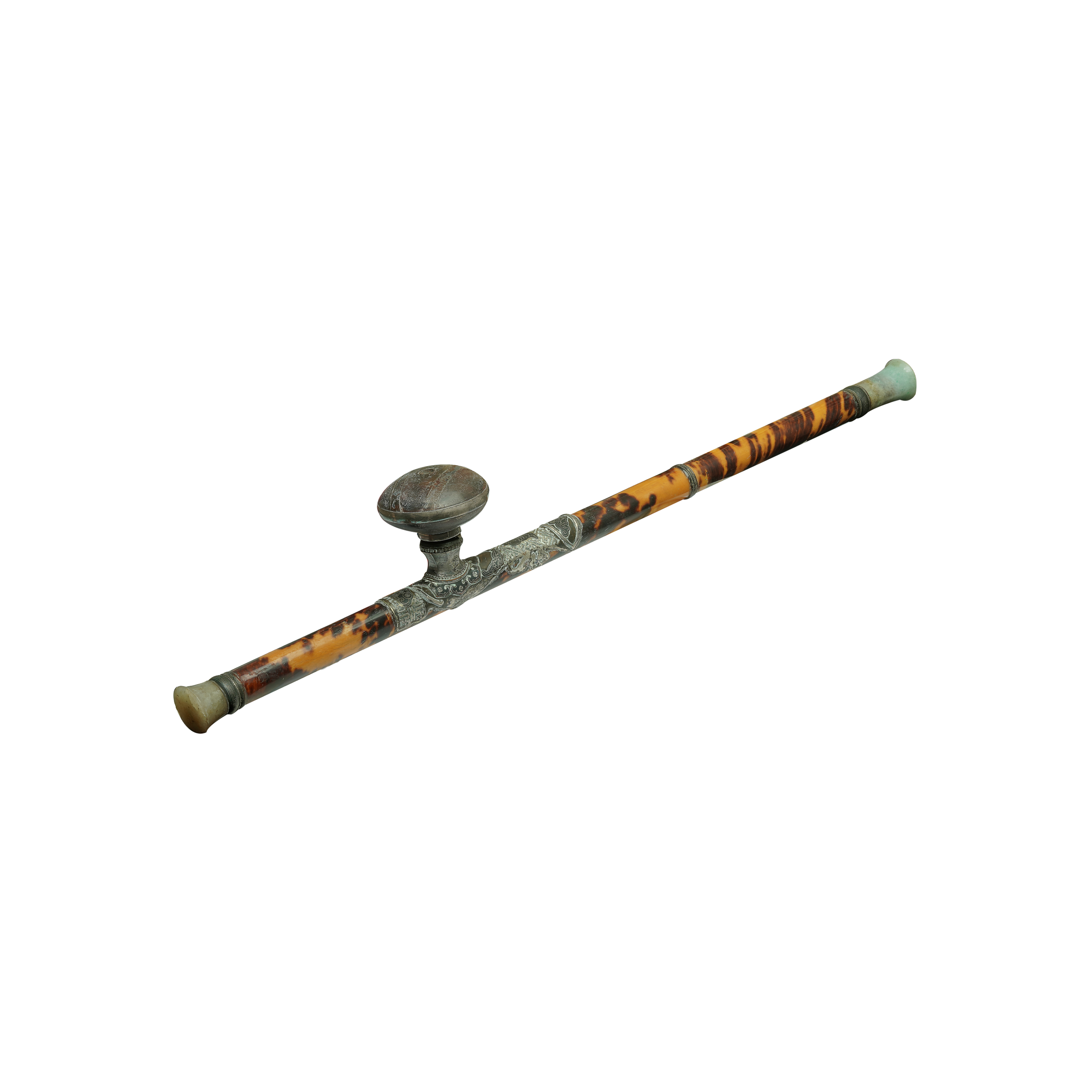
Origin: China
Date: Late 19th–early 20th century
Materials: Tortoiseshell, metal alloy, lacquer
Dimensions: Appro 67 × 10 cm
Description:
Opium pipe showcasing a stem crafted from richly patterned tortoiseshell, exhibiting warm hues of amber and deep brown in its naturally mottled surface. At the center, a domed metal bowl cover rises on a narrow collar and connects to an ornate metal saddle, intricately engraved with scrolling motifs and stylized forms typical of the Qing dynasty aesthetic.
The vivid tortoiseshell, prized for its beauty and rarity, complements the finely detailed metalwork. The integration of precious organic and metallic materials suggests this piece was created for a refined clientele, likely within elite social circles.
Cultural Context:
During the height of opium use in late imperial China, smoking implements were often bespoke, combining function with visual elegance. Tortoiseshell, a symbol of longevity and high status, was favored by the wealthy for personal objects. The pipe’s refined craftsmanship and costly materials reflect the ritualized and aristocratic nature of opium consumption during this period.
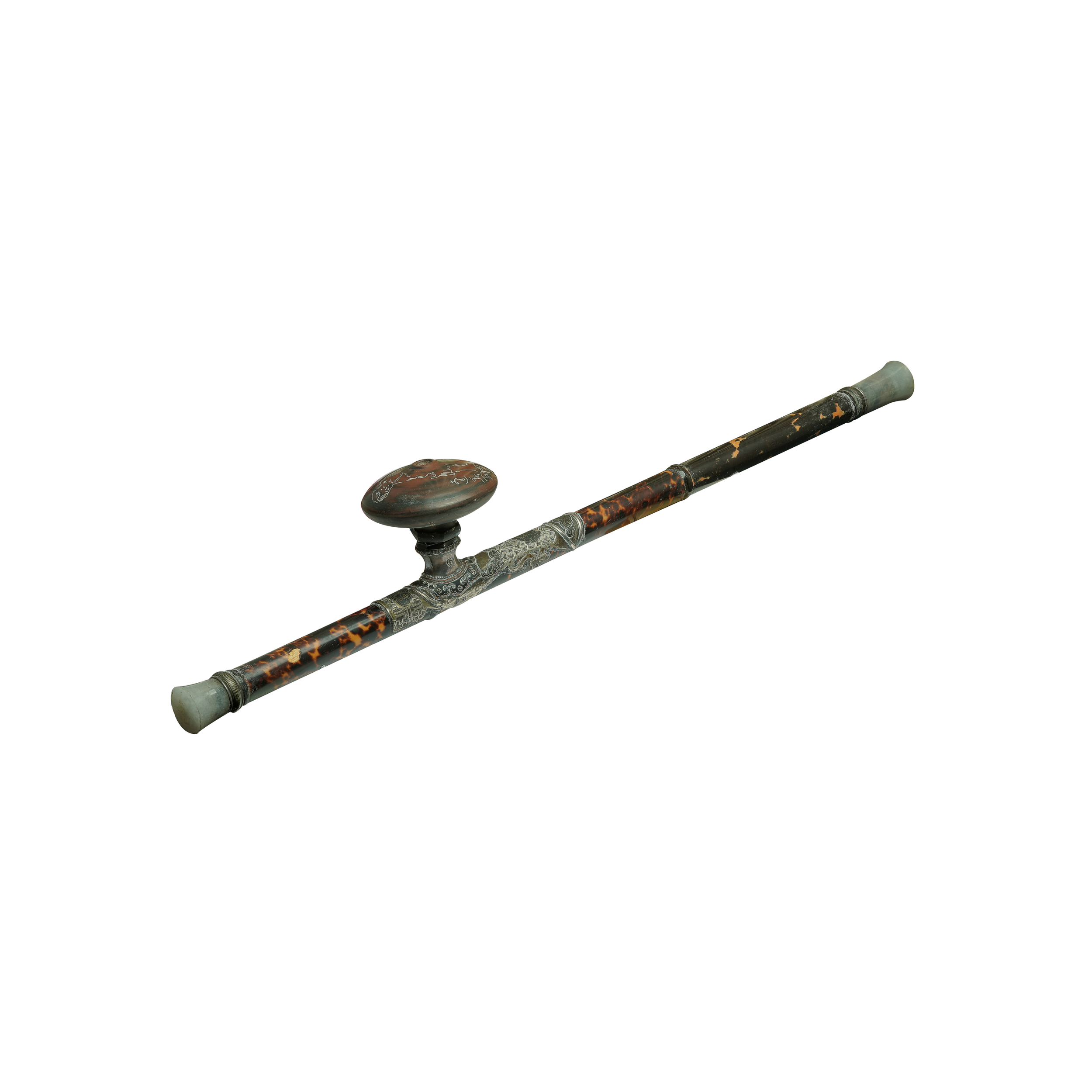
Origin: China
Date: Late 19th–early 20th century
Materials: Tortoiseshell, metal alloy, lacquer
Dimensions: Appro 65 × 9 cm
Description:
Chinese opium pipe featuring a stem crafted from mottled tortoiseshell, its natural amber and dark brown patterns enhanced by age and use. At the center, a domed metal bowl cover, possibly copper alloy, rests on a short neck and connects to an engraved metal saddle adorned with intricate scrolling motifs. The metalwork shows subtle signs of wear, attesting to its history..
Cultural Context:
In late Qing dynasty China, opium smoking was not merely a habit but a cultivated ritual among the upper classes. The use of tortoiseshell signified wealth and refinement, while engraved metal fittings reflected the artistry expected of personal objects in elite society. Pipes of this quality were often treasured possessions, sometimes gifted or passed down through generations.
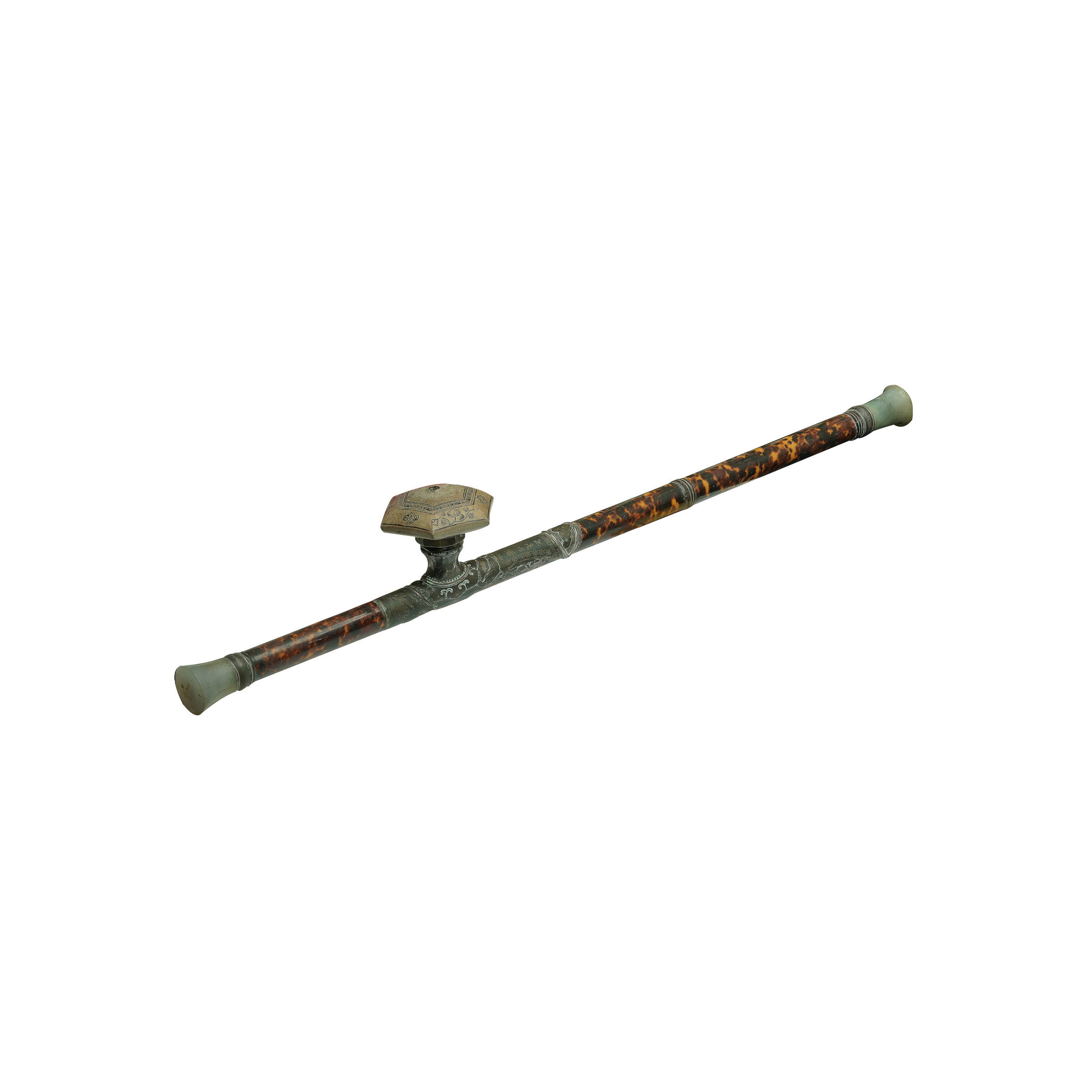
Origin: China
Date: Late 19th–early 20th century
Materials: Tortoiseshell, metal alloy, lacquer
Dimensions: Appro 62 × 9 cm
Description:
Chinese opium pipe showing a long, polished stem crafted from mottled tortoiseshell, prized for its warm amber and deep brown tones. At its center rises a hexagonal metal bowl cover, finely engraved with decorative patterns and mounted on a short, ridged neck that connects to an elaborately worked metal saddle. The engraved designs on the saddle include scrolling motifs and stylized flourishes, reflecting the fine craftsmanship typical of luxury opium-smoking implements.
Cultural Context:
During the late Qing dynasty, opium smoking was a ritualized social practice among China’s wealthy elite. High-quality pipes such as this were often custom-made, incorporating precious and exotic materials that signified the owner’s status and taste. Tortoiseshell, in particular, was valued not only for its beauty but also for the skill required to work it into such long, slender forms without fracture.
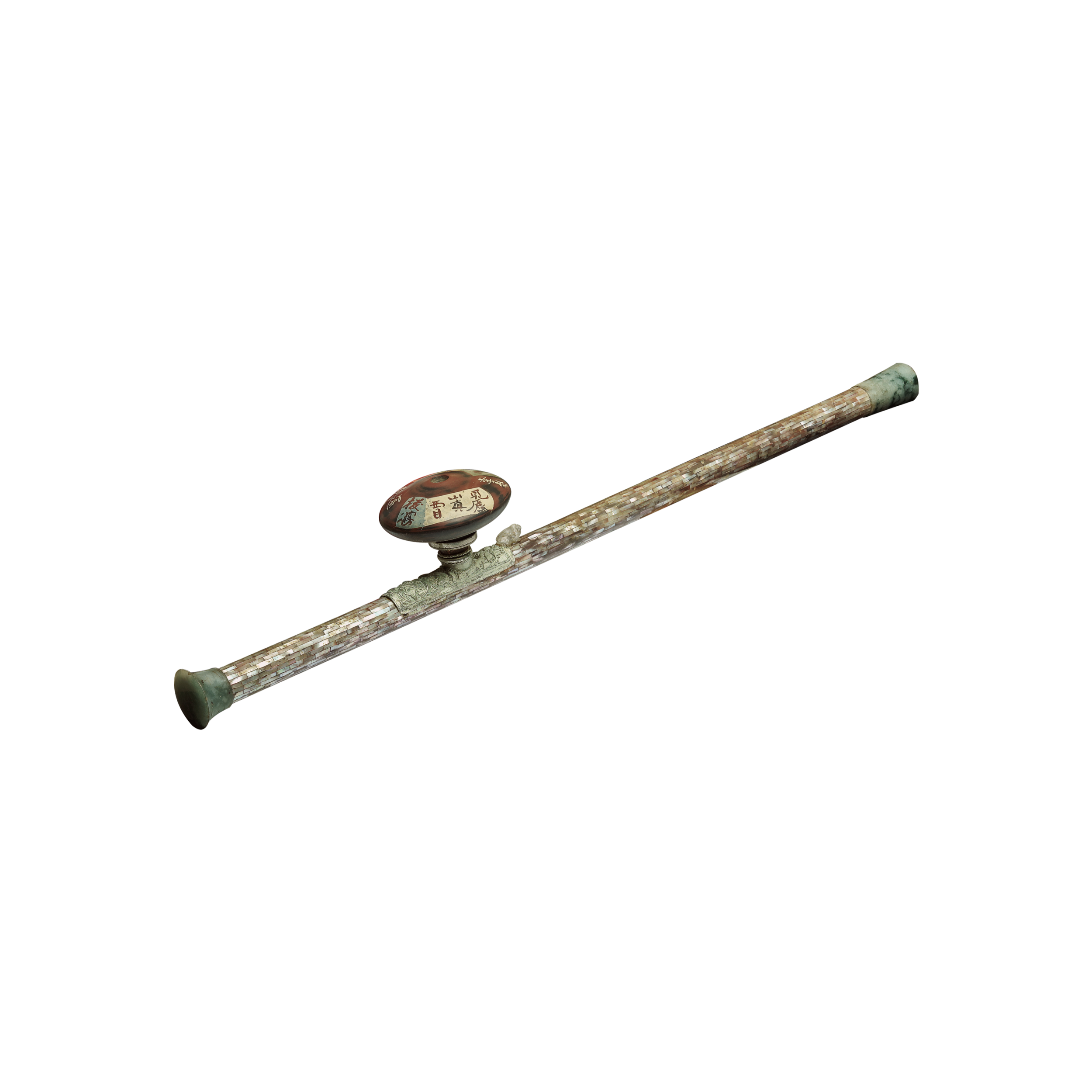
Origin: China
Date: Late 19th–early 20th century
Materials: Hardwood, mother-of-pearl, metal alloy
Dimensions: Appro 66 × 10 cm
Description:
Chinese opium pipe distinguished by its hardwood stem, inlaid with iridescent mother-of-pearl in geometric and floral patterns. The inlay catches the light, producing a visual richness that reflects the high status of its original owner.
Cultural Context:
In late Qing dynasty China, opium smoking was as much an aesthetic ritual as it was an indulgence. Pipes of this caliber, combining precious inlay and hand-painted porcelain, were not merely functional objects but expressions of refined taste, wealth, and cultural literacy. The inscriptions would often carry moral, literary, or auspicious meanings, enhancing the contemplative experience of smoking.
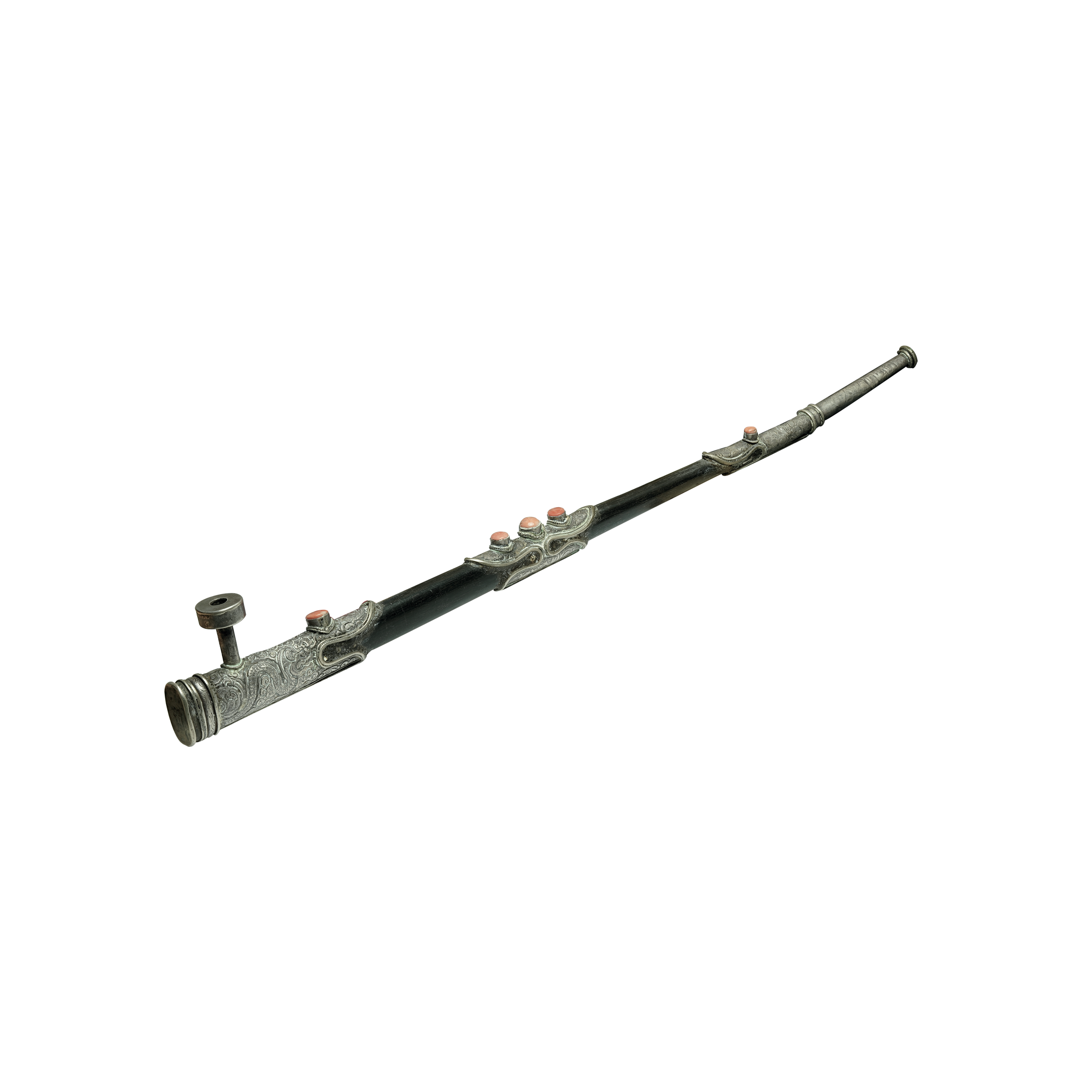
Origin: Tibet
Date: Late 19th–early 20th century
Materials: Silver, coral, wood, metal alloy
Dimensions: Appro 58 × 8 cm
Description:
Tibetan opium pipe featuring a long, dark wooden stem fitted with elaborate silver mounts. The mounts are engraved with scrolling floral patterns and set with domed coral cabochons in symmetrical arrangements along the length of the pipe. The bowl, positioned near one end, is made of metal and designed to hold the opium for smoking. Both ends of the stem are capped with decorated metal fittings, ensuring durability and adding visual harmony to the design.
Cultural Context:
Tibetan opium pipes of this type were luxury items, often crafted for affluent users. The use of silver and coral not only added beauty but also reflected Tibetan decorative traditions, where coral was prized as a protective and auspicious material. These pipes served as both functional smoking instruments and symbols of wealth and status.
Origin: China
Date: Late 19th–early 20th century
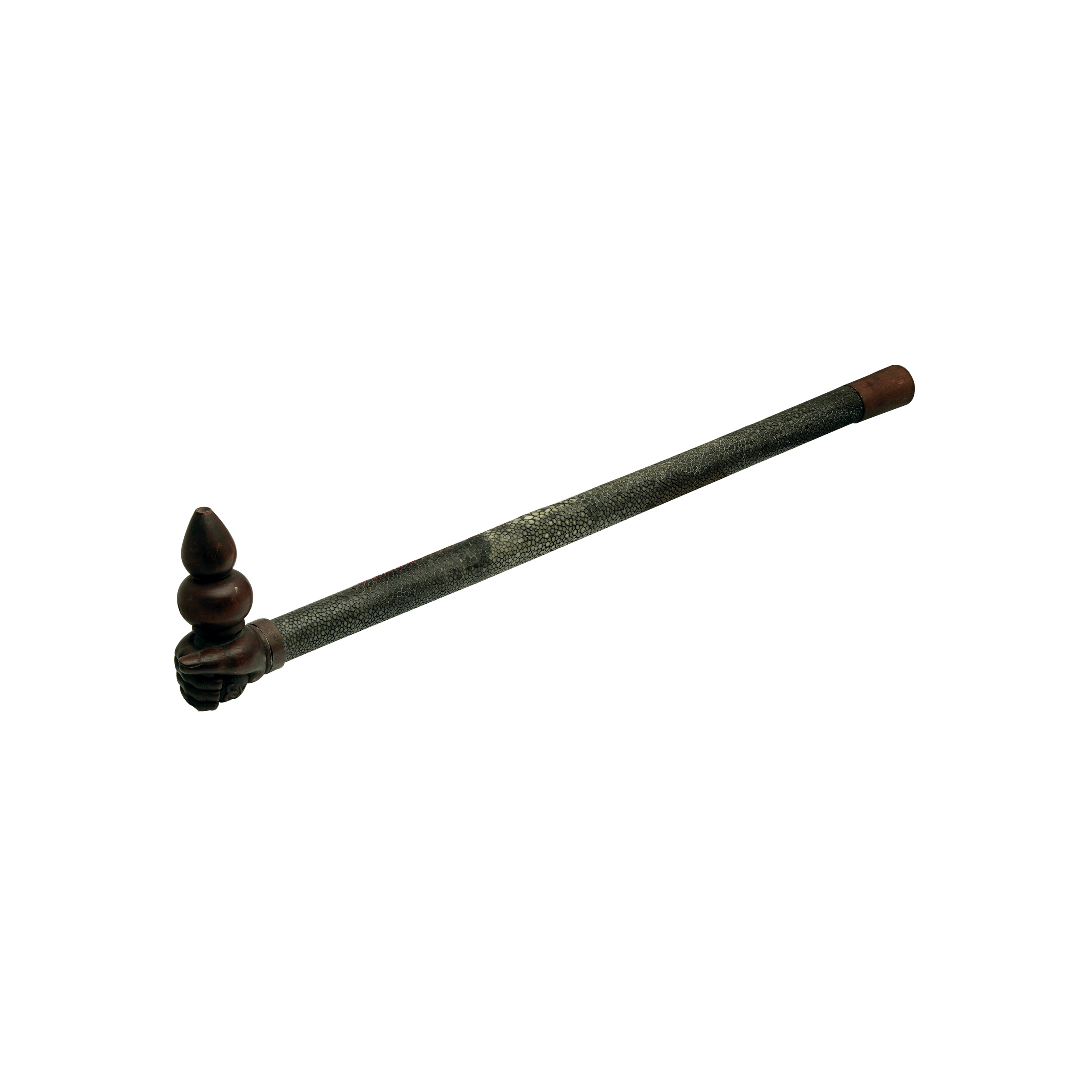
Materials: Hardwood, ray skin (shagreen), metal alloy
Dimensions: Appro 52 × 10 cm
Description:
Chinese opium pipe featuring a long stem clad in ray skin, giving it a textured, pebbled surface prized for its durability and appeal. The mouthpiece and bowl mount are crafted from dark hardwood, with the bowl shaped into a tiered, finial-like form. The bowl base is carved in the shape of a hand.
Cultural Context:
Ray skin was a favored decorative material in Qing dynasty luxury goods, valued for both its exotic appearance and longevity. The carved hand motif may have represented protection or a blessing, integrating artistry into the opium-smoking ritual. Such pipes were not merely utilitarian but also served as personal statements of taste and status.
Origin: China
Date: Late 19th–early 20th century
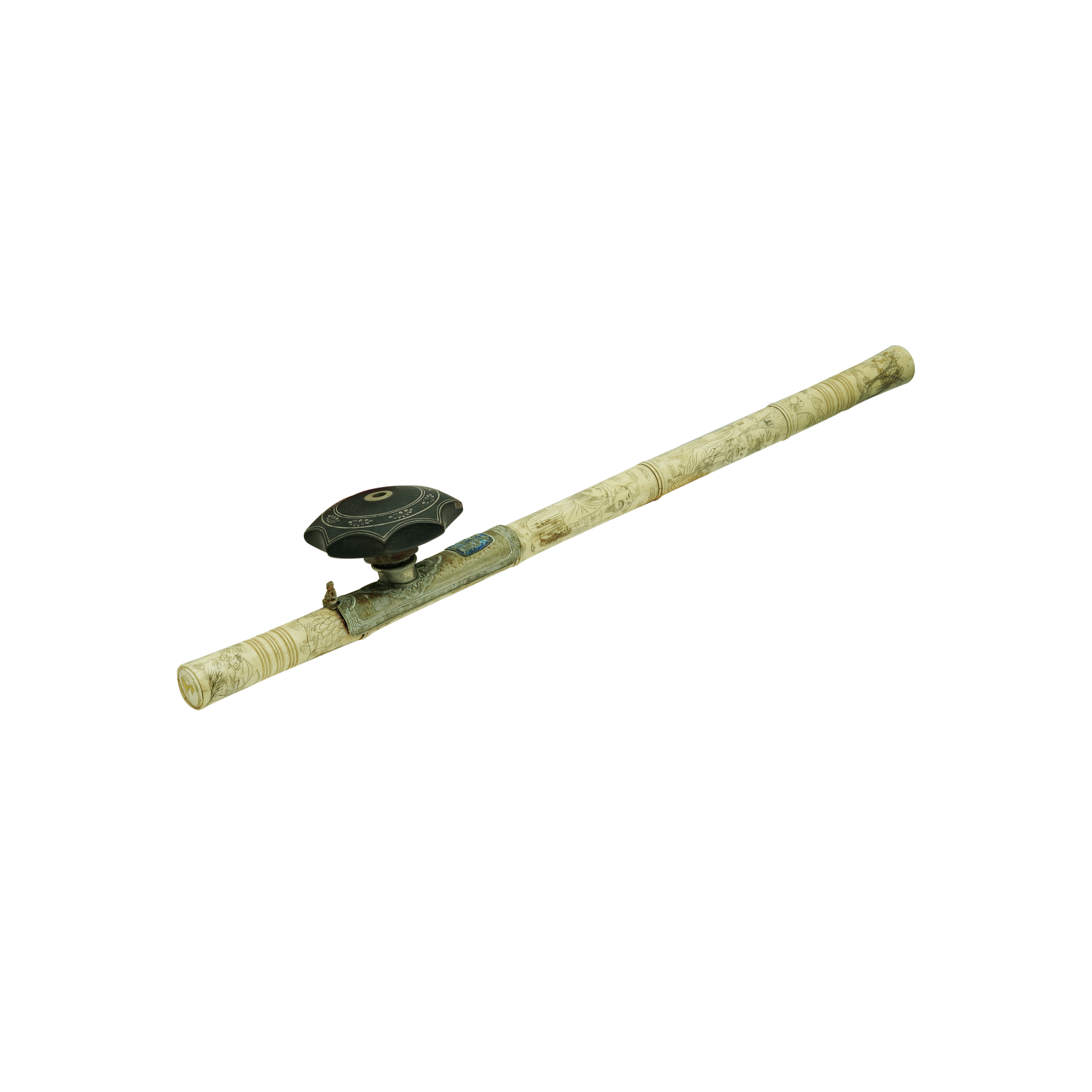
Materials: Bone, metal alloy, lacquer
Dimensions: Appro 51 × 10 cm
Description:
Chinese opium pipe showcasing a straight stem crafted from carved bone, its surface decorated with incised motifs that may include floral patterns and symbolic imagery. The stem is fitted with a central metal saddle, engraved with traditional scrollwork, which supports a black lacquered ceramic bowl cover decorated with white linework. The pipe’s light bone hue contrasts with the dark bowl, highlighting the interplay of texture and color.
Origin: China
Date: Late 19th–early 20th century
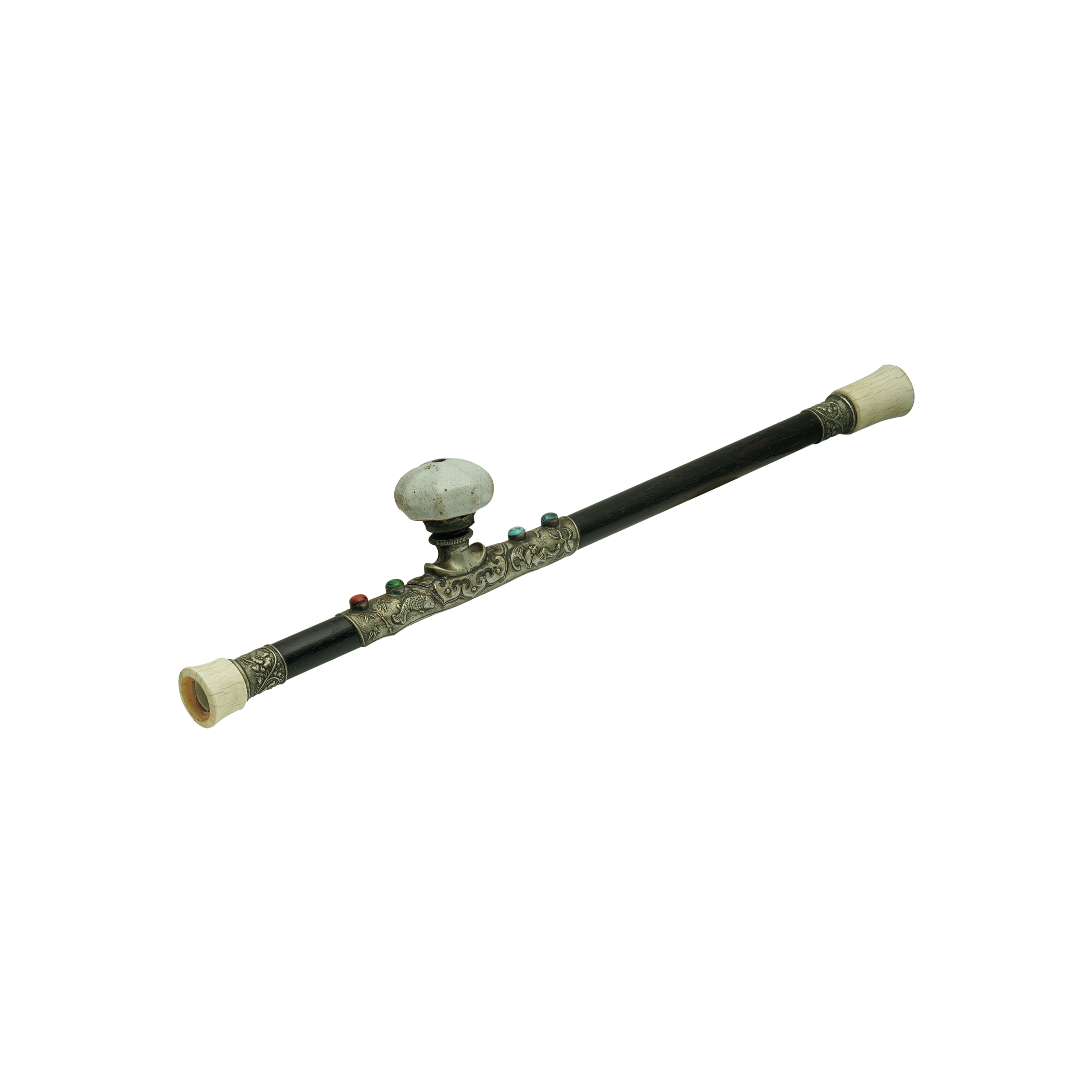
Materials: Blackwood, metal alloy, ivory or bone, semi-precious stones
Dimensions: Appro 54 × 10 cm
Description:
Chinese opium pipe featuring a straight blackwood stem fitted with carved bone mouthpieces at both ends. The central saddle is crafted from engraved metal in a scrolling floral design, supporting a domed white ceramic bowl. Along the saddle are inset beads in red, green, and turquoise tones, providing colorful ornamentation.

Origin: Likely Southern China or Southeast Asia
Date: Late 19th–early 20th century
Materials: Hardwood, mother-of-pearl inlay, metal fittings
Dimensions: 26 × 18 cm
Description:
Opium cabinet designed for the storage and preparation of opium-smoking implements. Constructed from dark hardwood, the piece features a central arched mirror framed by delicate floral and avian mother-of-pearl inlay. The decorative inlay extends across all visible surfaces, with motifs of birds in flight, flowering branches, and geometric symbols.
The cabinet comprises multiple small drawers—ideal for holding pipes, burners, scales, and other paraphernalia—alongside open compartments for larger items. The metal studs along the frame not only add decorative appeal but also reinforce the structure. The mirror would have aided in preparing opium pellets and reflecting light in dim interiors.
Cultural Context:
In the late 19th and early 20th centuries, opium cabinets like this were common in wealthier households and opium dens across China and Southeast Asia. They combined functionality with artistry, reflecting the social status of their owners. Mother-of-pearl inlay, labor-intensive and prized for its iridescence, was often used to elevate such utilitarian objects into works of decorative art.