
OPIUM BURNERS
This page presents a curated selection of opium pipe burners by Eclectic Collectors, showcasing diverse materials, forms, and decorative styles from various historical periods. Each piece reflects the craftsmanship and cultural context of opium smoking traditions
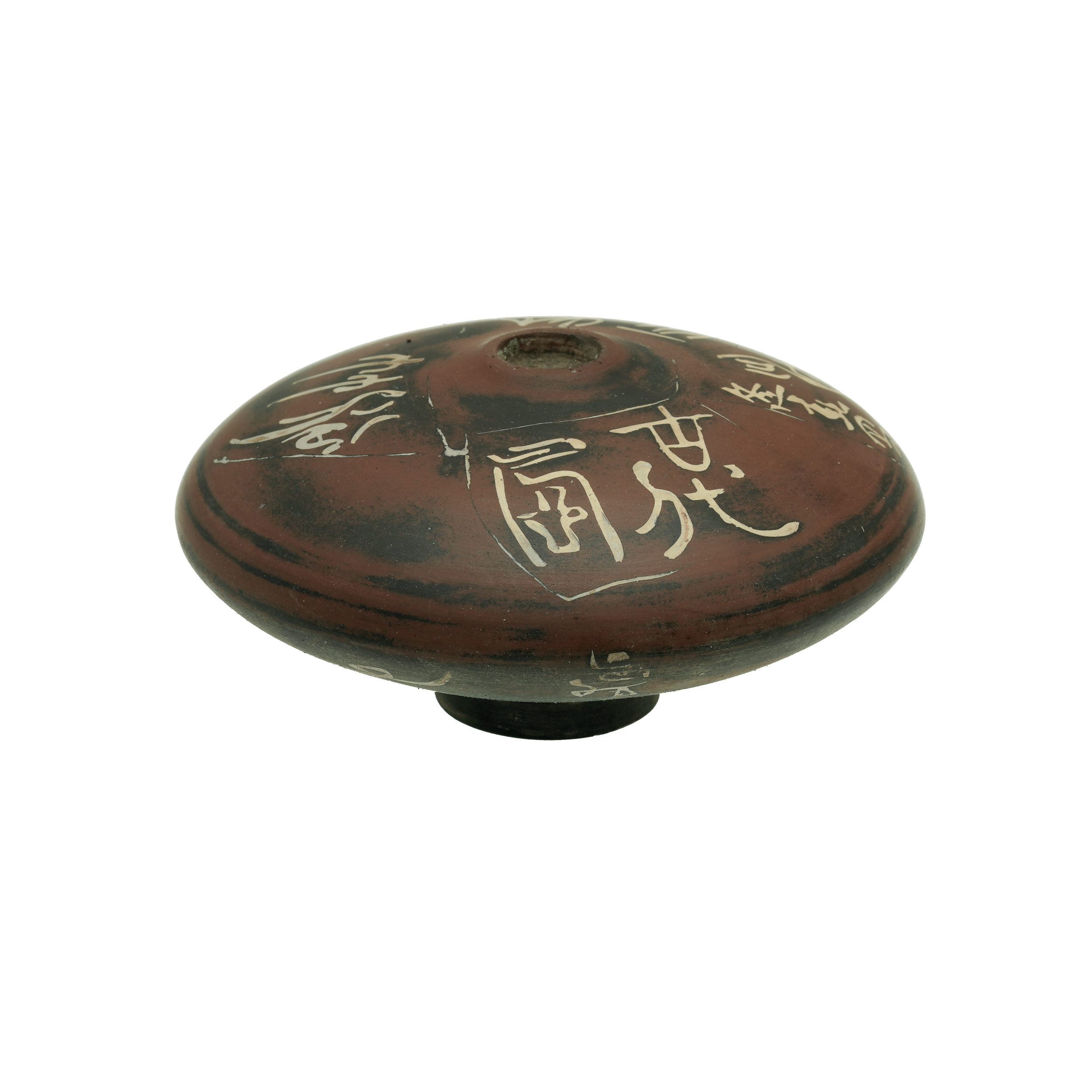
Opium Pipe Bowl – Ceramic
Dimensions: Appro 4 × 9 cm
Ceramic opium pipe bowl with a flattened, rounded form and central aperture. The surface is finished in a reddish-brown glaze and inscribed with Chinese characters in contrasting white slip. Likely late 19th to early 20th century, used for heating opium during traditional smoking rituals.
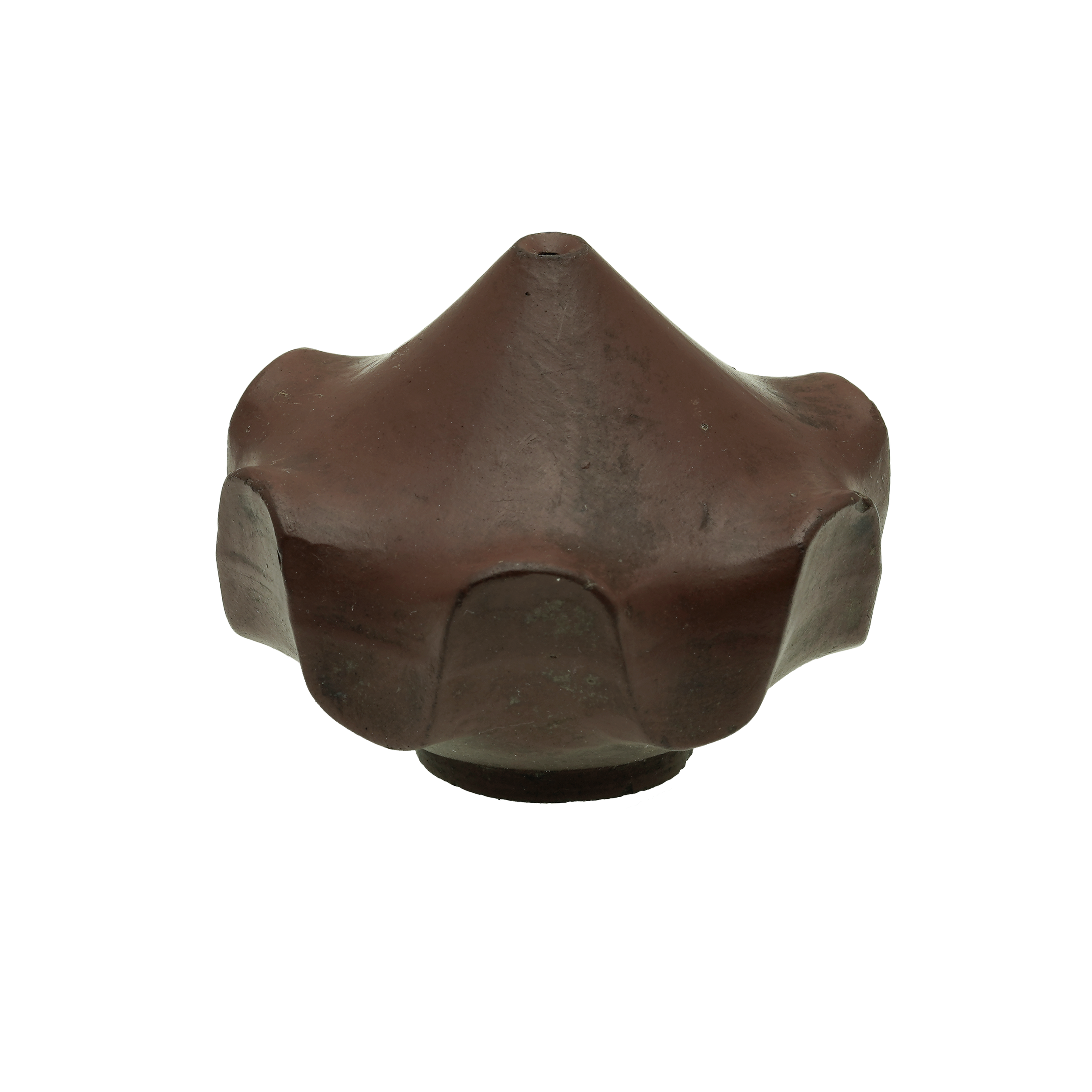
Opium Pipe Bowl – Ceramic
Dimensions: Appro 5 × 7 cm
Ceramic opium pipe bowl with a fluted, star-shaped body and a conical top featuring a central aperture. The reddish-brown glaze covers the entire surface, giving it a smooth, uniform finish. Likely late 19th to early 20th century, used for heating opium in traditional smoking practices.
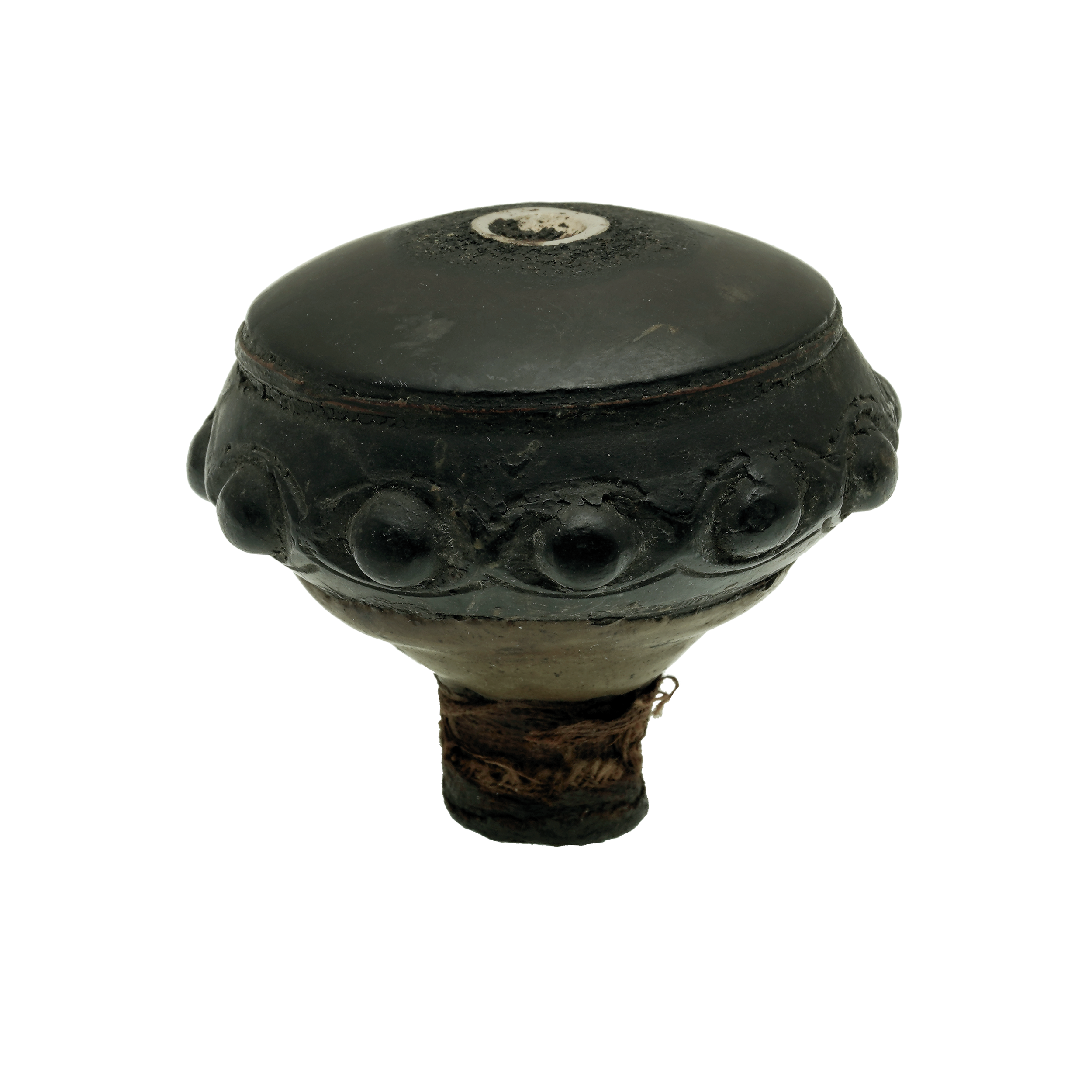
Opium Pipe Bowl – Ceramic
Dimensions: Appro 6 × 7 cm
Domed ceramic opium pipe bowl with a central aperture. The upper section is glazed in black and encircled with a raised bead-and-wave relief pattern. Likely late 19th to early 20th century, used for heating opium in a pipe.
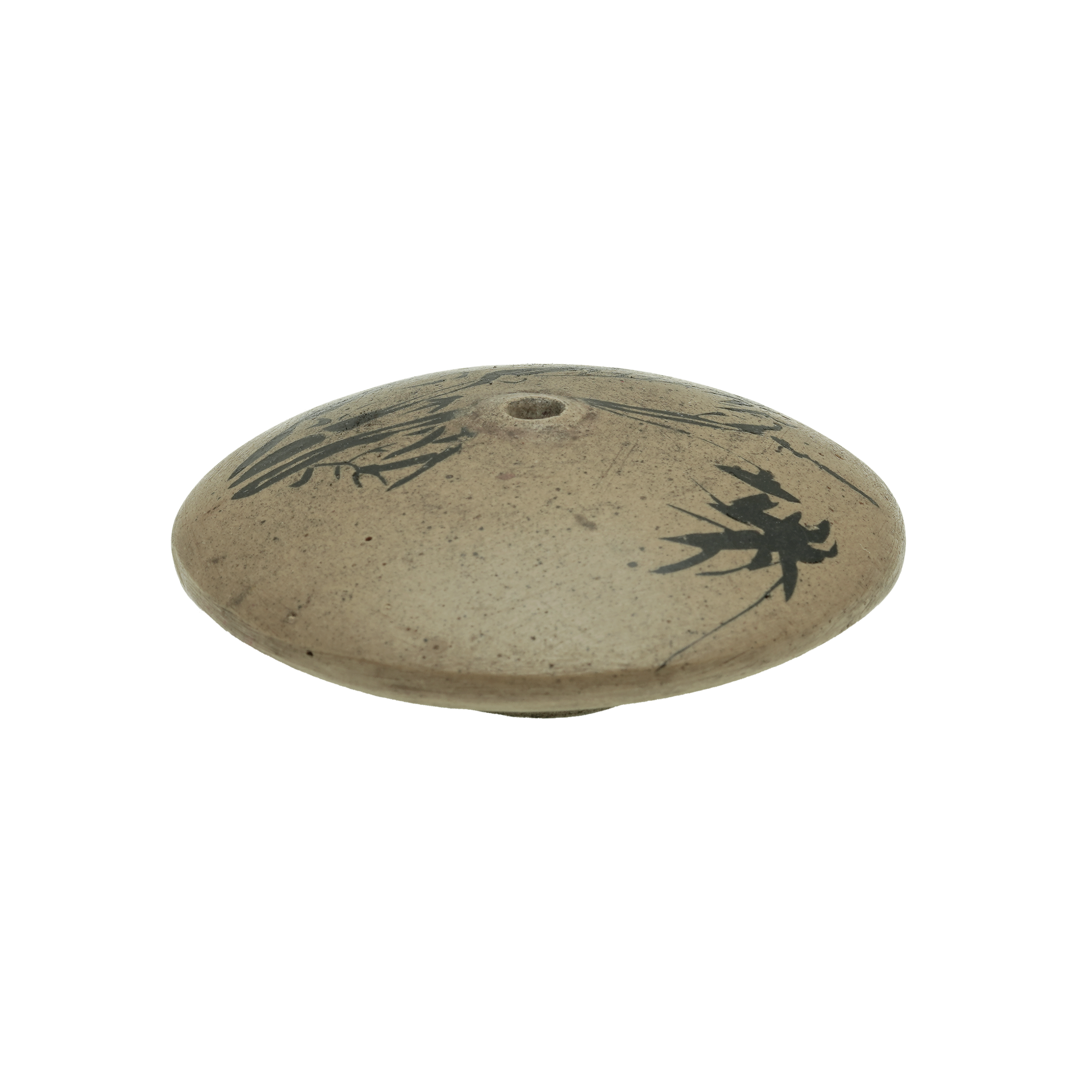
Opium Pipe Bowl – Ceramic
Dimensions: Appro 3 × 8 cm
Flat, disc-shaped ceramic opium pipe bowl with a small central aperture. The surface is decorated with hand-painted black bamboo motifs. Used for heating opium in a pipe. Likely late 19th to early 20th century.
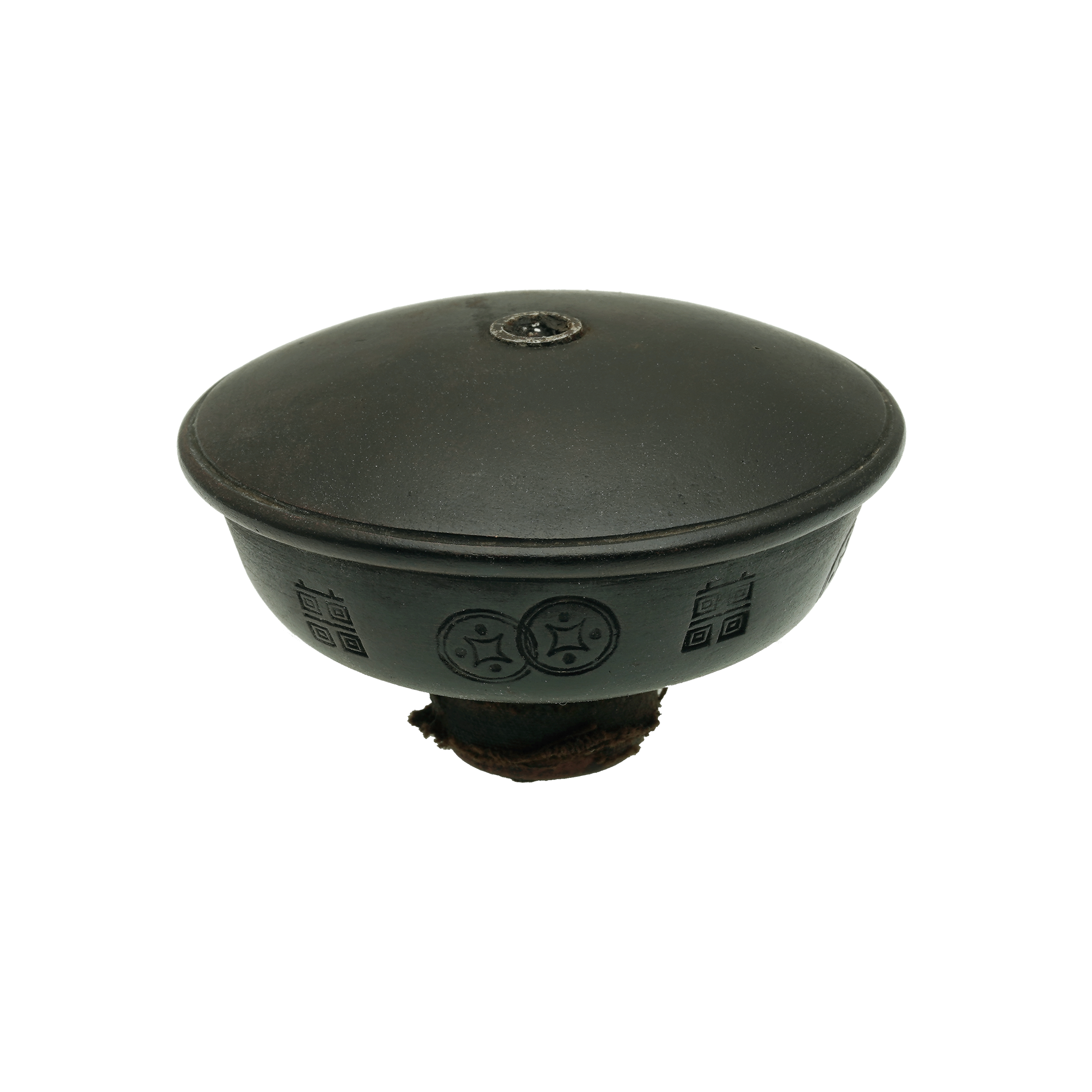
Opium Pipe Bowl – Ceramic
Dimensions: Appro 4 × 7 cm
Black-glazed ceramic opium pipe bowl with a shallow domed form. Incised circular and geometric motifs decorate the sides. The central metal-lined aperture was used for heating opium. Likely late 19th to early 20th century.
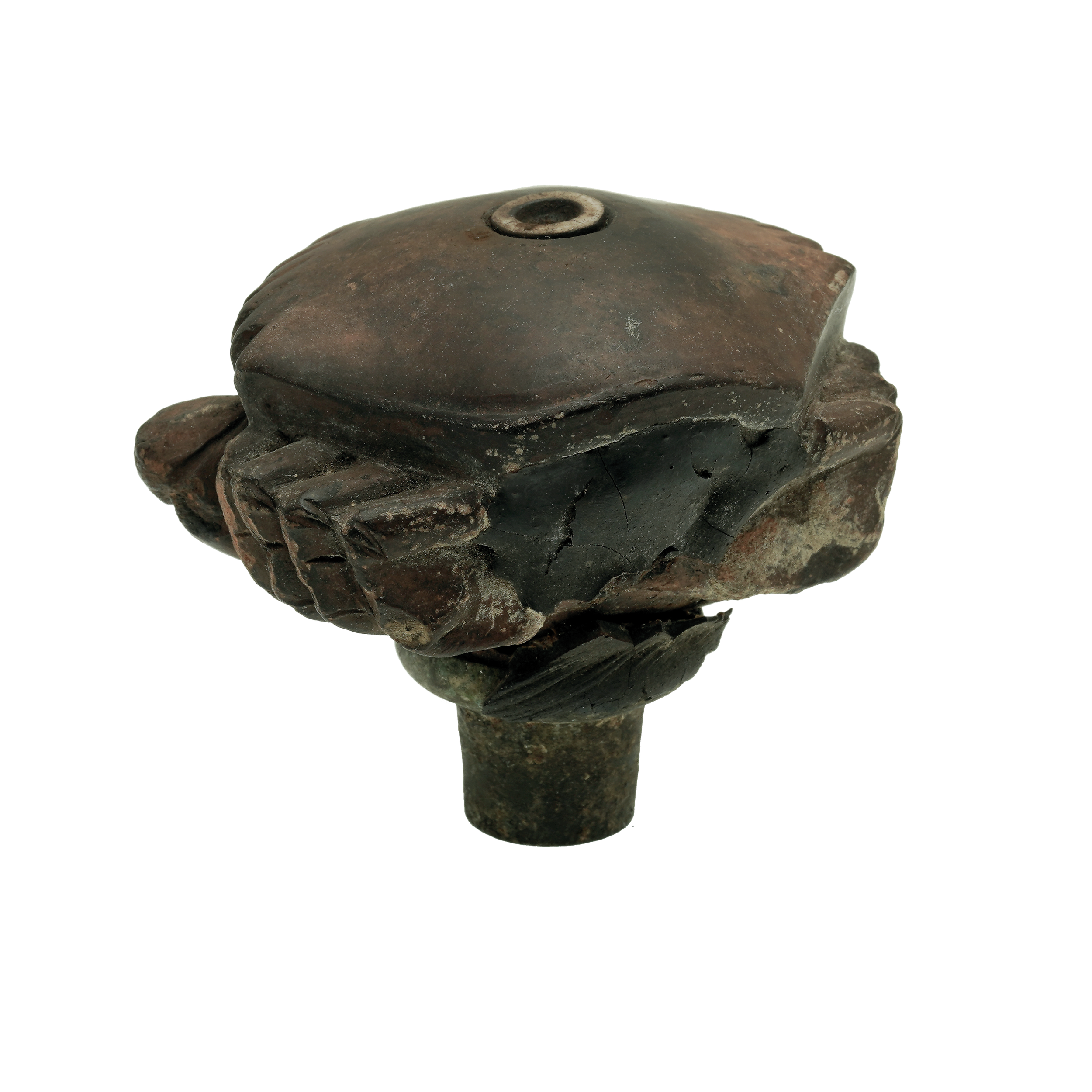
Opium Pipe Bowl – Ceramic (Crab Motif)
Dimensions: Appro 7 × 8 cm
Ceramic opium pipe bowl modeled in the form of a crab, with a central metal-lined perforation for heating the opium. The sculptural detailing combines functional design with symbolic or decorative elements. Likely late 19th to early 20th century..
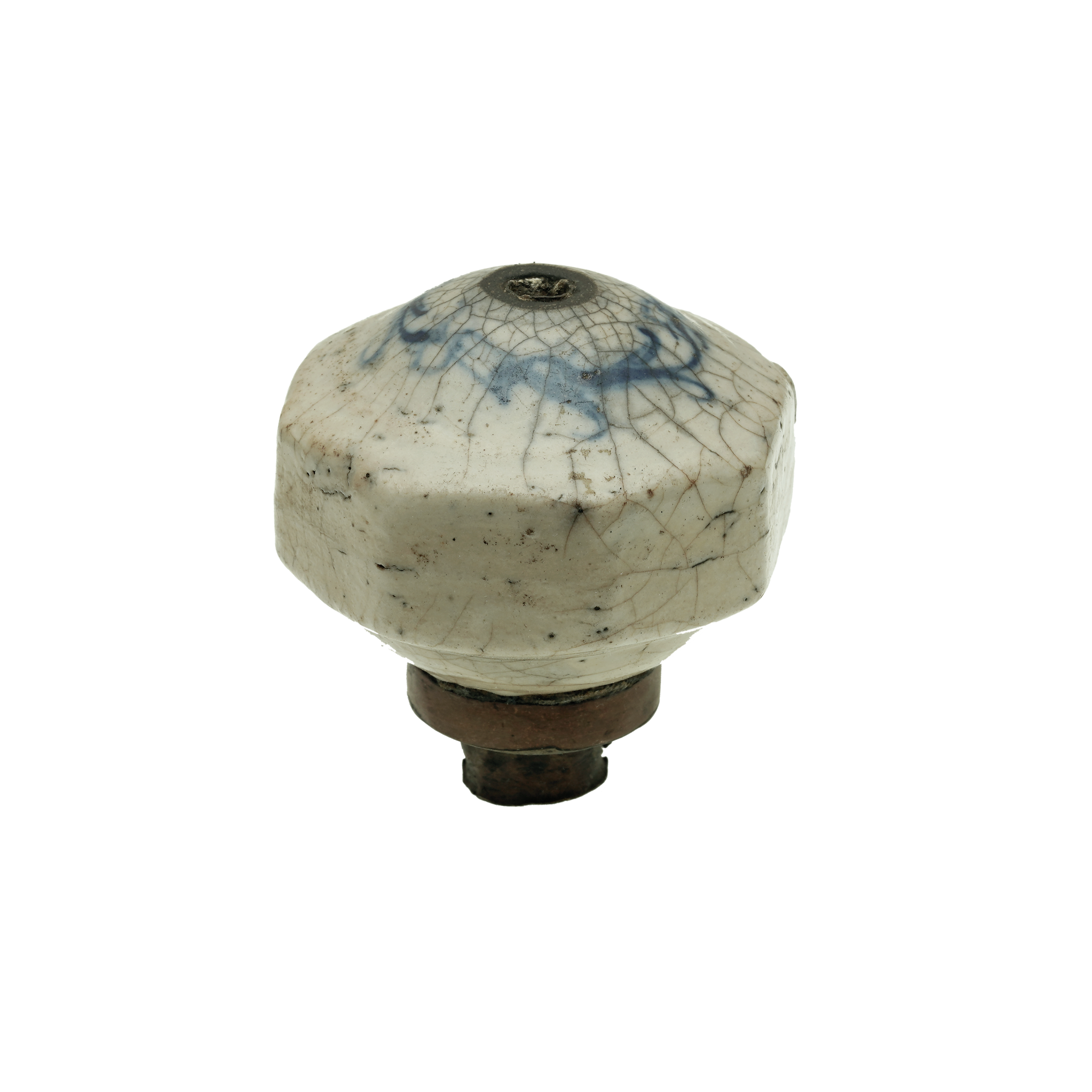
Opium Pipe Bowl – Porcelain
Dimensions: Appro 6 × 6 cm
Small hexagonal ceramic opium pipe bowl with a crackled glaze and faint blue decoration near the top. The burner has a central perforation and is mounted on a metal fitting for attachment to a pipe. Likely late 19th to early 20th century.
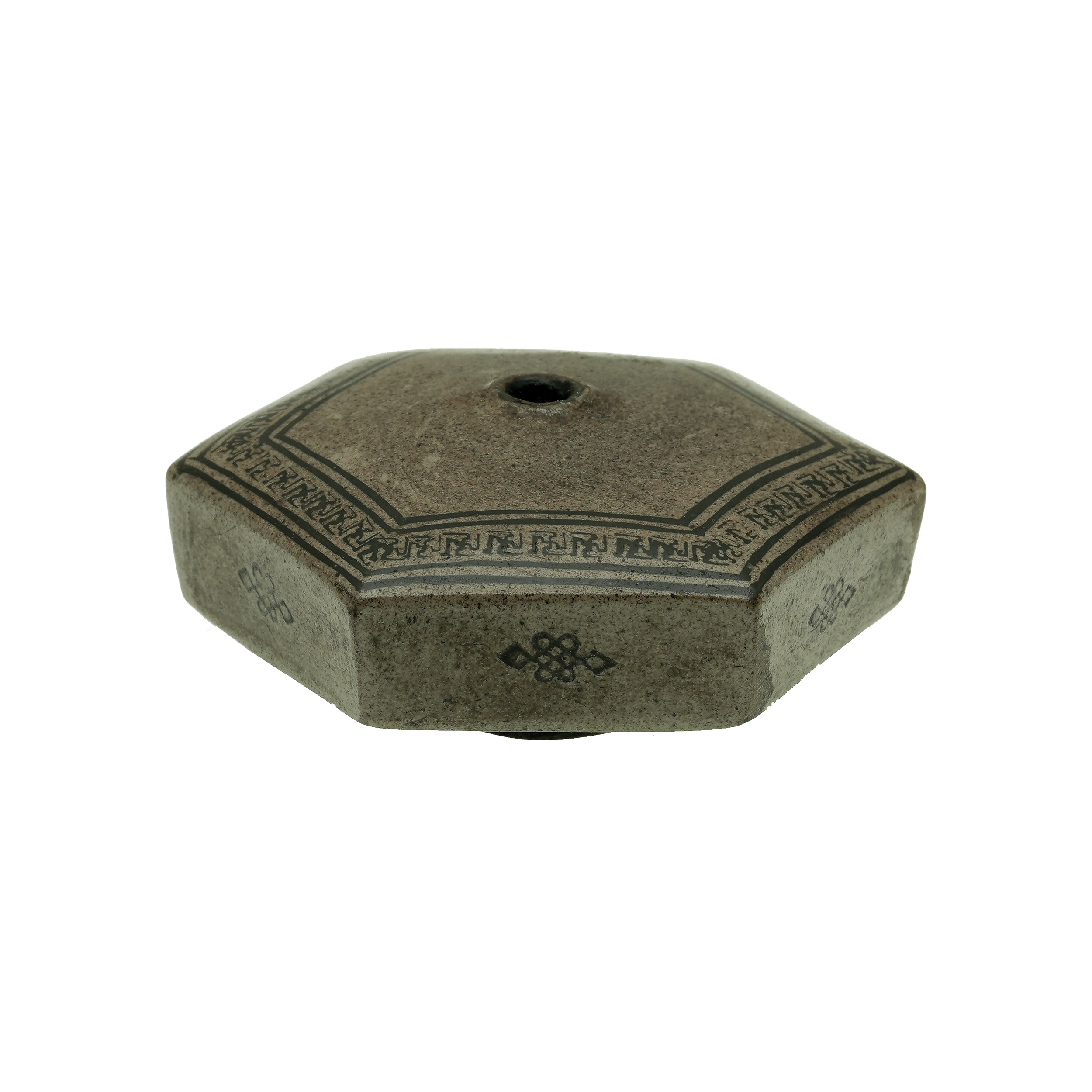
Opium Pipe Bowl – Ceramic
Dimensions: Appro 3 × 6 cm
Hexagonal ceramic opium pipe bowl decorated with black geometric and floral motifs, including a meander border around the top. The piece has a central perforation and a metal fitting underneath for attachment to a pipe. Likely late 19th to early 20th century.
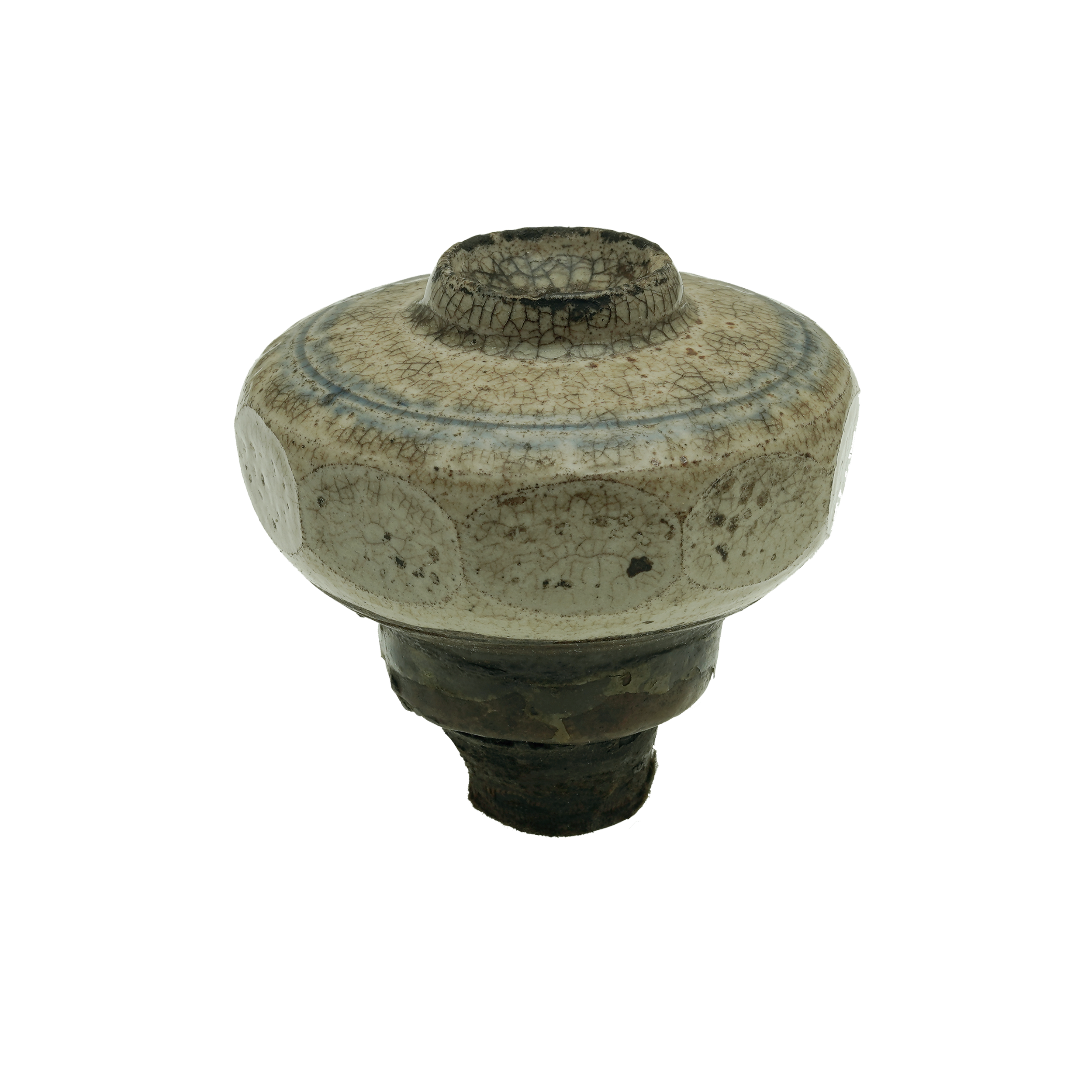
Opium Pipe Bowl – Ceramic
Dimensions: Appro 6 × 6 cm
Opium pipe bowl with a crackle-glazed ceramic body, decorated with faint circular motifs around the sides and a subtle blue band near the top. Fitted with a metal base for attachment to the pipe. Likely late 19th to early 20th century.
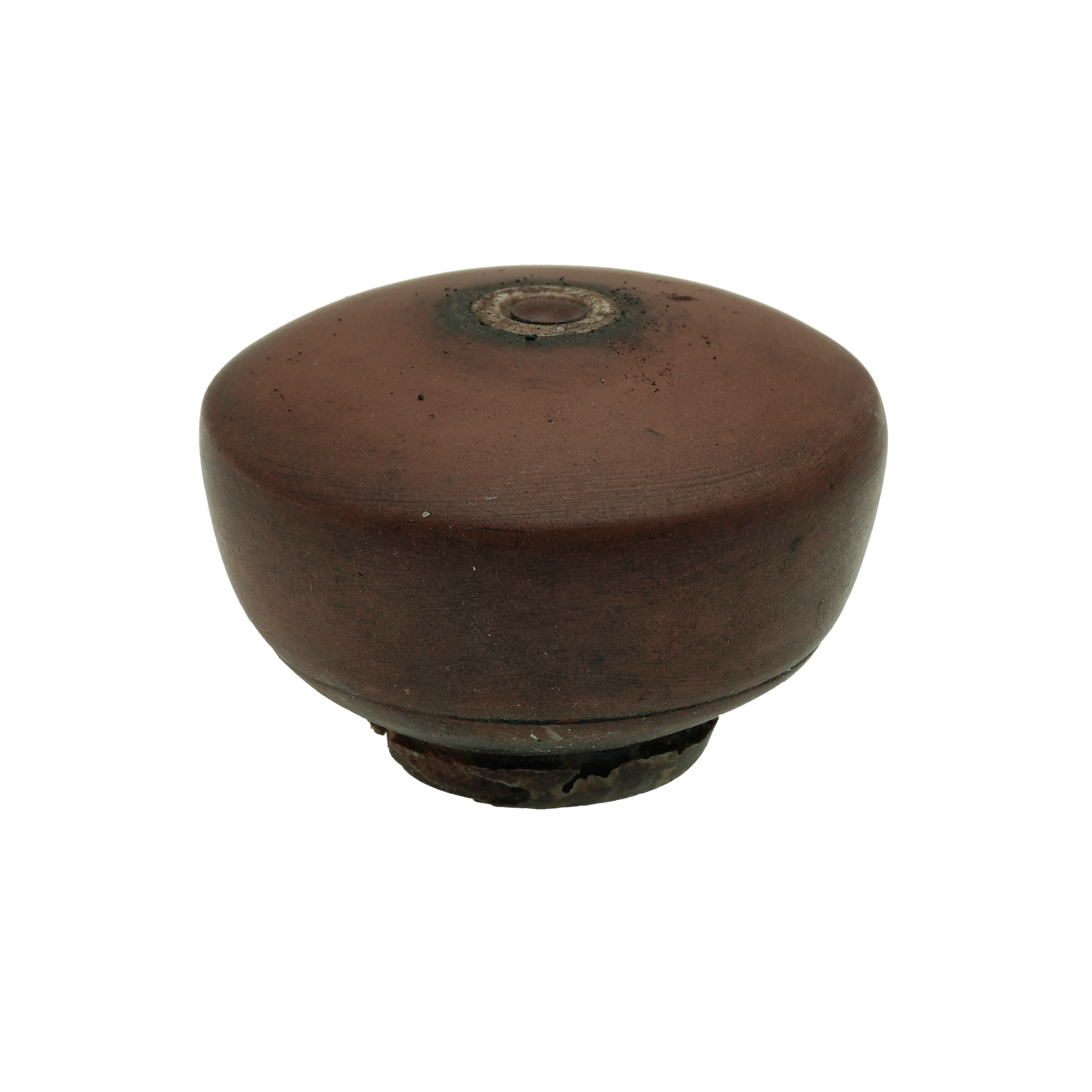
Opium Pipe Bowl – Ceramic
Dimensions: Appro 5 × 6 cm
Opium pipe bowl with a smooth, rounded ceramic body in reddish-brown finish. Minimalist design without surface decoration. Fitted with a metal base for attachment to the pipe. Likely late 19th to early 20th century.
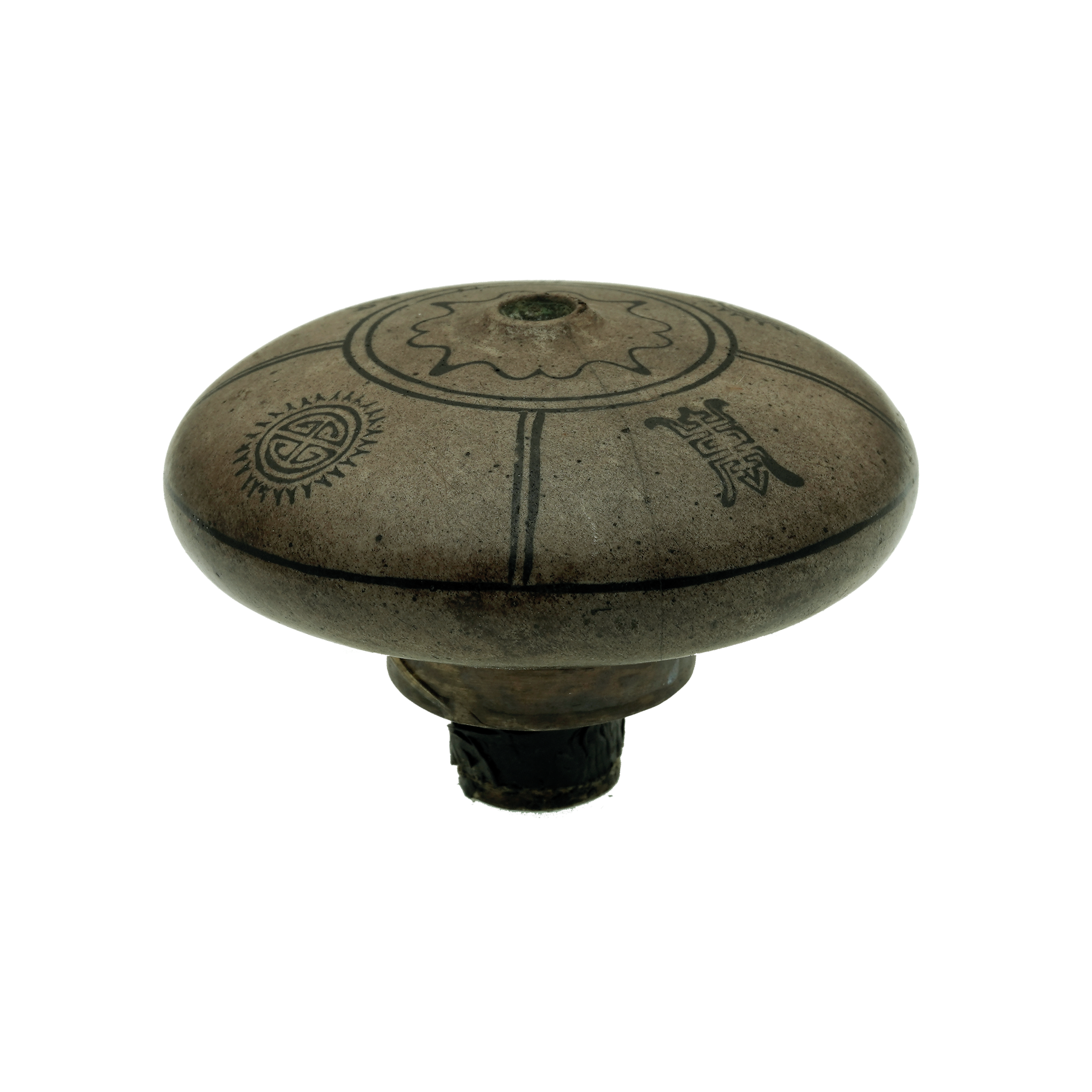
Opium Pipe Bowl – Ceramic
Dimensions: Appro 5 × 7 cm
Opium pipe bowl with a wide, flattened ceramic body decorated with black linear and symbolic motifs, including geometric and character designs. Fitted with a metal base for attachment to the pipe. Likely late 19th to early 20th century.
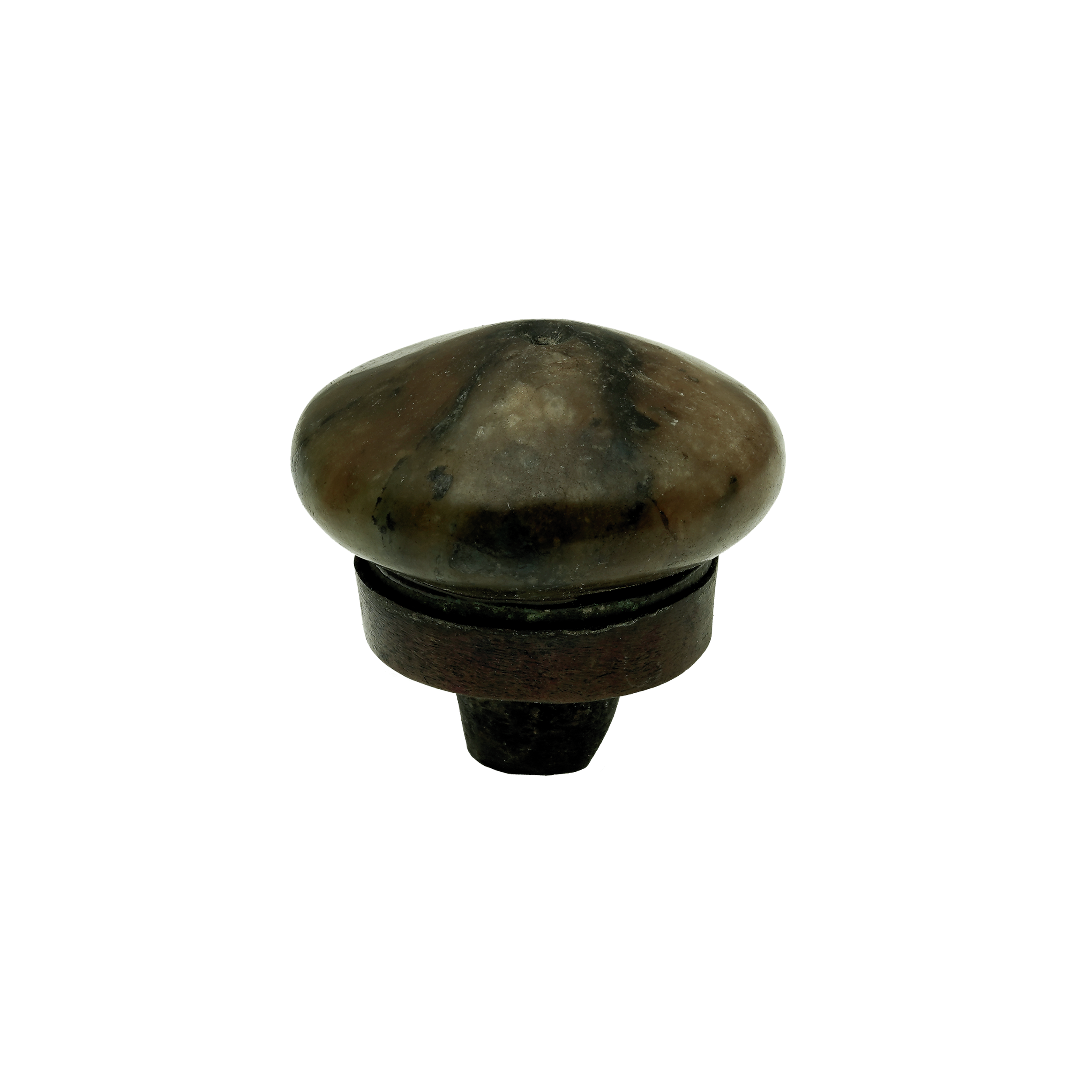
Opium Pipe Bowl – Wood
Dimensions: Appro 5 × 5 cm
Opium pipe bowl with a smooth, rounded wooden body, slightly domed at the top. Fitted with a metal base for attachment to the pipe. Likely late 19th to early 20th century.
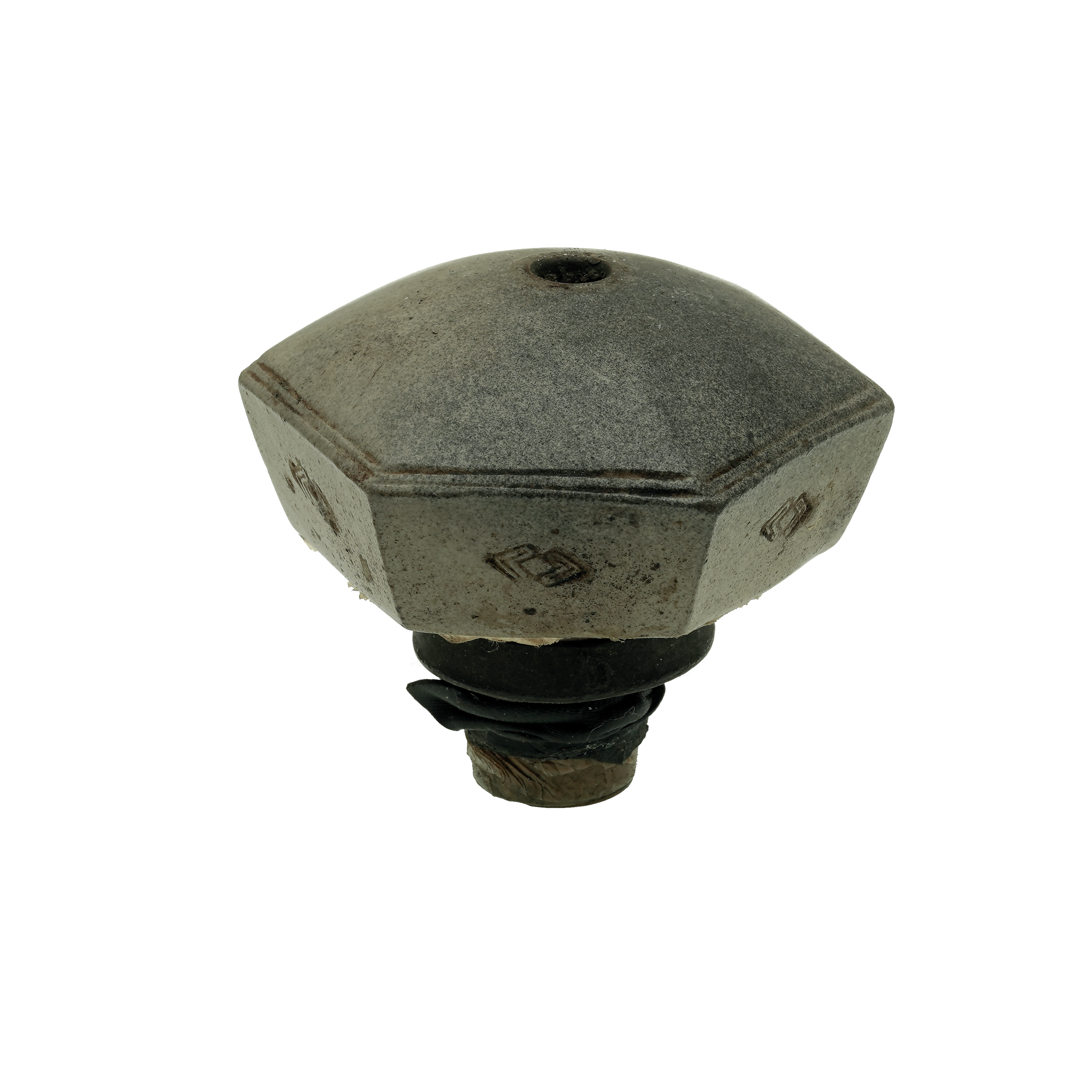
Opium Pipe Bowl – Ceramic
Dimensions: Appro 5 × 5 cm
Opium pipe bowl with a faceted, hexagonal ceramic body. Each facet is stamped with a small symbol, and the top has a central hole for heating opium. Likely late 19th to early 20th century.
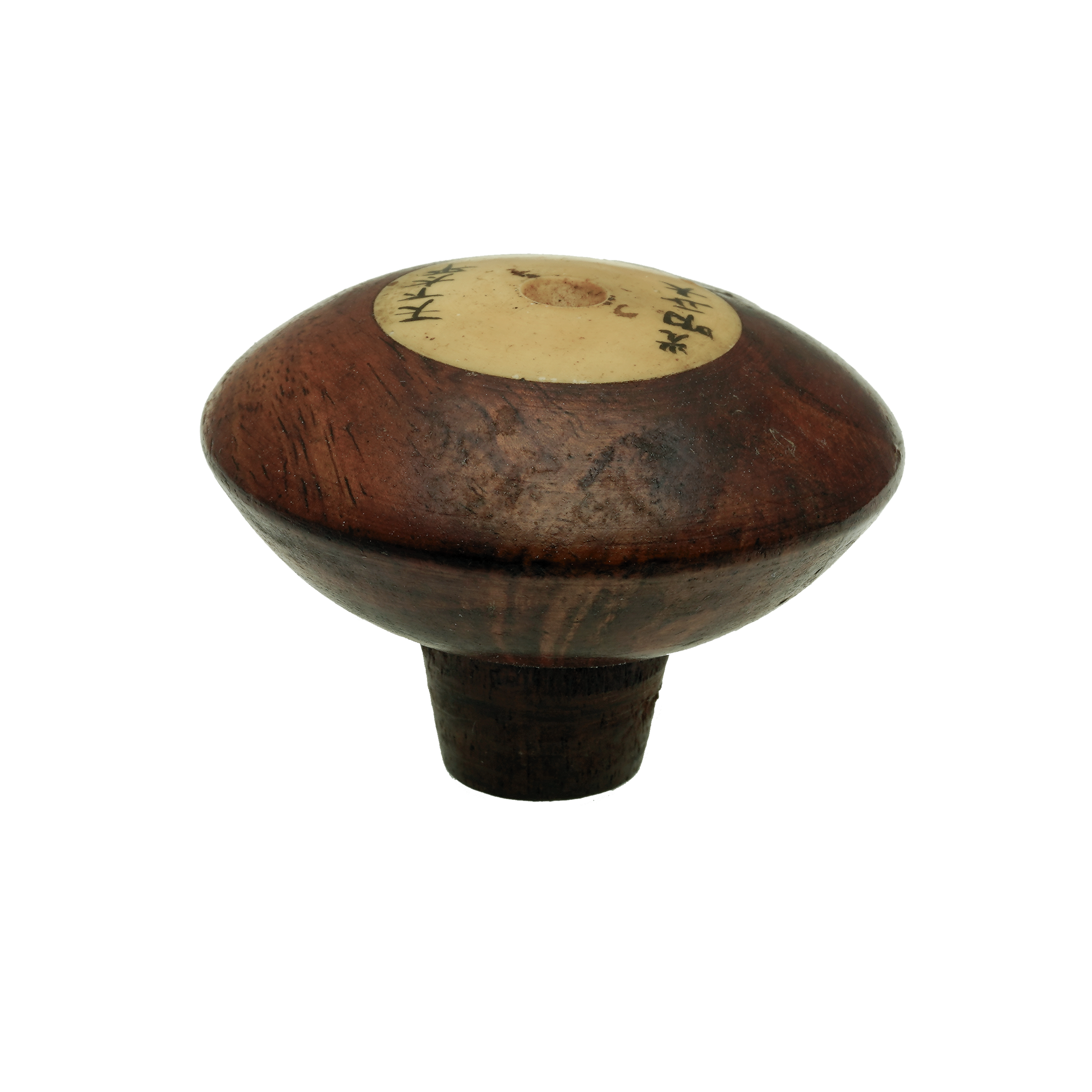
Opium Pipe Bowl – Wood and Ceramic
Dimensions: Appro 5 × 6 cm
Opium pipe bowl with a rounded wooden body and a cream-colored ceramic top. The ceramic surface features a central opening for heating opium and black painted characters around it. Likely late 19th to early 20th century.
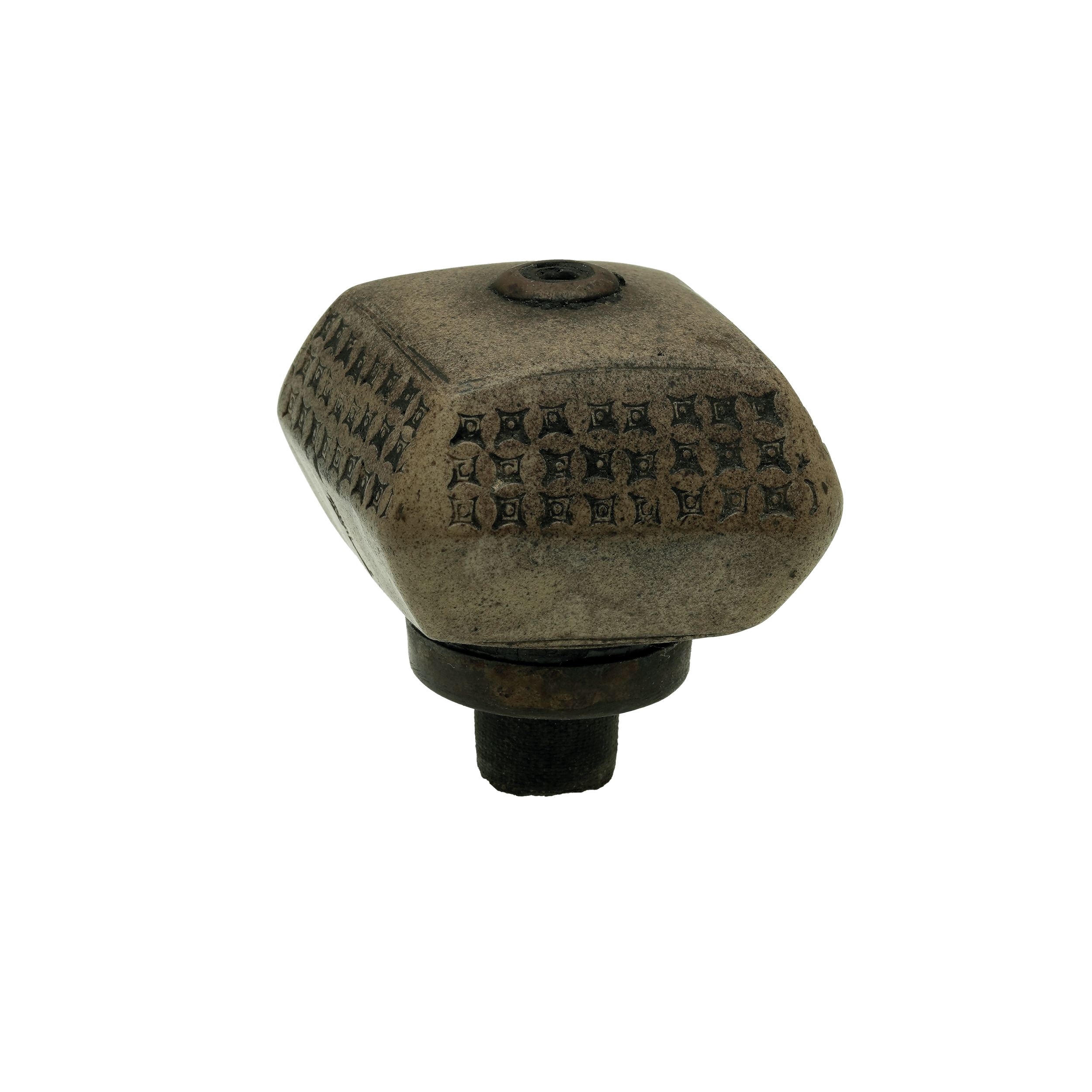
Opium Pipe Bowl – Stamped Ceramic
Dimensions: Appro 5 × 6 cm
Square ceramic opium pipe bowl with slightly rounded edges and a central opening for heating opium. Each face is decorated with a grid of stamped geometric motifs. Mounted on a metal fitting. Likely late 19th to early 20th century.
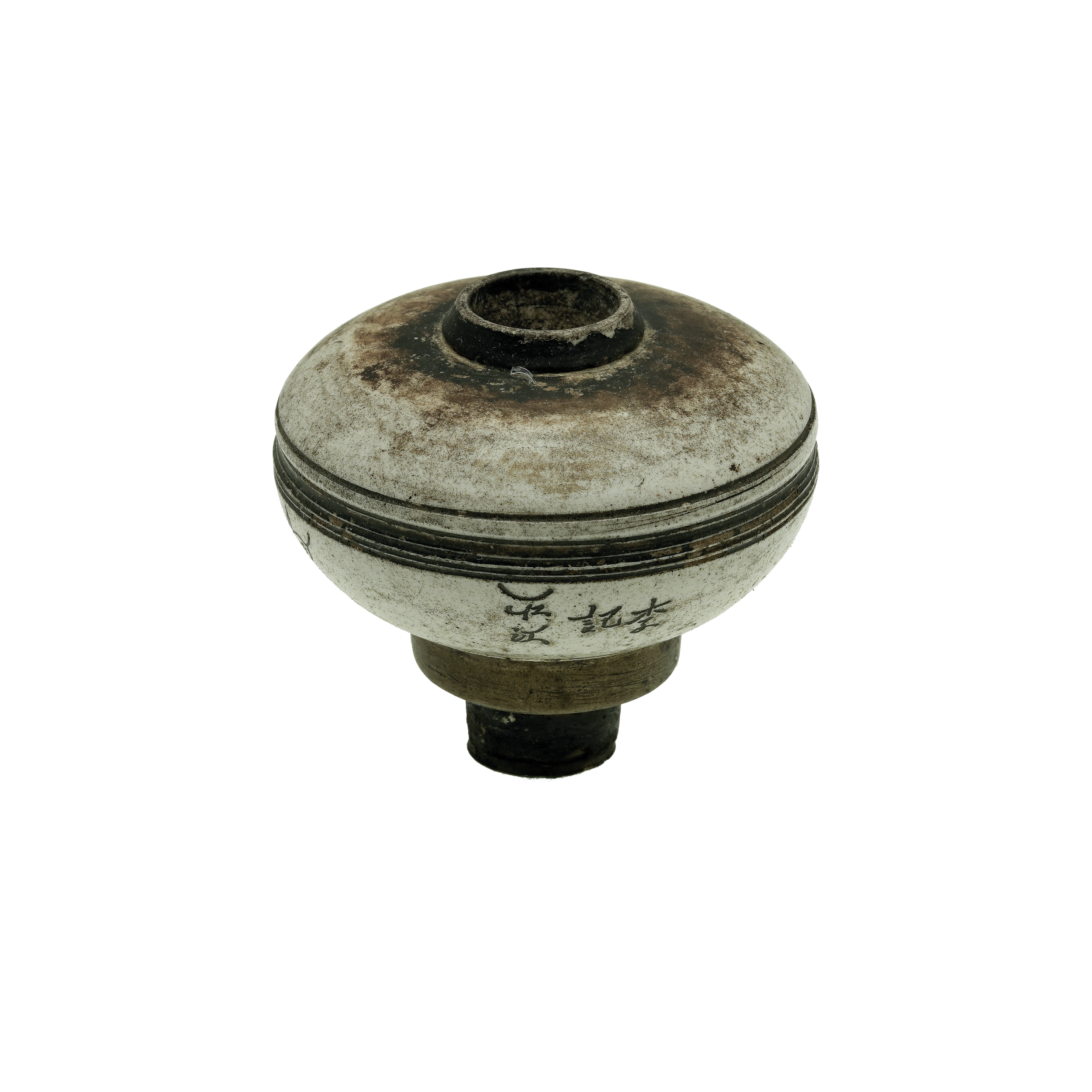
Opium Pipe Bowl – Ceramic with Script
Dimensions: Appro 6 × 6 cm
Round ceramic opium pipe bowl with a central opening for heating opium. Features incised lines around the circumference and Chinese script on the side. Shows discoloration from use. Likely late 19th to early 20th century.
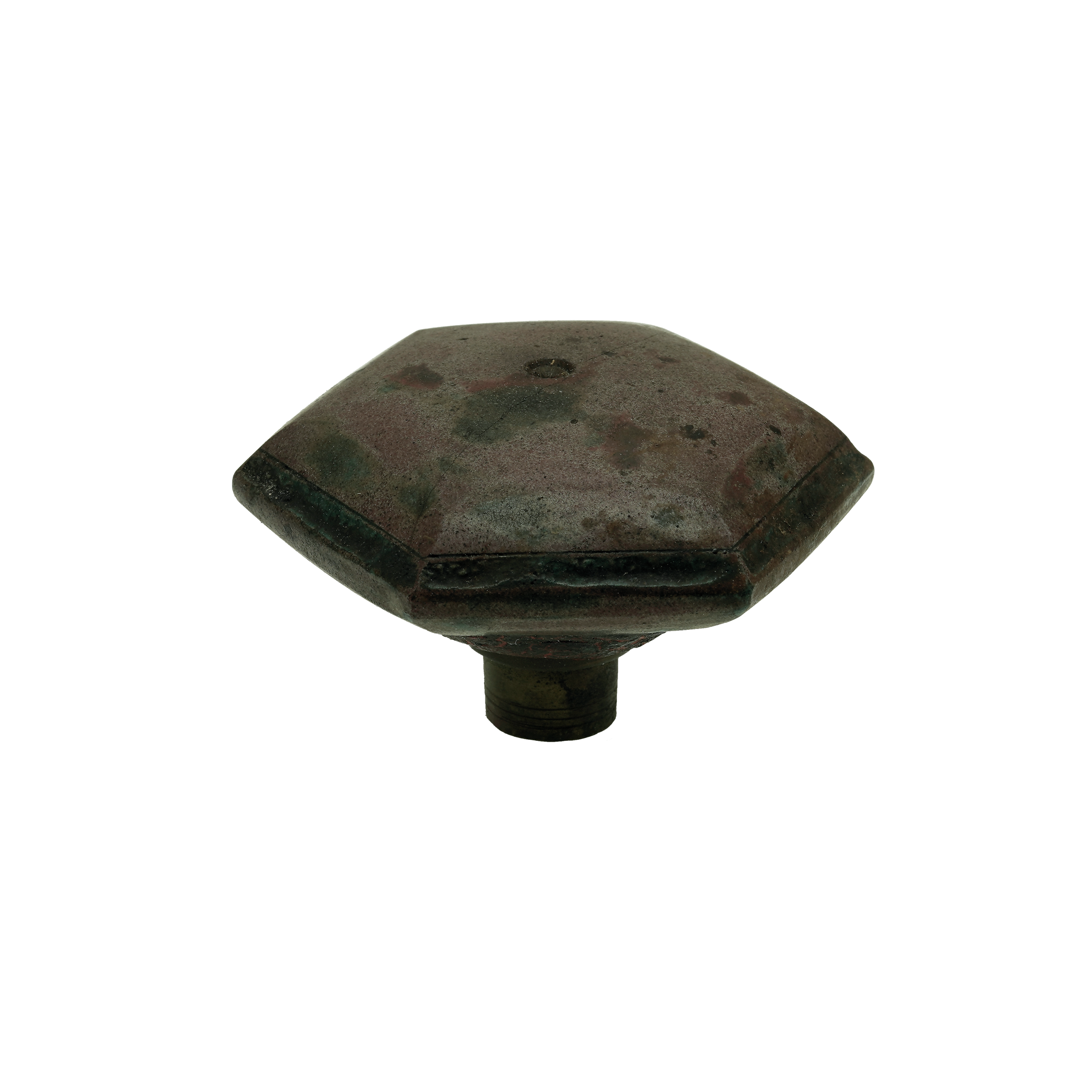
Opium Pipe Bowl – Ceramic
Dimensions: Appro 5 × 7 cm
Hexagonal ceramic opium pipe bowl with a flat top and central hole for heating opium. The surface shows signs of wear and discoloration. Likely late 19th to early 20th century.
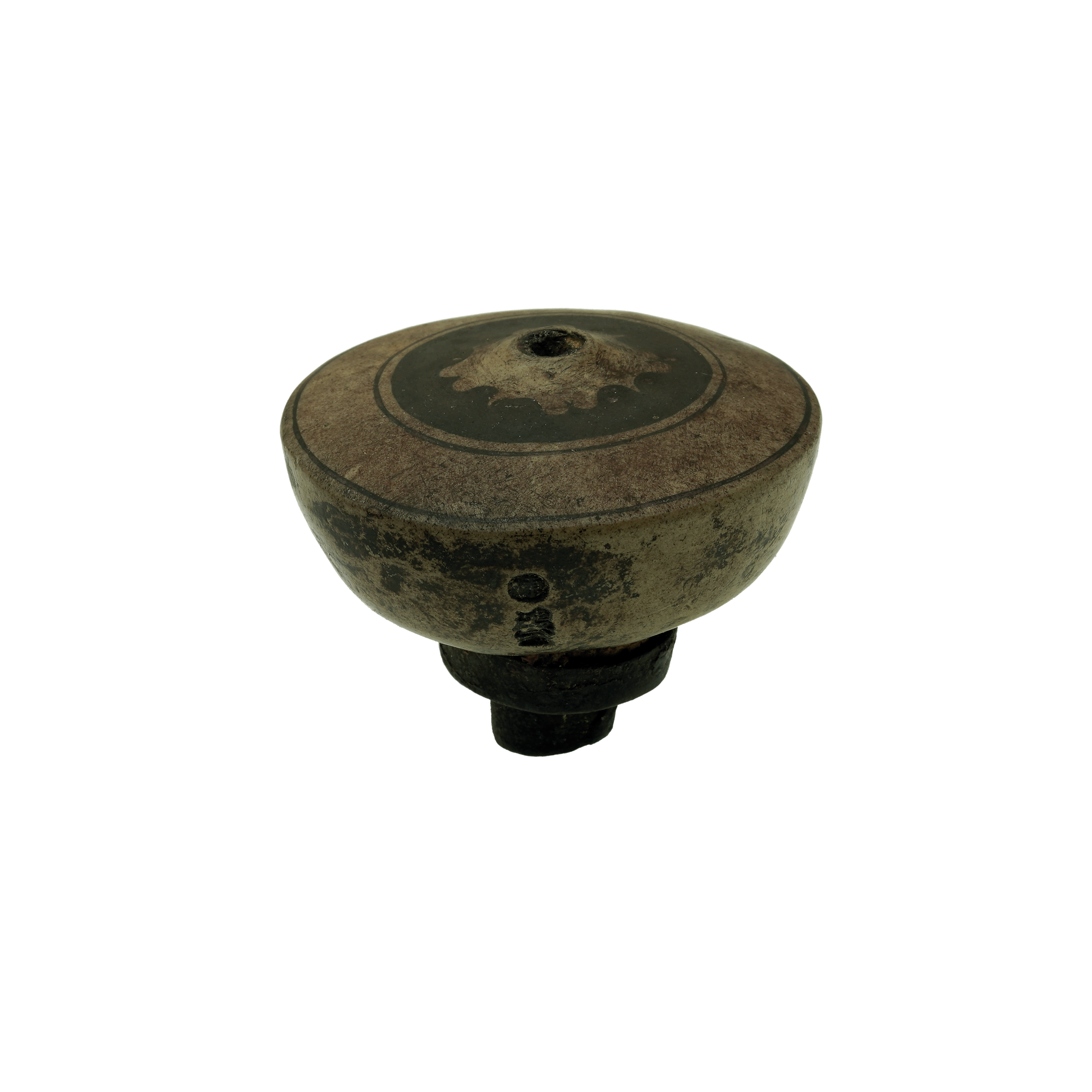
Opium Pipe Bowl – Ceramic
Dimensions: Appro 5 × 6 cm
Ceramic opium pipe bowl with a rounded form and flat top. Features a central hole for heating opium and a simple painted circular motif. Likely late 19th to early 20th century.
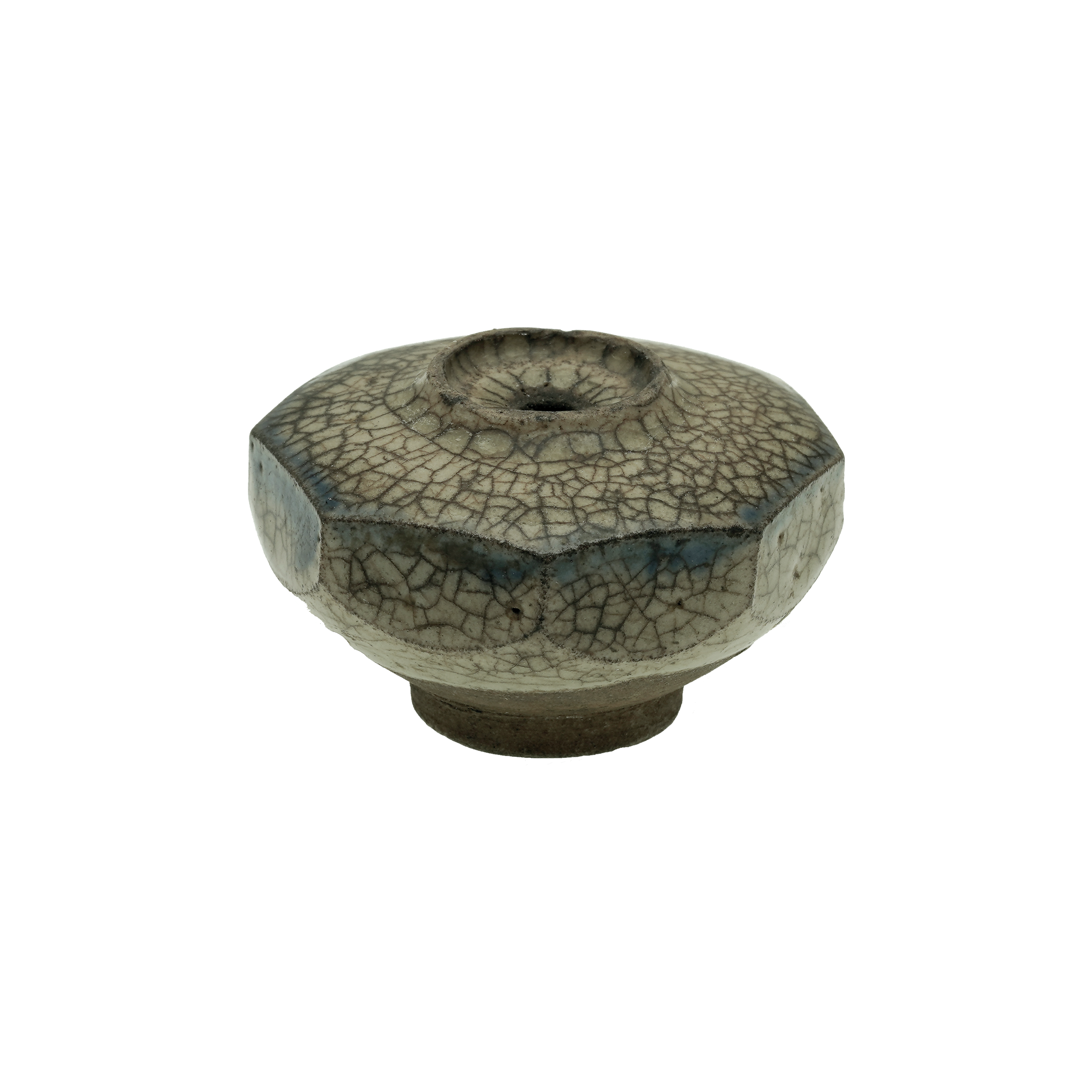
Opium Pipe Bowl – Glazed Ceramic
Dimensions: Appro 4 × 5 cm
Glazed ceramic opium pipe bowl with a crackle pattern and faceted sides. Features a central top opening for heating opium. Likely late 19th to early 20th century.
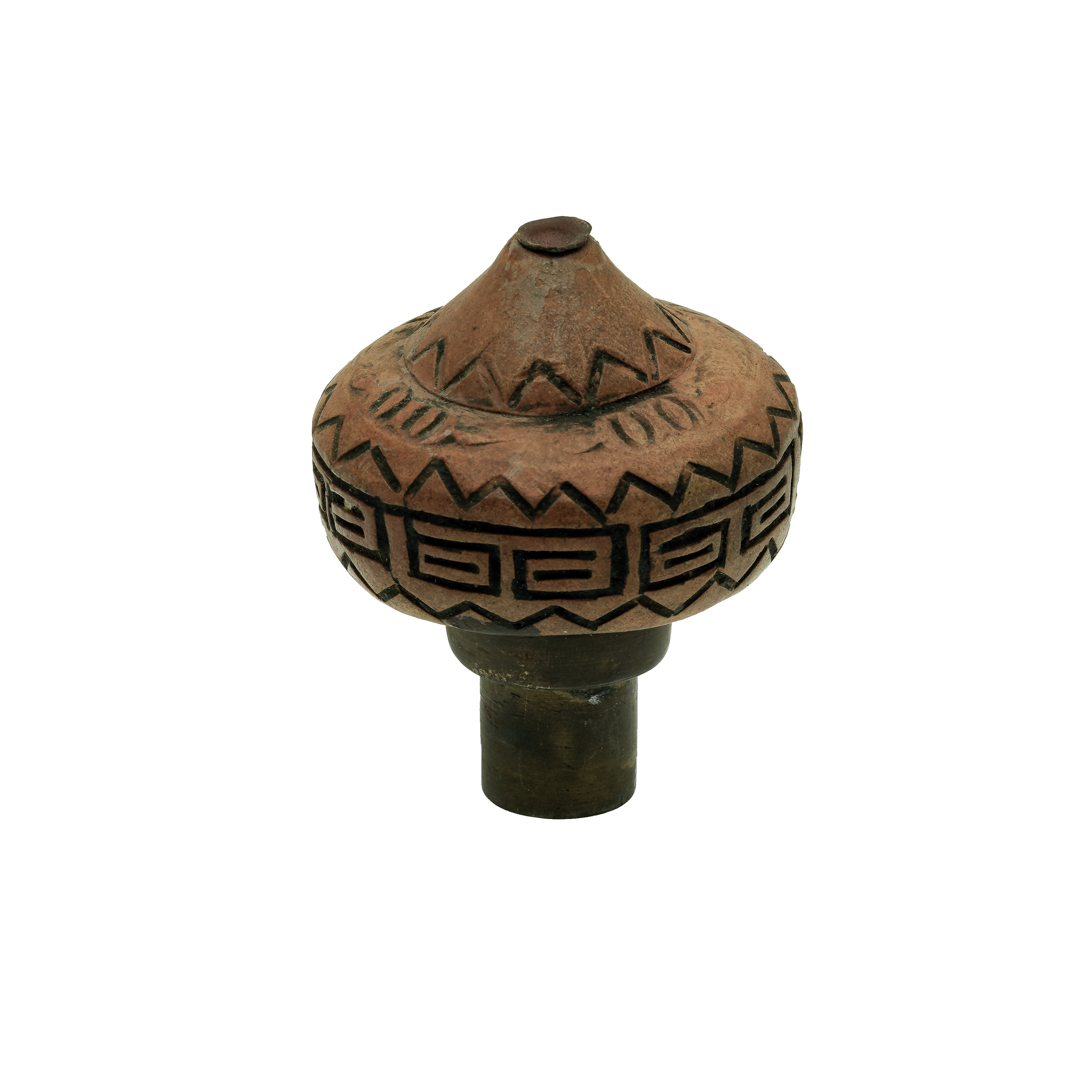
Opium Pipe Bowl – Ceramic
Dimensions: Appro 7 × 5 cm
Ceramic opium pipe bowl with a conical top and geometric black-painted designs around the body. Central top opening for heating opium. Mounted on a metal fitting. Likely late 19th to early 20th century.
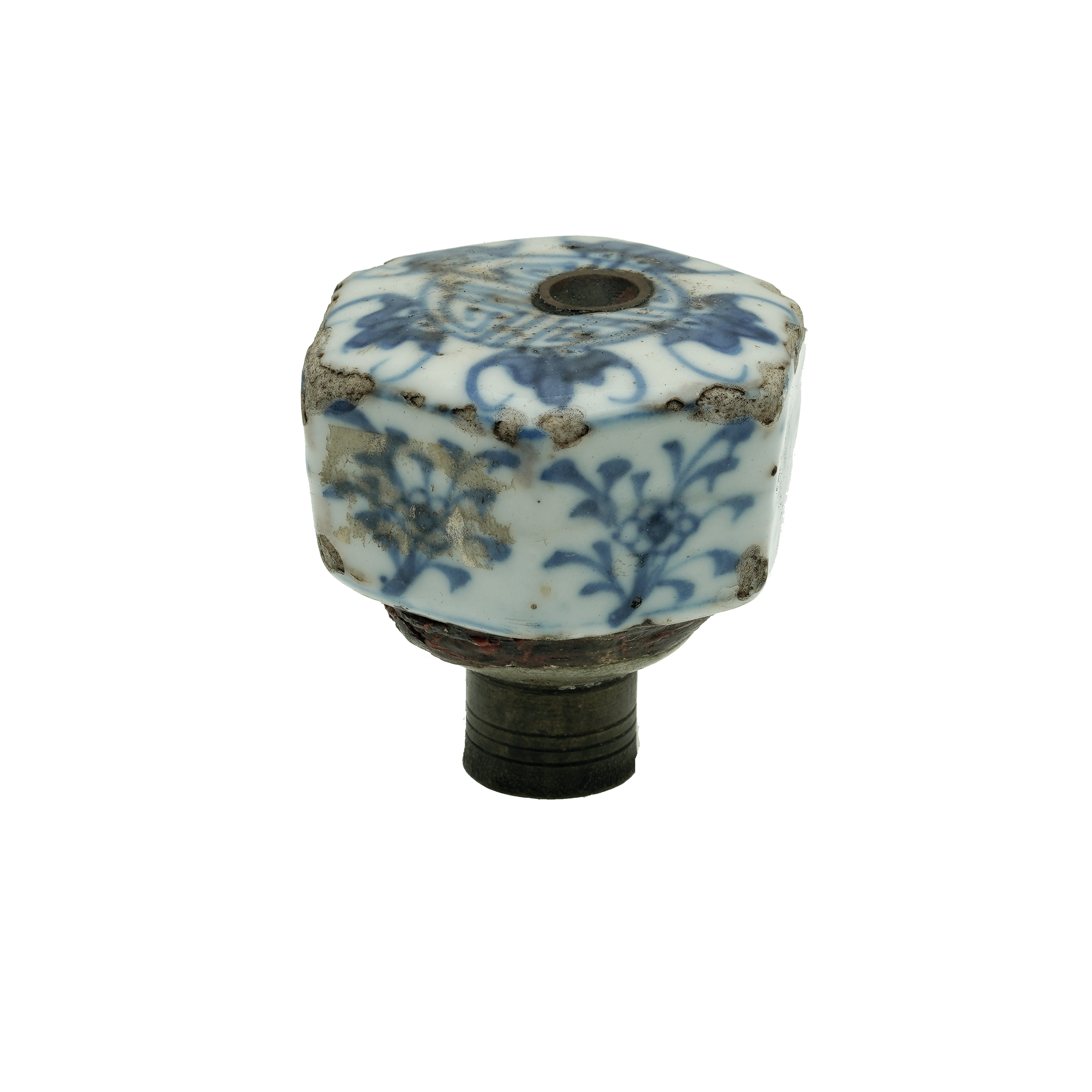
Opium Pipe Bowl – Porcelain
Dimensions: Appro 5 × 5 cm
Porcelain opium pipe bowl with a hexagonal form, decorated in blue-and-white floral motifs. Central top opening for heating opium during smoking. Mounted on a metal fitting. Likely Chinese, late 19th to early 20th century.
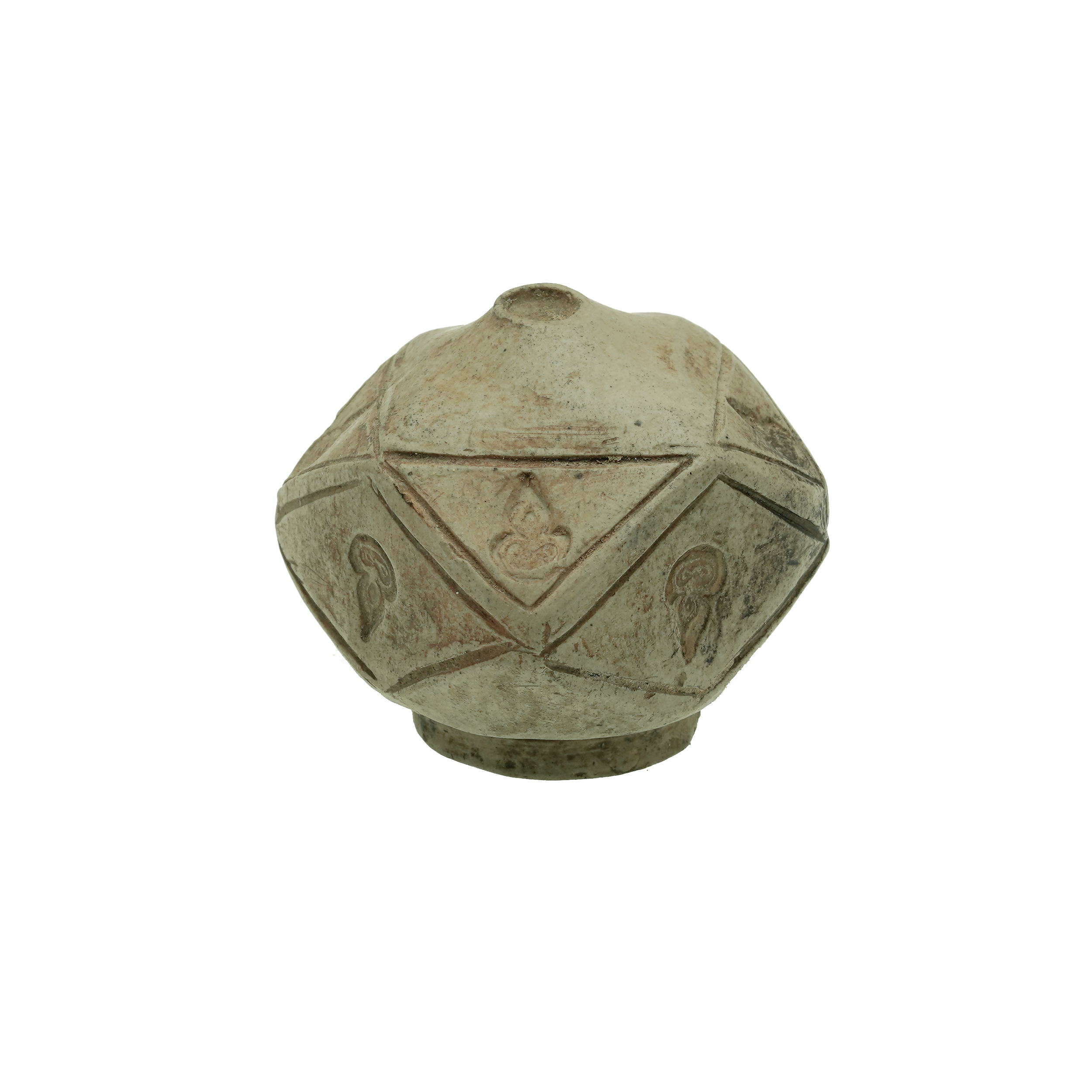
Opium Pipe Bowl – Ceramic
Dimensions: Appro 5 × 5 cm
Ceramic opium pipe bowl with a geometric, faceted form. Each panel is decorated with incised triangular motifs and small floral or seed-like emblems. Central opening on top for heating opium in traditional pipe smoking. Likely Chinese, late 19th to early 20th century.
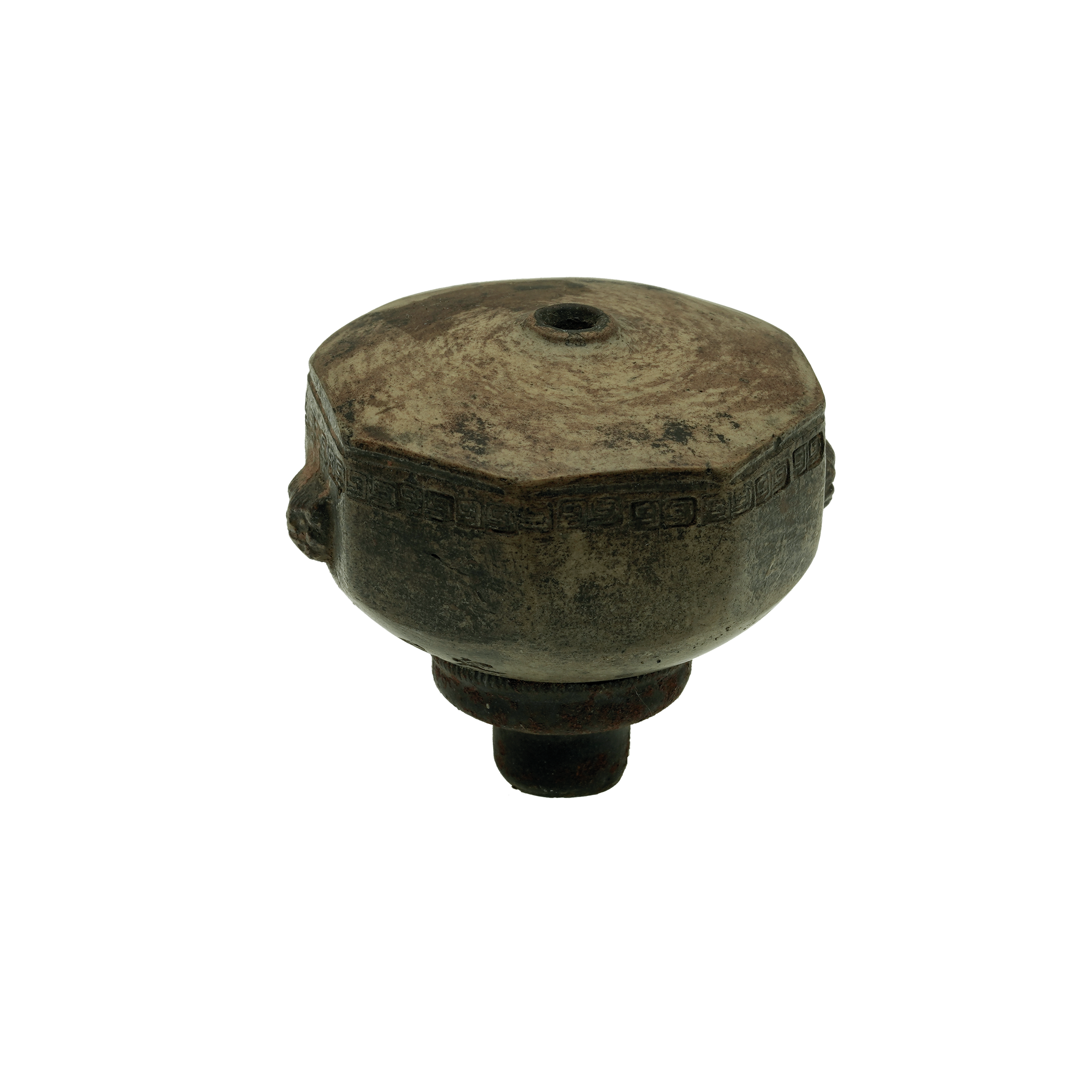
Opium Pipe Bowl – Ceramic
Dimensions: Appro 6 × 7 cm
Hexagonal ceramic opium pipe bowl with a small central opening. The upper edge features a simple geometric border pattern, and small protruding side lugs are present. Used for heating opium in traditional pipe smoking. Likely Chinese, late 19th to early 20th century.
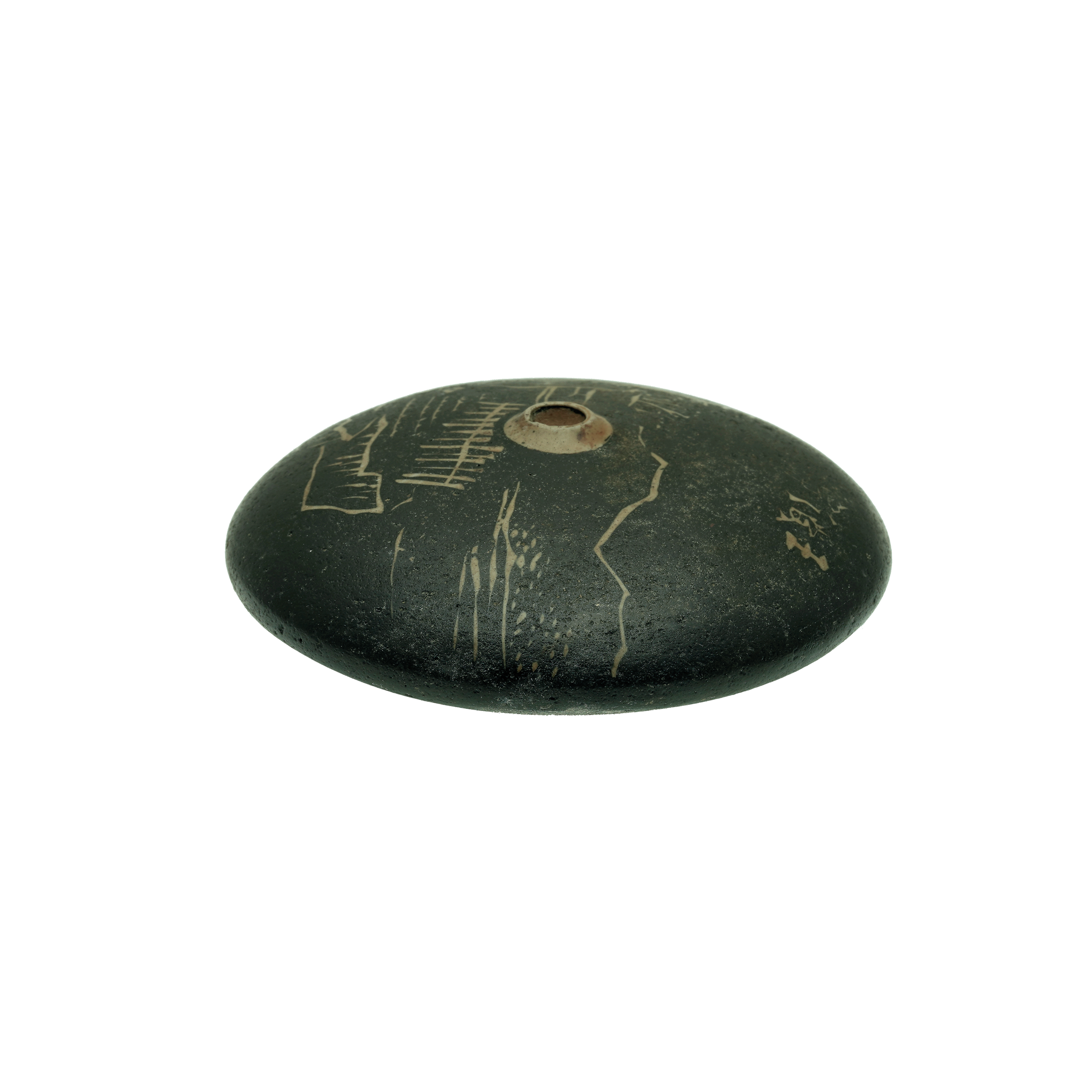
Opium Pipe Bowl – Stone
Dimensions: Appro 3 × 9 cm
Flat, disc-shaped stone opium pipe bowl with a small central opening. The surface is engraved with simple linear patterns, possibly decorative or symbolic. Used to heat and vaporize opium when mounted on a pipe. Likely Chinese, late 19th to early 20th century.
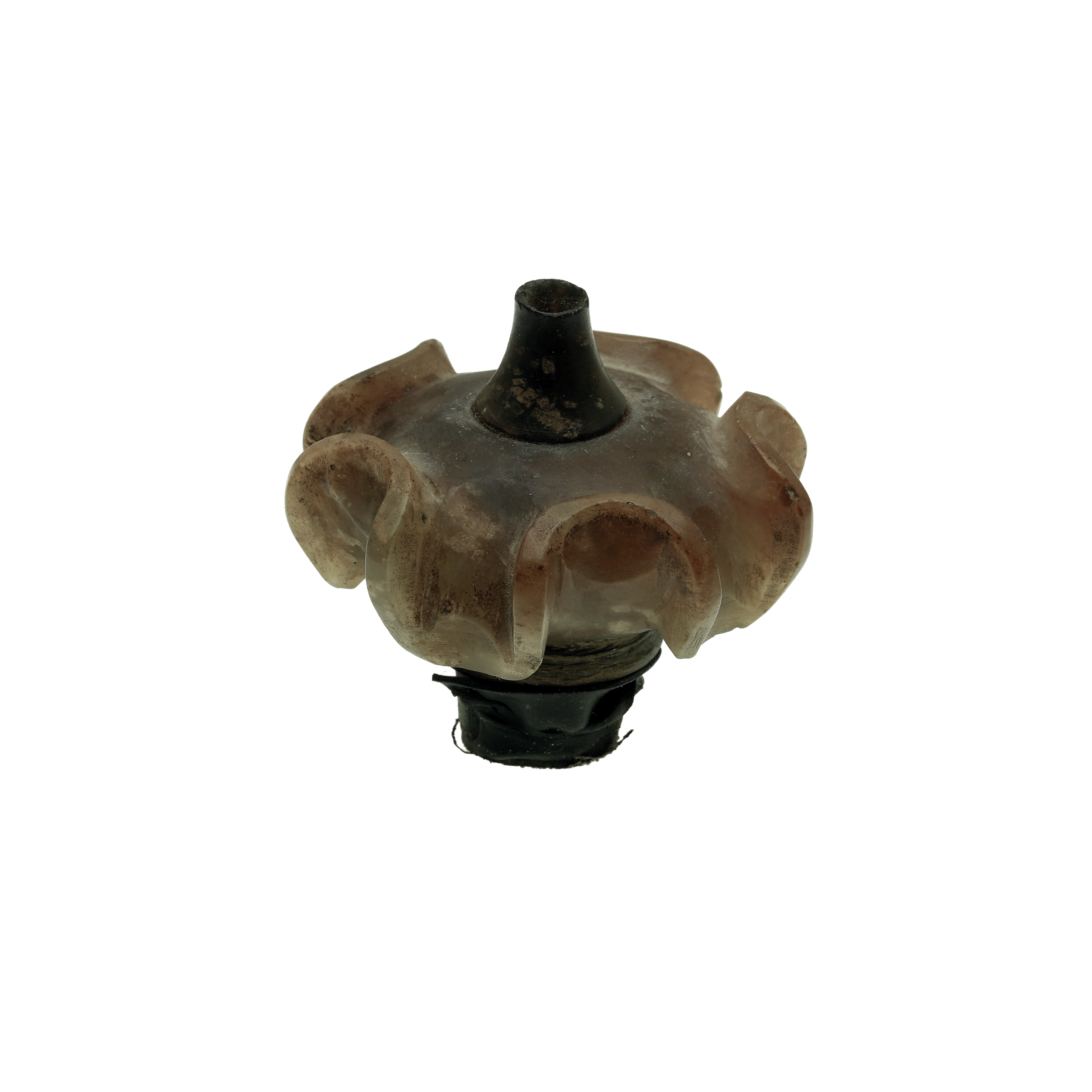
Opium Pipe Bowl – Stoneware
Dimensions: Appro 6 × 6 cm
Stoneware opium pipe bowl with a flared, petal-like rim and narrow central chimney. The body shows signs of heat exposure and surface residue from use. Such burners were fitted into the pipe to vaporize opium over a flame. Likely produced in China during the late 19th to early 20th century.
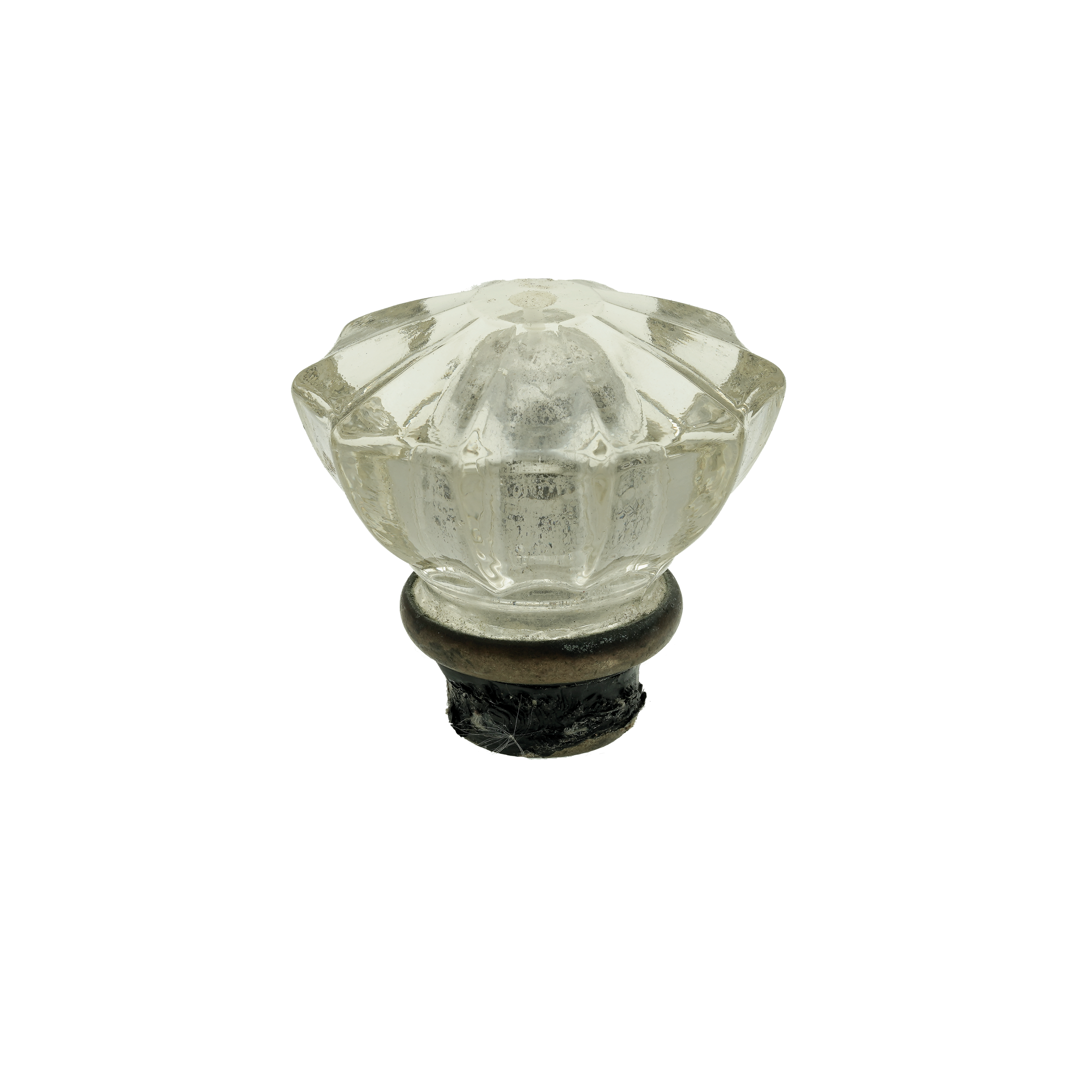
Glass Opium Pipe Bowl
Dimensions: Appro 6 × 6 cm
A clear glass opium pipe bowl with a faceted, fluted design, mounted on a metal fitting for attachment to the pipe stem. Used for heating and vaporizing opium, dating to the late 19th or early 20th century.
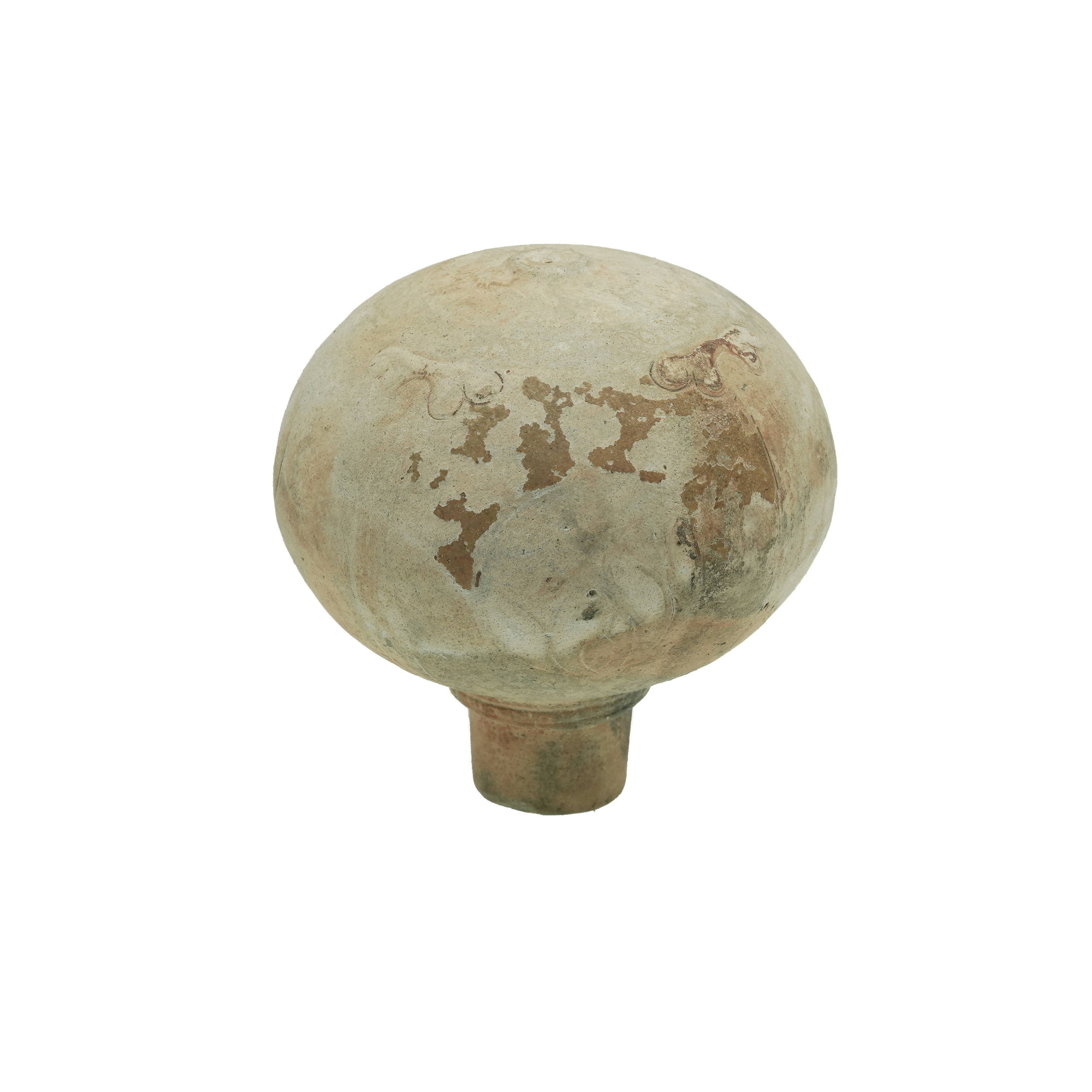
Terracotta Opium Pipe Bowl
Dimensions: Appro 6 × 6 cm
Opium pipe bowl fashioned from unglazed terracotta. The surface shows natural wear and patina from age and use. Such utilitarian yet subtly ornamented pieces were common in opium-smoking cultures of the 19th and early 20th centuries, blending practical craftsmanship with modest aesthetic detail.
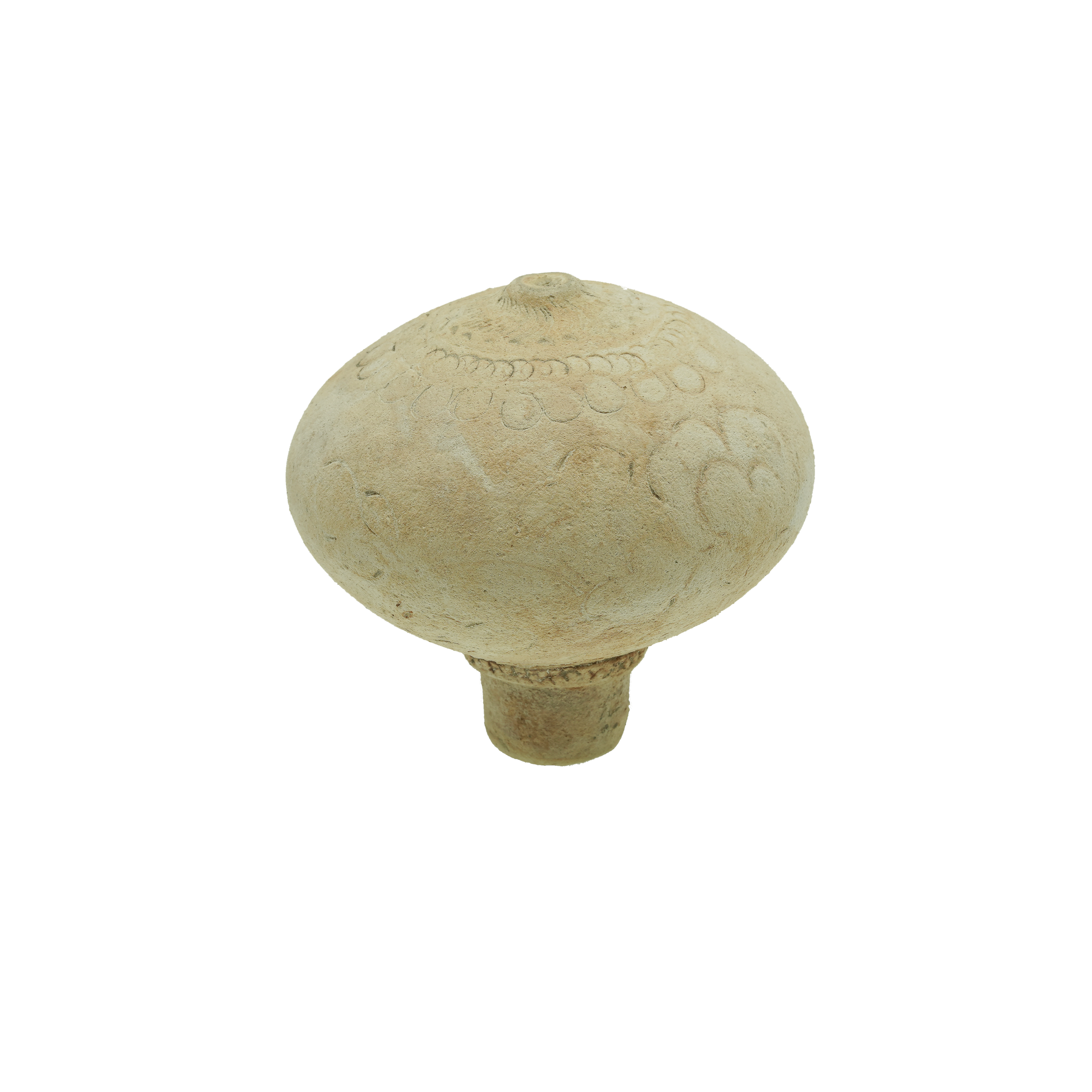
Terracotta Opium Pipe Bowl
Dimensions: Appro 6 × 7 cm
opium pipe bowl crafted from unglazed terracotta with incised patterns around its upper surface. The porous, earthenware body allowed for even heat distribution during use, while its narrow base was designed to fit securely into an opium lamp.
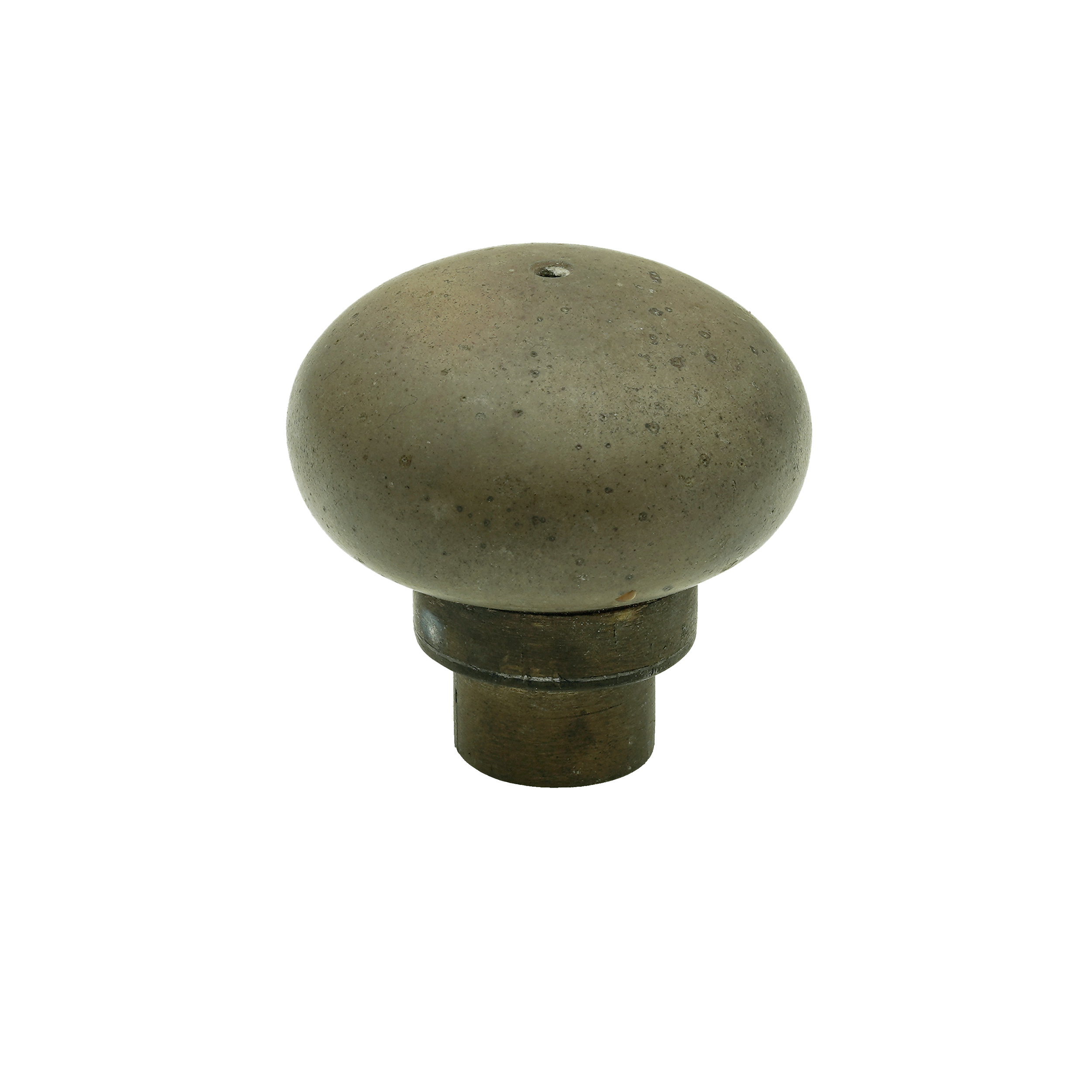
Opium Pipe Bowl
China, late 19th – early 20th century
Stone and metal
Dimensions: Appro 5 × 4 cm
Opium pipe bowl carved from smooth stone and mounted on a metal fitting. The domed stone head, with a small central aperture, held the prepared opium, which was gently heated over a lamp to release vapour.
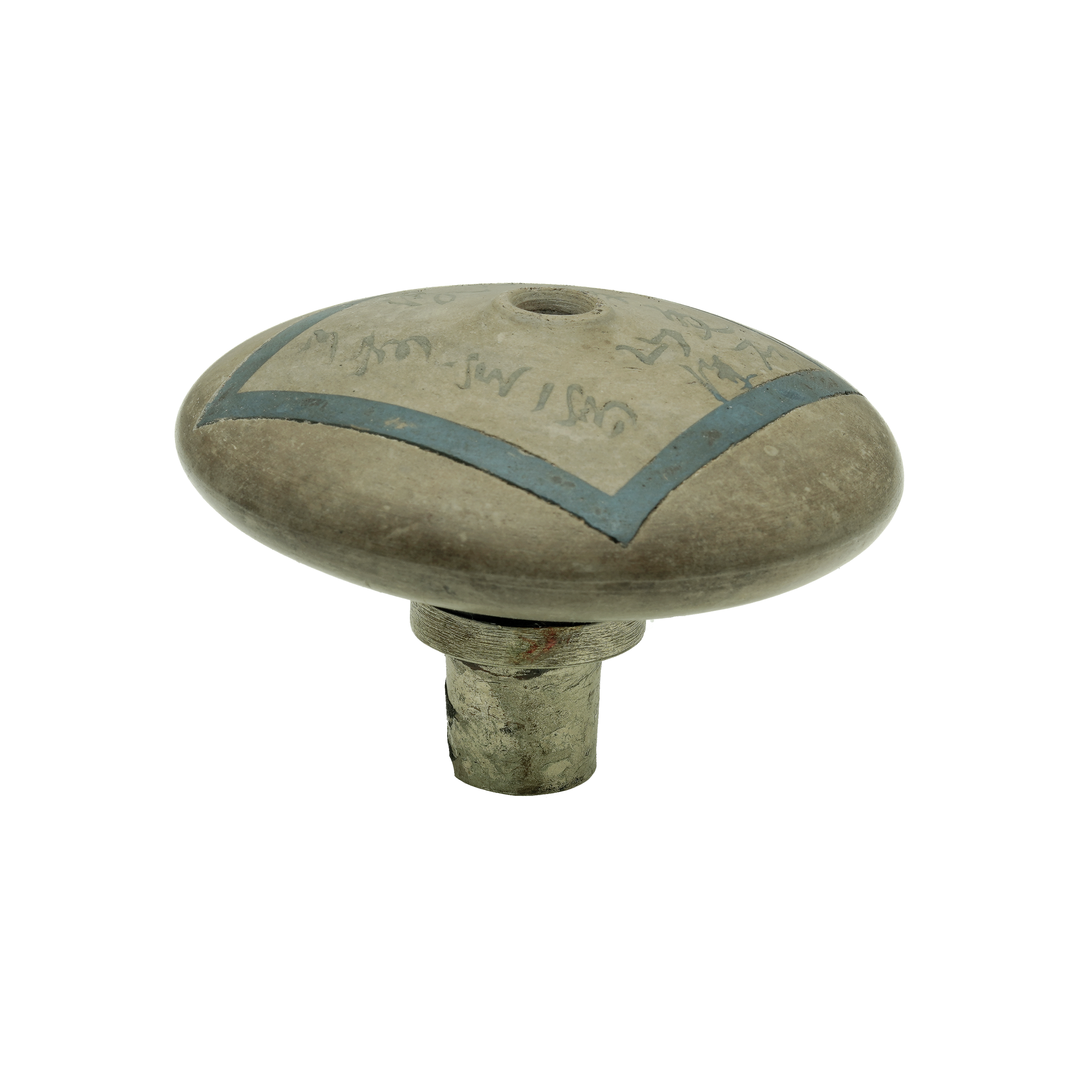
Opium Pipe Bowl – Ceramic
Dimensions: Appro 4 × 9 cm
Ceramic opium pipe bowl with a rounded form and central aperture. The surface is decorated with a blue chevron motif and faint inscriptions, showing signs of wear from use. Mounted on a metal fitting. Likely late 19th to early 20th century.
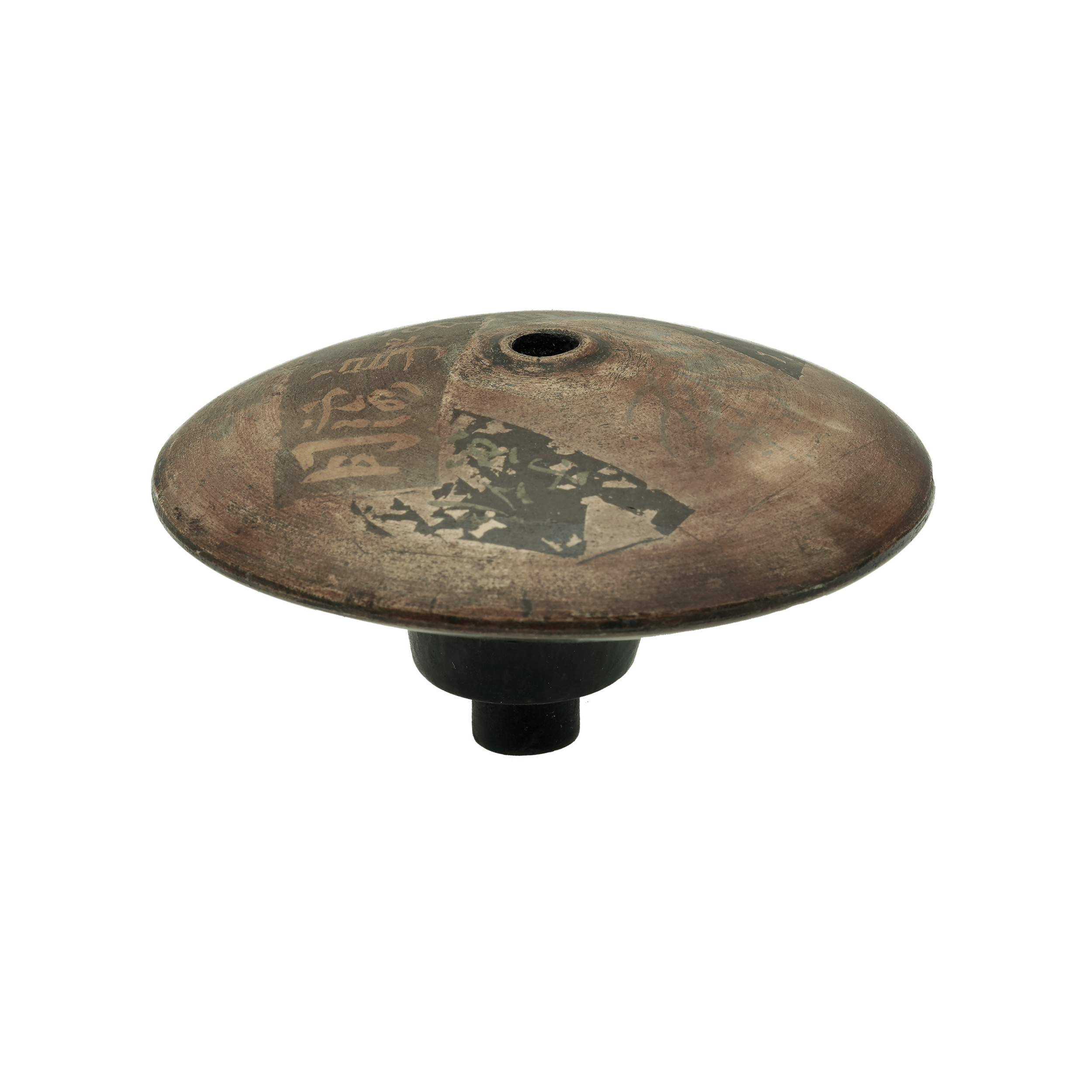
Opium Pipe Bowl – Ceramic
Dimensions: Appro 4 × 9 cm
Wide, shallow ceramic opium pipe bowl with a central aperture for heating opium. The surface features faded painted motifs, including Chinese characters and abstract patterns, with areas of wear consistent with extended use. Likely late 19th to early 20th century.
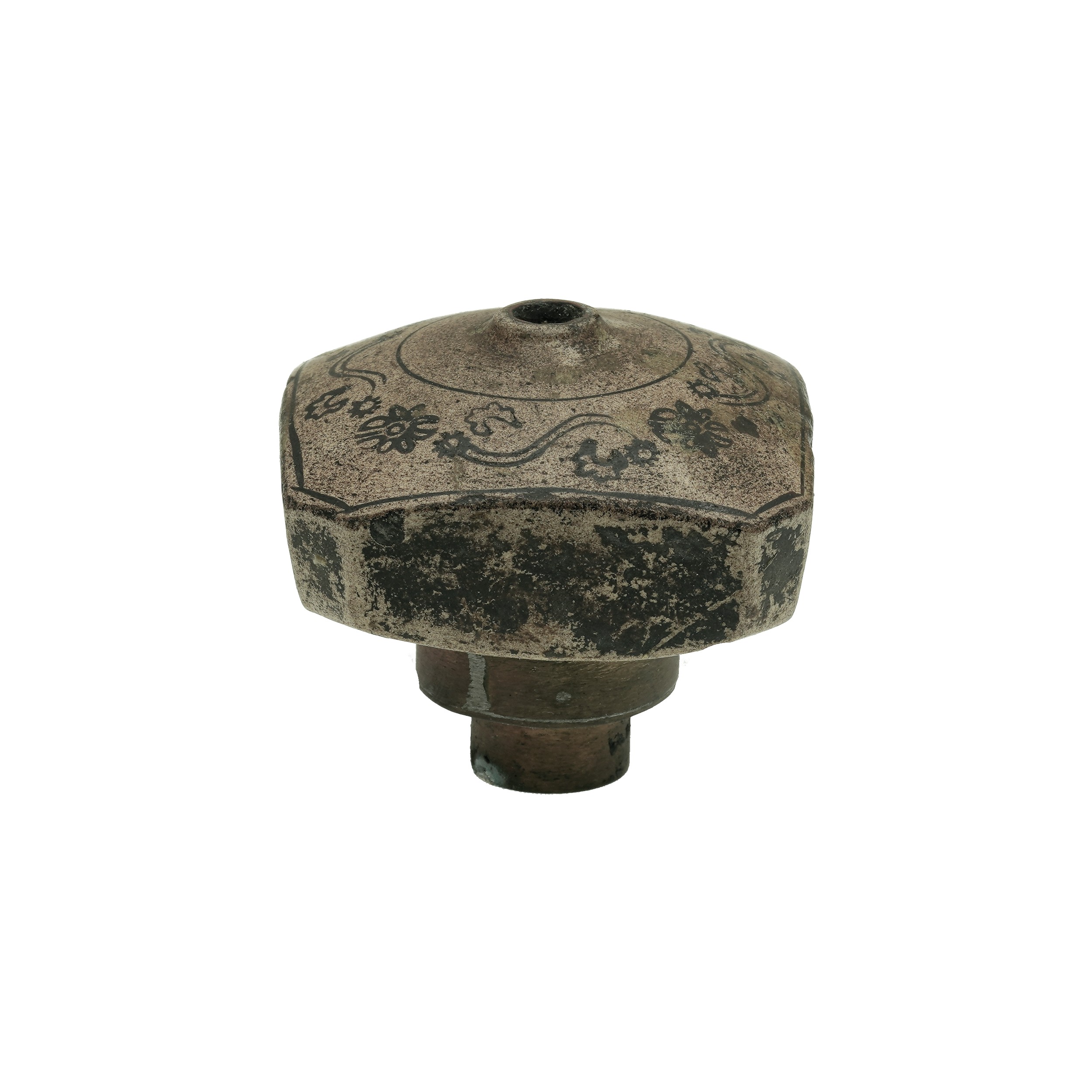
Opium Pipe Bowl – Ceramic
Dimensions: Appro 5 × 4 cm
Hexagonal ceramic opium pipe bowl decorated with a floral scroll motif on the top and geometric borders along the edges. Features a small central aperture for heating opium. Surface shows signs of wear and soot deposits from use. Likely late 19th to early 20th century.
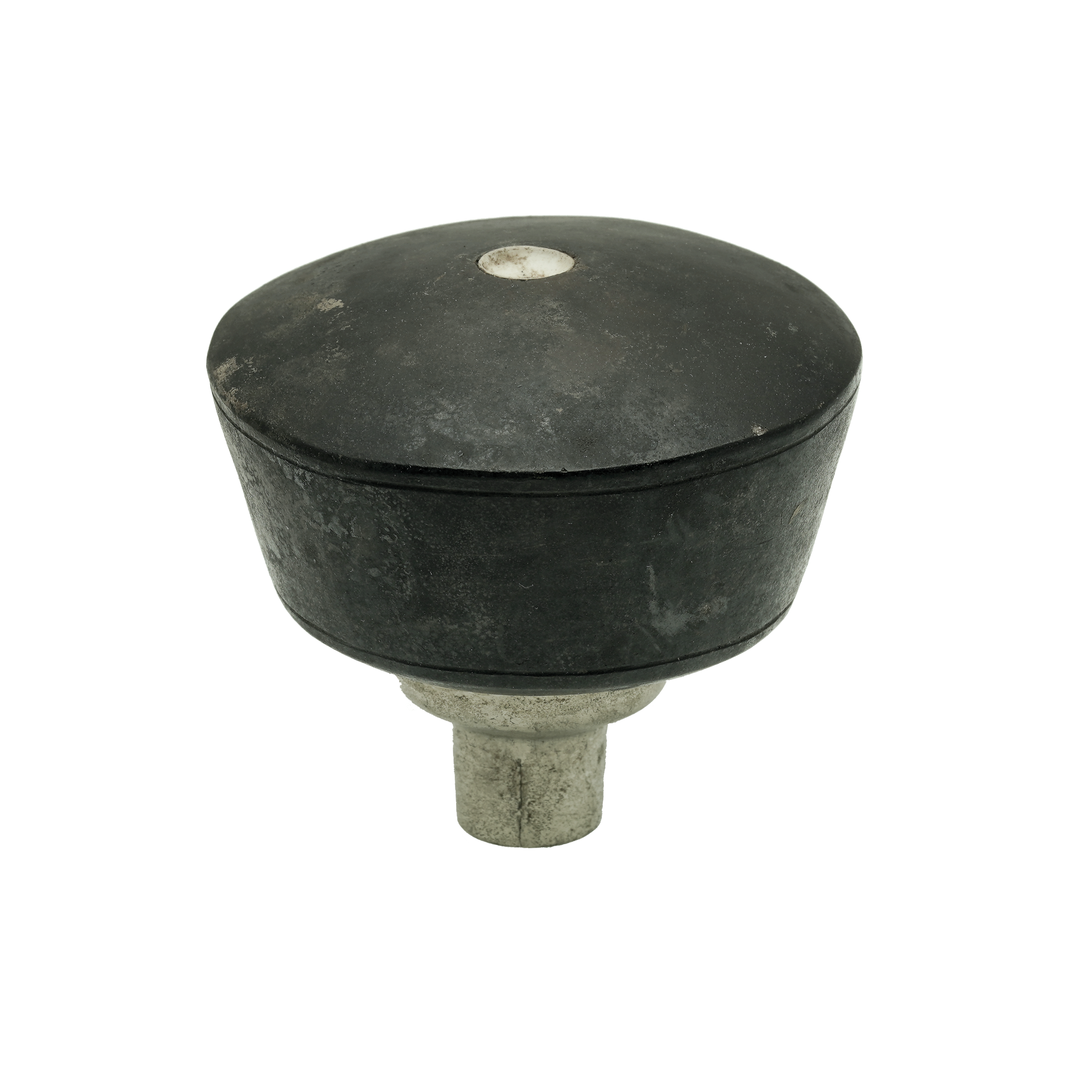
Opium Pipe Bowl – Ceramic
Dimensions: Appro 6 × 7 cm
Ceramic opium pipe bowl with a slightly tapered cylindrical body and domed top, featuring a small central aperture. Finished in a matte black glaze with minor surface wear. Likely late 19th to early 20th century, used for heating and vaporizing opium during smoking.
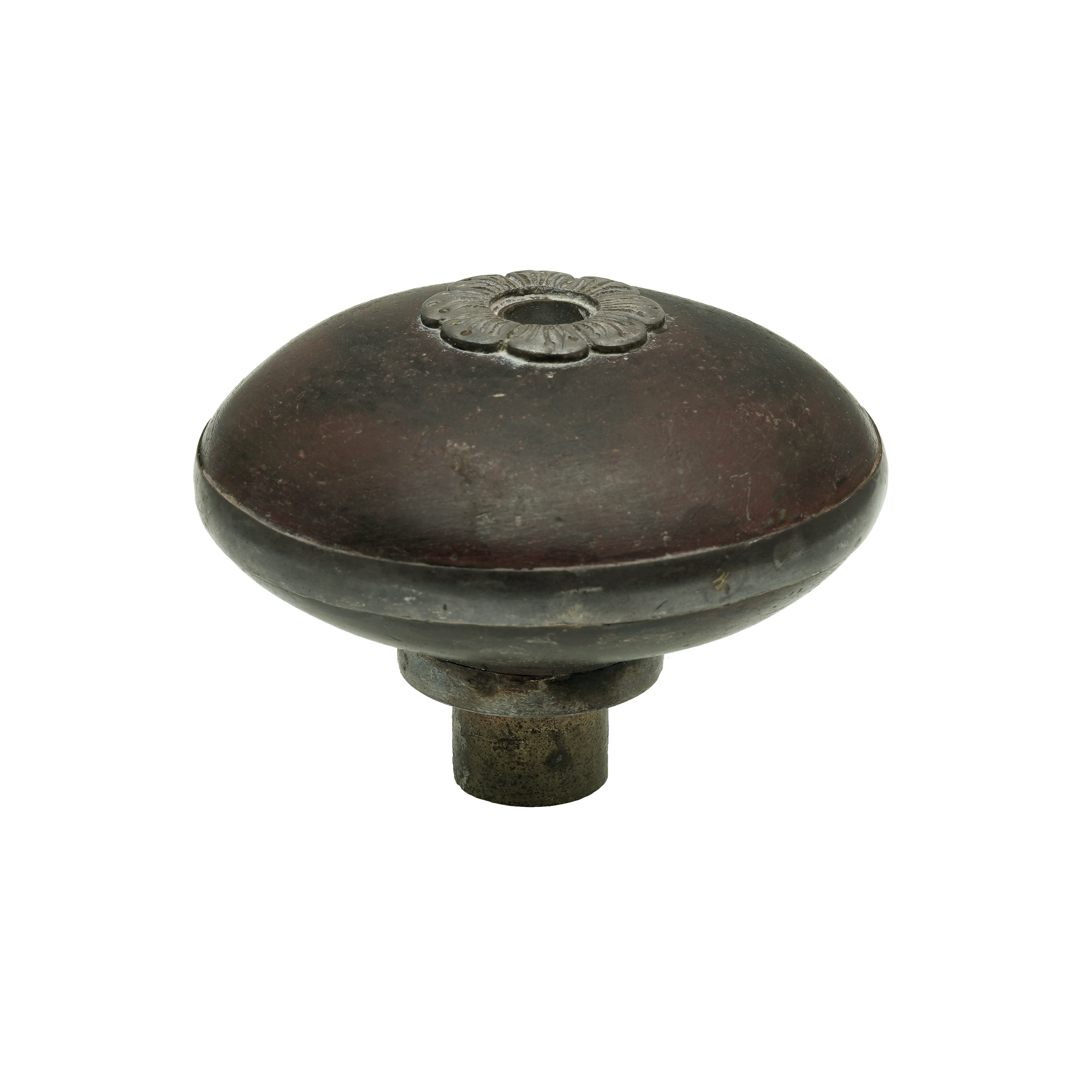
Opium Pipe Bowl – Ceramic
Dimensions: Appro 7 × 6 cm
Ceramic opium pipe bowl with a rounded, domed form and small central aperture encircled by a molded floral motif. Finished in a dark brown glaze with signs of wear from use. Likely late 19th to early 20th century, employed in the heating and vaporization of opium.
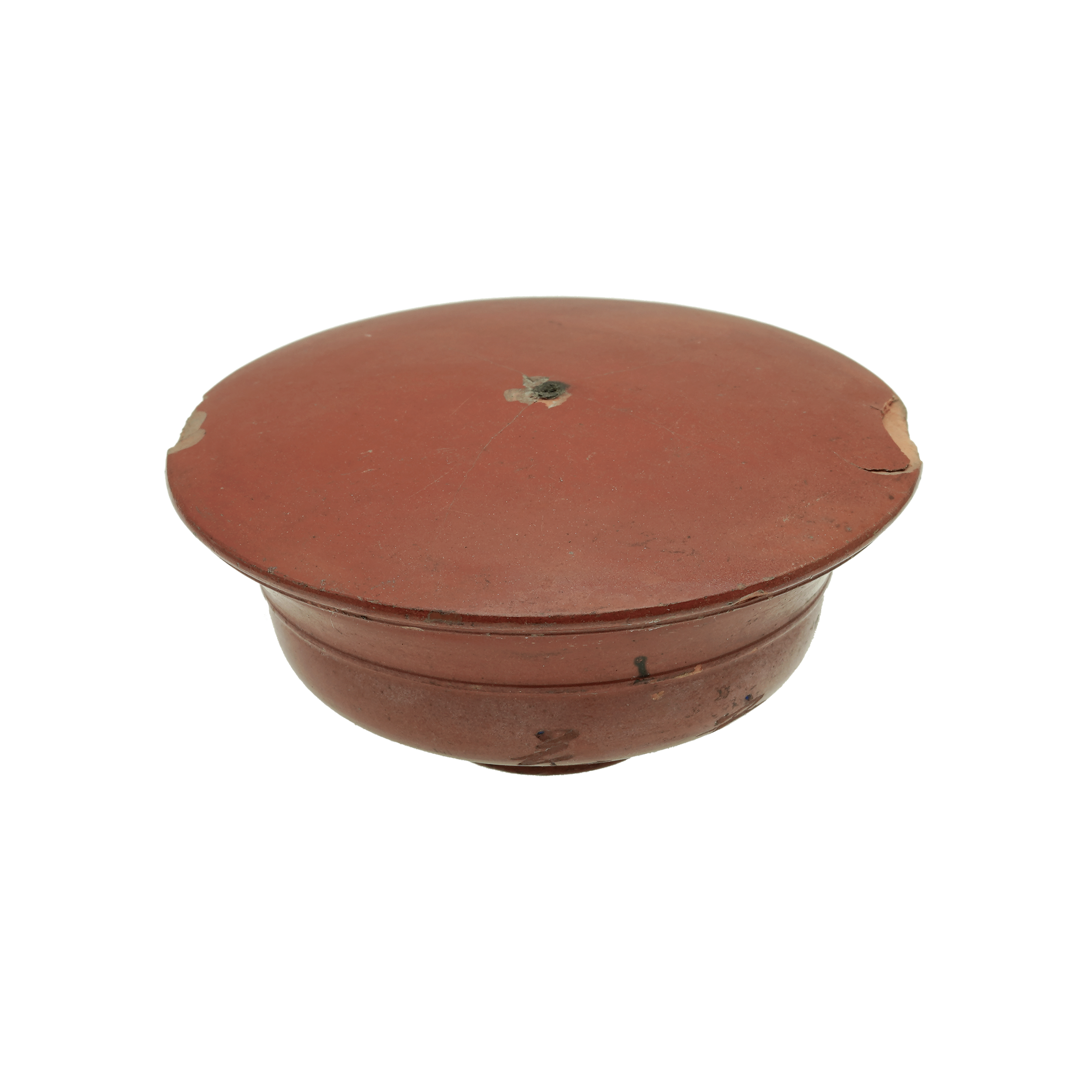
Opium Pipe Bowl – Ceramic
Dimensions: Appro 4 × 8 cm
Ceramic opium pipe bowl with a broad, flat, circular form and small central aperture. Finished in a matte red slip, now worn in places to reveal the underlying material. Likely late 19th to early 20th century, used in the preparation and smoking of opium.
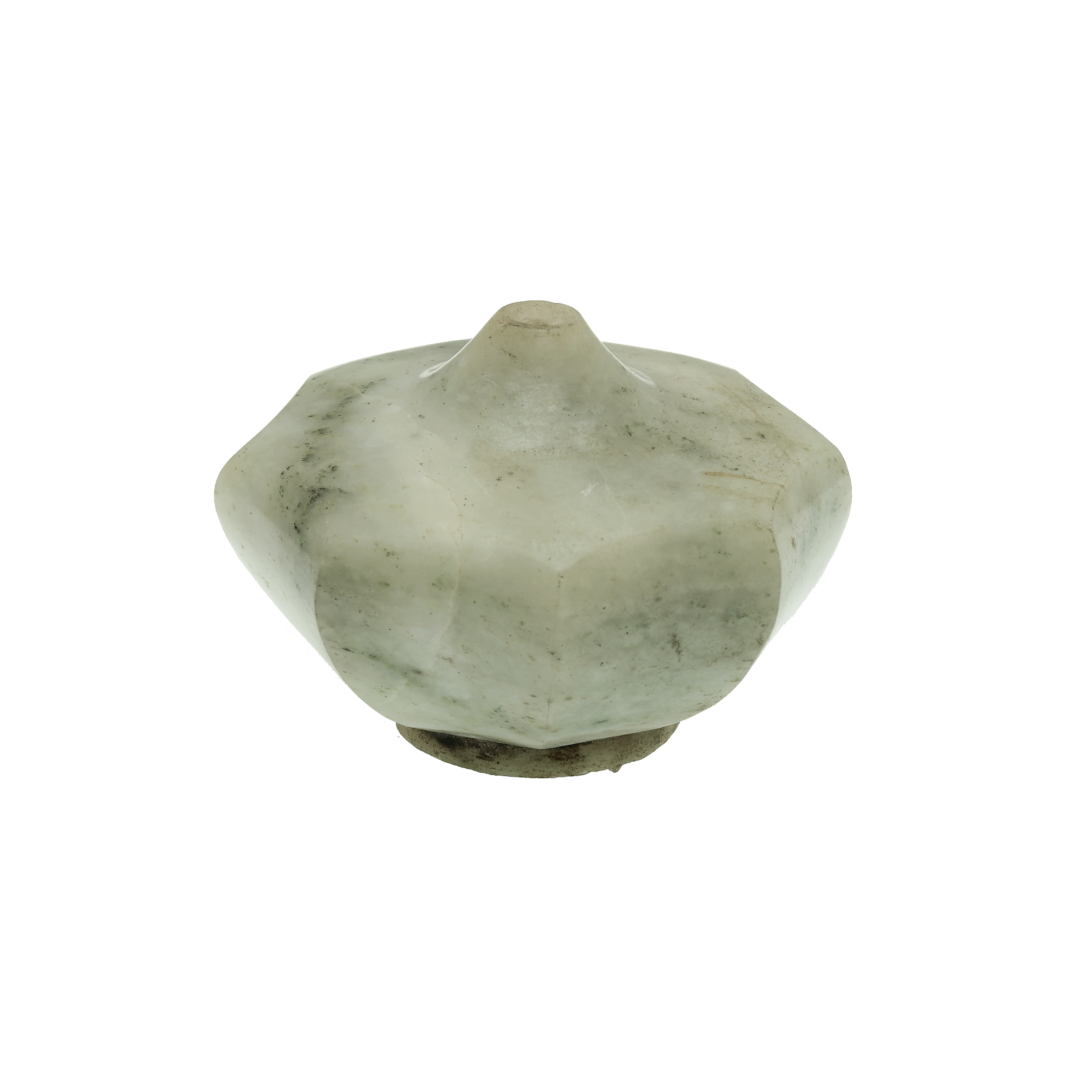
Opium Pipe Bowl – Stone
Dimensions: Appro 6 × 5 cm
Stone opium pipe bowl with a faceted, lobed body tapering to a small central aperture. The pale greenish surface suggests use of a hardstone such as jade or serpentine. Likely late 19th to early 20th century, employed for heating opium in traditional smoking practices.
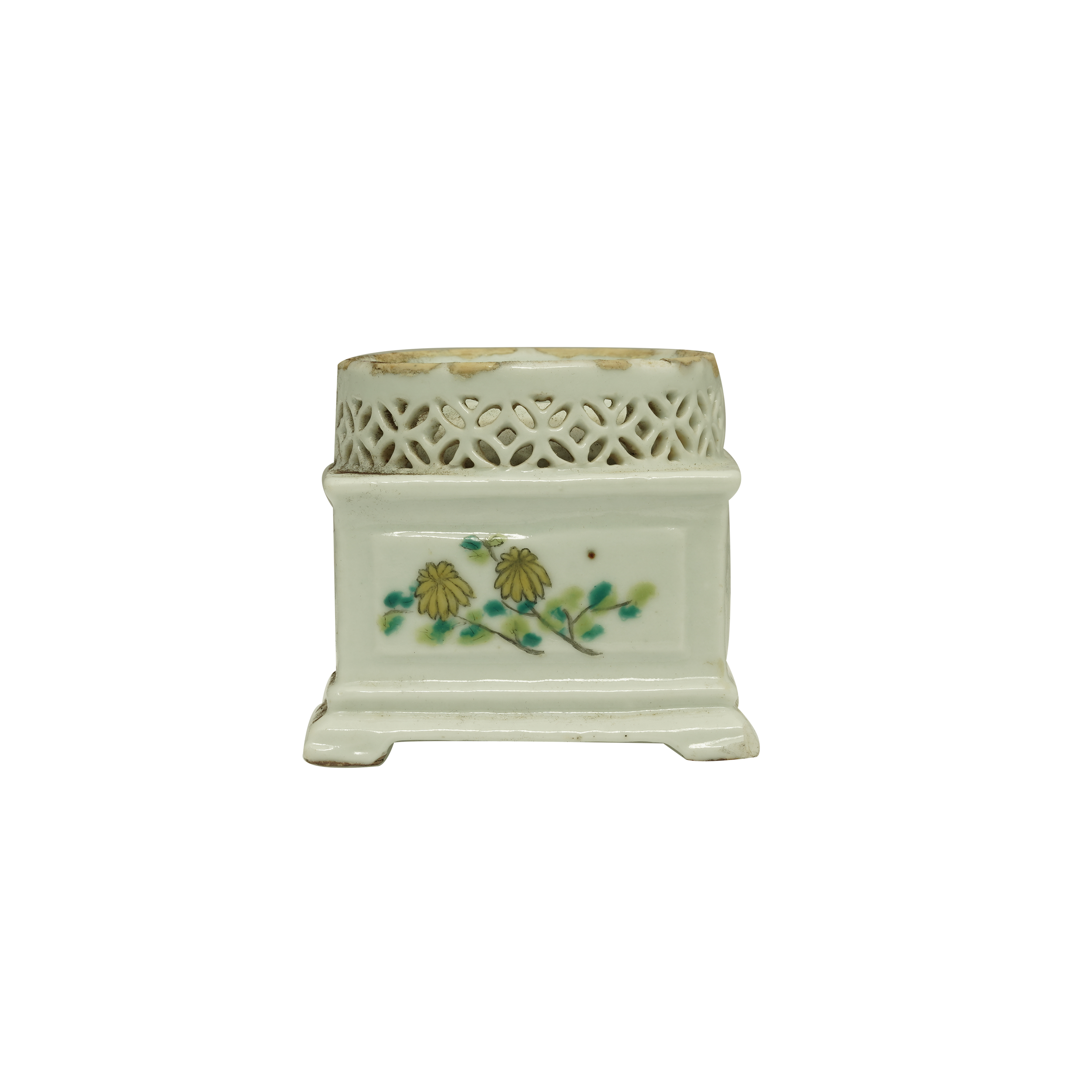
Origin: China
Date: Late 19th–early 20th century
Materials: Glazed porcelain with enamel decoration
Dimensions: Appro 4 × 5 cm
Description:
Small rectangular opium lamp is made of white glazed porcelain and decorated on its sides with hand-painted yellow chrysanthemums and green leaves. The top features a pierced, openwork gallery designed to hold and ventilate the lamp’s chimney and wick. The floral decoration adds an elegant touch to this functional piece, which was used to heat the opium pipe bowl during smoking sessions.
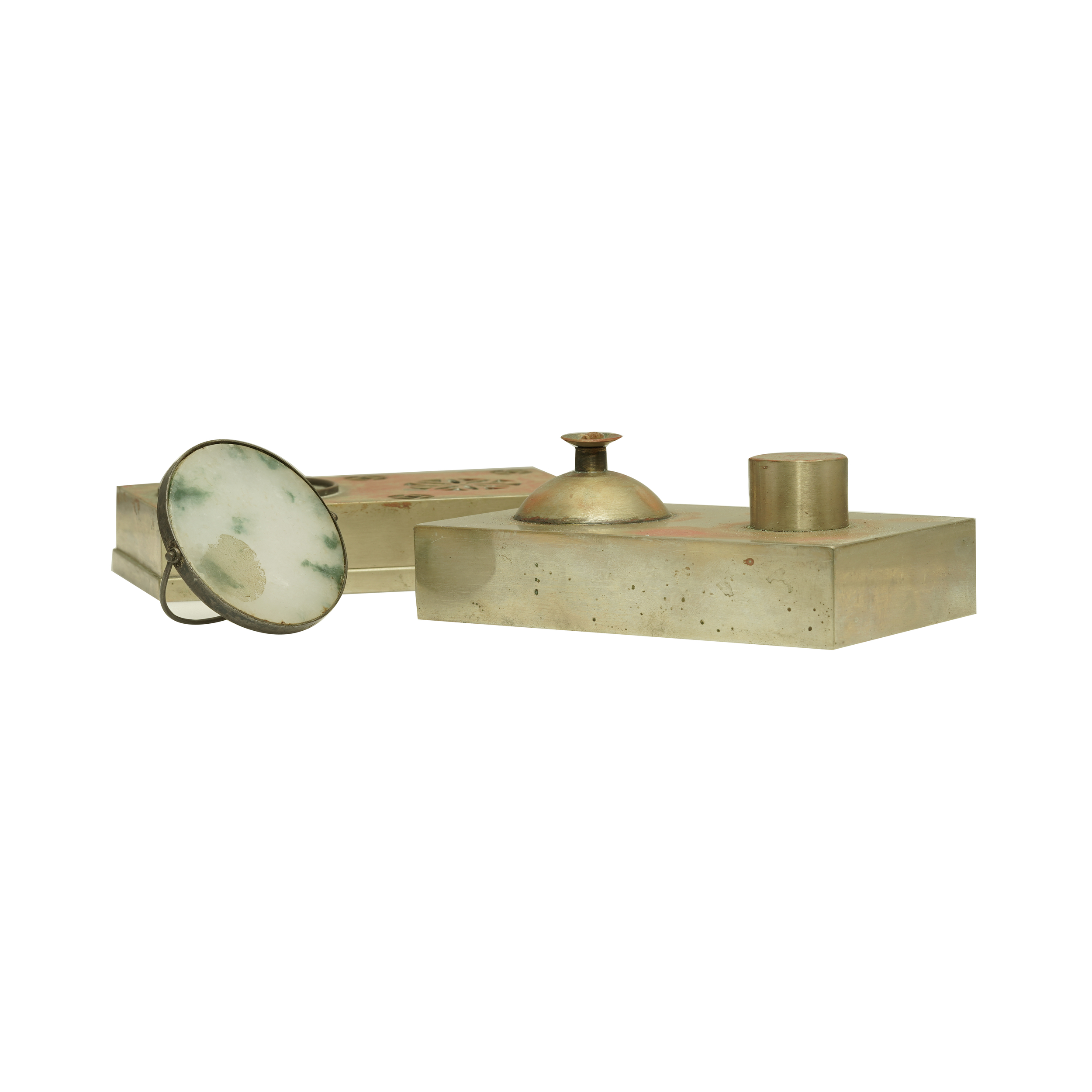
Origin: China
Date: Late 19th–early 20th century
Materials: Brass, jade, glass
Dimensions: Appro 12 × 4 cm
Description:
Rectangular brass opium lamp featuring a domed central burner flanked by a cylindrical reservoir. A detachable jade disk, mounted in a brass ring, served as a heat reflector, focusing the flame’s warmth onto the opium pipe bowl during preparation. The lamp’s sturdy brass construction ensured durability, while the inclusion of jade, reflects the blending of functionality.
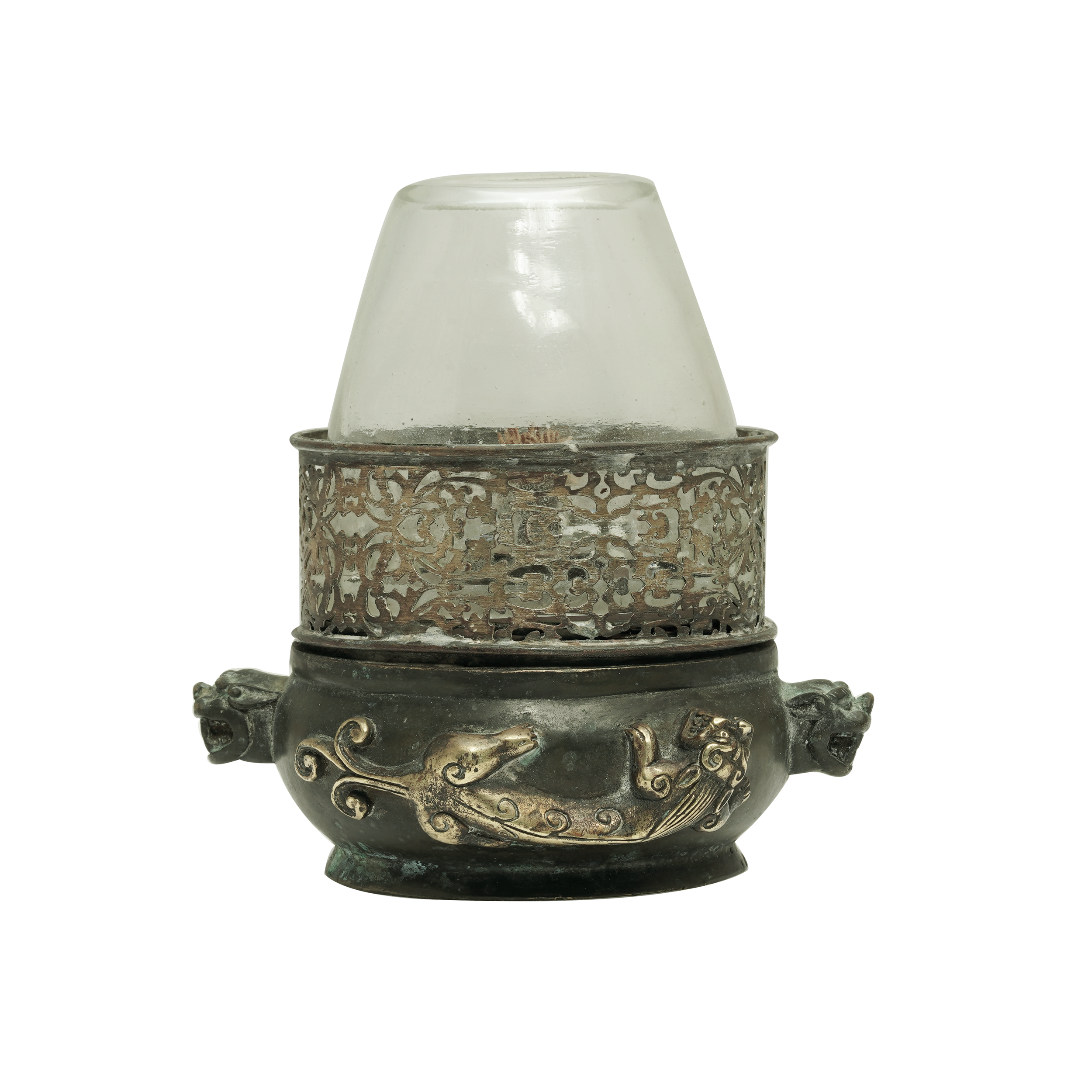
Origin: China
Date: Late 19th–early 20th century
Materials: Cast bronze, gilt decoration, glass
Dimensions: Appro 9 × 8 cm
Description:
Crafted opium pipe lamp consisting of a cast bronze base with gilt decorative elements, a pierced metal gallery, and a clear glass chimney. The base is adorned with gilt relief motifs of stylized mythical animals—possibly chi dragons—on a scrolling background, flanked by handles in the form of lion or dragon heads. The pierced metal gallery above is decorated with an intricate lattice of geometric and foliate designs, allowing heat to dissipate while shielding the flame.
The lamp’s glass chimney, slightly flared and tapering toward the top, would have protected the flame from drafts and ensured a steady burn. Such lamps provided the focused heat necessary for vaporizing prepared opium in the pipe’s bowl.
Cultural Context:
During the height of opium smoking in China, lamps like this were essential components of the ritual. The quality of materials and workmanship in this example suggest it was made for a wealthy user or an upscale opium establishment. The decorative program, blending auspicious animals and fine metalwork, reflects the tendency to imbue even utilitarian smoking implements with artistry and symbolism.
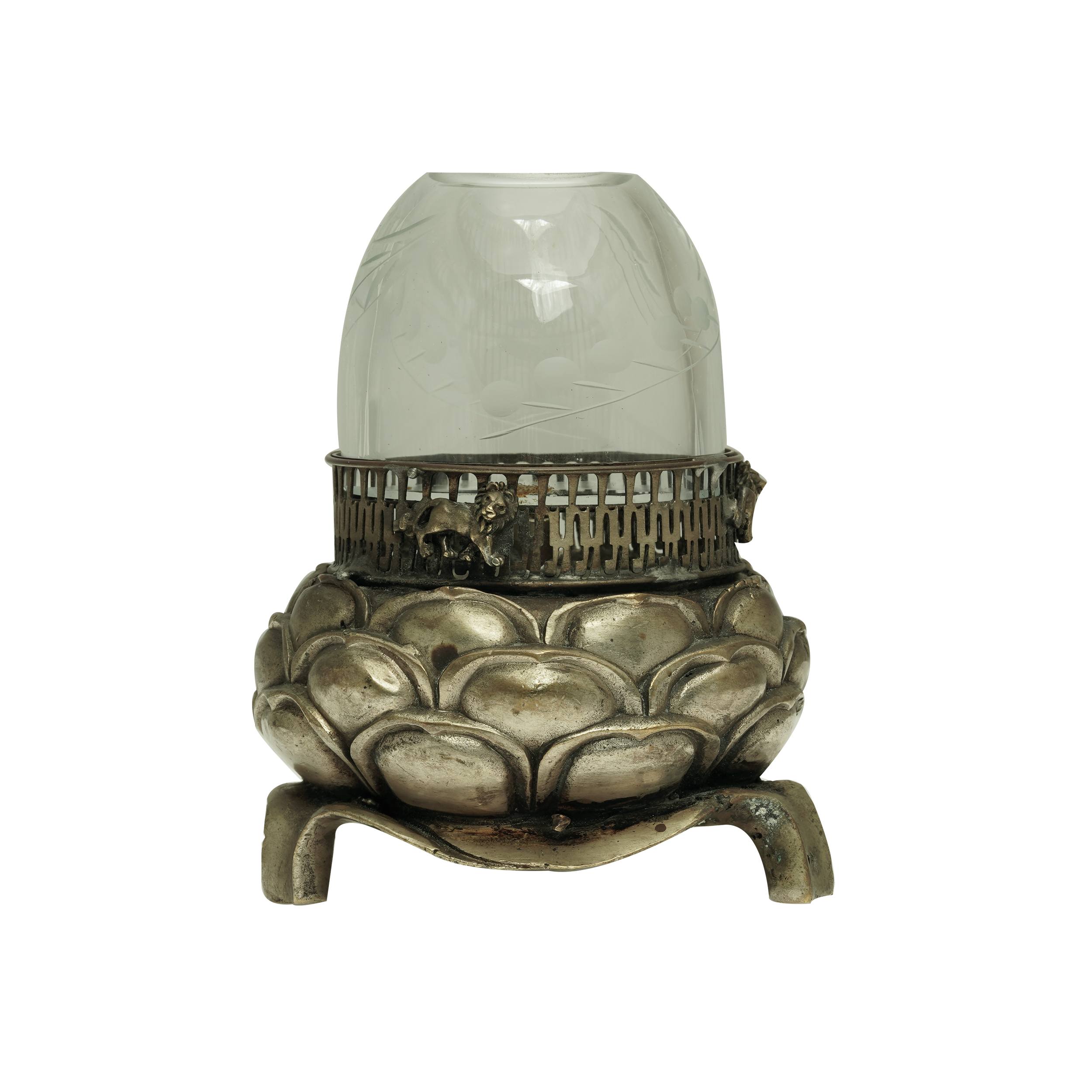
Origin: China
Date: Late 19th–early 20th century
Materials: plated metal, cast and chased; glass with etched decoration
Dimensions: Appro 10 × 8 cm
Description:
Ornate opium pipe lamp modeled in the form of a blooming lotus flower, a symbol of purity and transcendence in Chinese culture. The plated metal base is cast in overlapping lotus petals rising from a footed stand with four outward-curving supports. Above the petals sits a pierced gallery band adorned with small applied animal figures, including a finely detailed lion in relief.
The gallery supports a clear glass chimney, subtly etched with a pattern of flowers and foliage. This chimney would have shielded the lamp’s flame, ensuring a steady source of heat for vaporizing prepared opium in the pipe’s bowl. The lotus motif—paired with the inclusion of protective animals—would have imbued the piece with auspicious associations, blending spiritual symbolism with functional design.
Cultural Context:
During the height of opium smoking in the late Qing Dynasty, lamps of this type were essential tools, yet wealthy patrons often commissioned examples of high craftsmanship. This lamp’s decorative sophistication reflects its probable use in an elite household or refined opium parlor, where artistry and ritual combined in the act of smoking.
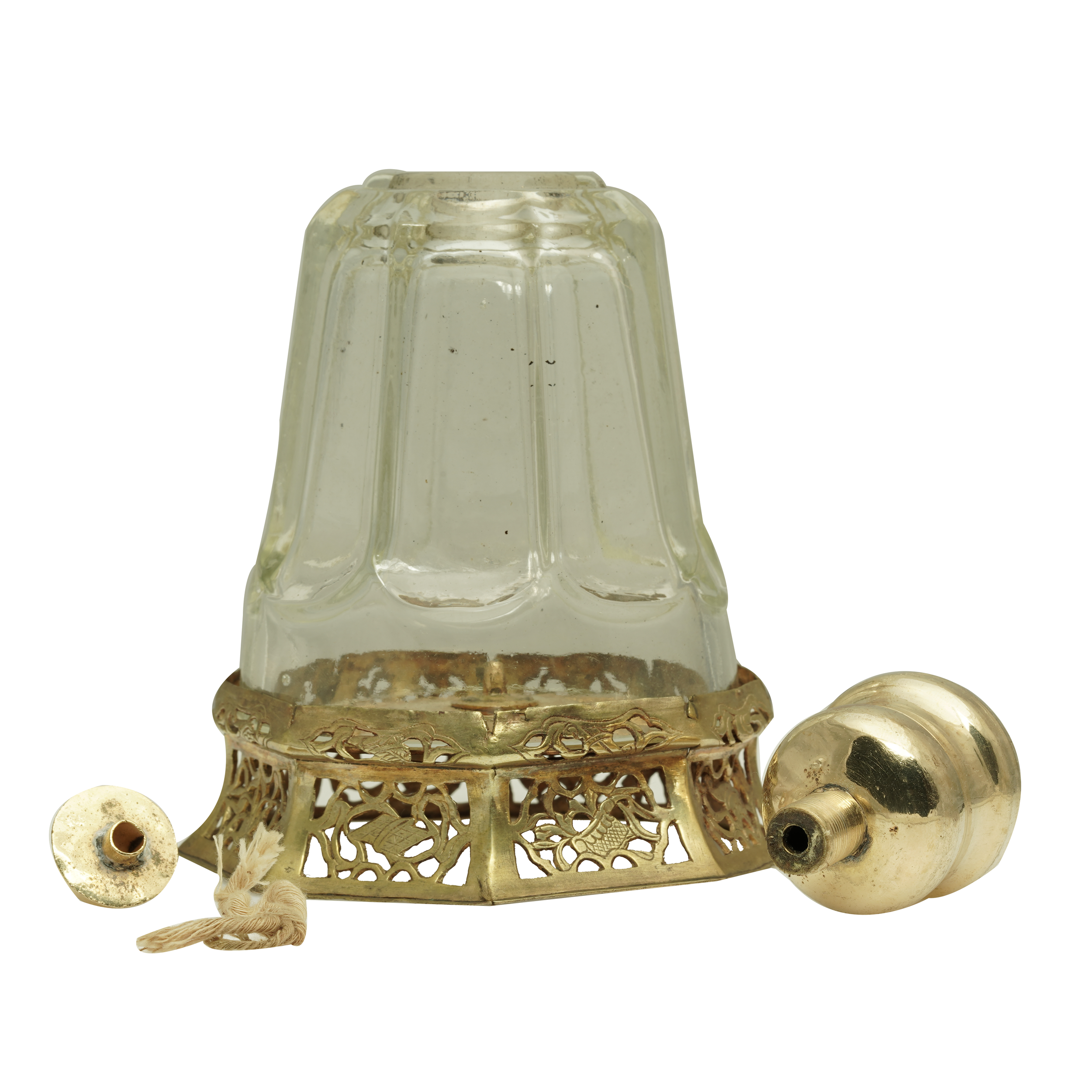
Origin: China
Date: Late 19th–early 20th century
Materials: Glass, brass, cotton wick
Dimensions: Appro 14 × 9 cm
Description:
Traditional Chinese opium lamp featuring a fluted, clear glass chimney mounted on an ornate pierced brass base. The base is decorated with cut-out patterns, allowing light to diffuse softly while protecting the flame from drafts. The removable brass burner and fitted cotton wick enabled controlled heating, a critical aspect of preparing opium for smoking. The detachable components reflect both practical design and ease of maintenance.
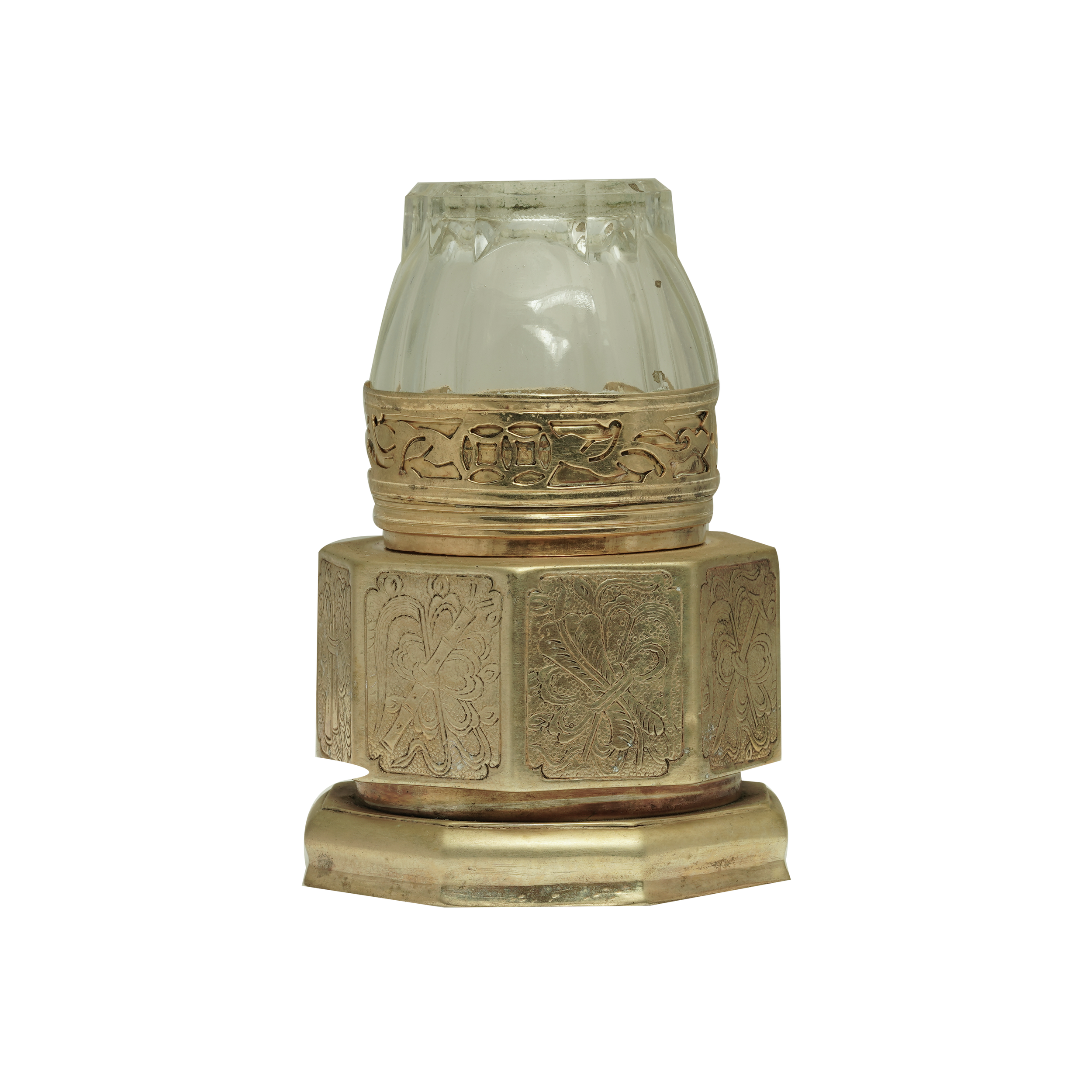
Origin: China
Date: Late 19th–early 20th century
Materials: Brass, glass
Dimensions: Appro 11 × 9 cm
Description:
Crafted Chinese opium lamp showcasing a faceted brass base, each panel adorned with engraved floral motifs. The cylindrical glass chimney is held in place by an ornate pierced brass collar with a scrolling vine pattern. The combination of a stable, weighty base and the protective glass allowed for a steady, focused flame—essential for heating opium paste in the pipe bowl. The lamp’s compact and robust design reflects both functional precision and decorative artistry.
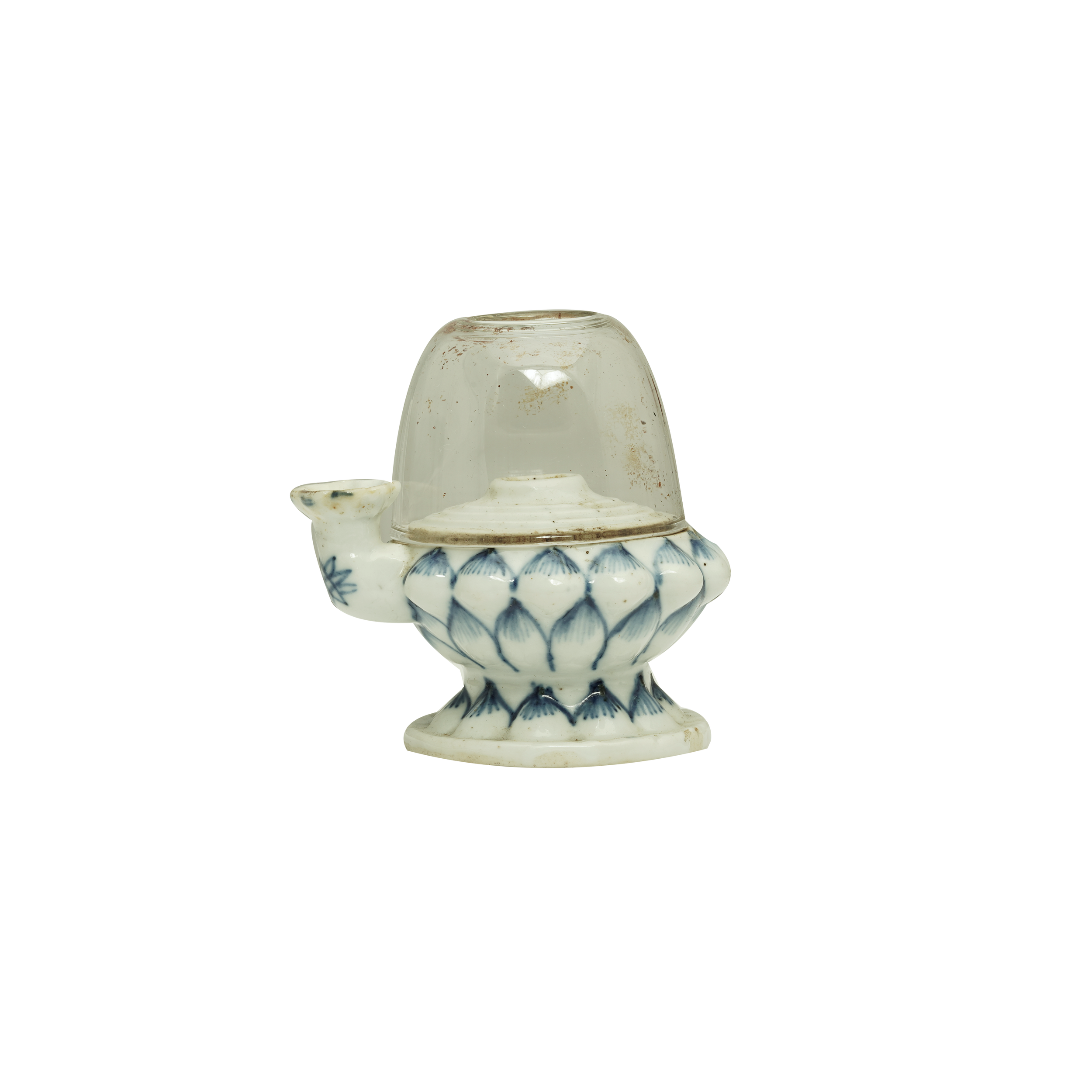
Origin: China
Date: Late 19th–early 20th century
Materials: Porcelain, glass
Dimensions: Appro 11 × 7 cm
Description:
Opium lamp crafted from blue and white porcelain, its body formed in a lotus-bud motif—an auspicious symbol in Chinese culture. The porcelain base supports a clear glass chimney designed to focus and protect the flame. A small spout-like extension served as the fuel chamber opening, allowing controlled access for lighting and maintaining the lamp.
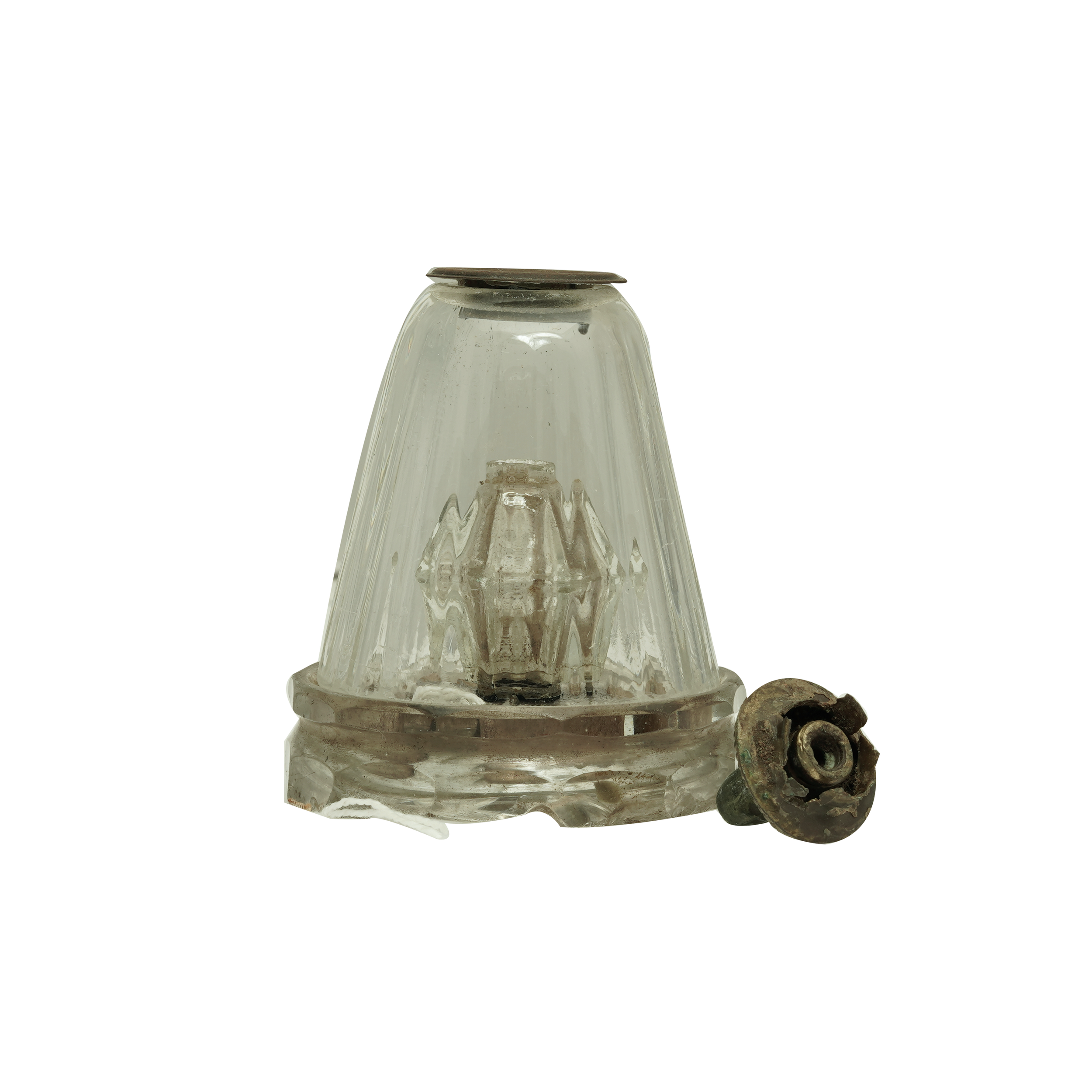
Origin: China
Date: Late 19th–early 20th century
Materials: Pressed glass, metal
Dimensions: 13 × 11 cm
Description:
Utilitarian opium lamp fashioned from clear pressed glass with faceted and fluted surfaces that refract the lamplight. The conical chimney, integrated with the base, encloses the burner assembly to protect the flame from drafts. A small metal burner cap, now aged with patina, once held the wick in place for precise heating of the opium pipe’s bowl.
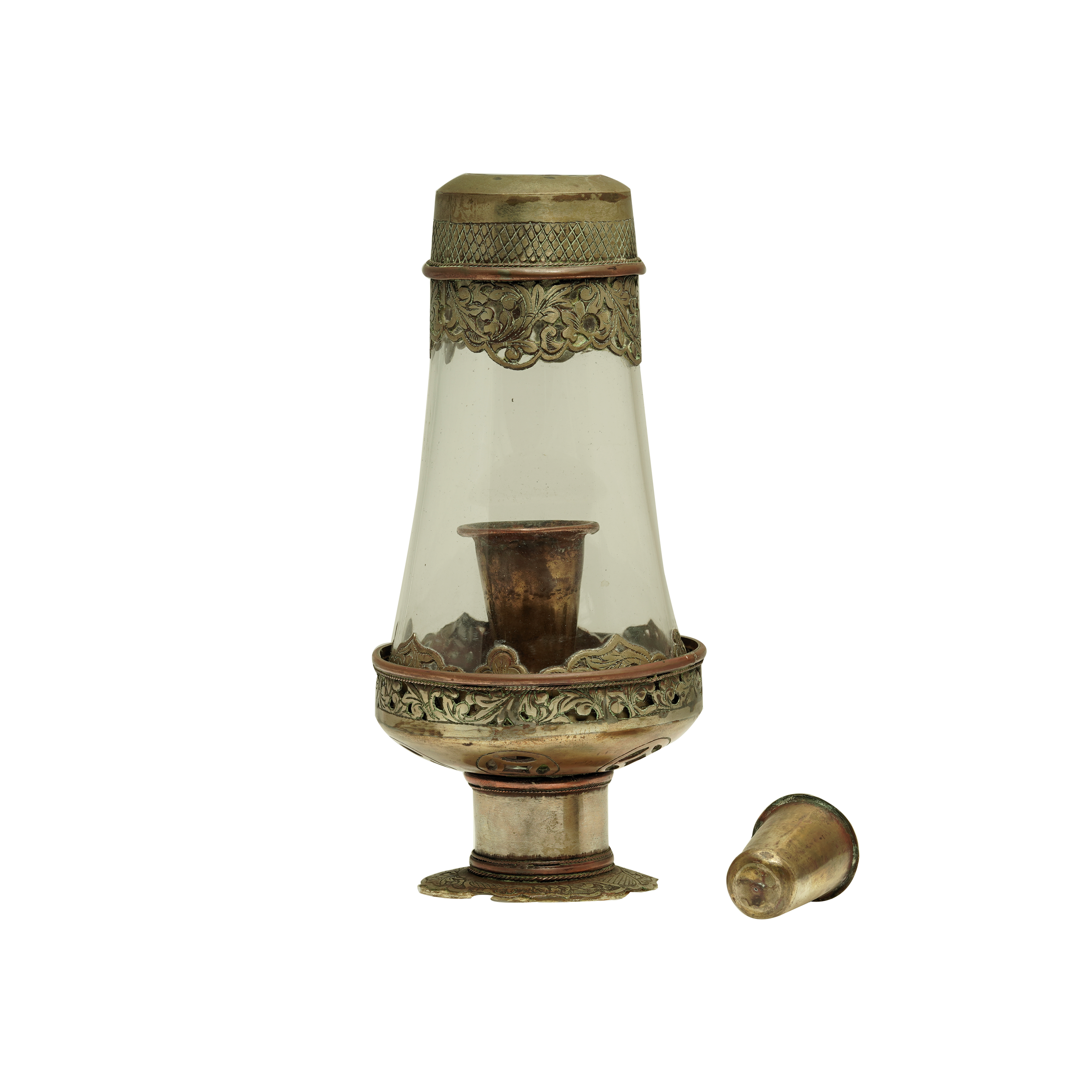
Origin: China
Date: Late 19th–early 20th century
Materials: Glass, brass, copper alloy
Dimensions: Appro 18 × 8 cm
Description:
Opium lamp featuring a tall, slightly flared glass chimney secured within ornate pierced brass bands at the top and base. The interior holds a copper burner cup designed to hold the wick, with the removable brass burner cap displayed alongside. The pierced metalwork incorporates scrolling foliate motifs, both decorative and functional, allowing airflow to sustain the flame.
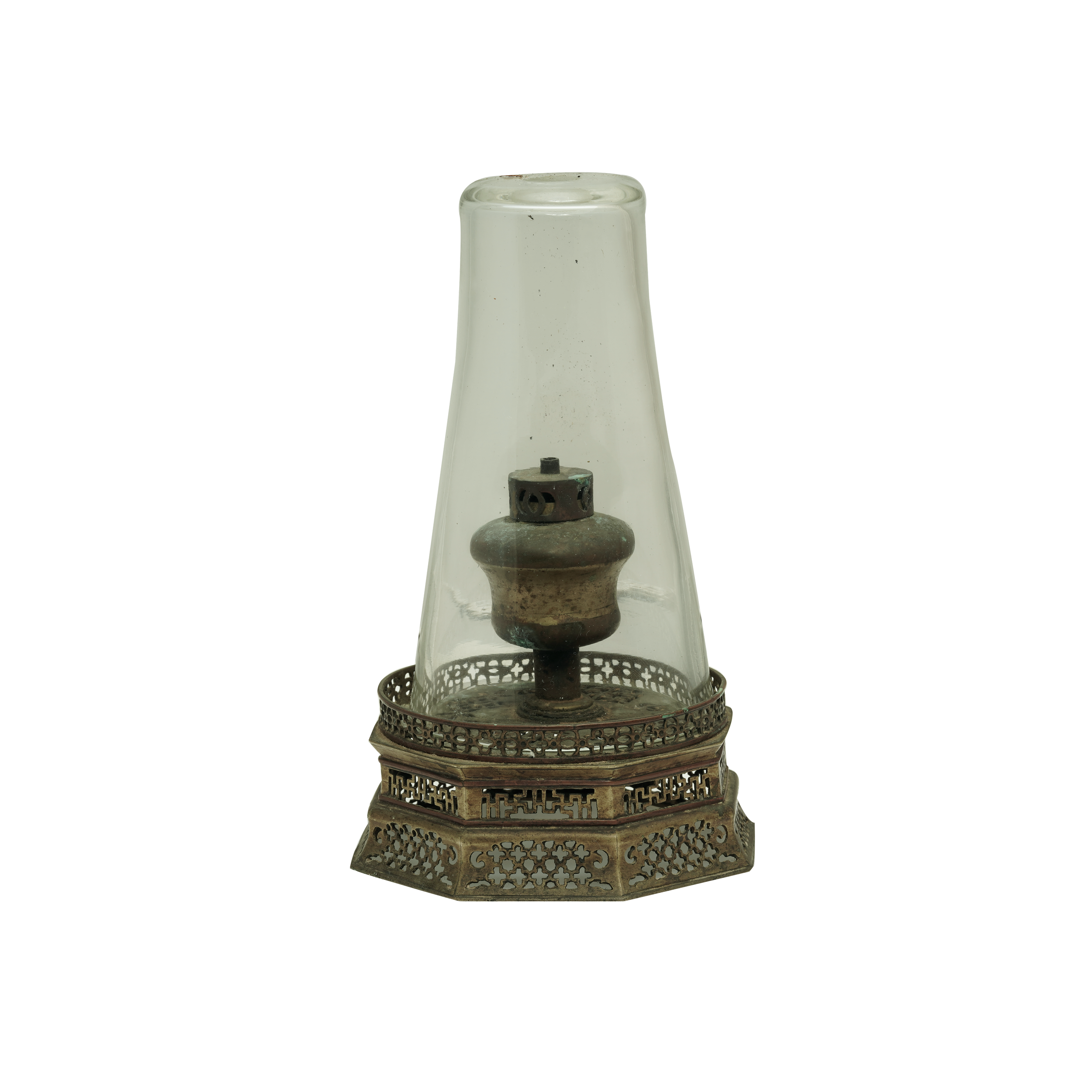
Origin: China
Date: Late 19th–early 20th century
Materials: Glass, brass, copper alloy
Dimensions: Appro 19 × 14 cm
Description:
Opium lamp featuring a tall, clear glass chimney set into an ornate, pierced brass base of octagonal form. The base is finely worked with geometric and foliate patterns, allowing ventilation for the central burner. The metal burner sits elevated within the chimney, designed to hold a wick and produce a steady, focused flame for heating opium in a pipe. The pierced brass work is both decorative and functional, enhancing airflow and stability.
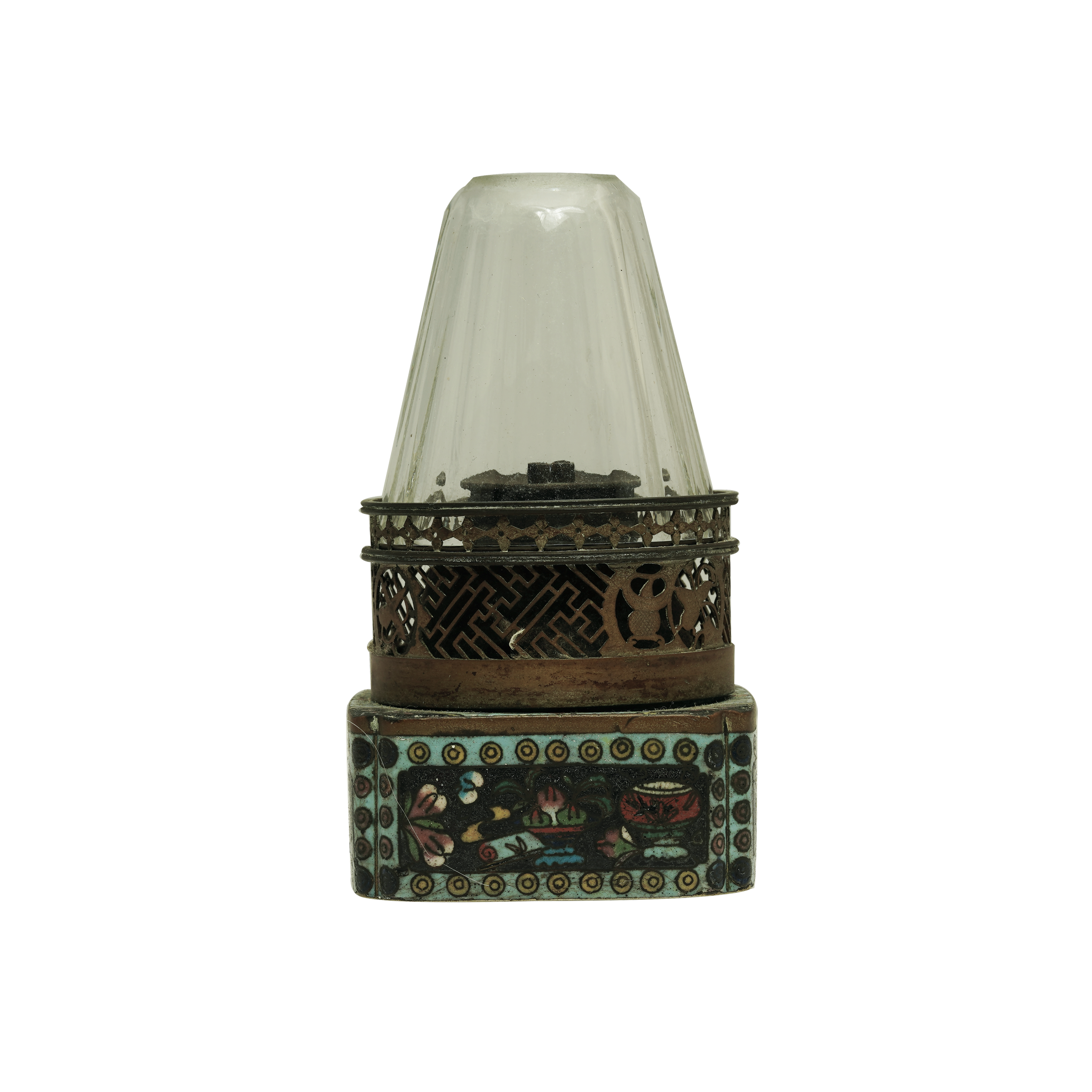
Origin: China
Date: Late 19th–early 20th century
Materials: Cloisonné enamel, brass, glass
Dimensions: 12 × 7 cm
Description:
Opium lamp featuring a square cloisonné enamel base decorated with vibrant floral motifs framed by circular patterns in turquoise, red, and white. Above the base sits an intricately pierced brass gallery with geometric and symbolic designs, allowing airflow to the flame. The lamp is topped with a conical glass chimney, which would protect the flame while focusing heat on the opium bowl during preparation.

Opium Pipe Bowl – Glass
Dimensions: Appro 6 × 5 cm
Glass opium pipe bowl with a faceted, domed shape and central aperture. The clear glass body is set into a ceramic collar for attachment to the pipe stem. Likely late 19th to early 20th century, used for heating opium in traditional smoking practices.