

 Image 1 of 2
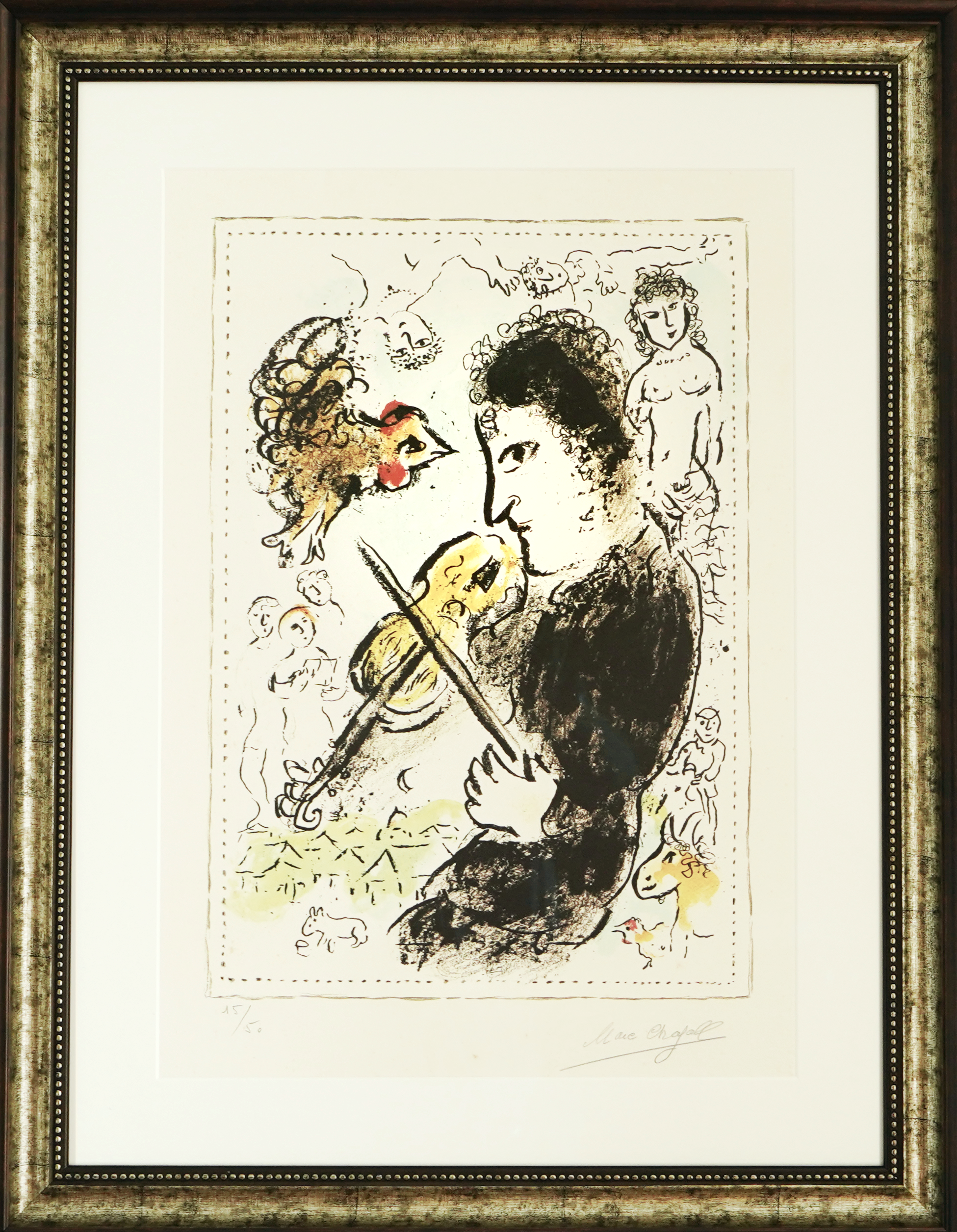 Image 2 of 2
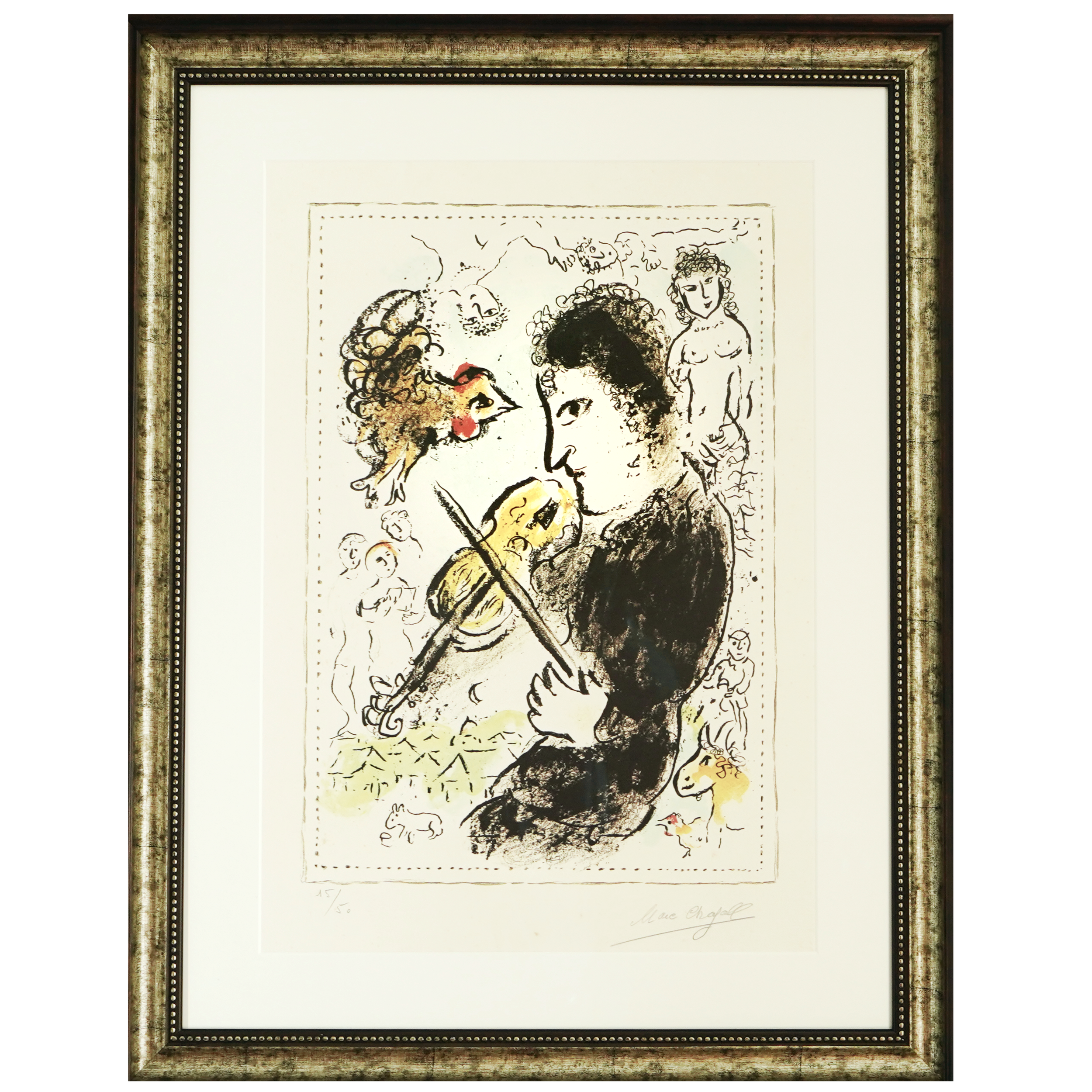
MARC CHAGALL - LE VIOLONISTE LITHOGRAPH ORIGINAL
MARC CHAGALL Etching drawing. Signed bottom right, limited edition
Edition: 15/50
Title:Le Violoniste
Artist: Marc Chagall (1887–1985)
Date: Mid-20th century
Medium: Color lithograph on paper
Dimensions: 56 × 40 cm
Description:
Lithograph by Marc Chagall showing a man playing a violin, surrounded by dreamlike figures including a rooster, a nude woman, and a dog. The background includes a village scene and floating heads, all drawn in Chagall’s distinctive style.
Chagall often used the figure of the violinist to reflect his Jewish heritage and memories of his childhood in Russia. The warm colors and flowing lines create a sense of emotion and nostalgia.
MARC CHAGALL Etching drawing. Signed bottom right, limited edition
Edition: 15/50
Title:Le Violoniste
Artist: Marc Chagall (1887–1985)
Date: Mid-20th century
Medium: Color lithograph on paper
Dimensions: 56 × 40 cm
Description:
Lithograph by Marc Chagall showing a man playing a violin, surrounded by dreamlike figures including a rooster, a nude woman, and a dog. The background includes a village scene and floating heads, all drawn in Chagall’s distinctive style.
Chagall often used the figure of the violinist to reflect his Jewish heritage and memories of his childhood in Russia. The warm colors and flowing lines create a sense of emotion and nostalgia.
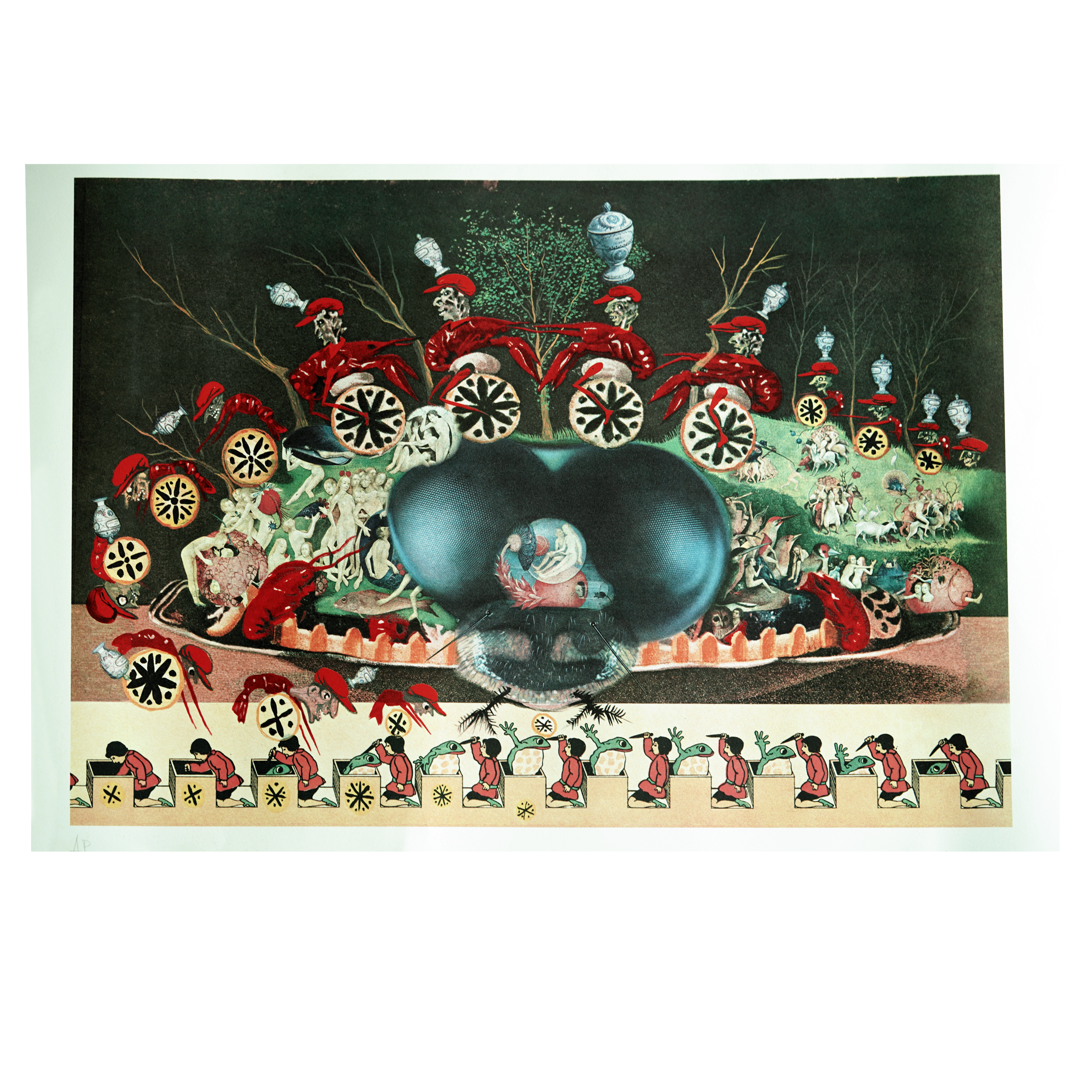
Salvador Dalí (1904–1989)
Lithograph after "The Garden of Earthly Delights"
Lithograph on paper
Dimensions: 41 × 58 cm
This lithograph by Salvador Dalí reinterprets Hieronymus Bosch’s The Garden of Earthly Delights through the surrealist’s unique vision. Combining fantastical figures, dreamlike landscapes, and symbolic imagery, Dalí pays homage to Bosch while infusing the work with his own eccentric and provocative style. The composition reflects Dalí’s fascination with the subconscious, metamorphosis, and the interplay of fantasy and reality, themes central to his career as one of the most influential artists of the 20th century.
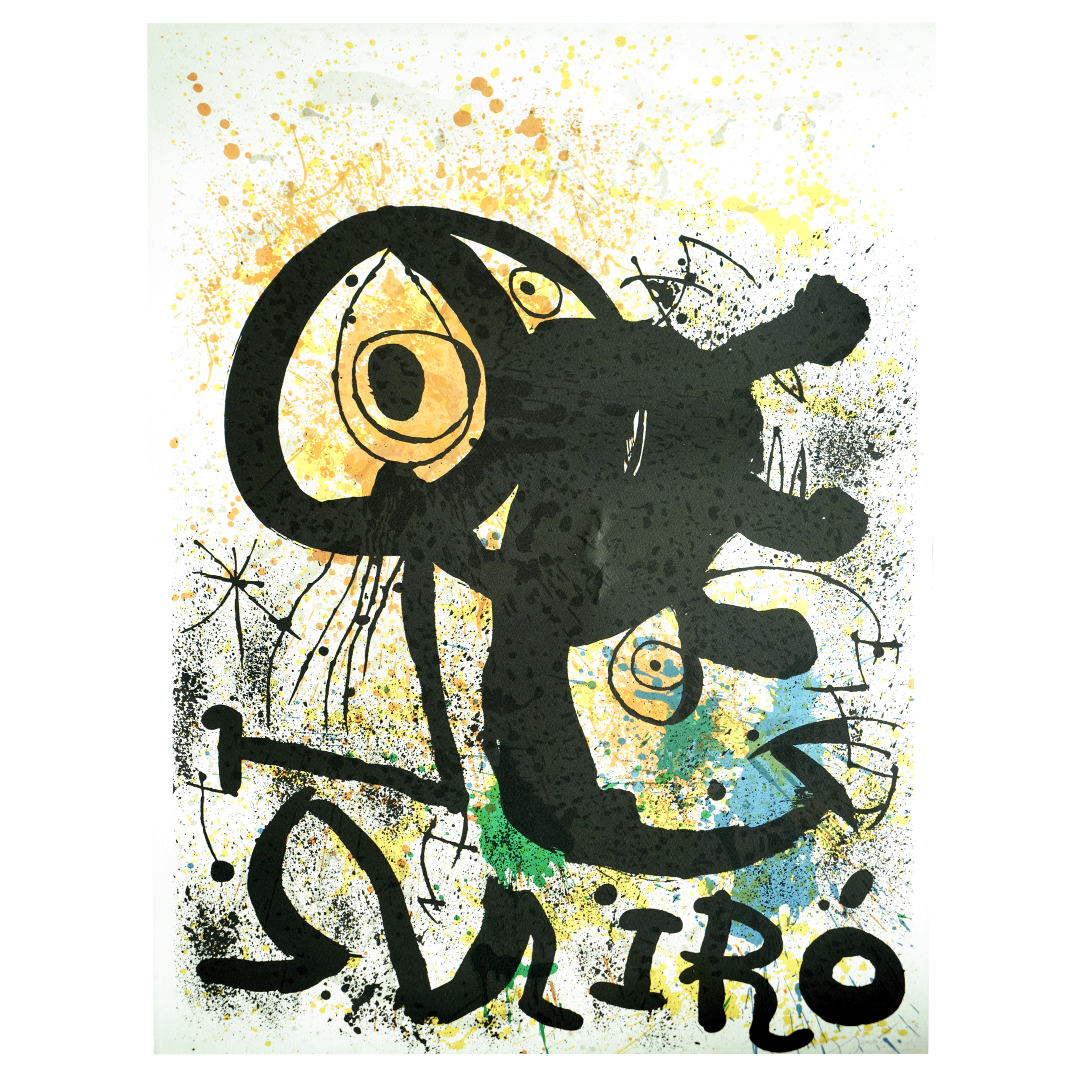
Joan Miró (1893–1983)
Untitled, c. 1960s–70s
Color lithograph on paper
Dimensions: 86 × 59 cm
Lithograph capturing Joan Miró’s fascination with spontaneity, movement, and the dreamlike world of abstraction. Bold black forms dominate the composition, animated by bursts of yellow, green, and blue splatters that evoke both cosmic energy and childlike play. Miró’s gestural lines and biomorphic shapes suggest a universe alive with symbols, where imagination transforms into visual poetry.
As in much of his graphic work, Miró uses lithography not only as a means of reproduction but as a medium of invention, preserving the immediacy and vitality of his painterly touch.
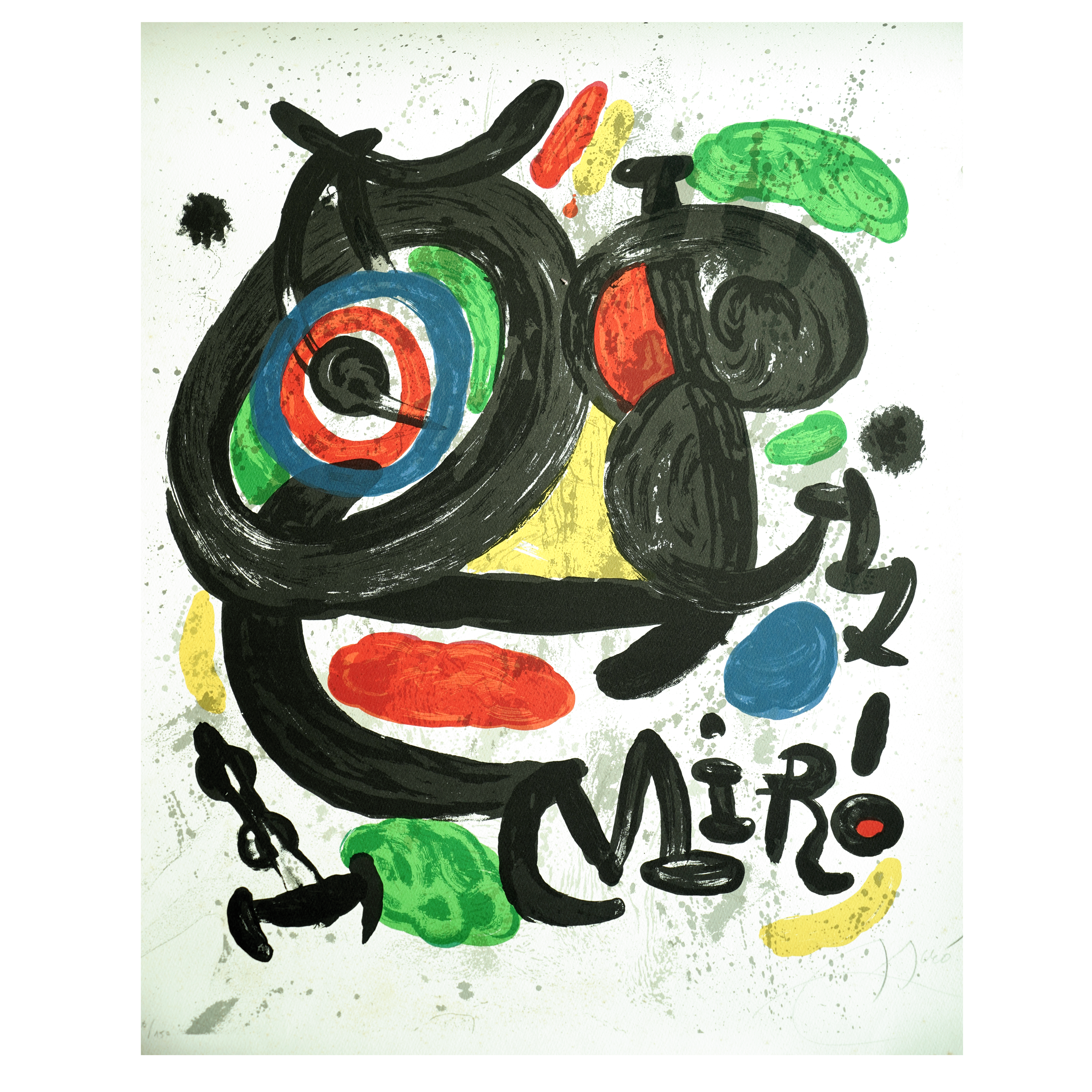
Joan Miró (1893–1983)
Untitled, c. 1960s
Color lithograph on paper
Dimensions: 86 × 59 cm
Lithograph exemplifying Joan Miró’s playful and poetic visual language. Bold black forms intertwine with bursts of primary colors—red, blue, yellow, and green—set against a dynamic field of painterly textures and gestural marks. The composition embodies Miró’s signature balance between abstraction and spontaneity, evoking a dreamlike world of symbols, movement, and imagination.
Miró’s graphic works, such as this, highlight his ability to translate the energy of his paintings into printmaking, making color and form accessible while preserving their expressive intensity.
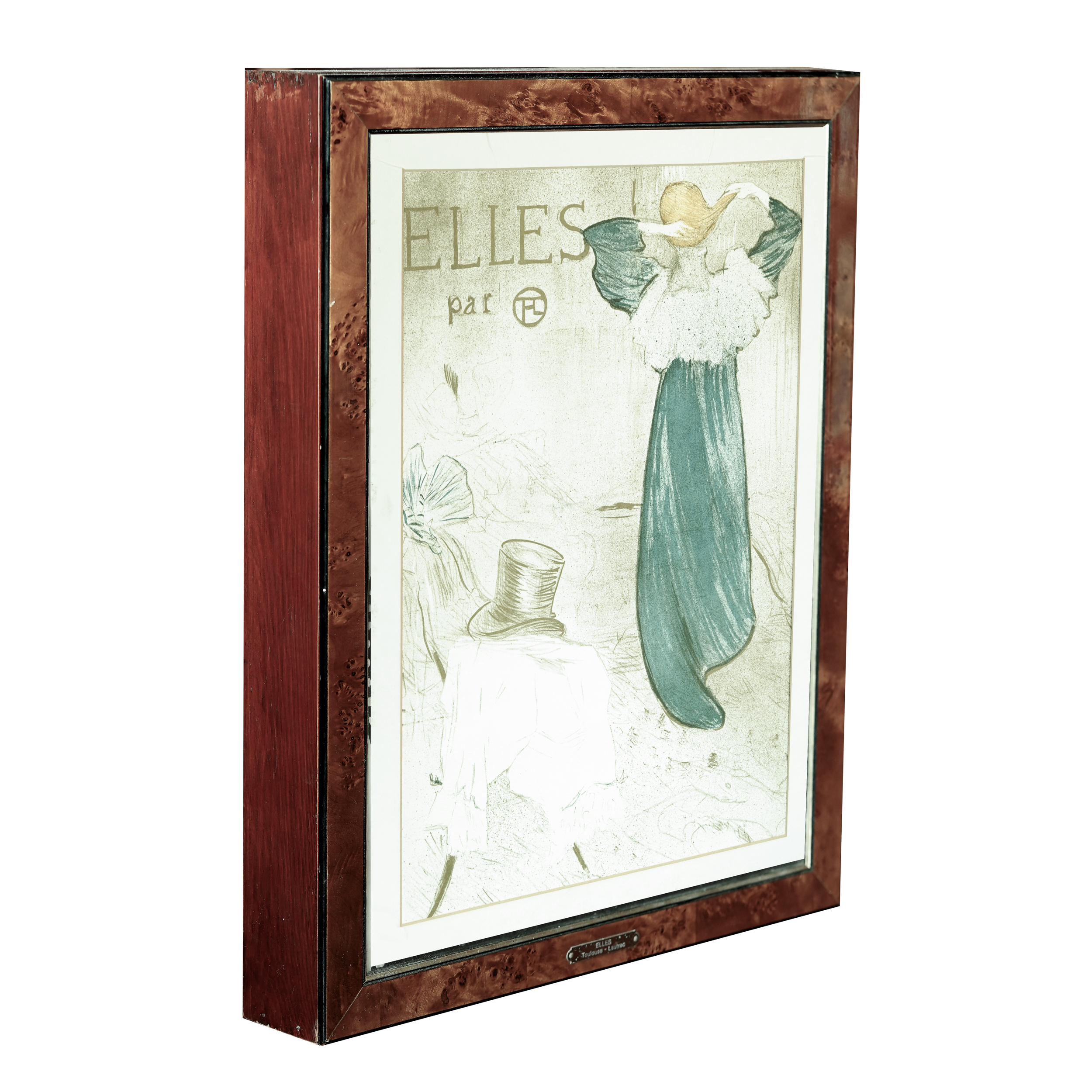
Henri de Toulouse-Lautrec (1864–1901)
Elles, 1896
Suite of pochoir lithographs
Dimensions: 60 × 49 cm
The Elles series, published in 1896, is one of Toulouse-Lautrec’s most intimate and revealing bodies of work. Comprising twelve lithographs and a cover, it depicts the daily lives of women in Parisian brothels—not in moments of spectacle, but in their private routines: waking, bathing, dressing, and resting.
With soft lines, muted tones, and a compassionate gaze, Lautrec strips away the stereotypes of the courtesan to portray women with humanity and dignity. Far from caricature, Elles stands as a sensitive testimony to intimacy and the quiet beauty of everyday life.
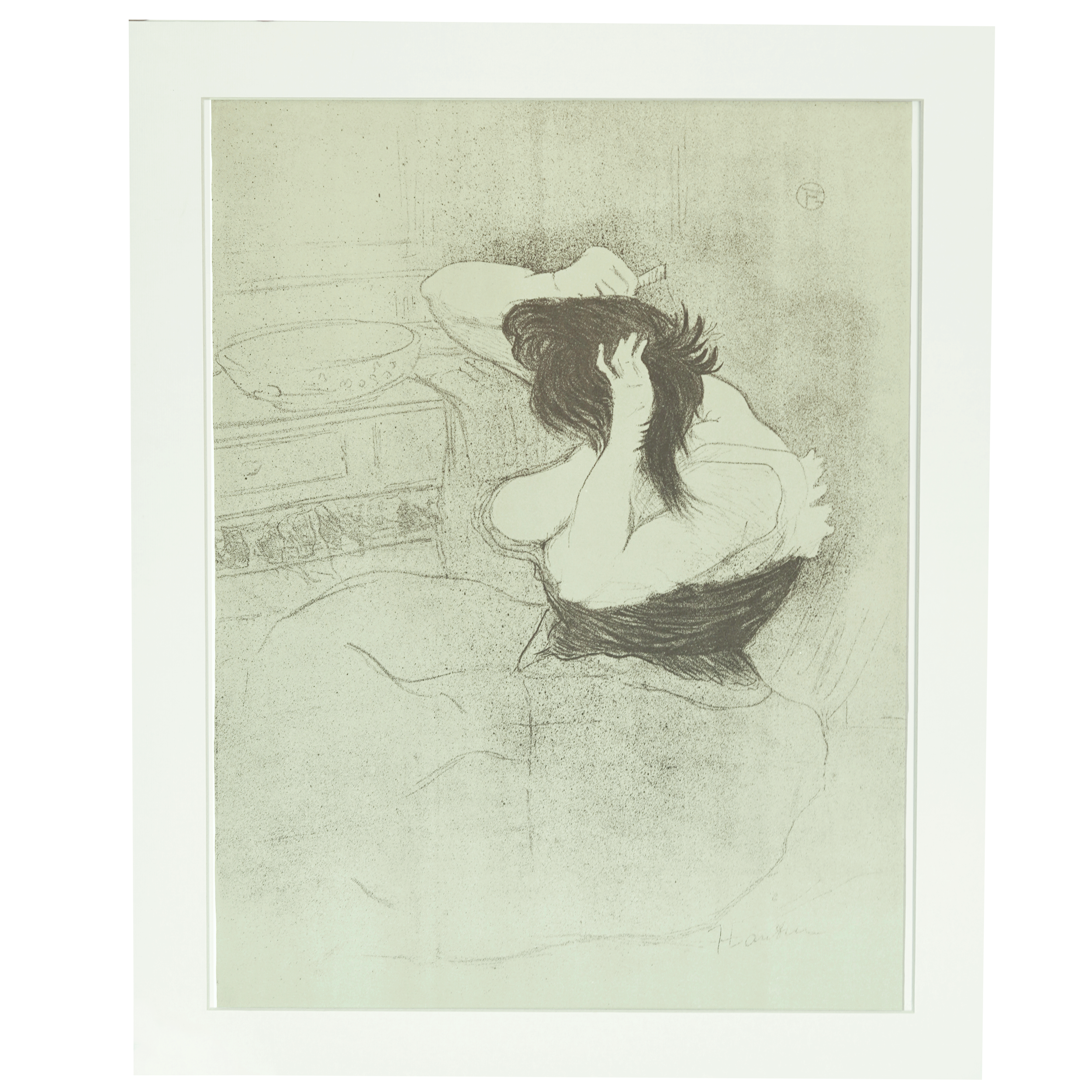
Henri de Toulouse-Lautrec (1864–1901)
Woman Combing Her Hair, from the series Elles, 1896
Lithograph
Dimensions: 60 × 49 cm
This work belongs to Toulouse-Lautrec’s celebrated Elles portfolio, which intimately portrays the private lives of women working in Parisian maisons closes. Here, a woman is shown in a moment of personal grooming, seated and absorbed in the simple act of combing her hair.
Rendered with soft lines and delicate tonal shading, the composition avoids dramatization, instead capturing the dignity of everyday gestures. Lautrec’s empathetic vision elevates the ordinary, offering a rare and humanizing perspective on women who were often marginalized in 19th-century society.
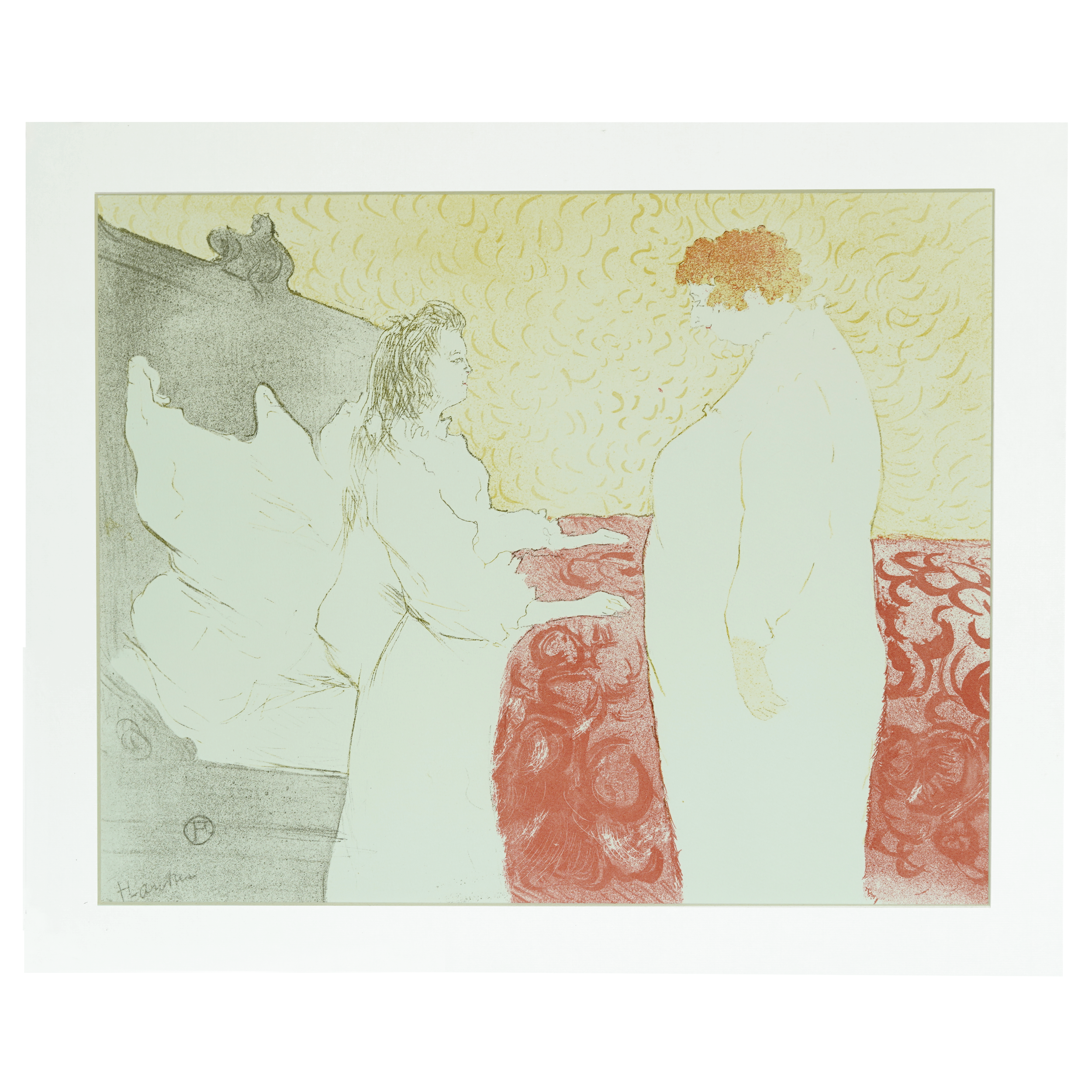
Henri de Toulouse-Lautrec (1864–1901)
Two Women in Bed, from the series Elles, 1896
Lithograph
Dimensions: 49 × 60 cm
Lithograph belonging to Lautrec’s Elles series, a groundbreaking portfolio depicting the daily lives of Parisian courtesans with honesty and empathy. Here, two women are shown in an intimate, unguarded moment—standing by a bed, their gestures casual and unposed. Lautrec avoids sensationalism, instead emphasizing companionship and the quiet rhythm of private life.
With its soft palette and simplified lines, the work conveys warmth and humanity, underscoring Lautrec’s unique ability to portray marginalized women with dignity and subtle psychological depth.
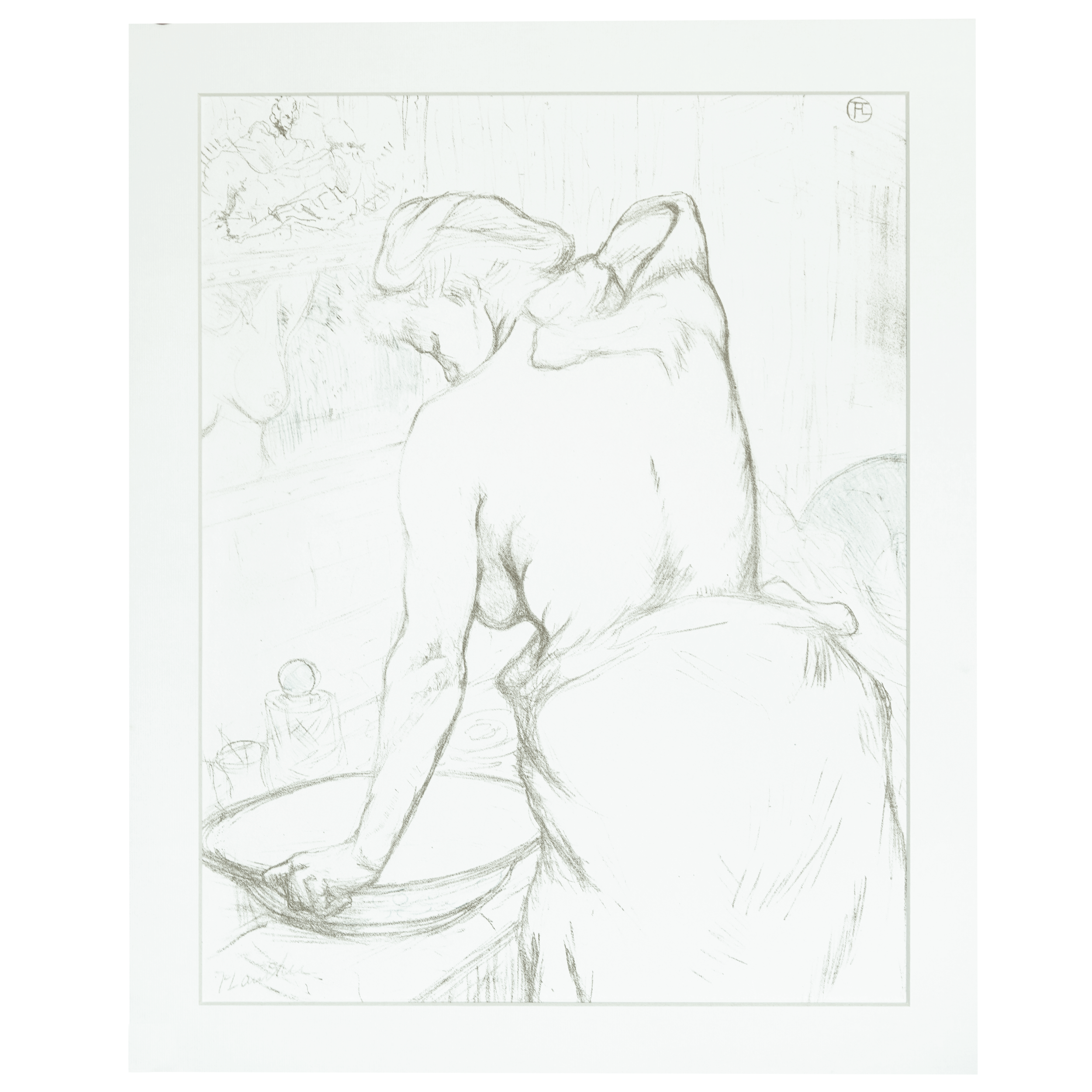
Henri de Toulouse-Lautrec (1864–1901)
Woman at Her Toilette, from the series Elles, 1896
Lithograph
Dimensions: 60 × 49 cm
Lithograph belonging to Lautrec’s celebrated Elles series, which portrays women in the private spaces of brothels. Rather than focusing on eroticism, Lautrec captured their quiet, everyday routines with intimacy and empathy. Here, a woman bends over a washbasin, her body rendered in fluid lines that emphasize both her physical presence and the ordinariness of the moment.
By highlighting gestures of self-care, Lautrec dignifies the lives of these women, offering a rare and compassionate view that challenged the stereotypes of his time.
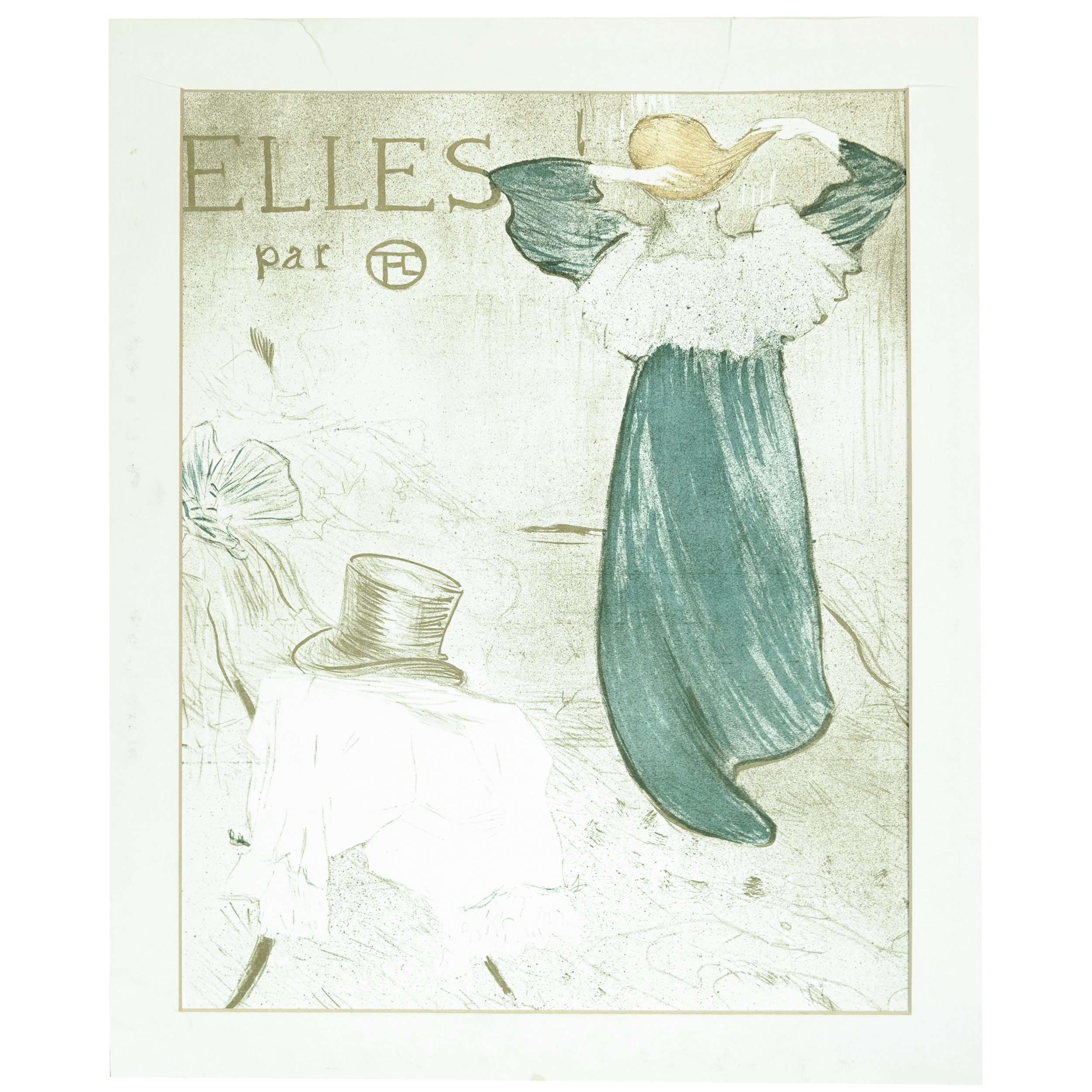
Henri de Toulouse-Lautrec (1864–1901)
Frontispiece for the series "Elles", 1896
Lithograph with pochoir coloring
Dimensions: 60 × 49 cm
This lithograph served as the frontispiece to Lautrec’s celebrated Elles series, published in 1896. The portfolio presents intimate scenes of Parisian prostitutes, focusing on their daily routines rather than their public personas. Here, a woman in a dressing gown adjusts her hair, her back turned to the viewer, embodying the quiet privacy and unposed dignity that define the series.
Lautrec’s refined lines and flat planes of color highlight his mastery of lithography, while the Elles suite reflects his sympathetic portrayal of marginalized women, offering a rare, humanizing perspective in 19th-century art.
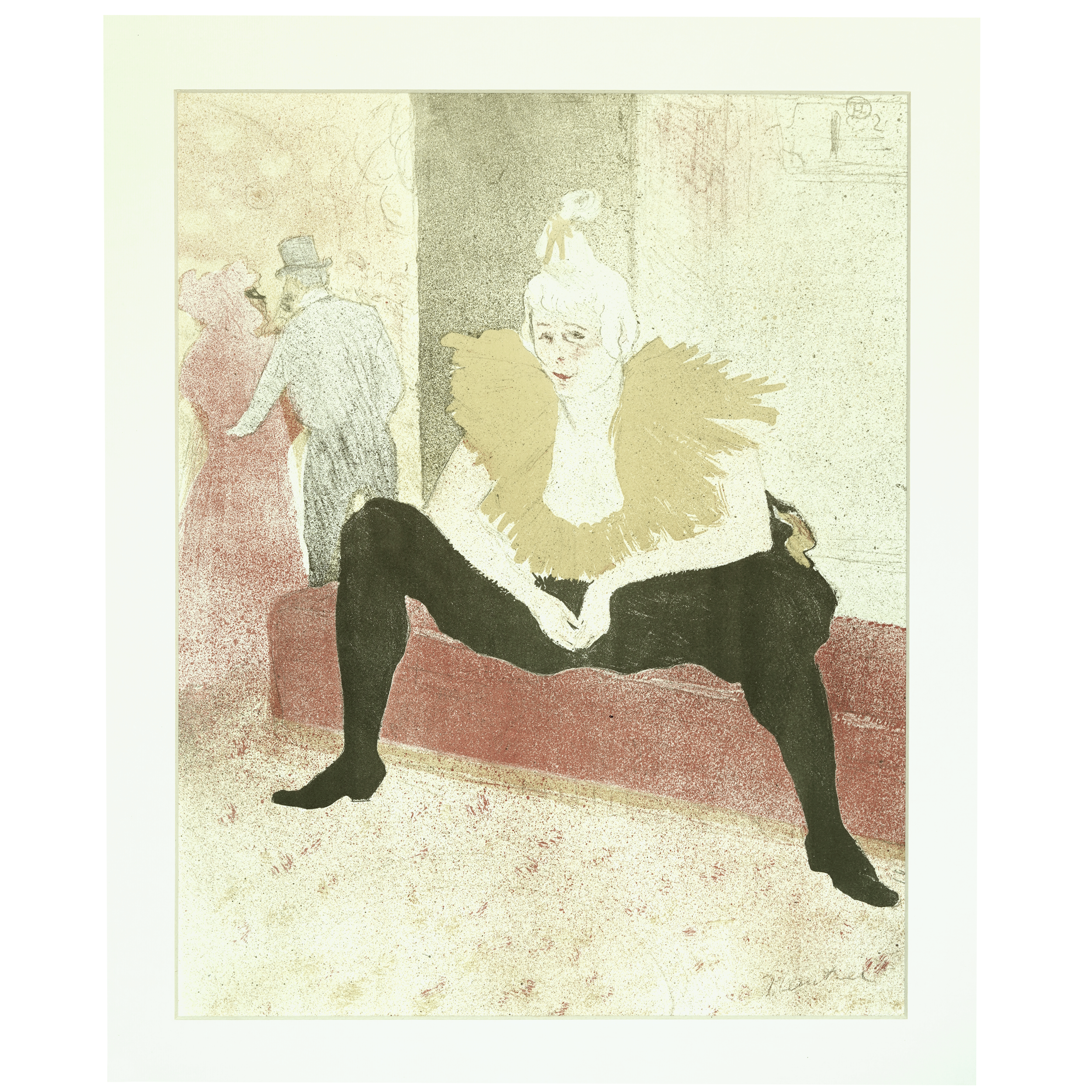
Henri de Toulouse-Lautrec (1864–1901)
Lithograph from the series "Elles", 1896
Dimensions: 60 × 49 cm
Lithograph belonging to Lautrec’s Elles series, created in 1896, which depicts the intimate and everyday lives of Parisian prostitutes. Unlike his famous cabaret posters, these works are quieter, offering tender and empathetic portrayals of women beyond the stage, shown in moments of rest, reflection, and vulnerability.
Executed with pochoir (stencil coloring), the print demonstrates Lautrec’s bold yet delicate use of line and flat color. Far from caricature, Elles captures humanity and dignity, reflecting Lautrec’s deep understanding of the social realities of Montmartre’s demi-monde.
ENQUIRY:

Joan Miró (1893–1983)
Lithograph
Dimensions: 86 × 59 cm
Lithograph by Joan Miró showcasing the artist’s distinctive visual language of bold colors, organic shapes, and playful abstraction. With its rhythmic black forms interwoven with striking reds, blues, and yellows, the work reflects Miró’s exploration of the subconscious and his desire to evoke a dreamlike, poetic universe. Characterized by spontaneity and imagination, this print exemplifies Miró’s pivotal role in Surrealism and his lasting influence on modern art.