

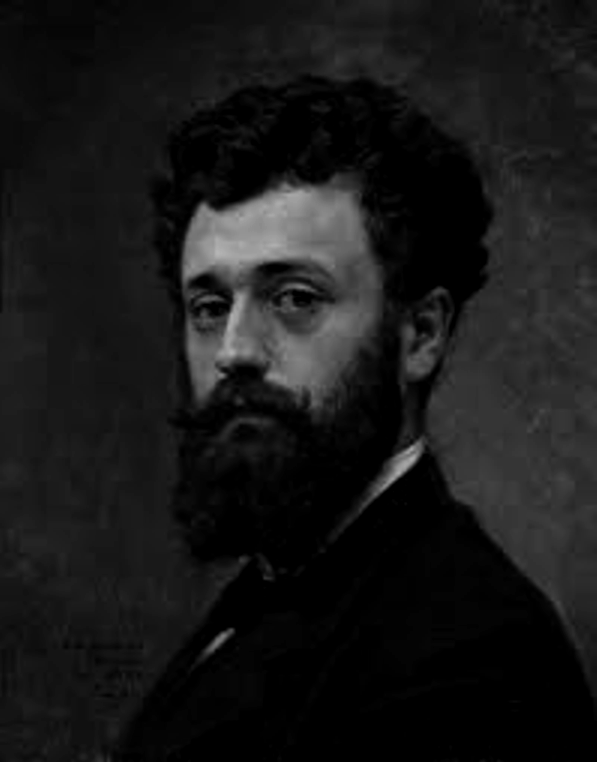
Raimundo DE MADRAZO
Raimundo de Madrazo y Garreta (1841–1920) was a Spanish painter celebrated for his refined, elegant portraits and genre scenes. Born into a distinguished family of artists in Rome, he trained in Madrid and Paris, becoming part of the Parisian art world’s elite. Madrazo’s works are known for their meticulous detail, luminous color, and polished realism, often portraying fashionable society, intimate interiors, and graceful female figures. His style combined academic technique with a subtle charm that appealed to aristocratic patrons across Europe and America.
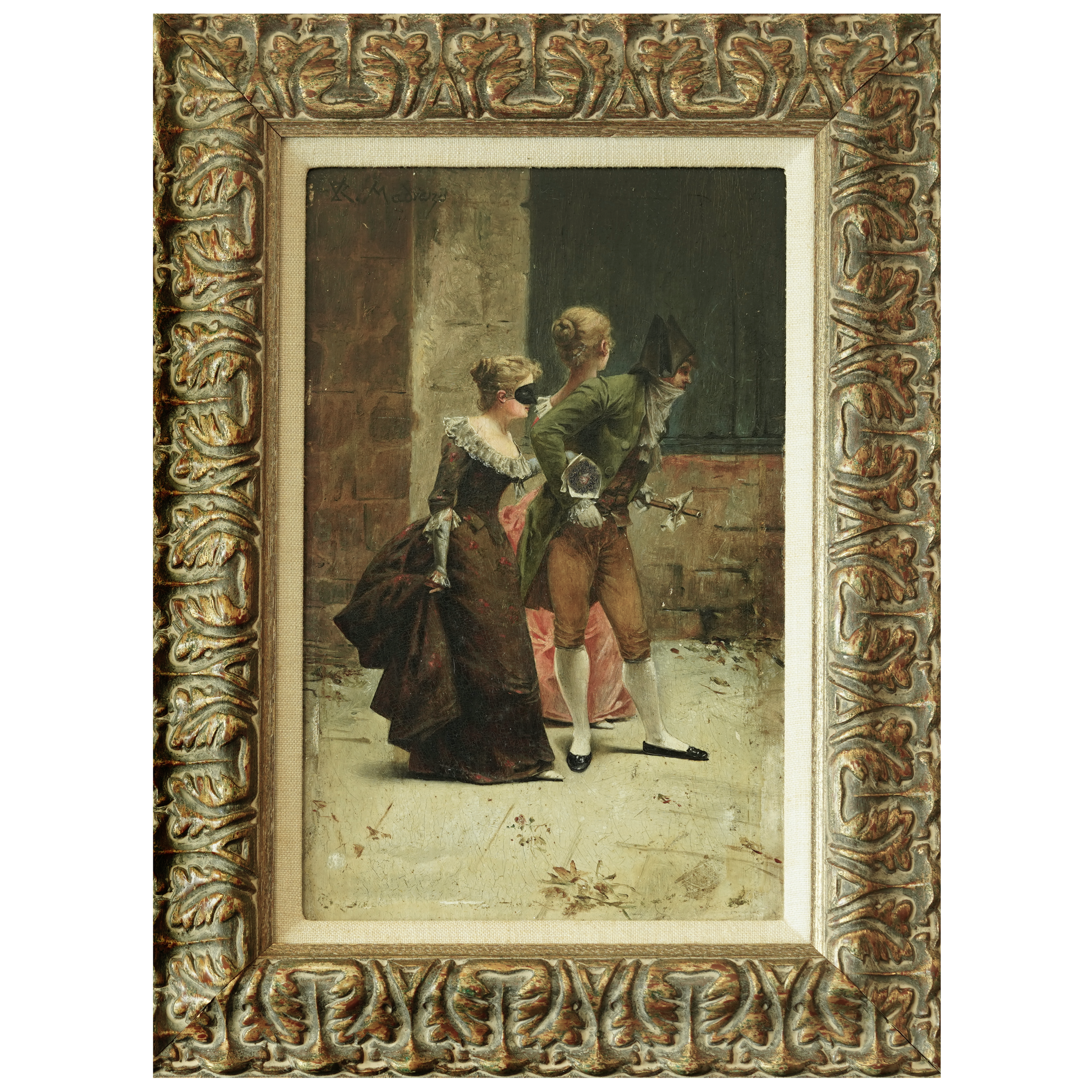
RAIMUNDO MADRAZO. Original Oil painting. Signed top left
Artist: Raimundo de Madrazo y Garreta (1841–1920)
Date: Late 19th century
Medium: Oil on canvas
Dimensions: 32 × 21 cm
Museum Description:
Painting by Raimundo Madrazo showing a scene with two women and one man dressed in 18th-century clothing. One woman is wearing a dark gown and a mask, while the man, dressed in a green coat.
Madrazo was known for painting elegant and romantic scenes. This artwork captures a moment with great attention to costume and detail.
Raimundo Madrazo was known for his depictions of refined interiors and courtly figures. His work often draws on themes of flirtation, gallantry, and historical nostalgia, making this painting a quintessential example of his richly romantic style.

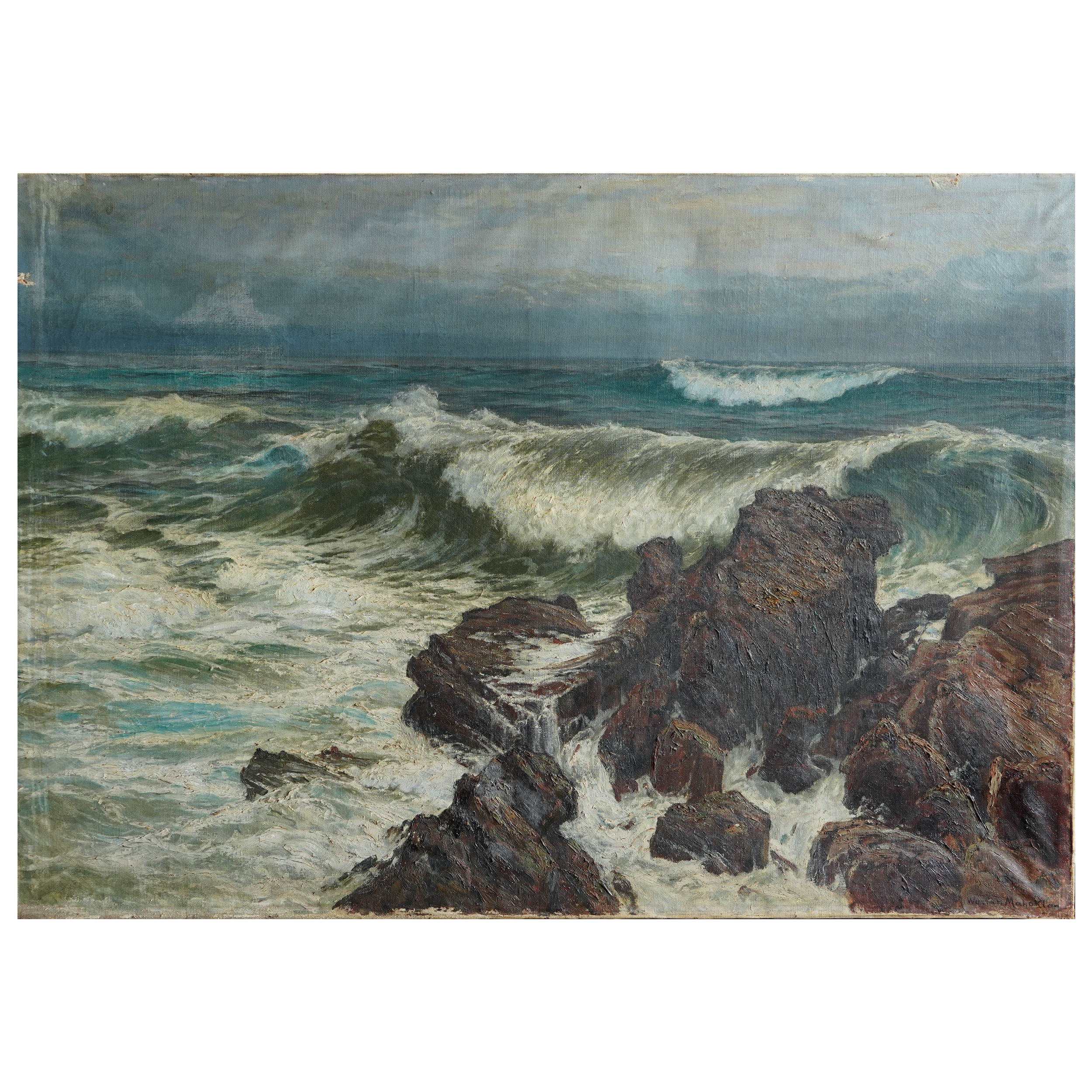

UNKNOWN ARTIST. “Opium Den” 19th Century Oil Painting
Year: 19th Century
Title:Opium Den
Artist: Unknown
Date: Late 19th to early 20th century
Medium: Oil on canvas
Dimensions: 115 X 145 cm
Collection: Private Collection
Description:
Painting presenting a hauntingly atmospheric glimpse into an opium den, most likely located in East Asia during the height of the opium trade and its social consequences. The composition captures a richly detailed interior—a semi-private chamber adorned with carved wooden panels and dimly lit by a hanging lantern. The subdued color palette, dominated by deep browns, ochres, and dark greens, intensifies the somber mood.
The artist’s attention to costume, architecture, and gesture suggests not only a documentary interest but also a critical lens, hinting at themes of escapism, colonial trade, and social decay. The use of directed light—illuminating the figures on the bed while casting the rest of the room into shadow—enhances the psychological depth of the composition.
While the artist remains unidentified, the painting offers rare insight into the cultural and historical context of opium use in the East during a tumultuous period shaped by imperialism, addiction, and moral ambiguity.