

PICASSO
Pablo Picasso (1881–1973) was a Spanish painter, sculptor, and one of the most influential artists of the 20th century. Co-founder of Cubism, he constantly reinvented his style, producing groundbreaking works across painting, sculpture, ceramics, and printmaking. From his early Blue and Rose Periods to the radical abstraction of Les Demoiselles d’Avignon and the political power of Guernica, Picasso’s art blended innovation, emotion, and mastery, leaving an enduring mark on modern art.
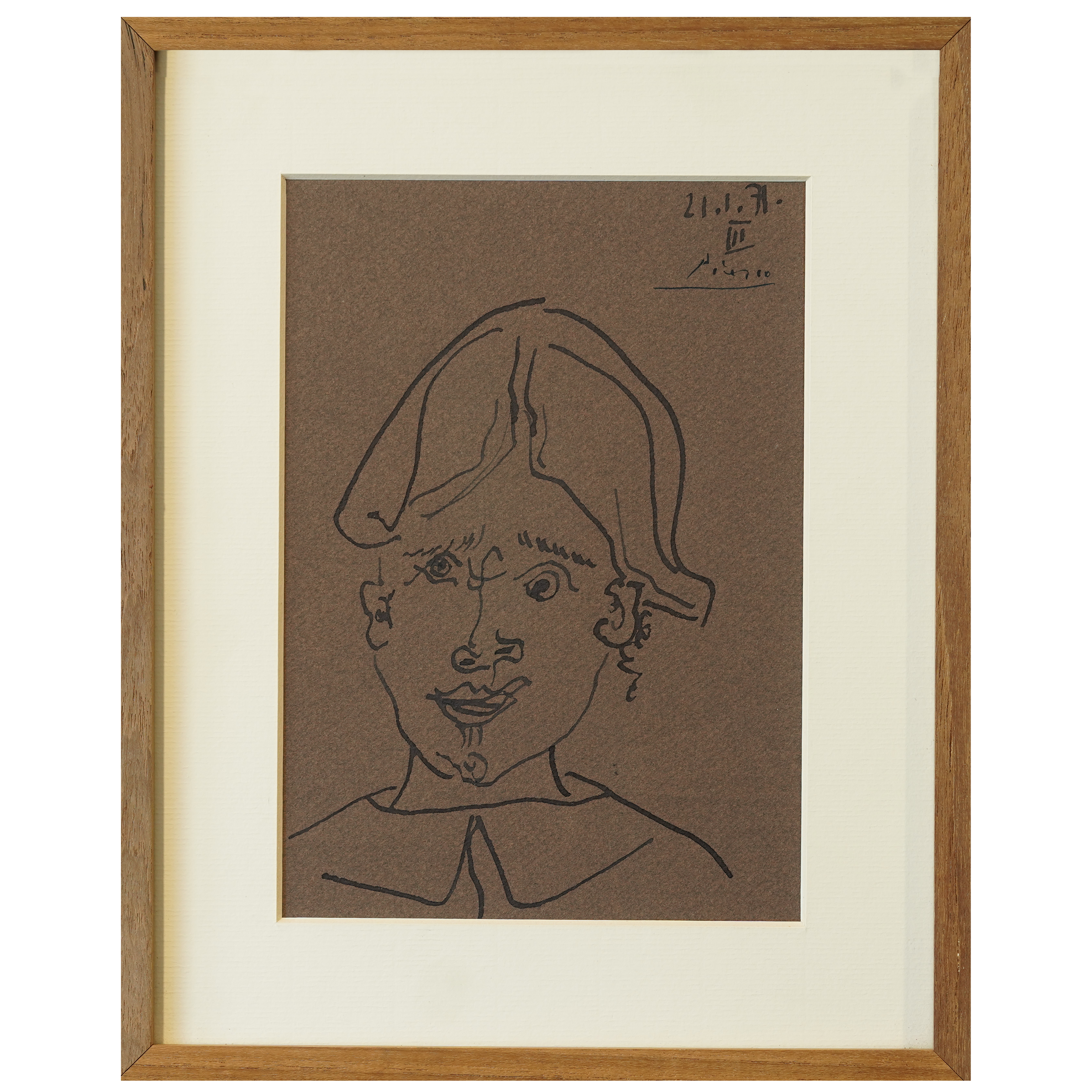
Original drawing by Picasso depicting the head of a capped Pierrot, executed in black ink on brown paper, dated and signed at the top right 21.1.71 II
Year: 1971
Title:Pierrot
Artist: Pablo Picasso (1881–1973)
Medium: Ink on brown paper
Signature: Signed and dated upper right
Dimensions: 20 × 14 cm
Description:
Drawing by Pablo Picasso reimagining Pierrot—the melancholic clown from the Italian Commedia dell’arte tradition—through his distinctive late-period style. With confident, continuous lines, the artist distills the character to its emotional essence. The figure’s wide-brimmed hat, delicate features, and stylized collar unmistakably evoke the iconic costume of the theatrical sad clown.
Drawn in the final years of his life, Pierrot reflects Picasso’s enduring fascination with theatrical archetypes, identity, and the emotional power of gesture.
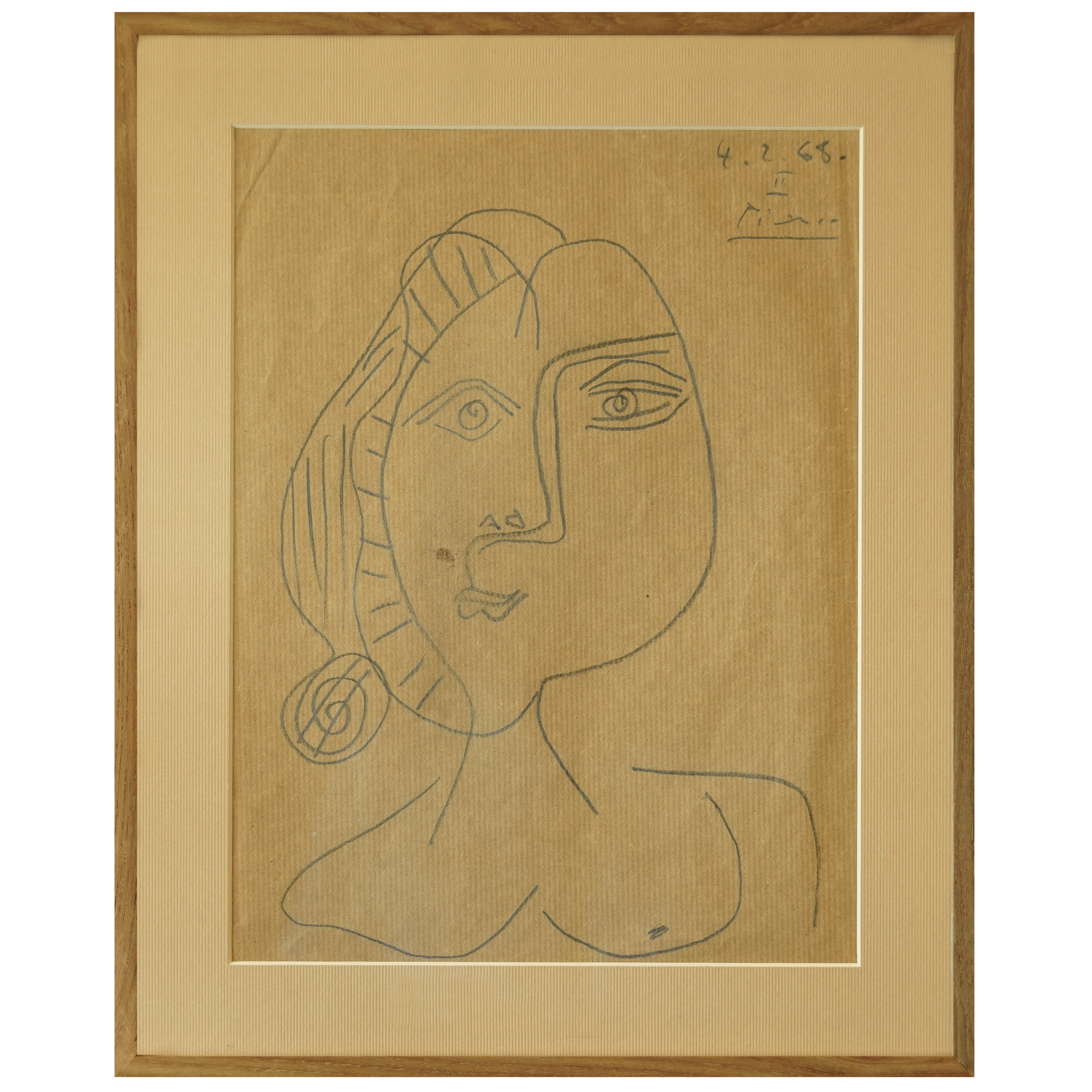
Original drawing by Picasso depicting a woman’s face, executed with pencil on brown paper, dated and signed at the top right 4.2.68 II
Year: 1968
Artist: Pablo Picasso (1881–1973)
Medium: Graphite on brown paper
Signature: Dated and signed upper right
Dimensions: 32 × 24 cm
Description:
Drawing by Pablo Picasso capturing the essence of his late period: confident, fluid, and bold in its abstraction. Rendered in a few uninterrupted lines, this drawing portrays a woman's bust-length figure, with a split or dual visage—two profiles merging into a single frontal form.
The use of brown paper and sparse line work highlights Picasso’s mastery of expressive minimalism. Despite the simplicity of the materials, the drawing conveys a vivid sense of presence, sensuality, and introspection.
Dated February 4, 1965, this work reflects Picasso’s continued fascination with the female form and psychological duality. The face, at once serene and enigmatic, is emblematic of the artist’s late-in-life synthesis of Cubist innovation and Mediterranean lyricism.
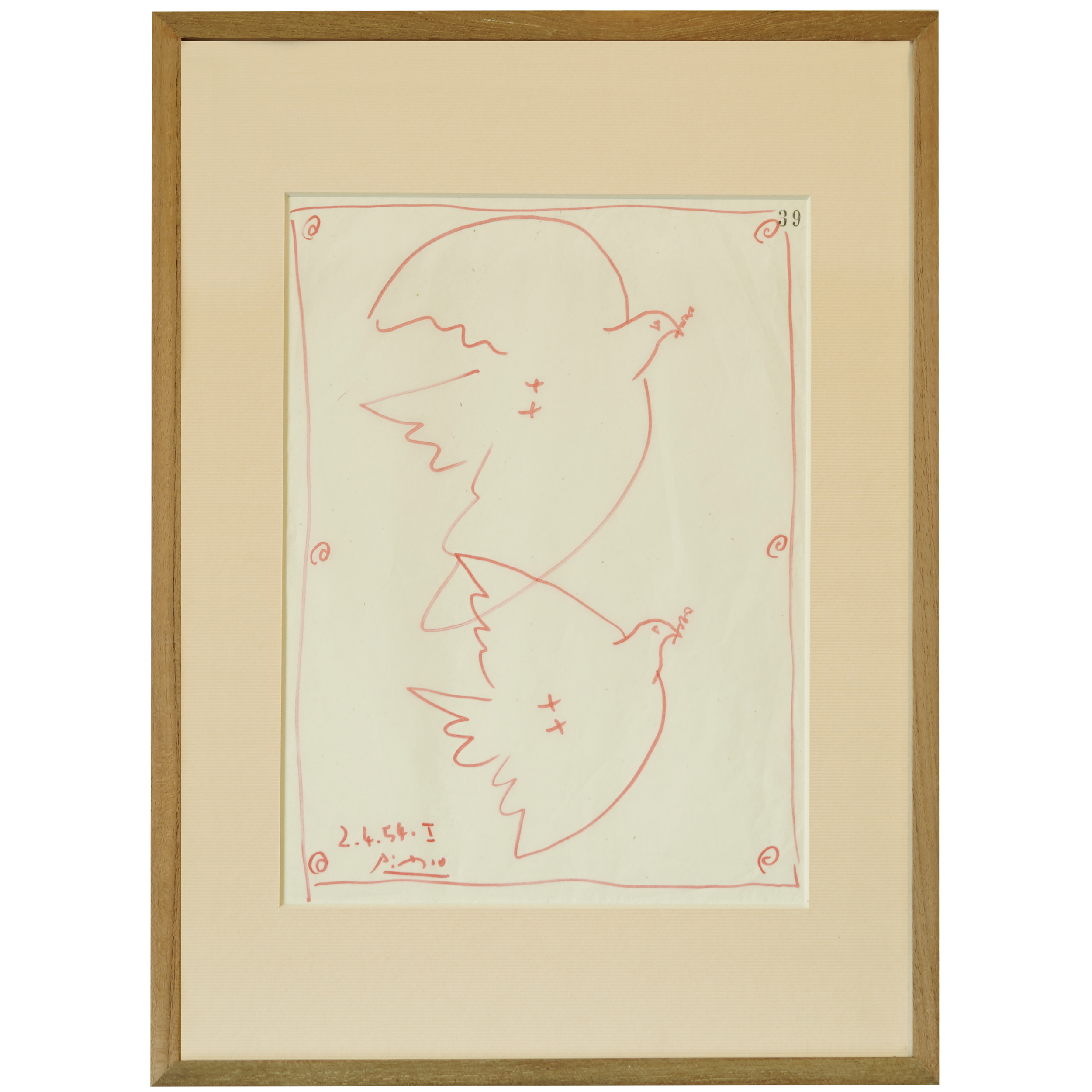
Original PICASSO two doves of peace, in flight, a sprig of olive in the beak. Dated and signed bottom left 2.4.54 I
Year: 1954
Dimensions: 27 × 20 cm

Original Picasso, Galerie Louise Leiris, 8th arrondissement, surmounting a lively scene of a picador on his mount, flanked by two toreadors signed bottom left
Year:
Dimensions: 20 × 20 cm

Original drawing by Picasso, in black pencil, depicting a painter at an easel, signed and dated in the center: 15.4.70
Year: 1970
Title:Le Peintre au Chevalet
Artist: Pablo Picasso (1881–1973)
Medium: Pencil on paper
Signature: Dated and signed upper center
Dimensions: 20 × 28 cm
Description:
In this late-period drawing, Picasso captures the image of a seated painter mid-action, brush in hand and palette resting on his arm. Executed in a simplified, almost naïve style, the line drawing emphasizes form and gesture over detail. The artist’s elongated profile, emphasized nose, and prominent beard imbue the figure with character, while the angular easel and canvas assert a clear narrative: the act of creation itself.
Drawn at the age of 88, Le Peintre au Chevalet reflects Picasso’s enduring fascination with the artist as a subject—a theme he explored throughout his life. Despite its economy of line, the work communicates confidence, humor, and introspection.
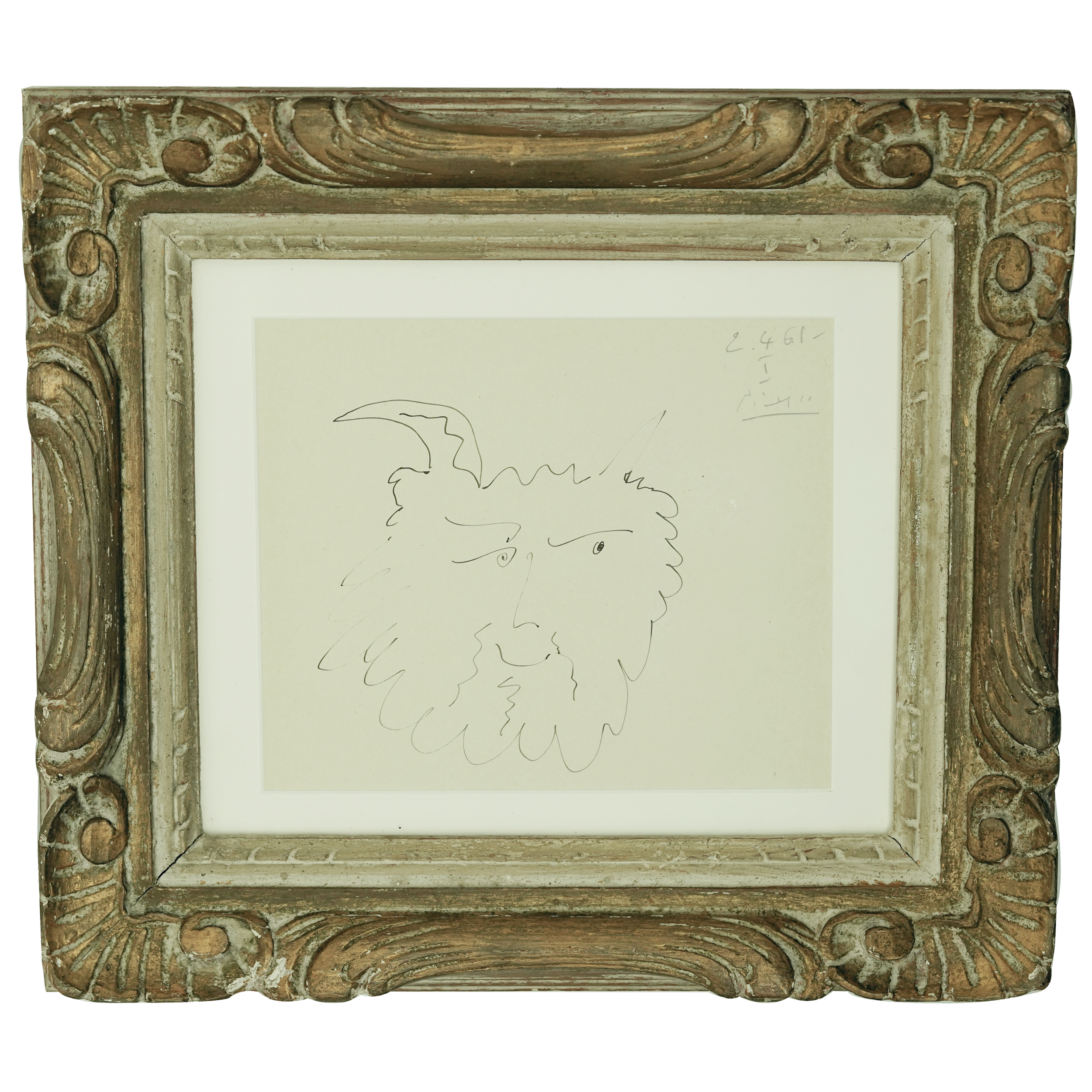
Original drawing by Picasso depicting a "Head of a Faune." Drawing in black ink on beige paper, dated and signed in pencil at the top right: 2.4.61
Year: 1961
Title:Head of a Faun
Artist: Pablo Picasso (1881–1973)
Medium: Ink on paper
Signature: Dated and signed upper right
Dimensions: 17 × 21 cm
Description:
Original drawing by Pablo Picasso depicting the head of a faun, a recurring mythological subject in his oeuvre. Executed with a few fluid and confident ink lines, the composition captures the essence of the creature’s dual nature—part man, part beast—with a single curved horn, a pointed ear, and an unruly beard framing an enigmatic expression. Despite its apparent simplicity, the drawing exudes character, wit, and Picasso’s mastery of spontaneous line.
In his later years, Picasso often returned to mythological and classical themes with renewed freedom and economy of gesture. This work distills the faun’s identity into a minimal yet evocative image, underscoring the artist’s lifelong fascination with Mediterranean mythology. "Head of a Faun" is both whimsical and archetypal, revealing the artist’s ability to imbue even the briefest sketch with expressive depth and symbolic resonance.
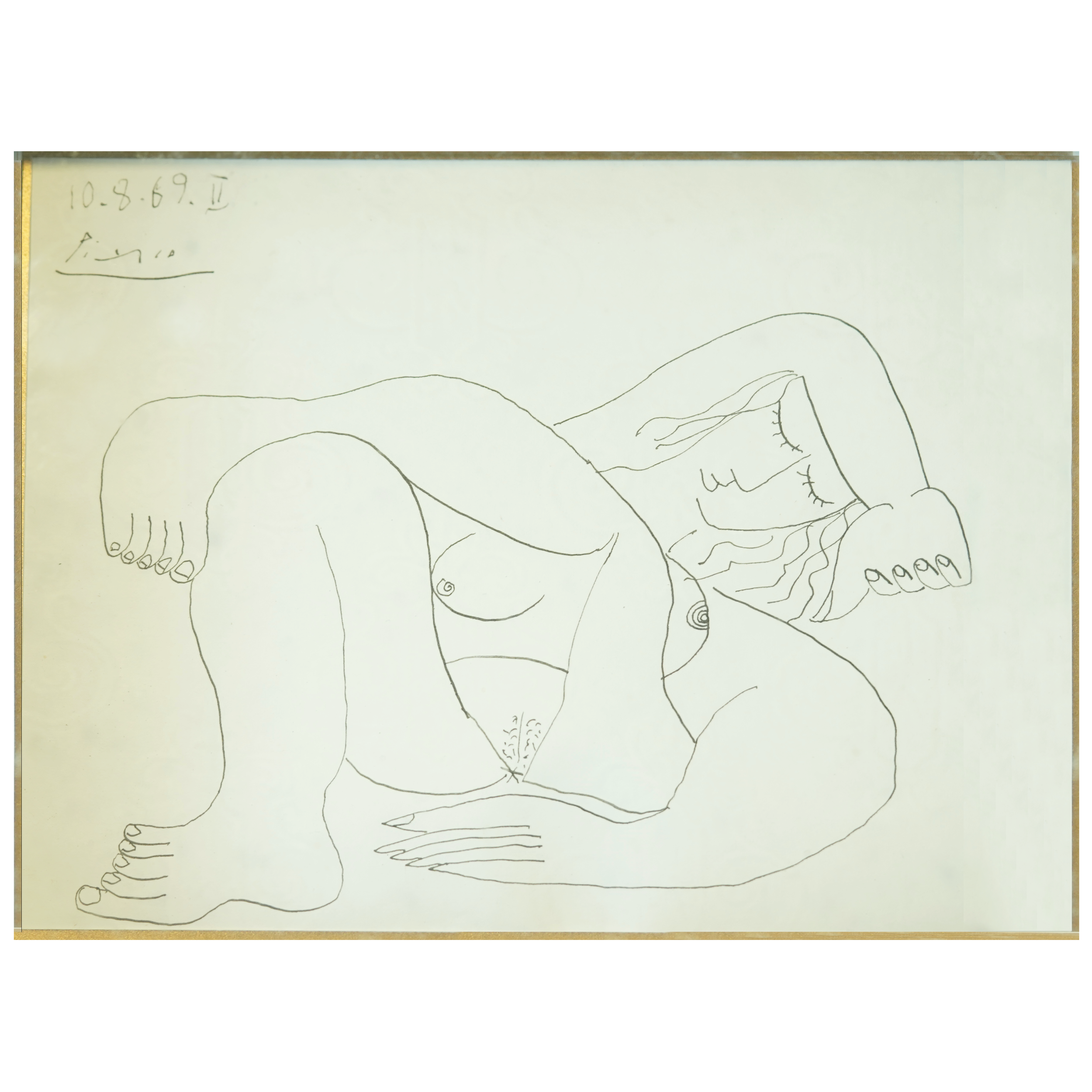
Original ink drawing depicting a reclining nude woman, bearing PICASSO's monogram and dated on the top left 10/08/1969 II
Year: 1969
Title:Reclining Nude
Artist: Pablo Picasso (1881–1973)
Medium: Ink on paper
Signature: Signed and dated upper left “10.8.69 II / Picasso”
Dimensions: 17 × 22 cm
Description:
Drawing by Pablo Picasso capturing a reclining nude in a pose that is both sensual and serene. Executed with characteristic fluency and economy of line, the female figure is shown folded into herself, limbs curled and overlapping in a contorted yet natural position.
Created in the final years of Picasso’s life, this drawing reflects his undiminished fascination with the female form and his continued exploration of expressive distortion.
Drawn in 1969 at the age of 88, this work stands as a testament to Picasso’s enduring creative vitality. His late style embraced a raw spontaneity that distilled decades of mastery into unfiltered expression.
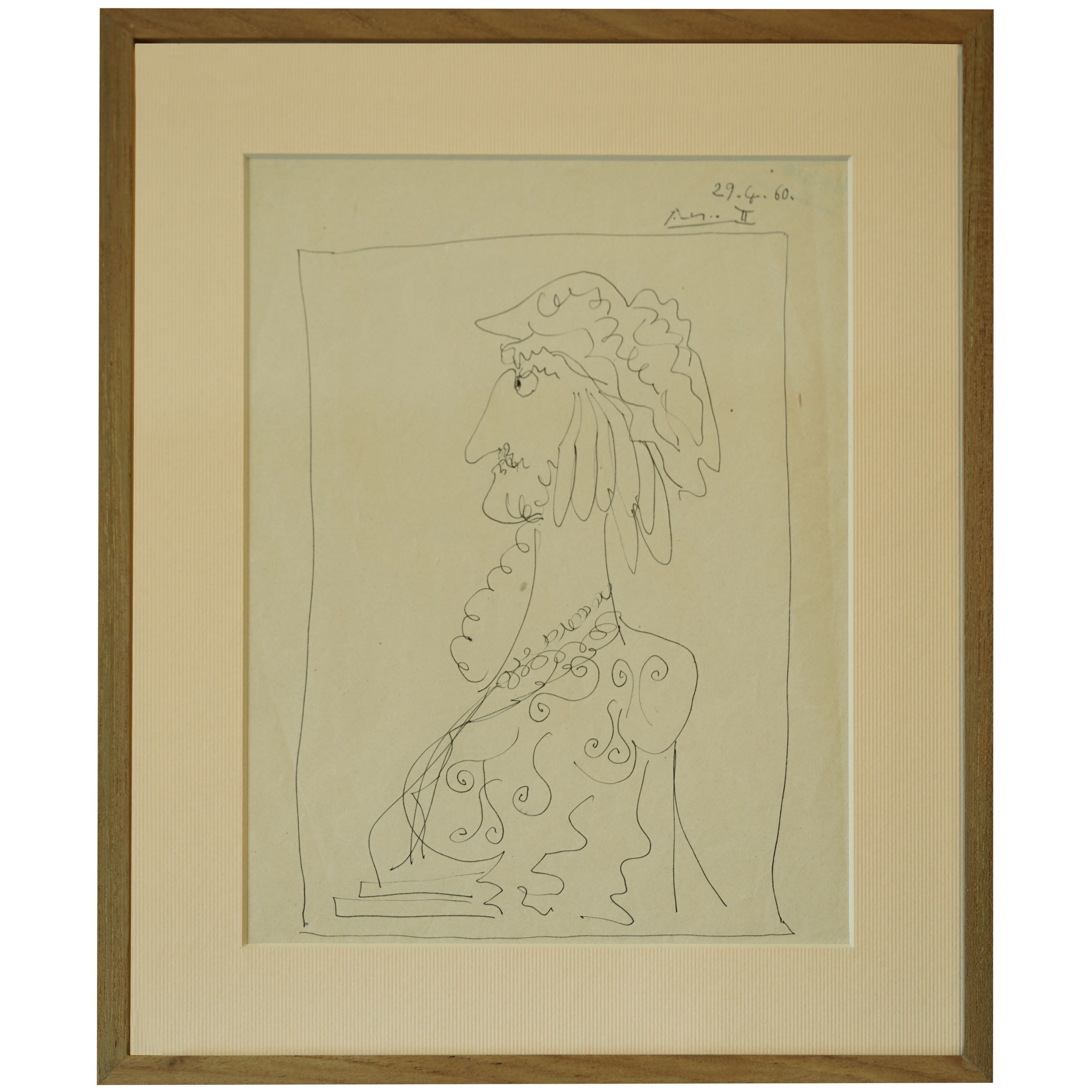
Bust profile of a burlesque character, wearing a headpiece, looking to the left, outlined by a rectangular ink stroke. Dated and signed top right 29.4.60 II
Year: 1960
Dimensions: 26 × 20 cm
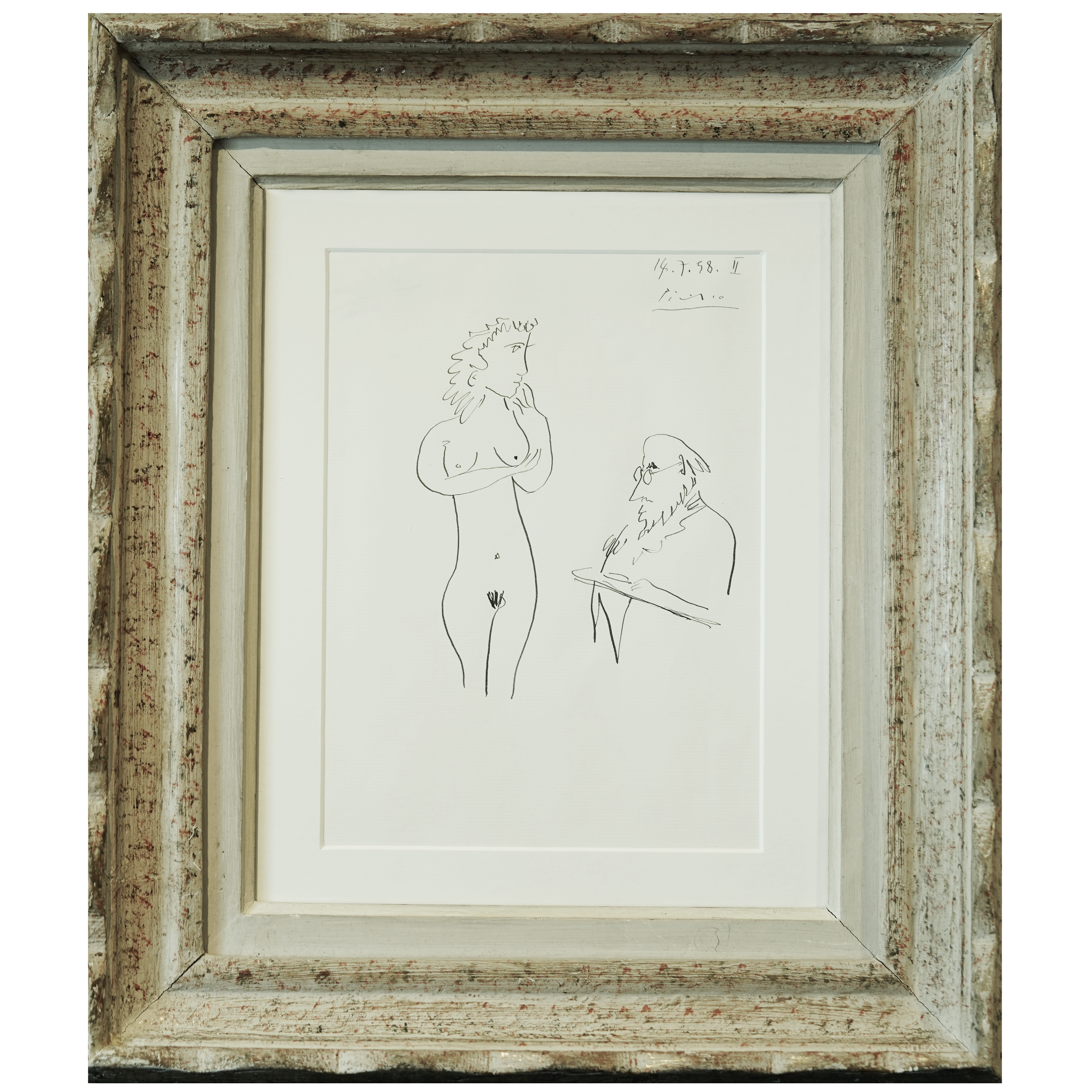
Original drawing by Picasso depicting a nude woman and a man. Drawing in black ink on beige paper, dated and signed in the top right 14.7.58 II
Year: 1958
Artist: Pablo Picasso (1881–1973)
Medium: Ink on paper
Dimensions: 26 × 18 cm
Signature: Signed and dated upper right
Description:
Original drawing by Pablo Picasso capturing a classic artistic theme—the intimate moment between an artist and his nude model. Executed with remarkable economy of line, the composition features a seated male figure sketching a standing nude woman.
In his later years, Picasso frequently returned to the theme of the artist and his muse—a dynamic reflecting both his own life and the enduring classical tradition. Here, the sparse elegance of line reflects his masterful control and spontaneous energy. Dated July 14, 1958, this drawing belongs to a prolific period where Picasso explored the fusion of eroticism, artistic creation, and mythic intimacy in its most distilled form.
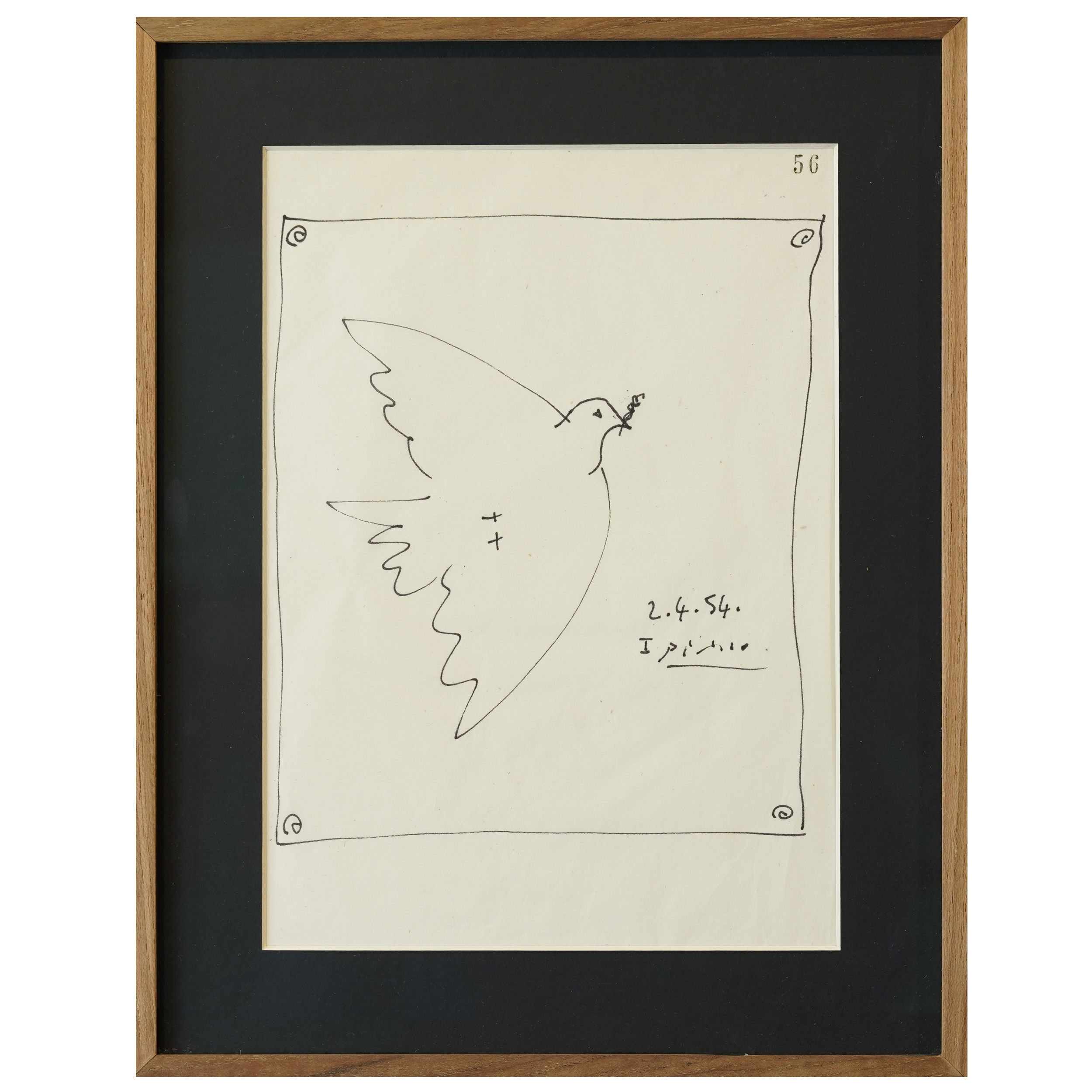
Original drawing by Picasso, in India ink on tracing paper, depicting a dove, signed and dated at the bottom right: 2.4.54
Year: 1954
Title:Dove of Peace
Artist: Pablo Picasso (1881–1973)
Medium: Ink on paper
Signature: Signed and dated lower right
Dimensions: 26 × 19 cm
Description:
This minimalist yet powerful drawing captures one of Pablo Picasso’s most iconic symbols: the dove. Rendered with a few confident lines, the bird is shown in flight, bearing an olive branch in its beak — a universal emblem of peace. The image radiates both movement and serenity, embodying Picasso’s ability to convey profound meaning through simplicity.
Originally adopted as the emblem for the 1949 World Peace Congress in Paris, the dove became a recurring motif in Picasso’s work and a personal symbol of his political engagement. This particular version, executed in 1954, exemplifies his mature graphic style, where form is distilled to its essence while maintaining emotional weight and clarity.
Dove of Peace is more than a drawing — it is a message. Created in a post-war world still striving for harmony, Picasso’s bird became a beacon of hope, embraced worldwide by peace movements. The artist’s line, fluid and unwavering, turns a simple sketch into a timeless plea for unity.
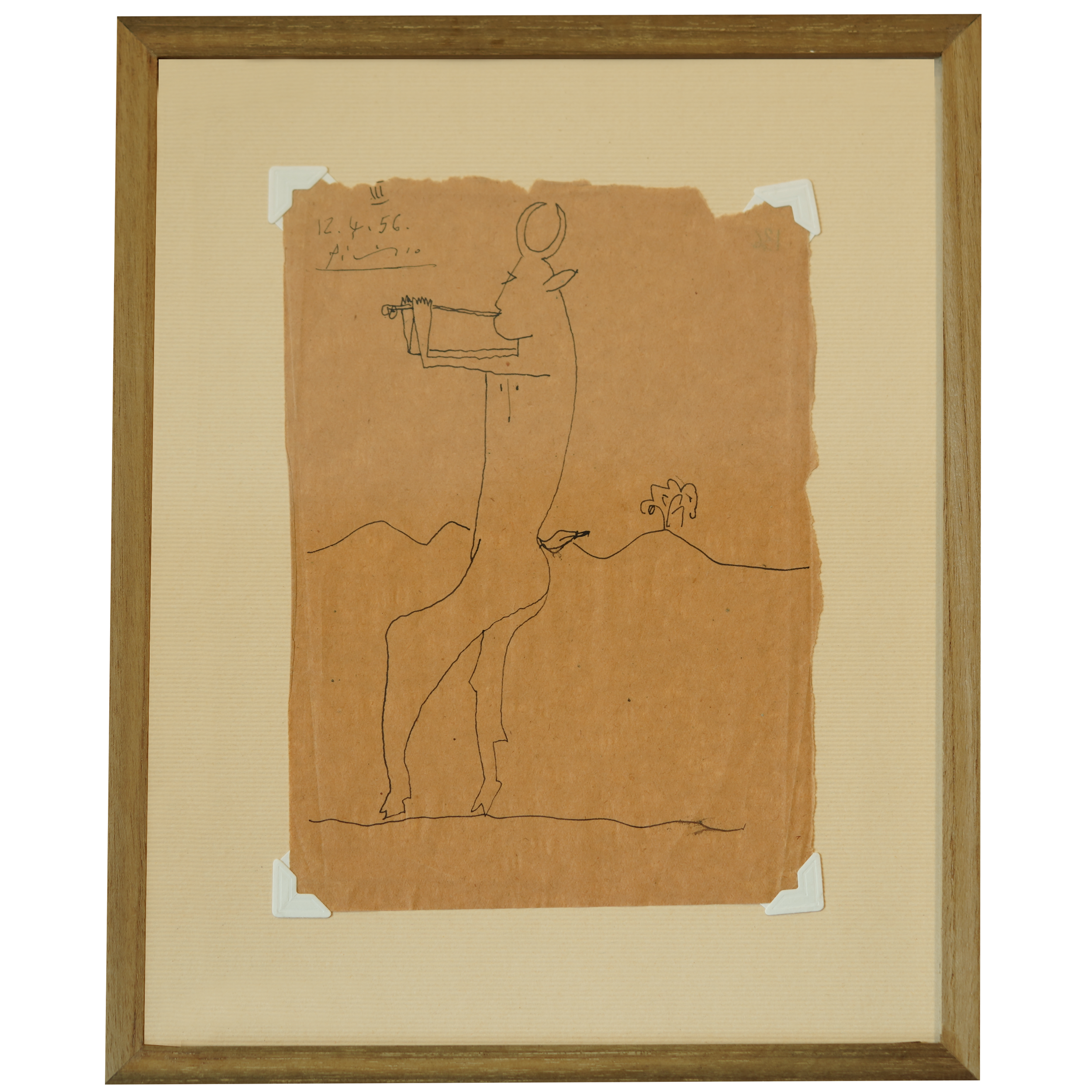
Horned faun standing, playing the flute in front of a tree-lined ridge dated and signed bottom right 12.4.56 III
Year: 1956
Dimensions: 19 × 14 cm
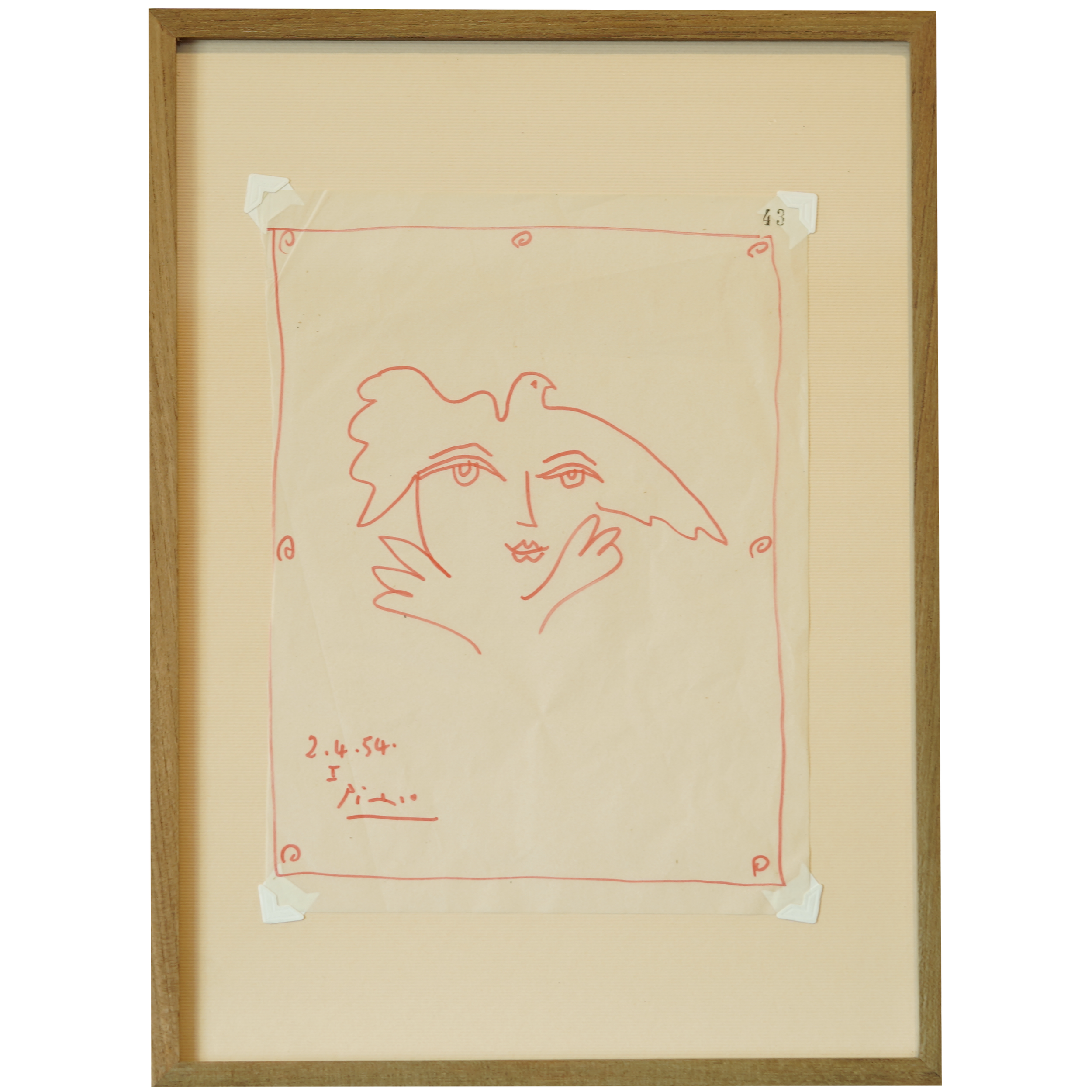
Feminine face adorned with a dove with outstretched wings, supported by two open hands dated and signed bottom left 2.4.54 I
Year: 1954
Dimensions: 27 × 20 cm
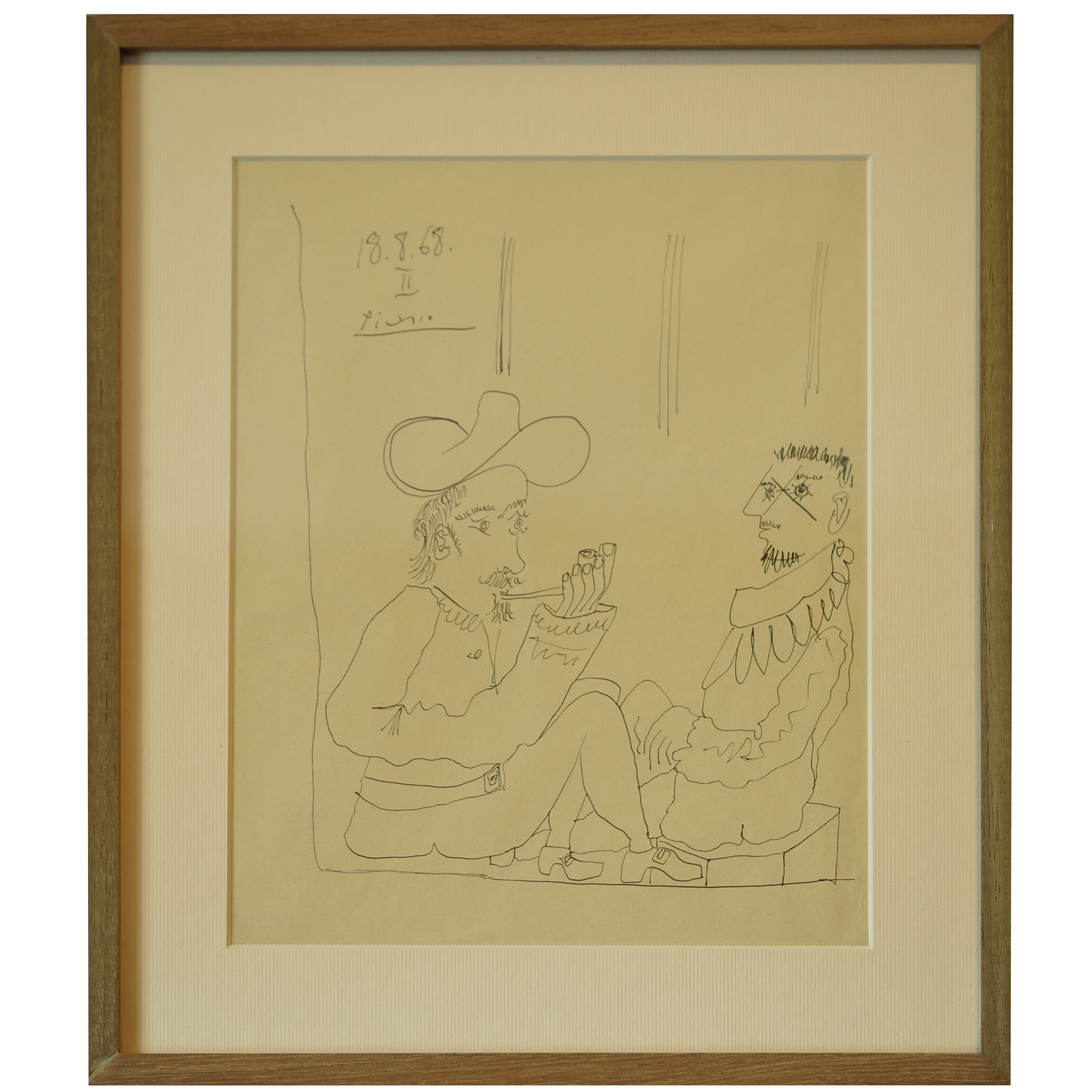
A hatted pipe smoker sits facing a figure with an X-shaped face and a jabot, set before a row of columns. Dated and signed top left 18.8.68 II
Year: 1968
Dimensions: 26 × 20 cm

Original drawing by Picasso depicting reclining nude man. Drawing in black ink on beige paper, signed in the top right II
Title:Reclining Bearded Man
Artist: Pablo Picasso (1881–1973)
Date: Undated (inscribed “II” in upper right corner)
Medium: Ink on paper
Signature: Signed "Picasso" upper right
Dimensions: 20 × 20 cm
Description:
Drawing by Pablo Picasso presenting a reclining male nude with a prominent beard and an air of calm self-possession. Rendered with his unmistakable linear economy, the figure appears at once archaic and contemporary — a classical pose stripped to its essentials through modernist abstraction.
Picasso's late drawings reflect a liberated, confident hand that distilled decades of technical skill into immediate visual poetry. In Reclining Bearded Man, the artist combines sensuality, wit, and timeless form in a deceptively simple composition.
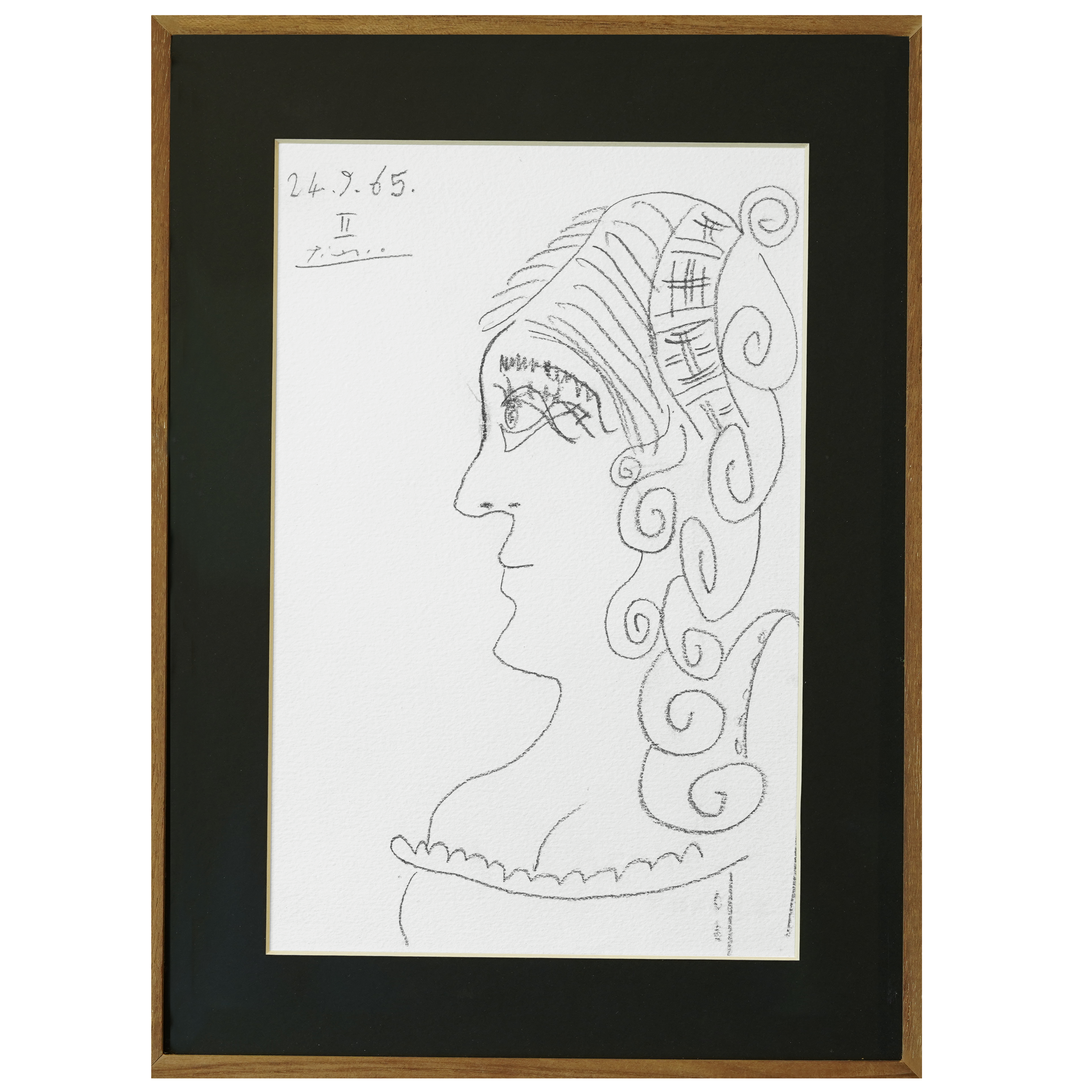
Original drawing by Picasso, in grease pencil, depicting the profile of a young woman with a low neckline over her chest, signed and dated at the top left: 24.9.65
Year: 1965
Title:Portrait of a Woman in Profile
Artist: Pablo Picasso (1881–1973)
Medium: Pencil on paper
Signature: Dated and signed upper left
Dimensions: 27 × 18 cm
Description:
Original drawing by Pablo Picasso presenting a stylized profile of a woman, rendered with fluid yet deliberate pencil strokes. The elegant subject is shown in left-facing profile, her hair composed of a rhythmic play of curls, loops, and crosshatched textures that frame her composed features. Her large, expressive eye and delicate neckline suggest a sense of classical serenity while simultaneously revealing Picasso’s playful linear abstraction.
Created in 1965, this portrait reflects the late period of Picasso’s career, during which he embraced spontaneity, confidence, and minimalism in his drawing practice. The economy of line and ornamental composition in Portrait of a Woman in Profile captures the artist’s enduring fascination with the female figure—now distilled to its essential, lyrical essence. It is both a tribute to tradition and an assertion of Picasso’s bold artistic language.

Original Picasso horned bull’s head carried by two running legs. Dated and signed top left 1.2.54 XV
Year: 1954
Dimensions: 16 × 22 cm
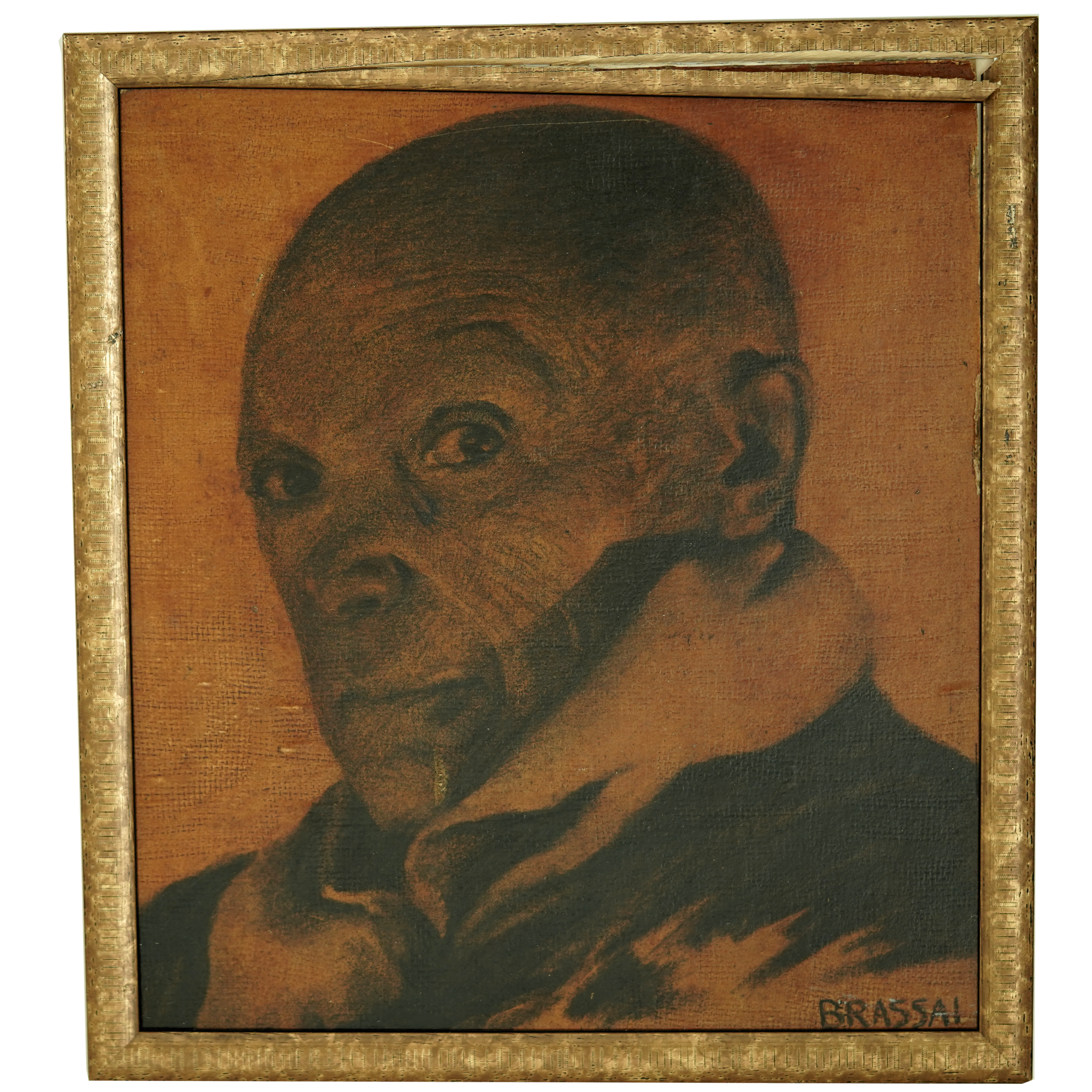
Title:Portrait of Pablo Picasso
Artist: Brassaï (Hungarian-French, 1899–1984)
Medium: Charcoal and pigment on canvas
Dimensions: 32 × 28 cm
Signed: Lower right, "Brassaï"
Description:
Portrait of Pablo Picasso by Brassaï revealing an introspective and intense depiction of one of the most influential artists of the 20th century. Rendered in a restrained yet striking palette of burnt sienna and black, the image radiates a quiet force. .
Better known for his photography, Brassaï was deeply immersed in the artistic circles of Paris and held a close friendship with Picasso, whom he photographed extensively over several decades. This rare painted work demonstrates Brassaï’s deep understanding of his subject, capturing Picasso not only as an iconic figure of modern art but also as a man immersed in thought and creative gravity.
This portrait stands as a powerful testament to the mutual admiration and artistic dialogue between Brassaï and Picasso. With its hauntingly intimate perspective, the painting bridges the realms of photography, painting, and psychological portraiture, showcasing Brassaï’s ability to capture the essence of a person with profound sensitivity.
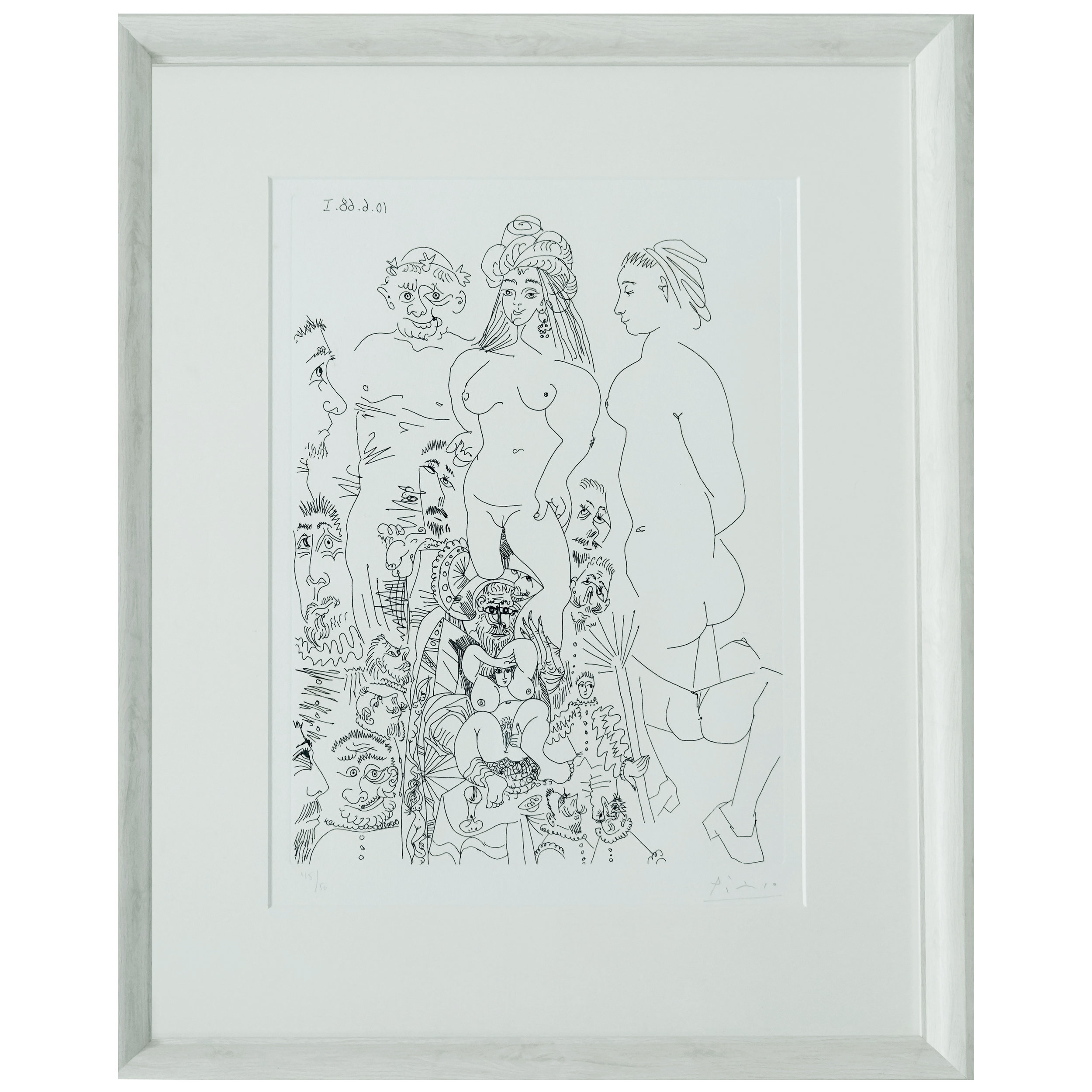
Etching by Picasso depicting the Characters from El Entierro del Conde de Orgaz dated and signed
Edition: 45/50
Artist: Pablo Picasso (1881–1973)
Medium: Etching on paper
Dimensions: 40 × 29 cm
Description:
Etching by Pablo Picasso showcasing a dense and playful mythological composition, filled with nude figures, stylized faces, and fantastical beings. Rendered in fluid, assured lines, the work captures Picasso’s fascination with classical themes, eroticism, and the grotesque, all distilled into a single theatrical tableau.
Picasso’s graphic works often allowed for greater freedom and experimentation than his paintings. This etching, with its layered forms and crowded composition, echoes the bacchanalian energy of ancient myths while embracing the spontaneity of surrealism.
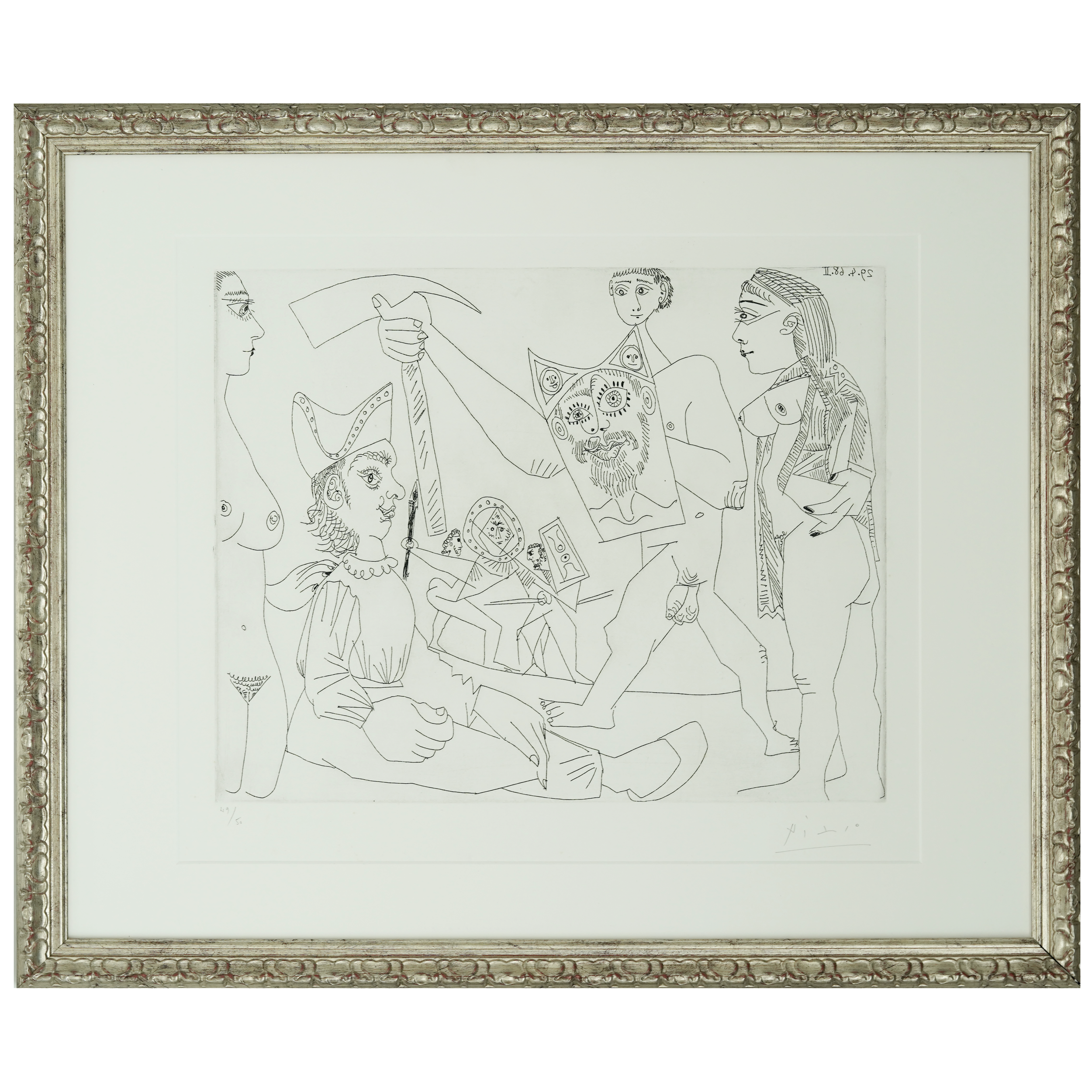
Picasso etching representing some gladiators, nudes and seated figure in two cornered hat, signed and dated with pencil 4/29/1968 II
Edition: 49/50
Dimensions: 32 × 40 cm
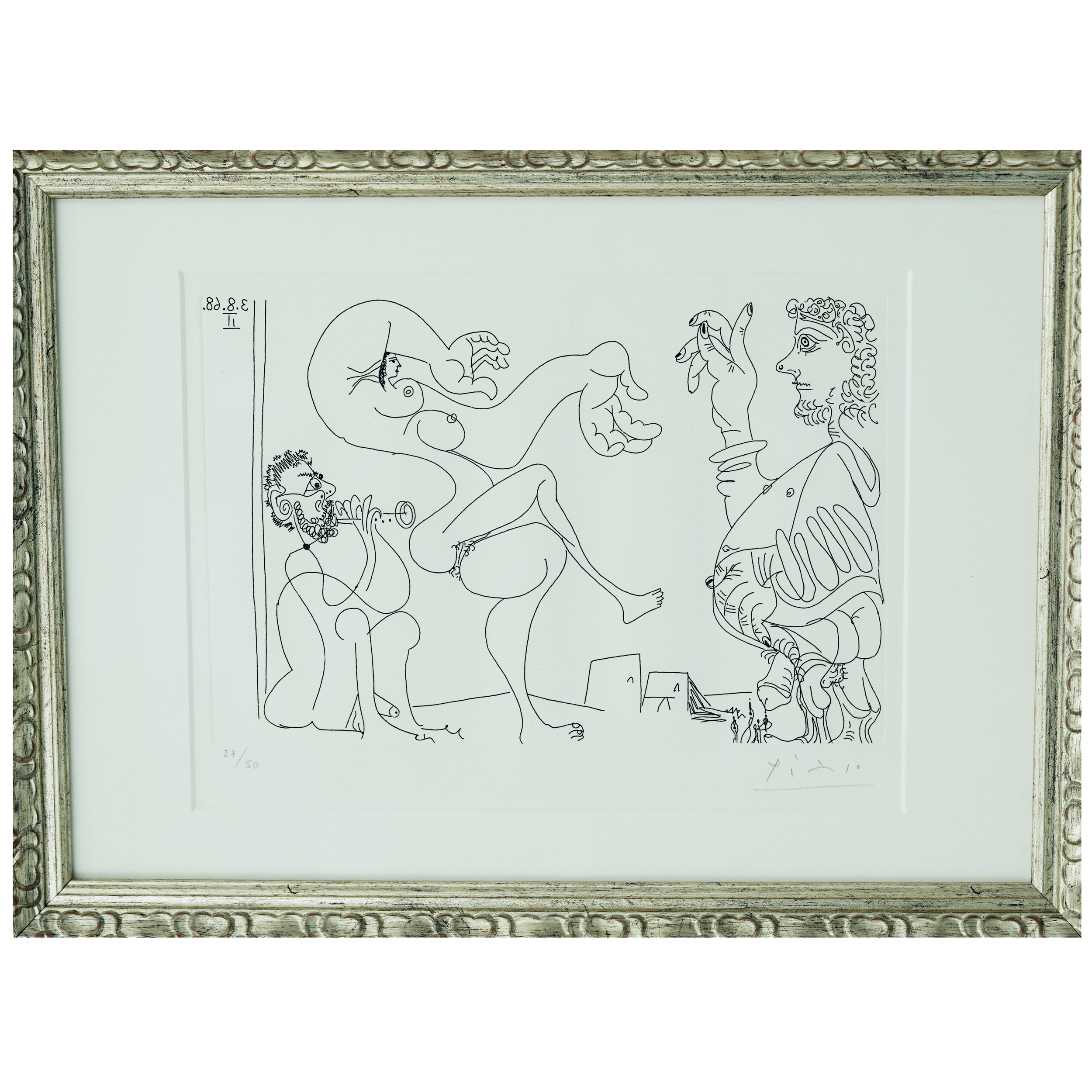
An Etching drawing by Picasso representing a belly dancer, flute player and exposed man with painted fingernails signed and dated
Edition: 15/50
Dimensions: 20 × 26 cm
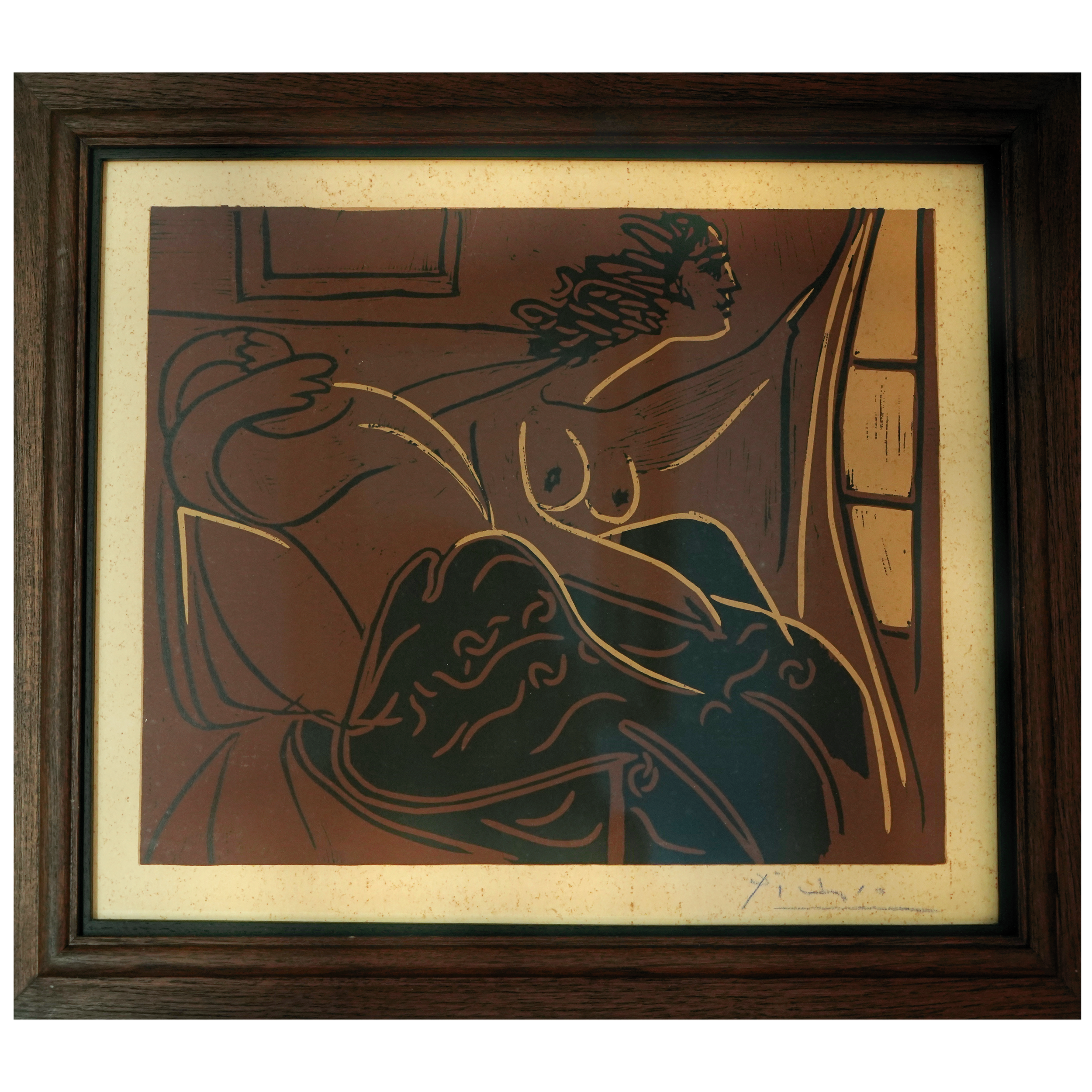
PICASSO Linocut depicting a young woman looking out the window, signed at the bottom right
Year: 1962
Title:Femme à la fenêtre (Woman at the Window)
Artist: Pablo Picasso (Spanish, 1881–1973)
Medium: Linocut on paper
Dimensions: 27 × 32 cm
Signature: Signed in pencil lower right
Description:
In Femme à la fenêtre, Pablo Picasso harnesses the expressive potential of linocut to depict a woman poised in a moment of sensual reflection. The figure, nude and dramatically outlined in bold, sinuous contours, reclines across a richly patterned surface while reaching toward an unseen view beyond the window.
Created during Picasso’s prolific final decades, Femme à la fenêtre exemplifies his mastery of the linocut technique—a medium he embraced for its directness and sculptural immediacy. This work reflects both his classical influences and his radical innovations in form, line, and gesture. It is a testament to Picasso’s ability to reinvent figuratio
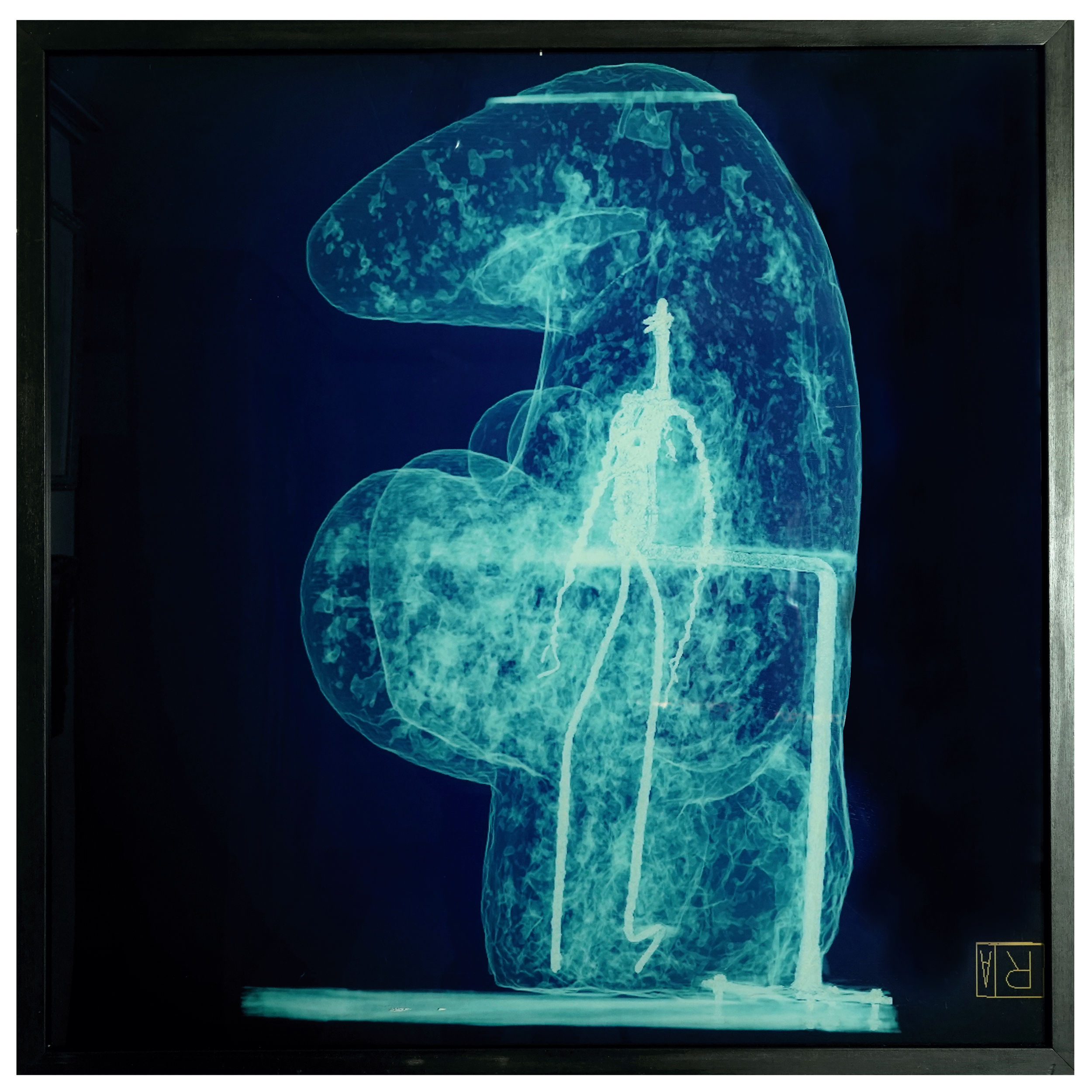
Radiography by Xavier LUCCHESI of a PICASSO sculpture, signed at the bottom right
Title:Radiographic Revelation: After Picasso
Artist: Xavier Lucchesi (b. 1959)
Medium: X-ray on photographic film
Dimensions: 122 × 122 cm
Description:
Radiographic image by Xavier Lucchesi unveiling the internal structure of a sculptural work by Pablo Picasso, transforming the invisible into a luminous composition. Using medical imaging technology, Lucchesi captures the soul of the sculpture—its bones, voids, and materials—rendered in spectral blue and white. The result is a ghostly presence that transcends the physical object, revealing its hidden anatomy in a way that is both forensic and poetic.
Lucchesi’s artistic practice merges art, science, and technology, interrogating how we perceive and interpret form. His radiographic works invite viewers to reflect on transparency, memory, and the unseen layers of creation.
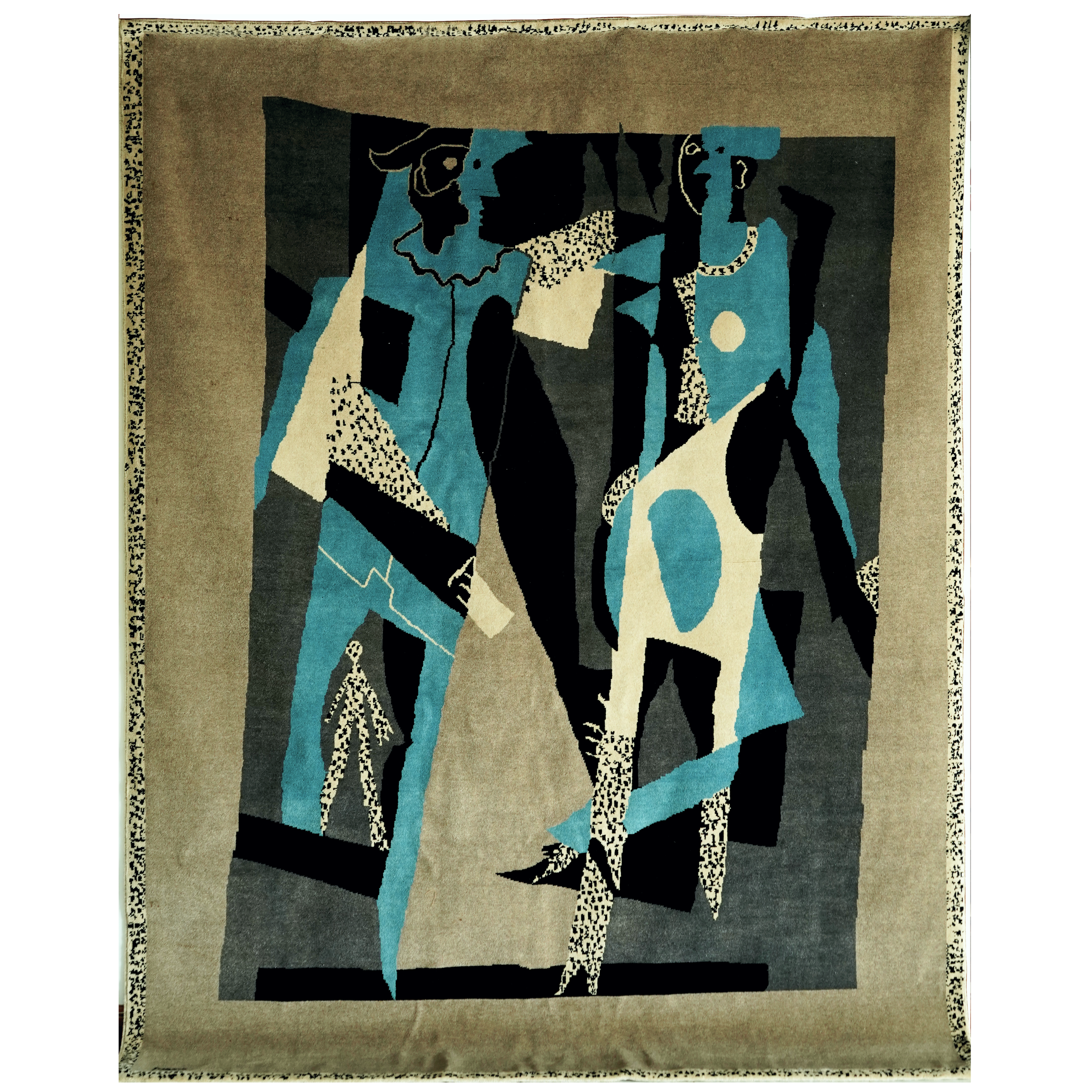
PICASSO Tapestry Harlequin and Woman with Necklace Wool Tapestry
Title:Harlequin and Woman with a Necklace
Artist: Pablo Picasso (Spanish, 1881–1973)
Medium: Wool Tapestry
Dimensions: 265 × 202 cm
Description:
Large tapestry, Harlequin and Woman with a Necklace, transposes the unmistakable visual language of Pablo Picasso into woven form. Rendered in a palette of muted beige, slate gray, turquoise, and ivory, the piece captures two stylized figures—an iconic Harlequin and an elegantly adorned woman—in a dynamic geometric interplay of forms and shadows.
A recurring figure in Picasso’s oeuvre, the Harlequin—derived from the Commedia dell’arte tradition—serves here not just as a motif of theatricality, but also as a symbolic stand-in for the artist himself. The juxtaposed female figure, adorned with a beaded necklace, adds a counterbalance of grace and sensuality. Their interaction is enigmatic, framed by cubist fragmentation and rhythmic contrast.
Created during a period when many of Picasso’s works were adapted for the decorative arts, this tapestry stands as a testament to his interdisciplinary legacy. With its bold forms, theatrical archetypes, and sophisticated abstraction, Harlequin and Woman with a Necklace bridges fine art and applied craft, inviting the viewer into a world where myth, performance, and modernity converge.
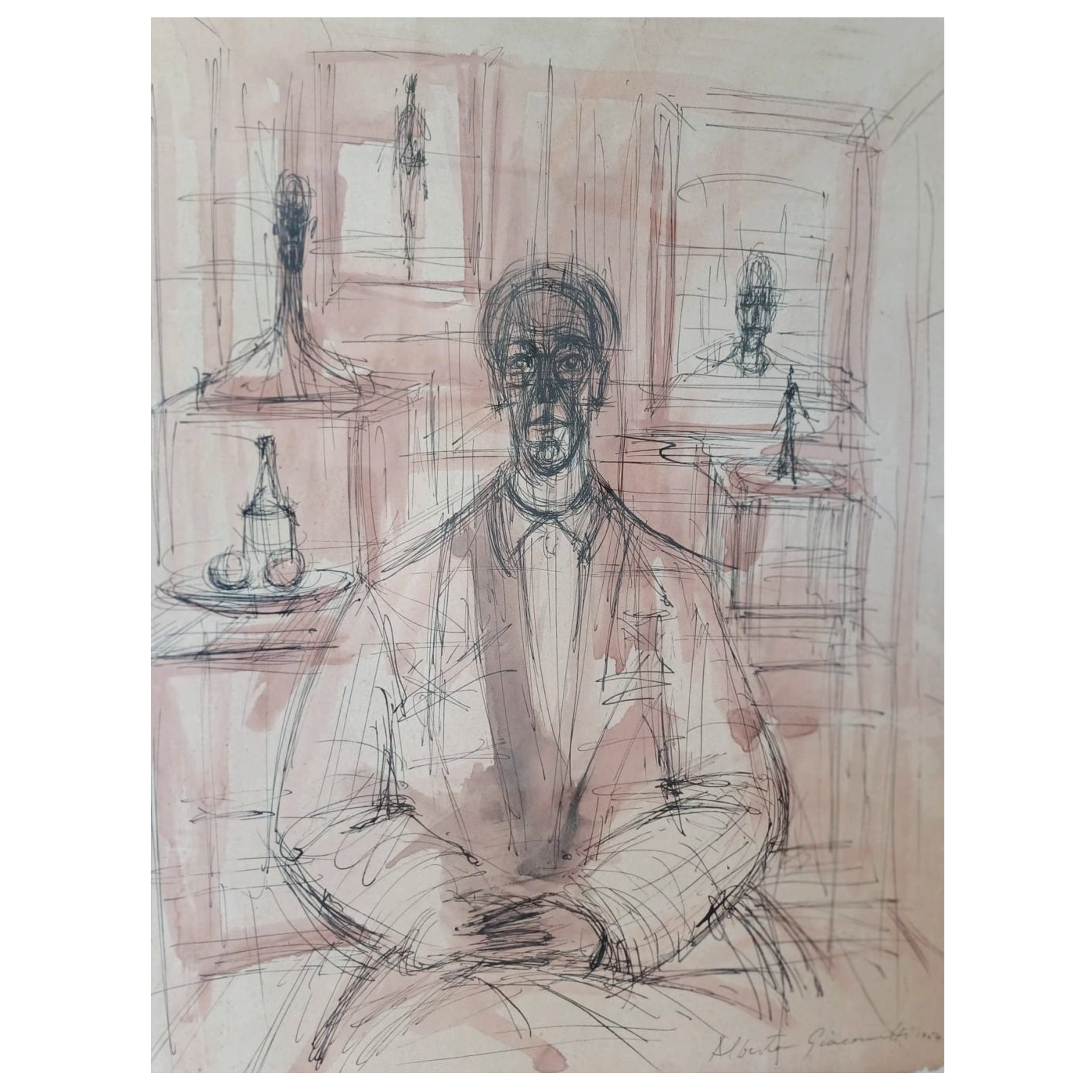


Alberto Giacometti (1901–1966)
Figure Studies
Ink and wash on paper
Drawing exemplifying Alberto Giacometti’s relentless search for the essence of human presence. Combining studies of heads with elongated standing nudes, the composition reveals his characteristic linear draftsmanship—nervous, repetitive strokes that seem to etch the figure into existence. The attenuated bodies anticipate the sculptural forms for which Giacometti is most celebrated, evoking both fragility and permanence. The ink wash adds tonal depth, situating the figures in a spatial field while underscoring their spectral, almost immaterial quality.