


Matisse
Henri Matisse (1869–1954) was a French painter, draftsman, printmaker, and sculptor, celebrated as one of the leading figures of modern art. Known for his bold use of color, fluid lines, and innovative compositions, Matisse was a pioneer of Fauvism, a movement characterized by vibrant, expressive brushwork. Over his long career, he moved from traditional painting to paper cut-outs, creating iconic works that balanced simplicity with emotional intensity. His art, often inspired by nature, the human figure, and decorative patterns, aimed to evoke harmony and joy, securing his place as one of the most influential artists of the 20th century.
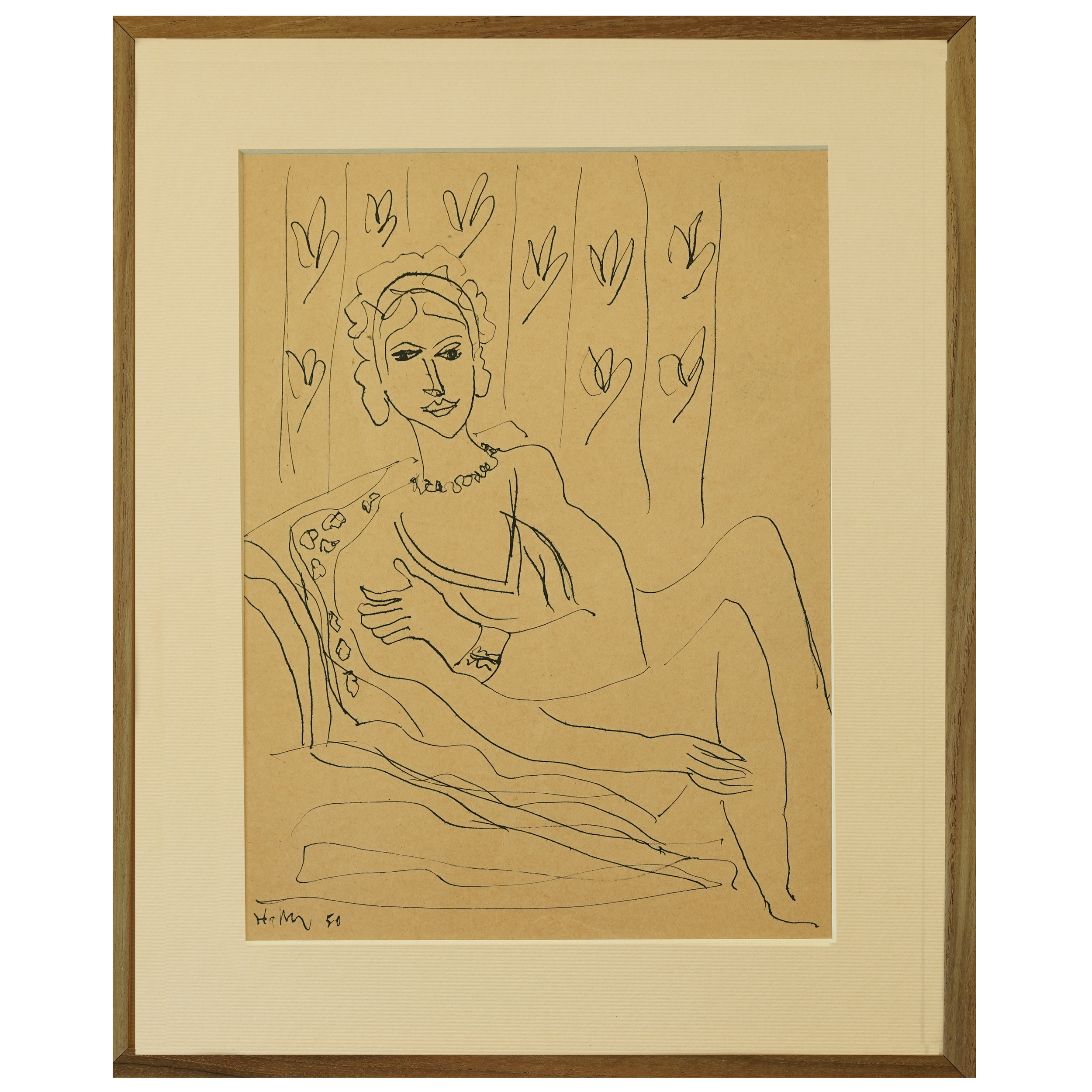
Original pencil drawing depicting a reclining woman, bearing Matisse's monogram "HM" and dated '50
Year: 1950
Title:Reclining Woman with Floral Drapery
Artist: Henri Matisse (1869–1954)
Medium: Ink on paper
Signature: Signed and dated lower left "H. M. 51"
Dimensions: 26 × 20 cm
Description:
Drawing by Henri Matisse’s refined late style, where bold, economical line work conveys elegance, sensuality, and grace. A reclining woman gazes outward with calm poise, her figure gently undulating across the page.
Created in the final years of Matisse’s life, this drawing reflects his ongoing fascination with the female form and interior space. It embodies the artist’s pursuit of harmony and clarity, and illustrates his belief that art should be “something like a good armchair” — comforting, beautiful, and serene.
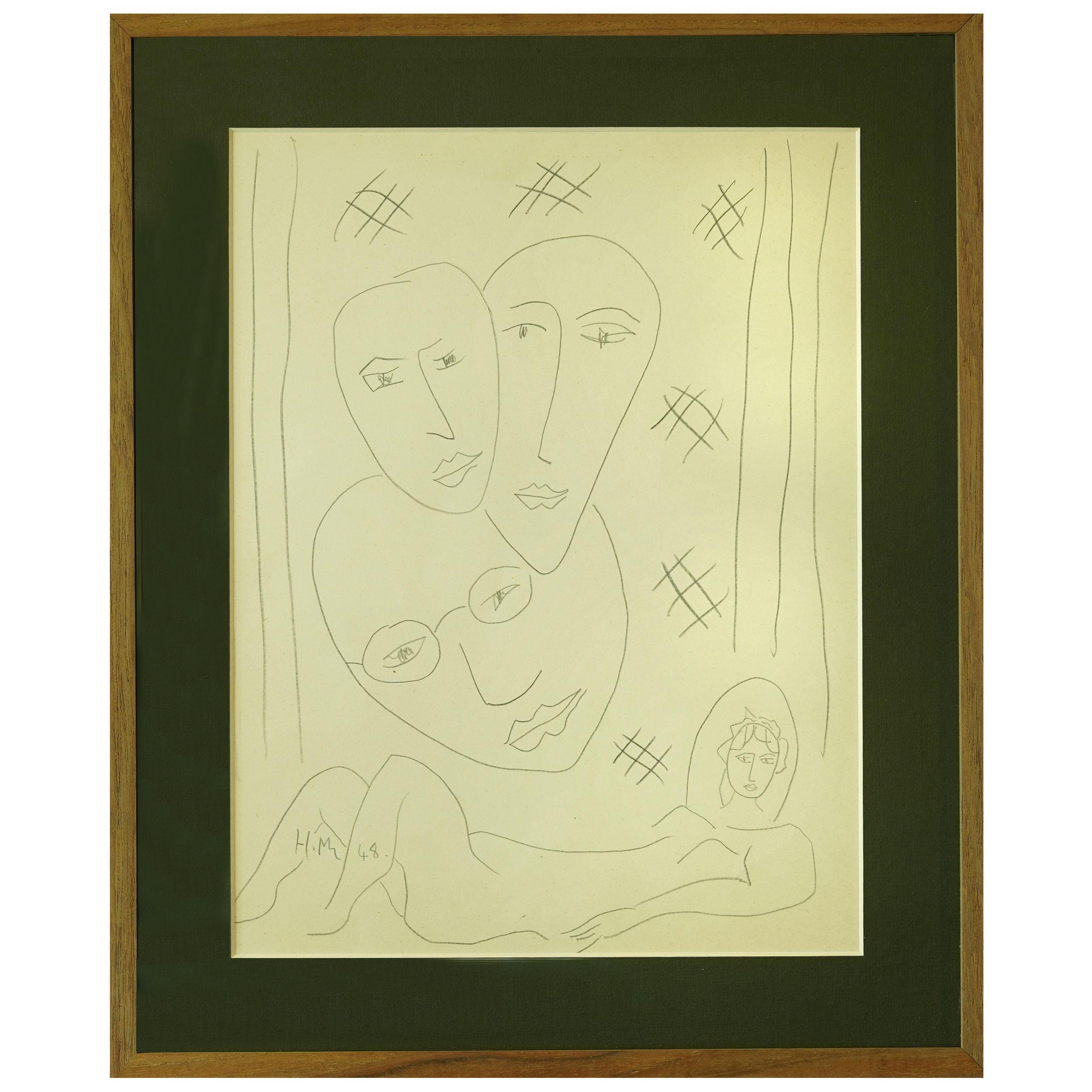
Original pencil drawing depicting a reclining woman, topped by three stylized faces, bearing Matisse's monogram "HM" and dated '48
Year: 1948
Title:Trois Visages et Figure Allongée
Artist: Henri Matisse (1869–1954)
Medium: Pencil on paper
Signature: Signed and dated lower left "H. M. 48"
Dimensions: 29 × 23 cm
Description:
Drawing by Henri Matisse capturing the artist’s late-career mastery of minimalism and expression. Rendered in a few delicate strokes, the composition juxtaposes three stylized heads, suspended in space, above a reclining figure.
Created in 1948, during Matisse’s late period, this drawing exemplifies his pursuit of purity through line. It reflects his deep interest in human emotion, abstraction, and the lyrical simplicity that defined his later works. The dreamlike grouping of figures evokes both intimacy and distance—hallmarks of Matisse’s poetic visual language.
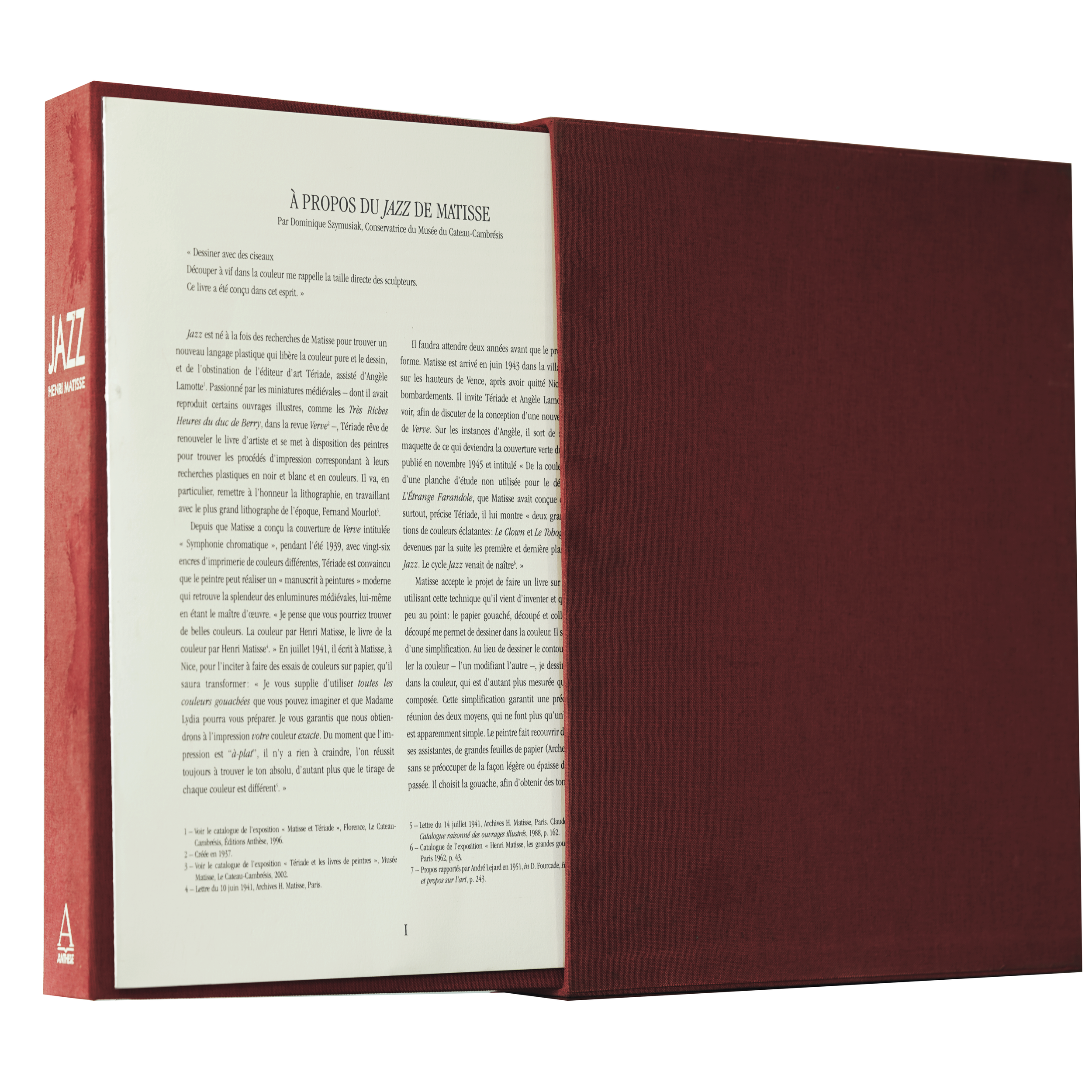
Henri Matisse (French, 1869–1954)
Jazz
Artist’s book with pochoir prints, text in French
Dimensions: 43 × 32 × 7 cm
Matisse’s Jazz is one of the most celebrated artist books of the 20th century, uniting vivid images and poetic reflections. Published in 1947 by Tériade, the work consists of twenty color stencil (pochoir) prints derived from Matisse’s paper cut-outs, accompanied by his handwritten text. The title evokes improvisation and rhythm, qualities that define both jazz music and Matisse’s late artistic style.
Created during a period of convalescence when the artist was largely confined to bed, the cut-outs offered Matisse a new way to “draw with scissors.” The resulting imagery—circus performers, acrobats, mythological figures—captures energy, movement, and joy, balanced by passages of personal meditation.
Jazz is not only a masterpiece of modern printmaking but also a deeply introspective work, blending color, form, and text into a unified expression of vitality and resilience.
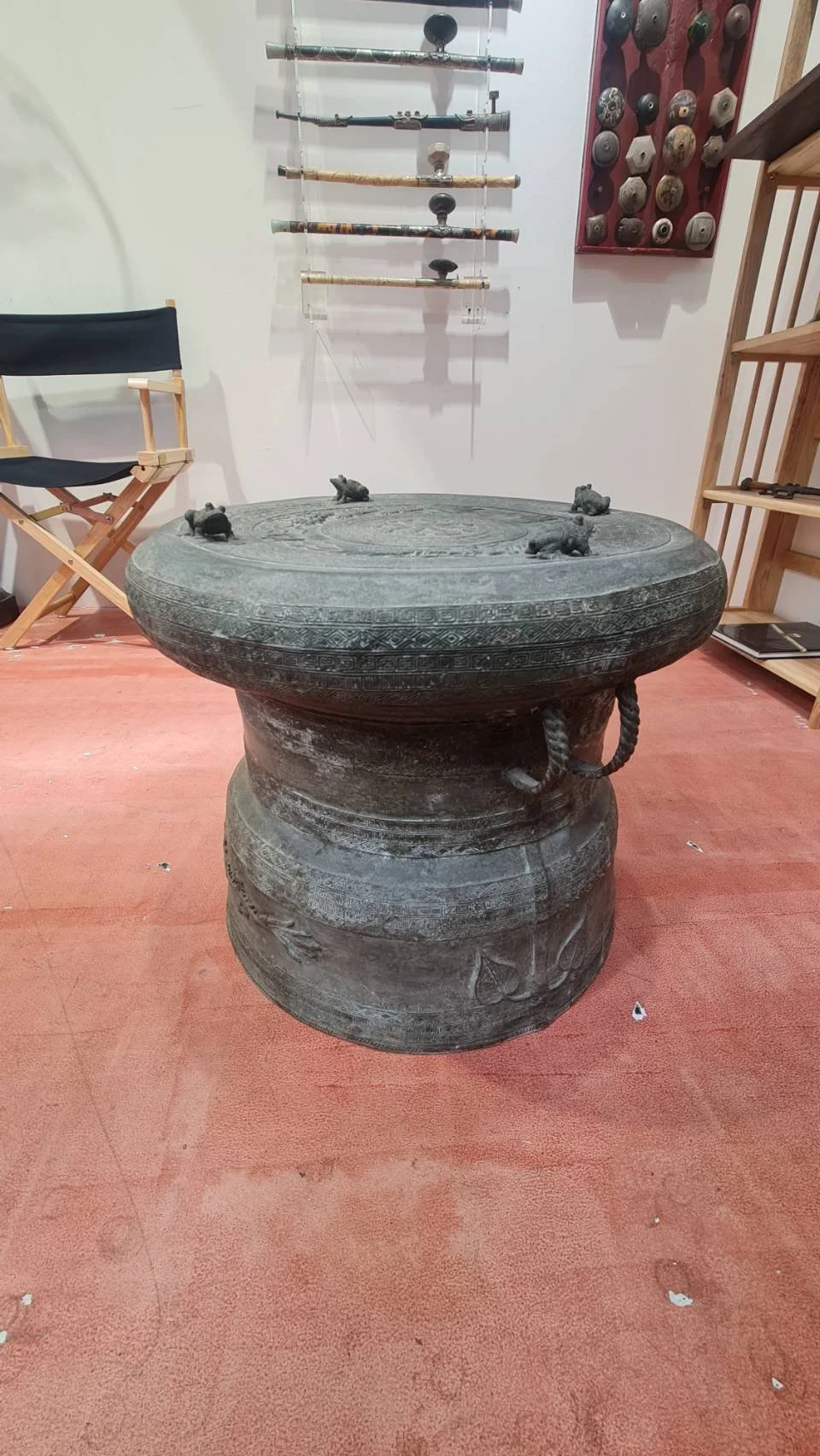


UNKNOWN ARTIST
Circa 1800-1820
Original Item: One of a Kind. Here we have a wonderful original bronze lantaka swivel cannon barrel, dating to about 1800-1820. While these were used throughout South East Asia, this style is from the “East Indies”, more properly known as South Eastern Asia. These were used only at close quarters, used to fire lead balls, stones and other debris while mounted on boats and other ocean going craft during the age of Sailing.
The cannon is very heavy, weighing in at 33lbs, a good sign as later copies are much lighter and sometimes are filled internally with foam to be sold as fakes.
Totally authentic but not too big to display in home or office.
Dimensions:
Lantaka or rentaka was a type of bronze portable cannon or swivel gun, sometimes mounted on merchant vessels and warships in Maritime Southeast Asia. It was commonly equipped by native seafaring vessels from Indonesia, Philippines, Brunei, and Malaysia. Lela and rentaka are known by the Malays as meriam kecil (lit. "small cannon"), the difference is that rentaka is smaller in length and bore than a lela.