
JADE JEWELLERY NECKLACES
Curated Mayan Jade Jewellery
This section features a selection of finely curated jewellery pieces crafted with authentic Mayan jade. Each item highlights the cultural heritage, symbolic richness, and artisanal techniques rooted in Mesoamerican tradition, offering a timeless connection to ancient craftsmanship.
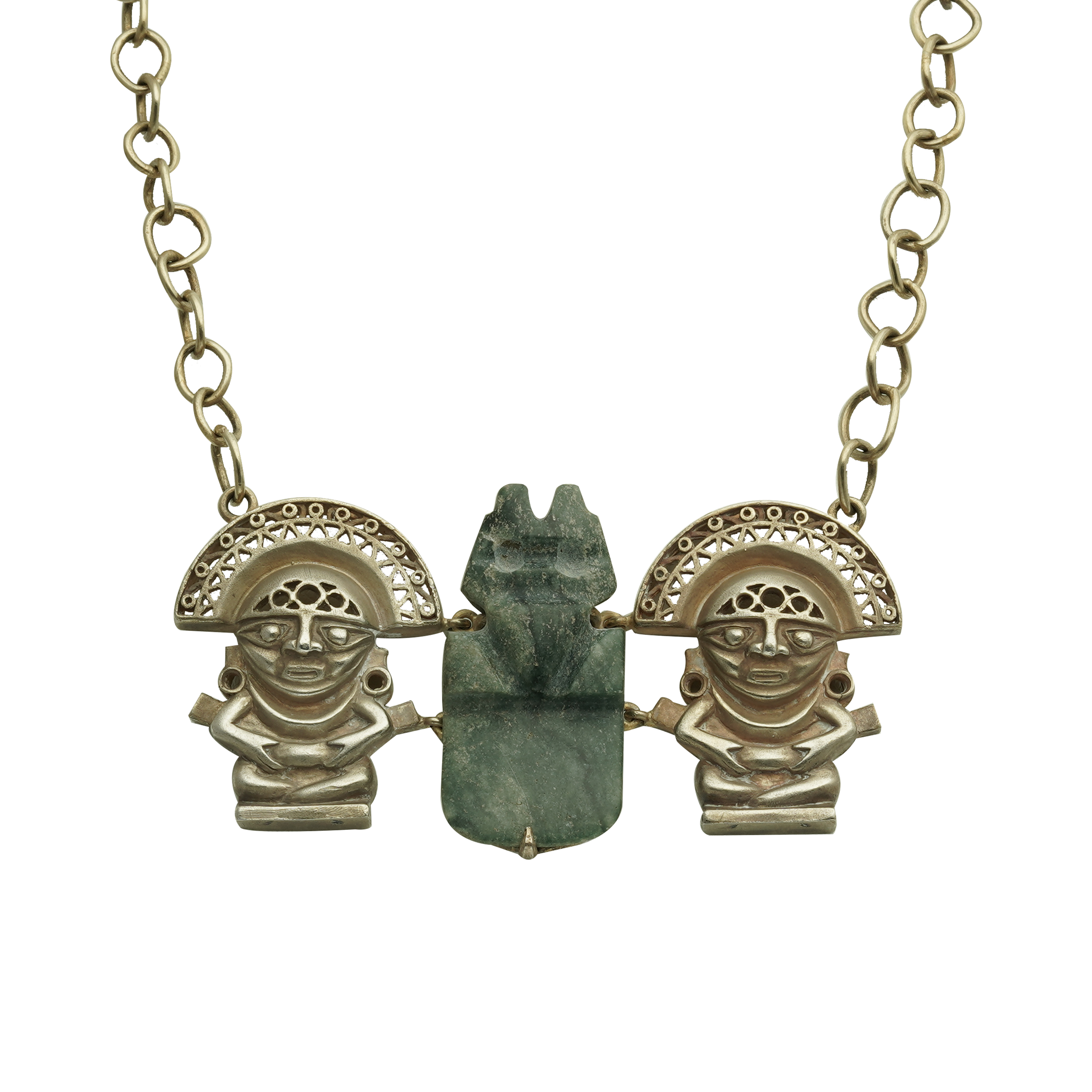
Maya Necklace with Seated Figures and Central Jade Pendant
Culture: Maya Civilization
Date: c. 600–900 CE (Late Classic Period)
Materials: Carved jadeite, metal (gilded metal), metal chain
Dimensions: Central pendant height approx. 6 cm; total width with figures approx. 10–12 cm
Ceremonial necklace featuring a central jadeite carving flanked by two cast metal anthropomorphic figures. The jade element, carved from deep green stone, depicts a stylized form possibly representing an animal-headed or deity-like figure. It is polished smooth with minimal incised detail, emphasizing the natural beauty of the jade.
On each side, finely crafted metal figures are shown seated cross-legged, holding an object across their chests. They wear large semicircular headdresses with openwork and geometric patterns, suggesting elite status or ceremonial roles. The figures are symmetrically placed and joined to the jade pendant by small connecting mounts, with the entire assembly suspended from a simple oval-link chain.
Provenance:
Likely from the southern Maya lowlands, in present-day Guatemala or southern Mexico.
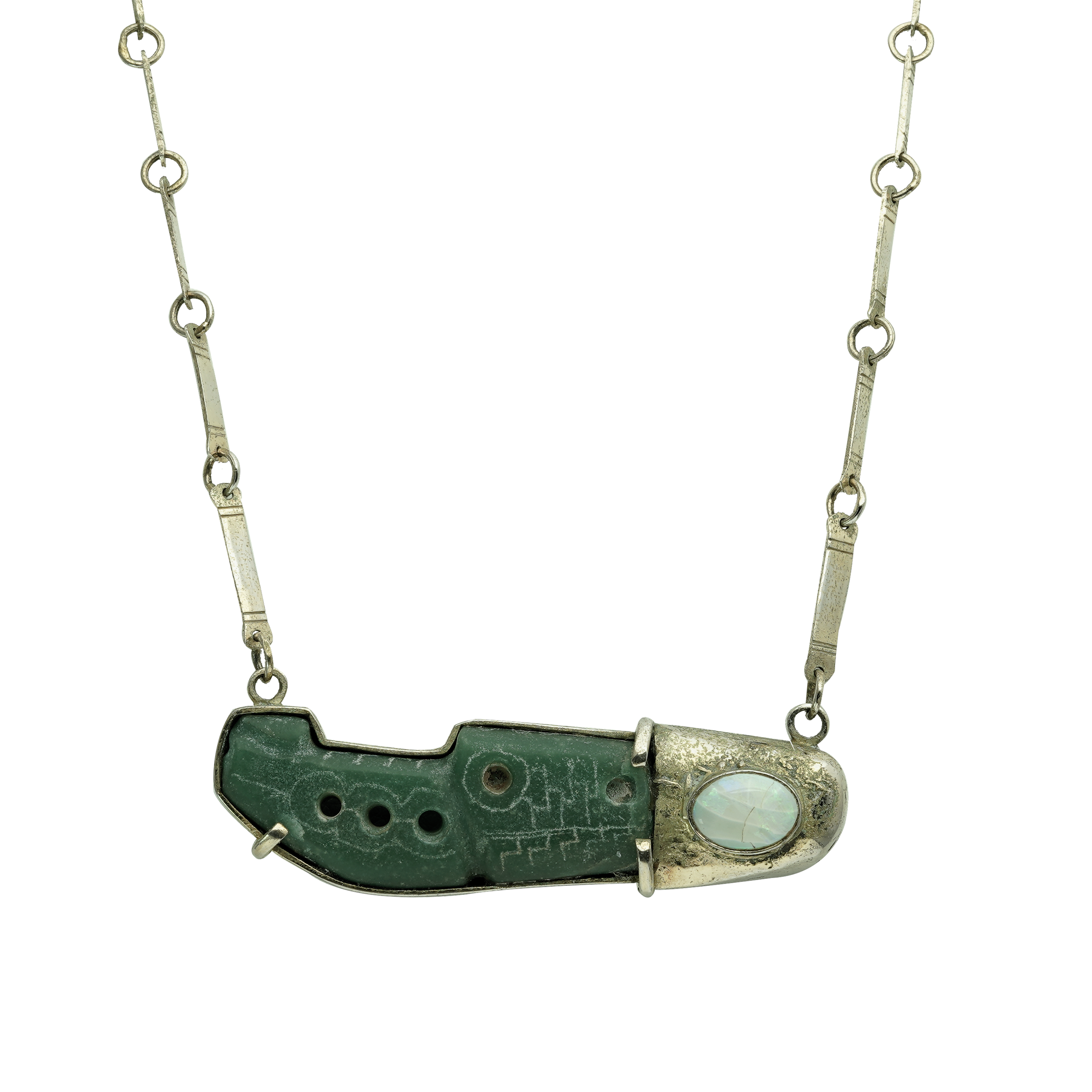
Maya Necklace with Jade Zoomorphic Pendant and Opal Inlay
Culture: Maya Civilization
Date: c. 600–900 CE (Late Classic Period)
Materials: Carved jadeite, opal inlay, metal (gilded metal)
Dimensions: Pendant length approx. 7–8 cm; chain length variable
Necklace featuring a pendant carved from jadeite in an elongated zoomorphic form, possibly representing a crocodile, lizard, or serpent—animals with deep symbolic meaning in Maya cosmology. The jade surface is pierced with three circular holes and decorated with incised stepped and linear patterns that may suggest scales or ritual markings.
One end of the pendant is enclosed in a textured metal fitting set with an oval cabochon opal. The opal’s shifting iridescence contrasts strikingly with the rich green of the jade, creating a visual focal point. The pendant is suspended from a chain composed of alternating round and elongated bar links, enhancing the necklace’s refined and balanced design.
Provenance:
Likely from the Maya lowlands, in present-day Guatemala, Belize, or southern Mexico.
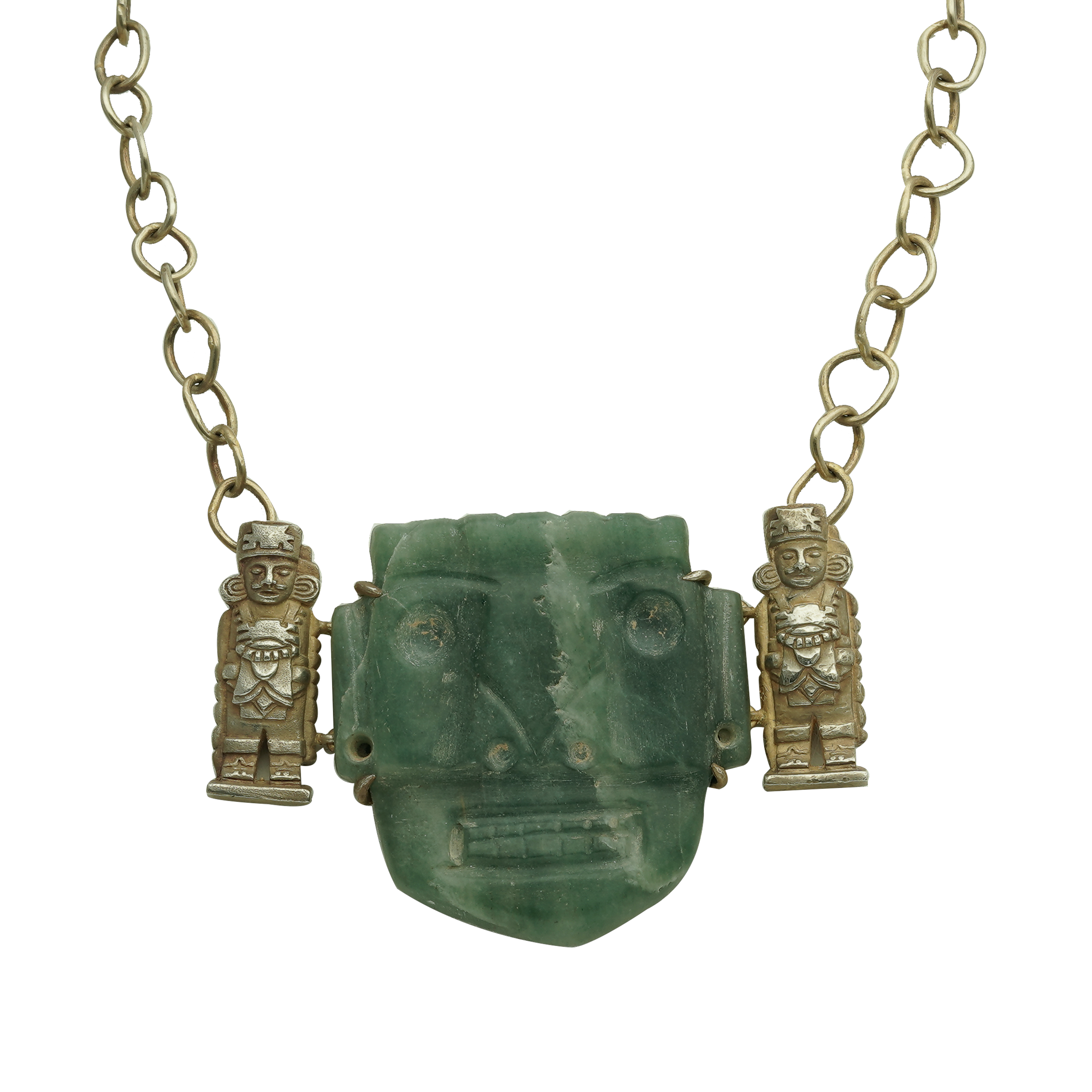
Maya Necklace with Jade Mask and Anthropomorphic Figures
Culture: Maya Civilization
Date: c. 600–900 CE (Late Classic Period)
Materials: Carved jadeite, metal (gilded metal), metal chain
Dimensions: Pendant approx. 6 cm x 9 cm width chain length variable
Necklace showing a central jadeite mask carved in a stylized human form, with geometric facial features, drilled eyes, and incised mouth. The carving exhibits the green hue and subtle mottling characteristic of jadeite valued in Maya culture. The mask is mounted in a simple metal frame and flanked by two cast metal anthropomorphic figures in full ceremonial attire. Each figure wears a headdress, earspools, and layered garments, with one hand resting on the chest in a gesture of authority.
The figures are attached directly to the central mask, forming a symmetrical pendant suspended from a simple oval-link chain. The juxtaposition of jade carving and detailed metal work demonstrates both the lapidary skill and the metallurgical craftsmanship of the piece.
Provenance:
Likely from the Maya lowlands, present-day Guatemala, Belize, or southern Mexico.
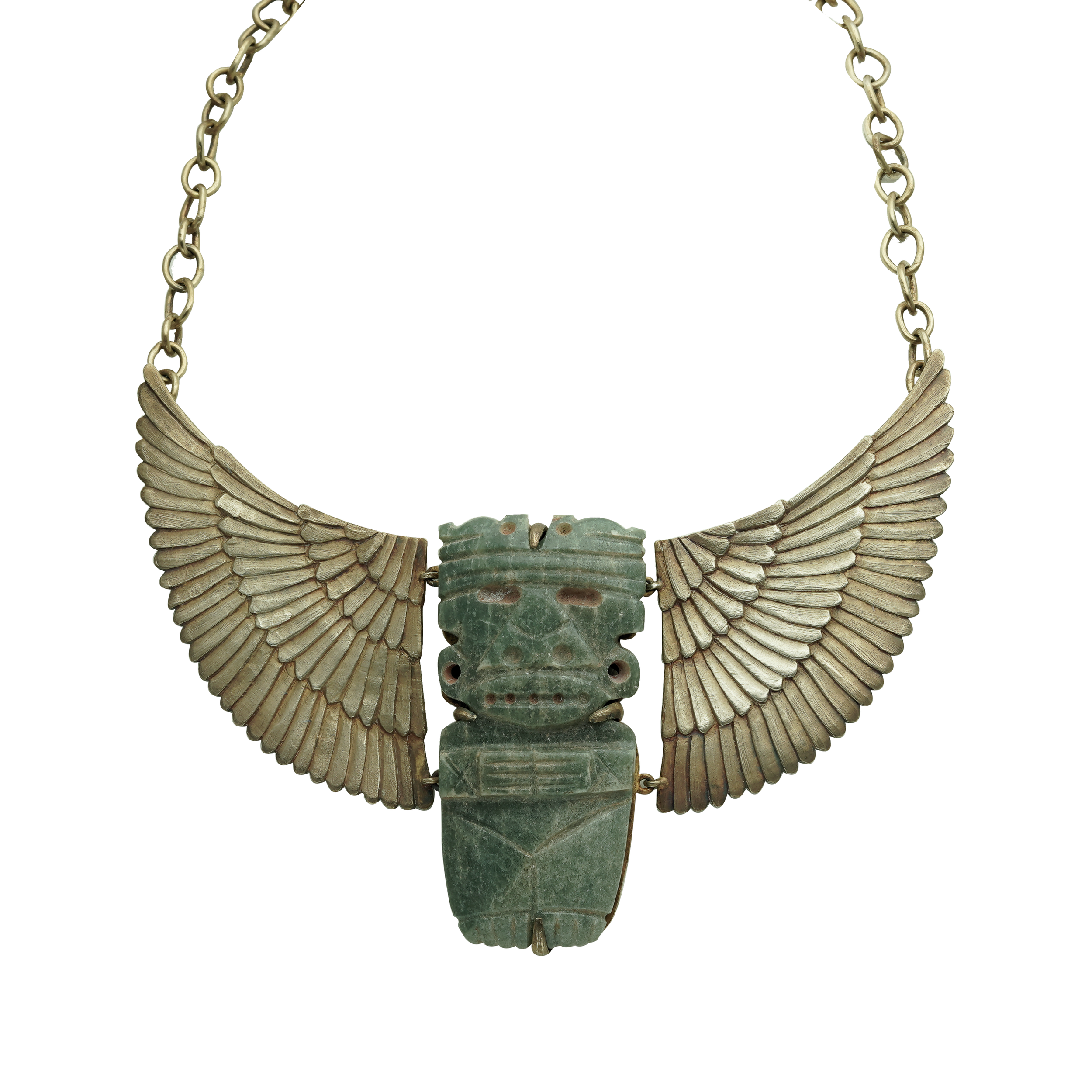
Maya Necklace with Winged Jade Pendant
Culture: Maya Civilization
Date: c. 600–900 CE (Late Classic Period)
Materials: Carved jadeite, metal (gilded metal), metal chain
Dimensions: Pendant height approx. 10–12 cm; wingspan approx. 16-20 cm
Ceremonial necklace featuring a central carved jadeite pendant depicting a stylized human or deity figure. The face is rendered with drilled eyes, a squared jawline, and incised details suggesting a headdress or cranial adornment. The body below is simplified into geometric sections, a hallmark of Classic Maya lapidary style.
Flanking the central jade carving are two finely cast metal wings, each composed of layered feather motifs with subtle texturing, extending outward to form a dramatic, symmetrical composition. The wings are attached to a sturdy metal chain, indicating the piece was intended to be worn prominently across the chest.
Provenance:
Likely from the Maya lowlands, in present-day Guatemala or southern Mexico.
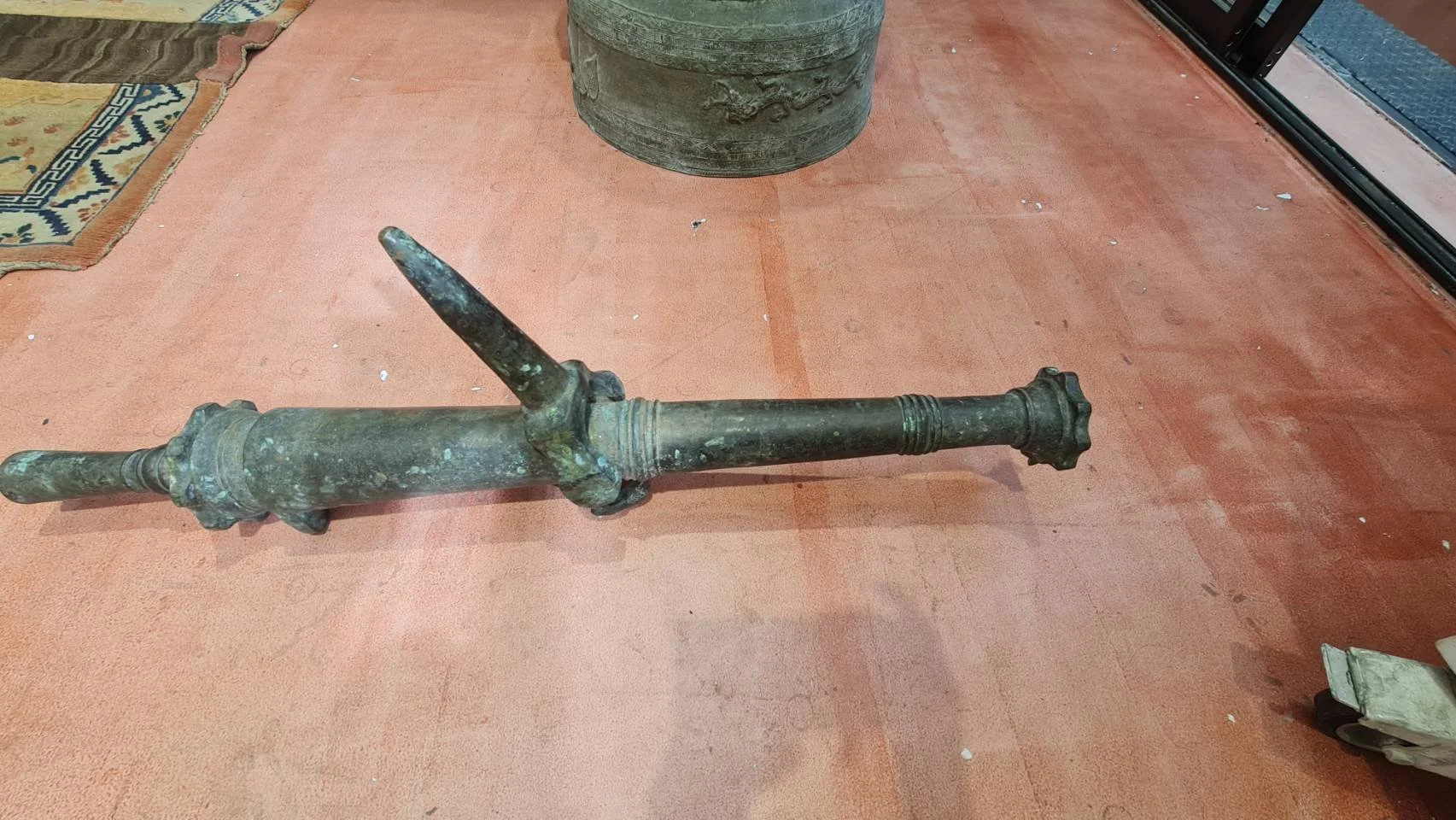
UNKNOWN ARTIST
Circa 1800-1820
Original Item: One of a Kind. Here we have a wonderful original bronze lantaka swivel cannon barrel, dating to about 1800-1820. While these were used throughout South East Asia, this style is from the “East Indies”, more properly known as South Eastern Asia. These were used only at close quarters, used to fire lead balls, stones and other debris while mounted on boats and other ocean going craft during the age of Sailing.
The cannon is very heavy, weighing in at 33lbs, a good sign as later copies are much lighter and sometimes are filled internally with foam to be sold as fakes.
Totally authentic but not too big to display in home or office.
Dimensions:
Lantaka or rentaka was a type of bronze portable cannon or swivel gun, sometimes mounted on merchant vessels and warships in Maritime Southeast Asia. It was commonly equipped by native seafaring vessels from Indonesia, Philippines, Brunei, and Malaysia. Lela and rentaka are known by the Malays as meriam kecil (lit. "small cannon"), the difference is that rentaka is smaller in length and bore than a lela.
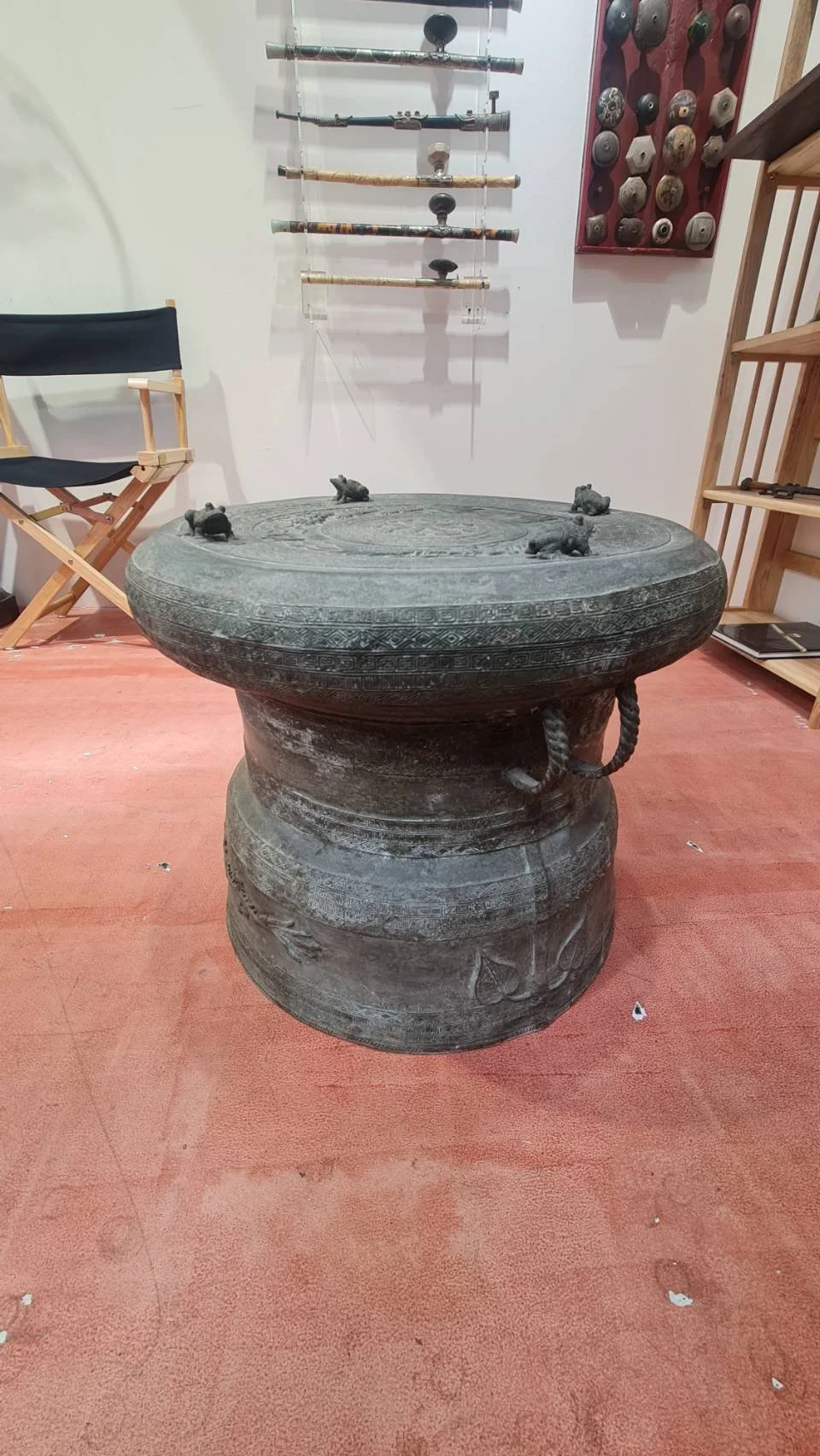
UNKNOWN ARTIST
The object in the image is a type of Southeast Asian bronze drum, commonly known as a "rain drum" or "frog drum". These drums are found across various cultures in Southeast Asia and as far away as Indonesia.
Dimensions:
The drums are typically decorated with frogs around the rim, which are symbols of water and rain, and associated with fertility. The sound produced by striking the drum is sometimes likened to the roar of thunder or a bullfrog, heralding the monsoon rains.
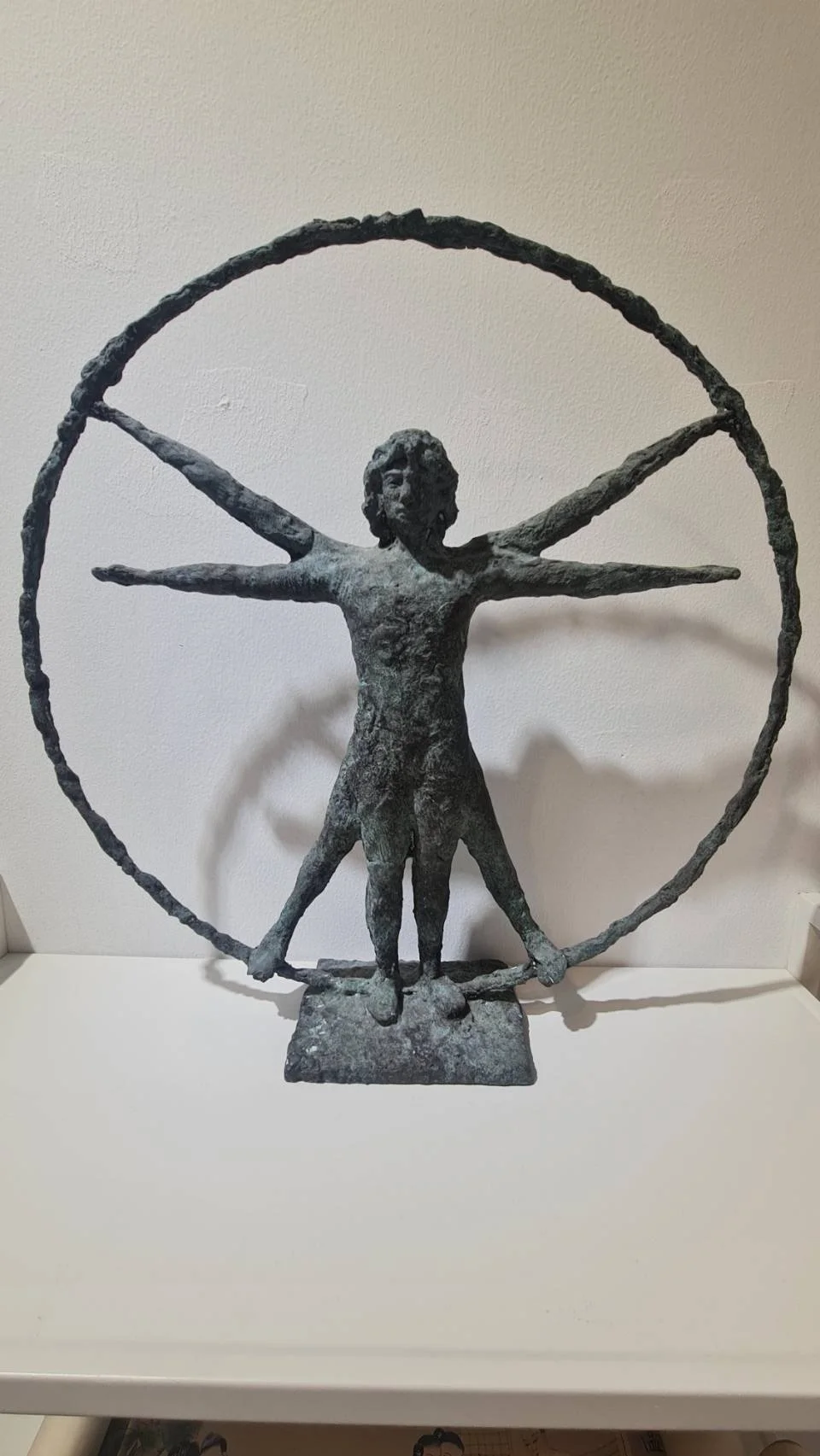
BOZE
JIM MORRISON inspired by Leonardo Da Vinci,
Bronze sculpture with green patina
Dimensions: 25 × 20 cm
This bronze sculpture reinterprets Leonardo da Vinci’s iconic Vitruvian Man, translating the Renaissance master’s study of human proportions into three-dimensional form. The figure stands within a large circular frame, arms and legs extended to convey balance, symmetry, and the harmony between man and the universe. Cast with a textured surface and green patina, the work evokes a timeless quality, bridging classical ideals with modern sculptural expression. It serves as both an homage to da Vinci’s pursuit of knowledge and a meditation on the enduring quest for human perfection.
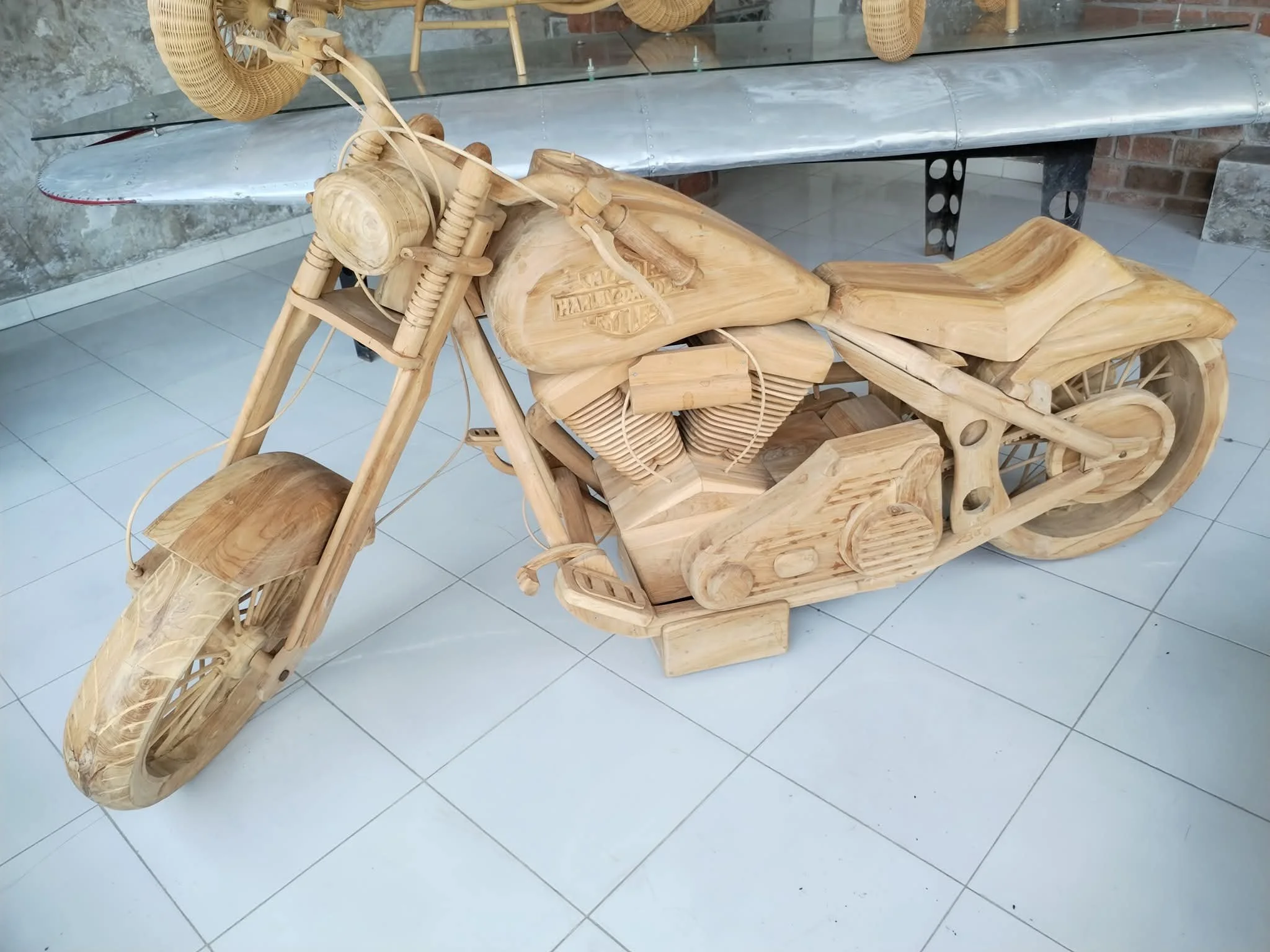
Artist: Unkonwn
Date: Unknown
Materials: Carved wood
Dimensions: 235 x 80 x 137
This wooden sculpture is inspired by a Harley-Davidson motorcycle. It is fully hand-carved from wood, with detailed parts such as the fuel tank, engine, wheels, and handlebars carefully shaped to reflect the original design.
The piece is not functional and cannot be ridden. Instead, it highlights craftsmanship and patience, transforming a powerful mechanical motorcycle into a quiet wooden object. The natural wood grain is left visible, giving the sculpture a warm and organic appearance.
This work celebrates the iconic Harley-Davidson form while presenting it as an object of art and display.
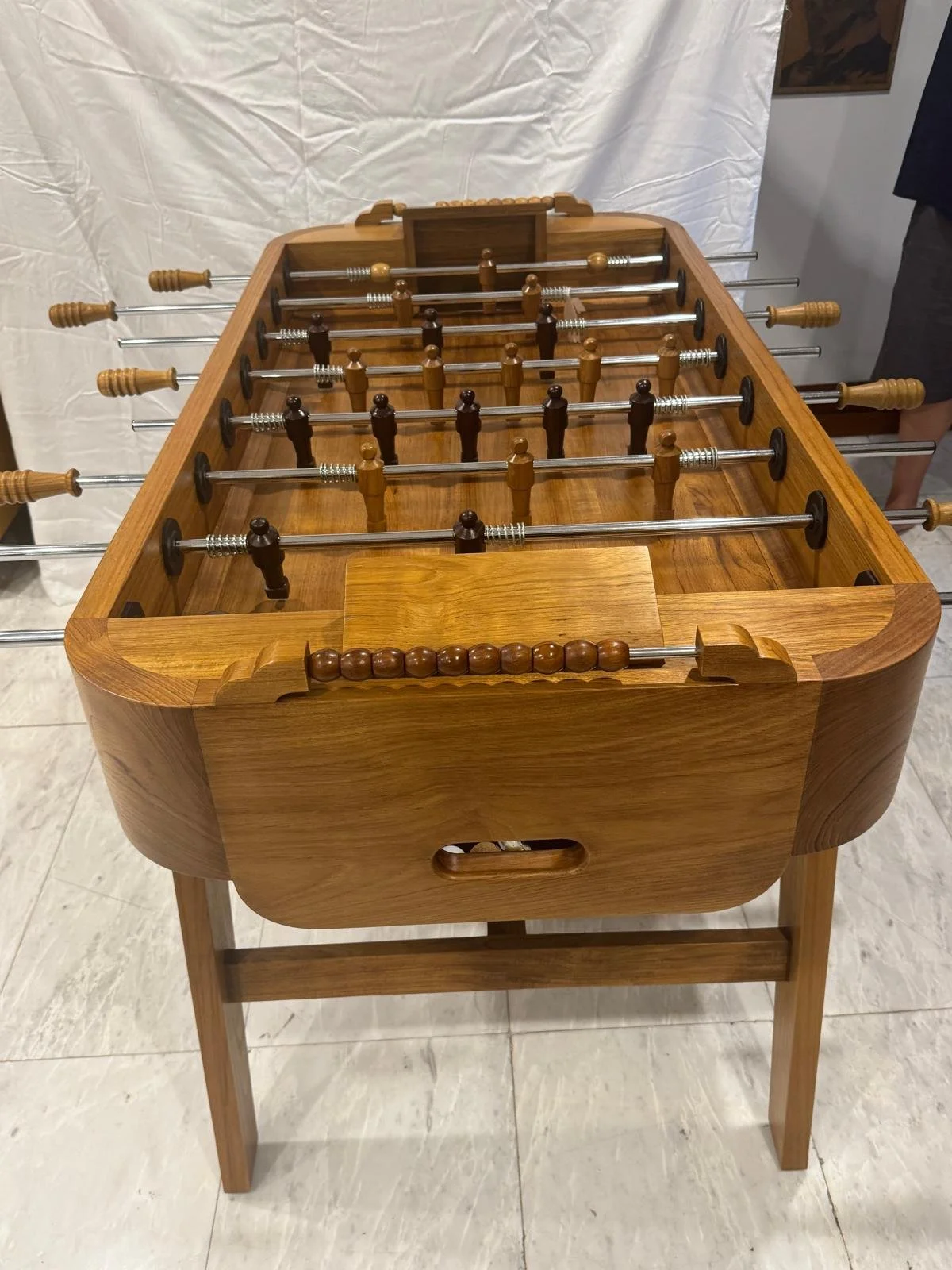
Artist: Unkonwn
Date: Unknown
Materials: Teak wood, metal rods, hand-turned wooden figures
Dimensions: 160 x 132 x 104
This babyfoot table is made from teak, a strong and beautiful wood often used for fine furniture. The natural color and wood grain are left visible, giving the object a warm and elegant appearance. Its rounded edges and solid shape show careful handcraft and attention to detail.
The wooden players are hand-shaped and placed on stainless steel rods. Their simple forms give the table a handmade character. Wooden score counters and carved handles add to the overall design.
This Babyfoot is both a game and a crafted object. It is made to be played, but also to be appreciated for its design and quality.
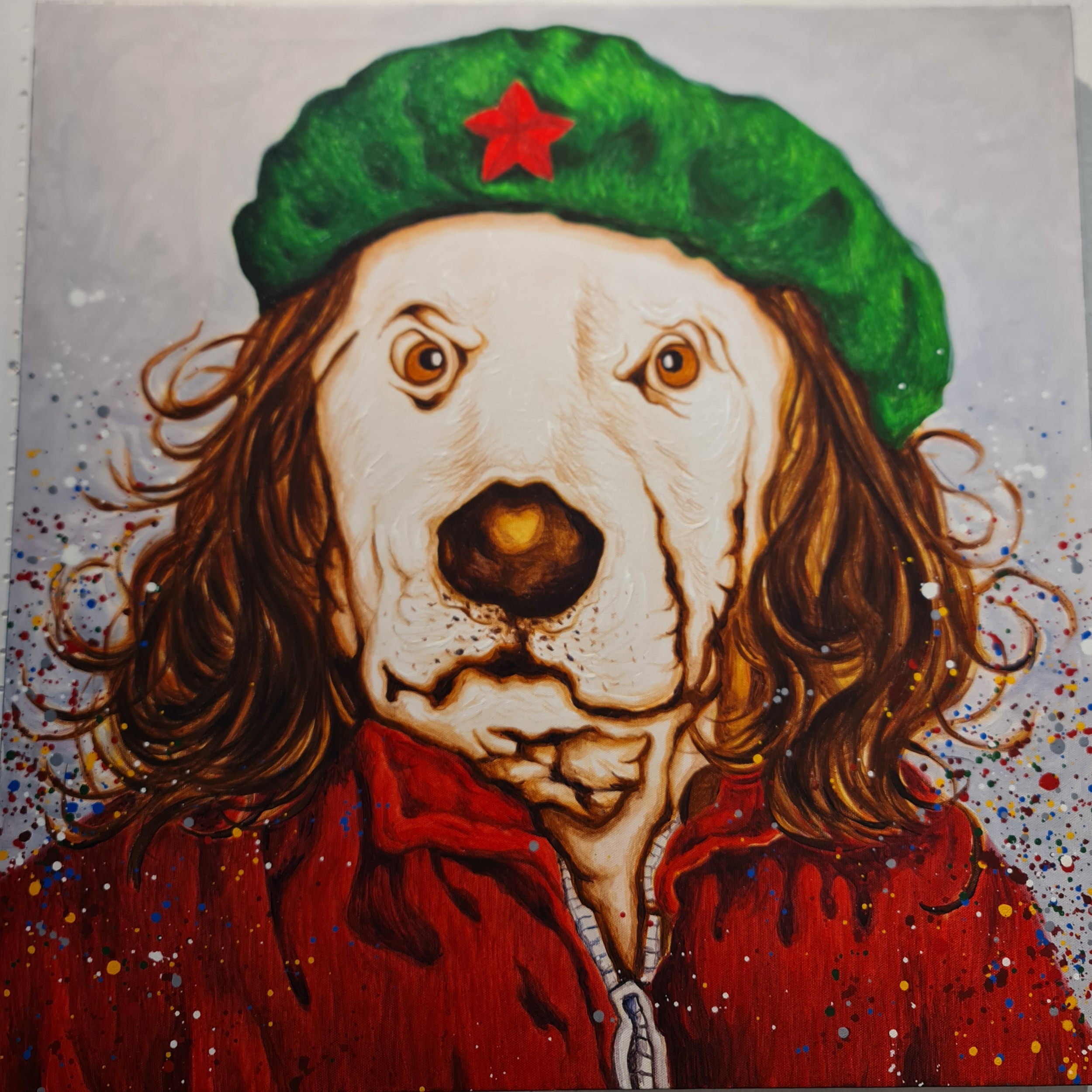
Artist: BOZE
Date: Unknown
Medium: Oil on canvas
Signature: Not Visible
Dimensions: 29 × 37 cm
This portrait depicts a dog rendered with human posture and expression, dressed in a green beret marked by a red star and a red jacket. The work playfully merges animal imagery with revolutionary iconography, creating a figure that is at once humorous, and quietly unsettling. Rich, warm tones define the face, while energetic splatters of paint animate the background, adding movement and contemporary edge.
Artistic Context:
BOZE is known for creating expressive, figurative paintings that blend humor, symbolism, and social commentary. Working primarily in oil on canvas, the artist often uses animals as stand-ins for human characters, allowing complex political or emotional ideas to be explored with irony and warmth. BOZE’s style combines strong draftsmanship with painterly textures and contemporary pop references, resulting in works that are immediately approachable yet layered in meaning.
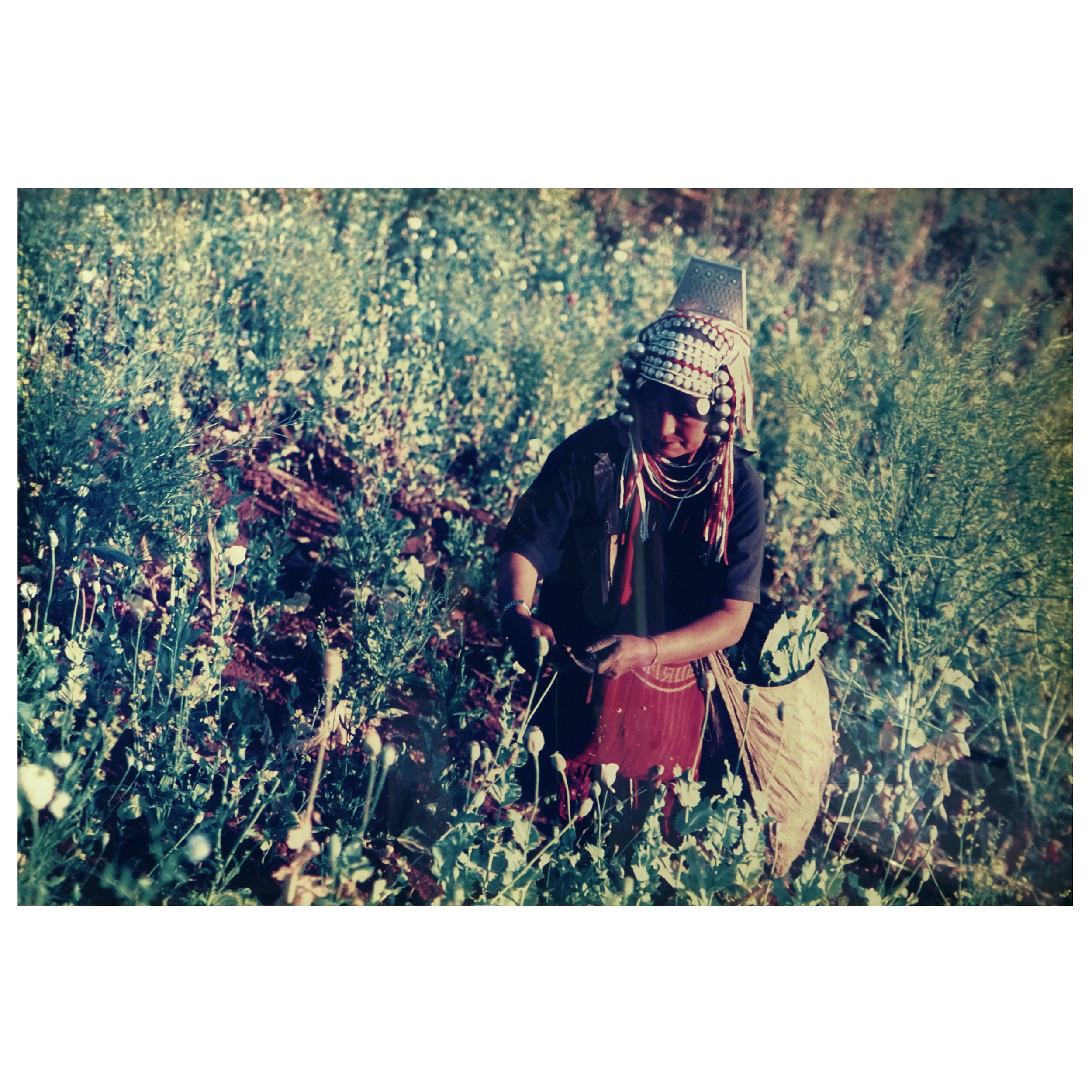
robert Curran
Akha Woman Harvesting in the Fields, Chromogenic print, late 20th century
Dimensions: 76 × 114 cm
This photograph depicts an Akha woman engaged in agricultural work, surrounded by dense vegetation. She wears traditional attire adorned with elaborate silver headdresses and beads, a hallmark of Akha cultural identity in the highlands of Southeast Asia.
US$ 5000
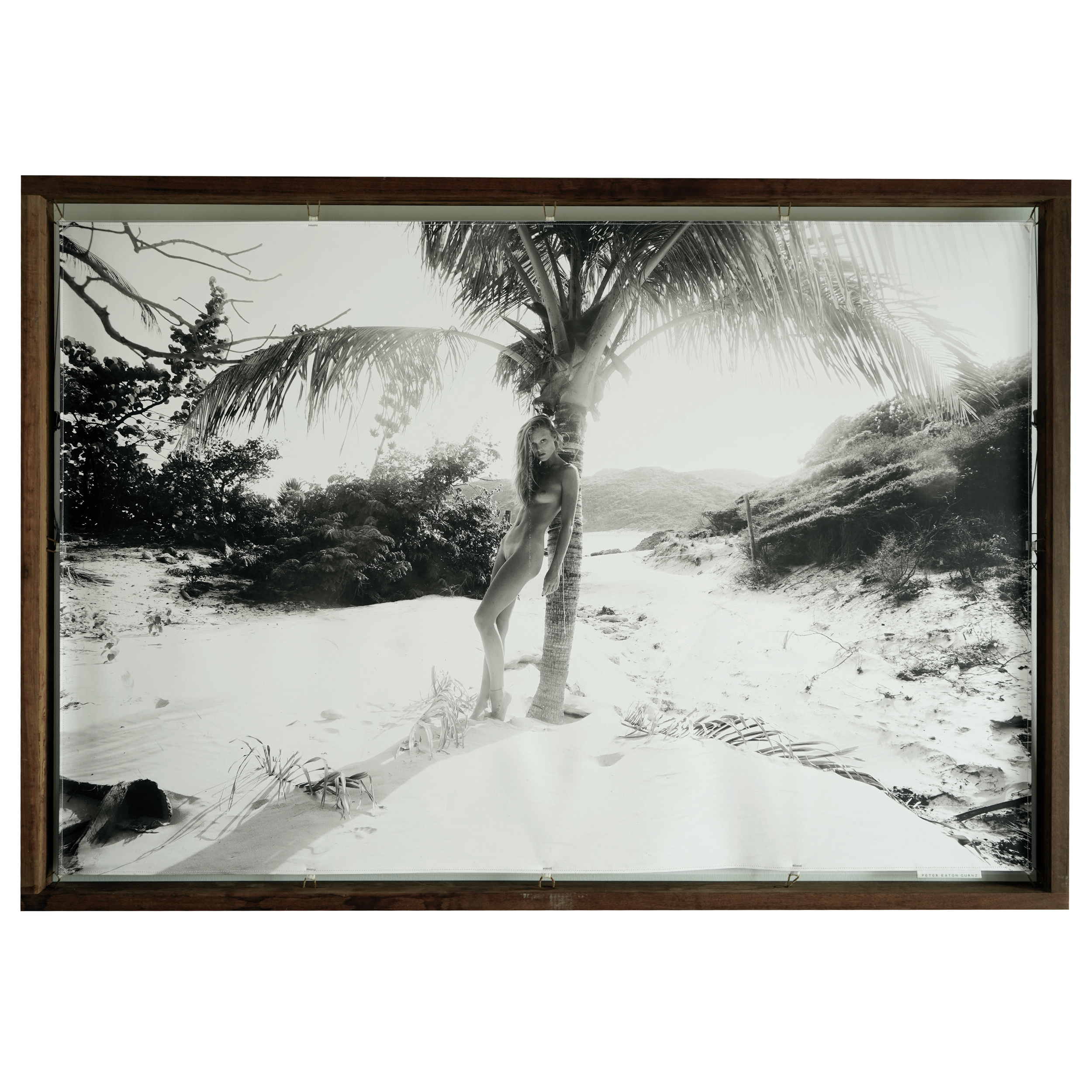
Peter Eaton Gurnz (b. 1968)
Untitled (Nude on the Beach), Gelatin silver print, ca. late 20th century
Dimensions: 111 × 153 cm
Black-and-white photograph by Peter Eaton Gurnz capturing a nude female figure leaning gracefully against a palm tree on a secluded beach. The composition balances the natural contours of the human form with the organic lines of the tropical landscape, evoking themes of vulnerability, strength, and harmony with nature. Gurnz, known for his refined exploration of the body and its dialogue with environment, frames the subject in a timeless and contemplative manner, emphasizing both intimacy and grandeur.
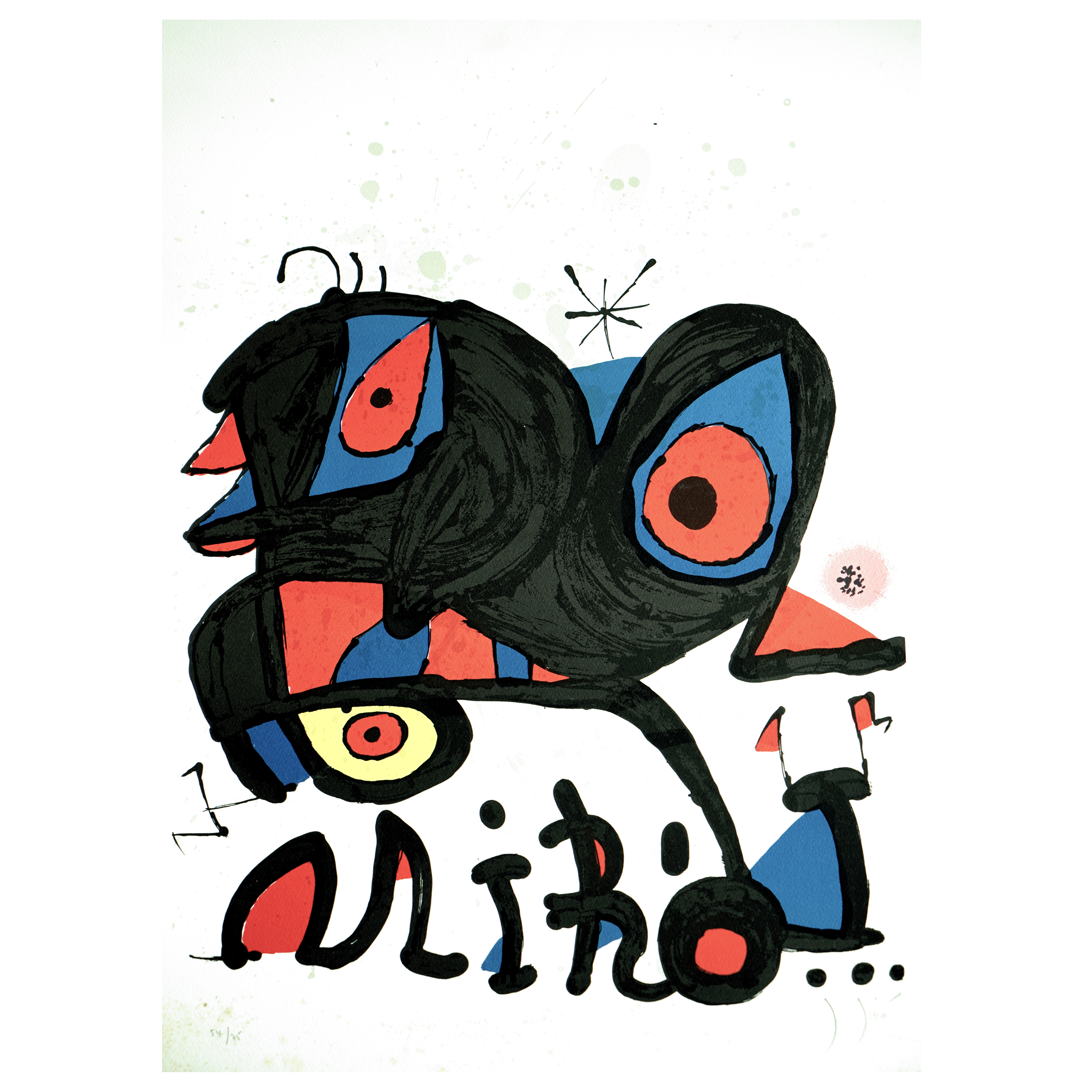
Joan Miró (1893–1983)
Lithograph
Dimensions: 86 × 59 cm
Lithograph by Joan Miró showcasing the artist’s distinctive visual language of bold colors, organic shapes, and playful abstraction. With its rhythmic black forms interwoven with striking reds, blues, and yellows, the work reflects Miró’s exploration of the subconscious and his desire to evoke a dreamlike, poetic universe. Characterized by spontaneity and imagination, this print exemplifies Miró’s pivotal role in Surrealism and his lasting influence on modern art.
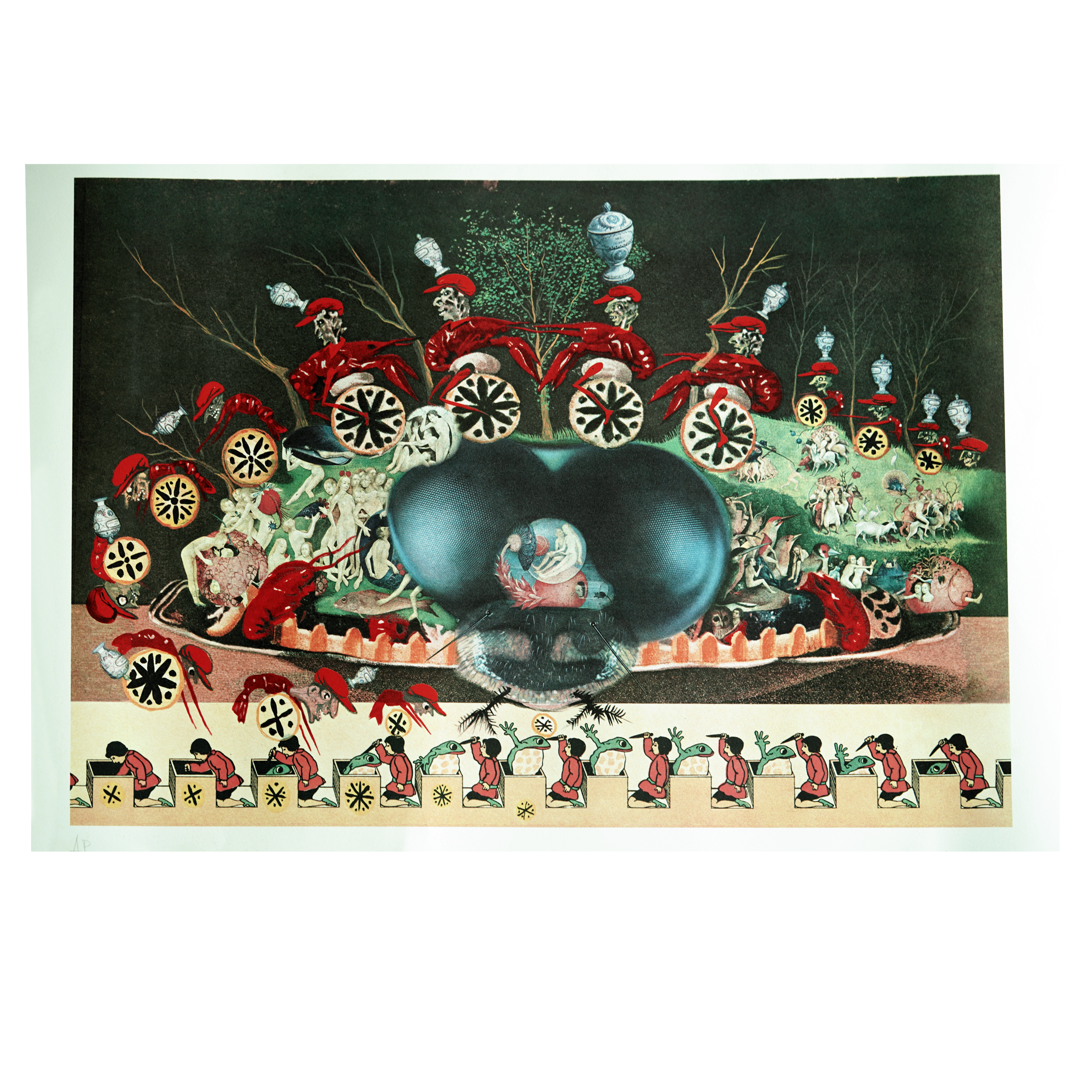
Salvador Dalí (1904–1989)
Lithograph after "The Garden of Earthly Delights"
Lithograph on paper
Dimensions: 41 × 58 cm
This lithograph by Salvador Dalí reinterprets Hieronymus Bosch’s The Garden of Earthly Delights through the surrealist’s unique vision. Combining fantastical figures, dreamlike landscapes, and symbolic imagery, Dalí pays homage to Bosch while infusing the work with his own eccentric and provocative style. The composition reflects Dalí’s fascination with the subconscious, metamorphosis, and the interplay of fantasy and reality, themes central to his career as one of the most influential artists of the 20th century.
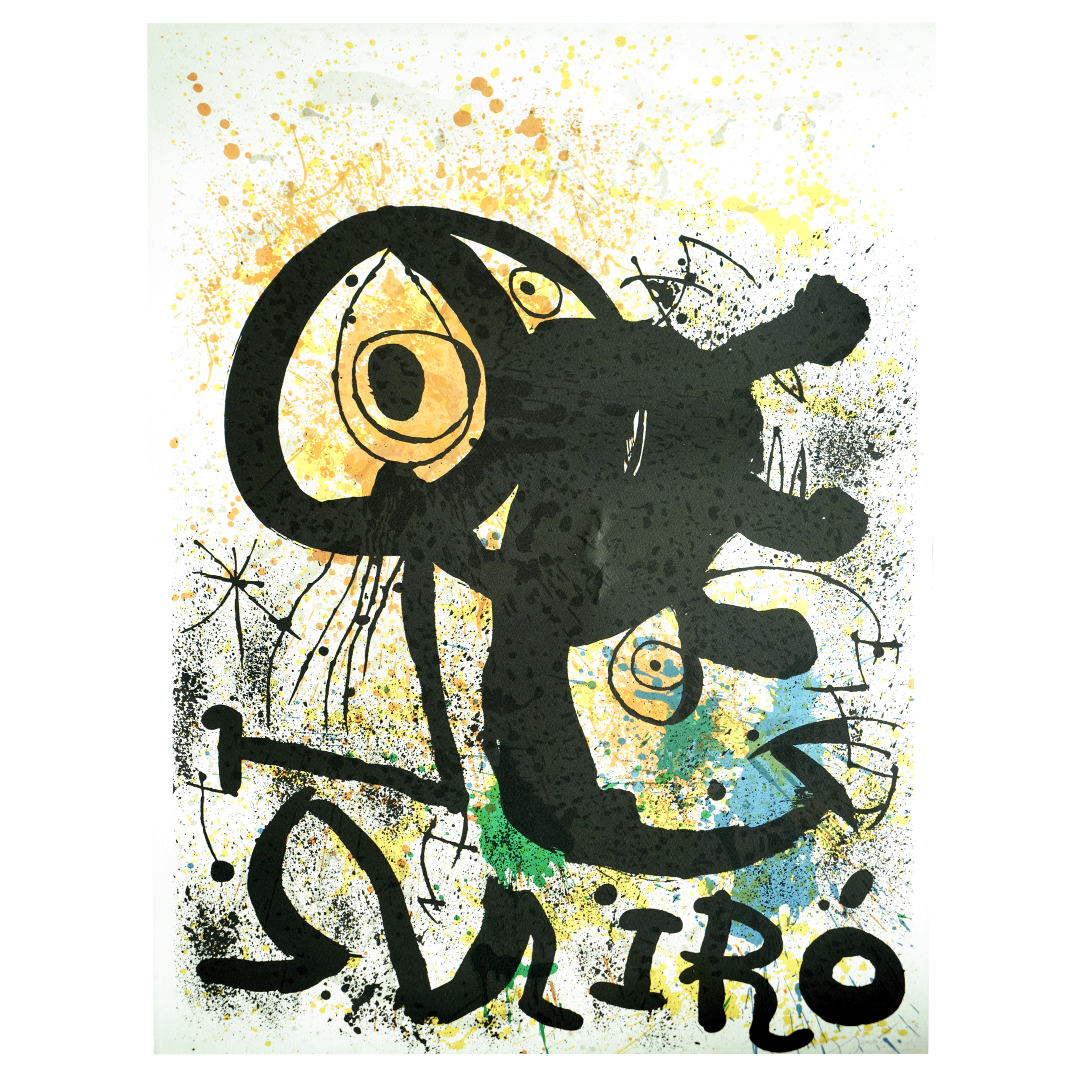
Joan Miró (1893–1983)
Untitled, c. 1960s–70s
Color lithograph on paper
Dimensions: 86 × 59 cm
Lithograph capturing Joan Miró’s fascination with spontaneity, movement, and the dreamlike world of abstraction. Bold black forms dominate the composition, animated by bursts of yellow, green, and blue splatters that evoke both cosmic energy and childlike play. Miró’s gestural lines and biomorphic shapes suggest a universe alive with symbols, where imagination transforms into visual poetry.
As in much of his graphic work, Miró uses lithography not only as a means of reproduction but as a medium of invention, preserving the immediacy and vitality of his painterly touch.

Maya Necklace with Jade Pendant and Beads
Culture: Maya Civilization
Date: c. 600–900 CE (Late Classic Period)
Materials: Carved jadeite, stone beads, shell or bone beads, metal fittings
Dimensions: Pendant height approx. 6 cm; overall necklace length variable
Necklace featuring a carved jadeite pendant in the stylized form of an abstracted insect or shield-like emblem, defined by symmetrical lobes and a central vertical ridge with transverse bar. The pendant’s smooth, mottled green surface is characteristic of high-quality jadeite prized in Maya culture.
The necklace strand is composed of cylindrical jadeite beads, smaller green stone beads, and darker interspersed beads, possibly made of shell, bone, or stone. These are strung on metal-linked connectors, forming a V-shaped drop that emphasizes the central pendant.
Provenance:
Likely from the Maya lowlands, in present-day Guatemala, Belize, or southern Mexico.